


- Collection:
- Georgia Government Publications
- Serial:
- Outdoor Georgia.
- Title:
- Outdoor Georgia, 1942 - 1943
- Creator:
- Georgia. Department of Natural Resources. Division of Wildlife
- Contributor to Resource:
- Georgia. Division of Wildlife.
Georgia. State Game and Fish Commission. - Publisher:
- Atlanta, Ga. : Georgia. Department of Natural Resources. Division of Wildlife
- Date of Original:
- 1943
- Subject:
- Hunting--Periodicals
Fishing--Periodicals
Hunting--Georgia--Periodicals
Fishing--Georgia--Periodicals
Periodicals - Location:
- United States, Georgia, 32.75042, -83.50018
- Medium:
- periodicals
- Type:
- Text
- Format:
- application/pdf
- Description:
- Periodical of the Georgia Department of Natural Resources
- External Identifiers:
- Call Number GA G200 .P1 S6 v. 11
- Metadata URL:
- https://dlg.galileo.usg.edu/id:dlg_ggpd_i-ga-bg200-b-pp1-bs6-bv-p-b11
- Digital Object URL:
- https://dlg.galileo.usg.edu/do:dlg_ggpd_i-ga-bg200-b-pp1-bs6-bv-p-b11
- Language:
- eng
- Holding Institution:
- University of Georgia. Map and Government Information Library
- Rights:
-

--_.._-- "-. - ---
* COVER PAGES *
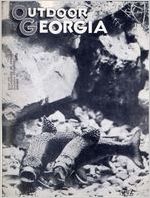
This splendid underwater photo was loaned to Outdoor Geargia by the Pennsylvania Game and fish Department and shows trout during spawning season. More of these remarkable pictures with an excellent story by John 801n, fish Culturist of the U. S. fish and Wildlife Service, may be found on pages 10 and II. These striking pictures are the result of great patience and skill and Outdoor Georgia is proud to present them to its readers.
July 4th is a great and celebrated day in American history. The Department of Natural Resources expresses its sentiments with this back page picture and it seems to fit in so well with Independence Day. Marjorie Cravey holds Old Glory while Maurine McDougall (next to flag) and Gloria McCleskey stand at attention. (Photo by Joe Stearns.)
Invest in U. S. A.-BUY BONDS
Commissioner lack Cravey
Page
2
State To Release 60,000 Quail
3
Notoriously Destructive-The Crow.
4
Beverly Burch
Jefferson Davis State Park-In Pictures. 5
Georgia's Bee Industry.
Joe Stearns
. ... 6-]
Fighting Muskie loses Battle
8
Native Brook Trout.
John B/osz
10-11
Wildlife Tidbits
13
5,000 See Ceramic Exhibit.
14
Ceramic Industry
15
Cary Hansard
Conservation, Please!
16
You Tell 'Em
16
Joe Stearns
In The Mail
19
Fishing Seasons and Regulations . . . 19
**** * * ****
INVEST IN THE U. S. A. *
* *
BUY BDJlD ~
*
* *
RECENTlY I issued a suggestion to the Division of Wildlife Rangers, asking the boys to purchase as many war bonds and stamps as possible.
Weeks ago I pledged the cooperation of the Department of Natural Resources in the purchase of war bonds and I am proud to report that in many instances employees are buying more than the recommended 100/0 of the salary in war bonds.
For pure patriotic fervor I want to cite the case of Ranger Hoyt Seabolt. Ranger Seabolt is stationed in the Chattahoochee National Forest Management Area. The nearest town from his home is Blue Ridge and it is about 25 miles away.
Mr. and Mrs. Seabolt are about three miles from the nearest neighbor. In the stillness of the mountain nights, the Sea bolts have plenty of time to discuss the problems of the world and their constant companion is a radio which keeps them up to the minute on war news. They decided one night to invest in America and Democracy. It was their way of showing their appreciation for a free country and a land of liberty.
Each time Ranger Seabolt drives his car into town over twisting mountain trails he returns home with another war bond. This couple, far away from bright city lights, upon last report had purchased more than $3,000 worth of war bonds and they. have promised to keep up the pace until Old Glory is flying above Tokyo and Berlin. America can never lose a war with citizens of this type holding down the home front.
The wife of one Ranger sold chickens, ducks and pigs. With this income she purchased war bonds and now has more than $400 worth of bonds.
The Rangers all have promised to buy bonds until it hurts. I am sure these men will not let us down.
The least we can do back home is to invest in America and Uncle Sam offers a good profit on each dollar used for war bond purchases. While our boys are sacrificing their lives and fortunes and facing enemy bullets each day - we at home should be proud we can have a share in victory by the purchase of bonds. No American would want to have our Soldiers and Sailors and Marines go into battle not properly equipped. Our dollars for bonds are used to buy guns, bombs and other implements of war. We can have the best equipped army on earth if all of us, after we think we have bought enough bonds - buy one more and then one more.
Buy bonds now and there will be no bondage in America.
JULY, 1942
OUTJD)(Q)(Q)IRi GIE(Q)IRiGllA
(
I
Volum ,No._XU!
ZACK D. CRAVEY, Editor
JOE l. STEARNS, Managing Editor
PAT COOPER, Associate Editor
BEVERLY BURCH, Feature Editor
Published monthly by The Georgia Department of Natural Resources, 422 State Capitol, Atlanta, Ga., in the interest of Georgia wildlife
and for fishermen, hunters, nature lovers and conservation of natural resources. Yearly subscriptions to United States and its posses-
sions, 'and Canada, 75 cents; other countries, $1.50. Subscribers must notify us of cbange of address four weeks in advance of next pub-
lication date, giving both old and new address. Contents of this magazine must not be reprinted without permission. This magazine is glad
to receive photbs, drawings, stories and articles dealing with outdoor subjects. but cannot guarantee return of unsolicited contributions nor
insure against their loss. Contributions not accompanied by sufficient postage will not be returned. Entered as 2nd class matter August 31,
1940, at the post office at Atlanta, under the Act of March 3, 1879.
co "ILLIA.S PTO
ATLANTA
STATE GAME FARM TO RELEASE
60,.000 !2
AMONG FARMERS, SPORTSMEN, ~LUBS THIS SEASON_
GEORGlkS Game Farm near Atlanta will relea e
.
60,000 quail this sea on, according to Superin-
tendent Ralph Buice.
The first delivery of day-old quail will be made early in July and will be continued op into October. The first delivery wiIl find 1200 young quail distributed among farmers, ~portsmen and wildlife club. The e young ter will be given every attention and when eight weeks old, they will be relea ed into protected Georgia field.
The system of handling quail propagation among sportsmen has been changed entirely this year. Last year the Game Farm delivered quail eggs which were placed under bantam hens for hatching but this method left much to be desired. Under this -sy tern Buice esti. mates only 15,000 birds actually reached. hunting grounds. Under the new, streamlined system, the day-old quail will be delivered, placed in brooders and Georgia's lands will have 60,000 quail well. distrihuted.
The game farm has more than doubled its capacity of output. Baby quail are coming out of the two new incubators at a rate of 1800 per week now and this will
Tltis Iype lub will be used e"'ensive/y Ihis season by sportsmen in laking care of young quail dislribuled by lite Slale Game Farm. It will pro vide Iteal and keep lite young birds from being cltilled on coo/ nig"'s.
OUTDOOR GEORGIA July 1942
Nalure does its sltare in lite restocking of our lands willt quail. Here a Iten is sit own on Iter nesl. Bul nalure is not yel 9b/e . to supply enot:J~ quai/for tlte demand, so your State Game Farm makes up lite dillerence. (Soil Conservation Service pltoto.)
be tepped up until 4,500 are being handled by August 1. That is a lot of quail.
The Game Farm i open to the public. Large crowds of visitor are present each Sunday to watch tate workers gather egg and inspect, feed and water the stock birds.
. Superintendent Buice deserves praise for his efficient and industrious efforts in behalf of the quail farm. Buice took over the farm when it was in a ruri-down condition. Today the quail pens are spotlessly white and clean. Where the mortality rate among the birds once was checked at 250/0, it now has reached the new low of only 50/0 and still is going down.
Applications have been heavy for young quail. It
would take 300000 quail to fiIl alI the applications on
hand. This admittedly is impo" ible but it is the aim
and hope of Commissioner Zack D. Cravey and Governor
Talmadge to make this possible in future years. It is
possible this year to release 60,000 quail
~
I
Governor Talmadge and Commissioner l\~
Ty
funds for necessary expansion.
LIB F.; 1\ ;; I ES j
OF GE.URG'~
By BEVERLY BURCH
T OST non-game birds are con-
L sidered so beneficial to agriculture they rate year 'round protection by the Division of Wildlife. But not the crow.
His repugnant habit of stealing eggs and young from the ne ts of other birds makes him extremely unpopular. And the way crows rob a field of sprouting corn and peanuts, peck holes in melons and peaches, and filch pecans, dassifies him as a grade-A rascal.
All told, his reputation is about as black as his feathers and the Wildlife Division is urging boys, farmers and hunters to kill him on sight. Director Cravey estimates each crow does a minimum of $50 worth of damage per year by eating crops and destroying game and beneficial non-game birds.
However, for all hi bad ways, the crow is extremely crafty and difficult to kill. So, when Outdoor Georgia heard that four Atlanta hunters were successful in crow destruction, it dispatched a reporter to get the detail .
Charles Knott, insurance man, and
J. M. Caldwell, blacksmith, are the
"comeon" men of this crow killing squadron, for they know how to lure the black devils with their decoy calls. Their partners are Pete Barth, employed at Conley (Army Quartermaster Depot near Atlanta), and Tom Faison, realtor, who form the firing squad. They guess that in four years they have shot between 5,000 and 6,000 of the rascals.
Generally crows are wise to artificial crow-calls and sit off in the distance ignoring hunters who try to trick them. But somehow Mr. Knott manages to give out a call which the squadron believes means distress in crow signals. At any rate, it fetches them.
However, the call won't hold crows, especially after shots are fired, so Caldwell uses his decoy, \ hich he be-
4
THE ~ROW!
,4t/tuda g~ dJO/UH "dJi/lb; g~", el.a.un (!)tJe/I, 5,000 KilJecJ, !In dJOWJ, 'lfeaM-
lieves is a fighting call. Anyhow, it holds them on the scene or lures them back until practically the last une can be killed. The ignal men shoot tho e which are near at hand while Barth and Faison get those which fly off at a distance.
either Mr. Knott nor Mr. Caldwell can tell how they are able to give the genuine crow sounds. They say it's a technique which is acquired through practice and study.
"I couldn't begin to esti-
mate the hours I've put in
learning the fighting-signal, as
1 interpret my call," Caldwell
declares. "Sometimes when a
reed wears out, and 1 put in a new one, 1 have t~ spend hours tuning it for the natural tone."
To get the correct pitch, the men u e the genuine artid the crow himself. They go to the \ oods or field, and Ii ten to him.
"We've shot them when they had a beakfull of shelled peanuts some farmer planted for seed," Mr. Knott says. "And we've found white smudges on their black face, when, they had been swiping milk out of young corn.
'Also, we've found them with telltale egg smears on their face, after they've been robbing the nests of other birds," deeJar s Mr. Caldwell. "And even worse, we've caught them eating the young of other birds."
On top of that, "they are full of fiea , lice I;lnd even smell bad." So
(Continued on Page 13)
Curiosity got the best 01 these crows lost spring when they come within firing range 01 the "squadron." Lelt to right, the hunters are Charles Knoff, who gives the "distress ,signal;" J. M. Coldwell, who lollows up with the "fighting call;" Pete Borth, and Tom Faison, who lorm the firing squad.
OUTDOOR GEORGIA July 1942
l-Jefferson Davis State Park is located 2 miles north of Irwinville. These lofty pine trees provide shade, comfort and content ment for hundreds of visitors to the park
each week. 2-A monument in the park to
Jefferson Davis, President of the Confed erate States of America. The bust is in bronze. 3-A. C. Coburn, Superintendent of the park, shows a splendid collection of firearms, relics of yesteryear. The guns were given to the state by Mitchell Coffee, of Eastman. Many of these old firearms were actually used in the War between the States. 4-Mrs. A. C. Coburn shows one of the Rint lock type guns. This one has a wooden ramrod. With this gun, your tar get would have to be patient and hold per fectly still while you prepared for action. 5-Th .. park marks the exact spot where Jefferson Davis was captured May 10, 1865. This museum contains many artifacts of the War between the States. (Photos by Joe Stearns.)
[SIDE T
Of rf'[
EDER-\ E _TATL OF A [InCA
1861 - I"b~
l-This hive is ready for shaking. The queen bee has been removed. The worker bees will be shaken into the wire cage on the right and shipped-probably to Canada. 2-Each wire cage contains about 6 pounds of bees. This one had too many and they are being transferred to another cage by a worker. 3-Here is the actual shaking. The frame is tapped against the funnel-like box and the bees tumble down into the wire cage. The workers in the background are locating the queen bee and removing her from the hive before the shaker takes charge. 4-A color picture was recently made by the State Entomology Department of the queen bee laying and other phases of the bee industry. Wilmer Kimberly is behind the camera and W. B. Cash, State Bee Inspector, holds up a frame for camero action. The film will be shown to beekeepers soon. 5-Each cage is weighed. 6-Honey Bees-II Holding large cons of delicious Georgia honey at G. G. Puett's place in Hahira. Hattilu Mcintyre (left), Rosalind Taylor and Anne Stiche seem quite interested in honey.
By JOE STEARNS
W ITHOUT the benefit of fanfare. shocking publicity tricks and a drum and fife corps to di charge a curl' nt of hu,ine s-gettirill; huild.up from coast to coast. Georll;ia in a rather quiet and orderly fa hion can du'ts an annual million dollar in du.tn in-\es. ,ir-bees.
\oi man; Georgians know that in early spring shippers in outh Georgia ,end hee to all parts of me rica and e\'en foreign countrie in carload lots, Truck, regularly beat a path from _outh Georgia a far orth as Canaoa di tributing our be.
Thousands of dollars pour into Georgia from the sale of bees. After this sale of mil lions of bees is concluded, Georgia hees start gathering honey which is worth many more thousands of dollar to our honey producers.
Getting oown to simple figure. the a\erage hive equipped to produce hone) is worth from 8 to 10 and some producers have as many' as ~.OOO hives.
~trange and mysterious i the life. action. living condition and home activities of bee. There' i nothing fal e about the statement. 'busy a a bee." Not \\hen you con ider it requires 80.000 trips by \\orker bees to tore up a ingle pound of honey.
this i written. Georgia bees are working indu triously in the Ea t ern PSirt of the United tate, the Mid- West and Canada ga hering hone,. When winter comes in these ections. the owners rob the hi\'es and gas the bees-briefly. they kill all of their bees so the will not have to leave a great tore' of honey in the hive to tide the bee through the win tel' months. That i where Georgia comes in. In the spring. the e owners order new bee from us.
Georgia sends the bees in a wire cage which is arranged to include a queen and a can of sugar and water, whieh will get them to their destination in a healthy (ondition. The new owner places them in the hive and the queen soon starts lay-
ing. In almost no lime at all the honey starts coming in.
Three kinds of hee are to he found in each hi e. The queen bee is the hoss. he is the, perfect female \\ ho lay: the egg and controls the population of the hi\'e. he can lay as much as Ihre times her own weight' each day ,or. in round figures. she la)s a many a 3.000 eggs per 2-1 hours. \\hi h prove -the a erage chicken is a lacker. There is the worker bee \I hich i considered the undev loped and imperfect female. The drone-the llIan of the bee fam ily-get little or no attention, In fact. .\\'hen the \\ orker tart /?:athcring hone) late in the _pring. they chase a\\av or kill all the drones. as they are ~onsidered loafer and no loafer i all \led in bee hive,
ature provid d well for bee ln the way of <Yiving them a weapon for defense. Ho\\ many time have you heard people say. "They sure can sit do\\ n hard!" Right! The stinger i said to be three times sharper than a needle and till-it has a hole in it.
(Continued on Page 18)
G. C. Puett, prominent beekeeper and honey producer at Hahira, shows one of the cons of sugor and water he used to place in each wire cage. This is food for the bees to keep them happy and healthy while an their way to a new home, perhaps thousands of miles from Georgia.
Four or five worker bees and a queen are placed into this small cage for shipping. These ore often sent in the some manner 0$ you would moil a post cord. This case contains sugar candy eaten by worker ,bees and fed to the queen. The lower cage is ready for mailing.
Fighting Mnskie Loses Battle At Lake Blue Ridge
'1r. and Mr,. John T. Ison_ or Blue Ridge. Georgia. have had their fi.hing thrill for 1942. If the) don-t catch another fi h all ear the) ar contentcd.
Ca~ting in Blue Ridg Lake in May this IllU kie took their minnoll and after a terrific hallie. the mu~kie paid the pri e for losing the argument.
This IllU kellunO'e. onc of the finest of all <Tame fi hand omething fit for a king on thc dinner table. mea ur('d 42~~ inch(' and lIeighed 16 po~nds. Blue Ridge Lake ha giv('n up Illany Illuskies from time to time. ith onc of these fi.,.hters on your hook, you can be a.sured of a battle 'ou II on't forget.
FOLKSTON BIRD DOG ADOPTS- SEVE
FOX PUPPIES
I F 1::\1 IRO\~IEi'\T is l11or(' pOllcrfuJ than inheritance. therc's one lit tic bird dog PUpP) dOli n in Charlton count) II hich i going to chase foxes instead or pointing quails when he
gl'O\\ SUp.
The ,oung pup. 0\\ nf'd II) F. L. \Iurn. of Folkston. doesn't like fox and hc's got a g()oc! r('ason . e\ en \ oung ones ha\'(' .tolen hi~ cafet('ria from' him.
l ot long ago M r. Murry O. E. lb) nor and J. . ~o\\'en II ere on a
fox chase and callie across tllO litters o{ orphaned fox ._ accurding to Ran O'er Carroll right. Rather than I('t them peri.h, Mr. Murl") took them
lunch time! F. L. Murry and san, 01 Folkston, watch their lax puppies get dawn to business. The black and white puppy is anxious to get to his caleteria but what c~ance has he to outsmart seven litfle
loxes!
homc and turned them over to Okefenokee Regena, his bird dog which has onl one uckling pup.
The puppy, like a good little port, let them hang around. Soon the were taking more and more privil ges and gradually he found it ery difficult to get a good feeding tation him elI.
Then one bright day the even little foxes ganged up and cha ed him away completely. 1ama Okefenokee Regina, fond of all th brood, lct them fight it out among them elves.
lOW the fat lillie pup sits at a safe distance dreaming of the day when he's a big fellow.
H TERS HELP One out of every four migratory waterfowl tagged with numbered bands are reported to the Fish and Wildlife Service.
8
. 0 TDOOR GEORGIA July 1942
@
1-You have often heard of a "pig in the bog" and now here's one often used in reference to magicians-"a rabbit in the hot." his splendid picture was tal, .. by Glenn Bell, of Atlanta. 2-Ho Hum-"Pepper," owned by Dr. L. W. Mitchell of Augu>fa, is most unhappy. If he can just knock that blasted flea off his ear-it'll be a better world in which to live-so for as he is
concerned. 3-C. c. Corter, of Waycross, found the fishing in Lbura S. Walker state pork to be
mighty good. He is counting his string of Perch and Bream, and there is enough for the entire
family dinner. 4-T. f. Harden, of Commerce, set some kind of record recently when he
hooked this IB-inch Brook Trout in Rock Creek. It was a beautiful 3-pound fighter and one of the largest Brook Trout ever caught in Georgia. 5-They have a splendid method for beating the heat these hot days at Lauro S. Walker state pork near Way~ross-hop into a bathing suit and get into the cool sparkling lake water. 6-Baby quail are hatching out each week at the state quail hatchery near Atlanta. The division of Wildlife is distributing day-old quail in Georgia this year by the thousands. There'll be swell hunting next fait.
1 These pictures taken underwater show clearly Nature's ..,.
trout. Here ;s shown preliminary contact 01 the male and fern to secure these series of pictures. The trout here ore busy On t Outdoor Georgia by Pennsylvania Boord of Fish Commissioner are ready to spawn. It is somewhat difficult to believe you Oct 4-Comera skill enabled the photographer to catch this pic/, position during actual spawning-the mole is above and sfig
~~l~~E ~~
01 (j1U q~ d)
By JOHN BLOSZ
Reeional Supervisor of Fish Culture U. S. Fish and Wildlife Service
THE only trout that is native to
Georgia is the brook or speckled trout, although other varieties have been introduced successfully. It is found in the headwaters of mountain streams and is one of the most beautiful and active of the American trouts. It prefers clear, cold, rapid streams. This trout is a member of the s~lmoll family and belongs to that" group of trout known as chans, characterized by the presence of round CrImson spots on the sides of the body.
The general form of the hrook trout's hody varies considerably, sometimes being elongated and sometimes rath-
er short, hut the usual depth is ahout one-fourth or onefifth of the length. The head is large and hlunt, and is contained four and one-half times in the hody length. The large mouth is provided with teeth on the jaws, tongue, and palate bones, and also with a small patch on the vomer. The eye is placed high in the head; its diameter is about one-sixth the length of the head. The tail is square or slightly lunate in the adult; forked in the young.
There is considerable variation in the color of this trout, dependent on local conditions, sex, and age. As a general rule the back is a greenish or grayish color. Along the middle of the side are numerous round, light.
red spots surrounded by whitish or light-brownish circular area. The brook trout may be distinguished from the other charrs by the darkbrown or black marblings on the back and the general absence of spot.
The pan marks, which are always present in young trout and salmon, are often found in large brook trout. These marks, which in the brook trout are about eight in number, are large, dark, vertical blotches or bars extending along the side. The individual brook trout may vary greatly in form and color; not only those of different waters, but often those of the same body of water or different parts of the sam~ lake or stream. Modifications of both form and color also appear during the breeding season. This variation is a protection pro-
"'ay 01 keeping Georgia's mountain streams stocked with brook ! Ie during spawning season. 2-/nfinite patience was required
.r,.I the actual work 01 building the nest. All pictures loaned to 3-Alter having carelully constructed the nest, the fish now lefually are seeing these fish in their natural underwater habitat. 'eal the female jusl belare depositing the eggs. S-Female in 'ightly to Ihe rear 01 the lema Ie .
..........
vided by nature which permits the fish to change its color and markings rapidly when passing from one environment to another.
As in external markings, there is likewise a great variation in the color of the flesh of brook trout. Although in most instances it is white, trout with yellow or rich, red flesh are not rare.
The ize of the brook trout varies in different localitie and probably i innu nced by the abundance of natural food and the characteri tics and range of the water in which it is found. A trout will not attain a very large size in a ~estricted environment no matter how much food it has. The average ize, as taken from time to
time in any given body of water, is remarkably uniform. It is generally true, and particularly as regards waters of small extent, that the size of the fish decrea es in proportion to tIle numbers occupying a given body of water.
The most favorable temperature for this fish is from 450
to 65 0 F. Under favorable con-
ditions a brook trout at the age of one year is from four to five inches, at two years from seven to eight, at three years from ten to twelve, and at four years from fourteen to sixteen inches. At three years the average weight should he ahout one pound. Because of the flavor and fine quality of. its flesh the brook trout is highly
esteemed as a -table delicacy, and, as it is very game, it is much sought after by sportsmen. ,Those from clear, swift streams do not grow as large as those found in quiet and deeper waters but are superior in quality and appearance.
The brook trout has a voracious appetite. In the wild state the species is no doubt largely carnivorous, its food con isting chiefly of Crustacea, Mollu ca. and various form of insect and worms. When hungry, it does not hesitate to devour its own kind.
All treams can not be successfully tocked with this pecies. The flow must not .be too sluggish nor the temperature of the water too high, al-
(Continued on Next Page)
N4TIVE BROOK TROUT
(Continued from Preceding Poge)
though an unfavorable temperature. if not excessively high, is no eriou" ob tade where the current is swift enough to in ure thorough aeration of the \ ater or where the fish can run into spring-fed creeks flowing into the main tream. Any tream having a summer temperature greater than 65 F. can hardly be considered suitable for brook trout unl s it ha large spring tributarie acce ible to the fish during the heated period.
As the spawning time approaches the fish seek suitable gravel bed for the deposition of their eggs. Those inhabiting lakes and ponds Illay find suitable nesting spots in those waters, or they may enter tributary treams, ometimes pushing long distances up to their headwater. A favored nesting locality in a stream i at the head or foot of a large pool, where the water ripples gently over gravel bars. The males usually precede the femal s, and they frequently have the beds well cleaned before the laLter appear. The ne ts are formed by working out little deprcssions in the' gravel and scrupulou I clearing them of all sed iill en L. ]11 lakes or pond uch nest are made on gravelly shoal or bar wher seeping water is present, either in the form of priogs entering the ponds or lake or water s eping from the pond through a porous section of it boLtom.
The fish usually pair on the
nests, the males fighting vic-
iously for the possession of the
females. A few eggs are deposited at a time by a female and
fertilized by the milt which the
male simultaneously deposits.
This process of spawning and
impregnation by a pair of fish is repeated many times until til all the eggs have been de-
posited, and through the constant working of the fish on
the beds the eggs become bur-
ied in the gravel. After a spawning bed is once occupied
it is hard to drive the fish away,
the female, especially, returning to it despite all hindrances.
Brook trout eaas will average about one-sixth of an inch in diameter. but there i a great variation in the' size of eggs taken from fish of different
.I..
Filling the nest with grovel ofter spawning. This is done
to protect the eggs against predators and silting.
localities. The time necessary for developing the egg i dependent on the Lempcrature of the \ ilter, varying from abouL 125 days in waLer at 37 0 F. Lo about 50 day in water at 50 0 F. The colder waLer, howcver, produces thc hcalthier fry.
This fish is being artificially pro] agated exLen ively by the Fish and Wildlife ervice and considerable restocking has been done in the moun-
Lain sections of north Georgia, wherever suitable waters are found. The Georgia Division of Wildlife a sists the Service in this distribution. The Service maintains a rearing station in the Chattahoochee ational Forest, and the State Division maintains a hatchery at Summerville. This stocking program carried on cooperatively ha been eminently successful in Georgia. A a result good brook trout fishing is found throughout the Forest.
FLY-FISKING
By Svede
Sven Olaf Svenson bon gude guy Who like lu fisk viI rod and fly.
He fisk in all dese Iiddle cricks Yil bolloms hard as paving bricks
And slippery like a blooming eel; Sven Olaf knows yusl how il feel
Yen off a rock his fool shol glance And he sil down and hurl his pants.
He also like 10 skull a boal Or maybe he yusl leI il floal
Close 10 do bank of liddle lake Yusl so Sven Olaf he can make
Plonly of casls up 10 do veeds Yere greal big bass he lays and feeds;
Sven Olaf casls and bye and bye Do bass shol yump 10 gel do fly.
Yen dis har bass do bail har look A yen tie yerk skol sel do hook,
Do fisk skol finds he ain'l ban vise, To grab at vun of Svenson's flies.
He den skol yump and svim and fight And yerk do line vit all his mighl;
Sune he skol losing all his spunk Because he can't break do Cullyhunk.
Sven Olaf den skol pull him in And on Olaf's face he vere a grin,
"Yell, Holy yee!" Ye hear him shout "He vay sox pounds or derealiout,
Ay tank dot he ban gude and fat, He ban fine fisk, Ay tal yu dol."
Den Sven skol brecik do fishes back And put him in a gunny sack.
Do fiskerman skol fisk some more Yay up and down do veedy shore,
And all dis time he sit and link And maybe lake a liddle drink;
He flip his rod lill night skol fall , Den Svenson say, "Ay tank daIs all,
Ay yusl har calching only vun, Bul Yudas, dol was loIs of fun.
Ay spose dol Ay could calch much more If Ay gal up real close tu shore
And fisk vis live shrimp in do veeds Bul dot ain'l done by sparling Svedes,
Ay ban yusl vun of dem dere guys Do like lu calch dere flsk viI flies,
Ay tank dol ban much beller sporl." Den Sven skol lake an udder snarl.
From SOUTH BEND BAIT COMPANY Sent in by TOM WADE, Columbus. Ga.
12
OUTDOOR GEORGIA July 1942
Use 'Of Volunteers
To Fight Forest
Fires Asked
E tablishment of a volunteer fore t fire-fighter' service ha been announced by James I. Landi, director of the Office of Civilian Defen e, who aid diversion of men to the armed forces and war industries has created a hortaae in regular firefighting per onnel.
"The menace of forest fires this year is the greatest the country has ever faced," he declared.
'Fore.t fire could cause a much damag and could hamper the war effort just a eriouslya direct enemy bombs. The could di rupt transportation and communication facilities, impede \\ ar industry by de tro ing the res urce 0 imperativel needed. and damage power lines and aquedueL:'
The volunteer for the fire-fiahtin a job \\ ill be rganized through tate and local defen e council and \\ ill be enrolled in the l' aular civilian defen e manner. They will be furni hed "ith arm' band. cards, and automobile plate for purpo es of identifi ation.
Donald M. elson, chairman of WPB, commended the idea of the Forest Fire Fighters Service and declared its members would he performing a valuahle national defense duty by protcting critical war materials. He termed the fore ts and timber national re ource, the protection of which is essential to the war effort. The Navy and War Departments added their. endor emenls.
Participating in the OCD-supervi ed program \ ill be the . Fore t
ervice. the Indian ervice. the ationaI Park ervice, the' Grazing
ervice, the General Land Office, the Fi h and Wild Life ervice. state fore try departments and oth'er groups which will help train the volunteers.
THE CROW
(Continued Irom Page 4)
there's nothing much good can be said of them, say Mr. Caldwell.
This is confirmed in a letter Director Cravey received recentl from J. F. Atkin on of Waverly, who wrote that he had seen crows destroying
Mr. Knott serves as "comeon" man by drumming up a drove 01 crows with his decoy colt. little Toughie, smart cocker spaniel in Iront 01 the hunter's lelt loot,
retrieves the birds.
mar h hen and quail ne t , and even wild turkey nest. Mr. tkin on suggests that the Wildlife Division offer a bounty for crow,
But the Director want Mr. Knott and Mr. Caldwell to teach every Ranger in the state exactly how to give the "distress' and the "fightina" crow alls, Then Ranger can teach farmers. boy and hunter and soon crow quadrons. perhaps a effective as the Atlanta outfit. can be "aging total war on the rascal .
Fire H~nters Caught: Ranger Eugene Futch. of Richmond Hill. and thr patrolmen from Henry Ford plantation down that wa,:, 'are due a bia hand from portsme~. After a middle,of-the-night cha e they captured four firehunters. 0 called becau e they blind deers with Po\ erful light at night and hoot them down a they stand frozen in their track, Fire hunter are among the mo t de picable of all offender. The four have been placed under bond and will appear for trial in Liberty county Oil' July 15.
BOO~RBVIBW
***
COWBOY-FI HERMA HU TER
lIy L. C. ~IER FELDER. Rro~ n- ~hite.Lowell Press. 82.50.
"Cowboy-Fi herman-Hunter" written by
L. C. Mer felder, i jam packed with some
plendid hunting, fishing, and be f-herding yarn. With an abundance of factual rna
terial, gathered firt hand, the author has ucreeded in ,riling a most slimulaling
and enjoyable book. In this his fir t publicalion, 1r. Mers-
felder has hown he possesse a rare qualily \\ hich enables him to write reali tically and enlertainingly. In pictllre-que and caplivaling fa hion, th author expounds his early life on a farm and hi later experiences a a'yIHlIl" man and a cowboy. His life as a ranch hand is amusin~, exciting
entertainm nl.
'CowboyFisherman-Hunler' i. divided
inlo four ctions dealing "ilh ranching,
fi hing, hunt in", and varied crap of in-
{ormation on the ull1\' esl.
.
Although \Hillen about territory foreign
to most Georgian, "(.F-II" contains such
a wealth of vivid topographical descriplion.
lhal reading it seems to gi\e (lne a "ork-
ing knowl dge f south\\e tern terrain.
One group of tories on fishing is par
ticularly enjoyable. ince fishing i 0 uni
ver al a port it will inlere,,1 tho II 'and of
porlsmen, but it' likely that if you aren't
already a follower of uld Isaak X alton Ihis arlicle "ill convert you.
The hunting slorie are.o real you can fairly hear the rifle crack and mell the powder moke, One ection of Ihe book is devoted 10 a very excellent ummary of Ihe be t hunling and fishing spot in Ihe entire
oulh\ e t; omething many of u can u e when azi m is a thing of the pa t and we again have the gas, lire, and vacations so nece ary for fishing and hunting trip,.
The wriler include in hi book a chapter entitled "How ot to Do and Where Not 10 Be" in \\ hich he recites in very brief form the mishaps of hi long career a a. port,,man Ihal \\e may profit by them.
A good book by a r gular fello\\', "CO\\ boy-Fisherman-H unler" i one no real friend of God' great out-of-door \,ill want 10 miss il.f It" a job well done and will fit in nicely on your library .helL
PETER K 'UDSE
WOODJA BELIE E IT!
oft- hell rab is simpl a hardhelled crab that ha not yet formed its new coat of armor. The hardshelled crab di cards it armor becau e it desire to expand, havin!! filled it pre ent hell. It is one of the few thing that wears its skeleton on the out ide, The crab aain about one-third in volume in each shedding.
o TDOOR GEORGIA July 1942
13
R
5,000 See Ueramic Exhibit In Atlanta
Assurance that ceramics is rapidly winning many new friends is found in the estimate that more than 5,000 people visited the First Georgia Clay Products Show held recently in Atlanta at Sears.
The Division of Mines, Mining and Geology of the Georgia Department of Natural Resources was one of the sponsors of the exhibit. Colorful pottery pieces made by students of Atlanta schools formed a major part of the displays. Dinnerw.are, Boor and wall tile, brick, roofing, hollow tile and other ceramic products in Georgia em phasized the great importance of this state's great nat ural resources.
A kodachrome moving picture was made of the exhibit and will be available for showings in a few months to schools, clubs and business organizations. Manifestation of such great interest by spectators has been encouraging to the sponsors who hope to repeat the exhibit
again next year. Pictures On this page show parts of the splendid show.
r!~
I~~
*
*
*
*
*
*
RATED FIFTH LARGEST IN AMERIUA;
r
HISTORY OF POTTERY FASUINATI G
T HE Iford Ceramic is rather a new word to most of us. Thlf root of thi word comes from the ancient San crit or Hindu, and was changed to ,"keramos" in Greek, and whose literal meaning wa "burned tuff." The French pelled this "ceramique, , and the Engli h implified it to Ceramic.
Thi art and industry was at first principally as ociated with the making of brick, tiles and pottery object. However, today it embrace a far larger cope, including such p'roducts a : gla s. firebrick, pottery, porcelain . enameled metal. abra ive cements, electrical and thermal in ulator .
The Ceramic industry is America's fifth largest (over 5,000 ceramic plants), and ranks close behind Steel in importance. The Ceramic industry includes in its scope the mining and manufacture of all minerals except metal ores, oil and coal.
The making of clay-products is one of the olde t of the industries and arts, and has been carried on by many nations in an' unbroken line since the dawn of history. In fact, the earliest records by man were made upon clay tablets, brick or tiles. From these ceramic relics, historians have even been able to determine the cu toms and progress of ancient civilizations.
Undoubtedly the first clay product were either building brick or vessels for storage, eating or cooking purposes. Today these ,are still among the most important objects made from clay, which is a tribute to the
fitness of ceramic products for such uses-especially in view of the keen competition of modern substitute materials. At fir t these objects were merely dried in the sun, but soon afterwards i~ was di covered that the action of fire and heat rendered clay much harder more durable and thus more u eful.
The Egyptians used bunted brick and pollery as early as
4,000 B. c., in spite. of an
abundance of stone. An inscription-tablet in one of the pyramids built with brick states how these brick were made from mud raked up from a lake bpllom, shaped by hand, and hardened by fire; and how ordinary stone was regarded with disdain in comparison with these man-made brick. The "Poller's Wheel" was used by the Egyptians, in much the same form as it is still used by roadside pollers of today.
The Babylonians and Assyrians rapidly advanced the art of brickmaking, since they were limited for building materials. They began llsing burned brick and tiles as early as 600 B. C. The Persians also developed 'glazes," which are es entially combinations of andy and alkaline materials that will melt to form a gla coating on clay product at high heats (1600-30000 Fahrenheit).
The Greeks and Romans followed up these ceramic achievement by spreading the knowledge of firing clay product to all corners of their empires, even to Britain, pain and
the Balkans. The Greeks used some brick and originated a classic shape and style of pottery and decoration made famou to many students by the poem: 'Ode to a Grecian rn." The Romans leaned more to the practical type of c~ramic product, such a brick for b,uilding structures: aqueducts ewer, baths, ovens, etc, The word pottery i from the Latin for ve el, and carrie that meaning to da .
The Chinese advanced ceramics in the form of exquisite white porcelains and dinnerware, which has since borne the nanlC "china" as a consequence. Their Golden Age of Ceramics extended from just
(Continued on Page 18)
)
fgyptians ore credited with the first use of the "po"ers wheel" and it has been handed down through the ages to the present day, A Girls' High student shows one of the operati~ns with the wheel.
OUTDOOR GEORGIA July 1942
Conservation Please
(1) The sap of one of these wild
plants may prove to be a good future
source of rubber
a. Wood Sorrel c. Milkwee,
b. Pokeweed
d. Sow Thistle
(2) How many of the following birds
are protected from shooters the year round in Georgia?
a. Wild Turkey b. Golden Eagle c. Red-toiled Hawk d. Bold Eagle e. Wilson's Snipe f. Meadow-lark
(3) The present war may be detri-
mental to the duck population. along the coast because
a. The sound of the big guns disturbs
the breeding ducks. b. Ducks may have to be utilized
mor~ and more for food. c. Oil from torpedoed tankers gums
up their feathers. d. Ducks love to gobble the poison-
ous lead from the shells.
(4) The mountain-laurel and rhodo-
dendron protect their blossoms from ants, which could not render' effective
pollination, by a. A very rough bark. b. An absence of nectar. c. A series of. barbs that point down
the stem. d.Housing on insect in the bark
which devours the ants. e. Exuding a sticky secretion which
stops the ants.
(5} How many of these birds have been known to nest on the ground?
a. Whip.poor.will.
b. Killdeer. d. Wood-cock.
c. Osprey.
e. Wood pewee.
(6) A queen bee, which motes only once, normally remains fertile for as
long as
a. Three month.s c. Four years.
b. One year.
d. Eight months.
(7) Plants called slime molds, almost
pure mosses of protoplasm and commonly found on roHing logs, have the
peculiar ability to a. Crawl from place to place.
b. Absorb much water. c. Eat small insects which are
trapped on their surface. d. Secrete an acid for protection.
(8) The primitive ancestor of the modern horse was about the size of
a. A shetland pony. b. A fox terrier. c. A large wolf. d. An elephant.
(AJUwers on Page 19)
16
Information Wanted
orne time ago an appeal was made in this column for information on fishing dogs. As a re ult Outdoor Georgia reader were given pictures and- a story on a splendid fishing dog and also information on two other fishing dogs in Georgia. Ranger Bob
pear spotted the dog and arranged for the story and pictures.
ow. comes a new and stranger request. This writer would like to locate somehody who has a trained fish. A magazine recently carried a story on a man in DIinois who has a trained bass. He feeds the bass out of his hand and on occasions, takes the fish out of water for a short time to show his friends.
Who has a trained fish? And there
is a dog that ha been trained to water
the livestock-who is the owner? If you can help out with this informa-
tion please addre s a note to J. L.
teams, 422 tate Capitol, Atlanta.
* * * Pointer de Luxe
Ralph Buice, Superintendent vf the State Game Farm, heard this one near Hog Mountain in Forsyth County.
A banker {rom the big city came over to Hog Mountain for a little quail hunting and hired one of the farmers as a guide. ext morning the banker and guide started out. The banker was astride his fine sad dIe horse and the guide rode an old jackass bareback. The hunter noticed the farmer had no dogs and called his attention to the fact.
"We don't need no dogs,,' the farmer declared, "this mule is the best pointer in the outh." The banker all but demanded dogs but decided to humor the guide. After a short ride the mule ran into a field, stood still a moment and then sat down with his head extended. The farmer said, "Wen, git yore gun
ready. Thar' birds here." And sure enough a covey came up. The mule repeated the performance several times to the amazement of the banker who finally decided he just mu town that remarkable mule. "I like that mule you hav what'll you take for him?" The farmer was in ulted. "Why I couldn't ell thi mule for no price. He's just like a member of the family." Several more coveys were found. The banker now in isted on a trade and finally it wa agreed to exchange the mule for the fine saddle borse plus 500.
ext morning the proud new owner of the startling quail.pointing mule started out for a hunt. In going across a stream the banker's foot caught the mule in the side and it sat down in the stream and stuck its head forward.
Quickly the irate banker looked up the farmer. " ay, fellow-what do' you think I am-a fool? I ve been windled. I want my hor e and 500 back. This jackas is a fake." He told the farmer about the mule pointing in the middle of the stream and assured the farmer there were no quail on top of the water. "Wal, I'll tell ye-" said the farmer, "I not only trained thi mule to point birds but he point fi h, too! '
ENJOY the thrills an
OUTBOARD MOTOR
- - - - offers - - - -
Fish out-of-the-way places.
*****
Motors sold, serviced and rented at
ATLANTA OUTBOARD MARINE
LOUIS TROTzmR
311 Spring St. Atlanta
OUTDOOR GEORGIA July 1942
@ ~.
l-Georgio's only state pork with sea coast frontage. Located near St. Mary's, this may one day be im-
proved to provide boat racing, swimming and even a base for sea planes. It has rich potential possibilities.
2-This house in Darien is one of three that were left standing after Sherman left. What stories this building
could tell-if it only could talk. 3-This rustic entrance leads the way to the Okefenokee State Park near
Waycross. 4-Ranger Luke Chester, of Rober/stown, trapped this vicious wildcat in the Chattahoochee Na-
tional Fares! The cot was mounted by Frank Wansley, of f/berton. 5-Wildlife Rangers a~d public spirited
citizens boil with anger when they see this. Somebody poisoned a lake with lime near Midville. It killed hun-
dreds of small fish and makes the lake useless for a long period of time so for as fish are concerned. This
wildlife ranger shows some of the small bream, cat fish killed by the lime. 6-What's that old story about
"daisies won't tell?" Your wildlife photographer couldn't get a word out of ths one. Mum's the word. 7-He
is a great little engineer-this beaver. Perhaps he is looking over the situation in preparation to the construc-
tion of a dam-perhapsl
.
georgia's r:Bee Industry
(Continued Irom Poge 7)
The stinger contains poison and i located on the bee, right where you would find the taillight on a model A.
The bee, when angered, accelerates its buzz and siml)ly sits down. It has only to touch its stinger to release it and then -you're stung, although it cost the bee its life. It is nat ural to slap where you feel the stinger, which is exactly what should not be done. Just locate your sting-that isn't hard to do-and you will see the stinger. Quickly use your thumb to scrape it off. The sting then loses much of its power. To slap it jams the stinger down in your. body and you get max imum benefits of the poison.
The queen has a stinger but won't sting you. The queen never rests. She does not even stop to eat-the workers feed her, keep her fresh and clean and provide all of her needs. It takes 21 days for the egg to hatch.
Men gathering bees for shipment are protected by' silk masks and use pine straw to smoke the hives before disturbing them. Smoke quiets the bees. The Ty Ty, a large bush, is a splendid sour.ce of nectar used by bees to build up the colony. Other trees .used as a honey source include'the willow, maple, black gum, tupelo tree, and white holly. The gallberry bush also provides much nectar. The flat woods section is rated tops for Georgia honey production. Just above the flat woods section is said to be the best for package bees. Georgia's mountain section is especially well equipped for bee life with its many wild flowers, sour wood, bass an poplar trees.
State bee inspectors annual. ly check thousands of hives.
VACATION
It seems to me I'd like to go Where the bells don't ring nor whistles blow, Nor the clocks don't strike nor gongs don't
sound, And I'd have stillness all around. Not real stillness, but just the trees' Low whispering, or the hum of bees, Or brook's faint bubbling over stones, In strangely soft, tangled tones, Sometimes it seems to me , must lust quit the city's din and dust And get out where the sky is blue; And, soy, how does it seem to you?
-Eugene Field.
The state certifies healthy hives. It is estimated Georgia has more than 100,000 active hives. A swarm is Nature's way of creating a hew colony. A honey flow is when nectar is so plentiful the bees store it, rather than use it for build.up.
It is not bee stings that beekeepers fear. It is the block widow spiders that seem to thrive near bee hives. Look close-there ;s a block widow spider in the hole 01 this hive, See? Scorpions also like bee hives and are Irequently killed by keepers,
Ralph andifer of Ocilla, claims Georgia's most gentle bees. Visitors can walk among,hi hIves with little fear of that drdded sting. When a belligerent bee makes kno\ n his presence, Ralph immediately puts it out of busine s.
With these days of sugar.rationing, honey has taken on new importance. It's swell on waffles or flapjacks.
It is rumored that bee stings are wonderful for people who suffer with rheumatism-Oh yeah!
THE JOY OF LIVING
II nobody smiled, and nobody cheered, and nobody helped us olong-
If each, every minute looked after himself, and the good things all went to the strong-
If nobody cored, just a little for you, and nobody cored for me,
And we all stood alane, in the bottle of life, what a dreary old world it would be. .
Lile is sweet just because of the friends we have mode, and the things which in common we hare.
We want. to live on, not because of our ,selves, but because 01 the people who care.
It's giving and doing for somebody else-on that all life's,_ ~p/endor depends.
And the joy of tltis world, when we've summed it all up, is found in the making 01 friends, -AUTHOR UNKNOWN.
CERAMIC
INDUSTRY
(Continued Irom Page 15)
before Christ thru the Middle Ages. Marco Polo was the first European to bring back any of this fine white dinnerware, which was a vast improvement over the cruder red-clay type of ware made in Europe, which was influenced by the Moorish ceramic technique spreading from Spain.
This Chinese war stimulated the search for a white-burning clay ill Europe, and was found in Austria in the 17th Century, and later in France, Germany and England. These white clays are called, "kaolin," from the two Chinese words "kao" and "ling," meaning "high ridge," where' these white clays were found exposed in China.
The various nations of Europe made contributions to the ceramic progress of the Renaissance Period, with such characteristic products as:
ltaly and Spain: Terra COila, 1ajolica (dinnerware and Illes),
France: Soft Porcelains and Faience (dinnerware and tiles)_
Holland: "Delft" ware (blue decorated dinnerware and tiles).
Germany and Austria: Hard Porcelains, t stoneware) .
England: Bone-China and Eart hen ware (dinnerware) .
America has contributed greatly to the advancem&nt of the Ceramic industry by improving old products and developing entirely new ones from clays and other ceramic minerals. Among these are:
STRUCTURAL CERAMIC PRODUCTS:
Brick, 5.ewer pipe, tiles, conduit, hollow tile.
REFRACTORIES: Firebrick, crucibles, furnace linings, arches and special shapes.
POTTERY A D WHITEWARE: Dinnerware, stoneware, porcelain specialties, bathroom fixtures.
GLASS PRODUCTS: Tableware, windows, container, optical glass, light bulbs.
AMELED METALS: Kitchenware, reo frigerator linings, signs, plumbing fix~ tures.
ABRASIVES: Grinding wheels and grinding compounds of many types.
CEMENTS, LIMES AND PLASTERS:
Portland cement, gypsum ~roducts, lime,
etc.,
.
I SULATIO PRODUCTS: Electrical insulators, rock and glass wool.
18
____ OUTDOOR GEORGIA July 1942
--
The MAIL@JBOX
Mr. J. 1. Stearns, Editor
Outdoor Georgia 422 State Capitol Building Atlanta, Georgia
June 2,1942
Dear Mr. Stearn : I have enjoyed reading "Outdoor Geor
gia" very much and am enclosing $1.00 to cover subscription for 15 issues thereto.
With kind regards, Yours very truly, G. W.LEYHE.
GWL:lm
"IT DOESN'T FAIL"
I've often wondered why we hove A city weather man.
I'm sure that I can do as good As any prophet can.
My method may not be approved By laws of Rain and Hail,
But through a span of many years I've never seen it fail.
To those of you who doubt my word, Just take this priceless tip;
If you desire a drenching rain, Just plan a fishing trip!
- BERT PRUITT, lakewood.
* Lhe *
OGLETHORPE
3toteL
BRUNSWICK
On Coastal Georgia
where all sports abounJ
Your catch or your kill cooked to perfection for your dinner, with the Management's oompliments
OWNER MANAGEMENT
FISHING SEASONS AND REGUL4TIONS
JULY
Rock Creek lake and Drainage .
Noontootly Creek Drainage Jones Creek Drainage Chattahoochee River and Spoilcane
Creek Drainages Boggs Creek and Chestatee River
Drainages Moccasin Creek Drainage Wildcat Creek Drainage
Jacks River Drainage (except Rough Creek)
Conasauga River and Rough Creek
July 4, 5, 11, 12, lB, 19,25,26
July 9, 16, 23, 30 July 2
Blue Ridge
.__ Blue Ridge Blue Ridge
Chattahoochee July 2, 9, 16,23,30___________ Chestatee
July 4, 5, 11, 12, 18, 19,25,26
ChattahoocheeChestatee
July 1,8, 15, 22, 29
lake Burton
July 4, 5, 11, 12, lB, 25,26
lake Burton
July 4, 5, 11, 12, 18, 19 Cohutta
July 25, 26
Cohutta
AUGUST
Rock Creek and Drainage
Noontootly Creek Drainage
Chattahoochee River and Spoilcane
Creek Drainage .
.
Dicks and Waters Creek Drainages
Moccasin Creek Drainage Wildcat Creek Drainage
Jacks River Drainage (except Rough Creek)
Conasauga River and Rough Creek
August 1, 2, 8, 9, 15, 16,
22, 23, 29, 30 . August 6, 13,20, 27
Blue Ridge Blue Ridge
._August 6, 13, 20, 27
Chattahoochee Chestatee
August 1, 2, 8, 9, 15, 16, Chattahoochee22, 23, 29, 30 ,____ Chestatee
August 5, 12, 19,26
lake Burton
August 1, 2, 8, 9, 15, 16,
22, 23, 29, 30
lake Burton
August B, 9, 15, 16, 22, 23 Cohutta
August 1,2,29, 30
Cohutta
SIZE LIMIT: The minimum size limit for all trout is 7 inches. CREel LIMIT: The maximum catch in any day and the maximum number in possession for one person shall not exceed 10 fish of anyone or all species. FEES AND MANNER OF FISHING: Fishing permits shall be $1.00 per person per day or $10.00 for season permit. Permits shall be valid on any stream or lake during the regulated season for such water. Permits shall not be valid unless accompanied by a regular State Fishing license. Children under sixteen years of age shall be allowed to fish without permit. Fish shall be taken only with rod and line. Any type of bait or lure, except Baltimore minnows or goldfish, may be used. Each permittee shall have in use at anyone time an the area not more than one rod and line. PERMITS NECESSARY BEFORE FISHING: Fishermen are required to obtain fishing permits before they begin fishing. Permits can be obtained from the Wildlife Rangers on the areas or they can be obtained from the following addresses: Division of Wildlife, State Capitol, Atlanta, Ga. Forest Supervisor, U. S. Forest Service, Gainesville, Ga. District Forest Ranger, U_ S_ Forest Service, Blue Ridge, Ga. District Forest Ranger, U. S. Forest Service, Suches, Ga. District Forest Ranger, U. S. Forest Service, Clayton, Ga. Wildlife Rangers and patrolmen will be at various road entrances into the areas and permits may be obtained from them. However, to avoid delay in getting started, fishermen should obtain permits as for in advance as possible. Persons found fishing without permits will be liable for legal action. FISHING TIME: Fishing shaH be permitted only between the hours of sunup and 7:00 P.M. of the same day, eastern war time. CREel CENSUS: Each permittee will be furnished a franked Government postal card, addressed to the Forest Ranger, on the back of which is a form for recorded pertinent information in regard to his catch. Each permittee will be ~equested to fill out the card and leave it with Rangers or patrolmen or mail it (no postage required). The information obtained from these cards, if accurately recorded, will be of value in formulating future policies.
Answers Conservation Please
(Continued from Page J6)
(l) c. (2) d, e. (3) c. (4) e.
(5) a, b, c, d. (6) c.
(7) a.
(8) b.
SMALL MOUTH BASS LARGE MOUTH BASS BLUE GILL BREAM SHELL-CRACKER BREAM
Live delivery guaranteed. Write for prices and information.
JAS. H. REEVE,
Calhoun, Ga.
o TDOOR GEORGIA Ildy 1942
19
* COVER PAGES *
"We ain't got much money but gosh don't we have fun." Here are twa gaod reasons why dads should take their sons along on fishing trips. These liHle fellows are completely happy on this pond at Watkinsville as they watch their corks, hoping a big one will get on the hook. It is a sure bet when youngsters are out fishing, they have no dreams of mischief.
This back page photo shows one of the roads cut through the wilderness near St. Mary's. The hanging moss from giant trees offers a restful haven from the din and thunder of activity in the cities. A short distance from this site can be found the Sonta Maria Spanish Mission ruins.
!in CChis !issue
Sportsmen Praise Wildlife Movies
Commissioner Zock Crovey
Magic Mica . .
Joe Sfeorns
War Conditions Emphasize Great Importance of Wildlife
Jomes Silver
State Markers .
Page
2 3
. 4-5 6
Forest Saboteurs
7
Walfer Dyol
Lives of Our Forefathers Depended on Wildlife
A. D. McKellar
. . 10-11
Historical Santa Maria Mission Ruins. . 12
Beverly Burch
You Tell 'Em
Joe Steorns
. . 13
Conservation Please
13
Popular Question
14
E. Ross Allen
Two Georgia Wildcats
Given 81 st Division .
15
Keep Our Soldiers Happy
18
Fishing Seasons and Regulations.
19
Sportsmen Praise Wildlife Movies
Georgia's Division of Wildlife has been the target for much criticism. We all realize how impossible it is to please everybody. In fact some people do not wish to be pleased, no matter what is done.
In order to give taxpayers a chance to see some of the constructive work accomplished by the Division of Wildlife, a 35 mm. moving picture on Georgia Bob White has been made and released to the theatres throughout the state. This picture serves its purpose be"er than any amount of oratory.
Seeing is believing and this quail picture which won so much praise during the week of July 10th, at the Roxy Theatre in Atlanta, shows what is being done to permit Georgia to hold on to its fame as a bird-hunting state.
In addition to showing the people exactly what is being done at the State Game Farm, the picture brings out simple, instructive points in the successful and approved method of quail propagation. The stimulating educational advantages will help thousands of sportsmen interested in quail life.
It has been my contention for years that the progress of true conservation is purely and simply a matter of education. This picture then is another step in the right direction. It will be shown in hundreds of Georgia theatres. Thousands of Georgians will see and understand just what the Division of Wildlife is doing every day to keep the Bob White a favorite game bird.
Dozens of le"ers have come in from citizens praising the picture and new interest has been aroused among sportsmen. The Game Farm reports an unusually large attendance. This is but a part of the effectiveness of visual education. Even those who from selfish interests have been severe critics of the Division of Wildlife have been silent, proof of agreement that we are making progress.
The quail picture will be followed by several others. We hope to secure a picture on stream pollution and inform the public exactly of the problems we face and what the state needs to eliminate this great evil.
later we expect to have pictures showing various types of game law violations; a picture depicting Georgia's mineral possibilities and what is being done to provide our minerals for National Defense; and perhaps a picture showing predators featuring the destructive crow.
I would like suggestions from the public. Particularly do I ask those who have seen the quail picture to write me their impressions.
AUGUST, 1942
OUTID>OOlRi GIE,OlRiGllA
Volume XI, No,. II
ZACK D. CRAVEY, Editor
JOE l. STEARNS, Managing Edifor
PAT COOPER, Associate Edifor
BEVERlY BURCH, Feature Edifor
Published monthly by The Georgia Department of Natural Resources. 422 State Capitol. Atlanta. Ga. in the interest of Georgia wildlife
and for fishermen. hunters, nature lovers and conservation of natural resources. Yearly subscriptions to United States and its posses-
sions, and Cana~a. 75 cents; other countries. $1.50. Subscr!bers m u,st notify us of chang!' of ad~ress four w.ee~s in a~vance of. ne~t pub-
lication date. givmg both old and new address. Contents of thIS magazme must not be reprmted WIthout permISSIon, ThIs magazme IS glad
to receive photos. drawings. 8tories and articles dealing with outdoor subjects. but cannot guarantee return of un80licited contributions nor
in8ure again8t their loss, Contributions not accompanied by sufficient postage will not be returned. Entered as 2nd class matter August 31,
1940. at the post office at Atlanta, under the Act of March 3. 1879.
"ILL'A.' PT. to ATLANTA
MINERAL WITH THOUSANDS OF USES; GEORGIA MINES KEEP BOMBERS FLYING
Leonoro Ginn shows some of the best grade mica ready far market. This ha. been sheeted and trimmed. This type mica will bring more than $6.00 a pound.
MICA is a magic word now that the War Production Board has asked for increa ed production of thl
follow the mica vein wherever it may lead and as a result the Vaughn mine has been dug and blasted into a z-like
,ital and trategic mineral. ]f Georgia and North Caro-
pit 100 feet deep into the bosom of the earth. The pur uit
lina stopped producing mica, it is likel that Uncle am \\ ould be unable to get his bomber in the air since it is e timated each bomber u es approximately 200 pounds.
is relentless. Men tripped to the wai t' tand behind Po\ erful air-compression drills, gouging holes into stubborn earth. Dynamite i in erted into the hole. and there i a bla t. Thus, down and down they go, alway examining
alure seems 10 have scallered mica pro-
in hopes new books of sheet mica will appear. One large
fusely about the earth. It is one
book of heet mica could bring more
of the mo t common minerals,
than 100 and unle the riaht amount
but only a few place have
of explo i e i u ed, thi book might
been bles ed with mica of such
suffer a fracture and be rendered
quality and quantity as to make it valuable and useful in indus-
worthless. It i tediou. hard work but it pay dividend fo~ the careful
try. Georgia mica not only
operator.
ranks along with the very best but our state lands at the top of the production list when all of its mines are operating.
Cranes lift large metal tubs one after the other to the surface where trained workers examine the contents, saving the
Around Barnesville and Thomaston,
mica. Hundreds of pounds are
production of heel mica is an exten-
extracted daily and sent to a
sive and profitable btIsine . Since
large room where highly train-
February operator report more than
ed workers grade and sheet the
75,000 pound of sheet mica have
mineral. Mica comes in what
been taken from the Early Vaughn
is known as books. A book the
mine near Barnes iIIe. At the Vaughn
thickness of your finger can
mine there is a day and night shift workin a, drilling, dynamiting. haul-
ing, con tantly searching and cratch-
ing for the precious mineral. Miners
Lillian Garis ad':'ires a sock of sheet mica thot only a few hours ago was more' than 100 feet below the earth's surface.
be sheeted into dozen of pages. Skilled workers sit hour after hour peeling off
(Continued on Page 17)
Here is the early Vaughn Mine near Barnesville which has yielded mare than 75,000 pounds since February and keeps a night and day shift busy extraeling more mica.
Dr. Fureron, Stole Geologist, has jus" inspected this mica mine near Thomaston. A small car brings the mineral to the surface on the tracks shown in the pielure. (All picrures by Jae Stearns.)
War Uonditions Emphasize Greatlmpor
8if!~g~
H"/tional Director L'. S. Fi~h and Wildlife ervil'e
cOlllmercial fish. and other meat t furni h an arm) of 1.000.000 men for more than one ) ear.
It is important thal lhi
A C RDI:'\ L principle in present II ildlife thinking is the treat-
Illent of 'rildlife and fish as a crop. the _urplu of which shou~d be ha~ "ested for publi use. WhIle Am~n
makes a total of 135,000,000 pounds of meat in game animals and birds, to which can be added the game fish taken
large amount of meat is the surplus and can be made availahle annually without damage to the re ource. In all states
to to
can people d not depend upon III~d
to replace meat needed in our
now, game departments regu-
lif for food as our forefath rs dId,
war effort.
late the annual take of fish
it is _urprising to learn. the to.tal amount of meat that is stIll su pphed through the harvesting of game birds and animals, and game fish.
There are morc than 12,000,000 sport fishermcn in the nited tates. It is conservatively e timated that each of thesc will catch on the aver-
and game so that the surpll. ca~l be harve led wilhout re-
ducing the breeding stock. In
There are more than 900,-
ay~aaer.moInrc
than fact,
25 pounds of fish per information available
sonle states, urpluses are not fully utilized and it has been
000 big game animals, includ-
hows that the average catch i a~ove
found that failure to remove
ing deer, elk, moose, and antelope killed in the United States each year, which at an average of only 90 pounds each, dressed, represent about
30 pounds in man tate. However. on the basis of an average of only 25 pound of sport fish annually {or each fisherman, there is supplied in thi countr each ear 300,000,000 pounds of' game fish. All together
actual urpluses may be as harmful as over-harvesting.
The Fish ~nd Wildlife ervice doe not advo ale letting down the bar to permit more killing of game to
81,000,000 pounds of meat.
this add up to 435.009,000 pounds make a upply of meat immediately
It is e timated that during the
of food available from the annual available during the war peri d. Wf;
last year 15,000,000 waterfowl, 20,000,000 rabbit, 15,000,000 upland game birds,
harve t of game animals, gam bird,
'aQnudar~aearmmea
fishe. ter Corp
cording of the
to the nited
tates Army, the meat allowanGe per
hould prote t the breeding stock and harve t only th urplu. De pite this rea onable princi pie, officials entru t.ed , ith the welfare of the nation's
and more than 4,000,000 other mall game were killed, which, averaging only one pound each dressed, would
soldier each day i 18 ounces, but the full quantity i n t always supplied. Using thi generou ration of Illeat a a unit. the 435,000000 pound of wild game and game fish
wildlife are urged by certain groups a a war mea ure to permit a raid on our game 0 a to furnish an unusual and immediate uppl of food and to economizc on the expenditures
..
supply an additional 54,000,-
u ed in Anierican homes would re- nece ary to protect and maintain
000 pounds of food. This
place enough beef, pork, poultry, our wildlife re ource . To the unin-
formed, some of these proposals may
So beautiful, it seems almost a shame to hunt it. This is the mourning dove on nest. Dove hunting ;s a populor sport in Georgia.
be ver plausibl; and to the game hog and the man who want to profit
...
financially on our aame the argu-
ment that we di card Illan of the
<Tame laws, di charae the game II ar-
dens, and top the alaries of game
technician and admini trators i like
a me ag from heaven. During the
fir t World War a few tate accepted
such argunH'nts. liberalized lall , and
cut dOli n enforcement acti ities. In
o doing, a dep ndable ourc of food
"as immediatel~ and gr atl) de-
<'rea.ed. II hi h. in .om in tance ,
has not )et b en re tored. Fortunate-
I\'. thi occurred in only a fell in-
,-
s'tan s. Mo. t tat ga,rie re our s
"ere adefJllatel) maintained through
the liar p riod..
The United 'tates Food Ad-
mini tration, after careful in-
ve tigation and tudy, came to
OUTDOOR GEOHGlA A'L/{USI. ]942
anee of Wildlife
the conC'lusion that since wildlife con ervation laws had been needed in peace and had operated to maintain from year to year a more abundant food supply, it was even more important that the restrictions should be continued and adequately enforced in war time o as to provide a continuing ource of food.
furs are important to the war ef
fort as they are u ed to provide parts
of lothing for soldier who have to
fight in the colder climates and for
.
th clothin u of a iator . During the first World ar. civilian and mili
U. S. Wildlife officials study a beaver dam. Faced with extinction a few years ago, the Beaver under the protection of the U, S. Wildlife Service and State Conservation Departments" ;s making a gallant comeback.
tar demand for furs brought about
a decrea e in a f w sp cies of fur-
in the number of hunters and
number of hunting and fish-
Ilearing animals in several localities.
fishermen. Reduced hunting
ing licenses are sold, it is quite
and a fel tates permitted the taking of large" numbers of fur animals \I hith reduced the breeding stock in omc il1!"tan e to uch an extent that the animals havc made little recover . The raw fur hu ines in thi count;y repre enl. an indu try valued at about .'60.0nO,ooo annuall . Although furs hould be utilized, their u e hould 'bp.
and fishing, of course, meaDS reduced sale of hunting and fishing license, and a consequent curtailment in wildlife organizations and a breaking down of wildlife programs. This has been of sufficient importance to cause the Federal
probable that there will be less game killed and less sport fish caught because while a larger number of folks may want to go hunting and fishing, they will be' kept so engaged in war work that the number of fishing or hunting da)'s actually spent in the field
rca onable and not 0 exten i e a to
Fish and Wildlife Service to
will be materially reduced.
pre ellt maximum m1l1ual production.
undertake a tudy of just what
Furthermore increa ed in-
.
Durin~ \: orld War I. wildlif uffered in lhe vicinit of militar train
happened to hunting and fishing during the la t war.
come taxes will reduce funds available for their recreation
ing camps. and th re i eviden that the sallle thing i ccurring 1I01V.
Jnforlllation was not available from
and sport, and restrictions on tire and gasoline will also
This indicates that we may expect a all state but sufficient data was ob
place a ban thereon.
verv notic able increa e in hunters \I h;1I the \I ar i over. a many oung Illen for th fir~t time are learning the use of firearm and the recr ational
po sibilitie of hunting.
tained to how that contrary to the general helief, there wa on the whole a gradual increase in huntin u and
fi hing, and al 0 revenue immediately follo\l ing the war. 'to be pecific,
there wa an increase in fund of 5'X,
AIso, there has been some appre hen. ion as to the availability of am munition. The be t information ob tainable, howe er, indicate that there are ufficient to ks of amlllun ition
It i difficult to determine
in 1916-]7' 8';' in 191718; and and arm in the hand of port men
aC('urately what will happen to wildlife as a result of the present war. There ha been much
20',7" in 1918-]9. Only three state out of 22 from which definite data \I as ohtained indicated a decrea e in funds for wildlife purposes. There
and dealers to take care of the huntin u needs for probably several years.
It isdrue that thi war cover Illore territory and influences more directly
speculation and apprehension
wa al 0 a corr ponding increase in the acti ities of people than the la t
regardina the effect that the
th number of hunter and sport fi h war. It is al 0 true that we will prob.
war will have on. wildlife and upon wildlife administration.
pprehension has been felt by slate game commi ioners generally that the induction of such large numbers of men into the armed forces and into war production indu tries will cau a drastic falling off
rmen.
The probability of a similar in crease after the pI' sent war i a good reason for con erving our uame wiseh and in sufficient numbers 0 that ';len \I ho ri ked their live in the \I ar may be able to enjo huntin" a~ld fi hing when the come back.
As a matter of fact, if history repeats it elf and a larger
abl have a larger army and na, y and that \ e will experience more difficulty with transportation. Also, our nation's population i larger, but as before stated, hi tory has a wa) of repeating itself and there i no doubt hut that we can profit much by paying 10 e attention to what has happened in the pa t in planning for the management of our wildlife resour ce during the present emergency.
o TDOOR GEORGIA. August 1942
5
v.
;JACH
BUTLER'S ISLAND
~NTE BElLUM RICE PLANTATION WHERE FRANCIS H. (FANNY) KEMBLE (MRS. PIERCE BUTLER) CELEBRATED ENGLISH ACTRESS IN'1838-39 ROTE
DIARY PUBLISHED 1863. HICH HELPED
TURN ENGLISH SENTIMENT AGAI S1 CON FED ERACY.
STATE MARKERS POINT OUT IIISTORICAL SITES IN GEORGIA
Through the effort and patience of the Divi ion of tate Parks and the Atlantic Coa tal Highway A ociation, mark I' uch a shown on this page have been erected in hundreds of sections of Georgia. Hundreds of touri ts have praised thi method of getting hi torical message over to the public. Amateur photographers have napped many hundred of dollars worth of film getting pictures of these marker.
At the xtreme lower right Bessie Lewi stand beside a ne\ marker erected in memory of the oldieI' of Fort King George near Darien. An elaborate ceremony is being planned for the unveiling of this monument in the near future. (All pictures by Joe Stearns.)
..
Carelessness is just another word for sabotage when you are guilty of starling a fire like thiso When a fire 01 this type rages, everybody loses-but our enemieso Be sure yaur match is oull
By WALTER DYAL
late For~slcr
T HAT lighted match you thought was out, tossed aside in dry brush! Thoughtless sabotaOge!
The campfire you left smoldering! A breeze blew up to scatter its embers and starts a roaring forest fire. Carelessness! But it gave aid and comfort to the enemy. It is sabotage.
The farmer burning field trash, lets fire get into woods and spread unchecked to destroy seedlings and applings and scorch tree trunks!
abotage of the trees, even the trees of the future generation!
Fires that rage through turpentine forests, destroying the gum-a vital war need; fires intended to improve woods pastures but destroying the best grass and injuring the trees 0 fire that destroy the soil-improving mulch of the forest floor; fires that hinder tree in their every effort to develop forest reSOUf(~es; all are sabotage.
ever have the forests been called upon to give up their resources so abundant ly as now. War is a voracious
OUTDOOR GEORGIA. Augu&t 1942
consumer of forest products. Forests, in a sense, form a first line of defense. They provide the lumber for housing soldiers; their wood enters into the construction of planes, war vessels, trans ports, merchant ships, arma ment and munition factories. Years of accumulated timber growth is pouring out of the forests on their way to help win the war.
ot only lumber but naval stores, cellulose for paper and munitions; boxes, crates, excelsior, Barrels
o
poles, piling, and many other wood_ en products, all urgently needed in the war effort.
Yes, war is making a tremendous drain on the forests. But in addition there is this fire drain. 0 matter if it is the re uIt of carele sness, there is such a thin a as the guilt of carelessness. In time of war carelessness that contributes aid to the enemy i nothing less than sabotage.
What better aid to the enemy than a forest fire to 'silhouette a merchant ship off shore, for an enemy submarine to attack, or a forest fire that helps light an enemy plane on its way to some important point inland? In fact, what better method
could enemy saboteurs employ in guiding enemy bombing planes than a series of cross country forest fires '?
Consider, too, what a han dicap would confront our fighter planes where forest fires have cast a pall of smoke over the area, hinderin~ not only contact with the enemy, but creating difficulties in grounding the planes. For that matter, the forest fire smoke will create low visi. bility and hinder the training programs of airplane fields.
Then, too, forest fires leave land marks easy to see from plane~, that can be uSf:d as guides to some objective.
As an aid to the enemy, and an obstacle to our defense, forest fires can indeed be c1as ed as a very se rious act of sabotage.
For the sake of our coun try and forests, is it not imper. ative that we have a forest blackout?
The war has come to the forests. All who have control of them have a fight on their hands, not on the firing line but on the "fire line." It is up to us to do our part. Let us not fail.
7
- - - --- -----~-------
They're Catching The Big Ones These Days
*
Along the bonks 01 the swirli waters 01 the Oostonoula River nea Calhoun can be lound some 01 th best fishing in the state. C. B. Dovi (left), Clay Fox (center), and Ro Meadows picked out a day whe the big ones were biting. That mo strosity on the right is a catfish on weighs 30 pounds. The other strin weighs about 35 pounds. Yes sir there is enough fish here lor a wonderful fish Iry.
A. C. Knight and Lawrence Har rington, both of Brunswick, went deep sea fishing recently and in just 3V2 hours they had all of the winter trout they could possibly use plus plenty for their friends. This mag nificent catch consists 01 trout Iroll I V2 pounds to 3 pounds.
Tom Wade, expert in piscatorial and aquatic events Irom Columbus. isn't a bit ashamed 01 these twa large bass. Tom won't tell where h. caught them. He only admits he was in a party that included Tom Parker, W. C. Bradley, W. D. Anderson, Edward Swift, John II/ges, Clifford Swilt and Abbot Turner and it was the day Tokyo was bombed. Th. party caught about 100 fish thaI glorious day.
@
J-Loots like some monkey business. Wonder if he cores much that the
book is upside-down? 2-Many of the readers enjoyed the rabbit and hot picture which appeared in lost month's issue. Here is a liffle different .iew of the some subjects. 3-0ne look at this owl and you can understand
WHO they are talking about when they soy, "flathead." 4-Bad news for sparrows. This is a sparrow hawk. 5-This baby brown thrasher is not quite old enough to fly. (These splendid pictures token by Glenn W. Bell of Atlanta.)
lives Of Our forefather
1l0fJ. Wildlife Oepent
increase of deer could furnish a year's liberal meat diet
for 225,000 persons. Use of this meat to help supply the
...
demand under our present war economy was sugge ted.
This is a good illu>itration of the principle that wise use is
better than unconditional preservation. nless the larger
..
game animals arc kept in balance with the available food
supply nature will reduce them through slow starvation,
disease and death by predators.
The Bobwhite quaH (Colinus virglDtanus
virginianus) is rated as an excellent game
hird. Becanse of its non-mobile nature, often
living out its life within a radius of one-half
mile, the bobwhite is well adapted to small
landholdings such as farms. Pr:ovided with
the needed cover afforded by brushy fence
rows, hedges and contour grain strips, the
bobwhite enjoys the variety of foods found in
Where possible, den Irees such as Ihis one, should be 'ell slanding. This Iype Iree is uselul 10 squirrels and woods mammals. Nole hickory nul shells in hollow at bose 01 Iree. (Soil Conservation Service Photo.)
agricultural areas. Native wild foods are preferred over the cultivated crops but the latter offers winter sustenance in many instances.
Bv A. D. McKELLAR
'University of Geor~ia George Foster Peabody Scho()1 of forestry
Wild legumes, particularly lespedeza striata, .
....
is often an index to the quail population. Oth-
er favored foods are ragweed, pine seed,
acorns of wiJIow oak and other oaks, and,
T HE southeastern states possess a rich heritage of wild "ame; game which fed our forefathers and provided
food, furs and sport to us today. It is not difficult to be-
lieve that many of the early colonists would have per
ished if wild species had been less plentiful. This is rea-
son enough for us to concern our elves with the security
of our wildlife-that it may not perish at our hands.
quAaiml, odno~"'eouar ncdhodiuccekgs.amAelsospethcieerse
are are
wild truke)', neer, squirrels, rabbits,
opossums and raccoons. The fisherman, of cour>ie, has
his black bass and trout.
when made available, peanuts.
The .Ea3tern Whitetailed deer (Odocoileus americanus I \ ith related forms, i a larg game animal which still is cOlllmon in our woodlands. ctually the cutting of the forest and a limited increa e in agriculture benefited the deer which increa ed il1 number. Brush land where berries and fruits are abundant is ideal for these animals, however, 1.00 much farm land, a too much of an thing, is not desirable. Where the proper environment and reasonable protection is provided the Whitetail will thrive.
The bobl hite is limited by unknown factors to an ap-
The wild turkey (Meleagris gallopavo sil-
proximate maximum density of one bird per acre. 0
vestris) is distinctly North American. When
management has succeeded in sustaining a denser. pop-
the Spanish conquerors of Mexico discovered
ulation.
these savory birds in this new land, they sent
The Eastern Mourning Dove (Zenaidura macroura)
them (1530) back to Spain from whence they.
because of its ea onal movement, is classed as a migra-
later were transplanted to France and Eng-
tory bird. Hunting i regulated by federal law. Protec-
land. The turkey inhabits the deep woods and
tion of the dove should be given careful attention silice
borders of swamplands. Stories relate that
it is a relatively slow breeder. It is the only Am rican
large bands of them were seen to migrate hy
game bird which reO"ularly breed more than once a year,
foot for long distances seeking areas of heavy
however, o'nly one or two egg are laid at cach meeting
mast (acorns and like fruits) production.
a compared to the bobwhite, for instance, which aver-
Originally they ranged over 'the eastern
age ahout 14 eggs. The popular conception that other
. United States from Kansas and Texas to
game hird breed everal tim s a year i ba ed on ob-
Pennsvlvania and Florida. Because of the de-
>iervation of re-nesting. whi h occur only when the first
8tructton of much of the forest this beautiful
nest is a failure.
species is limited in its natnral range.
Adult do es feed almost entirely on weed seeds, the
There is some danger of over-production. A recent reo lease hy the U. . Department of Agriculture warn that in some ections deer and elk are threatening damage to
most important single item being bull grass. Doves are attracted in large numbers to corn grain and pea fields where these crops and weed s ed provide xcellent food.
forest reproduction and consequently their own destruc-
To those of us who know the coastal
tion through starvation. It was estimated that the annual
marshes nothing is quite so welcome as the
'10
o TDOOR GEORGIA AU/l:u.<t 1942
Depended On Wildlife;
On Us for Survival!
first faint honking from the sky as geese
come south and ducks arrive to paddle on our
open water. The mallard, pintail, teal, black
I ..
duck, scaup and goldeneye belong to that
vast horde of travellers which come from the
north down the eastern seaboard.
Persecuted almost to the point of extinction by hunting, pollution and drainage of breeding grounds and dec-
imation by disease had brought our waterfowl by the early 1920's to a dangerous state of depletion. Alarms were sounded throughout the United States. Through the
expanded work of the . S. Fish and Wildlife Service
and other federal agencies, and the states, the picture is
.,
much better today. Ducks /Ire increasing each year, extending their nesting to new or reclaimed breeding
..
grounds provided for them. By treaty with Canada and Mexico, not only ducks but many other species are given
protection during migration.
These are our natural heritage. Shall we ell it for a me s of pottage by continuing or permitting the destructive practices which operate against our wildlife? Fortunately the measures which can restore our game an~ within the realm of pos ibilit -even \ ithin easy reach of practical application in many cases.
What are the needs of our wildlife? These usually are simple. First food, cover and suf-
(Continued on Page 16)
OUTDOOR GEORGIA August 1942
Above-Close-up view' of heavily seeded privet hedge. Privet grows easily from cuttings and will do well on poor sail: 8irds feast an fruits in winter. Cultivation of this on farm lands means more and healthier -birds. (Soil Conservation Photo.)
Left-Clean water and sportsmanship are necessary if GeC;;rgio ;s to continue to hove these visitors each year. Observe the bag limit and obey the laws. (Division of Wildlife Photo.)
Below-This land seeded to serkea, Sudan grass, . German millet, 8rowntop millet, laredo soybean, and Korean lespedeza offers abundant food for quail. Little wonder this man has something to hunt in the fall. (Soil Conservation Photo.)
r -RlIins of 0 Sponish mission or sligar mill? There are proponents of
both beliefs, and nllmerOIlS booles have been written on the sllbject. R. F. BlIrch, Director of the Division of State Paries, inspecting rllins, holds with the theory that the tabby rll;ns are those of a 16th centllry Spanish mission. 2-Like something Ollt of a pictllre book, these ancient walls near St. Marys, in Camden cOllnty, stand ;n a forest of moss-hllng
pine, oak, and cypress. Almost 100 acres of land were given to Georgia recently by the Georgia Timber Company for lise as a State Pork. 3-What priceless tales these old walls, standing abollt 13 feet high, cOllld tell! Once, more than 300 years ago, the forest mllst have rllng as Spanish missionaries and sovage Red Men joined in mass and song. Today it's the cathedral of the birds.
Hiflorical Santa e5'Uaria e5'Uission Ruins
..
'Deeded To State For Use As Park
B BE ERLY B RCH
l\..TEWE T acqui ition to Georgia' y tern of tate 1 ~ Park i one of the rno t hi torically significant sites
in the entire country, the anta Maria mission ruins of Camden count .
Here it wa that one of the earlie t chapter of American hi tor wa written long before Oglethorpe landed with hi little band of debt-laden coloni t . Here it was that French, then panish and finally victoriou Engli h attempted to , re t the land from the Indian and po e it for their overeign.
Here today, in a setting of wild splendor, stand the ancient tabby ruins-the subject of many a modern eli pute between those who call them mission ruins and those who claim they are remnants of ante-bellum sugar houses. However, State Parks Director R. F. Burch holds with the theory that they are ruins of Santa Maria mission where priest and monk valiantly labored to make a Christian of the savage red men, at least 150 years before General Oglethorpe landed.
Becau e the ite is of such historical value, it was donated by the Georgia Timber Company, branch of Rayonier Incorporated, to the Department of atural Reources, under which the Division of State Parks functions. Almost 100 acres of rich forest land a few miles from the toW!. of 't. Mary are included in the gift.
In a letter to Director Burch, A. . McArthur of the compan \ rote; 'It i the de ire of the official of thi compan to convey to the tate of Georgia this hi toric ite for pre ervation and general use of the public of Georgia, feelina that you and your ucces or in your Department will be and are better able to pre erve thi for po terit, than a private corporation."
The ruin not only are the most pretentious of any found on the Georgia mainland, but they are in finest state of preservation. Con. structed of shell and lime, or tabby, they have with tooel the ravage of wind, sun and storm over this long, long period. According to ome hi torians, the OOs ion was built about 1566 by Pedro Menendez de Avile, panish
12
adventurer and soldier. He had been sent to the ew World by his King to put an end to the far too successful stakes being claimed by the French along the Atlantic seaboard.
lot one to mince matters, Menendez urpri ed the Fren h at their Fort Caroline on the t. Mar Ri er and promptly mas acred them. Then \ ith a band of 50 follower , he made friend \ ith the Indian and began a colony which was to endure for the panish a hundl'ed year. Perhaps it wa for religiou motive onl and perhap he con idered it wi e militar, trategy a well but at an rate Menendez e tabli hed the anta Maria mi Ion.
All went well for a long period and the pani h eccle iastics mu t have thought urely they had triumphed over the Devil. glowing account of the mis ion wa left by Jonathan Dicken on, Philadelphia Quaker ailor, who vi ited anta Maria. He and hi family had been ship\ reeked off the coa t of Florida on a return trip from England, and landed at a panish settlement. Cordially welcomed, he was accompanied by white men to Georgia and sent with escort from mission to mission. According to his journal, anta Maria was quite a flourishing mi sion and he wa mo t hospitably treated.
But one day, the Indians tired of it all, turned on their white conquerors and relig. ious brethren and massacred mo t of them. Those who managed to escape fled the country and the Spanish era in that section died.
The \ all of the ruins tand 13 feet high in orne place, are 150 feet long and 75 feet wide. The front room goes the length of the mi ion and i divided into three compartment. Column of what were porches are on each ide of the center room, and more than 30 small window high on the wall of the rear room indicate it ,a two torie tall.
The ruin tand in a magnificent gro e of preading water oak and to\ ering pine, hea ily entwined \ ith
pani h mo and mu cadine vine . Toul'ists for year have vi ited the ruins. Commi sioner of latural Re ource Zack D. Crave and Director Burch feel that the Georgia Timber Company ha done a magnanimou and fitting thing to deed thi hi toric land to the tate of Georgia for use alway a a tate Park.
OUTDOOR GEORGIA August 1942
'lfo.u em Conservation Please!
~eIJ.f
1. Georgia's first game law was passed
in
A. 1902
C. 1836
Joe ~~~~~BIf
g~.~~~~~
B. 1810
D. 1920
2. Spiders are members of the fam-
ily of
A. Insects
C. Reptiles
B. Mammals
D. Arachinads
Musical Fish
Herbert Elliott, of Augusta, reo mind u that fish are musical. And then he asks. Haven t ou ever heard of a pi~no tuna?"
knO\ n ubstance, Brazil aloha great deposits of flexible limestone which bend back and forth. The rock gives off a ound when bent . . . Do not allow Caltrop near your lake, river
3. Which of the following are migra-
"""
or pond. Thi plant growth spreads
tory birds?
How True
rapidJ ,impede navigation and di -
.,
;
A. Mallard B. Bobwhite Quail C. Mourning Dove D. Wild Turkey
4. Goldfish should never be used as bait because
A. Fish do not like them
Of a 11 ~ao , oro!; Of tongue or pen
The adde t are these: M tire are thin. -Albany Herald.
"""
Gratitude?
U. . couraO"e fish life and 'atedo\ 1.
The
Fish and Wildlife ervice
i working desperately to eliminate
t1lis pest growth . . . Vultmes con-
duct a ky patrol too high for thl'
human e e to detect. The patrol op-
erate efficiently. When a ulture de
tect omething promising, it woop
B. It annoys them
Emory Harri , of Thoma ton.' tells down. ~other vulture will notice
C. They are a kind of carp and thi one. fter a great struggle In the this woop and follow, t1lu the ig-
can do much damage if in- lake a man had aved a little bo)' nal pa es along for mile . The vul
troduced in fishing waters
from a watery grave. Soaking weI tUff:' has sharp eye and surveys widl'
4. They are expensive
and exhau ted, he lay gasping for breath in the gra s ,hen the little
stretche of territory during flight. The A iatic loth Bear and tI1e Rbi
5. A female rabbit is called a
boy" mother came up.
nocero are the most dangerou of
A. Vixen
C. Hen
, re you the man who saved my all wild animals to mankind. Either
B. Cow
D. Doe
darlulg little on?"
will attack viciou Iy without warn-
6. Clapper Rail is another name for
the
A. Woodchuck
C. Beaver
B. Marsh Hen
D. Mallard
'Ye,' the hero ga ped. "Well" aid the mother, "where
his cap?"
"""
This and That
ing. When a tiger or lion attack
man, the are con idered abnormal. It is natural for them to flee at thl' approach of man. However, once h~v ing ta t d human Ae h they acquul'
7. When a deer is in the "velvet" he
tranO"e, long.faced peccarie once a ta te for it and are dangerou and
.
... ,.
A. Has no worries B. Is soft and sleek to touch C. Has a velvet-like covering on
his horns D. Has a velvet-lined stall
8. Ichthyology is the study of
A. Fishes
C. Insects
B. Snakes
D. Birds
9. Gallinaceous birds are birds which
A. Cannot fly B. Scratch on the ground for food C. Sit on fences all day D. Bury their heads in the ground
(Answeu on Page 19)
lived in ebra ka . . . The pland
Plover i making a gallant fight to
urvive. Thi beautiful bird, once
plentiful, at on the. border line of
extinction before tagmg a comeback.
Hundred may now be seen in the
I e\ ota.
EnO"land tate and b
The pland Plo er
in Minne
ometun~
i called the prairie plover, the pral'
rie do e, tile hillbird, prairie nipe,
pa tme plover and quaili~.
.
Diamond \ ere found In BrazIl a
early 8 1721. Brazil produces 3
of the world upply, mo t of , hich
i taken from river bottom
While the diamond the harde t
relentles . " " "
This and That Gras hopper make excellen~ bait for unfi h. It is ea y to catch grasshoppers. se a Aashlight at night and earch around the bottom of corn talk , boards and in t1le weed. n empt tobacco can will hold a large upply ... Dried fruit and chocolate will check your appetite on the ne t fishinO" trip. Of com e you might
need a thermo jug to ati Y YOl1r
thir t . .. cotton-tail rabbit plucks hair from it bod to line it ne t ... Bud; on eal i mu krat fur ... There i a ommon hou e rat for every hu
K OW YOUR GEORGIA!
OUTDOOR GEORGI keep you informed on ~~dlif~ activitie and natural resource in our tate. You can get 15 excItmg 1 ues for 1.00. end in yom name today! 422 tate Capitol, tlanta, Ga.
fmbairarmndinOb,e"~inhOai"r"cehaancadopfthutehraeediwnooferllditv.ei.nt.ocfMkligoihntt
are dull colored . .. -ray i u ed in mineral anal, i by the Geolog-
ical ur ey . .. tone crab scarc.e
but neverthele s a delicac , can eaSI-
arne _
._---------------------_._---
I crack the hell of 0 ter, mu els and clam. In te t tI1e tone crabs
Addre .
_ ------------------
were able to clo e their pmcers aO"ain t an oppo ing train of more
than 60 pound
o TDOOR GEORGIA Augltst 1942
13
Popular Question
'J(J/,dJ, .ihe ~~ BeiuJeeH
I
By E. RO ALLE
The Florida Replile I n~lilllie Silver Sprinl:~, Florida
TH' BRIEF' article i Ill) an lIer to one of the most popular questions about alligator.
The Reptile Instit ute maintain an exhibit open to the
public, and the tourist c me and go daily. The employees
are trained to answer truth full and courteously the hun
dreds of questions, ollie foolish and some intelligent,
asked them dailv about reptile. One of our loaan is,
"Look and learn.' I believe we "Ask and listen," so many are the
hqouueldtiocnhsanc~anestiatntltoy
being a ked, but ill pite of the effort to explain to non scientific. people apout reptile we are glad of the in
CROCODILE
ALLIGATOR
creasing interest hown in them.
the crocodile i nan'o\,', and the nout more pointed,
One of our most popular questions is,
while the alligator' head is wider and the snout broader.
l
"~rhat i the difference between a crocodile
The crocodile has 70 teeth which are longer and sharper
and an alligator?" In fact, thi question is so
and protrude 0 er tbe edge of the lower jaw. The alii
popular that the employee invariahle has the
gator has 80 teeth which are horter but stouter and are
answer memorized and ready immediately.
not so noticeable a the crocodile' \ hen the mouth i
Eight out of ten believe that the difference
cIo ed.
between an alligator arid a crocodile is the
The scalation of the e til 0 reptile is different and the
way in which the jaws work, that is, they be-
eyes of the crocodile are ):lale in color. It is light tan in
lieve the jaws of one woFk upward and the
color with black cro -bar and markings, and the alii
jaws of the other downward. This, of course,
gator is black with yello\ cro -bar and marking. The
is a mistaken idea probably conceived by
ears of the crocodile are more noticeable and the belly is
someone who ohserved a crocodile sunning
whiter. There is a dot on each of the scales on the croco-
on a bank with its mouth open, 'and to all
dile' belly, and the body is flatter than that of the alli-
appearances it looked as though the crocodile
gator, the alligator being thicker from bottom to top on
raised his upper jaw, whereas he raised his
the tail as well as the body. The jaws of the crocodile
head and lowered his lower jaw and perhaps
are lighter in weight and he can' open them faster than
moved his upper jaw only slightly. The alli-
the alligator but, as tated above, the jaws of both are
gator' and the crocodile's jaws work in the same manner.
\ orked the same.
Our Florida crocodile attains a length of 14 feet and
the alligator a length of ] 6 feet.
The alligator and the crocodile are both found in Flor
The outline on page 16 sum up the difference between'
ida, the crocodile being much more scarce than the alli-
these two more clearly.
gator, and confined to the extreme outhern part of the
A couple of year ago, we had an accident here which
state, s emingly preferring the altwater bayou and
demonstrated just how fa t a crocodile can really move.
treams, and around the key and the Thousand I lands.
I had. prior to this accident, captured a five-foot croco-
The 65 crocodiles I caught thi pa t year were found on
dile and had put it in a temporar pen. It managed to
the upper keys, Cape Cabl . and out from Everglade
climb out and crawled over to the far end of the exhibit
City.
yard before we noticed its e cape. A we were approach-
The crocodile is built for peed and the alligator built
ina the crocodile, our oung pet deer decided to inve ti-
for po\\'er and, of the two, the crocodile i the more
gate, apparently out of curio it , and \ alked over and
vicious and the more agile. In orne in tance , it appears
in pected the crocodile. Quick as a flash the crocodile
to be the more agaressive. -It make its ne t on the key
lunged up undearneath the deer and it teeth ripped the
islands around mangrove swa111PS, u ually under a pile
middle part of the abdomen. A deer is very quick, and
of and and ,debris, and the eggs are allowed to hatch in
thi deer jumped so quickly and 0 high as the crocodile
the heat of the un, which takes ahout 60 days.
snapped that I thoVght it had. jumped clear of the croco
The mo't outstanding physical difference between the
dile, but the crocodile made another lunge and this time
alligator and ,the crocodile is that the nout and head of
(Continued on Poge 16)
14
OUTDOOR GEORGIA AUlCust 1942
Two Georgia Wildcats Given 81ft Division For Mascots
THERE was an inspiring ceremony at the State Capitol during July when Major Wesley Moran, of the 8Ist Wildcat Divi ion from Camp Rucker, Alabama came to Atlanta to accept a \ ildcat for hi boys.
Governor Talmadge made the presentation speech and told Major Moran that although his boys had requested oply one wildcat-for deliver to Hirohito in Tokyo, Georgia would not do things half \ ay. 0 he presented the Major with two wildcats, trapped in the Okefenokee Swamp, and asked that the other one be delivered to Hitler in Berlin.
Major Moran, in accepting the gift arranged by Commissioner of atural Resources Zack D. Cravey, stated that wildcats would win a fight or die trying and that his 8Ist Division was made up of that type men.
The 8Ist Wildcat Division is the same one that won such fame and distinction in the last war. The officers and men wear a wildcat ensign ill on their uni~orms.
The two wildcats presented were splendid pecimens.
A special cage at Camp Rucker will hold the two beasts.
Governor Talmadge sent greetings to the thousands of
Georgia boys in the Wildcat Division and predicted the
boys \ ould be heard from in a big way.
.
J-Commissioner 0/ Notural Resources Zack D. Cravey (le/t) and
Major Moron (right) hear Governor Talmadge's presentation talk as he delivered two wildcats lor the 81st 'Wildcat Division, 0/ Camp Rucker, Alabama. 2-0nly a short time ago this vicious animal was stalking prey in the great and mysterious Okefenokee Swmp. Now he has a more use/ul li/e-and on easy one. He is the pet and mascot 0/ on entire Division 0/ soldiers. 3-Commissioner Cravey bids adios to the bobcats as a couple 0/ the boys from Camp Rucker load them on on Army cor which will toke them to their new home. 4-0ne is ready to go and the other will join him. Note the wildcat insignia on the uniform 0/ Major MO.ran on the right. (All pictures by Joe Stearns.)
WILDLIFE DEPENDS ON US
(Continued from Page I J)
ficient space in which to live are essential. Wide ranging species cannot be confined against their nature to inadequate space. Mi gratory species need suitable environment in the breeding range, at tbeir winter qu~rters, and sites for resting. and feeding between these extremes. Food is a requirement of all Iiying organisms. In the case of wild species, winter is the critical season when much of the summer vegetation is gone or unavailahle. Variation rather than quantity is important. Most species are more abundant at the edges of fidels, woods and' grasslands where everal types of environment are easily accessible. A larg~ continuous field or extensive forest may be alm'ost devoid of certain game birds and animals. Of equal importance is cover. Wild creatures look to natural vegetation for protedion and from their enemies and from the elements. Few will. expose themselves in open areas for long periods even to secure food.
The second es ential is a certain degree of protcction from over-killing and from natural enemies. The blame should not weigh too heavily upon natural enemies. In proper environment predator los es fall within acceptable limits.
Responsibility for wildlife management rests alikP. upon the hunters, forest land owners. foresters, farmers,. governmentRI agencies and the general public.
Hunters. should be sportsmen in the truest sense of the word. They should realize that each species is limited in reproduction by a certain breeding potential. To harve t. through greed, more than the annual increase is to exhaust the capital on which future production is based.
Owners of extensive forest or potential forest land, even though they may not be in. terested in intensive game management, should provide the minimum protection, particularly from fire, which equally favors forest and wildlife conservation.
Forester's, as custodians of forest and associated grazing lands, can so adjust their silvicultural practices, with in econoniic limits, so as to henefit game. Harvesting timber in smaller units of area so as to create a greater "edge" effect; correct choice of species and sites for planting, and the recognition of the value of certain "weed" trees for dens and as food producers are a few ways in which the forester may contribute.
The farmers can encourage game b slight modifica tion of agricultural practices: Strip cropping and erosion control are examples. Wildlife borders of shrubs and herbaceous plants along the common margins of woods and fields can be established with little effort. Brushy fence rows and stream banks afford necessary travel lanes between fields.
Lastly, the general public, which mean the average person, or in other words, you and me, should appreciate the social and economic values of wildlife and give our active support to those agencies responsible for its management. Only in thi.s wa can this, our heritage, be preserved.
PIlPUiJli} !lUE?rrJIll]
dile. A crocodile wa sunning on the shore of a large inlet between two islands. I saw the crocodile from a distance
(Confinued from Page 14)
bit the deer on 'the hind leg. We then rushed in and stopped the crocodile from killing the deer, but in that brief econd the crocodile had disemboweled the deer and split its hind leg wide open for about 10 inches along the inside. It happened so quickly that we could not believe the crocodile had caught the deer in mid-air, but the gaping wounds were evidence enough. The intestines of the deer were put back in place by a veterinarian and the wounds sewed up. The deer now full-grown. walks cautiously by the alligator and crocodile pens.
while paddling by in m canoe and decided I probably had a chance to catch him.l arranged my rope and \ ent toward him in an attempt to do so. The crocodile apparently was a leep because it lay very quiet and did not move. I beached the canoe in front of him and lifted the rope and started up the bank. Suddenly, the crocodile reared up. snorted and charged down towards me at full speed. I stepped backwards and into the canoe just in time to keep out of the big creature's way, but he hit the canoe with such force it nearly upset me. The canoe broke his charge, but he seized the canoe in his jaws and splintered the wood and,
Another unusual fact about the crocodile is that, al though he is the most vicious and the most aggressive, he does not have the endurance that the alligalor has, and gives up much more quickly. For example, when tying
of course, put many holes through the canvas. While I was regaining my balance, the crocodile turned al1d made its e cape into the water. Later that night I captured the crocodile with the aid of a headhght and noose, slipping
up alligators and crocodile, invariably the alligator will
the noose over it head while it la in shallow \ ater. This
continue to fight and struggle even though tied up, but
crocodile measured nine feet two inches and is now pace-
once the crocodile is tied, it lies quietly and peaceably,
fully residing in the exhibit.
yet the treacherou look in its eye cau
tions me not to trust him too far.
PHYSICAL
Baby crocodiles as well as baby alligators make excellent pets. The baby, crocodiles re pond well to captivity and
STRUCTURE
Snout Head Eyes
AtliGATOR
Brood Short Dark and Aat
CROCODILE
Narrow and pointed long light and protruding
adapt themselves to fresh water without any trouble. We have several that we have raised in captivit the last eight years.
Ear Opening Teeth Body Color Belly
Barely perceptible 80 and short Thick and strong Slak, yellow markings White and grey
Very evident 70, long and sharp Narrow and agile Grey, block markings White with dots in "ales
Recently, "hile near Ke We t, Florida, I had a nalTO~ escape from a cro 0-
Sca/ation on bock Lorge scoles between shoulders
Weight
9 feet, 280 Ibs.
Very ,moll ,cole, between ,houlders 9 feet, 220 Ib,.
?
16
OUTDOOR GEORGIA Au/{ust 1942
... r 0
MAGIC MICA ,....--=----:---
(Continued from Page 3)
8heet after 8heet preparing it for market.
Small sheets of mica, known as punch, sell for as little as 22c a pound. The be t grade will bring as much as 8 a pound. It would be a simple matter to load $20,000 worth of sheet mica on a medium-sized truck and still have plenty room to take along a number of good Georgia 'atermelons.
If you had toa t this morning, mica played an important part iii your electric toa teT. mall mica plates, 250 million of them, were used in our atuomobiles annually. Our Army tanks, now playing a feature role in the Egyptian desert battles and helping Russia in its gallant struggle, use mica extensively. It is used in park plugs, electric fuses, electric light fuses, electric irons, roofing, paints, lubricants and that substance that glistens on the wall paper is mica. This magic mineral is bent, without breaking or crumbling, around electric rods that then can be heated to 1000 degrees where it remains perfect insulation while 12,000
(Continued on Page 19)
I-Down 100 feet, this is the way mica loolcs imbedded in the earth. 2-W. P. Buclcner, Jr., mining operatorl shows how work ;s clone with air'compression drill. 3-Metallic tub comes fa the surface with a load. Some of this will be mica, the rest is discorded. 4-The' tub is dumped and mica extrachd. 5-After mica is talcen, the cart is pushed along and the worthless roclc is dumped into discard. 6-These slcilled mica sheeters were imported into Georgia from another state. They are experts on mica having been in the business for 35 years.
7 -Charlie, the blaclcsmith, sharpens one of
the drills while his helper Iceeps a hot blaze ready. (All picture, by Joe Stearns.)
. . ." ~
* * ,l KEEP OUR SOLDIERS HAPPY WHEN' THEY ARE OFF DUTY
Lake Jackson is becoming a recrea~ion center for soldiers who don't know \ hat to do with their spare time. Several individuals agreed to entertain as many as six soldiers each week at camps along the lake. And if you don't think this plan is popular just ask some of the boys who have been entertained.
Mrs. Betty Hempstead, of Monticello, agreed to entertain six of the boys from a flying field near MacOil recently and only two of the boys put in an appearance. The other four claimed they were lost but the two that did show up had a wonderful time. Mrs. Hemp tead left no stone unturned. She invited 15 other guests to help with the entertainment, including some mighty pretty girls. Picture number one shows the two lucky boys out boating. And they were out numbered by the girls-two to one.
Picture number two shows Kenrock brewing orne of the be t turtle stew you ever tasted. The boys wanted Kenrock to send his recipe to the Army. One of the soldiers decided to plunge into the cool waters of Lake Jackson in picture number three. And in picture four, the boys do a little Ishin" and tell the girls all about their home tat le\ York.' oldierthis is the life! Picture number 5 wa taken after a large quantit of fried chicken and all the trimmin s were consumed. A Private ichael Sheri dan said, ", ew York \ as never like thi " (Photos by Joe Stearns.)
FISHI G SEASONS A D REGULATIONS
(Continued from Poge 17)
AUGUST
volts pas through the rod. It ucce s
STREAM
OPEN
AREA
full re i t water and acids.
Rock Creek and Drainage._ _....
Augu.t 1, 2, 8, 9, 15, 16,
Before the war, mica was imported from India. With
Noontootly Creek Drainage_. Chattahoochee River and Spoilcane
22, 23, 29, 30 Augu.t 6,13,20, 27
Blue Ridge Blue Ridge Chattahoochee-
that avenue shut off, Georgia
Creek Drainage __._.._ .._ _.._..__._Augu.t 6, 13,20, 27 _.__._ Che.tatee
mining of this precious and amazatg mineral takes on added importance. Our state nev-
Dick. and Waters Creek Drainage..
Mocca.in Creek Drainage _._.... Wildcat Creek Drainage
Augu.t 1, 2, 8, 9, 15, 16, 22, 23, 29, 30
Augu.t 5, 12, 19, 26 Augu.t 1, 2, B, 9, 15, 16,
Chattahoochee Che.tatee
Lake Burton
..
er bothered much about its rich deposits because the mar ket price would not justify
mining operations. But now
Jack. River Drainage (except Rough Creek)
_._ _. __..
Cona.auga River and Rough Creek
22, 23, 29, 30.
Lake Burton
Augu.t 8, 9, IS, 16,22, 23._Cohutta
Augu.t 1,2,29, 30.
.. Cohutta
,.
the price is suffic:ent for profitahle operations. Captain Garland Peyton, Director of State
Rock Creek Lake and Drainage. Jone. Creek Drainage ...._.__.
SEPTEMBER
.September 5, 6, 7 September 3_.
Blue Ridge Blue Ridge
Mines, recently stated that a
Smith Creek Drainage _ ....__...
September 5, 6, 7_...._.._Chattahoochee
fast.producing mica mine today is more valuable in quick
Che.tatee Jack. River Drainage (except Rough Creekl_September 5, 6, 7_...._Cohutto
returns than a gold mine of doubtful production.
SIZE LIMIT: The minimum .ize limit for all trout i. 7 inche. CREEL LIMIT: The maximum catch in any day and the maximum number in po.session
everal year ago. Germany bought
for one person .hall not exceed 10 fi.h of anyone or all .pecie.
.
up large shipment of mica from India-mica which might have gone
FEES AND MANNER OF FISHING: Fi.hing permits .hall, be $1.00 per person per day or $10.00 for 'ea.on permit. Permits .hall be valid on any .tream or lake during the regulated 'ea.on for .uch water.
to England. Today Germany bomb
Permits .hall not be valid unle accompanied by a regular State Fi.hing Licen.e.
England with plane u ing IndiaEngli h mica.
Children under .ixteen year. of age .hall be allowed to fi.h without permit. Fi.h .hall be taken only with rod and line. Any type of bait or lure, except Balti
more minnow. or goldfi.h, may be used. Each permittee .hall have in u.e at anyone
And-the gli tening ub tance you prinkle on your Xmas tree for sno'" -yep--it's mica, too.
time on the area not more than one rod and line. PERMITS NECESSARY BEFORE FISHING: Fi.hermen are required to obtairr fi.hin-g per~'
mit. before they begin fi.hing. Permits can be obtained from the Wildlife Rangers on the
area. ar they can be obtained from the following addree.:
Divi.ion of Wildlife, State Capitol, Atlanta, Ga.
Fore.t Supervi.or, U. S. Fore.t Service, Gaine.ville, Ga.
*
CChe
*
Di.trict Fore.t Ranger, U. S. Fore.t Service, Blue Ridge, Ga. Di.trict Fore.t Ranger, U. S. Fore.t Service, Suche., Ga. Di.trict Fore.t Ranger, U. S. Fore.t Service, Clayton, Ga.
Wildlife Ranger. and patrolmen will be at various road entrance. into the area.
and permits may be obtained from them. However, to avoid delay in getting .tarted,
fi.hermen .hould obtain permits a. far in advance a. po.sible.
Per.ons found fi.hing without permit. will be liable for legal action.
OGLETHORPE
FISHING TIME: Fishing .hall be permitted only between the hours of .unup and 7:00 P.M. of the .ame day, eastern war time.
CREEL CENSUS: Each permittee will be furni.hed a franked Government po.tal card, addressed to the Forest Ranger, on the back of which i. a form for recorded pertinent
information in regard to his catch. Each permittee will be reque.ted to fill out the card
3toteL
and leave it with Ranger. or patrolmen or mail it (no postage required). The information obtained from the.e card., if accurately recorded, will be of value in formulating future policie.
BRUNSWICK
On Coastal Georgia
where all sports abound
Your catch or your kill cooked to perfection for your dinner, with the Management's compliments
OWNER MANAGEMENT
ENJOY the thrills an
OUTBOARD MOTOR _ _ _ _ offers
Fish out-of-the-way places.
*****
Motors sold, serviced and rented at
ATLANTA OUTBOARD MARINE
LOUIS TROTzmR
311 Spring St. Atlanta
Answers ConselVation Please
(Continued from Page 13)
1. B 2. D A. A, C 4. C 5. D
6. B 7. C 8. A 9. B
SMALL MOUTH BASS LARGE MOUTH BASS BLUE GILL BREAM SHELL-CRACKER BREAM
Live delivery guaranteed. Write for prices and information.
JAS. H. REEVE,
Calhaun, Ga.
OUTDOOR GEORGIA Augu8t 1942
19
19
I
I * COVER PAGES *
This is th~ lif~. Just skimming along ov~r th~ wat~r at b~autiful Laura S. Walk~r Stat~ Park with a spray fly'ing in your face. What a wond~rful way to k~ep coolon a hot day. It also is encouraging to know that if you spill, you are in no danger. Dorothy Sasser and Frank Murray think it is grand sport. Do you agree? Drops of water flew up and dotted the camera lenses which explains the spots on the front page.
Harvest time in Georgia. Few sights are so comforting to the eye or restful to the nerves as huge fields of grain bending their fuzzy tops before a gentle breeze. Large crops of _ts; rye and wheat are a vital part of the war effort. (Pictures by Joe Stearns.)
Pollution Must Be Controlled .
Commissioner lode D. Cravey
Laura S. Walker State Park.
Trapping Georgia Black Bear
Joe Stearns
North Georgia Quail Hatchery
Page
2
3
. 4-5
6
Scrub, Defective Pines Used
To Make Profitable Charcoal
8
c. A. Whitt'e
Marsh Hen Season Opens .
9
"Blessed Events in Birdland"
fdw. L Miller
You Tell 'Em.
Joe Stearns
Conservation Please!
. 10-11 . . . 12 . . . 13
Charlie Wharton, Museum Expert,
Loaned to Oklahoma
14
Hobbies .
15
Tale of Tails
Joe Stearns
. 16-17
Fishing Seasons and Regulations. . . . 18
1942-43 Georgia Game Laws. . . . . 19
Pollution Midi Be Controlled
With increasing vigor, the bony, death-dealing fingers of pollution are squeezing fish-life out of existence in Georgia streams.
Early in August I stood on the banks of Potato Creek near Milner and watched the flow of water course its way downstreamabsolutely the most foul water I have seen in many a day.
Walking alang the bank I saw hundreds af dead fish floating. In small caves along the bank, fish were piled up. Nat just large fish, but small fish and very young fish. All af them dead. Why they were dead did not puzzle me. One look at the slimy water told the story completely.
One of the farmers near Potato Creek served as a' guide to show me existing conditions at various points alorig the creek. I was impressed when he told me, "If you put your hand in that water and leave it long enough, chances are-it will blister."
This farmer also told me that he and his neighbors had removed their livestock from the creek. "Why that water would set a cow's stomach on fire" the farmer said.
Potato Creek is a typical example of seasonal pollution at the peak of its infamy; many rivers and streams, however, have constant pollution. We know that raw sewage is dumped into the creek from several cities, but that alone did not kill the fish life although it does present a very definite and unsavory problem. A fruit and vegetable canning industry up-stream dumped certain acids and refuse into the stream and combined with the sewage - its completed the job of destroying fish life and making the water useless for miles.
My information an pallution in Georgia includes a report that we da not have a stream or river in the state that runs absolutely pure water. In this cannection, I appeal to all young people not ta use streams and rivers for swimming. The penalty for that kind .af swimming is jeopardy of your life.
The state has no law which permits us to clean up our rivers and streams. Just to say we need one fails so miserably to express how badly and how deeply; how imperative, and how important it is that we stop just talking about pollution and actually do something about itl
Georgia, I am told, has less of a pollution problem than dozens of other states. For that we can be thankful. Still technicians advise me that the condition will gradually intensify until finally we will wake up enmeshed in a hopeless situation that will require desperate measures. By astute analysis and keen observation of technical men NOW - we can, in a few years, control pollution, minimize its dangers and safeguard our future. Proper legislation and powers placed in the right hands will result in satisfactory control measures.
Possibly a hundred years ago, cool, sparkling water coursed its way down the bed of Potato Creek. Fish life was abundant and livestock was not in danger if the water was consumed. One can readily see that at one time, Potato Creek was a beautiful stream of water in a lovely setting. We can clean up this creek and others throughout the state - possibly not to the point where its water is absolutely perfect, but at least to a condition that will permit and support fish life, and such water is not dangerous.
SEPTEMBER, 1942
(Q)UTlD.>OOJR{ ClEOJR{GllA
Volume XI, No. III
ZACK D. CRAVEY, Editor
JOE l. STEARNS, Managing Editar
PAT COOPER, Associate Editor
BEVERLY BURCH, Feature Editor
Published monthly by The Georgia Department of Natural Resources. 422 State Capitol. AUanta. Ga .. in the interest of Georgia wildlife
and for fishermen. hunters, nature lovers and conservation of natural resourees. Yearly subscriptions to United States and its p0sses-
sions. and Canada. 75 cents; other countries. S1.50. Subscribers must notify us of change of address four weeks in advance of next pub-
lication date. giving both old and new address. Contents of this magazine must not be reprinted without permission. This magazine is glad
to receive photos. drawings. stories and articles deaHng with outdoor subjects. but CAnnot guarantee return of unsolicited contributions nor
insure against their loss. Contributions not accompanied by sufficient postage will not be returned, Entered as 2nd class matter August 31.
1940. at the post office at Atlanta, under the Aet of March 3. 1879.
e.o WILLIAMS PTG
ATLANTA
,.-
J-Fronk Murray cuts through the water at high speed
keeping perfect balance on his surf board. Fronk can hold his own with the best surf board riders in America. It must be fun - at least Fronk thinks so as he skids along over the beautiful lake at laura S. Walker State
Pork near Waycross. 2-Visitors enjoy speedboat rides around the lake. Occasionally on ol1igotor may be seen along the bonks. The fishing is excellent. 3-(left to right) Doris lisenby, Dorothy Sasser, Katherine Wilson, Marcia McNeely and Totsie Wilson get out the surf board for a ride on the lake. And if they fol1 off-well-the water in laura Walker State Pork is splendid for swimming. 4-The youngsters find laura Walker a wonderful place for games and fun. They particularly like the pier where they watch fishermen pull in the big ones. 5-After a swim, the girls find that a picnic lunch is on item of great importance. G/Oe, but they are happy; wonder if the food has much to do with their hilarity?
Trapper Andy Ray shows a trap ready to receive a bear. It is baited with honey. A trip is sprung by the bear ;u'st -as he reaches the honey. The trap is constructed on the pattern of a rabbit trap.
OUR black bear is the undisputed champion of the \ ilderne in Georgia. 0 animal or group of animals within the state boundary line would be interested in combat or even an argument with our black bear: He is king of Georgia's \ ildlife.
Our bears are found in the Okefenokee Swamp and in the stretching hills of North Georgia. The Swamp is the land of plenty for bears and as a result, they are larger there. One bear weighing over 600 pounds was killed in the Okefenokee Swamp by a Valdosta man severa] years ago and so far as we know, it was the largest ever taken in Georgia.
Bears often pre nt a problem. Living comfortably and protected ii1 the swamp the bear population increa ed rapidly. People living near the swamp regi tered complaint after complaint about bears tealing their pig and cattle. omething had to be done. In the orth Georgia mountains the people had a different type of complaint. The)' were upset over the large population' ~f \ ild hog- destroying young wild turkey and turkey egg, grouse, and in general were a nui ance.
In order that ature' \\ ildlife scale might balance. the tate arranged for the trapping of orne bear in the Okefenokee and tran ferred them to the mountain ection to reduce the hog population.
The State secured the services of agent trapper Andy Ray, of the . Fish and Wildlife ervice, to do the bear trapping job in the swamp, a sisted by tatc Wildlife Rangers. The e men had to penetrate deep into the wamp to set their traps. They walked mile through marsh, soggy mud, knee deep water and often made as many as three trips a day to the traps to check results.
he was released near Rock of the Chattahoochee National Forest.
The traps were baited with honey. Three bears smashed their way out of traps and each time Agent Andy Ray rebuilt them stronger and better. Finally a 400 pound bear was locked safely in one of the traps. He spent several hours in the trap before the Rangers found him. He had eaten all of .the honey and expended a great amount of energy trying his brute strength against his pri on. In doing this, his body temperature went up and he suffered intensely from the lack of water. While the Rangers were getting several pails of water to pour over the trap to cool the occupant, the bear heaved a sigh and died, apparently from suffocation.
Another bear, well over 350 pound, was caught, properly cooled and shipped to the mountains where he was released.
Trappers can never relax their vigilance, never allow themselves to get careless nor underestimate the dangers of their duties.
This writer accompanied them on an inspection trip of the trap and naturally asked a great many question. One trapper told me, "I hope we don't trap a cub. If we do, we will just have to shoot our way out. The mama bear will certainly tay near the cub and very likely charge u." It was easy to understand that the trapper wanted no contact with a bear on the loose.
Each of the four trappers carried pi tol within ea reach and et. did not feel entirely ecure. Unles a bear is hit in a vital pot, he can take 15 bullets or more and still be extremely dangerou . The exi ting danger of innocently getting between the mother bear and the cubs would mean trouble and jeopardy of life.
I told the trappers I had a couple of wonderful defense measures. At the sight of a hear hoth defenses would cause quicker action than a custom built, streamline hot foot. This dream of out-running a bear was blasted when the boys told me I would have to do better than 30 miles per hour-that is recognized top speed for a bear.
Bryant Crews, a State Ranger who ha spent many years near the s\ amp and can find his, ay around in ju t about all of it, pointed to some tall gras that wa bent and ilia hed flat, "Here i where a bear attacked a 350 pound cow, killed it and dragged it off down thi trail for more than 300 yards. It would take three strong men to duplicate that," he explained.
Under ordinar circum tances, a bear will flee from man. nder any kind of circumstance -man , ill flee from a bear. The Rangers chuckled as they told of a hunter \ ho stumbled into a pit where a bear was in hibernation. This hunter awaited no invitation to depart. In fact, he lays claim to a new speed record for leaving the Okf'fenoke~
wamp. He organized a party to re'-enter and recover his gun and hat. In this in tance, the swamp bear in hibernation sleeps lightly due to mild climatic condition. It would take only a very brief period for the bear to leave his sleep and nap right into furious action.
Bears have a decided taste for eggs, pigs, and honey. He thinks nothing of going right into a bee hive and stuffing himself with honey. He is only mildly annoyed that a swarm of bees cover him. Only his eye and lips are vulnerable. Occasionally he will roll over to crush as many of the bees as possible and return immediately to his tasty feast of honey.
One fellow living near the. swamps will assure you of the great power in a bear pa\. He wa hit on the right side of hi face by a bear paw-a inO'le blow. His ear drum was de tro ed. The entire right ide of his body wa paralyzed. And the man tayed in a hospital for more than ix week before he was sure he would live.
Little wonder Georgia' Black Bear i King of our tate' \~ildlife.
J -State Wildlife Rangers C. L. Harrell (left), J. J. Brawn and Bryant Crews (in rear),
shaw one of the trails they must travel to reach deep into the great and mysterious Okefenokee Swamp. Two trips a day were necessary to inspect the bear traps. 2-Here is tell-tale evidence of the proximity of bears. These broken limbs provide detailed information to experienced trappers. 3-Ranger Bryant Crews (left) and Trapper Andy Ray inspect a trap that failed to hold the bear. The bear sunk his teeth in this thick board and simply tore it up. Okefenokee bears have amazing strength in their jaws and legs. 4-Rangers J. J. Brown (left) and C. L. Harrel stand by t/lh trap that ha/ds a
350 to' 400 paund bear.
08TH GEORGIA
HAT~DERY
.. cno and deeds, not dream nor idle talk are stepping
f t tone to ucces ful conser ation.
The sportsmen around Dalton wanted quail for Whitfield and surrounding counties. They did somethin-g about it. In record time an agreement was made with the State Division of Wildlife and a sub-station quail farm soon went into action at Varnell, a few mile from Dalton. The state supplied the original stock of birds and in cooperation with this splendid organization of sportsmen, agreed to station Delmar Dorsett, hatchery technician at the farm. Dorsett is paid by the State to take care of the Varnell quail farm and is doing a great job.
Alfred Jones, of Dalton, i pre ident of the. orth Georgia Game and Fish Association, the organization that knew how to get thing done. The e orth Georgia portsmen work in close harmony with the Division of Wildlife with the happy re ult of atisfactory quail hunting each season.
Hatchery manager Dorsett expects to release more than 2500 birds this season. He has 80 birds mated and has been collecting 350 eggs weekly. The Varnell hatchery has been in successful operation for three year. Ahout 800 young birds are on hand. The hatchery probably will be enlarged next year.
Zack D. Cravey, Coml11i sioner of atural Resources, points with pride to the great work being done in cooperation with the orth Georaia Game and Fi h A sociation. Other sport men have the same opportunity. The state encourages such progres ive operation and is glad to lend a helping hand.
r-General view al the quail larm at
Varnell with state-emplayed Delmar Darsett inspecting some 01 the pens. 2-ln this brooder-house Technician Dorsett checks on some 01 his 800 young birds_ 3-Here ore 0 lew 01 the young birds on hand. In a lew weeks they will be lorge enough to toke care 01 themselves. 4-Mrs. Dorsett helps her husband in taking core 01 the quail.
It ;s interesting work thot req u;res
great patience. 5-De/mar has 80 birds paired off. This gentle bird is one 01 the pets at the North Georgia Game
and Fish Association hatchery.
r-Three cygnets paddle serenely about under the admiring glances
of Mama Swan. 2-Boby crow with on adult appetite. This one anxiously awaits lunch. 3-Perhops the egg is infertile but this baby Brown Thrasher isn't much concerned. 4-Jomes Hudson, 01 Atlanta, has his arms loaded with baby green herons. This picture was token on South River near Macon Highway. All of these striking pictures token by
Glenn W. Bell, of Atlanta.
Scrub, Defective Trees Used To Make Profitable Charcoal
By C. A. WHITTLE
E.lu ... atiunal 'tana;!er
Sial(' Fore... try Divb.iun
T HE \\eird cry of "Charcoal! Charcoal!" heard on the street of avannah and other outh Georgia citie -a cry that emanate from a vendor 1I10unted on a wobbly.wheel cart, i about all one has been hearing of charcoal. The vendor is crying his ware to the washwomen and to opel" ators of barbecue pits. This old-time but excellent fuel ha been restricted to a limited market.
But a nell day for charcoal eem to b dawning. Coal and coke are threaten d with a war-time carcity.
ub titute for the e fuel i a r'-
inu ne d and charcoal eem to b
ant> an wer. In several countrie , they have even de i ed wa s of runnin;" automobile \\ ith charcoal.
A a near-pure carbon, charcoal is high in heat unit, smokeless, and a splendid fuel. It is unequalled in produCing hard, highly carbonized teel such as is required in making machine tool, surgical and preci ion instruments of various kind . Coke ha never entirely replaced charcoal.
Charcoal also has a di tinct place a a filtering agent. and i used in various chemical industries, laundrie and in refining proce se .
Of cour e, it can be u ed in Iurnace and tove _ but ince it mu t be burned under draft. it will not do o well in an open grate.
~'hy the nell' intere t in charcoal?
W. G. Wallace Farm Forester working at Butler, G orgia, on a cooperative project of the tate Division of Forestry and the oil Con ervation
ervice, ha demon trated that a farmer, working part time, can make high grade charcoal from scrub-timber at a profit.
From a fore tr tandpoint. charcoal offer an opportunity for forest improvement. It point to a way that \\ ill pay the farmer to remove scrub tree and plant more profitable tree in their tead. With thi incentive and the po ibility of an enlarged charcoal market. the outlook is enough to cause some excitement.
Enlarged 'production of charcoal face ome difficultie but they are n.ot considered insurmountable. For in tance, charcoal can be made more satisfactorily with a simple kiln, such as wa u ed by the farmer, W. M. Gee, Jr., at Butler; but if sheet iron is not available, recourse could be had to the old method of stacking wood, covering it with earth, leaving draft openings an'd subjecting it to slow hurn.
In a few hours the charcoal
thu produced is ready for the
market. Almost any farmer, it
is claimed, can easily learn to
burn charcoal.
.
For the charcoal demonstration at Butler, a kiln was made locally out of sheet iron. Commercial production is con idered mo t profitable when twelve kiln are operated as a unit but Mr. Wallace decided to try one kiln a a farmer-operated unit. From January 19 to July 1, the kiln received 59 charue . It took the equi alent of three man-da s of labor a I eek to cut, haul and tack the wood. fire and tend the kiln, and to bag and tore the char-eoal.
The charcoal ielded a gros income of 353.49. With all expense deducted, Mr. Gee had a labor profit of 282_72 or liuhtl more than 2.00 per da for 139 da _ with only one kiln.
HOI ever. Mr. Wallace sa s that at pre ent pri~e of charcoal' it would not pa to buy wood and pay 1.50 a da for labor to operate the kiln. He i planning to make cost tudies with a laruer number of kiln per production unit. His belief i that charcoal production doe hoid promi e of a method for utilizing scrub and d,efecLive trees. hould the war increase the demand for charcoal he said, so much the better for the farmer.
This oielure shows the complete chorcoal operation. Under the earth mound the wood is burned slowly for a'bout three days. It is then extraeled and water sprayed aver the embers to cool them. The charcoal then is weighed and placed in bogs, ready for delivery to the marlcet. (U. S. Forestry Service Photo.)
MaMlt ellen g~ (j~!
Dove Hunting (;ut~ 10 Days Added On Docks Under U.S. Regulations
G ~ORGIA' rank of hunters might he a triAe thinned thi ea on but no Ie s enthusiastic. True. man of our hunter are i:l uniform and II ill. for the duration. track
down and bla t a cunnin o adver ary on which there is no closed sea on-the Japs.
Ga oline and tire rationing. and the ab ence of many of our hunter who are in the Armed Service, probably will decrea e the n umber of hunter in our fields thi fall.
Hunting license sales, however, were brisk during August and were expected to switch to a scramble ~s the curtain lifted September lst. Hunting, a necessity in the stone age for survival of the cave man, has lost none of its popularity in the march down through the years. Once bitten by the hunting 'bug, a sportsman never loses his love for his gun, dog and the great outdoors.
Few changes were po ted in the hunting la\ s of la t ear except for the new Federal regulation on the migratory pecie. The dove eason wa shortened and will run from
o cernber 1 through the 30th. The bag limit is 10 per day and only 10 are allowed
In po essJOn.
lew hooting hours and an additional 10 days on the sea on is good news for the duck hunters. You can hoot duck from sunri e to sunset ovember 2 to January 10. The bag limit remains 10 a day and 20 in po session.
Remember, avoid shooting wood duck. You are allowed only one per season. Sometimes a hunter will accidentally shoot one wood duck and this regulation was made to prevent the destruction of such duck. The daily bag limit on Bufflehead and Redhead ducks is three in the aggregate and possession limit not over six.
The coot season i Jovember 2 to January 10-ten more days than last season. The bag and pos ession limits remain unchanged at 25 each.
Probably the mo t important game available for shoot ing in September is the mar h hen. With the first high tide in eptember, Georgia hunter will take to their boats and glide through the marsh lands on coastal Georgia seeking their bag limit o'f 25 marsh hens daily. Marsh hen hunting allla)s has been a tremendou Iy popular port for Georgian a well a hundreds of visitors from other states. If you haven't hunted mar h hen. you've been missing something.
Before going marsh hen hunting this season. hunters mu t report to eoa t Guard stations. Hunters must carry full identification at all times and that of course. could be your hunting licen e. It would be wise 10 take along a photograph of yourself.
On the back page of this magazine is a chart on the Georgia game la II s. ave this page for your futur reference.
r -Charles Pasley, 01 Thomaston, bogged these two geese lost season on
the Flint River in Upson County. Nice shooting Charles! 2-0n point! This scene provides one 01 the biggest thrills lor hunters. A good dog is a vital and necessary port 01 your hunting equipment. 3-Dueks on the pond! You will have ten extra days this season to try to get the makings 01 a
swell dinner-um-roost duck! These are mallards.
OUTDOOR GEORGIA S"pf"ml,er 1942
9
BY EDW. L. MILLER
Conservation Please
An Apple n Day
Dr. J uliu Pierotti_ of Atlanta_ tells
of the two mosquito that III t in a
bugle and then II-ent out on a TOOT
together.
***
Crop Insurance
Will hirley, of Calhoun. is po Itive that a farmer i a felloll II ith a en e of humus!
***
A Little Learning Is (( Dangerous Thing
Lew Cordell, of Milledgeville. likes thi one.
ome p ople on an excur ion boat
in the Mi issippi River were worried
about 101\' water and the po ibilihof the boat str~king a tump and ink-
ing. The annoyed the Captain of the
boat with their fear. The Captain
rea sured them, 'You good people
ju t leave all the worrie to me. Why
I kno\\ every stump and log in thi
whole river."
A fel\' minutes later the boat
banged into a tump. The people \ ere
slammed against the deck b) the im-
pact. They glared a the old Captain
lifted him elf from the deck. he
dusted off his uniform he timidly re-
marked. " ee there-what did I tell
you - there's one of those tump
rfow. "
***
Fight Fanning!
It ha been my policy for many years to di courage bright ( ?) young men from courting pipe dreams of succes in the prize ring. Often youngster in the amateur rank \ ill go to the ring for their fight in the ame manner as a man being led to the execution chamber. They hi er
in fear from head to foot and often lose power of speech. Their reward. if they can II in a certain number of fight. is a cheap medal worth Ie s than a dollar. That. in more case than one. ha been the reward for a permanent physical injur or perhap for the los of an eye or everal teeth.
Promoters of fights have been largely responsible for the slow-death of boxing. For years they have pumped young lads full of false ideas of their great physical strength, speed and natural as ets for ring conquests, when all the while they are considering only-the cut they will get.
Max Baer. once play-boy heavyII eight champion of the world, is credited II ith thi tory. It wa making the round long before Max pulled on hi fir t glove. t any rate, Max \1 a fightilJU Joe Loui for the title. At the end of a round Max canie back to hi corner dazed. lip ut to ribbon and portino- a beautiful black eye. His handler ran a ponge of cool \ ater down hi spine to revive him and I hispered in hi ear, "Max, you-re doing well. Why that guy hasn't laid a glove on you. He didn't touch you_ Finish him off this round." Max listened to that dizz) chatter until the bell rang for the next round. He turned to his handler before leaving his tool and said_ "Listen-keep an eye on that referee- omebody is beating the devil out of me out there!"
Fight fan do not like to ee young boys crippled and slapped into a punch drunk condition. but-if they insi t on beating each other half to death-they want to \\ atch it. Me too!
KNOW YOUR GEORGIA!
OUTDOOR GEORGIA keeps you informed on wildlife activities and natural resources in our state. You can get 15 exciting issues for $1.00. Send in your name today! 422 State Capitol, Atlanta, Ga.
Name
_
Address_
(1) Fish do not strike well any time of the day during full of the moon because
a. They exercise by the added light at night and have to rest in the day time.
b. The rays of a full moon inhibit feeding activities during the day time.
c. They feed mostly at night. d. Moon attraction causes a rise and fall in the level of the water.
(2) The Chattahoochee National Forest in North Georgia consists of close to
a. 100,000 acres. b. 1,200,000 acres. c. 3,000,000 acres. d. 456,000 acres.
(3) Stick bait, a favorite lure of old time trout fishermen, is
a. A decomposed piece of wood highly esteemed by fish.
b. A small stick dragged through the water to simulate a minnow.
c. A beech limb stirred in the water to stimulate fish.
d. A worm larva which builds a case of stic.ks.
(4) The "walking fern" travels by
a. Sending out reproductive runners. b. Throwing out seeds from bursting seed pods. c. Dropping leaves which sprout into new plants.
(5) The highest waterfall in Georgia is
a. Goslin Falls. b. Bridge Creek Falls. c. Amaruby Falls. d. Amicalola Falls.
(6) the wall-eyed pike, or pike perch may be distinguished from the pickerel and the muskelunge since
a. The wall-eyed pike has larger eyes.
b. It has longer teeth.
c. The wall eye has a spiny dorsal fin.
(7) Fertilization of new ponds IS necessary because
a. It causes water weeds to grow. b. It helps the growth of microscopic plants.
c. It attracts ducks whose excreta cause plant growth.
d. It makes fish lay faster.
(An.sw~rs on Pall~ 18)
12
OUTDOOR GEORGIA Sp."tember 1942
J -Pictures such as this may be taken
on the U. S. Wildlife Refuges and presage a splendid duck season for the coming yeor. These ore Canadion Geese. (Soil Conservation Photo). 2-Five hungry baby Green Herons. Picture taken
on South River by Glenn W. Bell. 3-
Don't destroy these trees. This is a Hercules club tree. The cluster of berries on top of the tree provides a splendid source of food for wildlife. (Soil Conservation Photo). 4-Meet Bess. Her puppies have brought more than $500 to Grover C. Hammontree, of Rossville . .
5-You can help protect our bird life
by preventing nests such as this Irom being destroyed. 6-R. F. Burch, State Park Director, pauses close by Sugar Creek near McRae for a drink of that
cool, mineral water.
~HARLIE WHARTON, MUSEUM EXPERT State Forestry
LOA ED TO OKLAHOMA
Sets Record
CHARLE H. WHARTO . \\ho from time to time has written storie for OUTDOOR GEORGIA on bird. nake and taxiderm left earl in ugu t for Oklahoma. The Divi sion of Wildlife "loaned" Charlie to' Oklahoma to organize their mu eum.
A lasting tribute to the ex cellence of Charlie's workman ship may be seen in the museum in the state capitol. He caught, m ou n ted, and arranged a representative snake exhibit showing all the poison. ous and many non.poisonous species found in Georgia. His wildcat display is a work of art. When his dexterous fingers go to work in a wildlife collection you can be assured of splen. did re ults. And the lad i gifted. His pecimen are amazingly lifelike. In addition he ha ab orbed a great deal of knowl edge on wildlife. He i ca ually known around the capitol as Curator. Herpetologi t. Ornithologi t, Taxider mi t. Photographer. Geologi t, Fo sil Expert: and Genera! Handy Man. He' good-no fooling.
Charles is a junior at Emory University. He hopes some day to join an Expedition of the
Charlie inspects one of his specimens.
Charlie is quite on expert on snalees. He ;s shown here with a glass "snake" which he says is not a snalee at all, but a lizard.
Museum of atural Historythat is his pet amhition. In the
woods he is a modern Daniel
Boone. He seems to glide si
lently through the forest, and
nothing escapes his sharp eye.
He would be.a marvel at guer
rilla warfare. His friends claim
he can rub two boy scouts to
gether and start a fire.
At times Charlie eems to appear out of no place at all. You just look around and Bl GO-there's Charlie looking solemn and erious. Under the skin, he's a regular fellO' and great company. He i n't much given to hilarity. but when his funny bone i touched-you never have seen a fellow get so much plea ure out of a laugh.
And-he play the fiddle-just like those you find up in the orth Geor gia Mountain. He thoroughly enjoys hill.billy mu ic. And he can handle the harmonica too. but we will skip the singing.
But Charlie is \\'orkinO' on a muse um in Oklahoma City and you can bet your chips-when he turns it loose it \\ ill be somethi ng Oklahoma can be proud to sho\\. Charlie doesn't know ho\, to turn out a bad job.
For the year ending July 1, the State Divi ion of Fore try reports the best record it has made in fore t fire control in it hi tory, thi in pite of greater than normal fire hazards. According to the record of fire on protected area only 1.93 per cent of the land was burned over, the lowest percentage yet recorded.
The total area under organized protection is 5,054,542 acres. In pite of efforts to prevent forest fires, 3,162 fires occurred. The promptness and effectiveness of the fire-fighting crews are shown by the fact that the average extent of each fire was 30.95 acres. Forty. even persons were indicted for starti ng fires.
SOMETHING TO THINK ABOUT
By PAUL HALDER
When you Dads are going fishing, Toke that boy of yours along;
Don't drive off and leave him wishing, Thinking maybe he's done wrong.
Let him know that you're his buddy; Teach him how to toss those plugs
On a lake, when streams are muddy, With that fly.rod, flicking bugs.
When you've hooked old Mr. Largemouth, Pass the rod and walch the fun.
Even if he's nearly all mouth, You'll get thrills - full many a one.
Bayless men, please heed my story, Take along that neighbor lad;
Teach him fishing, and he'll glory In the Buddy that he's hod.
You won't miss a bit of pleasure If you share it with some boy.
He'll repay you without measure While you bring to him some jay. -South Daleota Conservation Digest.
GUNS RIFLES AMMUNITION ALL OUTDOOR EQUIPMENT
Bech 11 q1UNjrf
HARDWARE CO
ATLANTA. GA.
14
OUTDOOR GEORGIA. September 1942
-
MAKI G a hobby of hobbies requires skill, patience, great energy and the ability to get pleasure out of doing things the hard way.
John J. Knudsen, of Atlanta, and his son, Pete,
have been partners in hobbies for many years and
their industry has been rewarded with some excep-
.)
tional and well-done collections. As a matter of fact, the father and
son hobby team had to relax their enthusi-
asm a trifle to prevent its development into
a full time avocation.
They can builCl a fire of excitement in the most disinterested person by showing their treasured collection of fossils, sea shells, Indian relics, model ships, minerals, moths, butterflys, water colors, paintings, stamp albums and so on. On each shell or butterfly hangs a story-a story delightful to hear and entertainingly told. Memories of yesteryear pass in review and thoughts of tomorrow's pecimen stirs the imagination and zeal.
Outdoor Georgia has, on sevetal occasions, ape pealed to its readers to use wi ely their spare time on a hobby. It takes up the slack, destroys monotony resulting from excessive spare time and establishes communion between the individual and lature.
Anyone of the Knudsen hobbies could absorb all of the spare time of less ambitiou individuals.
The Knudsen list is endless. For exam pIe Pete keeps tropical fish. His dad is an expert on horticulture and specializes in wild flowers. His front yard has dozens of varieties. He also plays the piano. Of course -they have a victory garden.
And what do they do with their spare time? Both enjoy fishing with special attention to mountain trout. They have at lea t one of every fly you ever heard of and iI fel they tied themselves. Both enjoy hunting -there's never a dull moment at the Knudsen home. Just the other da Pete captured a Black Widow spider with 125 little ones. Yes sir, in his spare time. J. S.
J -Jo"n J. Knudsen and his son, Pete, have mode a hobby of hobbies
as shown by the pictures on this page. This collection of Indian relics represents long years of patient searching and digging. That shIll once was important to an Indion woman. It wos tole en from an Indian Mound. Note the shell on the left-it is a French 75 which Mr. Knudsen brought home with him from the lost world war. He went across with the 32nd Ditision. 2-Young Pete Knudsen inherited the hobby spirit and bel,eves in variety. II req uired talent for him expertly to hand-carve those model ships on top of the case. The books next to the globe or" filled with stomps collected over a period of many years. The first shell in the case holds fossils. Pete shows us a mineral specimen from the second shelf which contains agate, mica, amethyst, hematite, bauxite and so on. On the lower shelf he has a collection of sea shells gathered along the Atlantic coast. How is that for variety? Pete's Dod started practically all of the collections but Pete took them up rapidly. 3-Mr. Knudsen started this hobby and turned it over to Pete. The top case shows moths and the lower case contains butter/lys. This is about a 10 year collection and contains specimens from every port of the world except around the South Pole. And for good measure-Mr. Knudsen produced the picture of the Winneabago Indian Chief (on right) in water colors. How we doing-for hobbies? 4-11 took Mr. Knudsen only 20 years to assemble this bird egg collection. Pete assisted after he was large enough to climb a tree. No more than one egg was token from a nest and each nest hod to have two or
more eggs before even one was taken.
<Jale 01 <JrdU
By JOE STEARNS
AS THE DOG SAID WHEN HE BIT HIS TAIL.
"<J1ul A4 jk CnJ oj Me!"
O UR anima~ kingdom offers an inexhaustible wealth of story book material. Counties stories have been written about animals and birds but only in rare cases have author elaborated on the tails of animals. Perhaps something ha been over looked,
The tails' of animals and birds have strange and varied functions, all of
them important, perhaps not to us but certainly to the re pecti.ve owners.
The deer, an important game ani n1al, seems to have bcen completely short.changed by ature \ hen the tails were passed out. Still the deer are grateful for what they haveand use their tail for communication purpo es. When there are signs of danger, a deer flaunt. its white tail and the other deer see it and bound away to safety.
Beware of the alligator tail. The 'Gator can switch his tail around with amazing power and speed. These little ones are sunning-not too for away from mama.
At the zoo, the monkey cage
is the most popular and a
The alligator's tail is something
When a turtle nap its head back
monkey without a tail would
to stay well a way from at all time . in it hell. it doe not forget its
be a great deal less attractive.
He ha great power in that tail. It caudal appendage-it goes in too. Its
Still, most of us will agl'ee,
also erve notabl a an oar when tail is curled in ide its shell as a
there are no beauty prize win-
he is in the \ ater.
precautionary measure.
ners in monkeyland.
One of the trangest uses of a tail
is claimed by the Gila Monster. He
stores up fa't in his tail and when
there i a scarcity of food he regur
gitates choice morsel. This reservoir
enable the Gila Mon ter to survive
for days II here other animals might
perish.
Rabbits-well about the best we
can do for ,them i to admit that their
"
little powder. puff is attractive. The
peacock takes fir t prize for beauty.
With its tail feather spread, nothing in nature can match it for color..
ot even a rainbow.
A sinister .::Ianger signal is
the vibrating of the tail of a rattlesnake. If you have ever stopped in tall grass, heard the
.,,'"
A horseshoe crab has a menacing looking
tail. Looks something like a railroad spike.
rattle and didn't know from
Johnny Dilbeck, keeper ot Gront Pork Zoo, must know 0 few words in the monkey longuoge. This little animal was calm and happy over having his picture taken. He
which direction it came-you can appreciate this terrifying little snake jingle. It is not
In b i r d Iand, the Downy Woodpecker as well as the Flickel' use their tails as you
performed like a champion for Johnny but
only true of the rattlesnake
would use a chair. The spike-
-I
this monkey is no ape-he knows who owns the most peanuts around these parts. He doesn't mind if Johnny holds up his long
and useful tail.
but most all snakes vibrates their tails when angered or frightened.
like quills of the tail-feathers stick in the tree and the bird is perfectly comfortable.
16
OUTDOQR GEORGIA September 1942
Hummingbirds are interesting little lel/aws. Thair tails are about as long as the rest 01 their tiny bodies. The hummingbird is the only bird that can fly backwardsyes sir-those tail leathers do their pari
in this remarkable leat.
orne sportsmen vote tarpon fi hing the hlue ribbon for alt water angling. The tarpon is a fighter, and often will battle it out for hours before succumbing to exhau tion. The tarpon thrill it captor as it lunges from its salt \ ater horne-\\ hirling and twisting several feet abo e the water. But the tarpon would be unable to put on thi aquatic sho\\ but for it Po\ erful tail. It tail i about all that enable him to fling him elf in the air. The flip of a \\hale' tail i enough to up et a fairly larue boat.
The beaver employs its tail largely to navigate in the water. It al 0 use it as a danger signal to other beaver by flapping it on the surface of the water. Before the taking of beavers was banned the beaver tail was considered a delicacy in many ection.
Our wildcat. or bob-cat, in appearance i a port model job in the animal kingdom. even if the tail departm nt doe look as if it lost an arguIllrnt with a buzz saw.
Poor elephant! What is called his trunk might have been his tail. Undoubtedly elephants sneeze and when they do-it suo e does travel a long distance belore it gets to the, end 01 that exhoust pipe.
What a prank nature played on the good natured elephant! Weare all entitled to mistakes now and then-yes sir--even nature-because there can be little doubt that what was intended to be the elephant's tail wa hooked on to the wrong end. Surely to goodness, that little pretzel-looking job on his rumble-seat couldn't be called a tail-not even in jest. And the pig didn't get much of a bargain either.
those sad bro\\ n eye -and that. m friend, would be enough to jerk at the heart- trings of anyone.
Let's not forget the bee. That little fello\\ mu t use the extreme end of it con truction to sock home his stinger-and what a sock!
The o'po um tail come in handy. Hunter u e it much like ou would u e the handle of a suitca e.
Frankly, it eems the subject has been just lightly touched. There is so much more that could be said for and maybe against tails. For example most of us agree that the ostrich
needs a tail. It has been stick
ing the wrong end in the ground for years. Poor bird!
Some account of the eel should be given onl ' who can tell \\ here the tail tart or end ?
Dogs express themselves with their tails. When the dog drops his tai' between his legs, he is unhappy. When he wags it, he is happy and when he sticks it straight out-il it is a bird dog-he's on point!
Much of the joy of quail hunting would be 10 t if dogs had no tails. A hunting dog on point with no tail would look a out of place as Lady Godiva on a kiddir-car.
Fox pelts wouldn't bring much 01 a price il the Fox didn't have that luxuriant,
bushy toil.
Have }ou ever stopp d to observe a cow-a do e-up? Did you notice tho e big. brow n ad e} es? Just suppo e a cow had no tail to whip around and cha away anno} ing flie ! Why big tears probably \\ ould trickle from
o TDOOR GEORGIA September 1942
... and 110;)' the tale is told!
17
King of the tribes that room the air, Whose vision scaled your height? Who dared the path of glory there To catch your wings in flight? What sacerdotal scribe could write This final sacred word With eagle quill, in burnished light And image' of a bird? .
How many moons have waxed and waned Since first you told your lines? What suns have shon,e? What nights have
reined Their beauty through these pines? What pageantry has passed before Your ever-watchful eye? What volume of majestic lore Of earth, and sea, ond sky?
Will you some day rejoin the tribe? And when you, crumbling, go, Will you in stony dust describe The Georgia that we know? Will you extol the deeds she wrought? The giddy turns of fate? Say who were wise? And who were not? And who were truly great?
Majestic Eagle, keep your watch Above your silent dead. Though centuries will leave their blotch Upon your faithful head, Your constant syllables will show A constant spirit's power; And those same tenturies will know 't;our people had their hour.
-Christine Park Hankinson.
* CCke. *
OGLETHORPE
3toteL
BRUNSWICK
On Coastal Georgia
where all sports abounJ
*
Your catch or your kill cooked to perfection for your dinner, with the Management's compliments
*
OWNER MANAGEMENT
FISH) G SEASO SAD REG LAT)O S
SEPTEMBER
STREAM Rock Creek Lake and Drainage . Jones Creek Drainage Smith Creek Drainage
OPEN September 5, 6, 7 September 3 .._. September 5, 6, 7
Jacks River Drainage (except Rough Creek) _._.. September 5, 6, 7 _
AREA
Blue Ridge Blue Ridge Chattahoochee-
Chestatee ___. Cohutta
SIZE LIMIT: The mInImum size limit for all trout is 7 inches. CREEL LIMIT: The maximum catch in any day and the maximum number in possession for one person shall not exceed 10 fish of anyone or all species. FEES AND MANNER OF FISHING: Fishing permits shall be $1.00 per person per day or $10.00 for season permit. Permits shall be valid on any stream or lake during the regulated season for such water. Permits shall not be valid unless accompanied by a regular State Fishing License. Children under sixteen years of age shall be allowed to fish without permit. Fish shall be taken only with rod and line. Any type of bait or lure, except Baltimore minnows or goldfish, may be used. Each permittee shall have in use at anyone time on the area not more than one rod and line. PERMITS NECESSARY BEFORE FISHING: Fishermen are required to obtain fishing permits before they begin fishing. Permits can be obtained from the Wildlife Rangers on the areas or they-can be obtained from the following addresses: Division of Wildlife, State Capitol, Atlanta, Ga. Forest Supervisor, U. S. Forest Service, Gainesville, Ga. Distrid Forest Ranger, U. S. Forest Service, Blue Ridge, Ga. District Forest Ranger, U. S. Forest Service, Suches, Ga. Distrid Forest Ranger, U. S. Forest Service, Clayton, Ga. Wildlife Rangers and patrolmen will be at various road entrances into the areas and permits may be obtained from them. However, to avoid delay in getting started, fishermen should obtain permits as far in advance as possible. Persons found fishing without permits will be liable for legal action. FISHING TIME: Fishing shall be permitted only between the hours of sunup and 7:00 P.M. of the same day, eastern war time. CREEL CENSUS: Each permittee will be furnished a franked Government postal card, addressed to the Forest Ranger, on the back of which is a form for recorded pertinent information in regard to his catch. Each permittee will be requested to fill aut the card and leave it with Rangers or patrolmen or mail it (no postage required). The information obtained from these cards, if accurately recorded, will be of value in formulating future
policies.
- - IUl L _T..H.......I...S..R.....E...M..C..,.,IO..P.."...E..,..,TH_'.S.....
Here is an effective method of securing boiled fish fit for a king.
BOlLI G
3 Ibs. fillet or 4% Ibs. dressed fish. 3 Tbsp. all and 6 tb p. vinegar in 2
qts. boiting water.
Place the fish in the boiling water and
cook for 8 to 12 minutes until tender;
remove and drain. The fish may be hand-
leel more ea ily if wrapped and tied in
cheesecloth. erve with a white alice pre-
pared as follow: Heat 14 cup bUlter (or
c1fo2oktisnp~"
oil) salt,
then 'and 14
tir in 4 Tbsp. flour, tsp. pepper until the
whole is smooth: then tir in gradually, 1
pI. warm milk, continuing the stirring un
til the sauce is smooth. Chopped hard
boiled eggs, grated cheese, finely chopped
onion, etc., may be added as desired.
flnsrners Conservation Please
(COllrillllt"d from Page 121
(1) c. (2) b. (3) d. (4) a.
(5) d. (6) c.
(7) b.
SMALL MOUTH BASS LARGE MOUTH BASS BLUE GILL BREAM SHELL-CRACKER BREAM
Live delivery guaranteed. Write (or prieea and information.
JAS. H. REEVE,
CalhoUR, Ga.
EMJOY
the thrills an
OUTBOARD MOTOR
- - - - offers
_
Fish out-of-the-w.y
pi. . .
*****
Motors sold, serviced and rented at
ATLAMrA OuiBoARD MARIME
LOUIS TROTZIER
311 Spring St. Atlanta
18
OUTDOOR GEORGIA September 1942
GAME
OPEN SEASON (inclusive)
DAILY BAG LIMIT
SEASON BAG LIMIT
Bear Deer a (Bucks only) Opossum (with gun and dog) Raccoon (with gun and dog) Robbit
Nov. 20-Feb. 28 No limit
Nov. 15-Jan. 5
2
Oct. 1-Feb. 28
No limit
Nov. 20-Feb. 28
No limit
No closed season and no limit
No limit 2
No limit No limit
Squirrel b
Oct. 1-Jan. 15
15
No limit
Quail Turkey d Ruffed Grouse
Nov. 20-March 1 Nov. 20-March 1 No open season
30 week, also
15
possession
2
2
Woodcock
No open season
Fox (with dog only)
No closed season and no limit
Marsh Hen
MIGRATORY WILDFOWL
Sept. 1-Nov. 30
25
DAILY BAG LIMIT
25
PO ESSION LIMIT
Dove Duckf
Dec. 1-Dec. 30
10
10
No~ 2~an. 10
10
20
Wood duck
Nov. 2-Jan. 10
Goose f Coot Rail g Gallinule g Jacksnipe
Nov. 2-Jan. 10
2
4
Nov. 2~an. 10
25
25
Sept. 1-Nov. 30
15
15
Sept. 1-Nov. 30
15
15
No open season
Hours "for shooting" migratory birds: sunrise to sunset.
TRAPPING
Opossum, Raccoon, Mink, Fox, Otter, Muskrat (trapping) Wildcat, Skunk
~
DAILY
BAG LIMIT
Nov. 20-March 1 No limit
SEASON BAG LIMIT
No limit
a, b, d, f, g - see exceptions.
EXCEPTIONS a. DEER - Nov. I-Jan. 5 - Applin~, Ben Hill, Bryan, Bulloch, Camden, Charlton, Chatham, Effin,;ham,
Glynn. Liberty Lonr;, Mdntosh, Screven, Taltnall, Telfair, Ware and Wayne. 0 open season in Banks, Dawson, Fannin, Gilmer, Habersham, Hall, Lumpkin, Murray, Pickens, Rabun, Towns, Union, Jeff Davis, White, Whitfield, Marion, Schley, Webster, Chattahoochee, Musco~ee, Stewart, Talbot and Echols. b. SQUIRREL - Au~. I-Dec. 31 - Catoosa, Otattoor;a, Dade, Dawson, Fannin, Gilmer, Gordon, Haber sham, Lumpkin, Murray, Pickens, Rabun, Stephens, Towns, Union, Walker, White and WhitfieldNov. "I-Jan. 15 in Applinr;, Ben Hill, Bryan, Bulloch, Camden, Charlton, Chatham, Effin,;ham, Glynn, Jeff Davis, Liberty, Long, Mdntosh, Screven, Tattnall, Telfair, Ware and Wayne.
d. TURKEY - Nov. I-March I in Applin,;, Ben Hill, Bryan, Bulloch, Camden, Charlton, Chatham, Effingham, Glynn, Liberty, Lon~, Mcintosh, Screven, Tattnall, Ware and Wayne.
f. DUCK AND GOOSE - No open season on Ross' Goose, Swan and Snow Goose. Daily bar; limit on Bufflehead and Red Head Ducks not over three in the ag~er;ate. Possession limit not over 6 in the aggregate.
~. 15 in the ar;r;re,;ate of rails and ~allinule.
OUTDOOR GEORGIA September 1942
19
.
* COVER PAGES *
It's Georgia's state bird, the Brown Thrasher. This one is still a baby and just learning to fly. It is a safe Iret Mama Thrasher is near by to see that her pride and joy does not have a crash landing. Glenn Bell, of Atlanta, took this remarkable picture.
At Helen, near Vogel State Park, winding mountain trails are ideal for horseback riding. Mickey Martin, vacationing at a resort in Helen, is shown here as she paused to rest her horse. Mickey doesn't exactly understand why the headwaters of the Chattahooche'.' River are so clear and when it passes along near Atlanta it is a rich red. (Photo by Joe Stearns)
!In CChis !Jssue
Give Our Wildlife a "Brake"
Commissioner Zock D. Cravey
Crisp Autumn Days!
Page
.2
3
Continuous Flow of Georgia Minerals
Helps Keep War Production
Humming
A-5
Joe Stearns
Georgia's Grand Canyon __ .
-7
Alice in Wonderland
9
Opportunity Knocks!
Joe Stearns
You Tell 'Em
.
Joe Stearns
Conservation Please! .
10-11
.
.13
13
letters to the Editor
15
Book Review
15
Sdentific Forest Management
Art Schilling
16-17
Give Our Wildlife a "Brake"; Progress in Visual Education
Motorists are exacting an alarming toll of wildlife along Georgia's highways. The National 35-miles per hour law not only will conserve tires and gasoline and cut down accidents, wrecks, and save lives, but is one of the greatest saviors of our wildlife. It is impossible to travel our highways and not see rabbits, opossums and raccoons crushed on the highway. This is a discouraging sight to sportsmen. So, I urgently request all drivers to give our wildlife a "brake" on the highway.
Upon taking office as Commissioner of Natural Resources, I checked up and learned with dismay that we were without educational films. I have always considered education to be one of the strongest links in conservation.
This Department has maintained an educational program. The Educational Director takes mineral, wildlife, forestry and state park pictures to schools in many sections of Georgia and -shows them to students. The pictures also are shown in hospitals, camps, clubs and at meetings of sportsmen. At first we did not have a single picture that could be shown to an advantage. I can report that we now have a picture in color called "Seeing Georgia." We also have films on Georgia quail and one of the best fishing pictures ever shown on a screen.
The "Seeing Georgia" picture extolls this state's natural resources. Recently this film was shown at the 4-H Club Camp near Dahlonega and to student members of the Forestry Club at the University of Georgia. Both clubs enjoyed the show.
The Georgia quail picture was shown in every section of the State in theaters. Hundreds of people have told us how much they enjoyed it and how much they had learned about quail as a result of seeing the picture.
It is my pleasure to report that we soon will have four more Natural Resources pictures ready for the public. We will have a complete film on Georgia state parks showing the many Ilatural advantages offered by the parks and the recreational facilities. Another picture will show stream pollution in Georgia and suggest controlling methods.
Probably the most timely picture is "Strategic Minerals in Georgia:' This film will show what minerals Georgia is producing to do its part in the war production program. A forestry picture will show what Georgia is doing to keep America supplied with vital woods and pine by-products.
These four pictures will be ready within a week or two. I am acutely aware that even with these splendid pictures, Georgia still needs educational pictures. Wisconsin, for example, has a film library with hundreds of film for educational purposes. 'Of course it has taken several years to accumulate this collection, but other states have dozens of films on their natural resources.
Teachers interested in having these pictures shown are invited to write in 'for appointments. I want every boy and girl, man and woman, to know as much as possible about Georgia's great natural resources.
OCTOBER, 1942
(Q)U'1rJD)(Q)(Q)1R{ CGIE(Q)1R{<GHA-
Volume XI, No. IV
ZACK D. CRAVEY, Ed,itor
JOE l. STEARNS, Managing Ee/itor
PAT COOPER, Associate Ee/itor
BEVERlY BURCH, Feature Ee/itor
Published monthly by The Georgia Department of Natural Resources. 422 State Capitol, Atlanta. Ga., in the interest of Georgia wildlife
and for fishermen. hunters, nature lovers and conservation of natural resources. Yearly subscriptions to United States and its posses.
siaDs. and Canada, 75 cents; other countries. $1.50. Subscribers must notify us of change of address four weeks in advance of next pub~
lication date, giving both old and new address. Contents of this magazine must not be reprinted without permission. This magazine is glad
to receive photos, drawings. stories and articles dealing with outdoor subjects. but cannot guarantee return of unsolicited contributions nor
insure against their loss. Contributions not accompanied by sufficient. postage will not be returned. Entered as 2nd class matter August 31.
1940. at the post office at Atlanta, under the Act of March 3. 1879.
to WILLlA.S PTG
ATLANTA
C~p fJ~ (/)aAJS!
,I
I
,
A Sportsman ... A Dog . A Gun-
There Can Be But One Answer-Hunting!
SOMEO E once said that Autumn is the melancholy time of the year. Perhaps he was t~inking of the leaves of trees changing into various colors and finally to brown, and the grass losing its bright green and be coming pale and sere. Chilly winds nip the cheeks and summer seems to be at death's door.
That may be a beautiful poetic thought hut to the hunter all of that means it is time to take to the woods and fields and participate in his favorite sport. A true hunter wouldn't exchange the smell of burned gunpowder for anything a hot summer has to offer.
Every hunter has his special type of hunting. In Geor gia, the majority favor quail hunting. Hundreds of sportsmen, however, welcomed October 1st because it marked the opening of the season on opossum and in many coun ties-on squirrel.
Some hunters use persimmon trees as a guide to opossum hunting. When the persimmons are ripe, it's time to get the dog and gun and hike off into the woodland trails. Most of the opossum hunting is done at night. These chilly nights, the barking of the dogs in the chase runs tingling thrills up and down the spine. And then to find the dogs barking under a tree and to look up into Mr. Opossum's face--that's sport and if you don't believe it, just ask a dyed-in-the-wool oposs~m hunter.
Many counties will be open for squirrel hunting. The Division of Wildlife asks hunters to u e discretion in
Tlli. i.nt the entire family. Only six are vi.ible on the top deck but
there are two more below decks and a couple in the rumble seat.
The opossum, you .know, is marsupial.
(Photos by Joe Stearns.)
OUTDOOR GEORGIA. October 1942
Leon Walker, of At/onto, found this mama opossum near hi. home, trailed by her little ones. She was searching for food. Leon showed the true spirit of conservation when he provided this little family with a home and food, and released them when the little ones were old enough to toke core of themselves.
squirrel hunting. At thi time of year some squirrels are unfit for the table. They have' wolves" which is a wormlike larvae found usually in the squirrel's neck. If the fir t squirrel or two you shoot is in this condition, put away your gun for a while and give the squirrels a chance to get over it.
The marsh hen hunters were not completely happy with the first high tide in September. The veteran hunters along the coast are ready and waiting for a brisk northeaster and a high tide. That is the time. Marsh hen hunters are cautioned to take along identifications and to get permits from 1he coast guard.
The 'spirit of the hunt is in full stride. orne hunters are content to wait until ovember 20 when the ea on open full blast. The e sport men occupy themselves \ ith field trial and fox hunt . TKey get ati faction from ee ing their pointer and etter in action. The fox hunter Ii ten with pleasure to the baying of his hounds. It is sweet mu ic to his ear. 0 it goes along the hunting trail.
The bow and arrow expert are preparing for their special regulated deer hunt in the Chattahoochee ational Forest ovember 10-14, inclusive. And the regulated hunt with firearms \ ill be held in two parts- ovember 16th through 18th and ovember 19th through 21st. Send in your application to the Division of Wildlife right away so you may be eligible for the drawing. Arid don't wait un til the last minute to get your hunting license. There is a good hunting season ahead in Georgia!
3
Continuous Flow of Strategic Geo Helps Keep War Production Indust
Out of this huge croter in the eorth near Carterlvjfle has come thousands of tOni of manganese. At one time this was level land.
This "truclc is to Icing on' a load of mangan ese to deliver to the washer.
SELOW-It is oil/y a maHer of minutes un til this truclc load of ore i. wa.hed and
ready for shipment.
I T IS true-Georgia has only scratched the surface of its natural resources. But from a mineral standpoint, these tiny scars within our state boundaries are very comforting to our Government.
Most important in the war production effort is Georgia's mica. Now it is believed that Georgia is leading the country in the production of mica and for Uncle Sam. It is like sending in a pinch hitter in the ninth, who bangs out a home run with the bases full.
Mica really."Keeps 'em Fly. ing." It requires hundreds of pounds of this magic mineral to keep our bombers and fighters aloft. orth Carolina crowds Georgia for production leader!.~hip but we're on top. Our miners are digging furi ously and producing at a ter rific pace. The price of mica is the highest it ha ever been and for a happy embellishment Uncle Sam tags on a bonus. While a great many com placent Americans sit smugly in an ea8Y chair and find bright rays of satisfaction in headlines, Georgia miners
know it is action-not words -that brings victory, for our Government seeks a clean-cut victory regardless of the in convenience and expense.
Steel comes from manganese and iron ore. Georgia can take a bow on this one, as not a single day goes by that carloads of these two strategic minerl\ls do not head for steel mills, keeping a steady flow of Georgia manganese and iron ore rolling right into the war industry.
Near Cartersville one" may see craters in the earth dug by steam shovels and hydraulic pumps. From a distant view, one sees men shuffljng around like so many ants getting that manganese out of th.e earth, into the truck and on to the washer and ready for shipment. Truck stream in and out of these immense boles carrying their loads to the washer.
Close to Cedartown the same i true of the miner getting iron ore. Rain or shine they work. Perhaps these men are hardened and unselfish, willing to sacrifice enough, knowing that total war demands must be met. They know our Marines did not ask for a
This plant could handle either mangonese or iron ore.
'giaMinerals ~es Humming
J
reces or a rain check \ hen they lammed their fist against Japanese jaws and knocked them out of the Solomon Islands. These Georgia miners know ncle Sam must have this vital mineral and they give it to him by tireless, strenuous efforts..
Top bauxite honors go to Arkansas but Georgia is digging deep and industriously to provide all it can. Bauxite is the principal source of aluminum. Georgia is supplying great quantities of bauxite by stripping the earth of every available ounce.
Georgia does not stop with the e trategic m~nerals. Dozens of other minerals vital to the war production
industry are going into correct channel daily, but let us throw orne light on mica, manganese, iron ore and bauxite.
Mica provides perfect insulation JI1 airplanes and tanks. It keeps our lines of communication open by wide use in radio. Tons of it are u ed in Army trucks and motorized units that bring up the supplies to our fighting men. And these are just the highlights of nllca use.
All pictures of Fort Benning were securea through the cooperation of tlie Fort's Public Relations ollice. Outaoor Georgia is grateful to Major Boker ana Captoin Hammergren for courtesies extenaed. This is a small tonk. Actually it is a rolling moss of minerals. The plates are maae of steel (manganese ana iron are) and mica was used freely to equip it with perfect insulation. That little iron horse can really move-make no mistake.
Manganese and iron ore comhine to give us steelgood, tough steel that will protect our boys from enemy shell fire. Mr. Kaiser, the magician who pulls ships out of
hats, uses steel as fast as he can get it-yes, even faster. He recently sent a ship to sea in 14 days to break all records, and you may be sure that
(Continued from Page 5)
Fori Benning machine gunners can toss ouf a curtoin 01 steel
(manganese ana ,ron are again) bullets that spells boa news to the A~;s. As one officer said ofter a burst 01 fire, "not even a 5911respecting mosquito would wont to be caught in front of that!"
This tr.ansport plane is used at Benning for the instruction of paratroopers. The propellor is aluminum (Georgia bauxite and manganese). In fact that is just abollt the menu for the construction of the entire plane. Mica gives tltose thuna.rous motors insulation ana safety.
J-Glenn W. Bell, of Atlanta,
scored again with his camera when he snapped this picture of a Riclcer clinging to the side of a post at Camp Cherolcee at Lalce Burton. 2-G/enn explored the basin of Lalce Burton during a dry spell and turned up with these Indian relics. 3-Most farmers have adopted a sp/en-lid policy of cUlling one tree and planting two to replace it. This lad can plant several hundred pine trees a day. The State Forestry Division will talce your order for J,000 pine seedlings
for only $2. 4-1t is callan piclc-
ing time in Georgia. Reports over "he state show splendid.... crops and while the men are in arms against the Axis, the women patiently gather the cotton. Here ;s a scene neor Riverdale in Clayton County, Georgia. 5-After the silt was removed, this pond was stoclced. Now this young fellow has a gooa f fishing hole and is hopefully angling for perch. This pond, once a hopeless mud hole, ;s useful as a water supply to wildlife- and livestoclc.-(Soil Conservation Photos.)
expanded into a ditch, then a gully, and then the agents of erosion dug in to make what is now Providence Canyons.
As you look across awning SpaLl', you see layer of sand and cla stand ing out harply contrasted in color by the different hade of iron oxid.: stains. All of the colorations are controlled by the amount of tain pre~ ent. And, of course, you knew that at the time thi land was laid down ill it sedimentary beds, dino aurs were strolling arowld what is now Culumbu , only 30 miles away. That was about 60 million years ago.
Jut three and one-half miles west Jf Milledgeville, Georgia, is another
immense gully known in geology
books as Lyell' Gully. It was named
after Sir Charles Lyell, English geol-
ogist, who described it in 1846 after
it \ as just 20 years of age. Today,
and known as Hall Gully (named
after T. M. Hall, owner of the prop-
erty I, this great pit in the earth is
750 feet long, 500 feet wide and 60
feet deep. It i little more than 100
years old. Hall or Lyell gully is in
the crystalline rock area. In the earh
tages, soil erosion can be checked
If you have a problem, get in touch
with the U. S. Soil Conservation
Service. Georgia can never afford to
ignore the dangers of unchecked soil
erosion.
-J. S.
It is claimed that rainwater trickling off this barn started the soil erosion that gave
Georgia Providence Canyons.
A TRICKLE of water off a barn in tewart county near Lumpkin, Georgia; has given this state Providence Canyons, a small edition of the Grand Canyon of the Colorado.
Beautiful and awe-inspiring to see, yet startling and terrifying are the lessons that Provideuce Canyons teach on soil erosion.
tandin" on the rilll of thi great canyon takes your breath away. The bright color of the layers of sand and clays glitter brilliantly. You look clown, down and it makes you wonder if the earth didn t uddenly decide to grin. Hundreds of feet down into thi apparently endle bottom you ee huge boulders. Gee, what a swell place to throw old razor blades!
long the rim you note crack in the earth and realize that the next rain rna rip open huge blocks of soil at the seams and send tons crashing down, down. Huge trees leaning dangerously over the edge of the canyon are held froll1 a tumble into the great pit only by their roots, which seem to be slowly 10 ing their ~rip.
It is difficult to understand that Ie than 100 years ago this all was level land, and farmers were plowing across what i now thin air. It is claimed that trickling rain water off the barn washed out a hole in the earth which later
OUTDOOR GEORGIA. October 1942
This lofty pinnacle is what is left of what once was solid ground. Note edge of canyon in the background.
7
J-J. A. 80atwright, of Thomson, has an eye on
the future. At present he is working for Uncle Sam and intends to show a certain 8erlin paperhanger that America wants no part of dictatorship. After we have won the war, 800twright will return to his home where he has built a fish pond and there will be plenty of time then to catch the big ones. 2--Cool weather does not chill the spirit of the fisher man. At Pine Mountain the boys and girls will continue to toss their lures into the water almost until Christmas. 3-Tommy (right) and Frank Stocks feed the goats at Grant Park. 4-This 8/ue Heron, near Camp Rutledge, was undisturbed as Glenn 8ell took his picture. 5-Grady Archer, of 8uford, has a hobby of collecting scoffie dogs. Those shelves in the back of the room are packed. 6-Here is the Junior 8ird Club, of Avonda/e Estates, under the direction of Mrs. James C. Davis and Mrs.
O. C. Waters.
lasting friendships are formed at camp meetings of the 4H Club members. These girls are from different sections of the state. These pretty young ladies ore using some of their time off singing popular songs.
Congratulations! Here are the state wildlife champions of the 4-H Club. Champion Mary Eve Lanier, of Collins, in Tattnall County, shakes hands with champion Paul Boswell, Jr., of Penfield, in Greene County.
"I1~ !JH 'lMUUJ~~a II
H4D NOTHING 0 GEORGl4 YOUNGSTERS 4T C4MP W4HSEG4
IF
0 'E ~eed a gloom-chaser and three-pi in ur-
ance that Georaia's younger generation i of the highe t
order. a trip to Cam p Wah ega, near Dahlonega, is jut
I' hat the doctor ordered. But be ure the 4-H Club boy
and girl are in session.
Beautiful Camp Wahsega, nestled in the foothills of stately Georgia mountains, is a perfect setting for the annual meeting of the Club. There is no timidity, stiffness or careles ness to be found. You will see the bright young faces of our boys and girls glowing with health, and if you just didn't know the kids were from all sections of Georgia, you would believe they were one big, happy family.
W. A. Sutton, Jr., state 4-H leader, and his assistants set up such a schedule to make any boy's or girl's heart tick fa ter. It i an unbelievable program in which time is found for nature study, singing, hiking, round-table discussions, exchange of problems and ideas on the farm and in the city too, swimming, games and so on. And the Clubbers are fed so well and have so much fun they just don't want to go home when the time runs out.
You never saw such polite, friendly young people. Never an unkind word and the entire gang seems to welcome every camp duty that is
assigned them. It is surprising that boys and
girls understand so well what is expected of them in later life and how well these youngsters have grasped their problems. They discuss and solve their problems in a sincere manner, with firmne s and vigor. Their 4-H training has taught them to accept new and useful ideas and to apply them. Their keen minds are ever alert and notes are carefully jotted down in small books to take back home.
Paul Boswell, Jr. of Penfield, and Mary Eve Lanier of Collins, I ere awarded top honor' and were acclaimed tate wildlife champions. Outdoor Georgia rewards them for their efforts in conservation with one year's free subscription. Pete Donald on, Dean at Abraham-Baldwin College in Tifton, is an ardent 4:H booster. He is one of tho e fellows the camp just simply must have.
Pete has patience and the boys and girls consider him the man with a crystal ball who knows all the answers.
L. W. Eberhardt, J r., is the spark plug of the camp machinery. While camp i on he probably never works more than 24 hours a day and thrives on it. His activity is an inspiration to the campers. utton, Eberhardt and Donald on, that i the magic combination that makes 4-H camps and meetings a joy everlasting. Don't worry about our younger generation, the boy and girls are in capable sturdy, strong hand when they join ~he 4-H Club.
Pete Donaldson, genial Dean of Abraham-Baldwin College at Tifton, peps up the 4-H Clubbers with snappy songs.
Swimming is part of , the daily schedule. Who would want a better swimming pool than this one surrounded by mountains?
.
* Buntinl
Into Ge
O PPORTl fJTY -ometime mu t u c a mailed fist and hammt"r down a door hefore it gets an allention. But not so \\ ith good-natured Mike Carsello, owner of Twin-Lake Hotel and ice-pre ident and secretary of tht" Geor<ria Peat Mos Compan,.
Mike is a felloll I ho will take time off three time a day to go hunting or fi hing. Several year ago a neighbor invited him to hunt on his land and shoot some of the rahbit and squirrel that were "taking" the place. So Mike went hunting and came home II ith a peat mos bu ine .
Mike worked as a caddy when he was a
youngster and remembered seeing peat moss
u ed on the golf course. All he remembered about peat moss was that it was valuable.
Somebody told him so. While hunting he
walked across a field that felt spongy-a
great deal like rubber. Mike dug up a piece and sent it off for exal~ination. Analysis revealed peat moss of the highest grade.
\ hat Mike knell about peat mo s ou could stick under ~ our finger nail, but it didn't take long for him to get Ihe tor). Mrs. Car ello didn t raise any foolish children and Mike immediately saIl po ibilitie. He wrote John
'ickle , a friend I ho lived in Ohio, and told John he had found peat mo and hc would declare him a partner for . 20,000. It took that much and more to get the bu ine under way. Nil'. fickles II rote back "I don't know this fellow Peat Mos , hut maybe he i the next world' champion. The ,'20,000 is on the lI'a,." lickles never k,~ew what be wa getting into until mOJ)th later when he vi ited Mike to see what it was all about. That is how thc Gf'orgia Peat 0 s Company started bu iness.
And to give credit where credit is due, Mike
is the type of fellow who can fix anything from a broken main tem in a Swiss watch to a motor in a hattleship. First of all he in-
vented a drainage ystcm to take the water off his peat field and it worked like a charm.
Then he devised a gadget to lift the peat oyt
of the earth in brick-like blocks. He needed a hydraulic press and peat bailets so he drew
up plans and made them. Energy seems to
J-Mike Corsello developed this idea lor drainage a deep well and provides perfect drainage 01 who stubbornly around this tree stump. Mike shows a s it was deep under ground when Mike storied his del is used by the workers to toke aut neatly cut bloc 'he little motor-cart designed by the inventive Mike. in a load 01 peat to the shed. 6-This excavated pe dug in order that it may be perfectly dry.
JO
OUTDOOR GEORGIA
,J
I
g Trip Starte.d Mike Carsello ~orgia Peat Moss Business ..
generate in Mike so in his spare time he built
a small railroad to run into his peat yard and
set up a loud speaking system just for good measure.
Today 1ike ships out an average of a carload (270 bah~ I a day. ome days three carloads of peat leave Twin Lakes for market. Twin Lakes is a mall Geoqria community with hardly more than 200 people and Mike has a pay roll of more than ,'350 a week. So peat 1110 s is somewhat of an indu try at Twin-Lake.
Peat moss is decomposed vegetation. ome of the uses will include the manufacture of pia tic, bedding for livestock horticulture, a a filter for manganese from ore, and dozens of other lIses. Actually peat mo s has great pos ibilitie. lew use are being brought to the front rapidly.
The next can of tomato soup you get at
the store, you might remember that peat moss played a part in getting that soup ready
for your table. Georgia has an immense tomato plant busines . We grow the plants and.
hip them to canners in the East. They replant them in large fields and give them ex-
cellent care. The result is beautiful ripe to-
matoes. The Georgia Peat Moss Company sells
dozens of carloads of peat to the shippers of
the plants. The peat is placed around the roots of the plants and when they arrive in
the East they are fresh and very much alive.
This might not be possible without peat.
One of the principal reason" for the successful use of peat is that it can ab orb and retain so much water. For eX'ample, 1,435 pounds of wet peat will weigh just 1150 pounds when dehydrated. Wet peat n1ixed with soil and placed next to the roots of .your favorite flowers will give. them luxuriant O'rQwth and beauty. They ne er suffer for want of \\ ater.
The Georgia Peat Mos Com pan has 50 acres in peat. They have been steadily cutting into this supply for tll'O ., ear and have removed more than 55,000 bale, and the end i n't in sight. Mike says he ha enough peat to last 100 year going at full capacity. One bale will take care uf the average garden and at a cost of less than .:;. The
(Continued on Page 19)
applied it to his field of peat moss. Water drops into ,t otherwise might be bog. 2-Peat moss is wrapped loll piece of peat. No telling how old that stump is as velopment. 3-Another one of Mike's ingenious devices ks of peat. 4-General Manager W. M. Thomas rides This cart hauls the peat from the field. 5-Mike brings 'ot moss sometimes stays in the field 30 days after it is
(All pictures by Joe Stearns)
October 1942
11
J-Haven't you heard fellows de-
scribe this sort thing the morning after the night before? It would be a swell way to get Junior 10 go to sleep. Just threaten to hong it in his nursery-he will behove. But actually it ;s a Russian boar and was shot in Tenneuee. Bay, ah boy, whClHa tro phy/ This is exactly the way Ihe lady next door looks to you wl.en she storts her singing leuons at 6 o'clock in the morning (U. S. Forestry Servo ice Photo). 2-No they <Ire not .ducks. In fact they are n"t even game birds. These are Royerl 'Terns and may be seen along the coast of Georgia. Beautiful in flight, about the size of a small sea gull, these graceful birds are treasured by nat uralists. They are migratory birds and protected by low. No;e eggs in foreground. (U. S. Fish & Wldlife Service Photo). 3-R. L. J<enimer knows how to toke care of his land. He need never feor soil erosion. Is this the kind of little place you always have wanted in the country? (Soil Conservation Service Photo). 4-Bertie BurpiH, Ellabelle, Georgia moil carrier wins the crab apple pie for big ones. Marjorie Burp"t helps papa hold it up. Bertie was fishing in the Belfast River with a cane pole and make no mistake, he had a baHle. He won but only aFter going right into the water ana bringing it out i~ a hand-to-hand fight.
It is a 59 pound drum. Wow/ 5-
There is something cheerful "bout a fireplace with logs sizzling and crackling. The cabins at Pine Moun tain will be open during the winter months and if you get chilly, you'll have a good worm fire the way you like it.
12
. . \
.,;;
~
. .;. '""":.~
-
-~--:-=..
- ..-,"!-
. - ~:
'lfOM ~eIJ 'em!
- - - - ------------iB Joe g~I--------'
Maybe so, maybe so!
Juanita Wood recalls the conver ation between a native of Florida and a native of California at a Georgia fruit stand. The gentleman from California reached over and picked up a large, round watermelon and said. " ow that is a nice sized California apple." The Florida man replied, "Say, put down that Florida grape."
Where's my hat?
Atwell Walden, Chamber of Commerce expert at Waycross, tells of the absent-minded professor who poured sirup on his leg and scratched his waffle.
Thrown For (l Loss
Johnn Bradley, jovial Atlanta
bu inessman, chuckles at thi one. A
farmer wa standing in a small Tail-
road tation in South Georgia smok-
in" a big cigar. A railroad official
tapped him on the shoulder and aid,
"Say, mi ter, don t you ee the sign
that says,' 0 Smoking'?'
"Yep," the farmer said a he
flicked away ashes, "but ou can't
expe t me to keep all the rules around
here. That sign over there says, 'Wear
Lee girdles'!"
_
O. K., Lieutenant!
Ed Miles, popular Atlanta Journal sports writer, who soon will wear an officer's uniform in Uncle Sam's avy, is fond of this one.
It seems the manager of a big league baseball team went to a horse race on a day off and, just for fun, placed a bet on a horse that went to the post 200 to 1. With little concern he watched the race until the horses came down the stretch. There was hi 200 to 1 hot neck and neck with the
favorite. The manager began to yell. scream and frantically wave his hal. Onl a few yard from the finish line. the manager could stand it no longer. He shouted, "Oh boy oh boy-slide! Slide! "
From Ireland
Sergeant Buddy Patrick. 011 dut~, II ith the American forces in Ireland, ent this one" back home.
"You knOll what one piece of toast said to the other piece of toast? I haven't been burnt 0 bad ince J was 'bred'. "
Some Things Y OIL Probably Nel,pr Knew
The "very best grade of Georgia kaolin sells for 1 cent a pound . . . Chances are, we would not have apples, pears, plums, peaches, oranges. strawberries, etc., if we didn't have insects. to carry pollen hither and yon . . . About 60 per cent of tlanta sewage goe into the outh River, which empties into Lake Jack son ... Georgia's pollution problem, although not yet at a critical stage. will need strict attention in plans for the future ... Spiders catch and eat fi h. Eugene A. Fuchs, of Atlanta, not only sa\ but photographed a spider that had caught an inch and a quarter fish . . . The Grand Canyon is 217 miles long, one mile deep and from 8 to 20 miles wide: It is the result of erosion, although it took a good 1J1any thousand years to do it . . . Small
tingless bees are found in Africa ... There are tree frog in the Okefenokee ... Flying squirrel Ii large as beavers may be found in Indo-China . . . Bats sulk in captivity but live very \ ell OLl a diet of flies and beef ... Some of the finest private "em and mineral collections in the world are owned by tlanta citizen .
KNOW YOUR GEORGIA!
OUTDOOR GEORGIA keeps you informed on wildlife activities and natural ~esources in our state. You can get 15 exciting issues for $1.00. Send In your name today! 422 State Capitol, Atlanta, Ga.
Name ----------------------------_.--------------_._-----------------------------
Address
_
OUTDOOR GEORGIA. October 1942
Conservation Pleas,e
1. Georgia leads the U. S. in the mining of a strategic mineral, one of the below:
a. iron b. manganese c. mica
d. bauxite e. gold
2. A possible future source of income to Georgians may concern the mussels or clams of southern rivers. They could be used to
a. satisfy a craving for unobtainable oysters
b. grow pearls since the f~reign supply has been shut off
c. provide cheap fertilizer in place of previously imported soil-enrichers
d. provide buttons because zippers are becoming scarce
3. An aquatic biologist concerns himself mainly with
a. the amount of water flow from watershed areas
b. studying. furbearers which live in or near water
c. waterfowl which migrate over lakes and streams
d. the relations and maintenance of a balanced adjustment between plants and" animals in streams and lakes.
4. The White Pine blister rust present in our mountains is unable to infect white pines if certain plants are absent from the area in which they grow. These plants are
a. currants and gooseberries. b. wild cherry trees of various spe-
cies c. plantain d. black and red haw e. laurels and rhododendron
5. An arrow from a hunting bow generapy kills as quickly as a highpowered rifle, yet it
a. lacks penetrative power b. plugs the wound thus preventing
bleeding c. lacks shocking power d. fails to tear organs sufficiently
6. Some birds raise their young in hollows or cavities in trees, an outstanding example in Geargia being the wood duck. Others include the
a. goldeneye duck b. nighthawk c. chickadee d. vulture e. bluebird
(Answers on PajCe 19)
13
r-Fori Pul~.ki, on Cochpur Island,
neor Savannah, was 0 power of defense in it. day. In modern warfare, Fori Pu/a.ki wouldn't last long with dive bombers blasting away. 2-They say this is where John Wesley preached some of his first sermons. It is on Saint Simons Island. 3-;-Time out for lunch. These three beautiful little pointer. oren't interested in anything else, not right now. They belong to Mr. Gregory of the State Forestry N ursery at Albany. 4-Note the fellow off the diving
board. He seems to be all upsetl It IS the new swimming pool at Pine Moun tain. 5-Several of these cabins have been completed at Little Ocmulgee State Park ond next season will be opened to the public. These pretty McRoe girls inspect the cabins. 6-Mike Corsello admires his favorite country. This is Twin Lakes near Valdosta. Mike says he wouldn't swap this little section of Georgia for ony state in the Union. O. K., Mike!
-
September 2, 1942.
Mr. Joe 1... Stearns Managing Editor OUTDOOR GEORGIA
Dear Joe:
Have been inlending for some time to drop you a line of congratulation on the excellent magazine you are producing. Every sports!Jlan in the state of Georgia ~hould be a subscriber. One thing J wi h you would keep stressing, and that is to urge our Georgia mark men to get a little practice on killing crows. There isn't a farmer in the state who wouldn't be glad to have somebody who can shoot to knock off a few crow on his place. I knllw, because I'm a city farmer and have plenty of crows on my place in Rockdale counly.
To kill a crow is a sign of good marks man'ship. You can't do it with a shotgun because a crow is too smart to let you get that close on him. It takes a good twentytwo caliber rifle. I've shot them on the wing, but if you sit close to a pea field, or peanut patch, you might get them. Crows are pests of the worst sort.
Again let me say what a fine job you're doing with OUTDOOR GEOHGIA. Keep it up!
Sincerely yours,
TOM RIPLEY.
POST LIBRARY
FORT McPHERSON, GA.
September 8, 1942.
Mr. Joe L. Stearns, Managing Editor QUTDOOIl GEORGIA Georgia Deparlment of atural Resources Room 422, State Capitol Atlanta, Georgia
Dear Mr. Stearns:
This week we had a letter from Mr. H. B. Fuller bringing \0 our attention the pub lication OUTDOOIl GEOIlGIA which you publish. We have been looking for something of this sort as we have 011i this Post so many people of other sections of the country and they have been asking questions of Georgia which we were unable to answer and on which we had no material.
Your publication would be helpful to us here in Ihe library as well as introducing many people to the advantage and resources of Georgia.
We would like very much to have you visit our library at your convenience.
Thank you.
VIRGJ JA JOH SO ,Librarian.
Pineora, Georgia
August 30, 1942
Dear Sir:
I am a girl who attended the Wildlife Camp recently at Camp Wahsega, and am very interested in your magazine OUTOOOH GEORGtA. I like it very much, especially because it brings out the interesting points of Georgia and the beauty of thi wonderful state of our. Everybody hould thank OUTDOOH GEOIlGIA for its help in howing to us the picture of place in Georgia which people have never had the chance to ee.
I enjoyed the wonderful talk you gave to u al camp. There is nothing more that could be added to this magazine to make it more interesling.
J wish to I' ceive the magazine conlaiuing the picture or pictures that were taken at Camp Wahsega. I am one of the O'irl~ in the group picture of three or four girls.
Thanking you,
A five-year 4-H member,
lARGARET DAVIS.
OUTDOOR GEORGIA October 1942
Tifton, Georgia
September 3, 1942.
Mr. Joe Stearns, Managing Editor OUTDOOR GEOHGIA Georgia Department atural Resources State Capitol Atlanta, Georgia
Dear Mr. Stearns:-
J want 10 take this opportunity to thank you for the very fine contribution you made to our Wildlife Conservation Camp pro gram. I am sure every boy and girl and Extension Agent there enjoyed the talk you gave them in regard 10 wildlife con servation work. I think they felt there was a' challenge in your lalk for them to return to their re pective communities and do a better job of wildlife conservation than they have ever done before.
I think you are doing a grand job in your publicalion, 0 TOO OR GEORGIA. We gave every boy and girl in eamp a copy of this magazine, and J am sure you 'will be hearing from '1l1ile a number of them.
Sincerely yours,
L. W. EBERHARDT, JR. Asst. State 4-H Club Leade.r
BOO~RBVIBW
-----*-----
WILDLIFE OF IDAHO
By WILLIAM M. RUSH
Game and Fish Commission
Published by The Caxton Printers, Ltd. Caldwell, Idaho
"Wildli(e of Idaho" is a splendid intro-
duction to the study of wildlife a,nd game management. Evidently the purpose of the book is to enable boys and girls yet in chool to a.ppreciate more fully their wild life re ources. It is designed to appeal to children in maRy ways but even one who has long concentrated in this field may find it bOlh informative and entertaining.
The treatment of classification is especialIy commendable as it allows the child to ,;rasp the fundamentals, and why an~mals and birds with certain characteristics should be studied tOll:ether. This is a point often nell:leeted in books for youn,; people. Mammals are described under ten ordcrs, each bein/t 1aken up, discusscd lI:enerally and with a few reprcscntative, specific examples. To make it more interestin,;, stories about various outstandin,; individuals in the animal world are liberally spaced throu,;hout the book; These "home-IiIe" sketches incorpo_ ratc many educational facts that would otherwise be missed in the avera,;e text. Such sub.iects as "Beaver Ranch," or a bear's winter sleep, are cleverly written and apIJeal to youn,; and old alike.
In addition to the treatment of the various classes of animal life, a section of the book paints a novel. vivid picture of the early days of the pioneer in the west, pOl" traying the existence of an average family who subsisted enlirely upon the wildlife and productivity of the earth. From this is introduced the foundation and need for conservation, including game laws. Everywhere is stressed sportsmanship and the whys of an inquiring pupil can find a great deal of satisfaction here.
Il touches upon many related sub.iects, such as restockinll:, safety with Jirearlns and economic importance of the numerous'fauna. The fish are treated'more carefully than the birds and mammals and the illustrations of them are attractively presented in color.
Though this book treats only of the mam-
mals, bird and fish, and is intended for
the younger generation, few can read it
without learning ome new and interesting
fact. "Wildlife of Idaho" presents a last-
ing impression.
-C.H.
NOTHING NEW The Marsh Hawk refHeled in midair long before airplane pilots thought of it. The male will fly over his mate and drop a mouse that the female will seize long before it can touch the ground.
15
GEORGIA~S "BEST BET" FOR
ART SCHILLING u. s. F.rest Se..,..lee
.lS THE forests become depleted, f t the wildlife resource .also be-
comes depleted. The evidence in many of our heavily populated states, and to a lesser degree in Georgia, is much too concrete to think otherwise. On the other hand, tlie creation of the vast National Fort;st system in the Western States brought about a tremendous increase of the game spe-
cies. In ~rgia most all of the
indigenous game species depend either totally or partiallyon a forest environment. It is common knowledge that the squirrel could not exist without lree8. This is also the case with the raccoon, the opossum, tlfe bob cat, and the extirpated panther. The bob white quail, the so-called farm bird, requires some forest land for escape cover. The sportsman knows this only too well for he has learned that the birds in the covey rise immediately, and wing their way to the woods. The king of all game birds, the' wild turkey, is usually found in the wildest, most remote sectiou of the forest. And last, but not least, who would think of hunting deer except in a forested section. It is logical then to conclude that if Georgia sportsmen are to have a worthwhile game population, there must also be worth~hile forests for the game to live in. The two go hand-in-hand.
As a matter of fact, and perhaps better than most places east of the Mississippi River, the people of Georgia can have their cake and eat it too, The reason is Georgia forests are scientifically managed and are a paying proposition. There are few places in this great country of ours where trees grow faster or better, or for that matter mean so much to the people.
Once Georgia's 37,451,520 acres, except for several hundred thousand acres of inland waterways, was a vast forest wilderness. Time and several hundred years of civilization have naturally changed this pattern until now there remains but 11,675,000 acres of scattered farm woodlots, and only 9,310,000 acres of actual forest conditions. A natural sequence of events to be sure, but nevertheless it made quite a change from the original pattern. That the game species receded in numbers because of a reduced habitat area was natural. But the major cause for the depleted game animals can be blamed directly on an ever-increasing population that relentlessly continued to take and take
until today, even with concerted efforts in the way of laws, protection, and restrictions relative to hunting, the picture is none too bright.
A hope recently came to light. It lies in the forestry potentialities. Economic forestry in Georgia will create new wildlife habitat. Idle, devastated lands previously forgotten will again become productive. This is not mere theory nor wishful thinking; it fs reality, for there is an appreciable movement along these lines througJiout the State. On the national forests in north Georgia timber is being propagated and harvested accord ing to the best mod>:rn practices. Wildlife is also being developed; and in a pel.iod of only a few years it has increased to a most gratifying proportion.
Forest holdings are being purchased and managed by forest products industries. There are many estates in south Georgia that have long
Fawn, re/ea,ed in the wi/cl ,oon adjust themselve, to their new surroundings. At birth, fawn, have no odor which is Nature', way of protecting them from predators and giving the youngsters a chance to get big enough and strong enough so their long, thin leg, can tate them to ,afety at the first ,ign of danger. Under favorable condition" deer population, double each ten years.
16
been noted for their timber values and abundance of game. The farmer is being taught to manage his woodlot so that he and tlje resource ben efit thereby. But considering the state
as a whole, it mqst not b.e construed
that miracles are taking place. To the contrary, thus far these examples are merely demonstrations of what can be accomplished in both forest man agement and wildlife management. The>: mean little in providing hunting for all of Georgia's sportsmen, and they mean little toward perpetuating Georgia's forest industries. A great expansion must occur on a state-wide basis before it can mean much in this respect. But there is a gradual expansion, and that is something.
The expansion of the forestry movement will in itself create new areas. of wildlife habitat. Given half a chance, game will increase. The modern methods of scientific forestry offer far more advantages than disadvantages toward increasing forest game species. If the forests are properly managed, if devastating fires and over-grazing are eliminated, if the forest managers apply a few proven, simple practices for developing game, and if the forest managers will consider the wildlife resource with the same skill and enthusiasm that they do the timber resource, there is little doubt that the game species will reo spond to the treatment. The trouble is that so far too few people are willing to be concerned.
Education of the people by various means is progressing. Already we hear of some modern thinking to the effect that man has only a life tenure on
Happy hunters/ So far as Bradford McFadden (left) of At/anta and W. H. Mehle, of East Point, are concerned, the hunting season is a big success. Each bagged a beautiful buck on one of the regulated hunts in the Chattahoochee National Forest. JAil photos courtesy U. S. Forest Service.)
his farm or property, and that tbis ownership carries with it a definite responsibility toward
the ~>n-coming generati~ns. This IS progressive reasonmg, especially when it reaches a broad application. It is to the people a hope of a profound nature. Experience has spown that it is a ,comparatively simple procedure to produce native game species when a nucl~us exi ts upon which to build. On the Chattahoochee ational Forest in nflrth Georgia good protection alone yielded surprisingly fine result. Production, however, i only half of the wildlife management job. The more difficult task is the management of it after it has once been produret. Vnles hunting pressure is restricted it i but a matter of a short time before the game is again scarce. This sort of management is of
(Continued on Page 18)
In this beautiful mountain range in the ChaHahoochee National Forest deer live under the watchful eyes of State 'and Federal Rangers. To check over-population a supervised, regulated deer hunt is held each year.
17
Continuous Flow of Strategic Georgia Minerals
(Continued from Page 5)
some of the steel in the SIdes of that ship came from Georgia mines.
.I
Tanks must have heavy armor, able to resist special anti-tank guns. Remember how Field Marshal Rommell ran into some hell-bent-for-election desert fighting machines \ hen he reopened his Egyptian campaign? Those were American tanks taking the acid test in action and plates of Georgia steel fashioned some of those fighting machines. And even the large guns mounted on the tanks, that sent their messages sizzling into the Axis ranks, probably were made from manganese and iron ore mined right here in Georgia. What are other uses of steel made from our minerals? The helmets worn by our men in service, bullets that whizz out of machine guns, anti-aircraft guns, cannons. These and hundreds of other war essentials are the products made possible by Georgia mining.
Aluminum mixed with mag-
nesium produces a metal with
almost the hardness of steel. It is used extensively in airplane construction. Its lightness and armor '\'alue has saved the lives of many American pilots. Even the propellers of the planes are made of manganese and bauxite.
Georgia is doing a first cIa s job and as time goes by will do even a better job. It is slow work getting manganp-se and iron ore finally processed into shining, bright steel bul lets, but just think how fast they can go into Berlin and Tokyo! Happy Days!
Omar Sapp, 0/ Vienna, is beins instructed by N.Y.A. on how to use steel to make too/. When he complete. " .hort course he will be token into war work. N.Y.A. offers a greol opportunity to youngsters.
(Continued from Page 17)
course, erroneous; yet in the aggregate that is exactl what the situation is today. Game is a crop of the soil. As with timber, corn, and all other crops, there is a limit to what can be produced or maintained. And above all, seed stock must be available to produce a crop of game. The cardinal principle in forestry is to harvest the timber crop on a sus tained yield basis. The game crop
18
must be harvested imilarly; there is ho other reasoning.
There are about 9,000,000 . acres of strictly forest land left in Georgia, of which only 2,000,000 acres can be considered well stocked with game species. Seven million acres remain idly awaiting someone to take action. Of the land al. ready stocked with game only
about 25 % is open to public
shooting, and then under definite restrictions add to limited
numbers. The other 75 % is in
private ownership, and is either managed as hunting clubs or estates.
Federal and state agencies have successfully cooperated in developing areas under Federal and state ownership; and while this work is not to be minimized, we must look to the private forest lands for all major contributions. We cannot, how. ever, expect private owners to raise wildlife for the sportsmen without reo ceiving some form of compensation.
OUTDOOR GEORGIA October 1942
-
IN GEORGIA
One who has basked in the Georgia sun On a golden Georgia shore, Or stretched his length on a, mossy bonk
::>f a Georgia stream, no more
Need seek out a haven, nor hear the call Of the wanderlust. He has found them all-
In Georgia.
One who has gazed on the open bolls Of the snowy cotton fields, Or viewed the far-stretching tobacc~ rows, Or looked on the happy yields Of harve,ts stacked under Georgia skies, Has sated forever his seeking eyes-
In Georgia.
One who has breathed the magnolia-breath, Or tasted the fruit of her trees, Or sipped of her waters, or felt the caress Of a gentle Georgia breeze, If he should be elsewhere, will harbor a dream Of a tree, or a sky, or a mystical stream- -
In Georgia.
No matter what pleasures the years may unfold,
No matter what fortune may bring,
What fame has 10 offer, what v/aa/th may unfold
In the course of one's wandering, There will always be present the tugging
thought
That again he'll return to a glorious spot-
fn Georgia.
-Christine Park Hankinson.
K~!.
(Continued from Page II)
workers drink the drained water in the peat yard and no .sickness has ever been reported. The workers rub peat in cuts and claim it hastens healing.
Peat, after so long a time, and if submilled to the correct pressure and heat, changes into lignite or .brown coal. Centuries later it would become bituminous coal and perhaps thousands of years later it might be anthracite coal. Still later it would be graphite or pure carbon.
In Ireland there just isn't much coal, so the Irish lise peat moss as fuel. And, no kiddin', it is claimed that the Irish girls have such rosy jaws and shiny eyeballs because they sit by a peat fire. They claim peat has
The blocks of peat vory in weight but most of them will register close to 5 pounds.
some kind of, magic along that line. So that is the inspiration for the song, "When Irish Eyes Are Smiling!"
~llnnlJWise
~f1 6RI/6...
"Better Care-Longer Weal"
W HEN you come in out of the rain, don't put wet shoes br the radiator to dry. Heat wilts the leather-causes it to shrink. Stuff those shoes with paper or brace with shoe treesthen dry away from direct heat.
Leather is a material of war. The better the care you give your shoes the longer they will last. Help your State meet its War Bond Quota by putting every penny saved into BONDS and
STAMPS. U. S. TREASURY DEPARTMENT
OUTDOOR GEORGIA. October 194.2
Two bales of peat on the way to market.
AnsUJers ConselV.ation ~ease
(Continued from Page 13)
1.c
4.a
2.d
5. c
3.d
6. a, c, e
SMALL MOUTH BASS LARGE MOUTH BASS BLUE GILL BREAM SHELLCRACKER BREAM
Live delivery guaranteed. Write for prices and information.
JAS. H. REEVE,
Calhoun, Ga.
ENJOY
,the thrills an
OUTBOARD MOTOR
oilers
Fish out-of-the-way places.
*****
Motors sold, serviced and rented at
ATLANTA OUTBOARD MARINE
LOUIS TROTZlER
31~ Spring St. Atlanta
19
Librar an
General Lib
University of
:th 8 G
.
7-
* COVER PAGES *
Unlucky is the deer or wild boar that gets on the receiving end of this shaft, tipped with a steel broadhead. Many of the expert archers prefer to hunt with the bow and a special hunt for them has been arranged for this month in the Chattahoochee National Forest. Hugh Thompson, on the front page, is shown at full draw. Hugh is one of America's leading archers and wouldn't miss the hunt this month for anything. (Photo by Curtis Luke.)
Tall and stately, this silent sentinel stands guard surrounded with slash and loblolly pines in South Georgia. From the tower state forestry workers are on lookout 24 hours a day for fires that might spring up and damage or destroy Georgia woodlands. (Photo by Joe Stearns.)
!In CCkis !Issue
Wildlife Merry-go-round
Commissioner lack Cravey
Archery "Grand Opera"
Joe Stearns
Hunting Season Opens
Page
2
3
5
Illegal Deer Hunting Doesn't Pay
7
Parks Director Adds New land to
State list . . . . .
9
Uncle Sam's Ace-in-hole Is Georgia Kaolin
Joe Stearns
. . . . 10-11
In the Mail
. . . . . . . . 14
Conservation Please! . . . . . . . . 14
You Tell 'Em
15
Joe Stearns
Homing Pigeons
17
Charles Wharlon
Book Review .
. . . . . 18
1942-43 Georgia Game laws . . . . . 19
You're wrong if you do and you're wrong if you don't. The business of directing the wildlife destinies of Georgia is like the old lady on the merry-go-round, you are on the go but you seldom get any place.
It's a sure bet you can't make everybody happy but you try to satisfy as many as humanly possible and call it a job well done,
One voice screams, "We must kill these birds. They are eating up my crops, ruining my farm and are pests in generaL" Another voice says, "Why the dickens don't we get more birds?"
The quail hunters want an all-out war declared on the fox. The fox hunters step into the picture and threaten to exterminate every individual molesting a fox. They foam at the mouth at the very idea of deliberately harming fox. The quail hunters say fox destroy the birds-fox hunters say, "So what and why not go fox hunting in the first place?"
Somebody calls up to tell me the fish are not biting and the reason they are not biting, well there just are no fish whatsoever in Georgia. Another fellow calls up and wants his picture taken with a big string of fish. If the fish don't bite, it is my fault. I am blamed because I can't give fish an appetite to bite a shoe-horn on the end of somebody's line.
A letter of protest comes in saying the season does not start early enough-another letter lifts the roof and says how do we expect conservation with such long seasons. Too short for one; too long for another and of course, again it is my fault.
You are asked to change the game laws. If you do you catch Hades and if you don't you'll catch it. You just can't win. Practically all of the acts of Nature are traced to you. If trees develop a blight, it is your fault, you are not on the job.
Deer hunters call up and and in booming voices blast the department and everybody in it. They explain how they hunted all day and didn't see a deer. Or the deer they saw jumped behind some trees just as they shot. So-the deer hunting in Georgia is terrible. You calm and pacify the irate deer hunter by promising you will slip into the woods and notify the deer to please hold perfectly still next time while our outraged hunter walks up to within 30 yards and shoots him stone dead. Only then will Georgia be worth a tinkers dog-gone for hunting again.
"Why don't we have pheasant in Georgia," they ask. You explain how much you have pleaded, begged and encouraged pheasant to adopt Georgia for a home but they just naturally won't do it. When released, they flyaway to cooler climates. Then they want to know why the devil you don't do something about it and if you don't-you can go to a much warmer climate yourself.
To hear them talk, there isn't a fish in the whole state. This conversation always comes from some fellow looking for a favora favor that will close his mouth. If he gets the favor, he suddenly decides the state is loaded down with fish and what we really need is more water to give relief to poor fish over-populating our rivers and streams.
Troubles just pile up. There are times you feel discouraged. You want to toss the job into the air and go off some place where
(Continued on Page J4)
NOVEMBER, 1942
(Q)U1rID>OO~ GIEO~GllA
Volume XI, No. V
ZACK D. CRAVEY, Editor
JOE L. STEARNS, Managing Editor
PAT COOPER, Associate Editor
BEVERLY BURCH, Feature Editor
Published monthly by The Georgia Department of Natural Resour""s. 422 State Capitol, Atlanta. Ga. in the interest of Georgia wildlife
and for fishermen, hunters. nature lovers and conservation of natural resources. Yearly subscriptions to United States and its posses-
sions, and Canada, 75 cents; other countries. $1.50. Suhscribers must notify us of change of address four w~ks in advance of next pub-
lication date, giving both old and new address. Contents of this magazine must not be reprinted without perm18sion. This magazine is glad
to receive photos, drawings, stories and articles dealing with outdoor subjects, but cannot guarantee return of unsolicited contributions nor
insure against their I06S. Contributions not accompanied by sufficient postage will not be returned. Entered as 2nd class matter August 31,
1940. at the P06t office at Atlanta, under the Act of March 3, 1879.
WILLIAM' .TO (0 ATLA.TA
"q~ (!)~"
Hunters Await Opening of Regulated Hont In Chattahoochee National Forest Area
B'J Joe Slearnj
Bow and arrow experts from about 12 states will gather at Camp Wahsega this month for what is tantamount to the "Grand Opera" of archery in America. It is the third annual regulated archery hunt in the beautiful Chattahoochee ational Forest, which is rapidly taking its place as one of the outstanding sporting events in the U.S.A.
tate and Federal Rangers will send the "Robin Hoods" into the woods in quest for the wary deer for a five-day period starting ovember 10. The bag is not limited to deer Alone. The archers may bring in wild boar, a turkey gobbler, two raccoons and ten squirrels.
This regulated archery hunt is the only one of its kind in America and has definite appeal to each and every archer. About 1700 archers, men, women and juniors, are in what is generally considered the expert division. It is reasonable to assume that for each of these high-ranking archers, there will be 10 amateurs or near-experts, which gives some idea of the popularity of the sport. Archery has been placed on the sports schedule in hund~eds of high schools. Watch this sport grow.
Hardy men of the bow and arrow are among our finest sportsmen. They realize they mu~t get closer to the deer than a hunter with a gun. The thrill for them is to match wits with a nimble, alert deer and if the deer bounds away to safety-the archer considers himself a loser and the deer is entitled to his freedom.
The setting for the hunt is magnificent. Cool, crisp Autumn days and downright cold nights will be the schedule back in the mountain camp. The galaxy of colors of the trees, the crackling of dry leaves on the ground may be found over the 40,000 acres
of gorgeous hunting grounds in the Blue Ridge Wildlife Managemel}t Area, a range deftly touched up by nature' magic paint brush. The herd of deer in this area ha been estimated at one thousand.
Approximately 40 archers will range the woodlands for the five-day period. Then the hunt opens up for hunters with firearms. About 200 hunters will take to the woods in hopes of drawing bead on a fine buck.
The archers have left nothing to be desired. Cooks will prepare delicious meals and perhaps there will be barbecued wild boar or venison on the menu. The hunters will stay at Camp Wahsega and of course at night there will be the gathering around the fire side to spin tales of woe and tell tall stories.
To the victor belongs the spoils hut also some manual labor. 'For example, an archer gets a wild boar weighing 175 pounds three miles from camp. All he has to do is sling it over hi!' shoulder and lug it back to camp. At camp he will find himself the owner of weary and aching muscles, a paralyzed shoulder and probably a victim of fallen arches. He will drag his throbbing frame ereet and get his picture taken and so far as he is con-
cerned, the hunting season is an astounding success. And don't. forget the barbecue.
Archers are expected from Cincinnati, Ohio; Covington, Kentucky; Glenn Allen, Virginia; Sullivan, Missouri; orfolk, Virginia; Washing-
ton, D. c., South Carolina and Mis
sissippi.
The eleventh ranking archer in America will be there. He is Flight Commander A. W. Bartlebaugh, sta tioned at Tuscaloosa, Alabama. Mrs. Bartlebaugh is listed in the hunt also and hopes fate will provide her the opportunity to show up her husband.
Archery is distinctly split into two classes. Tpe bow and arrow man who can sock an arrow into the bull's-eye at a hundred paces and win pretty silver cup is just another fellow with soaring hopes on a hunt. Hunting down wildlife with a bow and arrow calls for a different type of skill plus quick action. Deer just won't be a still target for a steel broadhead shaft. Tommy Thompson, of Atlanta, cuts loose a swift, deadly arrow and has a seat at the head of the class when it comes to .rough and tumble hunting in the wilderness. The chips are down on Tommy to bring in a deer-he is the lad voted' most likely to succeed.
Make no mistake about the bow and arrow. In the hands of an expl'rt it can be a dangerous and e"edive weapon. for example, how you like to have been this tree? Hugh Thompson didn't hit that tree by acddenthe aimed at it. The archery hunt in the Chattahoochee National forest this month will be one of the bright featured hunts of fhe season.
(U. S. forestry Service Photo.)
Ola CotWW113
AT SOAP ~REEK
Old covend bridges are slowly vani hing in Georgia. Only a cattered rew remain.
Thi one is just a fe" niile from tlanta at oap Creek. ome of the covered bridges
in Georo-ia date back more than 100 year. Tt is said that the bridges are covered
becau e no metal "as u ed in the construction plan and it wa believed that a top
on the bridge" ould protect it from the elements. Aloin the old day of the hor e
and ,,"agon it" a a shelter from rain to the low traveler.
OUTDOOR GEORGIA November 1942
~~~l~~~ ~[~~~~ ~~[~~
2UGiJ p~; 8-dJ-ooi <7ie e~ <70. BIUw; (jut M~ dlen g~!
AS THE old egro said, 'You can
The dove sea on i hort. Season ha in the pa t. We can only tap the
go hunting this month for any- opens December 1 and ends Decem- wildlife resources this year and \ hen
thing you want, excusin' the dove."
ber 30.
our bo return home, the hunting
Geor<Yia's favorite hunting-the Bob White-starts ovember 20. Hundreds of hunters wiII take to the fields with their dog and there wiII be quail on toast again. Quail are plentiful in Georgia this ea on. The be t hunting season in year is ahead.
Marsh hen hunters are in for a splendid tide this month. An 8-foot tide is expected and wiII afford the first good marsh hen hunting of the season.
A word of caution to dog owners. Watch out for teel trap . The trap
wiII be excelIent.
Although the opening of the hunting ea on is the principal intere t of Georgia portsmen now, we stilI have a great many fi herrnen who are having a whale of' a time pulling in the big ones.
ping eason tart Tovember 20 and
make no mi"take. trapping i big busi-
ne in Georgia.
Gasoline and tire rationing will cut sharply into the hunting program. There will be no empty back eats in the cars of sportsmen thi year. The boy are even planning to it in each others lap if neces ary.
Even though we con tantly keep an
eye on a war-torn world, relaxation
and peace of mind, be it only for a few hours, is vital to the welfare of
all. Hundred of our best hunter are
Dogs enjoy hunting. Let one of these setters see you get 0 gun and you will see its toil wagging furiously .
in the armed services and as a result the hunting in Georgia this year wiII not reduce our wildlife a much as it
Georgia's favorite game bird-the Bob White.
.
They's offl Nicle Vismor (left) and Charlie Smith to lee to the woods near Homerville.
OUTDOOR GEORGIA November 1942
How would you lilee 0 shot at these mallards? Season opened on ducles November 2.
5
....
r -J. O. Davis pulled in a beauty while fishing from one of the many bridges near
Brunswicle. 2-When the salt water trout start biting, you see the bridges near Brunswicle lined with fishermen. 3-This is one of the mast popular fishing spots in Georgia. Although hundreds of fishermen toss their lures into this water each season, the supply of fish seem ine"haustib/e. The creele is located near laura S. Walleer State Parle at Waycross. The picture was taleen from the road that circles the parle. 4-This monument on St. Simons maries the "Bloody Marshes of Glenn" and is where General Oglethorpe and the Spanish staged a furious baHle. 5-Macle Rozier, popular Brunswicle businessman, inspects the ruins of Fort Frederico, a landmarie with great historical significance on St. Simons Island. General Oglethorpe battled the Spanish using this Fort.
Rangers Hoyt Seabolt (left), Andrew Davis (center) and Andy Roy check over illegally slain deer at Ranger station in Chattahoochee Notional Forest Area.
Andy Roy shows us what a splendid buck lost its life to vandals. It was a five.pointer.
Illegal Deer Bunting Doesn't Pay!
W HILE on patrol duty in the Chattahoochee ational Forest, Ranger Hoyt Seabolt heard a shot ring out in the woods. The Ranger knew the area is protected by state and federal laws, and he investigated.
Seabolt approached violators who had decided to ignore laws and to go hunting. The violators fled. Hoyt chased the men three miles before losing them but he did capture the two dogs that were used in the illegal deer hunt.
A beautiful buck with five points had been killed. The Ranger brought
in the deer and the dogs. It was little trouble locating the owners of the dogs. Warrants were sworn out for the men and they were forced to post bond. Later these men plead guilty and paid a stiff fine.
Thanks to splendid cooperation of the courts, officials and judges it is possible to make it extremely uncomfortable {or hunters to ignore the law and hunt in thi restricted area.
Supervisor of Rangers Ed Wall brought the illegally killed deer to Atlanta and presented it to Grady Hospital officials. Patients at Grady enjoyed the delicious venison.
It is. legal to shoot deer, turkeys and wild boar in the Chattahoochee
ational Forest on regulated hunts. Special permits are required.
It is amusing how much trouble some fellows will go to in order to conduct an illegal program of hunting which is really nothing more than a short cut to court-!1 firm court. Several men have constructed huts on the edges of the Chattahoochee ational Forest-just outside the restricted area. These men will stay in the huts waiting until they think the coast is clear and then invade the restricted area. Rangers are not asleep on this sort of thing and constantly watch those huts. It is the same story, a warrant, 'arrest and the Judge makes the violators dig deep to pay a heavy fine! It's much cheaper to hunt legally.
Supervisor of Rangers Ed Wall (left) checks over the warrants issued for the arrest of the guilty parties with Sheriff Cloud Collins, of Blue Ridge. Ranger Charlie BarreH looks on.
I/Iegally killed game must be given to a hospital according to Georgia Low. Rang"r Ed Wall has delivered the deer to the Grady Hospital in Atlanta. Hospital officials were happy to receive so splendid a gift.
careless matches aid the Axis
This flap is effective and fast in lighting forest fires. A dozen men with these flappers can get out a large brush fire as quick as you con spell and pronounce Stani/ouse Zybyzisco. (All pic tures by Joe Stearns.)
Lee/and Griffin, state forestry supervisor neor Waycross, shows the simplicity of back-pump, an effective and handy piece of fire-fighting equipment. It holds five gallons of water and can exti~guish small fires quickly. It is hand pumped and throws a stream of water much like your garden hose.
Here is how a fire tower looks straight up. State forestry worker~ ore on duty from the observation cabin 24 hours a day. Even small fires miles away are spotted and reported to the firefighting units.
Rear-view of the bock pump. As one of the fire fighters said, "I have fought fires on the coldest night and water from that pump would get on' my shirt-toil and it would freeze up and stick straight out."
Parks Director Adds New Land To State List
R F. B RCH, genial director of the State Division of . Parks, might have missed his calling in life. Posibly he hould have been an actor or an Ambassador. Here's \ hy.
everal years back R. F. decided that if Georgia is to have beautiful fore t and wildlife refuges, the state must gain control of lands that would serve the purpose. At the time, Georgia had control of less than 5,000 acres of land so R. F. rolled up his sleeves and went to \ ork.
10 bras -knuck nor blackjacks were u ed to persuade people to donate a part of their land to the state' for the useful purpo e in mind. Burch just approached the good people and won their friendship. A brilliant talker, R. F. could coax a Japane e bomber pilot to give him the spark plugs out of hi engine in mid-air.
R. F. was able to win favor in hi amazing landgetting project only because he first sold himself on the idea that he \ as giving this state something it could cherish and hold for future Georgia generations. It took eloquence, stamina, patience and courage to fight on in the face of bitter disappointment, but those are the ingredients that make up R. F. He was fighting to win and nothing else would do.
The state continued to take in new lands. A 1,000 acre here and another 1,000 acres there. Georgia is profoundly iridebted to R. F. Burch. Through his efforts Georgia now 0\ ns 65,000 acres of land. ome of thi is used as state parks, ome for timber and much of it is a wildlife refuge under the protection of tate. officers.
Here are some of the well-known places in Georgia on land acquired through Burch's effort and these sitp.s will forever remain a monument to hi tiFeles efforts.
1,000 acre at Miona prings, Oglethorpe. 1,000 acres at Magnolia prings, Millen. 1,000 acre at Forestry Division Property, Baxley.
R. F. Burch at. his desk
900 acre at anla Maria 1i illn, King land. 1,300 acres at Kolomoki found tate Park, Blakely. 1,000 acres at _ ati nal Re ource Res rvalion, Jesup. 1,400 acre at Cloudland Canyon tate Park, near Trenton.
800 acre at Black Rock Mounlain tate Park, Claylon. 800 acres at houlder Bone Creek Reservation, Hancock
County. _ 45,000 acres at Coastal Flalwood (Includes Laura Walker
and Okefenokee Swamp Parks) Waycro s.
That is but part of the record. It is believed that timber rights on the land secured by R. F. Burch will, within the next ten year, provide enough revenue to upport the Department of atural Resources.
Give R. F. an inch and he will take 500 acres of your land and what once was your back yard will be transformed into beautiful tate parks. Why even your flower pot isn't safe if the dirt i rich and R. F. gets the idea the t11-te should have it.
SOLDIERS FIND MUSEUM ENTERTAINING
Hundreds of soldiers visit the museum each week. The state museum is one of the best in America.
The bottom picture hows a couple of boy from Louiiana getting friendly with a 'coon-a stuffed 'coon. Sergeant Jeff Lowry (right) agrees with his buddy, Sergeant Mike Byrne, both stationed at Lawson General Hospital, that 'coon are just about the same any place you see them.
Those' in the armed service who have an afternoon to spend, can spend it wisely in the State Capitol, fourth floor, looking over hl,mdreds 9f valuable specimens.
GEORGIA has been awarded enough medals for outtanding service to make up a beautiful collection.
It i on di play in the State Museum on the fourth floor of
the tate Capitol. Iargaret Bower show taff ergeant
Wallace Burrell (left) of Mood Field, Valdosta, and. er-
geant Robert W. Johnston, of Gulfport Field, Mi issippi,
a pair of the medals.
Kaolin isn't exactly scarce. Look at this great pit from which tons 01 snow white koo/in are dug each day. The steam shovel plunges into the earth, pich up the koo/in and loads it on the.e railroad corso Then it. is token to the finishing p/ont.
R. W. Howell, Vice-President 01 the Georgia Kaolin at Dry Branch, shows a piece 01 koo/in, iusf as it com... from the ground.
10
GEORGIA kaolin is Uncle Sam's "ace-in-the-hole" against possi-
bility of an aluminum shortage.
It is no secret that we must have aluminum to keep our assembly lines busy turning out bombers and fighter planes. At present aluminum is obtained from bauxite and there is no necessity for the quickening of the
ational pulse as bauxite is some what plentiful, thanks to Arkansas. Georgia furnishes a good deal of banxite but it just isn't in our state iri. great quantities-at least if it iswe haven't found it yet.
One bright, .sunny morning we are going to wake up to find bauxite getting scarce. There is an overwhelming demand for it during this war emer
gency. When the steam shovels no longer can dig it up in vast quan tities, then will Uncle Sam use his "acein -thehole. "
Kaolin is knO\ n to yield as much as 400/< aluminum after an inexpen sive treatment. Georgia has enough kaolin to keep America comfortably supplied \ ith aluminum if we had to build bombers by the thousands for the next hundred years.
ntil kaolin is needed to make aluminum, it will continue to serve a useful purpose, uch as playing a part in the making of paper, filling for tires (you remember ~ those thino-s
b
you used to have on the wheels of your automobile), porcelain, earthenware, false teeth (your choppers wouldn't be pretty and bright if we
OUTDOOR GEORGIA November 1942
didn't have kaolin) , ink, refractories and dozens of other
things. ew uses for kaolin are being discovered from
time to time.
People who work or live near a plant have their own
..
names for kaolin. They conveniently call it "clay," or
some prefer to call it simply "chalk."
My vote goes to kaolin as just about the slickest of all
clays when wet. It is like trying to walk on polished ice
with banana peels attached to the soles of your shoes.
Kaolin appeals to you because it is so clean looking, so
white and reminds you of talcum powder. A visit to a
kaolin plant takes you into another world. It is too pretty
to be real. The building are covered with kaolin dust
This kaolin plant at Dry Branch belongs to the Georgia Kaolin Company and is but one of several plants in the Stote.
An air pump forces powdered kaolin through the pipe shown and into the box cor where it is shipped away to market.
and appear to have been sprinkled generously with fresh, clean snow. You are awed and walk on and on into this
I
fairyland. Huge machines roar a tune for you while blistering red-hot furnaces hiss like angry snakes. It is a sight you can't aHord to miss.
Kaolin people are as friendly a their product looks. R. W. Howell and his executives at the Georgia Kaolin Company take pride in showing you the whys and wherefores of the kaolin works and then you must drop by their rustic, beautiful little cabin for dinner. They will apologize to you because they made no preparations and warn you not to expect much in the way of fond, after
(Continued on Page 18)
Off this conveyor, thousands of pounds of calcined (extruded) koolin
tumble into containers each day and night. This is the finished prod-
uct and ready for market.
All pictures by Joe Stearns
J -Looking somewhat disturbed, this 81ue Heron was a camera study tor
Glenn 8ell, of Atlanta. 2-"Down by the old mill stream." This was snapped from the bridge in Lindale. 3-Since the moving picture, "Swamp Water/' visitors continue to drop in at the Okefenokee Swamp State Park and take in the sights from the board walk. It is believed this park will be jammed with tourists from all over America when the war clouds have been swept away. 4-Under this beautiful tree General James E. Oglethorpe .rested. A marker has been erected under its stretching limbs. 5-The end of the line. Entering the Okefenokee Swamp at Folkston, this is the last stop up the Swamp channels. Last year it served as home base for a CCC outfit that worked back in the Swamp making necessry improvements. Yes, sir, they are house boots. 6-At the opera, it may be "Coming through the Rye" but at the State Forestry Nursery. it is coming through the soybeans. The soybeans are planted after the harvest of young pines. Soybean planting improves the soil for future planting of pine seedlings.
w. T. ANDERSON CLAIMS ONE MILLION CASTS
(!)n4 -tum ~uh e~!
Tybee ig!?L
As night comes softly, slowly down Upan the sea, The Tybee lamp sends out its rays Religiously.
W. T. Anderson, of Macon, stood on the edge of the Okefenokee wamp ca ting beautifully with an expen ive rod and reel last year and, of course, a usual-he had no luck.
W. T. turned to a friend and bluntly stated that the man who manufacture artificial bait, such a plugs, pinners. frogs, bugs and so on, hould be jailed for selling useless items. Good naturedly, W. T. drew back his rod and reel and sent his plug spinning into the dark Okefenokee waters and adly declared, "Here goes my millionth cast and I have had about a half dozen strike and I have caught only two fish."
...
With ever-ready beaming eye And smiling lips, It speaks to all sea-faring men Who guide the ships.
To those who come with foreign stores From leagues away, It whispers, "Welcome to our shores" With every ray.
And when the vessel turns about To leave, ah, then It calls in every line of light, "Come soon again."
But when our own ore coming in Across the faa m, It flashes from its inmost soul, IIThrice welcome home."
-Christine Park Hankinson
SMALL MOUTH BASS LARGE t,\OUTH BASS BLUE GILL BREAM SHELL-CRACKER BREAM
Live delivery guaranteed. Write for prices and information.
JAS. H. REEVE,
Calhoun, Ga.
Mr. Anderson, meet William Routh
who exposes for your inspection a 9-
pound fighting bas cau.,.ht Oll-no\
ou won't believe thi -a rod and
re I. Lee Wilcox Superintendent of
Little Ocmulgee sent in the picture
and failed to ay \ here Mr. Routh
live or where he caught the fi h.
Mr . Y. C. Alexander ent in a let-
ter recentl telling the Outdoor Geor-
gia editor how much she enjoyed a
vi it to thi state. And \ hile here \\ ith her hu band, they caught a 4-
pound bas.
The Alexanders are from Oklahoma City. Mrs. Alexander fi hes as a hobby and likes it.
u. S. Trea$ury Dept.
"I'm not sure, but I think Peterson forgot to bring home 10% of his salary in War Bonds this pay day!"
OUTDOOH (;EORGIA November 1942
13
@]I IThe MAIL BOX I
GEORGIA PEAT MOS CO.
Incorporated
Outdoor Georgia, 422 State Capitol, Atlanta, Ga.
Lake Park, Georgia, October 23, 1942.
All: Mr. Joe Stearns, fgr. Editor.
Dear Joe:
Firsl"iet me thank you for both Mike and
myself on the splendid write-up you gaye us in the Outdoor Georgia. It was a
"honey."
Mike left for the Navy last Saturday and reports to Davisville, R. I., for duty in the
"Sea bees." Before he left he a ked me
to write you about sending us several ex-
tra copies of the issue, as he wants me to
mail them to his friends up country.
The next time you are down this way we
certainly expect you to stop and be our
guest.
Very truly yours,
Georgia Peat Moss Co., Inc.
By W. M. THOMAS, General Manager.
ummerville, Ga., Aug. 14, 1942.
Mr. J. L. Stearns, Managing Editor, "Outdoor Georgia," Atlanta, Ga.
Dear Sir:
As a visitor from out of the tate, I would like to express my appreciation of your magazine, "Outdoor Georgia," and of the very interesting way you present the wonders and beauties of your state.
I have had the pleasure of enjoying one
of my greatest hobbie while. visiting here and one of the thrill of my life came when a beautiful four-pound large mouth bass was landed. This fellow was een to approach the fir t hook, snap off bait, hook and all, proceed to the next about three feet away and was caught.
I have enclo ed the picture of our catch and must tell you that the fingerling bass was placed in the private lake of fro E. Montgomery of ummerville from your wonderful state fi h hatchery. I have had the plea ure of visiting the hatchery and meeting the genial, competent and courteous keeper, fr. H. G. Bus ey.
As a lover of outdoor life and sports, I can only say that other tates copld well emulate .the plendid example set by the
tate of Georgia. Thanking you for the privilege of expre ing my appreciation, I am,
MR . Y. C. ALEXA DER.'
1 Dorado, Kans. Oklahoma City, Okla.
R. S. WILSO
258 LINDEN PLACE DECATUR, ILLINOIS
Outdoor Georgia, Atlanta, Ga.
August 20, 1942.
Gentlemen:
I want to thank you for ending me your magazine t1Hough the courtesy of Tom Wade.
Anyone who knows Ir. Wade personally and who has enjoyed the ho pitality of Tom and his wife can gue why the "fish go after his- bait," or why he has such good luck.
"Outdoor Georgia" make me long to be a permanent resident of that tate so that I might always enjoy its opportunities.
Sincerely yours,
R. . WIL 0 .
(Continued from Page 2)
you will not have to listen to complaints as well as some praises. But, somehow, you like the job in spite of its many trials and tribulations. You stick to YObr guns and work a bit harder each day because you have dreams. You can see your native state as a garden spot of beauty. You are confident Georgia will be the finest fishing and hunting state in America some day. You know we have plenty of fish and game right now. And you realize that after all is said and done, all good citizens want the same thing you do. Most of them are just as anxious for best results as you are. So, actually we are all working for the same thing and shooting at the same target.
So, if the fish won't bite, the weather doesn't suit you, and your hunting trip fizzles and you go home empty handed-blame me!
Conservation Please
(1) The flattened sides of skates and rays, which have no swim bladder serve to
a. make them invisible in a head-on view.
b. wrap around and strangle their prey.
c. slow their tendency to sink in the water.
d. provide the enemies with nothing to grab.
(2) As a general rule most forest fires are caused by
a. campers b. lightning c.. railroads d. incendiary or intentional settings e. small children
(3) A hellgramite is
a. A fugitive from hades b. a larval insect c. the young of the hellbender salamander. d. a fisherman who beats you to your favorite pool. e. something you could eat but don't.
(4) The first institution to give de-
grees in forestry in the South was a. Georgia Tech. b. University of Georgia. c. Alabama Polytechnic Institute. d. Elkon College. e. Duke University.
(5) Three of the following birds are or until recently were in dangftr of extinction
a. great blue heron b. Florida burrowing owl' c. Franklin's gull d. Roseate spoonbill e. golden plover
(6) Our finest grades of paper are mode from
a. rice b. linen rags c. southern pine d. spruce e. cotton f. flax waste
(7) This turtle is now rare but was formerly common on the Atlantic coast from New Jersey southward, and highly esteemed for food
a. snapping turtle b. gopher c. Atlantic warmouth turtle d. yellow-bellied terrapin e. diamondback terrapin
(Answers on PaKe 18)
14
OUTDOOR GEORGIA November 1942
-
IT IS UNLAWFUL ...
To hunt any game bird on or over baited area.
To use live decoys or to drive, rally or chase water fowl with airplane, power boat, sail boat or other floating devices.
Aitention Messyschmidts!
MARGARET BOWERS read this one some place:
A sign in a London book store sa ys, "These BLASTED books for sale! "
When You Gotta Go!
GEORGE HATCHER, Atlanta Journal sports writer, overheard this in a bus station recently. A lady. asked
50 and 100 feet. . True, some flying fish get high enough to land aboard a steamer and glide as much as one-quarter of a mile.... Kangaroos at birth are tiny (about an inch long), naked, blind, and yet manage to find their way to mama's pouch where they develop.... There are 35 species or more of kangaroos varying in size from a rabbit to a man. . . . The larger ones have been known to jump as much as 18 feet and to clear
To take migratory game birds from or by aid of an automobile, airplane, sinkbox, battery, power boat, sail boat, any boat under sail, any floating craft or device of any kind towed by power boat or sail boat.
To shoot migratory wildfowl before sunrise and after sunset.
To use shotgun larger than 10 gauge or an automatic or hand-operated repeating shotgun capable of holding more than three shells, the magazine of which has not been cut off or plugged with one piece metal or wooden filler incapable of removal through the loading end thereof, on migratory birds.
the porter if there was a ladies' waiting room in the building. The porter
an ll-foot wall. ... Shy, the kangaroo shuns a fight, but when cor-
To hunt or kill Grouse or native Pheasants.
answered, " 0, mam, but we'se got nered, it can use its feet in a de-
To hunt or kill Woodcock.
two rooms for ladies dat can't \ ait!" structive manner. On the foot the kangaroo has a knife-like toe that
To trap, molest' or kill Beaver.
Weather Forecast
cuts like a razor. ... Tests have shown that the apparently h"armless salaman-
To hunt on any game refuge except on supervised hunts.
ELMO BRO tdls of two hunters. der will pollute clean water with colon
To waste game wantonly or to ship game.
...
They were walking in the woods and came to a low fence. One hunter care-
bacilli.... The salamander is an incubator or reservoir for colon bacilli.
To sell plumage of game or song birds without permit.
fully slid his gun under the fence and . . And many of the people with
To hoot from public highway or railroad
climbed over. The other hunter said, springs have protected the salarrian- right of way.
"You waste a lot of time that way. del', believing it kept the spring clean.
To hunt on lands without permission of
Why don't you just jump over?" And. .. A peek at the wildlife of Brazil, owner or tenant.
with that, he ran like a sprinter to the our ally in the war against the Axis,
To sell or offer for sale, barter or ex-
fence, leaped into the air and came shows the Tapir to be the largest and change any of the game animals or game
down rather hard on the other side. His gun struck the ground and dis-
heaviest animal in that country.... Brazil's dagger-toothed frog buries
birds, or parts thereof, of the State of Georgia.
charged. The friend who had been watching this athletic feat suddenly
itself in the forest floor and attacks small animals that come too close.
To take any .game bird or animals for holding in captivity except by permit.
found that his hat had been blown off. It lay several yards away, full of
.. It also will attack man if disturbed. . . . The legend is that in
To rob any bird's nest except sucn birds as are not protected by law, or to kill any non-game bird except Buzzard, Crow, Hawk,
buckshot holes.
orthern Brazil, the electric eels, Owl, Field Lark and English Sparrow_
The hatless one sat down on a log. when hungry, will shock a cocoanut His legs were too weak to hold him' tree repeatedly and cause cocoanuts
To trap, net or ensnare game animals and game birds, except fur bearing animals.
up. He shivered. and moaned. In a shaky voice he said, "As far as I am concerned this hunt is over." The high jumper said, "Well, I guess we might
to fall.... And Brazil's piranha fish goes in schools. . . . It will not hesitate to attack and destroy large animals and man. . . . We will stick to
To poison game or non-game birds.
To resist Wildlife Rangers or other officers charged with enforcement of the game and fish laws.
as well go home any way; it looks as if it might rain and we will get wet."
bass and bream fishing.
To use a light of any kind in hunting game animals and birds.
"I'm not worried about the rain getting me wet OW. Too late for that!" replied the hunter.
Things I haven't liked r~cently (as if anybody cared)-The moving pic-
ture "Cross Roads." In brief, "Cross
To fail to report to the Division of Wild life all Turkel" or Deer killed in Georgia.
To hunt or kill Alligators.
P. S.-Read that last sentence again Roads" off your list. If you have a
if the story isn't clear.
couple of hours fo kill, you surely
can lead them to slaughter looking 'at shot by a BB rifle and nobody both-
It's true--so help me--that:
this film. William Powell struggles ered to remove the little lead pellets gallantly to keep a weak blackmail and, too, there seemed to be a certain
Sailfish, swordfish, tuna, tarpon, story from going under water. Heddy amount of fractured skulls and ground
salmon often leap out of the water for Lamarr strives to be the faithful wife glass in what was advertised as "de-
air. The climbing perch, snake-head and mud-skipper fish leave the water and navigate about on land for considerable time without ill effects ... Flying fish pop out of the water to rise rarely ever more than five fieet and skid-doo along the water between
and Basil Rathbone again is the boogie man. If dragging pictures make you nervous, you will come out of this one with your teeth chattering. . . . The turkey loaf served by one of the better eating places on Ponce de Leon Avenue. The turkey must have been
licious turkey loaf." One dish of this and you will have to see your dentist more than twice a year. ... The commercial plugs that accompany the broadcasting of Georgia football games. A new low for this type of thing.
OUTDOOR GEORGIA. November 1942
15
r -This Canada goose wisely se-
lected an old stump in the water for her nest. If is an ideal nesting place from which to launch her young and it provides safety from marauders. 2-Wild plums! A ioy to those who like the tangy fruit. The branches are interwoven in a prickly 'tangle and are a haven of cover for wildlife. 3-Sights such as this are slowly disappearing. This old flour and grist mill belongs to Thomas 8ell, of Gainesville, former member of Congress for 26 years. 4-0ur widlife searches out the Hawthorne bush. The berries are protected by daggerlike thorns. Most animals know how to get the fruit without collisions with the thorns_ 5-Here ;s a lesson in soil conservation. This two-year old growth of Kudzu has gained control of a serious soil erosion proh/em.(Soi/ Conservation Photos.)
-Ho~qUjWM
u. S. Army Training Birds
For Communication Service
By CD RLES WHARTON
everyone's surpri the two male
birds hatched and uccessfully raised
T o RECEI E the Di tinguished Service Cross requires the ut-
the two squabs. One of the males found a mate and the other also lo-
.
mo t in abilit and courage. Cher Ami, famous pigeon of World War I, though mortally wounded and gas ed,
cated a companion. Demos says this is an unparalleled record, and Pete should kno\ -one of his homers took
Note the length and breadth of the po;".
Aew 37 miles through the fury of bat- /irst prize at the Southeastern World's
erful wings of this racing homer. Swift
tle to bring a vital message direct to Fair.
couriers in war or peace, the homing pig-
c. General Pershing. For this, he wa
awarded the coveted D.. b Gen-
VeLerans in Service
eon has even been trained to corry a small camera strapped' to its breast. This bird
eral Pershing himself. ow, as then,
All domestic pigeons seem to have
won second prize at the fair in Atlanta.
the deeds of the racing homers are originated from a common ancestry,
of great value to our army. When other communication is impossible, these valiant birds may be entrusted with the fate of an entire battalion.
the \ ild rock dove of Europe and orth Africa. More than 650 wild
specie are known throughout the world. The differ widely from other
The army maintains several sta-
birds, drinking \ ater like a hor e and
tions for the training of racing hom-
laying two eggs to the nest, the first
ers. The homing pigeon has a speed
layed nearly always being a male_
and an endurance far surpassing any
Our most famous, the Pas enger Pig-
of the 250 varieties of domestic pig-
eons. A speed of 60 mph is not unusual and this gruelling pace may be
eon_ i extinct. the last known of thi spe~ies dying in 1914. Pigeons have served man since the beginning of
kept for a far as 500 miles. The hom-
time. Cae ar u ed them as mes en-
ing pigeon appears similar to the com-
ger during the Gallic wars and the
mon pigeon, yet when closely exam-
Saracens were known to have used a
ined, distinct differences are noted.
pigeon po tal service during the Cru-
The homer pos esses a much racier
sades.
and slimmer appearance. The long,
More than 450,000 pigeons were in
powerful \ ings, which in some may
service during the /irst World War.
have a 28-inch spread, meet near the
The breeding and training center at
tip of the tail. The bill is more com-
Fort Monmouth '. ]., is turning
pact than that of the common pigeon.
them out by the thou ands now for
Unusual Experiences
Pete Demos of Atlanta is somewhat of an expert on pigeons. His flock, kept in a neighbor's double garage, numbers about 30, including, besides common pigeons, showy modenas,
A closeup of the head of a homing pigeon shows the fleshy protuberance at the base of the bill, charaderistic of certain types of pig"ons. A curious fact is that a homing pigeon, like an airplane coming in for a landing, always circles the roost several times before alighting.
active participation both home and abroad, for the Army knows that \ hen communication are down, and radio can't be u ed, the pirit and courage of a'well-trained racing homer will make delivery, when and \ here it i needed most.
homers and huge carneaux. One big
carneaux is so heavy that it is un-
able to Ay. Pete, who intend to specialize in homing racers, the kind the
KNOW YOUR GEORGIA!
army i interested in, has had many unusual experiences with his pigeons. The strangest one occurred about a year ago. It eems that t\ 0 male hom-
OUTDOOR GEORGIA keeps you informed on wildlife activities and natural resources in our state. You can get 15 exciting issues for $1.00. Send in your name today! 422 tate Capitol, Atlanta, Ga.
ers decided to show the females a
a me
..
.
_
thing or two in the way of squab-
raising, 0 began to sit, first one and then the other, on a nest of eggs. Ie ts
Address
almo t ah ays number two eggs. To
OUTDOOR GEORGIA November 1942
17
BOO~RBVIBW
-----*'-----
OUR LAND AND OUR LIVING
By ULDWELL, BAILE\' and WATKINS
Published by the L. W. Singer Company, Syracuse, N. Y.
As a general introductory texl for grade
school students on land, life and consena-
tion, this book could hardly be surpa sed. it
is simple and easily read. It omits all gaudy
and scientific terminology, explaining such
technical words as have 10 be used, simply
and efficiently. Herein lies its effectivenes~.
It makes an impression on the child by af>
pealing to_his spirit of fair play and to hi~
reasoning powers, always being clear and
easily understood.
The first chapters concern our good earth,
how soil is made at the rate of an inch in
500 years, and how that inch may be washed
to destruction in five minutes. Such a fact
will jar the most uninterested mind. The
chapters on water explain the need for
abundant forests and sound policies for
their protection. "If you were planning a
picnic to what kind of a place would you
wish to go? Would you go to an ugly
eroded field?" Such questions as these are
inescapable, and an answer for them is not
long in coming.
The majority ol the foUowing pages are
devoted to a brief treatise upon respectively
the trees, the birds, the mammals and the
fish. Each of these groups are explain,ed
clearly and the interrelated part they play
in nature's scheme is emphasized. Exceed-
ingly useful to the beginner are the pic-
tures, descriptions, and simple keys given
on the trees and birds, which, because of
the greater part they play in conservation,
are elaborated upon to a larger extent than
are the mammals and fishes. Suggestions
and drawings are provided concerning the
attraction and care of insectivourous birds.
One chapter in "Our Land and Our Liv-
ing" helps the child to tie up the law-en-
forcement agencies with ~e preceding
chapters and thus to look upon the conser-
vation officer, not as a kill-joy bent on mak-
ing life miserable for people, but as an
educated and trusled guardian of living
creatures. The final chapter is devoted to
"Our Buried Treasures," the minerals, their
use and conservation. Questions and sug-
gestions are provided at the end of each
chapter to create interest in the mind of
the student. Upon completion of "Our
Land and Our Living," every child should
have a working knowledge of the funda-
mentals precedent to a fuller appreciation
of life about him_
-C. H. W.
Hnswers Conservation Please
(Continued from Page 13)
(1)e
(5)b,d,e
(2) d
(6) b
(3) b
(7) e
(4) b
which you are served a steak about
a' yard wide and two inches thick.
You will have three kinds of v~ge
tables, a dessert, delicious coHee and
plenty of trimmin's.
These men deserve much credit for
the kaolin industry in Georgi.a. .They
have a huge plant that works night
and day. It was these men who went
to the front and mad~ industrialists
realize and appreciate the value and
importance of Georgia kaolin.
When Uncle Sam is ready to play
his "ace-in-the-hole," the Georgia
Kaolin Company will be among' the
first to answer the call. Kaolin has a
definite future and its presence in
Georgia gives this state great added
wealth. Hundreds of men have j{)bs
and many thousands of dollars are
poured into Georgia business each
month, thanks to that snow-white clay
-Kaolin.
.
(Continued from Page II)
/(ao/in flap;aclcs. These pancake-like pieces of kaolin are placed on conveyors that send them up and into processing machinery. Each one weighs 40 pounds or more.
After kaolin has run through orderly processing machinery it is finally dumped into large vats. These workers are sacking it for delivery. It is the finished produd, in powdered form.
ENJOY the thrills an
OUTBOARD MOTOR offers --~-
Fish out-of-the-way places.
*****
Motors sold, serviced and rented at
ATLANTA OUTBOARD MARINE
LOUIS TROTZIBR
311 Spring St. Adanta
J4c1ep~~
0/ 4"PP4~
GUIS RIFLES AMMUIITIOI ALL OUTDOOR EQUIPMEIT
BscII, & q'Ulff
HARDWARE CO.
ATLANTA, GA.
18
OUTDOOR GEORGIA November 1942
1942-43 GEORGIA GAME LAWS
Seasons And 8ag limits
GAME
OPEN SEASON ( inclusive)
DAlLY BAG LIMIT
SEASON BAG LIMIT
Bear
Deer a (Bucks only)
Opossum (with gun and dog)
Raccoon (with gun and dog)
Rabbit
Nov. 20-Feb. 28
No limit
Nov. 15-Jan. 5
2
I Oct. 1-Feb. 28
No limit
I Nov. 20-Feb. 28
No limit
I No closed season and no limit
No limit 2
No limit No limit
Squirrel b
Oct. 1-Jan. 15
15
No limit
Quail Turkey d Ruffed Grouse Woodcock Fox (with dog only) Marsh Hen
MIGRATORY WILDFOWL
Nov. 20-March 1
15
I Nov. 20-March 1
2
I No open season
I No open season
I No closed season and no limit
I Sept. 1-Nov. 30
25
I DAILY BAG LIMIT
30 week, also possession
I
2
25
POSSESSION LIMIT
Dove
Dec. 1-Dec. 30
10
10
Duck f
..
Woodduck
Goose f
Coot
Rail g
Gallinule g
Jacksnipe
Nov. 2-Jan. 10
10
20
I Nov. 2-Jan. 10
1
1
I Nov. 2-Jan. 10 I
2
4
I Nov. 2-Jan. 10
25
25
I Sept. 1-Nov. 30 I
15
15
I I Sept. 1-Nov. 30
15
15
I No open season
Hours for shooting migratory birds: sunrise to sunset.
TRAPPING
DAlLY BAG LIMIT
SEASON BAG LIMIT
Opossum, Raccoon, Mink, Fox, Otter, Muskrat (trapping) Wildcat, Skunk
, Nov. 20-March 1
No limit , No limit
a, b, d, f, g - see exceptions.
EXCEPTIONS
a. DEER - Nov. I-Jan. 5 - Appling, Ben Hill, Bryan, Bulloch, Camden, Charlton, Chatham, Effingham,
Glynn, Liberty, Long, McIntosh, Screven, Tattnall, TeUair, Ware and Wayne. No open season in Banks,
,
Dawson, Fannin, Gilmer, Habersham, Hall, LUD1pkin, Murray, Pickens, Rabun, Towns, Union, Jeff Davis, White, Whitfield, Marion, Schley, Webster, Chattahoochee, Muscogee, Stewart, Talbot and Eehols.
b. SQUIRREL - Aug. IDec. 31 - Catoosa, Chattooga, Dade, Dawson, Fannin, Gilmer, Gordon, Haber-
sham, LUD1pkin, Murray, Pickens, Rabun, Stephens, Towns, Union, Walker, White and Whitfield-
Nov. I-Jan. 15 in Appling, Ben HiIJ, Bryan, BuUoch, Camden, Charlton, Chatham, Effingham, Glynn,
Jeff Davis, Liberty, Long, McIntosh, Screven, Tattnall, TeUair, Ware and Wayne.
d. TURKEY - Nov. I-March 1 in Appling, Ben Hill, Bryan, Bulloch, Camden, Charlton, Chatham, Effing. ham, Glynn, Liberty, Long, Mcintosh, Screven, TattoaU, Ware and Wayne.
. DUCK AND GOOSE - No open season on Ross' Goose, Swan and Snow Goose. Daily bag limit on Bumc-
head and Red Head Ducks not over three in the aggregate. Possession limit not over 6 in die aggregate.
'I
g. 15 in the aggregate of rails and gallinule.
OUTDOOR GEORGIA November 1942
19
\. 1'-
* COVER PAGES *
Some hearts will be heavy this Christmas since loved ones will not be present to open their packages. Still our boys in the armed services are not forgotten. It isn't hard to understand that the dog on the front poge is lonesome. He remembers those days in the field with his master. Now he just waits for the happy day when his boss returns, picks up that gun, slides into his hunting c_t and they both return to their favorite sport.
few places in America offer the scenic beauty found at Pine Mountain State Park. The pork is open the year around. Notice Pine Mountain valley stretched out below the Tavern terrace. (Photos by Joe Stearns.)
!In CCkis !Jssue
Page
Hunters Can Help Win the War
2
Cammissianer Zacle Cravey
So long Pal . .
3
lou Ribble Breaks 100-Year Record in Georgia
Jae Stearns
Outdoor Fireplaces
. . . 4-5
7
You Tell 'Em . .
8
Joe Stearns
Beresford Mineral Collection .
9
American Way of life Includes
Christmas Trees . .
. . . 10-11
Winton H. Reinsmith
Only One in World. .
Beverly Wallace Burch
. . . 12
Conservation Please
. . . . . . 13
Georgia Appalachian Trail
16
Charles Wharton
Hunters Uan Help Win The War
Christmas joy will not reach the heights this year that it has enjoyed in other years. In many families a son or father or uncle will not be there.
Nevertheless, it will be Christmas and all of us have much to be thankful and grateful about. We can be cheered in knowing we are in the land of liberty. Our lights are not dark and we do not hear the deadly whistle of bombs hurtling earthward nor the drone of enemy airplane motors overhead. No flea-bitten dictator will send his secret police into our homes and take away one of our loved ones for a concentration camp or perhaps to face a firing squad. Americans are grateful that these things do not happen in the U.S.A.
Perhaps we have a few who complain a trifle that they have given and given to our cause. They say all of their scrap metal was graciously given and they have purchased many war bonds. They stress the sacrifice they have made to conserve necessary foods and materials vitally needed in the war effort.
All of that is true. But let us take the average man in the armed services. What is he giving? He is giving up, at least temporarily, his station in life-his privilege of living with and enjoying his family. He is betting his blood on victory. He is prepared to give up what, to him, is the most valuable thing he owns-his life. No matter how much we give, we can never match the "gift" of a soldier, sailor or marine. Some of these boys will spend their Christmas day in a foxhole or behind a machine gun.
After we have given everything we can afford to give, let's give a little more and then really give until it hurts.
Hunters can give. While hunting, be salvage-minded. Save those shot-gun shells, rifle cartridges, down feathers of waterfowl, and the fats and hides from game animals. Uncle Sam vitally needs these things. Fats from your game animals will make glycerine and glycerine is used to manufacture nitroglycerine, dynamite and other high explosives.
Deer hides were normally imported from Asia and South America. This, of course, has been halted. Uncle Sam now must appeal to the hunters. The hides will be used to make gloves and warm wearing apparel for our men in the armed services who are stationed in the Arctic. You couldn't give your Government a better Christmas present.
DECEMBER, 1942
(Q)U1I"JD)OOlR{ GlE,OlR{GllA
Volume XI, No. VI
ZACK D. CRAVEY, Editor
JOE l. STEARNS. Managing Editor
PAT COOPER, Associate Editor
BEVERLY BURCH, Feature Editor
Published monthly by The Georgia Department of Natural Resources. 422 State Capitol, Atlanta, Ga., in the interest of Georgia wildlife
and for fishermen. hunters, nature lovers and conservation of natural resources. Yearly subscriptions to United States and its POllSes-
sions, and Canada, 75 cents; other countries. $1.50. Subscribers must notify us of change of address four weeks in advance of next pub-
lication date, giving both old and new address. Contents of this magazine must not be reprinted without permission. This magazine is glad
to receive photos, drawings, stories and articles dealing with outdoor subjects, but cannot guarantee return of unsolicited contributions nor
insure against their lOllS. Contributions not accompanied by sufficient postage will not be returned. Entered as 2nd class matter August 31,
1940. at the post office at Atlanta, under the Act of March 3. 1879.
WILLI A.' .,. COATLA.,.
Be Paikd, Prd-ellel qos c!lutdu; dJ.M B~ qaHte 'kJiJJ" eIIu Uncle Sa#n!
Reprinted by request from the October 1941 issue of Outdoor Georgia. Many sportsmen have had this picture framed. Rarely is a photographer able to capture such expression in the face and eyes of an animal.
..
Lou Ribble Breaks Hundred-Yea
Hunte s Take Over 60 Dee
H E V . dark cloud are a (gn of rain' and when you get out the old faithful red nannel it is a si<Yn of cool weather ahead. and bv
the ame token when more than 60
deer-all buck -are killed in Geor gla annual regulated hunt, it is a ::ure ign that th i tate wildlife is definitely on the up'grade.
The hunting wa confined to 40, 000 acres in the Chattahoochee a tional Forest, which are but a mere drop in the bucket compared to the protected area jealou Iy guarded by
tate and Fed ral Rangers. Make no Jni take about it, the 1942 deer hunt was the blu -ribbon event and urpas e anything in the way of a hunt ever held in Georgia.
.Impressive etting
The ba e of operations was beautiful Camp Wahsega, which i about
II Illilc of pretzel road from DahIllnega and ne tl d in II ild C orgia
Ire t mountain lands. Th moun ta in were at thei r hest. II earing the autumnal dres in dignit) and splen. dor.
The signal for the start of this grand event I\a nothing Ie than a blast ~n hi ea-sh II horn by Zack , Long ]ohn" Crave~. Commis ioner of [atural Re ources. after which
archer from about 10 states came arunnin a. \,Vhen the official count
was completed, it wa learn d that more than 35 archer, their bows taut. their arrow sharpened to a razor dge and their e) e glillering ov ( th pro peets. 1\ ere ready to lip noi elessly into our lllaje ti forest in hope of bringing dOli n a deer or a 1\ ild boar.
The archer, raring to go, II re in 'amp November 9th and spent the evening und l' a tar-lit sky I\orking
them elves up for the da~h II hich lIas to tart at da, break. nd II hat arch pr lack in the 11''1) of deer.killing II capons, the)' make up for with torie - not ju t plain ever) da, torie but amazing and fan ta ti . tories that hold) ou spellbound. And other storie are told Ilhich not onll' tickle our funn) hone but arab it and won't let go.
'Twas Cold
1 )OU don't think it
old in
G orgia' mountain.) ou are invito
ing a wheeze II hich will qualify you
for a grade- ca e of pneumonia.
Only 30 minute after the archers I' -
tired, ou could count th occupant
in each collage b the challering of
teeth.
Winton Rein mith. 1\ ho can play an kind of musi 'al instrument from a fife to a. reconditioned xylophone. sufTered from in omnia due perhap to the fact that he had no blankets. '0 Winton had to lay on hi face and .:overed up lIith hi back. t any rate. Broth I' R in mith scraped the frost ofT hi trombone alon cy about the middle of daylight and br'oke the still mornin CY air with a shaky "A-hunting We II ill Go!"'ln a nash the bOI\l1len 1\ ere up, Sll allol\ cd a cup of coffee, grabbed a fell' andl\ iche and vani hed in the wood.
At du k the bo)s tarted coming in. dragging and bending low. For ome of them it \Ias the fir t time in <Yood-
t:>
ne knOllS Ilhen they had hiked any great distance. A bri k II alk to the cornel dru cy tore for a Cigar ancl back to work 1\ a n't enough to pre
Meet the champion! Lou Ribble, of Norfolk, brought in the first deer killed by bow and or. row in Georgia for over J00 years. Lou 0/50 proved 0 point in bagging his J75-pound buck -the archery hunt was three years young and no archer had been able to bring down a deer. Some of the hunters were 0 little doubtful of the bow and arrow as 0 lethal weapon_ No doubt now!
4
OUTDOOH GEOHGJA
euord In Georgia; nRegulated Hunt!
pare ome of them for the pull c)ver sa)s I\hen he fir t saw it it must
tho e stretching mountain rang
have II t'ighcd about 6S0 pound but
II of them saw deer but the first day th core remained: no hit and co~ntless errors.
II ht'n he looked up again it weighed
aoo and wa gelling bigger. Tommy
and the bear tood a few pace apart. Tommy looked at hi bow and then
Cox Sold on Georgia
the bear. The t mptation was great
W. Howard Cox, Cincinnati ports- but it didn't get the he t of good judg.
man and one of the best archers on ment. o-Oh- ooo! So, Tommy
th hunt, told me of hi impres ions mad an about fa e and I ith no di'g.
J, A. Gobel ba{iged this deer just 25 min-
..
of the day in the lIood and Georgia in g neral:
nity II hatsoever becoming a Robin Hood, he lit out in a ha t a retreat
utes after he started to hunt. He was back home the same morning he started out.
'Indians believed IIhen the di d th) II ent to the Happ) Hunting Cround . Well-they II1U t have b n thinkin a of GeorO'ia. Honestl'. ou
a you II ould ever want to see. As he curried for afer O'round he figured thi \I as an emeraenc which could best be handled by the ational Cuard. After all, he II asn 't Frank
Gobel's son, Jimmy, W05 a happy young ster (who wouldn't be with venison steaks on the future menu) and greeted the jubilant hunter with, "Congratu/ations, Dod!"
ought to have traffic light in tho e Buck he wa onl) a fellow with a bow
II oods Jor the deer. Plenty of them! and arrol .
tepped into view about 50 yard
nd b liev me. n ver have I sepn u h a beautifui place to hunt. The gloriou color of the II oods and the II ilderne are uperb. When ou are out there huntinO'. you feel a if you lIere all alone in a n II and unexplored world. I lIa afraid to bump
Lou Ribble, orfolk, irgJl1la, I ailroad man. was checking his compas omellhere hetlleen HalIk Mountain and Coop r fine Gap to find out II here in the dicken he wa when ud denl a 175-poul~d, 8-point deer
away. Ripple cut loose a wift and deadly teel broadhead arroll. The ~hot \I a a bit wide but the deer leaped ju t far enough to catch it un der his front left leg. The alTOI
into some of tho e bu he or brushes.
el e Dan iel Boone and some of his
Leather.stockings lIould jump out. It
II ouldn't have urpri cd me to see a
sabertoothed tiger. 1'm sold on Geor-
<ria! ou good people really have
som thing to be proud of and cher-
ish. "
That from a man who has hunted in the II ild of Canada and thr ughout our we tern tates. Cox ha hunted eveT) thing from an ant-eater 10 rock mountain goats. He i n't ju t a hunter, he' an authorit).
OvercolllPs Tplnptatioll
'I'omm) Thompson. of Atlanta, follOll ed ome odd.looking tracks for se eral hundred yard before he caught up II ith a nonp-too-friendly lookin" Georgia black hear. Tommv
Here is proof! A mogni/icent 175-pound, B-point buck that is cdnclusive evidence of the authority invested in a bow and arrow. Lou Ribble's arrow traveled 50 yards before making its deathly contact.
Dec('IlIber 1942
5
WANTED
QUARTZ CRYSTALS (ROCK CRYSTAL) as illustrated below are needed urgently by certain war defense industri's. This material is now bein imported from abroad subject to war hazards. It is imperative that domestic sources be found as soon as possible.
o. 1 No.2
Quartz cry "tal group showing typical growtb
Section awed from middle of crystal bowing hexagonal (6-sided) form.
o. 3 mallest size de ired 0.4 Ideal size ingle crystal
Material to be used must be perfectly tran parent a nd free from flaws, fracturcs, inclusions and color, and not smaller than crystal umber 3. Number 4 crystal is an ideal size, but crystals much larger can be u ed.
CAUTIO ! Even if crystal found are transparent, they still cannot be u ed unJess they possess certain electrical and optical properties tbat can only be determined by laboratory tests.
We are not interested in purchasing small quantities, but in developing propertie capable of producing in large amounts. Colored crystals on the ground surface often indica te the pre ence of clear quartz underneath.
If you find thcse crystals on your property, or know of properly on which tbey are found in quantity write at once giving full details.
Some of these crystals. exactly the type needed, have been found in Washington County, Georgia. Geologists have reason to believe Georgia has a large supply enough perhaps to make it possible to discontinuc importations.
The ithcrs Gem & Mining Company of Atlanta has all neee sary equipment to test quartz crystals. If you discover cry tals on your property, get in touch with
Captain Garland Peyton, State Geologist
425 STATE CAPITOL
ATLA TA, GEORGIA
~ DO NOT SEND SAMPLES UNTIL REQUESTED ~
OUTDOOR FIREPLACES
'.
. White man make big fire, ,it way back; Injun make liule fire. sit up clo!>e." That i the gi!>t of thi ubject;
perhaps our veal' (If dabbling \\ ith outdoor barbecues
,
are beginning to teach u what centuries of outdour cooking
.
.~ taught the Indian. Their qual s did not have time to chop a
~ .!! ., ~:t._-1()t of wood; our, haven't either,--too busy punching type-
'. :-':':J'C:~~::''' writers and riveting bombers.
_
_.. _.'~..i. L _.:-::.:.:~.~ .. Perhaps
the
overwhelrTIJng
number
of
I esterner
111 the
. S.
.. -.;, \." ,,;:-."'. ~::,;::.~~::~_.- Forest Service admini trative positions account for the recent
:.X.. ~"k~~it::.:~-.: .....b..:._ deci ion by the Fore t ervice to tandardizc on the simple Rock
. ;.:.:.. :~~~. :~)~:.t. oIk._ Slab Fireplace, which emplo a] 4" x 28" grate, flanked by stones.
..l.hul:... AI_,~ ., __..'"
__. .-:-~.:.A. .
(See F'Igure1.1 Th'IS re fI ects, perh,!ps, tlle populartrd en away from the co tly and impressive, but fuel.wasting "furnaces" that have been
-':=~I;~~i~:~JJ..
the vogue for backyard harbecues. If you want an efficient and inexpen-
f,.
_~ __,lfll.._1':="
",,:'::"-'~"J-:::':":'::::.
sive backyard fireplace, where you can broil over a fell' smokeless embers,
FIGURE 1.
_..~~u~::.;:~-..:-~.:..:..
. -::~..~~~._..101.~_,~_-
or u e charcoal, con ider the following pictures of simple, 'Iowdown" grilles found in the Atlanta area and el!>ewhere in the South .
_ ..11 _ AI.~
......
.
I... .",
r -This "furnace" far group use behind the Decatur Presbyterian Church, is
big but it cost v'er" little cash. Abcut a hundred common brick, a few readyto-hand metal parts, a sock of cement and a day's work was all that was required. 2-A dignified setting-hence a little more finish to the masonry work. The concrete cap affords a ledge for the stainless steel grills. 3-80th grills in place, hardware cloth on bricks below for ash grote, a sock of charcoal, a few sticks of kindling, and she's ready for a broil. 4-0n the stoneless Homochitto National Forest, near Natchez, Mississippi, they used brick and old storm sewer gratings for a durable fireploce. Clear Springs Recreation Area. 5-Mare of the same on the Mississippi Notional Forest, this one with a low chimney. 6-The Ozark .National Forest in northwest Arkansas likes
lichen-covered rock slobs, of which there are plenty. This is the Forest Service 14" x 2B" Standard grate. long Pool, Recreation Area, Ozark Notional Forest.
7 -Bock in Decatur, Georgia, ogain, this man was too poor to buy a grill
or a plate or cement, so he fitted the stones, punched some cloy in the crocks, and let it go at that. Kind of Indian style, but decidedly low cost. 8-At lost he's got it all together! He prefers the gos range g,ill to the gas range broiler pan, which fils down in more snugly. Note kindling' and charcoal. 9-Here's a dandy, low-cut example on the Cherokee Notional Forest, Tennessee_ Note the use of plicast to insulate the inside faces of the stones against heat crocking. Quinn Springs Recrealon Area, Cherokee Notional Forest, Tennessee.
~'1A11I'l
'lfflM;
~eIJ 'c.!
B loeg~
,
Stearns All1lOst Interviews McLenlore
Henry T. McLemore, nationally known olumni t, whose' article appear in 11ewspapers from coast to coast, \\ hirled into Atlanta late in No "ember for a two-da tand. after which he left for an undisclosed des tination.
Mac isn t a stranger in Atlanta. He claim to have successfully resisted the efforts of the professor' at Emory University for four years. He took hi diploma to the old Georgian newspa per office and displayed it to Sports Editor Ed Danforth and talked a blue streak. In self-defen e Ed hired Mac to write sports.
Between covering high chool ~ports and the Atlanta Crackers baseCall happening, Mac found time to read hi favorite magazines, including Police Gazette and Billboard, and picked up a great deal of information on Jew York. He nursed a hidden ambition to become an actor and one day informed Danforth he would no longer bend his efforts in behalf of the Georgian. So he landed in ell' York with an appetite, a straw suit case filled with an as ortment of oddsized shirts and a pair of shoes worn so thin he was almost on his feet agall1.
Atlanta boys have a way of meet ing in 'ew York, so Mac and I became roommates for three years, most of which was used up avoiding landlords, working at odd jobs, taking the violence out of well developed eating habits and frequenting pawn ~hops with articles of small value.
hi hotel and lie talked alung thi line:
, Why, Mr. 1cLemore, fancy meet ing you here. This is Joe Stearn ."
Mac-"Hi-you. JoscfT. I sure would like to ee you, but I have a column to do and in a few minutes they are taking me out to the Federal Penna, not for safekeeping, but to make a talk. Then I go to a luncheon and make another talk. By the way I read your magazine Outdoor Georgia, They sure do have, ou in the right pot nOI\'. After those days with me in . ew York, you ought to know plenty about wildlife."
Joe-"1'hat' what I wanted to talk to you about. I figur d on an interview with you on wildlife. You are a Georgia ~ome-grown but tran planted product and what you would say about wildlife surely would get our postal rights taken away. So I have written an interview for ou. It is what you probably would say."
Mac-"Read some of it to mesounds O. K. Let :er go. Joseff, I'll be back in Atlanta oon and we will get together. ed like to see you right now but you probably would spend an ho~r trying to talk me out of that $5 I 01 e you on the Georgia-Alabama game."
Since Mac II a dOlln to his last itamin and hooked olid. here is about IIhat he lIould have aid in an inter-
VJeIl:
Joe -What arc) L1ur impressions on Ccorgia II ilcllifc?
Mac Georgia wildlife ranks with the best. I remember a party 1 went to while I was in Emory-
Joe-J 10 , Mac. I'm talking about hiI'd and animals.
Mac-Oh. II elL A deer is something that Ilouid make Santa Claus look mighty silly if he didn't have it. It also i the fi rst word of almost every letter written and commonly used by people during the first six months of marriagc.
Joe-How about 'possums, 'coons. and squirrels?
Mac-The coon ~ as invented by Daniel Boone and makes a swell hat -or does it? The 'possum is a ratfaced animal that made yams famous and ha a rumble seat to carry around its young. And squirrels-I am practically an authority on them. Remember in ew York when we ate nothing but peanut for three days? I was nuttier than a fruit cake. I went for a \\ alk in Central Park one day and three squirrels ran out of an oak tree and tried to drag me up the tree and into their hole for the winter.
Jo Let's get dOl n to bu iness. You know, we have a great many wildcats in Georgia.
Mac-Oh, yes, and I remember otle ) ou had in ew York. Her name Il'as-
Jc Let tick to the subject. Are ou familiar with the bear?
Mac-That, Jo eff, is a silly question. Don't you remember my wardrobe. Or are you thinking of the two
(Continued on Page 13)
Mac's only stab at acting wa coolin<Y his heels in a casting office for a week. He was offered a part which called for an English arcent and after three \\e k of study could only man age such complicated British phrases as. 'Hi aay ole Chappie, deucely dull, eh II ot!" 0 he turned his at tention to nell spaper work. The story i too long to tell here. but, roughl\' ~peaking, Mac managed to secure regular emplo~ Il1ent and has no idea of g.iving it up.
While he lias here I call d him at
Mclemore (left) and Stearns on Riverside Drive in New York in 1929. Mac at this time possessed a normal figure which he used extensively to model his roommates'
garments. Since then, Henry has enjoyed regular exercise with the knife I and fork
and hos added on about 50 odd pounds. What a stunning figure he would be today i.n a zoot-suit with that avocado pear shope of his.
8
OUTDOOR GEORGIA Dpcpmber 1942
Mrs. Beresford's hobby is bells. She has a collection of bells gathered from all corners of the world. She shows Ruth Smith one built like a ship and mode of wood. Yet this strange bell from the Isle of Bali has a metallic clang that would do justice to one mode of steel.
William E. Beresford checks over a new specimen before adding it to his amazing mineral collection. The Beresford collecton is one of the
best in the world.
Beresford Mineral Uolleution Rated Among Best In United States
M OTif ER EARTH ha been mo t kind to William Beres ford. of Atlanta. urrendering to him some of her mo t pre'iou mineral. Bere ford's di pIa' of pecimen i rated one of the fine t in the \\olrd and will put a gleam 6f amaz ment in the II ear e\ e of any geologi t.
s.embling a colle tion of u h magnitude and charm i practically no trouble at all. You need only a trong back. a kno,dedge of mineral. the patience of Job. the trength of Hercules. a han\... account. willingness to tra . el. a di regard. for time. and keen eye.
Mr. B res ford ha been unrelenting in hi earch for rare p cimen . He has u ed \\ i ely almo t all of hi pare time digging pits, cracking open rock. and walkin a mile to ccluded formations that hOIl promi e.
You could never convince B re ford that what he has done in favor of hi collection appear to be hald work. He \rill tell you he spent man happy hours in the field.
Many rear ago Beresford adopted minerals a a hob by. Today he lectures in school on the subject. He never refu es to show his collection to almost anybody who care to see it. In his own unselfi h way, he explain "why
In this collection you see the result of years spent in digging and planning. Together the minerals radiate all of the colors of a rain bow. Minerals gathered in Georgia are numerous in this dispfay.
ha\e a hobb) if ) ou ('an't enjo) it".Oft n all entire cia of tudents will go to his hOllle and spend hour befor hi di play ca e .
Mr. Beresford not onl) ha the mineral but he al 0 0\\ ns all the tool needed to cut. poli h and lean them. Each pecimen. and there must be thou and of them. tell a tor) of adventure. or recall an incident to him.
'nder a f1uore cence lamp. one sp cial group of speci men. glow and radiate all of the color of the rainbo\\.
Time will never get hay on the Bere ford hand. There alway i omething to h done or some experiment, ol11e te.t or some cutting to he done II ith the tock of minerals. For relaxation Mr. Beresford play the violin. He al 0 has a very O'ood voice and if you do a bit of coax ing, ou will reall. get a treat.
fr . Bere ford is not II ithout her hobby. She ha col lected bells from every orner of the globe. BiO' bells, little bell, odd haped bell and bell that go from a dainty tinkle to a deafeninO' bong, all line the Beresford basement h If. Also Mr . Beresford i an ac omljlished pianist.
The basement of the Beresford home just wouldn't hold all of the minerals. A great m',ny of them have been stored in the garage.
'k/fUf oI.e~
* * * GET YOUR 0
By WINTON H. REIN MITH
U. . Fun''':1 S.on ice
.t DD another cherished item to the f t gro\\ing war list of the unavail
able or the dra tically rationed tao pIes of the American way of lifeour traditional Christmas tree. This yuletide our stores and mart will-offer few, if an , of the Pacific Coa t Dougla fir tree or the mall "varni hed" table spruce whi h have be- . come standard in Georgia and the southeast. ext year probably there won't be any to bu . The rea on, as we get it, i the lack of raih ay car spac to haul them here from the 1 a tional Forests of th we t, where the Chri tma tree bu ine in rec nt \'ear has mu hroomed into an indu iry of interstate dimen ions.
Wave the magic wand and coax the nece arr hundreds of rail car out of the DT pool, if you could, and there would till be \'irtually no Dougla firs. nell' am' forest ranO'er are much too snowed under \\ ith the chor of getting out m re vital war timber to admini ter Chri tma tree all' a of \ore. ~o \\e'll ha\'e to find a ub titut~ or pa over thi hal lo\\ed cu tom for th duration. For you and me thi assiO'nment i n't even
tough-no tugs on the tightening belt are indic3ted, in fact, it ma even ave us a few more' dimes for war stamps.
Be a Good Sport
A tree is a tree to a raccoon, but to us the term Yuletree connotes a short-n edled conifer a epitomized by the pruce or fir. Here i an opportllnit to glorify th Georgia pine -the sla h pine in southea t Georgia the loblolly round about tlanta the white pine and ' pruce pine" (Hem. lock) in north Georgia. But-thi is not a ignal to gang th,e by-ways or squander your preciou three gallons oj ga oline to chop down th laildowner's hard \ on coniferous reproduction with impunity. Go out, yes -the outing will do you good. But ask penni ion of the farmer to take one of' hi young tree ; be a port and offer him. out of your war-boom affiuence, a doLlar for the privilege. Chances are tho e rubber-grounded rural folk \\ ill welcome you, \\ ill disdain your offer, but \\ ill obligingly how ou wh re ) ou ma) cut "all you \\ ant a they're too thick there anyhow."
Then achieve a ma tel' touch, sho\ a fine point of con ideration-cut down Ihe whole tree. at the /!,round . don't leavc a green butt tanding tn 0'1'0\ up a cripple, and saw off and dis::ard the l>ottom shank when ou get the tree home. If your .cherish d tree turns up on tate or Federal land. a k the ranger or warden for his permis i n before you touch. el e prose cution ma impend.
orth Georgia ha little enoup:h
white pine and hemlock and no pruce or bal am, but our rolling acres ar~
choked with the lowly
Pinu irginia, the old
fi ld pine, long de
pi ed as a \ eed tree
and onl of late alued
for the erosion-arrest
inO' propertie of its
roots. Being hortnee
died. its aplings are
among th 'cute t" and
fine ttextured of the
pine. ugge ting in a
lightly coarser texture
the s\ elte of the cell"
b I' at d wi stone
pine (Pinu cembra I.
o th reO . our ubsti.
lute tree: the field pine.
Let's give it a play this )ear. use one indoor, I i g h. tan 0 t h I' 0 n e
Georgia contributes to with it.-; thousond( 01 aj pines. Here is a sp/enG
'planted" outdoor (if
permitted thi eason ). thu bringing
into the limelight a hitherto 0\ er-
looked nati\'e tree.
Plllllt. Pf'rtllflllellt Trf'e
Let' not o\erlook. either, the R d Cedar, whi h \\ ill b offer d on th .treet again thi ) ear along \\ ilh the pra) of merican HolI) and the
lu tel' of galax and red ru ell . al 0 th rop' of O'round pin . But ) our be t, mo.tl) unappre iat d source of coniferou trees of di tinctive character i )our local nur enman. \\ho ha 10\\. of fine specimen 'of "c~dar ,. on
Here ;.1 where the Christmas trees are assorted, tied into bundles ond prepored for shipping.
(All photos courtesy of U. S. Forest Service,)
JO
o TDOOH CEOH(,IA
IN WARTIME * * *
hi board bill, helping to eat up \I hat remain of his I ar- trangled bu ine . Look hi tock over with the doubl barreled purpo e of acquiring ali e a Christma tree of di tinction and later setting it out as a front lawn pecimen. In a few year it will be big enough to light up for "the Jones ."
Consider the Cunningham pine, the
'Korean" juniper (u ed to be J apa-
nese) , the American holly, al 0 thl"
Burford holly, the deodar of our e
-but don't overlook that prince of
conifers-the "arbor vitae" I illl an
elegant future. namely
the incen e cedar
(Libbo edru decur-
rensl. Cryptomeria.
sometime ca II e d the
Temple edar. mak
the most intere ting
outdoor ul tree imag-
inable II ith it oTaceful
silhouetting limbs. but
is not II idel) available
hereabout- and would
succeed onl in north
Georgia. We have heard
of. but have not 'et se~n, the pecimen of
the fine Cedar of Leba-
non (Cf>dru libani) at
e Christmas tree business es of white and Old Field rJ stand in North Georgia.
cottdale. This pecies fur nih e d the wood-
work 0 r I o m 0 n'
temple, remember?
But wh a coniferous tree? For that matter, \I hy a tree at all?' Ever l:onsider the arti ti p ibilitie of a compo itional elu ter of b rq -laden branche of the ver, ornamental firethorn (P 'racantha) or the "Icane ., holly (llex verti illata) \I ith it burning red berrie ? In outh Georgia can be found the dahoon (Hex ca. ine and !lex m) rtifolia I groll ing II ild in wet place, but do, please do, ask permi ion to take it and then don t break off branch promi cuou Iy or chop dOlI n the II hole tree jut to get ) our co,' ted temend. If
you haven t your pruning hears, II e }our good harp kn ife to sever the tI\ ius with a cI an cut. Judicious pruning like thi actuall will help the tr e or bu h-induce a den er grOI\ th next season. Thi you I ould do on your own property-do like1\ ise for your henefactor.
Decorations That Count
If you are of the landed gentry and have ubscribed to landscape arti try, you needn't leave your domain to find worthy material for Yuletidp. foliage. There i the pyracantha we mentioned before; the hollies, ligustrum. the fro t-reddened nandina, all hOI\ ily berried. If you live near the mountain cove, you will find there the recumbent dog-hobble (Leucotho e I, whose lu trou dark green leaves take on a rich purple color in II inter. few nur eries tock it. Push the tem bases into a pot, pail or box packed I ith damp and, arrange into pleasing 5ilhouett . contrive an embracing hadO\\-box or back drop, rig ) our trick liahting effel:t . then stand back and exult that 'ou "have omething." pra or dip the leafle. pecie. to a dull silver or gold curfine (if you have the metallic powders
left from la t ear I. garni h 1\ ith the right amount of ornaments and. if you must, even hang on ) our artificial icicle .
American urseryrnan, in a rec nt i ue, reported that Chri tmas trees can be kept green and leafy longeronc case of actual tip growth was reo counted-if you set the trees in water in a pail or tub and add a cupful of commercial fertilizer, say 4-12-4. Try it even if it i a little odorou the first dai
Let's do something like this to bridge a venerable Yuletide symbol over the war interim. Later there will be lot of fir tree again. We happen to knoll' of a quite large upply of real balsam and even ollie spruce, ) oung tree that are crowding each other on a certain ational Fore t highland in our outhern ppalachian ,not 0 very far from Atlanta or Raleigh or Knoxville. Whe'n th ban is off the rubber and the rails, we'll probably begin to enjo a homegrOI\ n, commercially available. pungo ently fragrant Christma tree produ ed and managed on the ame crop basi a are noll' our G oraia "paper" pines.
In normal times this ;s a common sight in our l
western stotes where the Douglas fir flourishes but this Christmas this box car will be busy handling war machinery and tools.
Dec'ember 1942
11
(j~ (j," !In 'k/cvJJ-
GEORGU ~IA OW SAD OPERATES DUMO DRACK TERRAPI FARM
BEVERLY WALLACE BURCH
ALO G with peaches, pretty girl and papershell pecans, Georgia ranks first in production of diamondback terrapins, that deluxe of all seafoods.
This is becau e William Barbee operates the only diamondback terrapin farm (on Isle of Hope even miles from avannah I, known to exist in the world. Wherever the beady-eyed hardshells are handled commercially, dealers look to Georgia as the never-failing source of supply.
It all started more than half a century ago when the ptesent owner's father, the late Alexander M. Barbee, began the farm in the face of the opinion of every authority on the s.ubject-that it was not pos ible to propagate diamondbacks artificially.
"Daddy was a streetcar conductor," Mr. Barbee declared. "Isle of Hope was the end of his run from Savannah and he used to watch the egroes capture wild terrapin out of the marshes. Eventually, he got into the bu ines him elf by buying them from the egroes and shipping them north."
However the upply along the Atlantic seaboard began to diminish and the price to skyrocket. 0, the conductor decided to raise them.
ince that time, the wealthy and the great throughout the nation have bought Barbee terrapins. Through many administrations the White House has been a steady customer and big dealers in 1 ew York, Baltimore, Philadelphia, Washington and other cities hold a warm spot in their hearts for the Barbees.
Diamondbacks bring a fancy price-$3 a head, while an eight-ounce can of meat sells for 1 and a medium . sized bowl of stew in a fashionable restaurant or hotel costs from $2.50 to $3.
"It's no wonder they sell like real diamonds," Mr. Barbee says. "It takes from five to nine years to produce a terrapin which measures six inches or more from shell end to shell end. And during that time it consumed lots of oysters and crab scraps and fiddlers."
Somehow this terrapin fails to excite the appetite. This little fel. 10w'/ives down in the Okefenoleee Swamp. Any resemblance between this one and a diamondbacle terrapin is purely misleading.
12
The meat of the male is tougher than the female, but only one bull hatche out to every 17 to 20 cow _ At five years_ the female lays 12 to 15 oft shell eggs, about the ize of a quarter. which she depo its in lots of twos in the wet sand.
While this snapping turtle isn't exactly a customer you'd lilee to have personal contact with, he malees mighty tasty soup. However, even as good as it ;s, it can't compare with diamond bacle terrapin stew, America's finest and costliest native delicacy. The diamondbacle terrapin ond snapping turtle bear a strong family resemblnce.
, nd she carefully make a bunch of little scratch mark in the and to throw crows, crabs and other enemies off the track of where's she really deposited them," he aid.
HOI ever, those false marks don't fool Barbee's men I ho gather the eggs and place them in incubators. ] ust how they are hatched is a trade secret, one which has made the business famous, for in the natural state the eggs hatch out all by themselves in the sand in about two and a half months.
"During the winter months the terrapins hibernate and come to the surface every now and then to sun or look around," he said.
He threw a crableg into the water and several terrapins unning on a log in the watery pen turned inquisitive eyes, then made a fight for the food.
Mr. Barbee laughter the terrapins he s goin lY to can from Tovember to March, when the meat i sweete't and firme t. Mo t of them he ships alive to customers or to wholesale markets. Hole are bored in bar els, then the terrapin are packed between la er of pan ish mos and arrive as fit and healthy a the day they left their corral.
"Diamondbacks ha e a gelatine in them that you don t get in other terrapins and thi account 'for the superb flavor and healthful qualities in the diamondback '. says Mr. Barbee.
He al 0 cans crabmeat and oy ters but he says they can't compare with diamondback stew.
Like his father before him Mr. Barbee operates a
dance pavilion where he serves eafood meals. In normal
till1e~, this is a favorite stopping place with yachting
partIes.
\
OUTDOOR GEORGIA December 1942
I
Conservation Please
(1) Although a baby wild turkey gobbler often struts at the age of three weeks, turkeys do not reach their full size until they are
a. three years old. c. five years old. b. 15 months old. d. 10 months.
(2) Fishing complacently, suddenly you fin'd yourself a long distance from the landing in the center of a lake that is rapidly rising at the rate of a foot every hour. The sides of your boat are only 15 inches high. The best plan would be to
a. try to calculate the time it would take to row to the landing.
b. begin pulling immediately for the shore.
c. continue fishing. d. shout to some motorboat to take you quickly back to the landing.
(3) "Point blank" range is that range when
a. the sight line is parallel to the axis of the bore of the gun.
b. yau may hit a fairly large object without aiming.
c. the upcurve of the bullet on its trajectory crosses the line of sight.
d. The army advises soldiers to always fire.
(4) Three out of the six following ducks are subject to bag limitations o:ner than the conventional limits
a. canvasback b. bufflehead c. gadwall d. blue-winged teal e. redhead f. wood duck
(5) Three of the six ores listed below are important sources of iron.
a. bauxite b. hematite c. limonite
d. magnetite e. pyrolucite f. kaolin
(6) The "pattetn" of a shotgun is
a. the carving generally cut into the grip.
b. the outline of the gun drawn on a piece of paper.
c. the relative distance between the comb and the drop.
d. The imprint this shot make upon striking a flat surface.
e. the grain of the wood in the stock.
(7) The fur with the best wearing
.eat II e had on the front row at Minsky's"? far a I am oncerned. I would reaBv enjoy going hear hunt ing. but I'd sure hate to ee one. You know. I'm not the runner I u ed to be.
Joe-Do you lik hunting? ac-I mu t. I pent two years in
New York hunting-a jol . But, Joeyou hould have known my great uncle. He was known a "Dead-eye" M<;Lemore. He was a great shooter. He had scars to prove it-shot too man y 7's. eems h is gun wasn't the only thing loaded. Fast on hi feet, Loa. He never wa ted bullets on rabbits-ran them dOl n him elf. And he sold the tails for powder-puffs-that kept him in pending change. If that isn't the truth, I hope I never strangle another lion with my bare hands.
Jo Tell. me more. What happened to your uncle? .
Mac-He died brokenhearted and an outcast. I remember the story well. "Dead-eye" lipped up to within three feet of a half dozen skunks one day. He lit the fuse on his carbine and drew a bead on the largest skunk. Well, sir, nobody would have a thing to do with him after that. It's an ill wind that blow no good, you know. So, he just tarved to death.
( ate-Interviewing Henry is like brushing your teeth with a boxing glove-you won't have any luck.)
* "* "* "*
No Hot Dogs Here!
Josh Davis, Atlanta real estate man, says he called on hi friend] oe
qualities has been proved to be
a. mink b. caracul c. otter
d. skunk e. wolverine f. mole
(8) A "dogfish" along our eastern seaboard is
a. a small lobster which seems to track its prey along the bottom like a dog.
b. a fish whose features resemble those of a dog's face.
c. a giant grouper that lives close to shore and is quite fond of roving canines.
d. a small perch-like fish that utters a sound when caught, not unlike the barks of a small puppy.
e. a small species of shark generally found in schools.
(An.we" on PaKe 18)
o TDOOR GEORGIA Dpce",bPr 1942
(Continued from Page 8)
Baldll in earl one frosty moming lately and found Joe in bed with hi feet ticking out a yard below the <;over. Josh aid,' Joe, IIhy in the dickens don't ou cover up your feeL"? They look frozen."
Joe drowsily replied, "That' just the troubl . Do you think I want those cold thing in bed with me?"
* "* "* "*
500000 Sad C. D. Gann, Atlanta contractor and 14-karat good fellow, gets a bang out of this one.
It seems a good-natured, happy-golucky, alway smiling and laughing fellow in a mall town wanted to buy a mule. A farmer met him and told him he had. a mule to sell, so they went off to the farm to look at the mule.
The farmer sent our happy man down to the barn to see the mule while he checked over hi tractor. A few minute later the farmer went down to the barn and there stood our good-natured friend, eyes fixed on one of tho e long-faced mules with huge and sad eyes. The mule and the man were looking each other right in the eye. The happy man was no longer happy. In fact, he was about as sad . a looking human being as you ever would want to see. His eyes were a bit moi t. The farmer aid "Well, for goodnes sake. What's the matter?"
Our now unhappy man replied in a shaky and sobbing voice, "That (pointing at the mule) is the sadde t looking on of a gun I ever, ever saw! Why don't au sell him to somebody to pull a hearse?"
* "* "* *
Drop Your Anchor!
America' rna t important resource i her pet pie. For years technical expert have preached the doctrines of con ervation to Americans in one form or another. Conservation steal into practically every phase of your life.
A Educational Dire<;lor of the Department of atural Resources, it ha b en my pleasure to speak to clubs, banquet, school and organizations on the importance of \\ ildlife conservation and forest conservation and <;onservation in general. In a headlong plunge and II ith flood-tide enthusiasm for the ubject, it was my
(Continued on Page J8)
13
Impatiently awaiting the starting gun. This was the typical scene the day before the archery hunt started. Greenville, South Carolina was well, represented by this squad of archers which included Mr. and Mrs. Harold Babb (front) and leroy Ingle (left) and f. C. Collins.
Margaret Bowers congratulates lou Ribble on his 175 pound buck for the benefit of a photographer. Margaret just can't believe he did
it with a bow cnd arrow.
Spore lIme was used up with practice shots ot this cordboord deer. Step bock about 50 yards and fire away, and if you can sock on arrow in this deerl you aren't likely to win the booby prize. It's
great fun, too.
Tommie Thompson wonted to know if the shooting of this deer would in any way slow down the delivery service of Santa Claus. Tomm;te's ambition ;s to grow up and be as good with a how and arrow
as his dod.
J-Vernon Kestner, of Clorksville (left), has
a perfect record for the regulated deer hunts. He has been three times incfuding this season and he bogged a deer each trip. Tillmon L Hampton, of Atlanta (center) and O. P. Perry, of Marietta display their bucks. 2-Fried venison, no less, was on the menu for the hunters. The fellow with the brood smile on the left just couldn't be anybody else but Ranger Arthur Woody. Commissioner of Natural Resources lack D. Cravey (center) can't get his eyes off the aromatic venison. Frank Gross, of Toccoo, is the chef.
3-Here is the way you get your deer out of the forest. O. P. Perry (left) and J. E. Wallace, both of Marietta, are ready to leave Camp
Wahsega for home. 4-J. Fred Hock.
ney was the only newspaperman to toke port in the hunt. He is owner, editor and a large port of the stoff of the Summit Post, at Blue Ridge. Fred understands and preaches wild life conservation. He is a booster of Georgia hunting from way bock.
By CHARLES WHARTON
~TAI'F ~ IIITEIl
A E .E MIG L Y endles trail through the la t remainin~ \\ iiderne s in the eastern nit d tates was the dream of Benton McKaye. Thi Ma a hu ell fore ter and philosopher nurtured the Appalachian Trail through its infanc and it gre\\ eament by segment, until it span the nation from north to outh.
For 2050 ruaged miles it follows
the lofty crestline of our oldest mountains. Beginning at Mount Katahdin in central Main , the Trail winds snake-like through den e spruce and b31sam land and over gras y treeIe s balds, terminatin a on a mountain bordering th Aattened cotton land of the deep south.
Georgia Owns 100 Miles
Georgia can claim a hundred beau tiful miles of this master trail. Beginning at the summit of Mt. Ogle-
thorpe, where a marhle shaft COllimemorates the founding of the Geor<ria colony, the Trail. twists northwestward across Rlood and Tray mountains and pas es through Nee!'s Gap where a bronze placque has been
rected.
.E sentially a ridge trail, it i_aid that if a bucket of water wa equally divided on top, half would eek the Atlantic and half would reach the Gulf. The Trail is rocky in places, breath-taking-and is no re pecter of oft, coddled mu cles and fallen arches. There are no one-man ledge or precipices to unnerve the traveler. however.
Before the war, trips \ ere regularly taken by the Georgia Appalachian Trail Club, but now it is up to th individual. For follo\ ers of the \ hite blazes which mark the trail, shelters, some substantial and other offering only protection from rain . are provided along the way. The substantial shelters are located at Tesnatee Gap, on Blood and on Frosty Mountains. Even fireplace are in tailed occaionall 0 that the moky-eyed and hand- corched individuals may not 10 e touch \\ ith properly-prepared food, for generally, after a hard day on the trail you are content to eat burnt and emi-raw food that you wouldn't feed the cat at home. For distance, old-timers state ten miles a day with a 60-pound pack will give you plenty to think about, including a good crop of blisters.
Plaques such a. this may be seen at points along the trail. The Trail is crossed by highways in such a way that you may ~ike for a week or a day, for 5, 10 or a 100 miles viewing some of the grandest scenery Georgia has to offer.
16
Menu Suggpslions
R. K. Babington, Atlanta member of the Appalachian Trail Conference, with wide exp ri nce in trail lore, recommends light and nourishing food such as Canadian bacon, dehydrated soups and dried fruit. One old trick on the trail i to eat dried fruit and drink water, wellin a the fruit till you lee! full. at lea t. Babington has had hi hare of the inevitable experiences, including a kunk \\ hich howed unusual interest in the cooking utensils. From some uf the tales the hikers teli it gets prett) cold un tho:: Trail. It ,eelllS that Babingtun a\\okeone fro t)
.. (Continued on Page 18)
o .TDOOR GEORGIA DecPlllbt>r 1942
buck \\a irrhLed 7.- yards away. Go bel had been gone only 25 minute, having come prepared to hunt for three day. In fact. he Lold hi \\ife hc \\ ouldn't I e home for Lhree day. Imagine her urpri e finding him home LhaL night.
13Poillt Record
D. H. Dowel, of Ben Hill, Georgia.
brought in a 13-point bllck. fO doubt
about the 13 'points. E erybody in
camp counted em. This was the first
13'poinL deer in Georgia record.
Four paratroopers were on the
hunt. Each bagged a deer with hi
first shot. As one of the Rangers said,
"The<;e boys could shoot the mous-
tache ofT Hitler's pan, one whisker at
a time. I just hope they get the op-
portunity.' Well said, pRI!
ernon Ke tner, of Clarksville,
and Paul King, of Cartersville, have
been on the hunt three straip;ht year
and each time they bagged a deer, thi
season included.
If you shoot at a deer and mis , the
price you pay is a piece of your shirt-
tail. ot man archers owned a com
R. C. Yates, of Orlanda, Florida, sharpens one of his steel broadhead arrows to a razor edge. Mrs. A. W. Bartlebaugh, who came over from Tuscaloosa, Ala., with her husband, a flight commander, for the archery hunt, watches Yates deftly put on the finishing touches.
plete hirt. William Barbour, master of ceremonie and wellknown in archery circles, didn't just lose hi hirt-
tail, he 10 t the whole shirt! Barbour
(Continued from Page 5)
shot the first deer and wiLh the first mi ed hi fir t shot at a beautiful
plung d it wa completely through hullet fired and he was the fir tone buck and then hot several other
the de r, ha ing its heart. Even back home.
bucks in the same place. Hi hirt.
afLer Lhis deaLR blo\\, the deer cram
Gobel wa laLe getting sLarted. He properly carved up hung above the
bled II ildl) away for abou~ 200 ards before dropping dead.
a ked a guide where to go. The guide pointed at a range, the fir t one he
fire-place identified by a mall sign. "Barbour's hame." In brief, a good
Fate Guided Arruw
And 0, to Lou Ribble goes the first deer killed in Georgia by a bow
saw, and said, "Try that one." When Gobel wa about 300 yards from Mauldin Ga., a 160.pound, 5-point
time wa had by all and al.ready they are looking forward to the hunt next
ear.
and arrow in over 100 year. Ribble,
a darn good guy and regular fellow,
said, "Surely fate musL have guided
LhaL arrow. It wa m .bigp;est hunt
ing thrill." The la t deer killed by an
alTO\\ in the Chattahoochee was by
Cherokee Indian more than 100
) ear ago. M. H. Brumble Lopped ofT
Lhe archery hunLing when he ex
ploded an arrow into a 200pound
\\ ild boar. Brumble 10 L 10 pounds
dragaing hi boar back to camp.
B)" the \\ay, Lou Ribble i rated amon a the Class B archer but there
are a 10L of Clas face Lhat are
no\\ a plendid shade of red.
F0110\\ ing the archery hunt, Lhe
riOemen came on the cene and
Lhing began Lo happen fast. J. A.
Gobel. of ALlanLa. ran ker mack inLo
some "fir Ls:' IL \\a the fir t Lime he had hunLed in Geor~ia. It lIa his fi rsL Limc out for Georgia deer. He
William Barbour (left) gives up-nat just the shirttails, but the whole shirt. Tommy Thompson takes aver the prize for a bit of surgical operation on the dangling ends.
OUTDOOH GEORGIA Dl'(,'mber 1942
17
6OR6IH HPPALHCHIAn
1RHl1
)I
(Continued from Page 16)
morning to find the egg and the I' a-
ter in his canteen frozen.
For the nature student the trail i
fascinating. The hardier bird of high
altitudes, the scarlet tanager, the gros-
beaks anq purple finches, are always
interesting. A migrating flock of wax-
wings may attract one. with their
whistle and you can always find
cheery juncos and kinglets fla hing
about, even on cold days. And don't
be surprised at anything you see; I
once found a small bullfrog in a bar-
(
ren granite rainpool at 4463 feet on
the summit of Blood Mountain.
Close observation may be rewarded
by a glimpse of stately I ild turkeys,
elusive ruffed grouse and even a mag-
nificent deer.
If you don't like overnight hiking,
how about a one-day affair, for there
are seven or eight easy one-day hikes
to be taken.
.
othing can revive you more phys-
ically and. mentally than five or ten
mile of the Appalachian Trail, where
guns and dogs are not allowed, and
the hunter is armed I ith a camera.
For here we can find relaxation in a
world at' war, and gain courage from
the wilderness where much of the in-
domitable spirit of our nation was
born.
Three reasons for the popularity of Georgia's Appalachian Trail. Wind-
ing a hundred miles along craggy peaks the trail provides unequalled
beauty lor levers of the outdoors. (U. S. forestry Service Photos.)
(Continued from Page 13)
had ail ays been paid well for his You know, the American oung peo-
desire to sow a beneficial seed crop of outdoor philosophy in Georgia people. So, it was somel hat of a shock recently when a particular t pe of conservation made a crash-landing right in my lap. The con ervation of time! Here is an element the human race uses carelessly and recklessly.
time and he told me he had learned, too late, a bitter lesson. 10 man can give up 20 years of his life in one type of business and uddenl witch to another.
"Son," the old gentleman aid. "when you get my age, you are in the I ay. While you have youth, get
ple have a grand opportunit ill these
government bond. It i well insur-
an e that in 10 year from now a lot
of fello\\ like me,
\\,on't be out on sticking up m
tahuhni~abh\\aanyd
aillayaoing some place-just hop-
ilia it will be good enough to keep me
alive. '
Recently I picked up a lorth Dakota man at Avondale. He was hitchhiking a ride to Monroe. In the cour e of the conversation I learned that thi man had unceremoniously passed hi
a root in the ground, or drop your anchor some place. Even a quirrel saves his acorns for a hard \\ inter. I didn't save my acorn and it' a hard winter the year arounrl for me no\\'.
Thi 'drop our anchor" idea is II orth a great deal of con ideration.
How man of us would like to look at that old fellow and figure, "J that my future?'
r
74th birthday. He was going to Mon-
roe in hopes of getting a job with a carnival.
He told of working for more than 20 years for a big manufacturing concern and would have been retired on a pension in three month except he was given t\\'o weeks salary and fired. The company told him that he
Answers ConselVation Please
(Continued from Page 13)
(1) a
(5) bed
(2) c
(6) d
(3) a
(7) c
(4) be f
(8) e
SMALL MOUTH BASS LARGE MOUTH BASS BLUE GILL BREAM SHELLCRACKER BREAM
~~de j~~~i;~~i:~.aranteed. Write for prices
JA5. H. REEVE,
Calhoun, Ga.
18
OUTDOOR GEORGIA December 1942
******------------------******* **:
M THE UNITED STATES TREASURY DEPARTMENT
*:
*
*
FIGHTER PLANES
like these cost $55,000 each
THE MORE BONDS YOU BUY THE MORE PLANES WILL FlY
Y OU KNOW the program: 60,000 planes this year! 45,000 tanks! 20,000 anti-aircraft guns! All to defeat the war lords for whom this great land of ours is the richest prize of all. You know the cost: BILLIONS. Bur-yoll-know, too, that freedom is priceless-that whatever this war costs us, it is a million times cheaper to win than to lose. That is why you are asked to buy Defense Bonds to the limit of your pow.ers, regularly, month after month. Only by steady purchases Ollt oj edrtlillgs by millions of Americans in all walks of life can a program so enormous be carried out-for it is the purpose of these Bonds not only to help pay for the planes, guns, and tanks we
need to win the war, but to put brakes on inflation and a ballast on taxes. Knowing all this-and remembering that even for so great a cause you are. not asked to give your money, but to lend it, at good interest-need you be urged to buy?
MAKE EVERY PAY DAY {'BOND DAY"
I
* COVER PAGES *
Here is one answer to the emergency transportation problem. These Georgia logs move down the Savannah River to a lumber yard where they will be prepared for market. Tug boats often tow the logs in a manner reminiscent of pioneer logging days. That lumberjack skipping from log to log must make no mistakes else he be dunked. A plunge into the Savannah River these coal days isn't exactly the most desirable thing we can think of, particularly in all your clothes.
This is 28 acres of beautiful lake. It's Lake Conasauga, Georgia's highest body of water at an altitude of 2500 feet. Conasauga is in the Chattahoochee National Forest just 15 miles from Chatsworth. Hmmm, just wait until they lift the gasoline rationing! (Photos courtesy U. S. Forest Service.)
!In CCkis !Issue
Page
Wealth For Georgia. . . . . .
Commissioner lock Cravey
Pictures From a Naturalist's Album
2 . 4-5
A Day on a Shrimp Boat.
6
You Tell 'Em
.
7
Joe Steorno::
Safety First ... and You'll Live
To Hunt Again. . . .
8
Georgia's Minerals Flow,
Hum Victory Song.
9
Trees Make War Weapons
Joseph C. Kircher
Georgia's Rock of Ages.
Charles H. Wharton
10-11 . . 12
Fantastic, Dizzy World Awaits Us After We Finish Axis. . . . . . . 13
Joe Stearns
Conservation Please!
15
Wildlife Tidbits
15
Joe Stearns
Courts Stand By Rangers
16
In The Mail . . . . .
19
Wealth For Georgia!
WAR IS everything Sherman said of it and a little more. No sane person wants war, but when you have a war there remains only one thing to do about it-do everything you can to win it.
As a result of war, Georgia stands on the threshold of new power and greater wealth. Never before has this state been confronted with so great an opportunity as today.
Our citizens are not short-sighted. Thousands of pine trees have been planted. We have realized that the pine tree, a fast grower in this state, is in greater demand now than ever before because of its use as lumber and the dozens of by-products it provides. Uncle Sam needs millions of board feet for construction. Georgia pine trees are being used rapidly and widely to make patterns and frames for airplanes and ships. We are reported to be several million board feet behind Government orders. The list of uses of the pine is a long one. Thousands of trees will be used up this year in the manufacture of bomb boxes alone.
What will this mean to Georgia? There will be millions of dollars poured into the state. It means greater purchasing power per person and more war bonds bought by workers.
Our mineral resources are on the march. Captain Garland Peyton, Director of the State Division of Mines, says we have only scratched the surface thus far. This, then, must mean that new minerals will be uncovered and given over to the war industry. Our mica, manganese, magnesium, fullers earth, iron ore and kaolin, to mention only a few, are bringing in millions of dollars annually now. Heavy demands for more of these Georgia minerals, so vital in the prosecution of the war, means simply that our mining machinery will intensify its activity for higher production. And as a result, more millions will enrich Georgia.
Our wildlife, a state asset which is rated in the millions, becomes more valuable as a result of war. Many of our hunters are in the armed services. Shells are hard to get and rationing of tires and gasoline will give our game a welcomed breathing spell. We can, therefore, expect more game and more game means more value.
The prospect is bright. So many expect a sharp let-down in business after the war. Whether or not this is true, the state's natural resources will continue to do business at the same old stand. I say this because our Natural Resources hook up so closely as a part of our life. Consider water, an important resource which sustains life, generates electricity for our comfort, provides heat and safety for all of us daily.
Most of us will agree that coal is the "life-blood" of industry. Its hundreds of uses and by-products keep the giant wheels of business spinning. Our state geologists have established the fact that in the northern part of Georgia we have 400,000,000 tons of high grade coal untouched. This is a golden opportunity for Georgia and let us keep it in mind.
It is possible to abuse our natural resources seriously. A match carelessly tossed into a dry forest floor can wipe out a hundred years of work which only nature can restore. Simple precautions and common sense along with conservation practices will help greatly. If we conserve our Natural Resources our Natural Resources will in turn take care of us later.
JANUARY, 1943
(Q)U1rJD)OOIRi (GJE,OIRiGllA
Volume XI, No. VII
JOE L. STEARNS, Managing Editor
ZACK D. CRAVEY, Editor
PAT COOPER, Associate Editor
Publisbed monthly by The Georgia Department of Natural Resources. 422 State Capitol, Atlanta, Ga., in the interest of Georgia wildlife
and for fishermen. hunters, nature lovers and conservation of natural resources. Yearly subscriptions to United States and its posses-
sions, and Canada, 75 cents; other countries, $1.50. Subscribers must notify us of change of address four w!",~s in advance of next pub-
lication date, giving both old and new address. Contents of this magazine must not be reprinted without permISSIon. This magazine is glad
to receive photos. drawings, stories and artieles dealing with outdoor subjects, but cannot guarantee return of unsolicited contributions nor
insure altainst their loss. Contributions not accompanied by sufficient postage will not be returned. Entered as 2nd class matter August 31.
1940. at the post office at Atlanta. under the Act of March 3. 1879.
WILl"M ..... CO.ATL ,.
Piutures From
Charle Wharton, tate taxidermist, nat uralist and technician recently turned u with some pictures from his album whic, h wa ur would be of interest to read
l-This is commonly mistaken for a snoke. Actually it is a gloss lizard. Twothirds of this lizard is toil. It can dislodge port or all of its toil without harm.
2-Char/es captured this 4112 foot timber rattlesnake in Rabun County lost July. Notice how the snoke is camouflaged by blending its colors with the leaves
and ground.
3-This shows a cicada, weakly wiggling its way into a new life. Some cicadas, or dry flys as they are commonly called, remain in the ground for as
long as 17 years.
4-In a dark cypress swamp near Albany, Charles Whorton and John Crenshow, Jr., caught this large cottonmouth water moccasin. The snake 'was caught half way down its body by a noose on the stick shown in the picture. The Moccasin buried its fangs in the stick several times before it was forced into a
sock.
4
OUTDOOR GEORCIA
aturalist's Album
er of Outdoor Georgia. These pictures are hut a few of hundreds taken over the past two years on field trips.
S-An American chameleon hod his picture token as he !compered up 0- tree neor the Oconee river.
6-These two harmless water snakes were found hiding beneath a rock in Soap Creek near Atlanta.
7 -This is one of those moments a nature photog-
rapher dreams about. A Taylor County red-bellied terrapin, known locally as a "cooter", ;s scooping out a hole in the worm, sandy s..iI, where the sun
wilt hatch her clutch of leathery eggs.
8-This young three and a half foot gator opens his mouth warningly and costs a baleful eye at the comero. Token by night near Billy's Island in the Okefenokee Swamp, the IiHle 'gator plunged quickly into the swamp water seconds ofter the pidure was
snapped. (All photos by Charles Whorton).
Jail/tar)' 1943
5
Bod .
l-These proud little shrimp boots have on increasingly important job. The boots plow the coastal waters of Georgia bringing in important catches of shrimp and fish. Georgia shrimp and fish help to ease the pain of rationing. 2-Huge nets are dragged along the ocean Roar for more than on hour and then hauled in. The nets are aHached to these boards shown in the water. 3-Up comes the net. 4-Here is a bog of fish life leaving its ocean home. " is now ready to be dumped on the deck. 5-Just lock at the shrimp! Here and there in that pile you might find some ,trange ocean characters. 6-Afler the shrimp have been removed and stored Dway on ice, this is what is lell. The largest pile of fish shown here is what is known as the star drum. Note the shov!,/.nose shark in the rear by the net. 't is harmless. 7-A fisheries inspector checks the haul. He tokes down the size of the shrimp cought and notes the other fish pulled in. Georgia waters produce some of the largest and finest jumbo shrimp in the world. (Photos by f. Higgins).
''ltou ~e/J 'em!
8 loeg~ .
Fare Enough!
Mrs. Elmo Pile, first woman bus driver of Gardena, California, was told to turn in a report for her first day's work. Her written report was summed up thusly, "Three runs, no hits, no errors."
***
Do Tell!
Bob Spears, Ranger at Augusta, reminds us ~ve have a Fish, Georgia in Polk County; a River, Georgia in Wilkes County; Dry Branch, in Bibb County; Dry Pond in Jackson County; Hunter, in Screvens County, lind Birds, in Effingham County_
***
Christmas in the Country
For many years now I have nourished the idea of owning a little home in the country. A home away from the bustle of every day life where one may have a cow, chickens, and a garden. I must confess now that the idea has suffered a blackout and no .longer is appealing.
I spent this Christmas down on a farm with some very dear friends. First of all, I was spellbound by the charm, quiet and beauty of the place. Roving in the yard, I noticed a pile of wood. It occurred to me that this offered a great opportunity for exercise. At least I have seen prize fighters in training who split rails and chopped wood by the hour for conditioning. This was my chance to get a little exercise and at the same time be useful. I placed a large piece of wood in what I figured to be the right 'position for cutting. With great determination and vigor I gripped the axe, twisted my shoulders slightly backward and with all my strength I whirled the blade toward the stick.
Celestial Explosion
Well, sir, you are never too old to learn. This is the first time I ever lost an argument with a stick of wood. The flashing axe blade sank into the wood only a couple of inches away from my foot. Half of the stick flew up and cracked me on the side of the head. There I stood, completely dazed, while before my eyes danced Venus, Jupiter and Mars, studded with blink-
ing stars. A lump, the size of a duck egg, soon appeared on my cranium. This was no time to admit defeat. ] was determined to chop some wood, but--with caution and profound respect for the job. I whacked awaypractically turning and running each time 1 flung the axe earthward_
What I didn't notice was my friend who had stumbled up on me and my lumberjack efforts. He broke out with a roar of laughter. He told me he had never seen such funny wood chopping before in all his life, and he thought I should get a patent on my style. Then he suggested 1 go fishing. He owned a rather large lake and told me to cha e away anybody who might try to slip in and fish it.
For nearly an hour I sat in the boat waiting for my cork to bobble and no luck. Behind me and about 60 yards away, another fellow was fishing. 0 use chasing'him away-neither of us would catch any fish. In a few moments I heard the stranger yelp and turned to watch him pull in a large fish. This sort of thing had to stop. After all, I was invited to fish this lake, not him. So I pulled on my oars and soon reached him. I stood up in the boat and wrathfully began, "Say,
ou !" The stranger looked up and greeted me with a quick "Hello" followed with, "Aren't you Joe Stearns? 1 read the magazine you get out, Outdoor Georgia, and J have wanted to tell you for a long time how much I have enjoyed it. I never fail to read your column. What was it you were saying?"
My Pal
How can you ju t cold-bloodedly chase away such a nice fellow? After all, he wasn't doing any real harm. Maybe the darn lake is over-stocked anyway. For some rea on ] just couldn't get angry with the man, 0 I said, "Oh, yes, I jut wanted to knoll' what kind of bait you are using?" Then J told him to; go right ahead fishing and wished him good luck.
It was chilly that night. The heating system of the cozy home was a fire place. It i strange ind ed how you can sit before a log fire and toast ) our face while ic) chill race up and down )our pine. iy host \\anted to
(Continued on Poge 19)
OUTDOOR GEORGIA January 1943
Attention Fishermen!
Use Your Carp!
Too many fishermen have condemned the carp fish as unsuitable for the table. Some of the best authorities on food have agreed that the carp can be prepared in such a way. as to make it one of the best dishes you ever tasted.
War conservation of food calls for common sense efforts_ In hopes some of our fishermen can be encouraged to look on the carp more kindly, Outdoor Georgia offers several methods for preparing the fish. Carp will play a part in the winning of this war if we will just permit. We need all the food we can get.
DEEP FAT FRYING
kin Ihe carp amI wash thoroughly in ~trong alt waler. Allow the fillets to remain in the lilt waler for about two hour, drain and wash in cl.ean water'. Dry with a lowel, roll in corn meal or flour. Fill frying pan with enough fat or cooking oil so fish when placed in the pan will be submerged. The fat hin:ld be very hot. Fry until golden brown..
BAKED CARP
Take carp of 1 10 2 pounds; scale and clean well; rub inside and out with plenty of salt; let stand an hour or two. Wip" dry with a towel, roll in well-beaten eggs and bread crumb or meal, and bake in plenty of buller till nicely brown. 1 desired, the body cavity of the fi h may be filled with stuffing prepared the same as for stuffing turkey. A quantity of dressing may also be packed aroun~ the fish,
STEWED CARP
Scale and clean Ihe carp; dry wilh towel and season well with salt, pepper, and a lillie mace, which ought 10 be rubbed in Ihoroughly. Place in a sauce pan or stew keule wilh some chopped parsley, sliced onion, celery lops, and a few potaloes and canols if de~iled. Pour on sufficient waleI'
to cover and let stew IIntil the flesh leaves
.he bones easily.
PICKLED CARP
Clean the carp inside and Ollt; pi it it lite whole length; cut it in pieces; wash, and cook it in water wilh salt, pice, onions and a few bay leaves. After it is cooked let il get cold in the cooking ves el. When cold put i-fno a drainer or sieve to dry. 0\\ pick to piece, taking Ollt all bone ; mix wilh sallce consisting of Worce lershire ~allce, vinegar, oliv oil, and yellow mil tard, according to ta te, all well b aten and mixed, olive oil and vinegar being in preponderance. Serve with capers, olive, and mixed pickles.
FRIED CARP
'cale and clean lhe fish and make SOllie slight incision' on both side-; if too large, cut in pieces. Wipe the fi h dr)', sprinklf' slightly with flollr, dip in beaten egg, and roll in bread .crllmb. Put tlte pieces in boiling lard, so as not to IOllch each olher. When slIflici 'nlly brown, lake tltem Ollt and iay on a hOi sieve to let the slIperAuoll fat rlln off; sprinkle with salt and lay in a hot dish \\ ilhout cover. Serve very hot.
7
SAFETY FIRST. aHJ YOU'LL LIVE 'fO HUNT AGAIN!
If you want a per onal interview with St. Peter at the Pearly Gates or if you think you would look ducky perched on a cloud playing a harp, then you can ignore thi article com pletely.
On the other hand, if you like your life and you want to get back home from a hunt in one piece, you might pick up a helpful hint on safety somewhere on this page.
Georgia, unfortunately, has its share of hunting accident. Too many people never get around to believing a gun is a deadly weapon. You just don't rub out hunting errors with the end of a pencil-it is too often a hospital case and frequently a job for the undertaker.
Even seasoned veterans mi cue. There is that single moment of careIe sness and a lifetime of regret. Prob ably" the most dangerous person out hunting is the young tel' just graduating from the BB gun age. The thought of being able to fire real hells sends him headlong in the field anxious to show his skill and unable to suppress his emotions. A flustered, thrilled youngster should not be allowed to go hunting \ ithout first learning the meaning of the word "caution. ' That is why Outdoor Georgia urges fathers to take their sons with them on hunts. It is educational and instructive for the boy and may save his life on a later hunt.
It might be a splendid plan to go to your hunting grounds with this thought in mind, "I am betting my life against this g4n that I get home safely."
l-H.r. i "adly how not to go hunting. lacle Cravey in front, ha. hi. gun in the right po.ition to blow lacle Jr.'. head off. liffle lack ha. his gun pointed so that if it happened to r,re his dad would take on a load of buckshot somewhere between his shoulder blades and his Southern exposure. 2-liff/e Zack and C. D. Gann (holding dog) are 100<16 wrong here. See it? They have parked their guns on the fender of a car. A slight jar and those guns will fall to earlh. One of them might go off. Don't make this error. 3-C. D. Gann lifts the shells from his gun. before placing it in the car. Never ride in a car that carries
a loadecl gun.
8
4-This on is a sure-fir. way to get your nom. in th. pap.r. Probably in the obituary column. Gann has parked his gun just aver the fence and it is pointing right at him. little lack add. a double measure of danger by pointing his g un at his parlner. S-Commissioner of Natural Resources Cravey tells the hunters fa be careful that the gun barrel is not choked up with dirl. 6-This one puts II hunter out of business permanently. C. D. Gann (/eft) is ready to open fir.e at a moving target just beyond the pines. The moving target, however, is liffle lack. This has happened many times on hunting trips. Don't 'et it happen to
you. (Photos by Joe Stearns).
OUTDOOR GEORGIA January 1943
Georgia Minerals Flow, Hum Victory Song;
State Geologists Win Wide Recognition
AXI experts, in checking up and summarizing their opposition, rated the United States as relentless, aggressive and willing to fight to the last ditch. We know our enemies respect us.
One of the many reasons why we are a dangerous foe is that America is made up of free men who insist and demand that their freedom be unmolested. The Axis has learned that these men are willing to fight, sacrifice and if necessary die to up hold their convictions.
One such man is Captain Garland Peyton, .Director of the Division of Mines, Mining and Geology for the State of Georgia. Before thi war the Captain all but stood on. soap boxe and with -tearful eyes pleaded with Georgians to take advantage of this state's mineral resources. It was a thankless job.
Then came the war. Uncle Sam asked Georgia to dig deep and produce fast-any and all strategic minerals available. Certain Georgia minerals are critically needed if America is to keep the wheels whirling that will give us the materials and tools we need to defeat and destroy our enemIes.
Orders Promptly Filled
Actually it took a war to make Captain Peyton's dreams come true. It is with great satisfaction that the Captain watches Georgia miners and operators not only meet Uncle am's needs b~t in many cases more than fill the order.
It would seem that with Georgia minerals steadily streaming into the war machinery, Peyton would have a re t period. But such is not the ca e. More than ever, the Captain is needed here, there and this 'place and that-
o TDOOR GEORGIA
to pass on, assist with, recommend, su pervise and suggest in' the opening of new mineral operations. His schedule often finds him working the clock around.
In years gone by, Georgia has been indeed fortunate to employ some splendid geologists. All of them have reflected credit on the state fo~ their excellent work but Captain Peyton is one of those geologists that comes along once in a' lifetime. He has earned his spurs the hard way and when the blue chips go do\ n, you can bet on him. When Peyton took over his duties with the state, the retiring Di~ector wrote a piece for the newspapers in which he tated he could leave his job with the a surance that the work had been placed in the hands of a better man. There seems to be little to add to such a statement.
Sees EmA.ll
Garland Peyton has a rollicking personality that has endeared him to every miner and operator in Georgia. These men know the Captain speaks with conviction and authority. They will bet on him. He is never too bus)' to see any man, be-he an humble prospector or a dirt farmer who is convinced he has discovered gold under his smoke house.
Without a moment of hesitation, the Captain will force shady subjects or frauds right out into the open. People \ ho own magic wands that locate rich mines manage always to display their talents as far away from the sharp Peyton eye as possible.
Captain Peyton is ably assi ted by Dr. A. S. Furcron, one of the finest geologists in America. "Doc" is a
(Continued on Poge 17)
Captain Garland Peyton at his desk, From his office inspiration and dreams of new mining operations have taken shope and operators have been encouraged to grasp the opportunities Georgia olfers.
Your Woodland Is An "
By JOSEPH C. KffiCHER
R~on.1 Forester C. S. Forest Service
ATTENTIO , G~orgia farmers and other preoccupied landowners! Uncle Sam needs more of that vital war timber than he is able to get from the overworked lumber industry. Timber estimators and buyers simply cannot get around rapidly enough. Public and commercial forest tracts cannot furnish all the select logs needed now for special pur~ pose war use. So down to your woodlots and wooded ravines we are heading, and it's up to you to help.
Timber is needed for aircraft, for ships, for veneers, for a hundred other purposes for which normal supplies are proving increasingly inadequate. With pine and hardwoods now bringing on the stump double, in some cases triple, the usual 3 to S per thousand of two year ago, your hearty response to Lhi plea will reward you handsomely. A spurt of pa-
triotism in behalf of this cause means immediate benefit to the war effort and cash in your pocketbook, or better still, war bonds.
Mature Trees Needed
Your country, however, does Dot want all your timber. The great demand is for your larger, finer mature trees--your best. So, there is no need to clear cut your stands, or to sacrifice your young, fast growing trees which will be needed in later years.
Here is the picture in brief. Yellow poplar and sweet gum {red gum}, for example, are urgently required in large izes for aircraft tock. Black w~lnut for gunstocks is being sought -not aplings but real trees containing straight grain heart wood. Your large yellow pines for huge timber, your slo\ grown pine of den e grain for special structural members, 'your large, tall smooth oaks, gum and other hardwoods for velie r log, our be t dogwood for 'huule blockthese are but a few of the high pres-
sure needs of a nation on the march to Victory.
Now 'Locked Up'
Millions of board feet of this kind of timber in small tracts are now
These giants 01 the forest must go to war. Uncle So ful purposes in the wor effort. There is on urgent used by the United States to help speed up prod
"locked up" on Georgia farm for aTJOU rea OilS. orne farmers are
holding their trees for sentimental
It to lees millions of board feet 01 timber to malee up the frames, forms, patterns and crib bing lor ships. It may be a PT boot or a freighter such as is shown here under construc~ tion in a Georgia shipyard. Maybe your trees will help build such a boot-it's something to thinle about.
10
OUTDOOR GEORGIA:
rsenal", Sell It To Uncle SaUl NOW!
reasons, others are a, altmg higher prices, while quite a few have had sad experiences with timber operators in the pa t and prefer to just keep their timber.
Prices for all kinds of timber are
lando\ ners just holding that 40-acre tract of big trees, because your Dad gave them to you when you took the farm over - why, just think how proud Dad would be if you sold those trees for badly needed ship timbers and put the cash into war bonds. That would be a double-barrel shot at Hitler and his mob, and you would still have a nest egg for Junior's college education.
You need not be the fortunate 0\ ner of hipmast pines or giant poplars to share in this \ ood-for-' ar niovement. There are a number of 'uses in which y~ur low grade trees from stand improvements, thinnings or tops from sawlogs sales can be well used". Right now dry oak and hickory fi.rewood, cut to right size, brings 10
a cord in Atlanta. Th! is an opportunity to cut scrub hardwoods and crooked and defective pines, giving more room for young, traight trees to improve our stand and make good money at the same time.
Cross Tie' Needed
Tie yards and treating plants are searching far and wide for cross.ties to meet the ever increasing demand of our railroads in keeping up the trackage system which is daily performing a Herculea'n task in transporting men and materials to and from all points of the nation. Every mile of this trackage requi.res around 2,500 wooden ties, with replacements necessary on an 8 to 9-year average--a lot of wood but for.a vital service.
So now is the time to look carefully over your timber land to see what it will yield for the present emergency. It is also the time to make sure that you are not ruining your forest while you are collecting that profit. If you cut properly you will have a lot of fast-growing young trees left for future profit. You must not allow any clear cutting. On the contrary, carefully elect the trees to cut: They must be taken from among the larger, older trees for high-grade material, or from
(Continued on Page '8)
e Sam need. wood ond more wood lor thou.and. 01 u.elent need. /I you hove tree. on your lond which can be roduction it i. your patriotic duty to .end them to war.
probably higher no\ than ever before. With ceiling levels in effect on manufactured fore t products, additional ri es in prices for stumpage are doubtful. In case you are one of tho e
Veneer to be u.ed making plywood which goes into airplane construction ;s peeled from poplar and gum log . Poplar and gum tree. are plentilul in Georgia .
.>IA }"n"flry 1943
11
Geo"iia'8 fRock 01 fI~e8.
STONE MOUNTAIN REGARDED AS EIGHTH WONDER OF WORLD!
By CHA.RLES WHARTON
St.JI ""ritrr
I W08 an English traveler, having heard a great deal about the huge granite bulk of Stone Mountain, declared it to be artificial. Later the Paris Academy of Arts and. Sciences wrote a Georgian for a description of this architectural wonder. Such h3s been one acceptance of the largest exposed,dome of granite in the ~orld.
Not only is Stone Mountain.famous as the location of the greatest memorial to the Confederacy, but its beautiful stone has built edifices in most of the major cities of the east. Its gleaming gray surface has been the pride of court buildings and chapels throughout the south. In Atlanta. the Federal Prison and Carnegie Library are constructed . of this stone which tests prove to be as durable and permanantly attractive as any in America. In street paving
Stone Mountain's wealhered surface is strealeed by the adion of ro;n wafer and small amounts of iron present in the rocle. Just above the Iree tops is shown the white face of the granite quarries. which have been mined since 1845. )2
it is unex<,:elled, for it never get smooth and slippery and the uniformity of the mineral grains give it a wearing quality unsurpassed.
Hotel on Top
About 1815 a man by the name of Aaron Cloud settled in the little town of Griffin, and later purchased Stone Mountain. He built a hotel and a tower on top, it seems, by pulling material laboriously up the slopes by ox team. But misfortune struck his little venture, and it is claimed that a high wind in 1835 sent both structures skidding down the precipitous sides.
Geologically, this amazing mass of rock has had a dubious and obscure birth which geologi ts hesitate to explain. It is thought to have once been the roots of a mountain system as high as the rockies-and none deny that it was once a hot, seething rna s thru t up beneath thousands of feet of overlying rock. There it 10\ Iy crystallized, countless years of erosion later removi.ng this protecting mantle and exposing for the world to see a 'rna 120 times larger than the mighty pyramid of Gizeh. It i estimated that the rock of tone Mountain above the surrounding soil exceed a billion and a. half tons, and the volume would fill a tring of freight car stretching two and one-half times around the world.
Carvings Unfinished
The pr-oject of a Confederate memorial on its steep north face has brought untold publicity to the mountain. The idea of such a gigantiC' undertaking first occurred to Mrs. Helen Plane. \\lido\ of a gallant Confederate captain who interrupted his honeymoon to organize a company of volunteers. Mrs. Plane helped create in 1916 the Stone Mountain Confederate Association and under its auspices several world-famous sculptor have tried their hands again t one of nature' colo 'al featurei:'. In order to trace the outline of the carving, Gutzon BOI'glum conceived the idea of throwing an outline of the figure by a monster projector on the face of the mountain and it wa fir t intended that an entire arm hould, be galloping over the top and down the ides. Borglum, at one time, attempted to get a lea e to build a road aero s the mountain with road-houses and dance halls along it lenoth. The present unfinished carvings repre ent the work of Augustus Lukeman. ince 1927 a mail plane beacon atop the mountain has guided hundreds of pilot safely on their way, but before that a plane did crash into the side.
One would think that the barren granite area and the shallow soil of Stone Mountain couldn't do much in the way of sustaining plant and animal life, but the region not only supports abundant flora but ha many pecies that are rarel found elsewhere. About 352 kinds of plants have been listed from the decompo ed granite soil and ten are enderilic to the granite. One of th 15 oaks found there is,honored with the name of" tone Mountain Oak"
(Continued on Page 17)
OUTDOOR GEORGIA January 1943
FANTASTIU, DIZZY WORLD AWAITS US
AFTER WE FINISH THE AXIS!
BEFORE we can win this war, we probably will have
wouldn't believe it. In your post-war automobile, you wiII
meatless days-yes, perhaps eatless days-and even
be' able to punch a button on your radio and talk back to
now we are down to buttered toast and coffee for break-
your home or pu h another button and talk with your of-
fast, often \ ithout butter and ometirnes \ ithout coffee.
fice. A mineral found right in Georgia makes this possible.
Rubber is scarce and ga oline is all but taboo. Hot water
Huge air transport planes will haul freight from coast
bottles are being vulcanized, and where young girls once
to coast. Oranges picked in California this afternoon will
r
chanted, "I know the best looking fellow!" they now say,
"I know a fellow with four practically new tires and a
'c' card."
It is true we have tightened our belts. Our wai t lines are maller. We are feeling the pinch for the duration.
America is ready to go the limit. nele Sam can call his shots and we will take it and like it. We are going to win this war. It is victory first and appetites and comforts last. All good Americans feel that way.
There is a reward for all sacrifices. ictory actually is reward enough, but for each of those day you didn't get all the gasoline you wanted and the morning you just shook salt and pepper on a corn shuck for your breakfast -you will be repaid a thousand times.
Look What's COIning!
Mter the war, you are going to ride in a new type al,ltomobile far better, safer, faster and cheaper to operate than anything you ever saw before. The car probably will be designed along the lines of a teardrop. The motor will be in the rear to keep away fumes and noise. The windshield, windows, body panels, instrument panels and even your uphol tery will come from plastics. America is well into the era of plastics and working wonders.
Authorities say, as a result of the war, America has leaped ahead 15 years.
This new car probably will weigh less than any car you ever rode in. Aluminum will replace steel for chassis and you will be considered a "gas ho"''' if your car doesn't get as much as 30 miles per gallon. 'Minerals no\ fighting the war will be put to use to add greatly to your comfort.
Television will be perfected after the war. You will be able to buy" a piece of land, pick out your cottage this morning, and move in tomorrow. Prefabrication will make the building of homes simple and fast. Your garage might be to ed up \ ith bubble glass.
Georgia MiTIRrfll Does It If I had not witnessed the ground \\ ork for this one I
Tennessee Stanton. 01 Greenvi/le. S. C. admires a Georgia quartz crystal. th'e remarkable mineral that is expeded to bring new comforts and pleasures to America after the war.
be erved in Georgia the next morning for breakfast. Huge, fa t flying planes will shrink this world to the smallest ize ever. It will be nothing to grab a plane in the morn-
, ing and spend part of the next day in Europe.
Then we mu t give credit to the helicoptt:r airplane. It i one of those things particularly urrounded with propellers. A big propeller on top will enable you to take off from your back yard, stop six blocks away and pick up a friend and motor on to work. Your friend might even say, "You can drop me off here' and step out'in his parachute. Yes, ir, it \ ill be a dizzy world as we see it from here, but just wait!
After the war, I am told, the Arm Jeeps might be sold tu the public. That is \ hat I ha e always wanted-a cheap Jeep!
OUTQOOR GEORGIA Janu.ary 1943
13
Early in December Nature cut loose in fury and for about 30 seconds a powerful, angry, raging wind swept through Lincolnton leaving a path of destruction. Man is helpless before the farces of Nature. One white girl and several Negroes were killed. If
could have been even more tragic. Pidure number J shows what
once was a house. Five people came out 01 this wreckage olive but only by a miracle. 2-Suppase this had been your hameand just before Christmas, tao. 3-Strang, sturdy pine trees were snapped in half like so many toothpicks. 4-Frank Wansley, of Elberton, mounted this I I-point buck (or Lt. William Leach, of Fort Benning. Leach bagged this beauty in the Chattahoochee National Forest. 5-Kildeer eggs in the open, yet notice how well their color blends with the ground surface.
-
Conservation Please WJ1D1Jff JJDBrr~
(1) Identifying birds is more difficult in the winter time because
a. the cold weather inhibits visability.
.:)atvage does not necessarily mean the collection of tin pans and scrap iron; on the contrary, it covers a great many thing. It definitely means, among other things, conservation of
each year would be worth more than 25,000 rated at 2V~ cents per pound.
Enough glycerine could be saved to
make .over 3,000,000 rounds of anti
aircraft shells. Save those fats!
b. the birds are afraid to stir about fats.
in the cold because of the lack of food.
c. the males have lost the outstanding marks which their breeding plumage gives them.
. d. the leaves are gone and you can't sneak as close to them.
Jt might be news to a number of people that the fat salvaged from the carcass of one opossum would makc enough glycerjne to fire five 37 mm. antiaircraft shells.
Odds "nd Ends-
Amanita, geasters, sulphur poly. pore, puHballs, stinkhOl:ns, blusher, ink caps, ditocybe and armillaria are all members of the mu hroom and toadstool family. Always be sure you
(2) Caves are formed by ground water dissolving the rock and forming underground channels which enlarge.
are eating mushrooms or Gabriel might blow a tune for you on his horn, long before you want to hear it.
Good caves are found only
The Duck hawk is the fastest bird
a. in loosely-consolidated which dissolve quickly.
b. in limestone areas. c. in mountainous areas.
sands
in America. When power.diving in
pursuit of prey, it often travels at 175 miles per hour. . . . The jack rabbit can step up to 45 miles per hour while its biggest enemy, the
d. near flowing streams.
coyote moves only 40 miles per hour
e. where cave-men remains have been found.
at tops. But-the race isn't always to the swift as the Jack rabbit-poor
devil-gets tired too soon ....
(3) Bats, which hibernate in caves and crevices, although they possess
The prong-horned antelope is the taste t thing on legs in the Western
needle-sharp teeth, rarely puncture the skin because
a. most bats do not like the blood
This bear was trapped in the Okefenokee Swamp. The fat from this fellow would
Hemi phere. These beautiful animals
speed along at 69 miles per hour
when frightened and pursued. They
that would issue from the wound.
make enough glycerin to fire a lot of anti-
can hold up at 40 miles per for a long
b. holding them in hand seems to hypnotize them.
c. the blood might soil their fur which they keep scrupulously clean.
d. their jaws are too weak.
e. they won't bite anything but insects.
(4) Of the five rivers in Georgia
listed below pick out the longest and the shortest
a. Chattahoochee. d. Flint.
b. Altamaha.
e. Oconee.
c. Savannah.
(5) Of the six names listed below
aircraft at Axis planes. Today this bear is ,0 rug.
One skunk will furnish the pOll er to 8hoot four anti-tank guns. Or II ould you rather think of that as a gas at tack?
It is estimated that the fats that could be salvaged by Georgia hunter
c. the small deposits of copper are unusually pure.
d. the numerous buzzards occasionally attack would-be collectors who venture too close to their roosting places.
stretch. Their safety often depends on their speed.... The mountain lion can leap as much as 25 feet and has tremendous speed from the word "go'-' But the lion has little endurance. . . . The moose and elk are slowfooted. They are in high gear if they get up as much as 30 miles per hour. ... A cottontail rabbit was checked in snow and one of it jumps covered 160 inches. . . . The prairie dog isn-'t a dog at all but a ground squirrel. ... It i strictly against the law, Federal Law at that, to shoot ong birds. Be careful with BB guns and sling shots or you might have to pay a $500 fine or six months in
three apply to a scrappy an'imal that abounds in sections of north Georgia
(7) Cotton, which has practically jailor both.... Buffalo once roamed "one cropped" Georgia lands to death,. about in Georgia. Guides at the In-
a. groundhog. b. chickaree. c. whistlepig.
d. woodchuck. e. timberdoodle. f. marnerog.
(6) Besides being a colossal rock structure (and having some of the world's finest granite) Stone Mountain is known to mineral collectors because
a. gold occasionally crops out in the quartz veins.
b. some minerals found there respond beautifully to fluorescent light.
is grown in
a. 60 of our 159 counties. b. 100 of our 138 counties. c. 155 of our 159 counties. d. 41 of our 173 counties.
(8) Three of the following members
of the cat family have been found in Georgia
a. cougar.
d. manx cat.
b. bobcat. c. ocelot.
e. Canada lynx. f. leopard.
(Answers on Page J B)
dian Mounds in Macon tell of Georgia buffalo. . . . Skunks feed on inect and grubs. Skunks also are noted a excellent mouse and rat catchers. Why, no home is complete \I ithout one.... During mating sea SOil bighorn sheep rams often face each other, back up a much as 100 feet and then, get l!P a peed of about 20 miles per hour and crash head on-. Silly isn't it? lean't think of a better recipe for fractured skulls.
-J.L.
OUTDOOR GEORGIA Jallltar)' 1943
15
-
COURTS STA 0 BY RA GERS
qe~ q~ V~ PlUf (jtJell, $h ~ ~ ~oIJaM, In 1fJ.Uu!4
RECE 11' fio-ures compiled by Ed Wall, upervisor of
tate Rangers, reveal that the Divi ion of Wildlife's men in the field have made a total of 727 case between Januar 15th. 1941, and December 31st, 1942. Conviction were tabulated at 354. with the violator paying fine which totaled well over '6 000. The batting average for the Rangers stand at 4.3.7'/{.
For the two years previous to thi , 1,746 cases were made with 601 convictions, re ulting in a batting aver-
age of only 34.3 Yo.
Arthur Wilson, District Ranger at Valdosta, delivered this beautiful turkey to a hospital at Valdosta. The turkey was illegally killed and the violators were arrested. Wilson has a splendid record as a wildlife ranger and has won the respect of all sportsmen in his territory.
The 42.7'/(; averao-e i the b t ill the past decade. It is the re ult of cooperation bet we n the Division of Wildlife
and th courts.Th fines ranged from 1 to 100. Rangers made only those ca e \I hich would stick.
Eugene Futch, Ranger at Hichmond Hill, chased two fire hunters several miles. The fire hunters in de peration, ran their car off the road and attempted to hide it in the wood. The car hit a tree -tump and was damaged. Futch recovered two de~r \I hich had been brutally slaughtered by the fire h':lnters. The men paid stiff fines for their violations.
The fire hunter is the illegal operator who slips into the ,ood during the night and blinds deer \I ith a bright light. This enable him to walk up very clo e to the animal and slay it.
Every type of violation, including netting, fi h traps, illeo-al shipping of fur. fishing and hunting without proper licen e and killing ,same out of ea on, is included in the 354 ca es.
Our State Rangers have been busy. The proof i in the record. The Divi ion of Wildlife make no claim to catching all o[ the violators. We will all ay have the poor with u and by the ame token wc will always have violators. One thing certain, 354 Georgian who \I ere taken to court will vouch f r the work of the Rang r . There definitely i omething to the old ~ ing- 'It i ch aper to buy a Iiense than to pay a fine."
Ranger \I ho have been out landing in their , ork include: J. . Autry, Fulton County; Luk Chester, Chattahoochee Management Area; D. C. Pari, Cedartown; Arthur Wil on. aldo ta; W. R. Perkin, Mt. Zion; John Caldwell, Lexington' Frank Thornton, Athens; Jerry Bond Bogart; C. L. Harrell, Wa cross; M. P. Phillip, Riceboro, and man) ther.
Georgia's game protector are profu e in their praise for the cooperation extended them by courts and judge. The Rallger can onl) brillo- in the violator-it is the court thalmu t administer the "cure".
16
OUTDOOR GEORGIA January 1943
(Continued from Page 9)
human d) nal110 with a large appetite [or olid, hard Ilork. ext to a good cigar, Doc likes nothing better than to plow hi Ilay over rough terrain and explore new mineral po ibilitie. Fureron i by no mean an average man. He is little short of a wizard Ilhen it come to taking technical.ubjects apart and laying the simplr pieces down right before your eyes.
Doctor IQ
One day a man brought in a salanUlllder for identification. 'Doc" opened up. The fellow Ii tened. hijaIl hanging dol' n a yard while "Doc" poured it on. The a tonish d man wandered down the hall staring at hi salamander and muttering omething about diso aur and uch.
]f ),ou e er dig dOI\n a hundred feet or 0 and come aero omething that has 16 legs, a rubber hat, red and green eyes and shoots roman candle out of its ars-bring it to "Doc," he will not only identify it but I ill give you the name and addre o[ it neare t relative. "Doc" taught college e\-
Add this mine to the long list of new operations to spring to lif. in Georgia as a result of the Captain Peyton-Dr. Furcron combination. This mine neor Lincolnton ;s turning out precious and strategic manganese.
eral years before getting to field work. Hi teel trap mind never mi ses a trick.
What tanIe) was to Livingston
and what Tinkers, Evers and Chance were to baseball-Garland Peyton and "Doc" Furcron are to geoiogy and mining in Georgia.-J. S.
GEORGIAS RO~K OF AGES ...
(Continued from Page 12)
and 13 varietie of fern clothe the loam)' cove and gullie on the broad and sloping flanks. The ro k abound in lichens and one 'an find the oft ab orbent phagnum moss abundant in nearby pond. T\\ 0 splendid lakes on the south side are u ed 0) migratin cy waterfol\ I and th mature growth of lobloll) and shortleaf pine are constantly alive with cloud of mall warblers. In the rainwater pools, even high on the sid s. you can find tiny, translucent, shrimp-like crustacea.
Stone Mountain contains roughly twenty billion cubic feet of granite. A geodetic survey marlcer on top maries an altitude of J686 feet. Although it is a difficult feat to get a cor on top, severol races to the summit hove been held, and once on old flivver was actually driven off the steep side.
OUTDOOR GEORGIA January 19/13
Curious looking mole crickets chirp from beneath the shallow turf. It is not unusual 10 run across the walking stick insect or a mo colored grasshopper, one that occurs onIon rock outcroppings. As unique as the plant and animal life are the 14 cold, pure springs that surround the bos each gu hing forth water that is unusually radioactive-water that has been subjected to radium rays.
Wherc\"el there is a collection of fluorescent minerals, minerals that "low wh n subjected to special rays, you can almo t invariably expect fo find a piece of Stone Mountain granite, for a substance on the surface of this stone glows with dazzling and unbelievable brilliance. This magic material i known a hyalite, a variety of opal that every collector seek. Hyalite and yellow uranophane, an ore of radium, occur in cfacks in the granite. Numerous crevice in the massive mountain are filled with a sub stance knol n as pegmatite in which occurs quartz and hiny black pencil-like crystals of tourmaline. Even small garnet are there to reward the diligent collector.
tone Mountain is fascinating. Thousands of people drive to the mountain and from the highway gaze in awe and upturned face at the mighty time-worn cliff and man's puny whittlings thereon. But no one can fully appreciate thi majestic structure from afar its earth-shaking origin, the truggle of many living things to eke out an existence from rock and rain water. It i like trying to read a book held at arm's length. Get clo e to Stone Mountain and hare its many secret. Jature hows you a new, enthralling world of its own-on a monolith of stone that people have called the eighth wonder of the world.
17
Trees Make War Weapons-
(Co"'inued from Poge J J)
among the mall one that hould bf' cut to thin the _tand or tho e that ar crooked or df'fective. Then you I\<ill have left a young fa t-growing stand "hich will increase rapidl) in volume and quality. If protected again t fire. it II ill bring ~ ou another good return in a few) ear,. It' money in the bank.
ervice to Your Country
'ot on I) can) ou perform a valuable service to lour count!") in scouting ) our II o()dl~nd prop rt) for tree needed in the pr'e ent emergency) ou ~an do even more. Labor and equipment to cut and haul these products to the mill or railroad are very scarce. By utilizin<Y your service and that of your farm labor on wet day or off sea on, much timber can be cut and delivered by farm truck and wagon. Compare the prices of standing timber to that offered on delivered produ t and you will find a handsome return for your labor and equipment. Before you cut down an of your choice trees and II aste precious time and valuable truck miles, be sure you have your market lined up -al 0 be sure it is the be t market. Communicate with timber buyers,
Here's 0 gentleman few of us hav.e met but his riRe ;s well known in the America's armed service. He is John C. Garand and he is hold ing one of his famous M-2 riRes. The stock of ,hese riRes require thousands of board feet of walnut. We want our soldiers to have the best equipment in the world and your walnut tree will help make this possible.
vi it nearby llIillmen to be ure the) II ant your timber and deliver it when they I ant it and in the desired form. In ca e ou are one of the favored fel who have giant yellow poplar or huge red gum which you su pect are of ai rcraft quality, better make sure before you cra h them to earth. CaU in an expert and let him check with you.
pecifications for aircraft lumber are very rigid; huge log require unusual mill fac"litie to handle and to process. A large percentaae of the logmu t be rift or quarter al n a certain way, while only a small percentage may be plain awn. Even with the best prein pection, disappointing defects may be disclosed by the ax or saw, with disillusioning 10 ses to the owner and millman.
Let Us Help You
And where will you get this expert advice? That s where I can offer a valuable sugge tion. Help can be obtained from any of three sources. Contact your County Agent and let him know of your needs. He can secure the help of the tate Extension Forester, or you may get in touch with the Georgia Divi ion of Fore try at the State Capitol. If none of the e are available, write my office Glenn Building Atlanta, Ga., for the services of a technical fore ter. These men can advi e you on many phases of your woodland problem uch as quality and grade of your timber, how to mark the trees for cutting, those most profitable to leave for fu ture growth, and how to secure the best prices for your products.
That's the message. ncle Sam needs your be t timber, your timely help in getting it out and deli ered to the mills. ow that trees are flying, floating and hooting for America and our Allies, do your part in keeping the production line well upplied. ncle am is the best friend we have in the world. Don't let him down now.
Answers Conservation Please
(Continued from Page J5)
(1) c.
(5) 0, c, d.
(2) b.
(6) b.
(3) d.
(7) c.
(4) l,ongest 0, 550, shortes b, 155.
(8) 0, b, e.
ENJOY the thrills an
OUTBOARD MOTOR
- - - - offers
_
Fish out-of-the-way places.
*****
Motors sold, serviced and rented at
ATLANTA OUTBOARD MARINE
LOUIS TROTzmR
311 Spring St. Atlanta
GUNS RIFLES AMMUNITION ALL OUTDOOR EQUIPMENT
Bech g q~
HARDWARE CO
ATLANTA. GA.
KNOW YOUR GEORGIA!
OUTDOOR GEORGIA keeps you informed on wildlife activities and natural resources in our state. You can get 15 exciting issues for $1.00. Send in your name today! 422 State Capitol, Atlanta, Ga.
ame..
.
_
Address
.. ._ . . ._._ _ .
.
._
OUTDOOR GEORGIA January 1943
(Continued from Page 7)
The MAIL ~ BOX
build a small fire in the guest room, but I foolishly talked him out of it. Oh, no, I could take it. He gave in and then told me that he usually had breakfast at 5 o'clock. I exclaimed, "In the morning!" "Yes," he told me, "but seeing as how tomorrow is Chri tma and a holiday-we will leep late. We , on't have breakfast until 5:30.' Breakfast never was my important meal, anyway. I didn't mind missing it-well-not much.
Barbecued Pajamas
Time to go to bed pre ents a problem. The idea is to get into your paj amas, stand before the fire un~il well done on both sides, race madly for. the guest room and leap into bed. It is a good idea to take along a towel to bite on a this will keep you from beating all the enamel off your teeth_ You will be convinced that pre ently you, ill get warm. This i what might be called second-gue sing.
o worry about breakfa t because at 5 o'clock you will be tanding before that fireplace again trying to defrost yourself.
That little home in the country might not be such a bad idea. Perhaps I can look on it in a more favorable light this pring when I tart thawing out.
***
Where To Now!
In time of war and emergencies, one never knOl . Thing happen at such a fast and furious clip these days it is uncertain what tomorrow brings.
One thing only am I ure-my future 1S spotle s. In a few days I expect to have a little chat with my uncle. Uncle Sam! It will concern a job in the avy. I wouldn't want it known for the world, but I get violently seasick for little or no reason at all. Even rocking in a chair set my head in a tail-spin. Just wave a banner in front of me and I get dizzy. On my only ocean trip I wore a port hole for a collar for three days.
If I am not accepted in the avy, I might turn up any place. This is exactly what has been worrying me. I have had my palm read, a phrenologi t examined the bumps on my kuU, my tea leaves were examined, and I stared into my crystal ball 0 long I have a gla sy look in my eye and with no result. Why, I have even tried an Ouija board and tried to
shuffie myself orne good fortune with cards, but all I get is such warning as to watch out for street cars on Thur day, or beware of blonds and brunettes.
One night I climbed a cherry tree and studied a tar-lit ky in hopes some mes age of my future would be forthcoming. The total re ult was a broken limb, a cracked tele cope and a slightly brui ed outhern exposure.
For a good while now I have been flirting with hope of a job a Foreign Corre pondent. That is my ambition so perhap I w:ill not be tandin l7 in this little corner of Outdoor Georgia in the future. I want to take this opportunity to thank my friends for their pricele patience, encouragement and in piration. One thing more, the reader of Outdoor Georgia are entitled to a front eat on the Heavenbound express so far as I am concerned.
gardening
I think my back is broken from digging with my spade,
But once again it's over with, this year's garden's made.
Each year, I swear I'll never plant another garden plot,
But as the weather warms, I remember I forgot To plant a new variety of an earlier tomato Or a couple other veg'tables that I never had
seen grow. So, as saan as old man frost allows, I start in
planting seeds To start the yearly battle between veg'tables
and weeds.
My wife thinks in this age of modern, green goads stares
That it's silly to add gardening to the other daily chores,
But her opinion weakens as the things begin to sprout
And on each morning garden gaze, she is the first one out,
And she is all enthused, as gloatingly she picks The first Kentucky Wonder beans from their
eight foot sticks, As the other things mature tao fast, she even
starts to can And most graciously admits, the garden is
her plan.
But when the patch needs hoeing and the sprinkler must be set,
Once more it is my garden, I'm the guy that gets all wet.
Tho' I weed the rows with care and perhaps may miss a few
The new weeds seem to grow before I am half way thro.
Still when it's all cleaned up, and the wife is at my side,
I look upon my crap with satisfying pride And feel sorry for the man, who lets his busi.
ness harden His interest in growing things and the pleasure
of a garden.
JOHN JONES KNUDSEN
GEORGI KAOLI CO <lPA Y Dry Branch, Georgia
TECH IC L DEPARTME T
ovember 13, 1942
oMr. Joe teams, 1anagillg Editor TDOOR GEORGIA tlanta, Georgia
Dear Mr. team:
Copy of your 'ovember i ue of OUT-
DOOR GEORGI ha b en received with
enthu ia m here in Dry Branch. All hand5 expre ed admiration for your graphic sim-
ile comparing the propertie of wet clay
with tho e of a combination of mooth ice
and banana peel. The writer would like to purchase three
or four copies of thi is ue and would be
obliged if you would have one of your tafT
end them along to u witb appropriate in-
voice.
,
Hoping that you will have occasion to
vi it u again before long, I am
Your very truly,
. C. LYO I ,
THE L. W. I IGER COMP Y Educational Publishers 249-259 We t Erie Blvd. YRAC E, '. Y.
<lr. Joe L. tearn 1anaging Editor
Outdoor Georgia 422 tate Capitol
Llanta, Georgia
January 6, 1943
Dear Mr. tearns:
Your Outdoor Georgia i certainly a wonderful magazine, 0 picture-full and most intere ting. The pirit as indicated by thi magazine show that you a.re doing mighty good work in conservation for the tate of Georgia.
The write-np on our book, 0 R LA D
ADO R LIVT G, is very well done. Plea e onvey my thank to C. H. W_
Please accept our greeting for a Happy ew Year and much succes in the grand work which you are evidently doing.
LW:r
ery truly your
L. W. 5, CER
BIG HELP
1any pecies of wildlife derive unusual benefits from unrelated forms. Thus, beaver often supply deer with food, the beaver CUlling down an aspen tree, and the deer eating the leave and twigs.
SMALL MOUTH BASS
LARGE MOUTH BASS
BLUE GILL BREAM
SHELL-CRACKER BREAM
Live delivery guaranteed. Write for prices and information.
JAS. H. REEVE,
Calhoun, Ga.
OUTDOOR GEORGIA January 1943
19
* COVER PAGES *
This remarkably good picture of a Georgia alligator was snapped an Blackbeard Island just off the coast recently. While the alligator population in Georgia isn't exactly what it was many years ago, we still have a great many of them. The largest number of 'gators in the state is more than likely to be found in the Okefenokee Swamp.
Lake Verne (back page) is the hide-out of
same of the biggest bass in the state. In this
quiet and solitude our fishermen have been
highly successful in pulling in bass, perch and
bream large enough to provide the family with
fish dinners.
(Photos by Ed Friend.)
!In CCkis !Issue
Page
No February Edition
.2
New Program Designed to Bring
Wildlife Prosperity to Georgia .
3
Wild Guinea Hen Hu:;ting Wins New Friends Among G20rgia Sportsmen . 4-5
Joe Stearns
You Tell 'Em.
.6
Joe Stearns
Something to Cheer About
.9
Joe Stearns
"Frozen on Point"
10-11
A Word to the Wise
Joseph C. Kircher
. 13
Camouflage by Nature Prevents Great Destruction of Wildlife
Charles Whorton
Wildlife Tidbits
. 15 17
Georgia's Red Clay Cliffs
18
In The Mail .
19
There was no February issue of Outdoor Georgia. Due to the change of administration, which includes the setting up of new budgets, outlining policies and future plans and a hundred other different things, it is easy to understand how Outdoor Georgia could get caught in the vortex of strenuous and painstaking efforts to gear the state machinery for successful operation.
This publication does not intend to penalize its readers for the leap over February. Your subscription will be moved up a month and your future deliveries will reach you on schedule.
From time to time we hear of certain subscribers who say they do not receive their magazine. If you are having trouble with the delivery of your Outdoor Georgia, write us a post card and we will check up. Otherwise we might never know of your trouble.
Outdoor Georgia is primarily for Georgians. If you know of a
good story concerning wildlife or forestry or mining or something on
our natural resources, tell us about it that we might explore a bit and
perhaps give our readers a story with pictures on the subject. This
.,
publication is forever on the alert for good pictures. Pictures sub-
mitted for publication must have a glossy finish and the larger the
better. Since the rubber rationing our funds have lost all elasticity
and we are unable to stretch them to pay for photographs. We
will, however, give proper credit to the photographer.
We want our readers to feel that this is his or her magazine. It is only through the efforts and interest of our readers that we are able to pump new blood into this publication r.,onth after month. We welcome your suggestions and when you read a story you like - tell us about it with a post card. We like to know what you like to read and the pictures you like to see.
MARCH, 1943
Volume XI, No. VIII
JOE l. STEARNS, Edi/or
CHARLES WHARTON, Associate Editor
Published monthly by The Georlda Game and Fish Commission, 414 State Capit.ol, Atlanta, Ga., in the interest of Georgia wildlife and for
fishermen, hunters, nature lovers and conservation of natural resources. Yearly subscriptions to United States and its possessions, and
Canada, 75 cents; other countries, $1.50. Subscribers must notify us of change of address four weeks ;n advance of next publication date,
givinJ,t both old and new address. Contents of this ma2azine may be reprinted if due credit is IZiven Outdoor Geor$tia and author of stories
reprinted. This magazine is glad to receive vhotos, drawings, stories and articles dealing with outdoor subjects, but cannot guarantee
return of unsolicited contributions nor insure against their loss. Contributions not accompanied by sufficient postage will not be returned.
Entered as 2nd class matter August 31, 1940, at the post office at Atlnnta, under the Act of March 3, 1 79.
WILLIAMS "'G t:O.AnA,..IA
New Program Designed to Bring Wildlife Prosperity to Georgia
ALL the cards have been hullied
in pI' paration to deal out a new , ildlife program in Georgia. Governor Ellis Amall in complaisance and in faith with his pre-election promises to Georgia sportsmen to give them a smooth-working wildlife program without political interference, ha igned a resolution for a constitutional amendment. ow it rest with the people of the state to vote it into law at the next general p.lectio~.
Action by the General A embly and with approval of the Go ernor aboli hed the old Division of Wildlife. A Game and Fish Commi ion wa establi hed and will in the future be known as such. The Department of atural Resource al 0 wa abolished and the Divisions of Mining, Parks and Forestry will function individuall in the future.
In the near future Governor Arnall will appoint a H-man commi sion to be known as the State Game and Fi h Commi sion. One commissioner from each of th ten congressional districts is the plan. One other commissioner, to make it H members, will come from the 'coastal counties. These men will meet upon order from the Chairman or when so requested by the majority of the commissioners.
The Commissioners will appoint a Director ,ho will in turn appoint a Supervi or of Coastal Fisheries. The Director will have the power, ,ith the approval of the Commission, to set up bag limits, fix closed and open
)
Governor Ellis Arnoll signs od which created the new Game and Fish Commission for Georgia. W. H. McNaughton, of Cartersville (;ust behind Governor), who is Acting Wildlife Director, watches the Chief Executive affix his signature along with Representatives S. Luke Pettit (seated), of Bartow County and Marion
Salter, of Upson County.
OUTDOOR GEORGIA March 1943
ea on . and in general direct a farfiling wildlife program for the tate.
In brief, the new et-up i designed to pu h politics in the background insofar as the , ildlife of Georgia is concerned. It is a step in the direction to' run the wildlife program of our state on a fundamentally sound and bu ines -like ba is. It means the mployment of fearless, active rangers in the field who will not he itate to uphold law and work for greater con~rvation rewards. Tho e days of destruction of thi state s wildlife and natural re ource are coming to a rapid finish. 0 longer will fishermen lift huge string of fi h from our streams many of the fi h little more than two or three inche long. Wanton destruction of our game birds and fur bearing animals will not be tolerated. It imply mean Georgia laws governing our wildlife program will be given big, sharp teeth.
Thc green light has been flashed and our ne, Game and Fish Commi ion and the new director will set into motion all machinery which will qualify Georgia to share in the Pit-
man-Robert on Act, which will bring
in large sum of Federal money for Georaia. This money will be used to give u an enlarged wildlife program.
I
The new Commi sion and the new Director fully realize that they are not goin a to have a "bed of roses" before them. They a k the cooperation and a i tance of the sportsmen. Hunter and fishermen are asked to report violation to the new office of the Game and Fish Commis ion at 412 tate Capitol. All uch information will be held in strict confidence. Georaia has the opportunity' at hand to become the leading fishing and hunting tate in America. Let's all pull together and get a good, practical job , ell done.
Wild Guinea Hen Hunting Wins
T HERE i a new type of bird hunting gaining fa or in Georgia. Perhap the plan isnt exactl brand new but at an rate it is II inning new friends. It i hunt ing II ild guinea h n .
One Georgia con ervati-onist Ilho has known the thrill of hunting phea ant and Iyho II anted omething akin to this port in Georgia hit on the idea of relea ing a flock f guinea hen on his acreage down in the outhea t part of the tate. H i pleased and happy over the result. The guinea hens lost little time adjustin cy themselves to Ii fe in the wilderness. Our hunter say the onl method, of r trie incy one of the e birds today. after almost a year on the 100 e foraging for them Ive, i from the busine end of a shot gun.
The guinea, in most instance, i larger than a phea ant. He has a better chance to urvive in the \\ ilderne than our Bobwhite in e he doe not see fit to roost on the ground. For his nocturnal abode. h" prefer the high branche of a tree where he can be afe from the predator.
Few animal or hawk will e er have thc plea ure of lipping up on the guinea hen in the day time. The long, erpent.like neck of the cyuinea jerk hither and yon regularl}. Hi harp eye discerns the enemy long before he i in a position for a sur pris attack. The guinea emits a queaky noi e which serves as a signal of danger.
J -These guinea hens in Southeast were released in
the wilderness lost year. Today they are as wary
and wild as any quail in the state. These guineas
have a better chance for survival .n the wilderness
~
than quail since they roost off the ground. Come bed
time and they get off the ground. Here are some
of them bedded down for the night. 2-The guinea
has a liking for water. Note along the bonk the hens
sticking close to the water. The guinea realizes that
water can save its life in event 01 a sudden attock
by a fox or a bobcat. 3-Food rationing does not
New Friends Among Georgia Hunters
With the flicker of the eye the entire flock
of uuinea hens \\ ill skee-daddle to cover.
Hunting down the wily guinea hen call
for the same ort of equipment u ed on a
quail hunt right on down to the dogs. Your
etler or pointer will lead you to them
and there is that thrill when they whirr off the ground. The guinea offers a much larger
target than a quail.
Hunting the guinea is ureat port. The
bird neeus little or no ympathy for it size
and peed. It can move uncannily fast.
It in tinctively head for the wood and
quail hunters know how difficult it i to
bring down bird that flutter into the
. stretching foliage of the woodlands. ollle port men who claim to know the wh and
wherefore of the guinea hen ay the birds
are prolific.
ince pheasant have no yen for Georgia
climate and do not care to enjoy the ho pi
Lalit of our red clay hill and coa tal flat-
wood, then we c,an do the next best thing
-perhap \ ild guinea hens will be the
an wer.
A a parting shot. If you are a gourmet
concerned about the fastidiousne of ga -
Lronomical delicacies then you are familiar
with breast of guinea hen on toast. It 'is
dark meat and no matter how it is prepared,
it make a beautiful dinner dish. Why, it's
enough to make a fellow drool. Wonder if
that hot dog tand across the street is
till open?
bothflT Jhese guineas. Their diet is tolcen from the Roor of the forest. Here is a Roclc feeding. 4-/n a pinch the guine,o will tolce to the water /ilce a duclc. This one, suspicious of the photographer who spent several days securing these pictures, Ropped out info the water os a protedive measure. The guinea ;s a splendid swimmer. 5-Here is your target! looles something lilce a miniature 8-19. Note too, this bird is headed directly for the trees. They are cagey rascals. The meat is doric and deeee-/icious.
(All photos by Ed Friend.)
-
"'OM.. <1eIJ 'eM!
1!::::=~~~~===~B.f-IJ~oe~g~~~~~~
Shiver My Timbers!
N EXT time somebody tells you Uncle am's avy has relaxed its restrictions and if you are good to your mother, attend unday School regularly, and you have been exposed to an education, then you will be eligible for a commission as an officer -don't you believe it!
Actually, all you need is ten or twelve degrees from outstanding colleges or universities, and they must be degrees you cannot reduce with the aid of aspirin. Don't worry much about your physical condition. You will- be O. K. if you are able to step five fast rounds with Joe Louis or Billy Conn. You might even get by if you can pin "Strangler" Lewis in a thirty-minute match.
A short course on "How to Win Friends and Out-Talk avy Inspectors" will stand you in good stead. When you apply for a commission, a Navy officer looks you over with a cool, calculating eye. Your talk to him should be something that would make Lincoln's "Gettysburg Address" seem as shallow as a Hitler victory talk deep down in a Berlin bomb
shelter. How's Your Health?
If the officer is impressed, he will arrange for a physical examination. You peel off your clothes. avy doctors walk by you several times and look you over. They shake their heads sadly. Even if you feel healthy, you wonder if you are not really running a temperature.
Finally one doctor will advance on you stick a wooden paddle in your mouth and defy you to say, "Ab.' Louder! "A.H!' If you add a ker choo, then you can dress and go home. He sticks something that looks akin to a large hand grenade up to your ear. It has a light in the end of it. He looks into your skull, and if he can tell how much small change i in your pocket from his light, you're out.
Aye, Aye, Sir!
A rubber hose is drawn tight! a r 0 u II d your arm. An a sistant pumps it up with a bulb and stares at you as if to say, "Who helped you get up here?" Then you stand on one
6
foot, holding a part of this hose. You hop up and down on one foot for a while. Just a split second before your arch starts to fall, you are told to it down again. Then they pump up that hose \ ith air again to see what makes
ou tick. The Doctor taps you on the chest with a small sledge hammer. Oh, boy, can you take it, or can you?
The eye test is next. With an armed escort, you are backed into the next cou~ty and the Doctor holds up a card WIth letters on it. It is about the size of a package of cigarettes. You are asked to read the card. You say to yourself, "What card?" If vou have strong glasses you might be ~ble to see the Doctor.
After you dress, you are handed over to another avy officer who \ ill classify you. He asks you man y questions such as, "What do you know about celestial navigation?" Of course, you never heard of it. He locates ten dozen other things you never dreamed existed. Soon you wonder if you shouldn't just go home and m~ke applic~tion to the Camp Fire Girls. He WIll, however and if possible, find a place for you.
AU Hands on Deck
ow you are ready for the aptitude test. You are led, like a lamb to the slaughter, to a room. The examination chief hands you an examination paper. He tells you that in one hour your test is over. aturally, your pencil point is broken. That uses up a bit of your time.
First on the list is about 75 words. You must find the opposite meaning for each one. If you can even so much as pronounce half the words, you are a genius. The fellow who wrote the examination was a student of the Chinese language for years.
ext comes a series of pictures.
One picture has a tropical island with
palm trees and a out into the water.
boat
0
ssmhookweincu~mfeasr
from the ship, and the palm t;ees do
not show any signs of fluttering in
the breeze. There isn't a ripple on the
~\'ater. The question is, "Which way
IS the wind blo\ ing. and how deep is
the water?" Another little picture
shows a factory with many gears and
(Continued on Page J9)
Conservation Please
(1) The smallest North American vertebrate ;s
a. One of several small surfacefeeding fish.
b. The pigmy shrew. c. The tiny least brown bat. d. Little ground lizard. e. least chorus frog.
(2) A."gut" leader is used on the end of a fly line in fly Fishing because
a. It doesn't hang up on willows as easily as the line.
b. It is much heavier than the line :md makes casting easier.
c. It is less visible to the fish than the line.
d. A fly can be tied more quickly onto a leader.
e. It breaks when you hang your fly in a tree thus saving your valuable line.
(3) Sportsmen should save the down and small feathers from waterfowl this year because
a. People might be forced to make their own pillows.
b. Of the scarcity of imported down.
c. Fly-tiers can use the small feathers to make flies.
. d. It can be used in making explosives.
(4) A "chest kit" as used by a fisherman is
a. A box containing medicative plasters for his chest in case he takes cold from a plunge into an icy stream.
b. A modified creel which can hold bigger and longer fish than the conventional side affair.
c. A jocular term regarding a small box containing a ruler which has extralarge inches.
d. A box containing lures carried on the chest.
(5) The new Game and Fish Commiss!on, :",hich soon will appoint a wildl,fe director, will consist of
a. A member from each county. b. 11 members. c. A member from each of the three geographic districts of Georgia. d. 7 members.
(Answers on Page J8)
OUTDOOR GEORGIA March 1943
~.
'-Junior McQuoig, of Homerville, has his hands full. His rod is bent like a rainbow and the battle is on. He is fishing at lake Verne. 2-Here is what Junior finally pulled in. It is a 14* pound large mouth bass. If you don't think Junior is happy just look at that big smile! 3-Federal Rangers invade the swamp lands to take up thousands of small fish which will be tronsferred to Georgia rivers and streams. The fish secured on this particular occasion were released in the Ogeechee River. 4-Egrets linger near the water down close to Dearing. Thousands of egrets may be found in South Georgia. 5-Down in the Flint
River swamps somewhere neor Marshallville, our photographer caught this fawn off guard. Generally all deer. .pictures show the graceful animals looking the picture-taker right in the eye. This little fellow must be more careful in his. old age or he will .get a rifle ball in his caboose. (All photos by Ed Friend.]
Our hunting dogs are not getting as much exercise these days as they require due to spasmodic hunting. This dog is a picture of health. Take care of your dogs and when the war is over, you will not have an occasion for regret.
8
OUTDOOR GEORGIA March 1943
QQ
.New Type Chestnnt Tree Staging Comeback In North Georgia Dills
By JOE STEARNS
them over to Tom McCauley, who
Good Business A.ssured
CA YOU remember back a few years when little roasting machines were to be found on street corners, usually around Christmas time, and a man attempted to tease your appetite with his cry of "Hot roasted chestnuts"?
It was about 10 years ago and it seemed that no Christmas was complete without the usual bag or bags of chestnuts. Then and as you might expect, from Japan came a blight which was destined to destroy almost every chestnut on the Atlantic coast.
takes care of Cloudland State Park, near Rising Fawn. Tom carefully set the trees out. He nursed them, protected them against fire and constantly checked the progress. It took up a great deal of Tom's time and tested his patience but Tom was rewarded. Three years after setting out the trees they started producing. Tom McCauley gathered up a jar full of chestnuts and chinquapins (remember them?) and sent them to R. F. Burch who naturally is as proud as a peacock on dress parade.
One day in the future, we may again see that man on the street corners about Christmas time and what a delight to our ears will be his cry once again, "Hot roasted chestnuts." And it is a safe bet that business for him will be good.
One discouraging note warns us that these new chestnut trees will do well for about 6 or 8 years and then die. TO}TI McCauley intends to check this theory.
Somehow, we are assured that the chestnut tree is staging a comeback.
Great Destruction
The chestnut is not new. Back before any of' us knew
The blight is sai!i to have started in Central Patk in
the merits of the chestnut. the Indians were using the~
ew York City and it spread
to make bread. The meat
rapidly, leaving in its wake
of the nut was extracted and
vast areas of dead chestnut
crushed. Finally it was baked
trees. Georgia was proud of
along with some corn meal
its thousands of beautiful
into what is reported to be
chestnut trees in the north-
a tasty bread. The chestnut
ern part of the state. Geor-
is protected by a coating
gia \ as powerless to halt the
of bristling needles that keep
ravages of the blight. Today
squirrels at a safe distance.
our mountains have silent
When the nut is ripe, it falls
memories to what once was
to the ground and the needle-
a thing of beauty. Our beau-
like coat opens to release
tiful hills are showered with
the nut.
dead chestnut trees.
Chestnuts have been a
It seemed that the chest-
source of food for our wild-
nut was doomed to vanish
life for many years. Wild
from our American way of
turkey seek out the delicious
life. The .. 5. Department
nut. It also is enjoyed by
of Agriculture, however, al-
deer, grouse and many other
lowed no grass to grow under
dwellers of the woodlands.
its feet. Experiments, hun-
Chestnut trees have been
dreds of them perhaps, final-
known to measure 14 feet
ly produced a ne\ species of
at the tree trunk in diam-
chestnut said to be a hardy type and Roberto Brown, of Broxton, e"amines the chest- eter. Thanks to R. F. Burch's en-
able to resist the blight.
nuts and chinquapins sent to the Division of terprise and Tom McCauley's pa-
..
R. F. Burch, Director of Georgia State Parks recently from Cloudland Canyon tience and interest, Georgia today has
State Parks, investigated and secured State Park. Here is the proof that our chestnut good news about the stlllely ami pro-
some of the new trees. He turned trees ore moving along on the comeback trail. rluctive chestnut tree.
*qW*e
~* ~*
*
to
*
tk
H*ED*
n;*HJ*~~*in
*M*~*
* * * * ** * * * ** * * *
OUTDOOR GEORGIA March 1943
9
Don't Brush-Burn Yourself Out of House and Home; Careless Fires Hamper Vital Military Operations
ByJOSEPHCKIRCHER
ReJ:'ional Forester . S. Forest Service
A THE first rays of light streak across the eastern sky, patrol planes drone away from an air base located on the Georgia coa t-the dawn patrol wings seaward in its neverending search for enemy sea raiders. Before the morning sun starts its climb across a blue Georgia sky, hundreds of other planes take to the air from aviation traininO' fields scat tered throughout the State - thousands of fledgling a\'iators earning their wings, young men anxious to train them elves to keep the nation's fa_t growing air armada flying.
In other camps. gunnery officer give the word. to start the day"s firing on artillery and anti-aircraft ranges where thousands of men are learning to man the guns and chart their range to deal death blow's to the na tion' enemies. Georgians and all America can survey with pride thi bee hive of activity now under way at dozen of military establi hment in the Empire tate of the South.
But our pride quickly turn to shame when we realize the hindrance
an old outhern cu tom offer to this all-out war effort. Ye , the timehonored custom of wood burninga scourge that visits outhern woodlands each fall and spring, causing the loss of thousand of hours of flying time at aviation training bases, 10 s of valuable time in gunnery training where vi ibility is essential and hampers the anti-submarine pa trol on our coast line.
Did you ever try to thread your way along a smoke blanketed high\ray in the fall or pring-a smoke blanket which your powerful headlights stabbed, but only penetrated for a few feet? Then ou know how smoke from GeorO'ia wood fires hampers the nation's war effort. Perhaps, like the young aviator flying the dawn patrol. when a bank of moke blocks out hi vi ibility. ou wonder why we worry about aboteur when every day thoughtle . patriotic. liberty.loving Georgian unintentionally sabotage our march to ictory.
The smoke i not the only folly represented in thi picture-the fuel that feeds the flames is in O'reat demand. Our forests are being drafted for important jobs. Millions of board
Be/ow-T.his North Georgia farmer is exercising every precaution in burning brush on his new ground clearing. The fire line has been raked between the field and the woods, helpers are stationed near the woods to watch for sparks, and the small piles 01 brush are burned one at a time with plenty 01 tools and water avai/
able to prevent the fire getting away.
feet of lumber are being u ed for cantonments, shipping crates, hip con truction and numerous other building purpo es in substitution for metals. Hundred of cargo planes, truck bodie, gliders and training plane are now on order and \ ill be con tructed from plywood, hardwood and other timber.
Fires Take Toll
Georgia' fore ts one of the tate's greate t re ource , were not in the
0(
Organized work among these South Georgia landowners mean a quick crew available on short notice for controlling fires belore they get too large. Such cooperation between neighboring landowners can save valuable timber and property. (U. S. Forest Service Photos.J
12
OUTDOOR GEORGIA
Cost of carelessness. This former lost his home, tools and equipment, when a careless neighbor a mile away let a fire get out from a brush burning, which swept through the woods in a high wind, destroying everything in its path. Here is all that was 'eft of what once was
his home.
)
be t of condition prior to the war. Reckless cutting and forest fires throughout the years have taken their toll, iJicluding destruction of wildlife. This makes it all the more important that every step be taken to protect our exi ting supply of timbtr and the young growth from damage and destruction due to forest fires.
This combination of dan<Ters, smoke interference in the training
and protection program of our mili-
tary units, and destruction of war-
needed materials, presents a public
problem which every citizen should
carefully consider. It is a problem
..,,,
,
which can be solved only through the united cooperation of all our people.
Forest protection organizations,
such as the Georgia Division ()f For-
..
estry, the U. S. Forest Service, and timber protection' organizations, are
doing everything possible to meet the
..."
issue. Additional crews are being organized and trained. Deployment of these crews through strategic areas is
being worked out with Army and
avy officials. Civilian Defense Offi-
cials are cooperating through the or
March 1943
ganization and training of volunteers in the Forest Fire Fighters Service.
These are all steps to control fore t fires after they are started. The mo t important job is to prevent them from starting. This is a job that every loyal citizen should perform. Let's consider how these fires start. Last year 28.8 per cent of the 16,388 forest fires in Georgia resulted from incendiarism-fires started on somebody's land for spite, or to "green up" grass 0 that non-landowners' cattle could get free grazing.
Smokers caused 25.9 per cent of the fires-motorists, fishermen or workers in the wood, who carelessly toss~d matches and cigarette butts away without seeing that they were out.
Landowners accounted for 17.6 per cent of last year's crop'ot Georgia forest fires through brush burning which permitted sparks or flames to sp~ead to adjoining woodlands and burn uncontrolled. Other causes included campers 59 per cent sawmills 1.8 per cent and railroads 4.2 per cent.
Man-Caused
The most pathetic picture drawn from these figures is that lightning, an act of God, caused only 3.2 per cent. All the rest were man-caused. Surely fires which man causes, he can prevent. When we stop to think that every forest fire hampers our war efforts, we will realize that doing
our part to prevent them is a patriotic duty. Farmers can make their contribution by using caution when burning brush-burn only when the wind is down and have plenty of help, tools and water to control a blaze in ca~e fire gets away. When the brush piles have burned, wet them down to keep sparks or smoldering embers from getting away.
Can Be Prevented
Smokers, campers, fishermen and workers in the woods can ground out their cigarettes and cigars in a clear spot of earth, break their matches to be sure they are out and wet down their camp fires to be sure they are dead out. By following these simple rules a large majority of our unintentional forest fires can be prevented.
Law enforcement officers, sheriffs, county police and court officials can pIay a l:1ig part in this drive by arresting and sentencing intentional woods burners who set fires to woodlands in violation of State and federal laws. Public spirited citizens and civic clubs can aid in this crusade for clear visibility for our aviators and artillerymen and for unburned forests to provide material for our war effort. First, do your part to prevent forest fires by being extremely careful-then enlist the aid of your friends in the cities and on the farms. Let's let every Georgian know CARE-
LESS MATCHES AID THE AXIS.
13
J -Charles Whorton, Associate Editor of Outdoor "('
Georgia, accepts the blame for taking these pictures. He is shown holding one of his pets. If is
known as a Gopher Snoke, eots rats, mice and other such delicacies and ;s said to be harmless. /t is the largest type snoke found in America. If has the gentle ability to bite like a bulldog. The thoughts of personal contact with something like this ;s enough to give even the most hardy inaj
vidual " new crop of chill bumps. 2-Rat snakes are harmless and all the nome implies. They have a penchant for climbing trees. Cute little thing, eh wof! 3-Lunch time! The King snoke (right) is being served a 10 corle. The main course this time is a luck/ess Pilot blacksnake. The King used up 25 minutes to complete its meal and then surveyed the surrounding territory for a couple of frogs as a dessert. 4-1f toke high speed camero action to get such a photo as this. If sliows the 'strike' of a harmless water snoke. Snakes do not just stab at you as is generally believed. On the contrary, the snoke actually opens his mouth and B/TES. 5-When you collide with this gentleman, it is time to kick up dirt in a hasty retreat or if you have a gun, you can start your fir~works. It is a diamondback rattler and he means business. And if isn't a case where his bark ;s worse thon
his bite. Just reverse. For those who hove no desire to get acquainted with members of the reptile family, Charlie says, 'Sweet dreams!' Wonder if it is O. K. for me to toke my feet down
off the desk now?
-
By CHARLES WHARTON
warbler resume its actIvItIes, then with jagged blotches to break the nat-
Associate Editor
a grey quirrel, satisfied that a new ural outline. Creatures that actually
T HE BATTLE on the icy steppe of Russia and war in the steaming jungle of Guadalcanal have brought sharply to our minds what nature has practiced for centuries, the art of concealment. Camouflage in these theaters of war has been superb. When a bird searches over a tree with hunger-sharpened eyes, the moth that blends the best into the soft gray and brown of the tree trunk, is the moth that lives to reproduce its kind.
Thus has the process of "natural selection" passed down those clever ruses and patches oJ color that help
tump has been added to the surroundings, scampers out for a nut. Suddenly you fight ari impulse to turn and see the cause of that commotion behind. It ounds like a bear heading straight for your back. To your relief and joy a perky chipm unk scuttles by, so near you could touch him with a stick. As an anticlimax, a flash of black and white a foot long settles on a trunk twenty feet away and your ears ring with the piercing call of the Pileated woodpecker.
Break in Outline
resemble the background are most fascinating. A grasshopper noticed on a rock outcrop high on Blood Mountain was colored exactly like the moss and lichen-~overed rock. ot ten feet away grasshoppers existed in normal attire. You can almost be positive that this moss-colored 'hopper never left his moss.
Collecting A Lark .
One wintry day, several naturalists were walking through a stubble of bent corn, when a flock of small brown birds began wheeling in concentric circles about us, turning and
creatures survive. We aU know the ze-
Whether it be in the snowy north twisting in unison. Their twittering
bra and the leopard, how their stripes or the southern swamplands there all was odd and we stopped mo-
and spots blend with the sun patches is no incongruity of coloration. Have tionless. "Horned Larks" they were!
on the veldt. Every time you walk you often wondered why an animal Thl!ir rarity was no more striking
through the woods and fields, na- is dark on top and light on the bot- than the fact that when they alighted
ture's subtle concealment has cau ed tom? Any other coloration would be they disappeared! Thirty birds one
you to miss perhaps ninety per cent out of order. Light, coming from minute, none the next. To collect a
of the life about you.
.
Our Woods "Alive"
above always lightens an object on top and darkens it on the bottom. Thus, in light, a fox appears normal
lark one must see something before he can shoot. There finally came the faintest motion out on the bare sur-
Here, from a dead branch, a long with no abnormally dark or light face. Upon firing, the flock rose as
graceful black snake sleeps, secure place. Many birds have what is one. Dashing to the target, it was sur-
that his narrow body will not break known as a "ruptive" coloration, prising to see a lark dash forward
the outlines of the limbs. Your eyes areas that break sharply the outline. several feet, but when it stopped, it
skim swiftly over a long-dead chest- The hooded merganser's startling became practically invisible, so close-
nut, nothing there. Yet not three black and white crest tends to dis- ly did its colors blen<;l with the
feet from your nose a grey moth tract the mind from the outlines of ground. Another dashed forward re-
rests on the weather-beaten surface. A pair of grey squirrels were frol-
the body. Ruptive coloration, in the ducks, shore birds, .and many but-
vealing that two had been hit. When the birds lit, they turned their backs
icking merrily over the huge limbs terflies tends to distract and con- to the collector and gave no hint of
before you walked up. A breeze had fuse. So we paint planes and ships stirred one's tail but you thought it
(Continued on Page 17)
nothing but a piece of moss, That
was a jagged opening up in the tree
top, but had the owl not been com-
pressed and motionless, the hole
would have been round~r.
The survival of the fit, it has been called. A marine stalking a Jap sniper in a palm grove, is well aware of this fact, and it is a matter of who sees who first. A well known deer hunter once remarked that he had watched a dead bush for fully a half hour before he saw that it was actually the antlers of a deer. This ability of our wildlife to remain motionless or "freeze," as it is known, has saved millions of them. To sit perfectly motionless in the woods is to open up a ne, world; first a tiny
OUTDOOR GEORGIA March 1943
J -This pointer is in the conine 'Gorden of Eden.'
He is on point but it,does seem a bit strange that he is so erect. Why he even looks a bit sleepy but don'l let that drowsy look fool you. Actually this pointer is one of the best bird dogs in the field. He belongs 10 Jim Wilcox, of Atlanta and Jim will vouch for him when it comes to finding the birds. 2-Hill Lewis, Jr., of Siloan, of the U. S. Navy, recently was given a few days away from dUly. After a short visit with the folks at home, Lewis called his dog, loaded his gun and look 10 the fields. Every hunter will enjoy Ihis picture. " tells the story. 3-This baby 'flying squirrel' isn't playing peek-a-boo. As a maHer of focI il ;s woiting lor mama #0 come home with some food. Aw nuts! Where did he gel those big brown eyes? 4-Here is something out of the ordinary. An albino dove. " was captured neat Elberton before its wings were strong enough 10 fly. 5-Three wifd turkeyscount 'em. These cunning game birds help make Georgia the finest hunting state in America. This picture was token near Reynolds.
(All photos by Ed Friend.)
.(
I q
- "(
UJildl~e Tidbits
MOST landowners welcome crol hunters. Pest hunts conducted by groups or individuals help to save farm crops, small game and song birds. The farmers only ask that you use common sense while hunting on their land. Such little things as carefully closing all gate, destroying papers and cleaning up after a picnic.
With the present shortage of labor, busines men I ho have an afternoon to spare can work off excess \ eight by helping some farmer with his crops. A number of Atlanta business men not only advocate this practice, but actually participate in it. Too many city people know too little of tife on a farm.
When you plan to visit some farmer who is your friend, don't forget to take along some cigars, tobacco or candy before you ask for hunting rights. Ask the farmer to hunt with you, and before you go, take advantage of any chickens or vegetables he might want to sell.
The Colorado spinner, with a hookful of worms is said to be exactly what the doctor ordered for rainbow trout. Badly crippled wild ducks often 'escape hunters and dogs by diving, and e i the r wedging under branches or limbs, or seizing plants in such a "death grip" that they never ri e to the surface. There is a report that the hummingbird is not the only bird that can fly backwards. Sea gulls are reported to be able to use their reverse gears very well. Barn swallows will migrate "on schedule" no matter if they leave their young to perish.
Georgia is content \ ith the Bobwhite quail, but other ections of America see a quail entirely different in appearance from our favorite, game bird. The Scaled Quail dwells in the desert country. It is found in Colorado and the country South and West of that state. The California Valle Quail lives along the Western coast, and has accepted. civilization to a greater degree than any other quail. It is often found in towns and villages. The Mearns Quail is probably the best dressed member of the quail family, and is found in Washington and C a I i fornia. Gambel's quail is sought in parts of Texas and California. On toast, none taste any better than the Georgia Bobwhite.
OUTDOOR GEORGIA March 1943
~~Let~s Go FISHING By CHARLES HEDDON
D o ''1' you remember, as a youngster, how you thrilled at those words? More than likely it \I'as "Dad" who asked you to go. He understood so well what it meant for a growing boy or girl to share his companionship. How close you felt to him on those happy occasions, and how clo e to lature, too.
Every place you fished was an exciting arena; every cast you made was one of expectancy; every hour was filled with glorious experiences. And when dark came, how reluctantly you left. But how pro.ud you were of your "catch"-how refreshed in mind though healthfully tired
in body. Something that day had drawn a protective bond of understanding
and friendship around you and Dad. ] t was the hand of Mother ature. You didn't understand it then, but you do now. You know why that spirit of comradeship which sprang from your fishing trips with
"Dad" I as so lasting, and so powerful in its good influence on your
whole life.
You learned to love the Great Outdoors and to appreciate the need
of conserving it; also to accept cheerfully bad wather and hard luck
and disappointment. Above all you learned that all the fishing was not
just in "catching fish", and that there was a vast difference between a
"sport" and a "sportsman" in the tackle and metqods used by each.
So, as you turn a page of youthful memories, I suggest that you call
your own Son or Daughter to you and say, as your Father said to you,
"Let's Go Fishing!" That's how the most democratic, restful natural
and universal sport in all the world continues to hold first place in the
affections of mankind.
-The Ohio Conservation Bulletin.
Wildlife Camonflage
(Continued from Page 15)
their cream and back front with perky little "horns" or ear tufts.
Among the reptiles and amphibians, concealing coloration is most elaborate. Most of the little tree frogs, II ith big adhesive pads on their toes, resemble a patch of moss. The big emerald green or Caroli a tree frog has a ruptive yellow stripe down its side that might be a leaf stalk.
Intere ting and fascinating applications of deceptive coloration occur in the snakes. In many snakes, such as the racers and ribbons, the coloration consi ts of longitudinal light stripes on a dark background. Tn gliding through weeds, a snake's body follows more or less the same path, and an enemy, grabbing at the fore part, finds the snake ha moved forward and gets only the tail end or none at all. The stripes make the snake appear to be still, when actually it is moving. In contrast, most slowmoving snake have broad blotches like the pattern of sunlight and shadow. The queen or willow snake, common throughout the south, has an orange, yellow and a black stripe running the length of its brown, slender body. This reptile is always found, stretched out along a willow
FISHERM!N'S GUIDE
Fishing-A disea e, for which there i no cure. In extreme cases the fever can be reduced by placing the patient in the hot sun for several hours.
Fishing Camp-A place to eat halfcooked food, fight insects and play poker. Liveliest hours are from mid night to dawn. Camping trips are often spoiled by screwballs who insist 'On going fishing
Bait-A couple of cases of good cold beer and a ham, tongue or liver . wurst sandwich.
Guide - Conversationalist whose job is to protect the fish by taking you where they ain't.
Rod-A sporty name for a fish pole costing over 5. Rods are sold by weight. The lighter the rod, the heal" ier the tho ' .
Reel-A coffee grinder invented by atan and designed to snarl at criti cal moments, thus inducing lurid and profu e profanity. Whopper-A term to describe the fish-any fish-however small, that got away.
limb, where only the extra bulk gives it away. As a finishing touch the queen snake may hang its very slen der head and neck down some three or four inches to imitate a dead branch!
17
Geo"i~'8 'Red C~ C~
PROVIDE CE CA YON OFFERS SPLE DID EXAMPLE OF RAVAGES AND WASTE BY SOIL EROSIO
N o SIR, these are not the White Cliffs of Dover. As a matter of fact, they are the red clay cliff of Georgia, better known perhaps as Providence Canyons, a few miles from Lumpkin in Stewart County.
One thing certain, there will be no Victory Gardens here. Wind and rain have conspired to de troy this land fro 111 all po sible use as a farm. Rich top soil that once leveled off to wherle' the h 0 men are shown in the picture, has been washed away, probably into the Atlantic Ocean.
When you see signs of soil ero ion, it is time to do something. If you don't know exactly what tep to take, write the . S. Soil Con er ation ervice, or ee your j:ounty Agent, or your ocational Teacher or check with some 4-H members or the F. . F. A.. hut the point is, just be sure to see somebody and get omething done.
This "cancer" of the earth is still in its infancy. Little more than 50 years ago, it \ as a farm land. Just where it will stop and where it will go is debatable. One thing is sure, it
.. goes daily along its destructive way.
Wonder how it will look-say 50 years from today? And-it could have been prevented.
Georgia has hundreds of acres of land that has been rendered unfit for any u eful purpo e through the ravages of the elements. If detected and given proper attention, soil erosion can be handled.
Geologists have examined Providence Canyon and have secured much
Some of the veterans in lumpkin remember
when there was no Providence Canyons, a part of which is shown above. One old timer claims to have farmed this land many years ago and he praised the rich top soil that was found at the time. Today it is worthless although hundreds of people visit it as a point of interest. Huge trees have tumbled over into this stretch-
ing canyon.
valuablp, information from it rcd clay wall. It is beautiful to see but terrible in the Ie son that ature teaches us about our soil.
Answers Conservation Please
(Continued from Page 6)
(1) e
(4) d
(2) c
(5) b
(3) b
SMALL MOUTH BASS
LARGE MOUTH BASS
BLUE GILL BREAM
SHELL-CRACKER BREAM
Live delivery guaranteed. Write (or priees and infonnation.
JAS. H. REEVE,
Calhoun, Ga.
18
@J The MAIL BOX
(Continued from Page 6)
dries on the last question. You will
belts that turn wheels. The gears and certainly have to refresh your mem-
belts are whirling in various and sun- ory because in this questionnaire, the
dry directions. Far in the rear of the place is a small gear. Question is, "Which way does that gear turn?"
avy intends to know a great deal about you. One question might be, "What did you have for breakfast
The following letter reached the de k of the Editor in January. Mr. William C.
Bargren speaks his piece concerning archery
So here you go ! You twist your finger first this-a-way and then that-away. Your head begins to spin, and your guess is as good as any other.
Hurricane Ahead
Soon you run ker-smack into some arithmetic. Simple little problems that any college professor could work in half a day. Most of the problems were readily answered by Einstein just before he went into his theory. Here is the general idea: A submarine is moving along at the modest speed of 20 miles an hour. It is passed by another submarine going one and one-fourth times as fa t. The fastest sub goes 10 miles due south and then 20 miles due east. An enemy submarine coming from the other direction hits a mine and blows up. Question is, "How long after the explosion before the sailor nearest the torpedo tube can get into a life belt, rise to the surface, inflate his raft and catch a salt mackerel? Also, what is his surname, age, and how would he open a can of tomatoes, u ing only one hand and working only with one shark tooth, while shooting
and I u n c h March 11, 1933?" It couldn't have been okra, because surely you are among the many people who have 110 hankering for the stuff.
Little wonder the officers of the avy wear their uniforms with such pride. Who wouldn't?
***
We also offer a few suggestions. Many of our readers have flattered this publication by saving all of their copies and having them bound into one volume. If you do not save your magazine, how about sending it to a soldier or sailor who is away from hi Georgia home? Perhaps a friend has never heard of Outdoor Georgia. If that is true, get him acquainted by passing along your old issue.
U THIS MONTH'S
RECIPE ~
but in doing so, he is certain to draw fire from bowmen who do not share Mr. Bar gren's viewpoint. Outdoor Georgia has no one who can qualify to judge and weigh the merits of the great sport of archery. We are grateful to Mr. Bargren for expressing him elf so well and somehow we feel, his letter will not go unan wered.
January 20, 1943 Atlanta, Georgia
Mr. Joe tearns, Editor Outdoor Georgia 414 State Capi~ol
tlanta, Ga.
Dear Joe:
After reading the ovember 1942 issue of the magazine, "Outdoor Georgia," espe cially that portion covering the archery hunt in orth Georgia by our friend, the field archer, I was struck by the lim, shallow knowledge that those men and women had about archery!
There is no form of the sport, out ide of Right archery, that develop such a me y technique and uch a big head!
Your article read: "Archery is di tinctly plit into two clas e . The man who can ock a bullseye at 100 pace and win pret ty ilver cup and the man who will track down his game and kills il." (Or hould I ay who waits for the game to come to him?)
A Iter tudying the port for 15 month, [ say to you, ir, that archery i di tinctly
flares with other hand? Ten seconds, please!
HASSENPFEFFER
(Swcet-sollr rabbit steIP to you)
split into two classe ; GOOD and BAD! The archer ,ho can make bull eye at 100 pace con i tently is an expert beyond
Suddenly, the examination chief dashes over to snatch your paper away from you in uch a way as would lead you to believe you were examining the plans for a dry dock. He proudly announces, "Time is up." He grades your paper and slyly tells
1 medium ized rabbit 1 pint vinegar
1 pint water 1 medium onion % teaspoon black pepper
1 bay leaf 4 whole cloVf~~
a doubt-and the field archer doesn't even compare nor doe he fit into the picture!
A target archer must make hi sport a cience in order to develop hi eyes, brain, nerve and muscles to function a one. The field "hunter" is inferior in every respect.
The target man must build a mechanically perfect technique, one that will en
you he is not going to give you any hint of your score. You don't much
Clean rabbit and cut into pieces. Place in large crock or gla s dish. Cover with vinegar and water mixed and add the
able him to duplicate his feat day in and day Ollt. A hunter 10 es hi form, hi tead-
ines, conwol and hi head in bragging
,
care, because by this time you are a ashamed of it as he is. He does
other ingredient. Cover ecurely and keep in cool place for two day~.
about hi ability. Field archery "hunting" i as primitive as the cavemen.
ay, "You did all right." But that is a stereotype remark for just about all the candidates. If you answer ever\' question, you might get a battle-
On the third day remove pieces from liquor, which will be used later. eason rabbit with salt and pepper and dredge
with Rour.
People who will brace their bows and walk all day long getting not more than one or two shot during the day-wanting to _hoot game and then brag about it; I say that they have an awfully mall ambition.
ship for a week-end, but you , on't get far with an A-card.
Heat butter in pan and brown pieces on all ides. train liquor and Ildd tv pot Cover pot, place over low fire and cvok
Therefore, look thru the record and ee
who the fine t archers are and how they got where they are.
Well, you now are on the thresh bold of the avy and cIo ing in on a
until rabbit is tender. The .tew mu~t nl'ver boil.
Give me and the re t of the students of thi game, the cientific, mechanical, body-
commis ion. You are given some more questionnaires to have filled in. With this, you must have letters of recom-
When meat i tender, remove from pot
and thicken with a liltl.. Rour. When smooth, add ~ cup of Ollr cream. Heat through and pour over th,. rabbit. Serve.
building, preci ion technique of the art, 'target archery," the champion of them all!
Re pectfully,
mendation, birth certificate, and so forth. If you start working on thi questionnaire at once, chances are, the war will be over before the ink
4 to 6.-JelJerson Conservation Commis sion.
Wm. C. Bargren.
* "* "*
'0 '0 Well, you field archers, what do you
have say that?
OUTDOOR GEORGIA March 194.3
I')
Libr~y
tJnlv~rslty of Go g1
Ser ala Dinlion
then$.G~
44
* COVER PAGES *
Angler Tom Brooks hooks a fighting trout in Soapstone Creek in the Chattahoochee Nationol Forest Area. This picture was taken last season by the omnipresent Clint Davis of the U. S. Forest Service. Hundreds of Georgia trout fishermen will visit the streams in the Management Area when the season opens next month. And where could they find better sport.
Just in case you don't catch trout on your mountain fishing trip, this back page shows you that your visit into the beautiful hills will not go unrewarded. As long as you can see such beautiful scenery as this and perhaps record it for future reference with your camera, trips into the mountains will be time well spent.
!In CCkis !Issue
Page
Why I'm Going to War.
2
Charles Wharton
Governor Arnall Explains Selection, Appointment of 11-Man Commission 3
Governor Ellis Arnall
If in the Spring? ? ? .
. 4-5
Strike Three - On Clint Davis.
6
Joe Stearns
Guard Your Health
8
Getting Personal .
9
This Month's Recipes
9
Your Dog - Always a Faithful Friend 10
You Tell 'Em
12
Joe Stearns
Water - One of Georgia's Most
Valuable Natural Resources
13
Speaking of Shortages (in Pictures)
14
In the Mail
15
Saws, Axes Bite Into Georgia Forests to Meet U. S. lumber War Needs . . 16-17
1943 Fishing Regulations and Schedule . 19
Claarlie Wharton, .olao has been a staff writer for Outdoor Georgia for the past two years, went into tlae Army early in April. Charlie laandled "Conservation Please!" and IfJrote many interesting snake stories for our readers. Before departing Charlie asked for space to say goodbye to Outdoor Georgia readers and to express lais feeling on leaving his favorite hunting and fishing grounds. While Charlie .oas profoundly interested in all phases of Natural History, he .oas first, last and al.oays a true conservationist. This montla toe turn uver the editorial page to Claarlie.
"'kJ~ !J'", qtUwj .io 'kJra"
As I write these final words for Outdoor Georgia I am acutely aware of the step I take into the greatest and most powerful force on earth-Uncle Sam's Army. In a few days my civilian clothes will be put away for the duration along with my guns, traps, specimens, fishing gear and various and sundry collections which I have painstakingly gathered over a period of years.
I ask myself, "Why am I going to war?" The answer comes to me quickly. I am going because I want to come back to my guns, fishing tackle and hobbies. I want to help fight that I may walk freely and proudly in our woodlands and wade down swirling waters in mountain streams. I want generations to come to enjoy the thrill of catching a fish, stalking game in the wild and to feel the crisp air bite into warm cheeks as they go to blinds to await early morning duck hunting.
Every naturalist, sportsman and outdoors man must feel as I do. He has developed a keen appreciation for the forest. He often hesitates in the woods to admire a tall and stately pine tree or to feel the soft petals of a beauiful wild flower.
I am going to war because I know Georgia people will never live contentedly under the heel of a dictator. Too long have Georgians enjoyed freedom of thought and movement to submit or to grovel in the dust before any foreign influence. Freedom means everything to me. I have breathed the cool, invigorating air of Georgia mountains as well as the fresh breezes from the ocean in the coastal flat section.
My dad and I have enjoyed many a coon hunt together. Our companionship is something that goes down deep. Our joy together on a fishing trip or on a hunt is something words fail to express. We just feel that something which ties a dad closer to his son and the son closer to his dad. When I think of the thousands of dads who are waiting for this war to end and their sons once more will return and sort of get back to that unfinished hunting and fishing business-I am then more anxious that we cling just a bit tighter to democracy and get down to the serious business of "Axis Destruction" with greater vigor.
People in every section of Georgia have contributed to my outdoor happiness. Hospitality is supreme in this state. I have borrowed boats, bait, flashlights, gun and collected minerals and other specimens from landowners simply by asking. I am grateful to the wonderful people who read Outdoor Georgia and who had flattered me with letters of praise for my contributions to these pages.
One tantalizing thought clings to my mind-"What will we come back to?" And once again I get the right answer. I have worked
(Continued on Poge 15)
APRil, 1943
Volume XI, No. IX
JOE l. STEARNS, Editor
Published monthly by The Georj<ia Game and Fish Commission. 414 State Capit.ol. Atlanta. Ga . in the interest of Georj<ia wildlife and for fishermen, hunters, nature lovers and conservation of natural resources. Yearly subscriptions to United States and its possessions, and Canada, $1; other countries, 51.50. Subscribers must notify us of chanl<e of address four weeks in advance of next publication date. giving both old and new address. Contents of this ma2azine may be reprinted if due credit is j<iven Outdoor Georgia and author of stories reprinted. This magazine is glad to receive photos, drawings, stories and articles dealing with outdoor subiects, but cannot guarantee return of unsolicited contributions nor insure against their loss. Contributions not accompanied by sufficient postage will not be returned. Entered as 2nd class matter August 31, 1940, at the post office at Atlanta. under the Act of March 3, 1879. WILLIAMS PTG. CO. ATLANTA
GOVERNOR ARNALL EXPLAINS SELECTION, APPOINTMENT OF ll-MAN WILDLIFE COMMISSION
By ELLIS ARNALL
Governor 01 Georg;a
I N keeping with my campaign promises to lift Georgia's wildlife program from the retrogressive grip of political interference,. I have carefully selected and appOInted a H-man commission which I charge to conduct the affairs, administer and develop this state's wildlife future on a business-like, sane and common sense basis.
The men 1 have appointed are men in whom 1 have the utmost confidence. I know each commissioner to be a sincere, loyal sportsman with an understanding of the problems lhat confront us. This commission will act to provide as amply as possible for all Georgians and no act will be designed to benefit the in-
GOVERNOR elLiS ARNAll
dividual or a few with selfish motives.
I place the wildlife program in the strong, capable hands of these men with the assurance they will work unceasingly and industriously to spin Georgia's wheel of wildlife fortune to an envious position at the top of the list in America.
Our commission is composed of men who have a complete and thorough understanding of conservation. 'They know this state's vast wealth of natural resources and they will not stand idly 'by and see it go to waste. The farmer, businessman and sportsman expects, is entitled to and will get a square deal at all times_ The commissioners will see to it. I have confidence in the future of Georgia's wildlife program.
62,600 Rainbow
Trout Released
In Streams
Georgia's new Game and Fish Commission already is looking into the future for this state's thousands of trout fishermen. C. C. James, Superintendent of Hatcheries, announced recently that during April he released 62,600 rainbow troul fingerlings in the orth Georgia mountain streams.
Creeks and streams in the Chattahoochee ational Forest as well as those outside of the area were restocked. The fingerlings will play no part in the current fishing sea on since it \ ill require at least one year for them to reach the legal size. And speaking of legal sizes on trout, the legal catch in the Management Area is 7 inches and 8 inches outside the Area.
More rainbow troul will be relea ed in the mountain streams from time to time this summer. Ina few \I eek liberation of bass in the lakes. river and ponds over the state will start. The season for relea inlY bream is not suitable until the Fall'" but already uperintendent James is making plans for a huge supply of bream.
OUTDOOR GEORG.IA April 1943
POLITICS IN WILDLIFE BANNED BY COMMISSION
Politics in Georgia's wildlife program was dealt a lethal blow this month as Governor Arnall named a H-man wildlife commission. The new Commission is charged with the conduct of the wildlife program for the state, with all political influences blotted out.
The Commis ion was exp~cted to hold an early meeting at which time it would name a director of wildlife in connection with other important and progressive business of the department.
For the 10 Congres ional districts, Governor Arnall named, in the order of their listing, Charles W. Skinner, of Waynesboro; Rosser Malone, of Albany; Vernon Phillips, of Cuthbert; Wallace Gray, of ewnan; Guy Rut land, Sr., of Decatur; Hugh Hill, of Maco.n; Phil Stone, of Dalton; A. R.
Hood, of Waycross; Dr. Clabu Lloyd, of Gainesville; and John B. Kennedy, of Augusta. C. L. McCarthy, an additional member from the coastal coun-
ties, completes the roster 'of Commissioners.
W. H. Mc aughton, president of the Georgia Wildlife Federation and acting director of the Game and Fish Commi~sion, had this to sa of the ne\ ly appointed Commis ion: "Georgia now ha a splendid representative group of high-type men at the \ ildlife controls. I firmly believe these lYenllemen will do a magnificent job and will not tolerate political influences "'nor allow political favors. The end i in ight for the wanton destruction of our wildlife and the carele administration of the slate program."
The new Commi sioner, will convene at interval _ not to exceed one meeting per month. One of the first dutie of the group is to enlYalYe in a profound study of the field of men eligible for the position of dire~to~. The director then will regulat~ the sea~ons, establish a creel and bag limit and carryon department busll1ess subject to approval by the Commissioners.
ntil the director is named, W. H. Mc aughton will continue as acting director.
The Commi ion will instruct the director to enforce GeorlYia lYame laws and to provide an adequate Ranger force in the field. OUTDOORo GE;'RGIA will keep its readers informed. from time to time, on new regiJlations and developments.
3
~
WHILE the theme song for the first two weeks of April might
well have been, 'Throw another log
on the fire,' the promises of warmer
days ahead presage mingled and
.
mixed emotions for Georgia sports-
men.
Harbingers of spring are not con- .
fined to birds tweeting and appear-
ance of green leaves in the woods or
the restlessness of the wife as she
shufHes furniture about in mighty
preparation for spring cleaning. You
may be sure spring is here when hub-
by starts tinkering about with his
fishing tackle.
They tell us, 'J n the spring a
young man's lancy lightly tums to love.' That young man, we may be
..
sure, has no membership in the grand
fraternity of fishermen.
Spring Fever?
Spring fever is one thing but the fishing fever is one darn thing after another, cured only by frequent visits to favorite fishing spots.
Acting Director W. H. McNaughton, of the Game & Fish Commission, issued an order which leaves the power lakes open to the anglers during the closed season. This comes under the heading of good news since all other waters were shut down for the spawning season which "lasts from April 15 to June l.
The gentry of the reel and fly rod business will just have to mark time until May 6 for their sport. But come May 6--the trout fishermen may toss their lures about in Smith creek, the first to open in the Chattahoochee National Forest Area. Smith Creek has. plenty to offer. Brook trout are the feature of the creek although the silvery, flashing rainbow is apt to tug on your line at any time. For other dates in the Management Area, see ... Page 19 and get ready.
Suggestion On Lures
.. Trout fishermen generally have their own ideas about the best lure
J-Trout fishing is often called the post-gr~d.
uote course of the fresh water sport. It calls for skill, patience and stamina. The sport does not belong exclusively to the men. Some of
Georgia's best trout stream experts are women. Joyce Gerrard skillfully handles the rod and net to bring in a big one from Cooper's Creek. 2-Aw shucksl Just after giving the girls a pat on the back, Virginia Allen, of Helen, had to run into trouble with her hook. That's o.k. Virginia - it happens to the best of them.
,
and it ranges from red worms, a shoe
horn, right on down to Grandpa's
pipe stem. However some of the ex-
perts who have had considerable suc-
cess fishing trout streams outside the
Management Area this year suggest
-.
the Colorado spinner with and without worms. Wet fiys have been widely used also.
One suggestion is to open your
first fish and examine the stomach
content and act accordingly.
One veteran fisherman says we
should not allow our fish to die a nat-
ural death. He says a whack on the
head is humane and ends the suffo-
cation of the fish. He also says we
should bleed the fish, place it in the
creel on a fern bed and the danger
of it sp" iling will be sharply de-
creased.
Observe Closed Season
Be sure you get your fishing Ii
cense.
One word more about the closed
season. FDod shortages are serious.
If we leave the fish alone until April,
there will be more and better fishing
for all of us.
The trout is a cold water fish and
- .. nature conveniently arranged for these fish to complete their spawn-
ing before April. Thus, they are ready
for the hook during April and May.
Biologist, fish culturist and others
who know the habits of fish, tell us
that from April 15th to June 1, the
warm water fish are busy restocking
our waters. They are much too busy
with maternal and paternal duties to
be annoyed with hooks, worms and
gadgets we might use to lure them
from their family problems. Experts
say that fish caught during spawn-
- ...
ing season are not only worthless but utterly a waste. They are unfit
for table use. Each fish caught in the
spawning season is simple destruction
of thousands of unborn fish. Let's
give the poor old fish a break!
)
3-This is one of the finest catches ever to come out of Jaclc's River in the Cohutta Wilalife Management Area. These trout average 14 inches ana were caught by D. S. Zimmerman, of Atlanta. When you see a fisherman get out his creel bag ana equipment ana start for the mountain streams - this is what he has on his mina. 4-This brown trout is heaaea for the frying pan. Ana he is a beautyl That clear, swift moving water ana a catch lilee this one is enough to malee a fellow want to talee a couple of aays off.
(U. S. Forest Service Photos.)
~l~~~E l~~EE ~ ~ ~
By JOE STEARNS
elud~~
MEMBERS of the radio and press gang will lose a comrade
Davis, an excellent photographer, has often permitted my fingers to
spection of your inert chassis and you could utter but a single word
and pal within the next 30 days as commit larceny in his Forest Serv- 'water'-Davis would be the one who Clint Davis, factotum of the U. S. ice files for the benefit of Outdoor turned up with the water. He isn't
..
Forest Service hies himself off into Georgia subscribers. That thunder- at all bashful nor timid about grab-
Uncle Sam's Army.
ous noise you mistake for an air raid bing the luncheon check and he
Getting downright personal, I con- alarm was Clint shaking the con- smokes cigars furiously. If he offers
sider Clint one of my best friends crete foundations of Atlanta sky- you one, politely refuse unless you
and I know he would give me the scrapers when I inadvertantly for- feel able to hang on to a telephone
shirt off his back, which would look right nifty if I could stuff it with a
got to give the Forest Service credit for, the photos.
pole until your head clears. In spite of his honest devotion to wild life,
sleeping bag and keep it from drag-
For two years I managed to get he doesn't own a parrot that can con-
ging the ground.
w Clint's thinning locks, one time verse in eight languages or a dog that
Our friendship does not compare for pictures, another time for a story brings in the evening paper. A few
with that of Castor and Pollux, but our paths have crossed many times. We attended the same high school and both of us were reasonably successful in resisting the efforts of all
or for forest information. This is
ample proof of the Davis patience under strain. Clint is a storehouse of information on forestry and \~ild life. In the field of public relations
hours spent in the Davis household with his lovely and congenial wife and bingo-you are under the Davis spell. He meets you at the door with
professors. We worked at the same he is unsurpassed and his success has a glass of your favorite beverage and
furniture store; I succeeded him as not unbalanced his equilibrium. He seats you in his personal 'easy' chair.
editor of Outdoor Georgia and we has never been known to look down After an hour of such treatment, if
have taken an early swim in the his nose at his fellow man. His you had a mortgage on the Davis
same ocean on numerous occasions. friends are counted by the thousands. house, you would mark it paid and
I'm Still Trying
My admiration for Clint is profound since he is the fellow who convinced me you couldn't make a gold whistle out of a pig's tail.. I still am dubious and if my gold paint holds out-anything might happen.
He is a conservationist, sportsman, expert on guns, married (it's no use girls), writer, lecturer, has the best sense of humor in the state, and manages to pay his income tax ahead of the deadline. But. who am I to be shooting off my typewriter about Davis-ask anybody that
(Continved on Page 18)
BelOW - A stvdy in still lile. Davenport Stewart (left), missed that piece 01 wood the /irst time and hit it in the same place a dozen more times belore the axe /inally connected. He now holds on while Clint works the camera. Tommy (center) didn't laney this pose so mvch becavse it was vncomlortable. He is gather-
knows him.
ing the wood only b.cavse he saw a snake
BelOW - Clint shows his skill. This actvally happened, principally becavse we had no
Watch Those Cigars
and wanted something to throw at it. Joe Stearns is resting comfortably thank yov. As
string to tie the flapjack from the ceiling. 1/ fori Mann sees this, Davis might get a contract
from the crackers. (Photo by avthor.)
If you fainted and six dozen people gathered around for morbid in-
soon as the boys tvrned their backs, he vanished and was fovnd three hovrs later sovnd
asleep behind the wood shed.
I-Lake Surton is one of Georgia's most popular fishing lalces. Since it is one of the power lokes, it will remain open this year and corry on business as usual. Kinda preHy too. 2-Sen Lee and Raymond Satten, of Folkston, had a good day of fishing and offer substantial proof. These were caught in January. 3-Ralph Davis, also of Folkston, piclced out a January day when the bass were striking. His smallest one weighed 3 pounds and the largest one tipped the scales at 7 pounds. 4-Several years ago some of the boys at Folkston found their livestock being mutilated. A check-up revealed it was an alligator J4 feet and 7 inches long. As you can see, the gqtor went out of business. 5-Fish can't live in conditions Juch as this. This silt, washed down into Sell Mill Dam at Gainesville, is a result of soil erosion.
This is rhododendron, beoutitul mountoin flower ond 0 fovorite of thousonds. lote next month the mountoin shoulders will sporlcle os this lovely flower bursts into bloom. (U. S. Forest Service Photo.)
qurvuJ 'lf~ eJleolih!
All Work and No.Play Makes Dull Boys and Girls..Visit State Parks
A LL work and no play makes Jack a dull boy as well as Jill a dull girl. That line might have been
Most of the parks provide fishing, cabin.s, meals, dining, hiking, boating and swimming.
been intended in jest but how true it rings today. America's war machinery is geared to the last latch.
Few states have the beautiful parks which nature has so richly endowed to Georgia. R. F. Burch, Director of
We have a production job to do and our weapons of war must get to the boys at ~he front. Thousands of
State Parks, has jealously guarded and watched over the park areas this winter and reports them to be ready
people are working harder today than ever before and
for visitors and vacationists.
proud to serve their country.
During April, the state parks are well sprinkled with
;. .
Use Time Wisely
early blooms and blossoms of beautiful flowers. Warm
Every man and woman in the war industry can stay on the job, remain healthy and alert with the use of simple precaution and sane judgment. The wise use of spare time is the answer. Let us say the human body is like
May weather will find the parks a fairyland of floral beauty. The mOJlntain parks will be richly decorated late in May with the beloved mountain laurel and rhododendron. .
a clock. If you allow it to run down, it stops. There is
Mr. Burch is expecting the parks to hllndle capacity
no excuse for this sort of thing.
crowds this summer since practically all Georgians have
Georgia's many state parks, strategically located
placed a self-imposed ban on long trips which would take
throughout the state, will offer a haven for relaxation,
them across the state borders, involving extra time and
recreation, comfort and ease for thousands this summer.
expense. Your state parks will be ready. For rates and
Some of us will not have a vacation-but what is wrpng
general information write, Division of State Parks, 418
with the intelligent. use of a week-end in a state park?
State Capitol, Atlanta. Make your reservations early.
8
OUTDOOR GEORGIA April 1943
!JEfIH]!J PEH~JJJH)l
.~.J_~HI~RSE~MC_OIP....E.J. _H..'.S.. .......-~ -""",U
Here is a bit of information on how to prepare fi h that might come in handy.
proud and happy to see him. He had been on the ocean a long, long time,
Baking WHOLE FISH
Meet H. E. Minchew, of Waycross, o long in fact, he seemed trimmed
A 4-pound fish. Butter or other fat.
who lays claim to 10 years of service in ncle Sam's avy and rates First Class Gunner.
in salt.
You would wonder what a fellow would like to do at home on a fur-
Stuffing: 1 quart bread crumbs.
*~ tablespoons finelycho1>ped onion. cup ce~er)'. finely cut. I teaspoon thyme or savory seasoning.
H. E. was on the first convoy to leave American shores shortly after
lough. Minchew just had to get on orne water, so he went fishing in
6 tablespoons melted butter. =" teaspoon salt.
~ teaspoon pepper.
we entered the war. He can tell you beautiful' Laura . Walker late Park.
Couk the celery and onion for a few
stories of the sea that will live vividly in your memory for years. Our Georgia sailor has felt the swing of
lake and proudly exhibits his catch. But, H. E., how can you smile so over that string-and after you have seen the monsters of the briny blue?
minlltes in the bllller. Mix the other in gredients and add to the bllller mixture.
Remove the head and tail of the fish if yOIl choose. plit the fish down the belly, being careful not to Cllt the roe. Remove
There mu t be something about fresh the backbone, if desired. Wipe the fish
water fi hing that gets 'em.
with a damJl cloth, alt it inside and out, and let tand about 10 minutes to absorb
the all. Preheat the oven to 500 F. tuff
- ".
e~ 'e"" '1Ip!
the fi h and sew with string to retain the dre ing. Place it on a grea,ed rack in a
baking pan and prinkle the top wilh melt-
Meet Wilfred T. eill, Jr., of Au- ed bllller. Bake at the high temperature
gusta, who write from hi camp near
for 10 minules; then lower the heat at 400 F. and cook 20 to 30 min lites longer.
the We t Coast, that he i ready to go
erve al once.
abload now to clean up the Axis and send along this picture as proof
FISH TIMBALES
that he has the weapons to do the
2 cups flaked cooked or can ned fish 2 tablespoons butter or other fat.
job.
2 tablespoons flour. t cup milk.
In a more serious light, we will
2 eggs.
hear more of thi young man before the war i done. Wilfred is the type of
1 tablespoon lemon juice. 1 tablespoon chopped parsley.
1 teaspoon minced onion. SaIt to taste.
soldier America is proud to have as a representative of this country.
dd the lemon juice to the Ii h. Prepare a alice of the fat, Aour, and milk. tir in
Whatever the job--excusing the the beaten egO's, fi h, onion, parsley, and
-.
salt. POllr the mixture into well-greased custard ClipS and bake in a pan of hot
H. E. MINCHEW
(Continued on Page 12)
the warships as they plowed through
enemy waters. He has stood by his
gun ready for action hours on end.
There \ ere times when he would
lean over the life line and watch por-
poises leap in and out of salt waves
and ripples. His visits to foreign
ports \ ould read something like those brightly colored booklets we received
years ago from the steamship com-
- ..
panie dangling a world cruise before us as a lure.
...
Oddly enough, it isn't seasickness that annoys' Minchew. He just yearns
for a hunting trip and he i a crackshot. It would seem strange that a
man \ ho has traveled 500,000 miles
on the ocean is content with a few dozen acres down in Waycross wh~re
he can hunt or fish.
Well sir, not lono- ao-o MincJ1e\\
talked the avy out of a well-earned
furlough. He lit out for Waycross.
The folks back home were mighty
OUTDOOR GEORGIA April 1943
WilfRED T. NEill, JR.
tool in the picture-Wilfred is certain to do it well.
eill would fit like a glove in commando activities. He moves about in the woods s'ilently and swiftly and few thiJllg move that do not aet the attention of his keen eyes. Wilfred ranks among the leading herpetologist in the outh. He has coIlected snakes-yes-live one for a long time and had a splendid coIlection before he turned his attention to Army life.
The Augu ta youngster has won the admiration of all with whom he has been a sociated. Hi hobbies and talents are many. He is somewhat of a naturalist and has devoted con 8iderable time to the study of birds and their habit. If it is Outdool life, count Wilfred in.
Good luck, feIlo\\', and hurry home.
9
-
'JI0M4 e~ 'k/~ 'lftu4
dJ.M <J1td Pat ~ ~i4 dleaJ
H ow can anybody look at Jake, the setter, on this . page and still say 'I don't like dogs'?
Any man who admires dogs will tell you Jake has a gentle, kind look in those large soft brown eyes and you feel an urge to pat that noble head and run your fingers through the soft, silky hair.
Even the postman, who lost the seat of his trousers to Prince, will admit that the dog still is man's best friend. Your dog asks only for the scraps from your table and for an occasional pat on the head. He knows your moods by the tone of your voice. When you are gay and light. hearted, he trails you about,. wagging his tail-his signal of contentment. When you are cross, irritable and downcast, your dog leaves you alone or just takes a nap in an obscure corner of the house or yard.
Pay Day's Safe
The dog has few requirements. Who ever heard of a pooch trying to touch you for ~ 10 spot until pay day like the friend in your office or across the street?
A well-known business man once said, 'I like to do busi ness with the man who has a dog that races to meet him at the gate, that dog's tail wagging furiously and perhaps emitting a little bark of joy. But deliver me from the man who, when spotted by his dog, sees that
dog curl his tail between his legs and moves away in the
opposite direction.'
Dogs have a greater intelligence than they are given credit for having. The dog knows when you are proud of him and when he thinks you are watching him, he will put on little acts just for your entertainment. He recognizes you as his master and he wants to become
just as much a member of the family as the wife, sister or
brother.
Papers Not Necessary
Your dog does not have to have papers and pedigrees six feet long to be a wonderful pooch. He can't read the papers without his glasses anyway. He can be of doubtful ancestry and yet make a great watch dog, plus a constant and dutiful companion.
It is interesting to watch a dog bury a bone. He digs into the soft earth with his nose, plants the bone and then covers i.t up with his nose. If you think that is easy, just try it sometime. Then he walks off a few paces, glancing back as a sort of final check-up.
Hunting wouldn't be hunting without dogs. The pointers and setters locate the covey of birds and when the master brings one down, they retrieve it. o' doubt the dogs feel they are a definite part of the hunt and they are. Then there is the coon dogs, the 'possom dog, the fox dogs, squirrel dogs and so on. In France, they claim the truffle dog. The truffle is a delicacy that grows underground. The truffle dog smells it out and digs it up
(Continued on Poge 18)
10
OUTDOOR GEORGIA April 1943
Reports from the Commander-inChief of the Gremlin "Flying Squadron" in ch~rge of juke box check-up are not at all encouraging. In fact, the reports seem to lean heavily on emphasis that the juke box business is having' a disrupting effect on the morale of the "home froQt."
From his hide-out in one of the better dine and dance hills and behind a fancy sign which boldly state~, "You have an honest face BUT we can't put it in the cash register," one of our most reliable Gremlins gives this detailed report:
About nine o'clock last night, a pleasure-seeking couple entered the establishment and were seated in a booth. For approximately 30 minutes the girl made small talk about first one thing and then another. Enthusiastically she told of her girl friend who, ~ a patriotic mood, gave her girdle to the rubber-scrap pile and then remarked that she hoped some day her girdle would be the means of building a life raft. She confessed that it would be the thrill of her life to know her sacrifice might some day keep sailors afloat. She had no doubt but that her girdle would support them-after all it had supported her in important places for more than a year. The fact that she had outgrown it had absolutely nothing to do with it.
Even after three highballs, this sort of conversation is apt to become extremely dull, so the boy-friend noticed a little typewritten card on the juke box selection board which announced, in bold letters, "Brahm's Lullaby,"-his favorite tune. At any rate, this would be a means of changing the subject.
The gentleman searched diligently but in vain for a nickel. The waitress changed a dollar for him. She brought back a half dollar, a quarter, two dimes and one nickel. The gentleman inserted the nickel, pushed the button, and leaned back to enjoy the strains of "Brahm's Lullaby." A click or two and then from the milliature pipe organs in the rear of the building abruptly carne forth "I Gotta Gal in Kalamazoo!" ow he had never discussed the matter but this was one song he could get along very
12
well without as long as he lived. Actually, he once had a gal from Kalamazoo, a wolf in expensive clothing. This confounded song revived bitter memories. Wonder what happened to "Brahm's Lullaby?" Perhaps he had pushed the wrong button. Very careless of him! The waitress brought him two nickels. Carefully he inserted his nickel and very carefully he pushed the button opposite "Brahm's Lullaby." And-again he was curtly reminded of that little bombshell he knew in Kalamazoo.
Now he checked over the entire list. He wanted "Brahm's Lullaby" and by-godfrey he was going to have it. He counted 19 buttons, excusing the "I Gotta Gal from Kalamazoo" record which he was delighted to do. The waitress was just a little annoyed at this man's constant request for nickels but nevertheless filled his order for 20 nickels. Yes, sir - he would have his "Brahm's Lullaby."
The juke box was choked up with 19 nickels, and every button punched except the one concerning Kalamazoo. Music filled the hall. First came "Sugar Blues," which was not even listed. Then carne "Mi ter Five-byFive," followed by such classic pieces as "Salty Dog," "Old Joe Clark,-"Moonlight Becomes You," "Merry Widow Waltz," "Be Honest with Me," "Amen!", "Green Eyes," and so on until 18 of the 19 selections were played.
ervously, the gentleman (?) tapped his fingers on the table. The 19th record wa coming up. This just M ST be "Brahm's Lullaby."
Hopefully, he winked at his girl friend and remarked "Ju t wait until you hear thi piece-it i a honey! I've always loved this one." The needle touched the record. Here it is -"Praise the Lord and Pass the Ammunition! "
ow, he was a peaceful man, but this was much too much. He threw up his hands and shouted, " o-no -no-it just can't be!" His words reverberated throughout the hall. He cupped his head in his hands. What on earth had he done to deserve this? He bought war bonds regularly, and he was putting his
(Continued from Poge 9
water in a moderate oven (350 F.l for about 30 minules. Turn the timbale onto a hot platter, garnish with lices of lemon, and serve at once.
FLAKED FISH
If more fi h i obtained than is neeJed for a meal of boiled or steamed fi h, or chowder, the unused cooked portion may be Raked and stored in a refrigerator until the following day. These fi h Rakes may be combined in many ways with other ingredient to give a plea ing variety to menus.
FISH FLAKE OMELET
2 cups Raked fish. 2 tablespoons lemon juice. 4 eggs. I" cup milk or fish stock. 2 tablespoons minced onion.
*1 tablespoon mino..'<! parsley. teaspoon salt. 1, teaspoon pepper. 2 tablespoons fat for cooking.
Add the lemon juice to the fish Rakes. Separate the eggs. Beat the yolks thoroughly and tir in the milk or stock, onion, par ley, alt, and pepper. Add the Rake and mix well. Fold the tiffiy beat en egg whites into the mixture. Have ready and hot a mooth, heavy frying pan containing the melted fat. Pour the egg mixture into the pan and let cook slowly over moderate heat until it is cooked through, or about 10 minutes. Then place it in a low oven (300 F.l until dry on top, about another 10 minute. When dry enough to the touch, remove the omelet from the pan by folding half over \ ith a spatula and rolling it ot'lto a platter. erve at once.
small brother through school. Wickedly he stared at the juke box selection board and it tested all of his
will-power it off the
towalkl.eepHefrowmoulwdrenaclhwuayl'~"
prai e the Lord, but he just wished
omebody would pass him a few
rounds of ammunition. He could pic-
ture himself standing off 25 paces
and shooting holes into that blasted
juke box.
The manager, attracted by the hout . of' o-no," stepped up to a k "I tllere anything wrong?"
fr~Tenhde.
gentleman 'He a ks
turned to me if there
his is
a<~ryirl
thmg wrong! If it isn't too much
trouble, ir-ho, in the blazing fires
~f Hade w?uld one ,go about get-
tmg Brahm Lullaby on this con-
founded music box?"
The manager pulled a nickel 01lt of his pocket, lipped it in the slot, punched a button and - bingo!"Brahm s Lullaby."
The girl friend didn't quite undertand why her companion kept repeating, 'It's a trick-that's what it is,' for the remainder of the evening.
OUTDOOR GEORGIA April 1943
.. -
.
~
...
.
.. -'
"_ -4
.l_ ....
.. ..
, ...,..
.- ~
'kJaieA, (jH4 01 q~MoJi V~
N~R-,e
e~
F ROM the time it fall to earth as rain until it flow into the ocean, water is one of Georgia' greate t natural re ource. From the waterfalls and tumbling brook of the mountain to the languorou channel and wamps of the coastal plain it provides us with recreation, quenches our thirst, keep us and our home and cities clean and make power for our lights and industries. It is e sential to our agriculture and our industry.
Controlled, it is man's greatest ser vant. ncontrolled it i nature' most violent de tructive force for it wash es all ay our top soil, pruvides breed ing places for the malaria mo quito. In flood. it ruin our road and bridaes and submerge our towns and fills our re ervoirs with ilt; in drouaht, it leave our crops and stocke parched, our pOll er and industry curtailed, our fi h and game killed by pollution.
Control and Conserve
To make the best use of the bountiful water which nature ha be towed upon Georgia, to control it violence or con erve it again t drought it is necessary to know how much water there is in the streams and how it varies how much water there is in the ground, in the soil, and in the great artesian beds of the coastal plain; how much mineral content there is in the variou water supplies.
It is the function of the Water Re sources Branch of the Geological Survey to keep records of the flow of the streams, measure the fluctuation of the ground water table, and the pre ure and flow from the ar tesian aquifers, and make chemical analyse of the later supplie .
Record of stream flol are obtained by maintaining gaging stations at key points in the rivers. At each tation a record of the height of the water level i kept b the use of various types of gages.
In the ground water work conduct ed by the Geological urvey in Geor gia a survey is being made of the Ocala limestone formation. Thi is a bed of hiahly permeable limestone 400 feet thick which underlies most of the coastal plain of Georgia and
OUTDOOR GEORGIA April 1943
which i the principal ource of \later for citie and industries in that region.
The Geological urvey will show the di tance beloll ground to the top of the Ocala formation the height ',0 which arte ian water will rise without pumpin a. and the amount of water obtainable without erious depletion of the uppl . I n critical areas such as at avannah a close check is kept of the ground water condi tions so that adequate warning will be made II hen the afe limit of use is reached.
Samples Analyzed Sample of water are obtained at tream gaging tation, municipal water I ork . and other places where the information is needed. These samples are analyzed in the . S. G. S. laboratory and re ults di tributed. The information publi hed by the Geological urvey i in constant use by hydraulic engineer and others who use water or who are affected
M. A. Warren, EnSlineer with the Ground Water Division of the c;eo/ogical Survey reads the pressure on a Rowing well neor Mcintosh. The 8.pound pressure shown on the gage simply reveals that the water will flow at a level 18 inches higher than the
gage. (Photo by M. T. Thomson.)
by water. ome of the typical uses are as follow :
Industrial water supply, lunicipal lIater supply, Sewage treatment, Power plant design and operation, Malaria control, Wild life, Flood control, oil ero ion control.
There are more flowing well ill
the coa tal counties now than ever
before in spite of the fact that the
flow from many wells has topped.
The reduction of flow and t~e stop'
n pin a of flowing II' i most start
ling in e)latham County where to-
day o.nl) about 100 of the 2000 or
more deep well in the count reo
main active. The reduction of floll
of so man II ells in Georgia brought
about an inve tigation of the arte-
ian conditions in the coastal plain
II hich began four year aao through
a cooperative program conducted b
the
. Geological ur e in co
operation II ith the Division of Mines. Minin a, and Gcoloay. Durina that
period, M. A. Warren, a i tant en-
gineer, with the Ground Water Di-
vis'ion conduct urvey of all the
known arte ian wells in the coa tal
pillin, measuring the flow and the
head, keeping the record . of the
changes in pressure, and interviell ing
the owners and I ell drrller to find
out the depth of wells, the sizes, the
amount of casing, how much they
are pumped, and similar fact -all
of which add up to a tory which
tells hOI much artesian water is
available.
Arte ian water can be found prac tically ever where in south Georgia below the Fall Line. that irreaular line th~ough Columb'us. Macon. and Augu ta II hich separates the I' gion of hard, aranite:like rock to the north and the bedded rock of the oastal plain. Colonel 10hn T. Fort sank the fir t ucce_ ful artesian II ell in Georgia in 1881 on hi plantation 16 miles I est of Albany. The first well drilled in the coastal countie of Georgia wa_ drilled by Captain D. G. Pur e at a annah in 188S. The succes of these well and the fine quality of I ater obtained frolll them encouraged people to tap the ource of upply so that by 1898 there were 200 or 300 deep well in the coastal
(Continued on Page 18)
13
SPfHKIn H 0f SH0ATH6fS!
J-'De crops am gotta get in de ground.' And this girl didn't soya word about
shortages. The fact that the 17 stamp (good for shoes) was used for 'go to town footgear' had nothing to do with this bit of farm worle. On top of that, she had to worle the land because Henry, her husband is 'in de wa'. There ;ust was/l't a horse or mule available but the old bull is carrying on Iilee a champion. So long as people lilee this utilize the tools and means on hand, Georgia is going to harvest food crops. After seeing this picture, which your Outdoor Georgia photographer snapped in South Georgia, who could complain about planting a Victory Garden? 2-This lad who lives near Margaret, Geor-
gia, en;oys his ride for the morning mail. He says he isn't. from Texas and you can't 'steer' him. He says he heard something about tire and gas rationing but he is too young to worry about it. 3-Shuclcs, it is much belter than walleing. This fellow isn't worried about gasoline, tires and he certainly isn't concerned about speed laws so long as his sport model bull holds out. 4-You are wasting your time trying to buy shells and bullets these days but this young North Georgia lad apparently doesn't need any. last dove season, he whipped out his sling-shot and bagged this dove from his bacle porch on his papa's farm. Wonder if he has heard the story of David and Goliath?
.Mr. Joe L. teams, Edilor OUldoor Georgia 414 tate Capitol, Atlanta, Georgia
Dear Mr. tearns:
Enclosed find $1.00 for renewal subscrip. lion to Outdoor Georgia.
I have Ihoroughly enjoyed tJ:1.&. issues enl me on my previous subscription.
During. these days of restricted travel when points of interell.t and beauty in the Stale cannot be visited as conveniently as before, I know of no more interesting manner in which they can be brought to Ihe attention of the people than thru the page of "Outdoor Georgia."
Yours sincerely,
G~ L:lm
Geo. W. L eyhe
Mr. Joe teams, Editor Outdoor Georgia 422 tale Capitol Atlanta, Georgia
Dear Mr. teams:
I believe my ubscription is about up on OUldoor Ge~rgia magazine and I am en clo ing herewith the one dollar ub crip, tion fee so that you may continue sending it.
1 have enjoyed Outdoor Georgia very much the pa t year. You are doing a splendid job for your tate and giving your readers an excellent piclure of your conservation program, a well as putting forlh some excellent educational pha es of it.
Keep the good work going and keep my name on your subscription lis!. With best wi she , I am
incerely yours,
James W. McMahan tate Game and Fish Commissioner
Okemah, Oklahoma JW 1c/jm
Augu ta, Ga. March 26, 1943
i\Ir. Joe L. team, Editor, OUldoor Georgia, 414 tate Capitol, Atlanta, Ga.
Dear Mr. Stearn :-
I am highly plea ed to know that your
splendid publication ha weathered the lo.rm of political changes and will con, tinue to furnish a most intere ting de,
piction of what our beloved tate ha in Ihe way of wild life and natural resources.
You are to be commended on such a fine work and I look forward 10 receiving the magazine regularly.
In the meantime, 1 would like very much to secure 3 or 4 copies of your March number and wlll be pleased to remit costs
promptly on hearing from you. Yours sincerely,
ACP/wjh
Andrew C. Perkins
OUTDOOR GEORGIA April 1943
gt. lIa H. Pauick, 14078661 307th Fighter Squadron 31 t Fight Group
APO o. 525, c/o Po tmaster New York, Y.
Mr. Joe Stearns, Editor,
OUldoor Georgia,
orth Africa,
Atlanta, Georgia.
March 26, 1943.
Dear Joe:
Copies of your splendid magazine, Out door Georgia, have rllached me and you can't imagine the enthu iasm with which they are read. I would like very much to receive an extra copy because the one I get does not last long. Some of the boys go 0 far a to natch it out of my hands. We are a hungry lot over here for news from back home. The Georgia boys are especially keen over your magazine, they claim it take them back to river banks and into the field on hunts.
Joe, I wi h you cou ld uggest to people in Georgia who have on in the service to end them Outdoor Georgia. Your pub lication keeps them closer to Georgia than anything I have run into.
If you have time, drop me a line and by all means keep Outdoor Georgia coming
to Africa. Your sincerely,
Buddy Patrick.
HERITAGE OF AMERICAN BOYHOOD
With fish poles and lunches they drove away My little son and his father, today. I watched through a rainbow of happy tears, Saw life unfold down the vista of years. No boy could ever turn out very bad Who'd studied life with a Fisherman Dad.
A vision of all the American bays Who'd known with their dads, a fisherman's
ioys Came crowding my mind. Why, souls once
so free To Dictator' never could bow the knee! They've traded their rods for knapsacks and
guns America's army of Fishermen's Sons.
They're fighting for more than their lives, it seems,
They're fighting for Boyhood's freedom a'nd dreams
That sons left at home and sons yet unborn May still whip the streams in the dew of
the morn. Dear Friend of the Fishers of Galilee, Help us keep America's trout streams free.
-leta M. Burdick
SPLlnlHG "HARES"
The jack rabbit is a hare; the cot tontail is a rabbit. Hares never make burrows, but live in forms or nests of a sort, in which the young are born. Rabbits make more or less use of burrows often the abandoned home of other animals. Young hares are born with eyes open' rabbits are born with closed eyes.
(Continued 'rom Page 2)
hand in glove with Joe Stearns, Editor of this publication, and I know him to be a true conservationist, a sportsman and one of my best friends. I use him as an example of the type of men who are "doing a job" keeping the home front intact. 'He is one among many which includes alert, capable U. S. Forest Rangers, U. S. Wildlife Agents, Soil Conservation workers, State Rangers, both wildlife and forest, and that only starts the long list of men we 16ds in the service depend on to keep our heritage in a splendid state of preservation, our lands green, our streams full of fish and our woods stocked with game. All of us in the service have something to come home to and I am sure most of them understand as I do-why we are y.oilling to fight this war and if necessary give our lives.
My faith in America is enduring. My faith in victory is pronounced. And I know the future of this country is a prize worth anything the millions who are in fighting togs can do. America's future is guaranteed by those men in the armed services who feel as I do.
I look forward to the day when I can again return and resume the warm friendships which now are temporarily interrupted. Perhaps through the columns of this splendid magazine will I be able to greet my many and treasured friends again and I hope-soon.
Charlie Wharton
15
Saws, Axes Bite Into Georgia Fores
T HE ring of axes and the whine of saws resound throughout Georgia woodlands as thousands of workers prepare forest products for the long journey to far-flung battlefronts. ever before in history have our forest products been called upon to play such an irpportant part in the nation's struggle for existence.
Sawlogs, crossties, veneer bolts, pulpwood, pole~ and piling all are in great demand. These products are pouring in a steady stream from the mountain hardwood forests of North Georgia, the shortleaf and loblolly stands of the Pied'mont section, the flatwood and swamp sections of South Georgia.
Products of the forest are going into docks, hangers, ships, crates, airplanes and gunpowder as well as numerous other war materials. Georgia trees are flying, floating and shooting in the defense of Democracy.
linfilled Orders
Last year an estimated 38 billion board feet of lumber was required to fill war needs. Of this amount 6 billion feet were dra' n from inventory or existing supply on hand in lumber yards. The heavy drain on stocks is further emphasized by the fact that at the close of 1942, un filled war orders on hand with lum ber industries amounted to 75 percent of the remaining stock.
The 1943 estimate of lumber needed for war orders has been placed at 31 billion board feet. This continued large demand, coupled with the al. ready heavy inroads on existing inventories means that every available source of raw supply must be tapped to prevent a serious'shortage in war needed timber.
The great volume of demand for lumber is shifting from construction grades and sizes to quality grades and items and materials for containers, crating and shipping. Half
of the lumber demanded by the mili'-Loggers pause to aelmire this magnificent white pine in the timber sales area of the ChaHahoochee Notional Forest in North Georgia. This veteran of the wooellanels must go to war. It will feel the sting of the sow anel the bite of the axe as Georgia continues its zealous effort to supply Uncle Sam wit" necessary wooel to meet war requirements. 2-A giant shortleaf pine in the Pie'elmont section of Mielelle Georgia is being prepareel for .hipment to 'he sow mill by loggers. This is no place for a tenelerfoot.
.. ....,
j
.-
.
sto Meet U. S. Lumber War Nee'ds
".
tary services 'in 1942 was for small dimension stock, 2x4's and other such !'mall construction timbers. This item will be reduced to 10 percent of 1943 orders.
Heavy timbers and special sizes, however, will rise from 10 percent in 1942 to 40 percent of the 1943 demand. Boards, as one inch lumber is usually termed, will make up half .. of the 1943 demand.
Importance to Georgia
A majority of -the trees cut in Georgia go into boards a!!d this heavy demand for 1" stuff makes it possible for the state's farm woodlands to play an important part in filling the 1943 war needs. Also many farm woodlands contain timber suitable for special stock, gum and poplar veneer and other uses.
Foresters of the State and federal governments urge farm woodland owner to make available their mature merchantable timbers for war uses. Present prices are higher than they have been for a number of years. However, landowners are cautioned to use care in making sales in order to insure a cutting which will leave young, fast growing trees for a future harvest.
Mark Certain Trees
Landowners are urged to mark the trees to be cut, removing the old mature trees or overcro\vded, crooked and defective trees in order to improve the stand. Wherever possible the landowners are advised to log their own trees with farm labor and secure a greater profit on their forest products by delivering the logs, pulpwood and ties to the mill or railroad siding.
Today, woods work is truly war work, and every hour spent in harvesting forest products and every stick of timber furnished to fill the
ation' war orders is another lick at the Axis.
3-'Giddy-yapl' Strong horses lunge forward to bring logs out of the Chattahoochee No tional Fore.t area. 4-The happy result of it all. These .tacks of lumber will drift into hundreds of indu.tries and work shops as soon as the wood is dry enough. It might be used to malee your next kitchen shell or it might be used to make a bomb box or a gas mask box. Lumber is cash money these days. When our trees burn, dollar bills go up in blazes.
(Photos by U. S. Forest Service.)
~LI'NT DAVIS
ROBERT LOVEMAN AII4D THE STARS :
(Continued from Poge 6)
and place another piece of furniture
When "The shepherd winds are driving,
go home and cry like a baby for ever o\\'n ing it.
Clint and I had been promising
against it. My brother Tommy kept repeating such things a, 'darned if he was going to sit there and wait to
Along the ways on high. A merry flock 0/ cloud land sheep
To meadows in the sky,"
each other for t\\'o years to run off see the whites of their eyes.' Although
I always think 0/ loveman there,
into the mountains for a camping trip and we finally got round to it, As protection against me, Clint in-
if he ever fired a gun it would take more than a first-aid kit to bring him around.
letting down the bars, That the sheep may crop the daffodils
We mortals call the stars.
vited Davenport Stewart, of Acme
Clint, the veteran, took over the
-Wi9htmon F. Melton
News Service and I brought along my brother, Tommy, as sort of ace-inthe-hole.
duties of Admiral-in charge of the kitchen vessels and Chief of cuisine operations. We had been under the
WATER
.,
Here We Go!
delusion that camp life meant sit-
<.
Clint made all of the arrangements ting under a shade tree when not
(Continued from Page 13)
even down to robbing his wife's out fishing. Davis exploded our hal- plain and in 1942 there are almost
pantry of two weeks food supply to lucinations with orders for fi rewood 4,000 wells drilled in Georgia' six
say the least. This was my chance to -tons of it-and water, hundreds of coastal counties alone. There are
know the fellow better and you do gallons of it-from the spring and probably 2,000 wells in Chatham
kno\\' people better when you spend so on. We soon realized we had County.
four days off in the woods with them been inducted into woodland slavery
One flowing well in the coastal
without feeling the urge to draw your and we loved it. At brief intervals countie, near BrlJnswick, produces
knife. Clint arranged for cabins we all tried trout fishing in the beau- as much 3S 6 million gallons of water
which he described as "slightly off tiful nearby streams but the only every day, enough water from that
the beaten paths." Actually the cab- thing that got into Clint's creel was one weU to supply all the water need-
ins are six miles beyond the point a fresh stack of cigars.
ed for a city of 60000 people. The
where all roads end. Davis was the only woodsman in the gang and
Found Out Plenty
amount of water produced by all these artesian \ ells is a startlin a fig-
when we finally arrived, he was the
Of course I found out many things ure. The Savannah area alone uses
only one brave enough to get out of about Clint I didn't know. I found nearly 40 million gallons a day.
the car without a sub-machine gun. We learned with alarm that our near-
out how darn much all of u will miss the big man when he dons khaki.
Loss of valuable artesian water could be postponed,. perh~ps indefi-
est neighbor was a mere 17 miles I know he can eat soup without mak- nitely, if all of the well owners would
away and he had been decorated ing a whistling sound and he has cooperate in a program of water con-
and given a merit card for being- the unerring accuracy in flipping pan- servation, stopping of water when not
greatest living hermit.
cakes which surprisingly enough needed and drilling wells with ade-
. That night must go down in the didn't break off any of our molars. quate ca ing, so that they \ ould not
pages of history as the nearest thing He has ympathy and soothing words collapse if they were shut off. In
to nocturnal' hysteria. Clint calmly for fellows who walk through the the not too distant future regulation
went to bed and immediately turned on his buzz saw but that display of
woods like pigs full of gin. He has no secret de ire to play the drum
will become a public necessity, for when the capacity of the rock is ex-
.. -
placidity failed to pacify the rest of in an orchestra nor doe he harbor ceeded, it will only be a question of
us. We would not have been shocked a yen to slip up on somebody and time before the water from the ocean
suddenly to find Daniel Boone and drop a couple of black widow spi- backs up into the formation and salt
his followers standing in the middle ders down the hirt collar. And I pollution sets in and it will no longer
of the room with their flintlocks am convinced if he had been pres- he usable for drinking water or most
aimed at us.
ent when that Dutchman bought the domestic and industrial purposes.
Island of Manhattan for $24, CliJ;lt The regulation and control for the
Doors Bolted, Windows Down could have ealed the deal for 20 preservation of future water sup-
With each scream of a bobcat, and would have insi ted that the plie will be ba ed on the facts which
the three of us would leap out of our Indians plant a couple thousand of are now beinl! collected on Geor-
cots and race to the door to bolt it acres of pine trees in the bargain.
gia's water-resources program.
YOUR DOG ALWAYS A FAITHFUL FRIEND
(Continued from Page 10)
and the epicurean pays a tidy price to have it served. At least, that is the story. Dogs trail mountain lions and bears and hold them steady until the master can fire the fatal shot.
Let a dog get hurt and' it hurries home, seeking out its master announcing its injury with a mournful whine and. yelping for attention which he expects and should receIve.
Man) people refuse to own a dog. They dread the thought of getting attached to a dog and then have some-
thing happen to it. There are a few-and thank God
it is but acter to
a few-who deliberately
are run
dcoru~venl
and low enouah in a dog in the "road
charor in
the street. These savages do not think that some boy will
ft~arndhisat pteh~,e
back tear
door until late dripping from
in the night his eyes and
wphrisatyliinna~
hIS dog wIll race in and throw tho e paws up on his
trouser. Some of us know that feeling.
Some folks who are feeling the sting of meat rationing are keeping an eye on Rover these days when he buries hi bones. Personally, I don't care much for soup. . . .
18
OUTDOOR GEORGIA A"ril 19113
Game & Fish Commission
412 STATE CAPITOL
ATLANTA
FISHING REGULATIONS FOR 1943
The law requires that every person fishing in the waters of the State shall procure an annual license if artificial lure or live bait is used, with the following exceptions: A person can fish in the county of his legal residence with worms. No person under the age of 16 years is required to buy 0 fishing license.
STATE RESIDENT FISHING L1CENSE-$1.25. License is valid from April 1 through March 31 of the following year. License may be procured from any county court house.
No non-resident of the State shall fish in any waters of the State until they hove procured a non-resident fi,hing license.
STATE NONRESIDENT FISHING L1CENSE$5.25 annual license. 10 DAY FISHING L1CENSE-$1.50; 30 DAY FISHING LICENSE, $2.50. The annual license is valid from April 1 through March 31 of the following year. The trip licenses are valid for the days stipulated on face of same.
The waters of Georgia are closed to fishing from April 15 through May 31, incl. for spawning with the following exceptions:
The streams of the following 18 mountain counties-Catoosa, Chattooga, Dade, Dawson, Fannin, Gilmer, Gordon, Habersham, Lumpkin, Murray, Pickens, Rabun, Stephens, Towns, Union, Walker, White and Whitfield. Fishing in these waters is prohibited from November 15 through March 31, incl.
The size and creel limit on trout is as follows: rainbow 8 inches, 20 in number; brown 8 inches, 20 in number; brook 7 inches, 25 in number; 25 in the aggregate.
Lake Jackoon is open to fishing throughout the year.
It is illegal to place or cause to be placed in any of the waters of this State any trap, basket or similar device for the p~rpose af catching fish
or to use dynamite or other explosive. or destructive substance. in any of the waters of the State for the purpose of killing fish
or use any kind of firearm for the purpose of killing fish
or to place trotlines entirely across a creek or river
or to place in the waters of the State any poisonous substance or other substance likely to de stroy or d rive away fish
or to take fish from the fresh waters (except private ponds) with nets or seines or other means except hook and line
or to fish on the lands of another without permission of landowner.
Private ponds and lakes are not under the jurisdiction of the Division of Wildlife and may be opened or closed at the discretion of the owner. However, no one may fish in a private pond without a license, unless they are fishing with worms in the county of their legal residence or are under 16 years of age, except the owner of the pond, his immediate family or tenants. The owners of private ponds, in accepting fish for stocking purposes from the State, sign an agreement to abserve the legal closed fishing season. They also agree to permit only hook and line fishing.
OUTDOOR GEORGIA April 1943
OPEN DATES
BLUE RIDGE MANAGEMENT AREA
ROCK CREEK LAKE and ROCK CREEK DRAINAGE
Saturdays and Sundays: May 8, 9, 15, 16, 22, 23, 29, 30. June 5, 6, 12, 13, 19, 20, 26,27. July 3, 4, 10, 11, 17, 18,24,25,31. August 1, 7, 8, 14, 15, 21, 22, 28, 29. September 4, 5, 6.
NOONTOOTLY CREEK DRAINAGE Thursdays: May 13. June 3, 24. July 15, 22, 29. August 5, 12, 19, 26.
MONTGOMERY CREEK DRAINAGE Thursdays: May 20. June 10. July 1.
JONES CREEK Thursdays: May 27. June 17. July 8. September 2.
CHAnAHOOCHEE-CHESTATEE MANAGEMENT AREA
DUKES CREEK DRAINAGE Saturdays and Sundays: May 8, 9, 15, 16, 22, 23. Thursdays: June 3, 10, 17, 24. July 1, 8, 15.
CHAnAHOOCHEE RIVER and SPOILCANE CREEK DRAINAGES Saturdays and Sundays: May 29, 30. June 5, 6, 12, 13, 19, 20, 26, 27. Thursdays: July 22, 29. August 5, 12, 19, 26.
BOGGS CREEK and CHESTATEE RIVER DRAINAGES
Saturday. and Sundays: July 3, 4, 10, 11, 17, 18, 24, 25.
DICKS and WATER CREEK DRAINAGES Saturdays and Sundays: July 31. August 1, 7, 8, 14, 15, 21, 2~.
1943 FISHING SCHEDULE
GEORGIA COOPERATIVE WILDLIFE AREAS GEORGIA GAME & FISH COMMISSION and CHAnAHOOCHEE NATIONAL FOREST
SIZE LIMIT: The minimum .ize limit for all trout is 7 inche.
CREEL LIMIT: The maximum catch in any day and the maximum nu.,ber in possession for one peroon shall not exceed 10 fish of anyone. or all specie.
FEES AND MANNER OF FISHING: Fishing permits shall b. $1.00 per person per day or $10.00 for a season permit. Permits shall be valid on any stream or lake during the regulated season for such water.
Permits shall not be valid unle.. accompanied by a regular State Fishing License. Children under sixteen years of age shall be allowed to fish without permit.
Fish shall be taken only with rod and line. Any type of bait or lure, except Saltimore minnaws or goldfish, may be used. Each permittee shall have in use at anyone time on the area not more than one rod and line.
PERMITS NECESSARY 8EFORE FISHING: Fishermen are required to obtain fishing permits before they begin fishing. Permits can be obtained from the Wildlife Rangers on the areas or they can be obtained from the following addresses:
Geargia Game & Fish Commission, State Capitol, Atlanta, Georgia. Forest Supervisor, U. S. Forest Service, Gainesville, Georgia. District Forest Ranger, U. S. Forest Service, 81ue Ridge, Georgia. District Forest Ranger, U. S. Forest Service, Suches, Georgia. District Forest Ranger, U. S. Forest Service, Clayton, Georgia.
Wildlife Rangers and patrolmen will be at various road entrances into the areas and permits may be obtained from them. However, to avoid delal in getting started, fishermen should obtain permits as far in advance as possible.
Persons found fishing without permits will be liable for legol action.
FISHING TIME: Fishing sholl be permitted only between the hours of sunup and 7:00 p. m. of the same day, war time.
CREEL CENSUS: Each permittee will be furnished a franked Government postal card, addressed to the Forest Ranger, on the back of which is a form for recording pertinent information in regard to his catch. Each permittee will be requested to fill out the card and leave it with Rangers or patrolmen or mail it (no postage required). The information obtained from these cards, if accurately recorded, will be of value in formulatin:J future policies.
A private pond is one lying wholly within a single ownership not connected with a con tinually running stream.
It is illegal to sell or purchase fresh water fish in the State during the spawning season, April 15 through May 31, incl.
(There is a Federal regulation making it unlawful to impart or export black bass (small. mouth or largemouth) from one state to another where they have been taken contrary to the law of the state wherein they were obtained.)
19
* COVER PAGES *
By means of an electrically handled camera used by Ken Raahen, of the U. S. Fish & Wildlife Service, this picture of a beautiful and rare trumpeteer swan was made possible.
The trumpeteer along with the whistling swan is winning a fight against extinction. See story an pages 10 and 11.
Roll along lazy river. In this case our back page shows the Chattahoochee River, one of the most important rivers in the state. The Chattahoochee is the source of water supply for Atlanta as well as ather towns and cities in the state. At the head waters in the North Georgia mountains, the water is clear and inviting but as it courses its way along it begins to show a muddy color. Near Atlanta the water is a dull red. (Photo by Lane Brothers.)
Page
How About Rationing of Shells? .
2
Long Needed Creel, Bag Limit Law
Given Georgia by Commissioners
3
Georgia Gets "Green Light" On Pittman-Robertson Funds. . . . 4-5
Dr. Clarence Watson
You Tell 'Em. .
6
Joe Stearns
"Closed Season" on Fishing
Ends First of June. . .
8
Mountain Laurel and Rhododendron
In Bloom
.....
9
Trumpeteer and Whistling Swans
Staging Gallant Comeback
. 10-11
Sympathy For Snakes?
12
Georgia Leads 'Em All! . . . . . . 13
Letters To The Editor
. . . . 15
This Month's Recipes
. . . . . 15
Wildlife Tidbits
19
Fishing Schedule and Regulations
19
HOW ABOUT
01 R~ Slte/,U?
Uncle Sam has worked wonders with the rationing system. Our red and blue stamps assure all of us an even break with food essentials, no matter how we stand financially. Our shoe stamp assures us we will get just as much and no more than anybody else. One thing certain, we can be sure our Government is not discriminating.
There is one little suggestion which is offered. Since all things vital are on the ration list-why not rationing of shells?
It is necessary for Georgia to have a hunting season this year and next year. Hunting means a source of food and it means recreation and relaxation for war workers. We will have a hunting season this year and next year but it will be confined to the few who were fortunate enough to buy up sufficient shells to see them through future needs.
Many farmers have complained they do not have any shells and can not get them while others have dozens of boxes stored awayin many cases more shells than will ever be needed. There is a "Black Market" in action right now on shells. It is possible to buy them but at prices that would shock any modest pocketbook.
As it stands now, hundreds of sportsmen will see their guns catch dust this coming hunting season while a few will get in all the shooting they desire. If Uncle Sam would step in and place a rationing on shells all of us would get an even break again. The Government could ask all sportsmen to declare the amount of shells on hand and take up the surplus. The surplus would go a mighty long way to correct the hunting problem.
Some sportsmen have suggested that Uncle Sam release a small amount of shells to the public on a strictly ration basis. They point out that we must keep a balance of nature. Certain hawks should be destroyed to help preserve our bird life and our quail.
We need ammunition to keep down an over-population of wildcats and other predatory animals. The crow, a wily bird, is destructive and man is unable to combat him without sufficient ammunition.
One observer says we must shoot into each large covey of quail if we are to get the best reult. A shot or so into a large covey of quail causes the birds to scatter and thereby bring about more families of quail.
A gun without shells is small protection of the home. It is estimated we have several thousand wild hogs running loose in Georgia. These wild hogs are very valuable sources of food. The fellows without shells can do nothing about it. A certain few are going to have all of the advantages.
We have a problem. Uncle Sam has the answer. All of us are willing to give up our shells if they can not be spared from the war effort, but if a few can be spared-we hope they will be rationed.
MAY, 1943
Volume XI, No. X
JOE L. STEARNS, Editor
Published monthly by The Georl<ia Game and Fish Commission, 414 State Capit.ol, Atlanta, Ga., in the interest of Georl<ia wildlife and for fishermen, hunters. nature lovers and conservation of natural resources. Yearly subscriptions to United States and its possessions. and Canada, $1; other countrieli, $1.50. Subscribers must notify US of change of address four weeks in advance of ne.",t publication date, givinl< hoth old and new address. Contents of this mal<azine may he reprinted if due credit is I<iven Outdoor Georgia and author of stories reprinted. This magazine is glad to receive photos, drawings. stories and articles dealing with, outdoor subjects, but cannot guarantee return of unsolicited contributions nor insure against their Joss. Contributions not ac.companied by sufficient postage wi]) not be returned. Entered as 2nd class matter August 31, 1940, at the post office at Atlanta, under the Act of March 3. 1 79. WILLIAMS PTG. CO. ATLANTA
Long Neede~ Creel and Bag Limit Law Given Georgia By New Commission
R~ (JH, loIJ.; V~ to q.ed
gUN; 01 'kJ~ RerrJ~
GEORGIA'S 1943 stream-lined Game & Fish Commission is at work. The gentlemen who will guide the destinies of our wildlife program have their sleeves rolled up and are down to serious business.
If the Game & Fish Commission didn't do another thing for a year, their creel and bag limit law will go down in the archives as one of the most progres ive steps in conserva tion thi state has ever installed. Congratulations are in order.
Guy Rutland, Chairman of the Board of Commissions, appointed committees to complete pecial and important duties. These committees went into huddles and came up promptly with suggestions and recommendations.
The committee members were named as follows:
Per onnel: Stone, Gray, Rutland.'
Coastal Affairs: Hood, McCarthy, Skinner.
Propagation: Phillips, Malone, Hill.
Pittman - Robinson: Lloyd, Hill, Hood.
Laws and Regulations: Kennedy, Malone, Stone.
Budget: Gray, Rutland, Kennedy.
Rangers in Field
trict qualification for rangers
~
Here ;s your new Game & Fish Commission with the new Direclor. They hove given un. selfishly of their time that Georgia might have a progressive and productive wildlife program. They are left to right (first row) Charlie Elliott, Direclor, appointed by the Commissioners, Guy Rut/and, Sr., of Decatur and Chairman of the Commission, Secretary Charles N. Slcinner, of Waynesboro; (2nd row) Hugh Hill, of Macon; Phil Stone, of Dalton; Wallace Gray, of Newnan; C. L. McCarthy, of White Oalc; John B. Kennedy, of Augusta; and A. R. Hood, of Waycross. (3rd row) Rosser Malone, of Albany; Dr. Clabus Lloyd, Gainesville and Vernon Phi/lips, of Cuthbert. (Photo by lane Brothers.)
OUTDOOR GEORGIA Mny 1943
were ordered. All rangers are required to move from their home ter ritory into new territory. All rangers have been employed and moved into their territories. The e men will enforce all Georgia game and fish laws to the letter and are now in the fields. Director Charlie Elliott intends to bring all flagrant violations to an abrupt halt. Violators now may expect to explain their actions to our courts.
The complete list of rangers with their new territorie i expected to be announced in the next issue of Outdoor Georgia.
Dr. Clarence Watson, PittmanRobinson Chief, and Director Charlie 'Elliott have devoted considerable attention to the study of certain areas in the state with plans to agreement on Federal Aid in wildlife projects.
Sales Banned
A new regulation by the Game & Fish Commission forbids the sale of fresh water fish in the state. This will not include catfish, bream, perch, carp, suckers and other rough fish.
The regulation also stated that not more than 30 fish in the aggregate of all species could be caught in one day, and that not more than 10 bass or 10 trout could be taken in one day.
The other committees reported that they had met with various state and government agencies with which they would work, and that plans were being formulated for the control and increase of Georgia sea food products, and for a more thorough tudy' of fish hatchery conditions in Georgia.
The budget for the department has been approved to June 30, and 11 ne\\ quarterly budget will be drawn for approval at the next meeting.
That, briefly, is the long stride taken by the ne\ game and fish commission at its first meeting. That is the longest stride ever taken in
(Continued on Page 15)
Tennessee is buying over siKty tltousart<l acres in this beautiful Catoosa project where deer, turkey, and other game will be restored for the sportsmen of the State.
Georgia Gets --Green Light~~
$iGk .e~ MaheJ. po44ilJJe
Vad d)~ ,4iJ,
ByCLARE CE W. WAT 0
Rpg;utl"l I nspeClor U. S. Fish ntHI Wiltllije ,.rvice
D lUNG the past five year each Georgia portsman ha been puttinO' money into a fund whi h should be retoring wildlife to the State and getting him better hunting. He gi e this money each time he buys a gun to hunt with or hells to hoot. The money is collected as a tax on the sale of all portinO' arms and ammunition-a tax of 11 percent. When hi dollar is laid on the counter 11 cent of it goes into the Federal Aid in Wildlife Re toration Fund. Thi Fund i intended solely to help the tates in the work of game restoration.
When COIJO'ress pa sed the PittmanRobert on Act, pro viding for this Fund. it wi ely tipulated that the money could be u ed only for wildlife re ration. The income varied each year, but ju t before the \\ar the tax \\'a
bringing about fi e million dollar per year into the F.und. However the money wa not made wholl available to the tate. Congre s re en'ed the right to appropriate an amount for expenditure from the Fund each year.
Nine Million D.QUflrS
The amounts appropriated by Congre aried annually. F I' the pa t five years fund have totaled nine millioo dollars. La t year' appropriation was 1,250000-a decrea e of a million and one-half dollars from the year before. As a re ult of Congress appropriating onl a portion of the income from the tax a very ub tantial reserve of funds has accumulated. It is ufficient alone to carryon the program for several years without addition to the fund. Thi generous safet margin is invaluable during the war while receipts from the tax are lower.
The IT. S. Fish and Wildlife ervice admini ter the
F deral Aid in Wildlife Re toration Program. The funds appropriated by Congre s each J ear are allotted to the states on the basis of the area of each tate and the number of huntinO' licen es sold in the state. Georgia was allotted the follo\\ ing amount
1939 1940 1941 1942 1943
_.$13,015.19 20,473.33 32,644.80 37,902.31 17,207.47
Total
.$121,243.10
Bcfor the state could re ei e Federal id money, legi lation had to be pa ed. a enting to the terms of the Federal id ct and providinO' that income from hunting licen e mu t be used in the admini tration of the game department and not ~i erted to other u e. The G orgia Legislature has ju t recentl) passed thi legi lation, and a sub tantial amount of federal fund i available. The al-
Alabama 't'i/d/ife. Inventory Project. The trained game tech. nidan on quail survey notes a covey iust flushed by the dog.
Ol'TDOOR GEORGIA May 1943
lespedeza field border and shrubs between woodland and cultivated field - a Tennessee Federal Aid
pro;ecf to restore quail on farms.
Pittman-Robertson 'Funds
lotments are good for onl two years, so Georgia now has the 1942 and 1943 allotment \\ hich total .. 55,109.78.
Outline of Projects
To obtain the mone ,the tate outline uch wildlife re toration project a it d sire and ubmit them to th U. -. Fish and Wildlife ervice for appro al. If a project is approved for, say, 12,000 dollar, the tate pa 2'5 percent of the cost and 75 per ent i paid froni Federal Aid. If all of the federal fund now available \ ere obligated in approved projects. these plus the nece sary state money would give an investment of 73,479.71 in better hunting.
Federal Aid projects include land purchase, develop. ment of refuges and game managment area, planting of food and cover, and protection against fires, pre<;lators, and other enemies.
Good Game Management
There ar also the re tocking of depleted areas \ ith game birds and animals, re earch, and many operation which <Yo to make up good game management. All of the e activities are demon trated in the man excellent Federal Aid project which are being carried on in the
outhea tern tate.
Tenne e ,and Florida are pending the greater part of their Federal Aid money for land acqui ition. Tennes ee ha it Cheatham and Catoo a project. t Cheatham, the
tate bought 20,000 acre of rough timberland. The interior part of this area \\ a fenced and tocked with deer. With the ample food and protection fu:-nished, the deer multiplied rapidly. ow they are trapped a needed and u ed to re tock other areas. One of the areas being retocked i the Catoosa Project in eastern Tennes e a fine country of rough, wooded hills with clear, swift tream . Her 60,000 acre have already been acquired and more i being added as the lands be2ume available.
Construction work on a North Carolina Federal Aid Development Project, Equipment becomes 'he property 01 the state,
OUTDOOR GEORGIA MflY 1943
5
labama, Arkansa . and Mi si ippi made state-wide in entorie. The inventorie howed what game animal and fur-bearers occurred in each county. It indicated area where game \ as carce and hould be re tocked, and it showed where to get the animal for re tocking. In' the-e state the re toration of deer, turkey, beaver, and muskrats is based on th aluable information gained from the \ ildlife in entorie .
Progressive Work
There are de elopment projects in all of the tates. Kentucky has the Harlan County and Pike County Projects in its ea tern mountain. outh Carolina has the Bel mont Plantation, and orth Carolina is dp.veloping its .~Ilteresting Holly helter Project for deer. A development project ma include fencing, roads, building construction, planting of game food and cover; in fact, any operation which develops the wildlife resources. On a project such as Holl helter in lorth Carolina considerable equipment is used, even including a drag-line for ditching and road building.
All" of the Southea tern State have projects aimed at
(Continued on Page 17)
9{ou <1eIJ 'em!
, B oeg~.'
...
After an exclusive interview with a bullfrog, I am prepared to launch a "Be Kind to Struggling Batrachian Week."
When I discovered from an alleged expert on such matters that frogs, next to birds, destroy more insects than anything else on earth, I was determined to know the frog better.
At a cost of much time and some wear and tear on a limited amount of patience, the date and time for the rendezvous was arranged. My first efforts to draw out the interview resulted in nothing more than a couple of disgruntled and throaty honks. The. frog and I saw eye-to-eye when he was assured I would not attend the meeting with a gig up my sleeve.
Man Meet$ Frog
Shortly after midnight I reached the meeting place and sat down on the bank of the pond. I promised not to reveal the exact location. A few moments later, Friend Frog drifted up, sitting on a lilypad and nibbling on a piece of pickerel weed. He eyed me suspiciously.
As a starter of this strangest of all interviews, I offered the frog a token of friendship which was a piece of Roquefort cheese. It was the first time I had ever seen a frog hold its nose. He refused politely and told me if it was all the same, he would stick to his diet of insects. He then asured me if that was a sample of what mankind had to eat-he was glad his lot had been cast as a frog.
claimed that when man first discovered he had warts, he didn't know where to place the blame, so he just charged them off to the frogs-a rank injustice.
Stick to Chicken
He was not at all enthusiastic nor flattered by people who compared frog legs with fried chicken. He asked if something couldn't be done to people who have rapacious appetites for frog legs. He talked of people who lost sleep to glide around the banks of ponds with gigs. Some of his luckless relatives had been whanged deadcenter. Some people shot them with rifles while still others used clubs.
The only decent thing he had ever heard from these "leg hunters" was the admission by a fellow who said he didn't care Jor frog legs because when he took his first bit the more he chewed the bigger it got.
Some Close C(llls
I wanted to know how he had managed to escape with his extra large
legs for so long a time. He didn't seem to mind that I drooled a bit as I . popped the question. He confessed to some close calls. There was the time a small snak the scoundrel slipped up on him while he dozed on a loggrabbed him. It was an all-night battle. Each time the snake attempted to swallow him, he would puff up and the reptile found that he had bitten off more than he could get down, and finally turned loose. It was almost human the way he wanted to show me his scars, .
The fr:og then told me it was a terrible mistake the way people would take only the legs. If he must sacrifice his life, he wanted an expert to get him. The expert would whack off the head and save the rest, since the body is as much a delicacy as the legs.
First (1M L(I$t
The frog then explained that he was weary and asked if we might terminate our little chat. He explained such an interview was highly irregular. He had hesitated to grant the in terview at all because it was against all set rules of frogdom. He warned me that I could consider this the first and last such meeting between man and frog.
So we parted. I hopped up. It seemed I couldn't quit hopping. Sud denly I let go a dozen lusty honks. The man who owned the pond approached me on the run. I ran away as fast as
(Conlinuecl on Page 16)
Very Vocal
Don't be mistaken about frogs. They are equipped with splendid leathery vocal arrangements. A visit to a swampy pond at night is convincing.
I asked the frog if he knew where he came from as a sort of opening punch. He gracefully evaded the question by. assuring me the stork didn't bring him. He was a troubled frog. He told me that he had been trying for years to reach a better understanding with mankind. He viciously attacked the theory that frogs caused warts. He denied that any frog had ever caused man to have warts. He
Joe Slearns is shown here Irying 10 gel Ihis stubborn bolrochion 10 soy so....,hing '0 'he radio audience. Joe uplained 10 Ihe IrOf/ Ihal il was Ihe biggest momenl in all frogdom. He begged and pleaded for a simple stalemenl 10 a spellbound audience. No amounl of coaxing or ca;oling brought Ihe desired resulls. rhe Irog admitted laler Ihal before he would ulter a word, he would ralher "croak".
6
OUTDOOR GEORGIA May 1943
"eltueJ
----ENDS JUNE lst.----
II~ d)UuJ NfUV. ~1vuJU CtU:h <J1tip;
</* 'lftU44 g~ 1ILtuu; Ned <JUne!
F ISHING business in the Management Area of the Chattahoochee Nationa.l Forest is good, very good. Come June 1, the fishing business will be good all over the state for it marks the end of the closed season.
There are a few things all good fishermen should do while waiting for the month of May to run out. First of all, get a fishing license. The price has not advanced and you get a year's fishing license for the same 1.25. And it wouldn't be amiss to check your line, your reel and your favorite spot for digging red wigglers.
Ou Hamilton and Smith, his fishing partner, both of Hiawassec, pulled in a couple of beauties recently in the Management Area. They were rainbows. One measured 20 inches, the other 22 inches and together they weighed 7 pounds.
Meat rationing will entice more
people to bait hooks this year than
ever before. Few people have ever
found anything wrong with a platt0r
of fried or baked fish and no points
are involved.
.
There was a time when a fisherman would storm and fume and perhaps use language to match his
thoughts when he hooked an old shoe or an old tire. That was before rationing. If he hooks an old shoe now, he is apt to sit there fishing long after dark trying to land the mate--especially if the first shoe fits. Who wouldn't like to catch a 600x16 tire with some tread on it? Or even bag an old hot water bottle that would respond to a bit of vulcanizing. Fishing has its good points--even if you don't catch fish.
Fishing is the universal excuse to get a~ay from home for a day in the woods with some old pals. The wife who considers her meat points, does not object to hubby going on a fishing trip these days. She just hopes he will bring something home and she does not mean a hangover.
Wherein lies the fascination of fishing? There always will be that thrill of pulling in a big one. That tug on the line and the fight to bring in a fighting bass never fails to send a tingle up and down the spine.
Georgia law does not require a lad under 16 to have a fishing license. So, you fathers, why not take junior along with you on that next fishing trip. You could never find a more satisfactory method of making a pal of your son. Remember, these youngsters are the future fishing experts-start them early. (1.5.)
Why men leave home! Looks as if rainbow trout is on the menu for dinner. This splendid catch was mode on Wi/deal Creek in the Management Area of the Chattahoochee Notional Forest.
OUTDOOR GEORGIA May 1943
Mountain laurel is in bloom. For a great many people, this is all the notice they need to hie themselves off into the beautiful Georgia mountains. Th .. rhododendron too, is in bloom and as pretty as ever.
M~ .e~, R
in B~
STATE PARKS SEE BIG SEASON AHEAD
NAT RE has elaborately decorated Georgia's majestic
. . mountains with a generous sprinkling of wild flowers lhis spring. The popular mountain laurel and rhododendron add greatly to the floral array that seems to cling everywhere on the lofty mountain shoulders.
With hot weather only a whisper away, Pine Mountain State Park and Vogel State .Park are prepared to entertain the largest crowds in their history this season. Cool mountain breezes never lose popularity and blankets are frequently needed throughout the summer in these mountain resorts.
Georaia' state parks are a good bet for a week-end or, for that matter, our entire vacation. At Vogel you rna rent a cabin by the week and take your entire family along for \ hat you will discover to be time well spent. The cabins line the lake and if you are so inclined, there i that early morning plunge in the cool mountain waters.
The mountain parks seems to offer a great variety of activity. You can hike along mountain trail, play horse shoe, oak in a wonderful sun tan on the beach, s\ 1m to your heart's content, go boati.ng and, most important, calch up on that lost sleep. You will come back feeling fit -after a week in Pine Mountain or Vogel Park.
Indian Springs State Park, just below Jackson, always entertains huge crowds during the summer. The health-
giving water at the spring attracts thousands of visitors annually. It is said that Indian Springs entertains more people than any other park in the state.
Laurel Walker State Park, near Waycross, will be the meeting place for thousands of South Georgians. The fishermen will visit it often, as its huge lake is teeming with big ones--even bigger than the one that got away. Just a fe\ miles away from Laurel Walker is the Okefenokee Swamp slate park with its \ alkway right into the interior of the great and mysterious Okefenokee. If you haven't looked into the s\ amp from the observation tower at the end of the boardwalk-put it dO\\Tn on your must list for this season.
Georgia is blessed with beautiful state parks. These parks are ideally scattered and no matter where you live in the state you will find a park nearby for your convenience and pleasure.
If it is scenery you want, Cloudland Canyon State Park near Trenton will fill your order. Little Ocmulgee State Park, near McRae, will have cabins available to the public for the first time this year. The lake in this park has been well stocked and orne large fish will be ready for your favorite lure. From the mountains to the oceans. your state park are prepared to serve you and provide you with recreation.
OUTDOOR CEORGIA May 1943
9
The beautiful '\ hi tling Sl an" and the graceful "trumpeteer wan", both rare species indeed, were all but marked off the list. They were 0 few in number that expert tagged their pro pect lith "doubtful recovery".
An analysis of this condition was completed by
Snow geese toking off. And 0 beautiful sight it is. Frequently these birds are seen
along coastal Georgia. They are smaller than the trumpeteer or whistling swans.
long may they live!
(Photo by P. J. Yon Huizen.)
I F WE could roll back the pages of time a mere 85 million year to the Me ozocic ge, Dr. Furcron, A si tant tate Geologi t, a ,I e , ould
find the arth dominated b reptiles. Dino aurs, ome of them weighing a
much a 20 tons, would pas in parade. To be ure, it wa before mankind
and not even an Alley Oop trod the globe.
At the do e of this reptilian aue, these giant mon
strosities became extinct. They eemed to vanish, al-
though even today we occasionally dig up one of
their skull or a shin bone to assure u they actually
were on earth.
The point i , unless we take care of our wildlife
today, we might ome da hold up a picture, per
hap a picture of a bob white, and tell a friend that
little bird was a plendid game bird year ago and
furni hed food and recreation for thou ands of
Georgian.
Jut a fell' year ago America' duck situation \ as
running a weak and 10\1 temperature. For a time it
seemed our duck were doomed to join the dodo
birds in extinction. The
. Fi h and ~ ildlife
ervice let deeds, not \I ords. govern their' actions
and oon the ducks were rapidly movll1g along the
come-back trail.
'.ook at this Trumpeteer swan gliding silently through the water.
Thanks to the U. S. Fish & Wildlile Service, this great bird no
lon9:( laces extermination. On the contrary, the trumpeteer is
doing well on protected areas.
(Photo by W. F. Kubichek.)
10
OLTDOOR GEORGIA MlI)' 1943
EW LIFE" EFUGES
W. F. Kubichek, in charge, ection of Vi ual Education, . Fish and Wildlife ervice in Chicago. :> Other con er ation minded individual a well as organizations took an interest in the vanishing wan. The Education Committee of the SO Fore tfire Commission headed by Dr. Gail Carver, of
How would you like to shoot your gun into this family reunion? Can't you iust see thot roost duck dinner? These ore convas~ bocks leeding on wild rice. Sights such as this are mode possible by adherence to strict rules 01 conservation. Thanks to the patience and tireless effort 01 the U. S. Fish & Wildlile Service we may see sights such as this lor years to come. (Photo by
H. W. Worcbester.)
Flight's end. This mallard is a victim 01 botulism which is known as a blitzkrieg in
the leathered world. It strikes quickly and with deadly effect. This poor mallard
is in the final stages. Stricken birds, like this one, are prostrate, respiration is. slow
and leeble and the heart aelion is weak. Another example 01 why we so des-
perately need conservation and reluges.
(Photo by Alex Wetmore.)
Mercer, and Profe sor W. L. haddix, of the same organization, actively supported the new and effective propagation plan for the "trumpeteer" and "whistler" swans.
These magnificent birds have been reported to visit Georgia. They have been seen in the Okefenokee wamp and along the coastal line near Brunswick. Sport men are warned to be careful not to kill them. These swan are from 4 to 5 feet in length and now white. Do not confu e them with the sno\\ goose or the Canadian honker.
Farm bo have dropped their rakes, hunters have been pellb~und, portsmen, naturalist and conservationi t tilt their heads back to hear the thrilling whi tie of the '" hi tier swan" or the inspiring call of the 'trumpeteer" swan in flight. Little wonder they ha e been appropriately named "sky orche tra ".
To best understand hOI Government and tate agencle are able to pump new blood into a dimini h-
(Continued on Page 17)
So what? There he stands out in all that cold weather dressed
in nothing but a lew leathers. It is enough to make anybody look
like that. He is a wild whistling !wan and it took on electrically
controlled camero to get this picture. Not that this bird wouldn't
appreciate the publicity, he iust isn't accustomed to cameros
clicking.
(Photo by E. R. Quortrup.)
OllTDOOR GEORGIA May 1943
11
While this brown woter snolee is harm'e.., he isn't anything you wou'd want the chi'dren to p'ay with. 'n fact, he isn't anything the ma;ority of us wou'd care to have for a pet. (Photo by Ed Friend.)
' OT MAl Y of us care a tinkers-(censoredl-if cerN tain snakes are considered as persecuted, but some
of the authorities are of the opinion that Georgia's brown
water snake should be permitted to survive.
The top picture is the true brown water snake. The experts say his biggest crime is that he resembles the water moccasin. Thousands of these harmless brown water
snakes are killed annually by people who shoot first and
ask no questions later. Both snakes live in or near the water. They both like
swampy places. The brown water snake will bite-make no mistake about that. Some of them are easily captured while others put up a whale of a fight.
An easy way to catch the brown water snake is to get
in a boat, look on tree limbs that lean out over the water along some river bank and you are bound to see one.
Paddle quietly up to the snake as he suns and. sleeps on the limb. ow, suddenly reach out and grab him by the
tail. He will wiggle and squirm and put up an awful
scrap for a minute or two. Then you slip him in a sack,
That is all there is to it except to go have your head examined.
The cottonmouth isn't particularly a vicious fighter but he i dangerous. His bite can be fatal. Experts catch him,
goodness knows why, by use of a forked stick or any kind of stick which is placed just back of his head. Once pinned down, the expert slips his hand back of the snake's head,
lifts him up and quickly stuffs him in a sack. Just watch
)
Georgia's true coHonmouth water moccasin is easily identified. Simp'y
'oole at his mouth and it 'ooles 'ilee coHon-un'e.. you ;usf don't care to
wait around for him to open it.
(Photo by Char'ie Wharton.)
12
'kJe/J, M~!
one of these operations and almost immediately you will find yourself in fuU possession of a swell case of insomnia and the jitters. This also is proof your mama houldn't let you out of her sight.
The brown water snake eats frogs, diseased or sick fish and an occasional mouse or rat. He is said to be a great help in keeping our rivers and streams free of undesirable fish.
Study these pictures. ote the brown water snake's eyes are like beads and stick up almost on top of his head. The cottonmouth is slant-eyed with more or less a fiat topped head. If it is any news-both of them can bite under water.
As one fellow remarked-anything I don't understand, I have nothing but contempt for it and-I don't understand snakes.-Amen!
q~ .e~ 'Cm ~/l, . ..
Millions of Dollars Pour Into State As Result of Naval Stores Operations
T HOSE thousands of beautiful pine trees we see from the highway as we spin along down in South Georgia are not just magnificient, stately trees-they represent industry.
Our piney woods produce brings into the state an annual income of some $l<,?,OOO,OOO. Georgia is the leading state in America in naval stores and produces 57% of the total output.
We get an idea of the importance of this pine tree industry when it is considered the amount of money naval s~ores landowners, operators and laborers spend in our villages, towns and cities throughout the state. Savannah is the largest naval stores port in America and it takes thousands of dollars daily to keep up the payrolls of this important industry.
Large quantities of rosin and turpentine are used in the war effort. They are used in the manufacture of paper, soaps, varnishes, paint, greases, waterproofing compound shoe polishes, sealing waxes, synthetic camphor, explosives, fireworks, medicines and even in flamethrowers.
As the world's leading producer of naval stores, Georgia plays a most important part in the war. The U. S. Department of Agriculture wants an increase in production of aval tores but labor shortages and men being inducted into the armed services has worked hardships on the industry.
Fresh from South Georgio pine trees, this crude gum, is being shifted from one of the retoining pits in 0 modern turpentine still ot Voldosto. This gum will be distilled and converted into turpentine and rosin. (U. S. Forest Service photos.)
Georgia has established large central stills and up-todate plants which purchase crude gum from 'turpentine fa~mers'. These places also encourage the small landowners to work their trees and sell their gum as a contribution to the war effort.
We readily recognize the great importance of a continued flow of gum. This can be made possible only if all of us cooperate in keeping down forest fires. Each large fire in our woodlands cuts off an avenue of supply of a vital war essential to our government. The State Division of Forestry stands guard over many thousands of acres of splendid pine trees. The State 'also is working constantly to promote country fire protection units. Todeliberately set fire to our woods is purely and simply sabotage. According to records compiled by the Georgia DivisiolJ of Forestry, our own people in 1941 were responsible for burning over 3 million acres of woodlands with an estimated damage of about five million dollars in timber resources alone.
We realize that in this war against the Axis, the chips are down and we are playing for keeps. Georgia can ill afford to have destruction such as a forest fire can cause. Don't hesitate to grab a pine top and beat out any small fire you see in our woods. You are patriotic in a deed of this type and a -slacker if yo,u permit it to ravish our valuable trees so desperately needed in the war.
A tonic car is being filled with turpentine at Valdosta. The huge tonics in the baclcground are reservoirs for turpentine which is shipped to points in all parts of America. The turpentine business i,. Georgia is another of this state's many million dollar industries.
CD
J -Hitler wouldn't like these Canadian geese. They form a V ... for victory. They are on their
way to mating grounds. Grocefut beautiful birds, these Canadian geese ore strong of wing and insist on spending their time in climates tho I suil them. This photo was snapped neor Augusta. 2-Near Tybee. these herons find it comfortable and safe to get acquainted in tree tops. 3-America's Bald Eagle finds a haven in Georqia. This young Bald Eagle lives under the protecting arm of the U. S. Fish & Wildlife Service on a refuge at Blackbeard Island. A few days after this picture was snapped. the young eagle left his nest and began learning all of the tricks an eagle must know if he is to keep up a steady diet. These large birds are able to dive down on an Osprey that has a fish in its talons and make the Osprey turn the fish loose. Then the eagle will sharply and quickly swing down to catch the fish before it hits tl'e ground.
(All photos by Ed Friend.)
(Continued from Page 3)
lhe interesl of Geoq~ia hunters and fishermen.
Department Policies
1. The policies of the department shall be established for the I?;ood of the state and the sportsmen of the state as a whole and not for the benefit of any person, group or section within the state.
2. The programs set up shall be long range programs for the primary purpose of building and maintainin1; an adequate and balanced game supply for the hunters, fishermen, farmers and landowners of the state. as well as for the visitors to the state.
3. The department itself shall be set up and maintained on a merit basis, for the continuous improvement of the organization and the personnel of the organization.
4. The commission and department will work with other state agencies, all governmental agencies, and all organizations toward the recognition of Georgia among all sportsmen every' here as the top-ranking stale of the nation in huntinl?; and fishing.
5. The commission and department will work to build back both the commercial and sport fishing on the Georl?;ia coast, so that Georgia may again assume its rightful place
among the leading states of the United tates in the production ,)f salt water sport fishing and commercial sea food.
-U:I,L' , _T..H....--RISE_C.I..OI..P..E..T..H...'..S. _
STEAKS OR FILLETS
3 )loun,t. fish steaks or fiillets,
'Ii CU)l melted fat.
2 tablespoons lemon juice. ~~ cup finely chopped parsley. 1 teaspoon minced onion.
Salt,
Wipe the fish, remove any bones, and CIII into pieces 01 Ihe size oesired for serving. Salt each piece on both sides and lei tand to absorb the salt. To Ihe melled lat, add the lemon jllice and minced onion. Dip each piece 01 fish inlo this mixtllre; place them in a greased, shallow baking dish; and pollr the rest of the fat over Ihem, Bake in a moderate oven, 350 0 to 375 0 F., about 25 minutes. Jf nol sllllicienlly browned, place IInoer Ihe flame 01 the broiling oven. Sprinkle the parsley (lver the fi h and serve from Ihe baking dish.
Fillets or pan-dressr1 fish may al 0 be baked wilh a mall amullnl 01 fi h or meat stuck, or milk in Ihe bottom of the open baking pan. Chopped onion, celery, or green pepper may be added if desired. The seasoning is added hI the sluck or milk. Bake in a moderale oven, 3500 to 375 0 F" IIntil tender. A modificatiun is to pan-bake the fi h in ,tock or milk in a covered, heavy cast-metal skillet on the top uf the slove~
OUR NEW FISH REGULATIONS
The following fish shall be deemed game fish and the designated size
and creel limit enforced:
Number allowed ea~h
Name of Fish
Size Limit fisherman per day
Rockfish or striped bass
12 inches
10
Large-mouth black bass
12 inches
10
Small-mouth black bass
12 inches
10
Rock bass
5 inches
10
Kentucky or red e,'e bass
8 inches
10
Bream
5 inches
25
Perch
5 inches
25
Crappie
7 inches
15
Jackfish or eastern pickerel
12 inches
15
Wall-eyed pike
12, inches
3
Muskallunge
15 inches
2
Brook trout
7 inches
10
Rainbow trout
7 inches
10
Brown trout
7 inches
10
Redbreast
5 inches
25
o person may pos e s more than 30 fish in the aggregate 01 all species. o more than 10 bass of' any or all species in the ,aggregale can be taken in
one day. o more than 10 trout 01 any or all species in the aggregale can be taken in
une day. There shall be no sale 01 the following game fish: Rockfish or slriped bass,
large-mollth' black bass, small-mollth black bass, rock bass, Kentllcky or red-eye bass, crappie, jackfish ur eastern pickerel, wall-eyed pike, mu kallunge, brook trullt, rainbow Irout, brown trolll, redbreast. Thes are in addilion to the laws pruhibilinj! the use .. I seines, Iraps, cxplo'ivcs, and all other laws now in effect.
OUTDOOR GEORGIA ~fay 194;J
The MAIL ~ BOX
CHICAGO HERALD-AMERICAN Evening and Sunday
~Ir. Joe Slearns, Editor, ., Olltdoor Georgia, 414 tate Capitol,
Atlanta, Ga.
March 23, 1943.
Dear Joe:
Just a word abollt your Outdoor Georgia. We certainly appreciate having it sent liS, for' both Art Swanson-our oUldoor editor-and J find it full of the most lascinating material.
The March issue of yours is a peach, bOlh from content and photographic standpoints. I don'l know how extensive your circulation may be, bUI it certainly has sllcceeded up here in selling us on Georgia, and I can't see how it can lail to accomplish Ihe same objeetive wherever it hits.
With best. wishes, I remain,
LEO FISCHER, Sports Editor,
THE STA WORD U IVERSITY LIBRARIES
STA FORD UNIVER'tTY CALIFORNtA
OFFICI: OF THE
DIRECTOR
March 29, 1943.
Mr. J. L. Slearn , Editor Ollidoor Georgia 414 State Capilol Allanla, Georgia.
Dear lr. Stearns:
This is to renew our subscriplion to
Ol.'TDOOR GEORGIA for an additional fiheen months.
This has been 10llnd to be a very uselul publication. I am sure that Calilornia read ers particularly enjoy reading aboul the natural resources 01 Georgia as presented in your interesting journal.
Sincerely yollrs,
V: L 1
NATHA VA PATH:, Direct.or.
fro J, L. SI aros, Ollldoor Georgia, 414 Stat.e Capilol, Atlauta, Georgia.
Dear Mr. St.earns:
I am very glad t.o renew my subscription
to 0 TDOOR GEORGIA for another
year.
I have been reading your magazine carelully and enjoying it.
I remember very pleasantly your visit to HAPP' 'SO in Rabun County. If at any time yOIl wanl 10 get some pictures 01 my cabin and fi h rearing ponds, I'll be glad il you will come 10 see me orne time dllring the ummer.
We plan to be there the early part of J line and will remain until some time in October.
\{ you plan to be in thai section, please drop me a note, as I should like to be there.
Wilh every good wish,
LMH-mw
Cordially yours, Lee 1\1. Happ
15
I could. After all, I couldn't tell him I had been interviewing a frog. He
wouldn't believe me and then tooI didn't w~nt that guy sticking a gig in me.
.eetUJe
***
e~
<Jotk C~...
If suddenly I had to lay my po-
tato chips down and select the most
interesting subject in the world, I
have a hunch it would be chemistry.
I always have been fascinated with
chemistry. My admiration for the
men in long \vhite coats who mix
things in test tubes without blowing
the roof of the house away, reaches
great heights.
But for an early chemical reversal
I . might have selected chemistry as
my life's work. Professor Red Col-
lins, of Tecb High, labored overtime
in a hopeless effort to teach me the
fundamentals of chemistry. I had got-
ten along very well and reached the
point where I could shake up a couple
of liquids without sticking my fingers
in my ears, ducking my head, turning
ghostly white and. getting a mental
picture of ~reeting my ancestors.
One day I decided to mix up some-
thing that would grow hair. I assem-
bled a drop of this, six drops of that,
a few ounces of this and so on. Fi-
nally I had a full bottle of something
I felt sure would grow hair. I also
mr had a white rat as a pet and planned
to try
hair grower on him. So
thereby I would become the sole own-
er of the first long-haired white rat
on record.
That night I dunked the rat in my concoction and the check-up next morning revealed-one white rattoes straight up and slightly dead. Fact of matter, you couldn't even tell the rat had ever been white as he had no hair to prove it. I worked up another conglomeration and tried it on my hair. For weeks people asked me why I never took my hat off-not even in the picture show. It is hard to believe, but I still like chemistry.
A few years ago a rash broke out on my face. The corner druggi t told me of a new preparation which would cure it over night. I \ as sold when he said a chemist had only reo cently discovered this new and won
16
(Continued from Page 6)
derful ra h remover. For m dollar J received t\ 0 little bottle. One of them contained a blue liquid and the other contained a red liquid. I used them that night. The next morning I washed for at lea t an hour, bue m face remained-definitely-blue and red. 0 for a couple of weeh people pointed at me. I looked like Chief Sling Bull High without his bow and arrows. To avoid arrest J would emit an occasional "wa-hoo!" J \ ould have gladly kept the rash.
Several days ago I sustained a burn on my finger. A school chum of mine, now a well known Doctor, poured some yellow acid on it. The burn healed but I still have a yellow finger. Frankly, it looks like an advance notice for a yellow plague. People avoid me. I used up at least a ton of soap and many thousands of gallons of water. It is getting might warm now and I dislike the idea of wearing a glove all ummer. Maybe it \ ould be easier to get rid of the finger. I still like chemistry. Or do I?
<JUIUUw;
*
BGCk
*P*~
oj
<JiHIe
!J" Ci B~ elu:w..
orne of my friends have complained bitterly about getting hair cut. They in ist the time they use up in the barber chair is time wasted. I do not concur in that belief. There is something restful about a barber chair. I have known men who could not sleep at night because of a nervous condition or because of restlessness but who doze off a few minutes after the barber starts to clip and scissor their hair.
The barber shop is an institution. It is the poor man's club room. There was the bald-headed fellow who entered the barber shop, took a seat in the chair and loudly announced, "I wanna haircut!" The barber, unimpres ed, said, "Ye sir, \ hich one?"
Barbers know more interesting stories, jokes, pun, war new and gossip than an other group of men on earth.
I fir t started going to A. a h, a colored barber in Atlanta when my mother thought J looked ducky in curls. I had to sit on a board placed across the arm of the chair so ash could reach my tiny cranium. That was more years ago than I care to remember.
ash is 80 years old now and hilS worn well over the years. He insists he will get to the century mark.
Of all the torie he has told me there are two that stand out. And a man who ha been cutting hair in Atlanta for 64 years mu t have watched orne great changes in Georgia.
a h recall the first electric treet car to run in Atlanta. It went down Edg\:\ ood Avenue, he says, and there was much to do about it. People were fa cinated with electricity and it pro pective u es. Crowd lined the street dO' n Edgewood to watch that street car on it first run. Few Atlantans cared to take that first ride for fear the electric car would hock them out of this world or perhaps get loose and run wild.
Three of ash's customers came by his barber shop the morning of the great event and left their watches. They had been told that the delicate works in the watches would be ruined if they carried the timepieces with them in the electric car. Each man later reported the thrill of riding in the hor eless car but not one of them could ee any future in the idea.
Then one day it was announced that the first electric light would be turned on in Atlanta at the Old Union Depot. It was a gala occasion. People came into Atlanta by the thousands. Farmers, businessmen, laborers, dressmakers, clerks, all gathered to watch history being made.
An announcer made much ado at the ceremonies. He spoke of the great event which was about to take place and of the great future in the electric light. Many of the peopl; just smiled. A platform covered with flags was ready. A long wire hanging down from the roof ended just over the platform. At the end of this wire was a bulb-Atlanta's first electric light.
Questions flew thick and fast. Babies cried. Some wanted to know if the darn fool contraption would really light up. Others were willing to wager that it would explode.
Big strong men drew away to safe position as the Master of Ceremonies snapped on the light. A great "Ah!" rolled over the crowd. And there they stood, watching that little bulb giving out its ra s of light. They pushed and shoved to get closer. One or two \ ould draw clo e and blow hardtrying vainly to blow it out.
And so the light burned on and on. By morning its rays of lights were still glittering and hundreds', of sleepy-eyed people still stood around -waiting and waiting for the darn thing to go out. That-says a hwa Atlanta's first electric light:
OUTDOOR GEORGIA May 1943
GEORGIA READY TO REUEIVE FEDERAL FUNDS
(Continued Irom Page 5)
improvement of the farm en ironment for quai!. Coop erative programs with the Soil Con ervatiun Di trict in Loui iana, Ii is ippi. Alabama. and Florida are especially good. The establi hment of perennial Lespedeza field borders is the chief development in these programs.
In all of this \\ork under Federal Aid. the Fed ral GO\' ernment pia s th role of a friendl) adviser. The state select it own projects and the e are approv d a long a the' conform to the very generous pirit of the Federal
id ct. Project leader and other per onn J working under the program are employees of the tate. Land_ equipment, and improvements acquired 1\ ith Fed ral id fund become the ole propert of the tate. The portmen of the state pay for the program through the tax on sporting arms and ammunition, and the materials and benefits belong to them.
War Restrictions
The war restricts projects to th e \ hich do not require scarce materials or young, trained per onne!. Con equent! , the tate are tumin a to land acquisition, ur
eys, and development work which do not r quire priority equipment. In starting it F deral Aid work now, Georgia \ ill not have a I ide a range of proje t to choose from, but there are opportunities for initiation of an excellent program. Purcha e of game management lands, surveys of the State's wildlife re ource , re tocking of depleted game areas, and farm game habitat impr vement offer plenty of outlet for work. The quality of the Fed
ral id Program will depend upon the selection of a fi rst-cla leader. trained in game management, to super vise the program. Thi ha beeri clearly proven in other states.
NOI\ that Georgia has the green light and a clean page to write on. he l:an take advantage of the experienc of her "i"ter state to fill that page \\ ith a plendid record of 1\ ildlife restoration.
Miaiaippi b.......r, frapped wll.,. pl.ntiful and released where too lew. The statewide wildlife inventory showed where restocking was needed.
Uf,
Fruits 01 conservation. Ducks fa rltoof and if "au or. Iud", a C......peok. dog to retrieve them lor you. Scenes such as this is wllat makes hunting one 01 the most popular sport; in America. (U. S. Fish & Wildlile photo.)
o TDOOR GEORGIA May 1943
(Continued Irom Page II)
ing species of. bird-calls for an understanding of
protected game refuges. Georgia's two outstanding
wildlife refuges are the Chattahoochee ational
Fore t et up on a cooperative ba is bet\ een the
State and U. S. Forest Service arid the Okefenokee
wamp under the
. Fish and Wildlife ervice.
tate Ranger and Federal Agent jealously guard
and protect the wildlife in the Chattahoochee Ta
tional Fore t. In this 'Game Management rea,
deer have thrived until now it is po ible to conduct
regulated hunts annually. nprotected, this area
I ould toon be tripp d bare of its abundant wildlife.
The Okefenokee 1\ amp i a sanctuary for wild
life. Rare birds live in peace and contentment in the
wamp. Federal Agents are alert for poacher and
bring them to j u tice Iliftly when they are caught.
Wild animals and bird eem to have a \1 ay of
knOll ing the meaning of 'refuge". orne instinct
a ure thenl that a protective arm keep them from
an untimel) end. Refuges 'are a bles ina to our \1 ildIi fe and fish. It i merica' insurance of the con
linued existence of creature living in the II ilder-
ness. Good port man.hip on the part of our hunt
er i a vital factor in the continued progre of
our refuaes.
17
l-One of the many pathways in the mysterious Okefenokee Swamp. This is part of a wildlife refuge proteded by the U. S. Fish & Wildlife Service. II you are not well acquainted with the Swamp, you don't go down these paths without a guide. 2-Note the holes in the tree stump. This brown nuthatcher seems to have a tunnel through the stump. 3-Miss Sarah Montgomery, proves thot fishing honors do not always go to the men. ShJ! exhibits two beauties caught while casting near Brunswick. 4-Nearly 20 pounds of catfish. It was caught early in April on the Ogeechee River near Dasher's Camp. 5-These baby brown nuthatchers are evidence of what a stray cat can do to our bird life. All of these birds died. A stray cat ca:Jght the mother bird.
--
Wildlife Tidbits
Ohio lists the Bobwhite as a song bird and does not permit its destruction_ This may be bad news to the hunters but it is good news to those who enjoy that cheerful whistle of the Bobwhite _ . . Maine, Michigan, Montana, ebraska, orth Dakota, South Dakota and Wisconsin also have no open season on the Bohwhite . . . For the best results in sharpening your hunting knife, use a piece of aluminum. It is said to give the knife a razor-like sharpness ... Hundreds of years ago people believed that migratory birds ReII' to the moon and there pent the ,inter . . . The majority of small birds and many of the larger birds migrate at night, so they can easily elude their natural enemie under cover of darkness .
There are claims that Florida has a few teyra cats which are considered by many naturalists to be among the most dangerous member of the animal kingdom. The teyra is larger than a big stray cat and has been known to kill and eat dogs. It has the sinister title of "dog killer." When wounded it will not hesitate to attack man
If bass are hesitant to accept the bait you have offered them and they eem dainty about napping at your lure, try two grasshoppers on your hook. This tidbit is to ba s what a big steak once wa to all of us before rationing.... Boots, ill dry much faster in a cool, airy place than out in the open under the heat of the sun . . . Shark fin are cut off, dried and in China are eaten for what they call "Chine e turkey"
Canadian legislature is behind a move to declare April 10 as "The Jack Miner ational Wildlife Day." Miner probably has accomplished more in the way of conservation of bird life than any man alive. He celebrated his 78th birthday on April lOth.
~ome of the best stories and pictures featuring the war may be found in the splendid "The American Rifleman Magazine." The editors make every issue ali e and interesting ... Robert Spark Walker, dean of Chattanooga Taturalists and author of such books as "The Story of a Mountain" and "Torchlights to the Cherokees" has worked up a very in-
o TDOOR GEORGIA May 1943
teresting brochure titled "Outdoors in the Chattanooga Area." In addition he has contributed some well written pieces to another booklet tagged "Outdoors III the Cumberland" .
Russian Setters!
Anyone interested in the breeding of Russian Setters is asked to get in touch with Gordon Saussy, Judge of Court of Ordinary avannah, Ga.
1943 FISHING SCHEDULE
GEORGIA COOPERATIVE WILDLIFE AREAS-GEORGIA GAME & FISH COMMISSION and CHATTAHOOCHEE NATIONAL FOREST
OPEN DATES BLUE RIDGE MANAGEMENT AREA
ROCK CREEK LAKE and ROCK CREEK DRAINAGE
Saturdays and Sundays: May 8, 9, 15, 16, 22, 23, 29, 30. June 5, 6, 12, 13, 19, 20, 26, 27. July 3, 4, 10, 11, 17, 18,24,25,31. August 1, 7, 8, 14, 15, 21, 22, 28, 29. September 4, 5, 6.
NOONTOOTLY CREEK DRAINAGE Thursdays: May 13. June 3, 24. July 15, 22, 29. August 5, 12, 19, 26.
MONTGOMERY CREEK DRAINAGE Thursdays: May 20. June 10. July 1.
JONES CREEK Thursdays: May 27. June 17. July 8. September 2.
CHATTAHOOCHEE-CHESTATEE MANAGEMENT AREA
DUKES CREEK DRAINAGE Saturdays and Sundays: May 8, 9, 15, 16, 22, 23. Thursdays: June 3, 10, 17, 24. July 1, 8, 15.
CHATTAHOOCHEE RIVER and SPOILCANE CREEK DRAINAGES Saturdays and Sundays: May 29, 30. June 5, 6, 12, 13, 19, 20, 26, 27. Thursdays: July 22, 29. August 5, 12, 19, 26.
BOGGS CREEK and CHESTATEE RIVER DRAINAGES
Saturdays and Sundays: July 3, 4, 10, 11, 17, 18, 24, 25.
DICKS and WATER CREEK DRAINAGES Saturdays and Sundays: July 31. August 1, 7, 8, 14, 15, 21, 22.
SIZE LIMIT: The minimum size limit for all trout is 7 inches.
CREEl LIMIT: The maximum catch in any day and the maximum number in possession for one person sholl not exceed 10 fish of anyone or all species.
FEES AND MANNER OF FISHING: Fishing permits sholl b" $1.00 per person per day or $10.00 for a season permit. Permits sholl be valid on any stream or lake during the regulated season for such water.
Permits sholl not be valid unless accompanied by a regular State Fishing license. Children under sixteen years of age sholl be allowed to fish without permit.
Fish sholl be token only with rod and line. Any type of bait or lure, except Baltimore minnows or goldfish, may be used. Each permittee sholl have in use at anyone time on the area not more than one rod and line.
PERMITS NECESSARY 8EFORE FISHING: Fishermen are required to obtain fishing permits before they begin fishing. Permits can be obtained from the Wildlife Rangers on the areas or they can be obtained from the following addli"sses:
Georgia Game & Fish Commission, State Capitol, Atlanta, Georgia. Forest Supervisor, U. S. Forest Service, Gainesville, Georgia. District Forest Ranger, U. S. Forest Service, 81ue Ridge, Georgia. District Forest Ranger, U. S. Forest Service, Suches, Georgia. District Forest Ranger, U. S. Forest Service, Clayton, Georgia.
Wildlife Rangers and patrolmen will be at various rood entrances into the areas and permits may be obtained from them. However, to ovoid delay in getting started, fishermen should obtain permits as for in advance as possible.
Persons found fishing without permits will be liable for legal action.
FISHING TIME: Fishing sholl be permitted only between the hours of sunup and 7:00 p. m. of the some day, war time.
CREEl CENSUS: Each permittee will be furnished a franked Government postal cord, addressed to the Forest Ranger, on the bock of which is a form for recording pertinent information in regard to his catch. Each permittee will be requested to fill out the cord and leave it with Rangers or patrolmen or moil it (no postage required). The information obtained from these cords, if accurately recorded, will be of value in formulating future policies.
19
.,
* COVER PAGES *
You have heard it said "We'come as the flowers in Spring" and no flower is more welcome in Georgia than the beautiful Cherokee Rose shown on page 1. The Cherokee Rose is the Georgia State flower. Our horticulture expert was away working on his Victory garden and was not available to positively identify this rose. So, we called on John Knudsen, of Atlanta, who is an expert on flowers. John said it was the most beautiful picture of a Cherokee Rose he had ever seen.
Our back page shows the gateway to Dade county. A poet might say, "'nto the 'and beyond." This road is a youngster so far as roads go. In fact the cut still looks fresh. A few years ago it was just a mountain ridge but today you spin through that pass, slip down the mountain on the other side and shortly you are in Trenton. (Photos by Joe Stearns.)
Page
Sportsmen Urged to Join Fight
to Restore Wildlife
2
The Beautiful White Egret
4
Game In Yaur Forest
6
Welcome To Georgia!
8
Need A Spring Tonic?
8
Pine Mountain State Park
9
New Horizons For Georgia's 400 Million Tons of Coal
Captain Garland Peyton
.1 0-11
Letters to the Editor
12
Benefactor to Mankind
_ _ __ .. __ 14
Ranger Arthur Woody
Charles N. EllioH
Wildlife Tidbits
._ 15 19
Fishing Seasons and Regulations
_ 19
portsmen Urged To Join Fight To Restore Wildlife
Georgia, at last is embarked upon a new program of game and fish administration. The story of how Georgia got her law setting up a Game and Fish Commission and a department that is unshackled by politics has been told time and again. It is a familiar story to every sportsman. It has become state conservation history.
Now we are at the beginning of a long road, an uphill road that can, and will, lead to more productive days of hunting and fishing in Georgia.
This fight is in the h'Jnds of the COfTlmission and the department under the Commission. The burden falls on the shoulders )f eleven men sworn in by the governor and of the staff the Commiss;on has selected to carryon the activities of the department under them.
These ;nen cannot be expected to do the job alone. Building back hunting and fishing conditions in Georgia without the help of all sportsmen, would be in the same class as having Montgomery, Eisenhower, Patten and Doolittle line up their official staffs to invade the European Continent.
It cannot be done. We need an army. We must have an army to help us accomplish what we have set out to do - build the best game and fish department in the nation. The game department cannot draft or conscript such an army. It must be backed up by an army of volunteers from the ranks of the hunters and fishermen. It is not the department, but that army of sportsmen which will make a success or a failure of this department, and of the program the Commission has outlined. And it will be largely up to those sportsmen as to whether, within two, five or ten years, hunting and fishing will be better in Georgia than it is today. Perhaps the one question that comes most frequently across the desk of the director is "How can I, as a hunter or fisherman, help you build back the game resources?" That question comes from the average man v ho follows his dogs through a sedge field or joints his rod beside some shady stream. And he's not asking just to pass the time of day. He is really interested and wants to help in every way he can. And he can help. His individual effort may be small, but the sum total of all such efforts will add up to progress. Here is what the average sportsman can do to help bring back deluxe hunting and fishing in Georgia. He can observe the laws and rules and regulations himself, and when he is out in the fields or on the streams, remember never to take more than he needs. He can preach conservation to his nefghbor and see that his neighbor observes the laws. He can report all violations to his wildlife ranger, whose name and address it is his duty to know. He can join his game club, and where there is no game club available, he can organize one in his community and work with his wildlife ranger on a worthy program for the club. He can buy his hunting and fishing licenses each year, to help support the organization which protects and propagates his game and fish. These are a few of the important things a sportsman can do as one of the army who will help to build Georgia's game and fish resources to the top-ranking place of the nation.
JUNE, 1943
Volume XI, No. XI
JOE l. STEARNS, Editor
Published monthly by The Georia Game and Fish Commission, 414 State Capitol, Atlanta, Ga., in the interest of Georia wildlife and for fishermen, hunters, nature lovers and conservation of natural resources. Yearly subscriptions to United States and its possessions. and
Canada, $1; other countrie., 51.60. Subscribers must notify US of chane of address four weeks in advance of next publication date, giving both old and new address. Contenta of this rna2azine may be reprinted if due credit is given Outdoor Georgia and author of stories reprinted. This ma~a'Z.ine is glad to receive photos. drawings, stories and articles dealing with outdoor subjects, but cannot guarantee return of unsoliciteo contributions nor insure against their loss. Contributions not accompanied by sufficient postage will not be returned.
Entered as 2nd class matter August 31, 1940, at the post office at Atlanta. under the Act of March 3. 1879. WILLIAMS PTG CO. ATLANTA
OR ITHOLOGISTS often tell a tory concerning the white egrets and it is a story of hame. Actuall it concerns the ruthless cruelty accorded the egret years ago.
Many years ago the fashion and style of ladies' hats .seemed to depend on the number and brightnes of the bird feathers it displayed. The more fashionable hat seemed to demand plumage from the back of the white egret as the proper embellishment. These certain egret feathers are the nuptial plumes of the beautiful bird and found only in the spring.
Feather hunters invaded the breeding grounds of the white egrets since the feathers were bringing an attractive price. The birds bearing these nuptial plumes were left to die after these valuable plumes were ripped from their bodies. It was an unsightly spectacle to see many of these gorgeous creatures with their backs raw arld bloody and feebly fluttering their wing in fatal agon .
The feathers were shipped to millinery houses in ew
York. It is cheering to all of us that the style of hats were atisfactorily changed 0 a not to include the plumage of our wild birds. The white egret, had this practice continued to exist, would have in due time joined the dodo bird and other birds in extinction.
The white egret seems to have held its own over the past decade. The beautiful bird i frequently seen in Georgia and large colonies thrive in Florida.
This practice of the feather hunters is believed to be the cause of the white egret vanishing from ew Jer sey, Maryland and Virginia a a nesting bird.
This wanton destruction of birds for feathers was by no means confined to the egret. Dozens of other birds with bright plumage fell victim to the craze for hats which boldly displayed brilliant feathers. That practice, ornithologists aaree, wa from a more barbarou day and now is but a bloody page of history written as hocking evidence of the mi treatment of our birdli fe ill ears gone by.
Certainly ene 0/ our most beouti/ul birds, this white egret does not seem to be ot 011 comero shy. Once tracked
down by feother hunters, he lives today in comparative sof.ty in Georgia wood/onds.
(Photo by Ed Friend)
An)' man with an ounce of ou'door blood-not already prom ised to the Red Cross bankwould leap at the rhonce to ex change place.c with either one of the lucky fishermen above.
They are abou' to start on on all day fishing trip on beautiful Rock Creek lake in the Chatto hoochee National Forest. The 28 Ocre JOKe is stocKed wi,h trout. This is your mountain fishing, and pal - there is absolutely ncthing wrong with it. (U. S. Forest Service Photo.)
Along the coast you still have vast fishing opportunities if you reside in Georgia. lorge, swift running rivers that empty info the Atlantic Ocean offer the max imum of thrills for the bream, perch, catfish and bass fisher men. Perhaps you would rather hook some mullet like those shown in the picture at the right. The season ;s open and it tokes plenty of will power to resist a pol who says, "let's go fishing!1I (U. S. Fish & Wildlife Service
~hoto.)
Game In Yonr Forest.......
p~ B'UUIt. B~, tljooJ p~
'kJiJJ Keep 'kJ~ ~ 'lfOWl" 'kJ~
A LITTLE more than three centuries ago, the contine~t of America was a wilderness from tip to tip. The first settlers landing on the beaches and the bluffs found before them 'unbroken 'forests of trees which were almost unbelievable in size and height. Those forests were barriers between the coast and the hinterland beyond.
-The first pioneers who braved the oceans it} ships smaller than the largest lifeboats today did not brave the dangers of America's primeval forests. They settled along the shores. At Jamestown. At Plymouth. At Yamacraw Bluff. They chQse to remain close beside the sea, the last connecting link between the world they had known and the primitive world that blanketed the uplands and the slopes beyond sea water.
Game Abundant
The first w.hite Americans lived hard, and well. Forests overflowed with game. Big buck deer came to the very back door step; wild turkeys gobbled beyond the palisaded walls of the settlements. Game wa abundant in the forests.
For generations the fringe of settlements grew away from the coast, up the rivers and gradually overflowed through the Appalachian mountain passes into the land beyond.
That western world on the other side of the Appalachians was startlingly different from the land that lay along the coast. The forests grew thin
and disappeared, giving way to meadows and then to grasslands which stretched unlimited to the horizon. Game, too, which had been plentiful in the Eastern forests was incredibl abundant. Herds of buffaloes numbering into the thousands, thundered away at the approach of man. Prairie chickens, quail, grouse, took the place of wild turkeys and roared out of the head-high grass. Ducks filled up the sloughs and ponds in countless numbers. The skies \ ere black with wild pigeons and hore birds. Little wonder the first hunters returning from open gra sland of the west were branded as liars.
But the tales were true. ever in the history of America, has the abundance of game that the first white men found on the vast grasslands of the west and middle west, been equalled.
The great game lands of the world have been the open grasslands. The veldt of Africa is an example. The pampas of South America, the teppes of Asia, are others. Forest game, at its best, is far less abundant.
Sacrifice Necessary
Forestry and game management can be practiced together, but enough words could be written on the subject to make up a volume of bulky proportions. either the forests, however, nor the game can attain maximum success when the two are worked in conjunction with one another. Some of the forest timber must be sacnficed for the game, and the game
birds and animals can never reach their full population where the principle pro~uct must be poles and ties and sawn timber.
I
. In the South, forests are of primary Importance to the farmer and land-
owner. From the woodlot behind the house, he cuts his fence posts, his winter firewood, the braces for his apple trees and his fences. Many of the large landowners devote their acres to forest products altogether.
Much of the nation's lumber and pulp wood and the bulk of the country's turpentine and 1'0 in supply comes out of the South. All of this encouraged and promoted by Georgia's Division of Forestry.
Many of those farms and many
large estates practice game manaae-
.
b
ment JI1 connection with their for-
estry. Some do not. But those that
do, often sacrifice some of their trees
~o build up a upply of game.
Food for Game
Walk through the well-managed
p~e erves of outhern Georgia. You
WIll find large clearings along the
dge of the wamp, planted to chufas
and millet and Egyptian wheat. Those
patches ~o~ld be growing trees. They
are provldll1g food for game instead.
otice the edges of the fields on
malleI' farms. The cultivation does
not run up to the very edge of the
woods. Between the fields and for-
e ts you will u ually find a strip of
\ eed eeds and grasses. Tho e are
the pots where the birds. and "'arne
animals feed and thrive.
0
Another practice recently developed by the Quail Cooperative Association in the longleaf-slash pine sections of the coastal plain is controlled burning of the forest. This is primarily a game management practice. It was developed to increa e game, although Herbert Stoddard and his associates claim that it also im,proves timber
(Continued on Page J2)
A typical example of Forestry and Game Management. This ';s a scene taken near Baxley and such lands as this hove room for both Wildlife and Forestry.
OUTDOOR GEORGIA June 1943
~tulJM, Ju,. .tk. (!)tJ,
Mill, g~ (CAIAOA CREEK II CHATTAHOOCHEE IAlIOIAL FOREST)
lUEitDIJ1E r!J JJE!lilJJJJl
A BO E i a sign that displays a cheering note. It welcomes tourists and visitors to Georgia and it means
when your car pas es thi sign, you are in the largest
state thi side. of the Missis ippi River.
.
You al 0 are in a land where the opportunities for fi h
ing and hunting are superb. You can depend on excel-
lent mountain trout fishing in rolling mountainous sec-
tions. If you are a rod and reel fi herman, remember that
the world's record large mouth bass was caught in Georgia.
This state is a land of enchantment. The climate is
moderate all year. Hospitality rules supreme. It is as easy
to make friends in Georgia as it is an place on earth.
Georgia's long coast line is dotted with ummer resorts
where you may wim in the Atlantic Ocean breakers and
surf cast to our heart's content. After the \ ar, you may
take a boat for a deep ea fi hing trip or perhaps ride in
:an airplane over some of the most beautiful land on God's
green earth. At Brunswick ou \ ill see some of the most
elaborate home ever buill, the kind ou ee on magazine
co er. Dream houses, no les .
One must not forget Georgia' great and my terious
Okefenokee wamp. It is one of the few frontier of
wilderne s et unspoiled by civilization. Mo ing pictures
have been made of the Okefenokee, but the movie people
never did penetrate into the interior of the wamp. They
touched only the rim. It is Heaven on earth for the nat-
urali t or the camera fan or for the horticulturist.
It would take books and books to go into detail about
Georgia. If you are ever fortunate enough to ee uch a
sign a accompanies this tory-get into Georgia and stay
a long a you can! You will remember those red clay
hill as long as you live. .
8
OUTDOOR GEORGIA'. JUlie 1943
NeeJ a g~ <JlUfk,?
TRY POKE SALAD
M I K THRY . BERRYMA I. Home D mon tration gent at Tr nton. examine a patch of pokc salad found on Tom McCaule 's place near Ri in" Fawn.
Old-timer claim poke alad i ome kind of a miracle \\ ilcl vegetable. The tuff is apt to gro\\ up right among your rose or mo t any place. A great many people clip off the leaves and cook the stuff. The' a) it has a taste some\ here between pinach and turnip green . It i claimed that poke alad is a pring tonic of great merit.
A pot of p ke salad i said to be worth its \\ eight in vitamins. It is upposed to contain iron, lot of it.
Th poke salad gives off berries which is said to be a delicacy for birds and wildlife. A. number of farmer pull up the roots and make a salve \ hich works wonders on skin irritations. It also is Grade for burns and cuts. There seems to be no end to the u e of this wild vegetable, or weed, or \\ hatever it is.
The berries of the poke salad have a reputation for making delicious jellie. A few farm bo ha e experimented \ ith.it as a ba e for wine. Their only comment \ a "WOW."
It is surpri ing how many people know about poke salad and ho\ many people put it to a wise use.
This. shows only a port of the Inn at Pine Mountain State Parle. Inside is a spacious dining room and a number of rooms for tourist and visitors. If you haven't been to Pine Mountain, place it on your "must" list. If you have been th.r. - naturally you will wont to go bacle,
PROVIDES RECREATION -AND RELAXATION FOR FORT BENNING SOLDIERS
M EN in the Armed services stationed at Fort Bennin CT are profuse in their praise of Georgia Pine Moun-
tain State Park. The beautiful mountain park is but a few
miles from the Fort and thousands of officer and enlisted
men have enjoyed the park facilities, These men have
found the park a' haven for recreation and relaxation.
Relatives of the men stationed at Benning find Pine
Mountain an ideal place to meet their sons, fathers and
uncles. I n the peaceful, quiet mountain retreat families
gather during hot summer days to escape the heat. Moun-
tain breezes constantly swish through the tree and the
nights are generally spent under blankets.
,
The Inn at Pine Mountain has rooms for a day or for a
week. Splendid meals are served and the view from the
lovely terrace is un urpassed. R. Ward Harri on, Director
of State Parks, urges all visitors to Pine Mountain to make
reservations in advance. The popularity of the park is
widespread and park officials do not like to disappoint
visitors. Rustic log cabins in the park area are available
OUTDOOR GEORGIA June 1943
to the public but often reservations are received weeks in advance. The cabins are in 'great demand.
Few places in the South offer such beautiful trails for hiking. The ,swimming pool, with its sparkling mountain watel', lures hundreds of swimmers each week. Boats are available to visitors at the lake. The lake is well stocked and has been the scene of many a fishing party. Fishermen were seeking the bass, perch, bream and catfish at Pine Mountain Lake when the season opened June 1. Some splendid catches have been reported.
June is an especially bright month on the Pine Mountain calendar. The great natural beauty of the park presents a colorful picture, splashed a the area is with the bloom of violets, azaleas, mountain laurel and rhododendron. The park is located in the Piedmont section of the state near Chipley and not too .far frC'm Columbus. The area is 011 the lower extremity of tl1e Appalachian Range.
Figure Pine Mountain State Park into your summer schedule-you won't regret it.
9
NEW HORIZONS FOR GEORGIA
By CAPTAIN GARLAND PEYTON
Director, SLt/te Dil'ision 01 Min.e.~
T 01 G before the dinosaurs roamed the earth] was settling in my bed. ThouL sands of years later, Man appeared on earth and soon discovered me. Man
also discover d many uses for me. I led him from labor by his hands to the satisfactory method of making \\ heels turn for high production and mechanical industry. Through my energy] took man from the stone age to the iron and steel age. I made possible va t railroad systems linking cities together like a great web. I unblushingly take credit for helping Man make his great civilization and I furnish the power which helps him win wars. MY AME IS COAL.
It is estimated that there is 1,600,000,000,000 tons of coal in the earth and enough to last for the next 3,000 years. We are certain that 400,000,000 tons of that valuable bituminous coal lies in beds in orth Georgia mountains. At only. 5 a ton for this splendid coal, Georgia's beds are worth over two billion dollars to this state.
Great Reserves
Little or nothing has been done to
exploit Georgia's great. coal deposits.
We have, for a period of almost 100
CD
years, scratched a bit here and there with rough, and generally hand,
equipment. To date we have mined
some 5,000,000 tons of Georgia coal
but even so, we have not as yet made
a dent in the coal reserves.
The Durham Coal Company, at
Pittsburg, Georgia, has been mining
coal in Georgia for 82 )ears. according to reports, and this company has taken as much as 200 tons of coal. often more, from mines per day_ and still, figu ratively, we haven't even sratched the surface.
Georgia coal is a soft, bituminous coal. ]t has been tested and measures up to the best in America. It has a high B.T. . and has been graded along the well-known Pocahontas (Va. I coal which is recognized as one of the best coking coals in the .S.A.
Railroad Use
We easily have enough coal. if laken by machinery and modern methods, to supply all of Georgia's needs for years to come. Thi splendid coal once was used almost exclusively by the Tennessee, Alabama and Georgia Railroad.
]n Dade Count , you ride along the highway and to the right and to the left of you, mines may be seen. It seems you could dig a hole at almost any place along certain horizones and find coal. High production of this coal must wait until the war is over, but , e often \ onder what could be accomplished with this coal if modern mining methods and equipment were put in use? The miners operating the
400 MILLION TONS OF COAL
IIllne nOli. in 1110 L in Lances. ecure the coal hy hard Ilork and a lot of it. Transportation has I een the big probl m since coal Ila fir t di covered in the Georgia hills but it offers an even <Treater problem noll' sin 'e rationing.
Gasoline, Oil Source
Secretary Harold L. Ickes, Petroleum dministraLor and olid Fuels Coordinator for War, recently wrote an ar ticle in which he pointed out coal' n II horizons. Mr. Ickes tated that coal represents 98.8 per cent of United tate fuel resource. He tated further that it requires no eer to foretell that the da i approachill" II hen petrol. eum must be upplemented a an indu trial and dome tic fuel and as a source of gasoline. A new industry based on the use of coal loom on the not-too-distant horizon. As oil re ource dl indle the relati e II eight of oal and oil in the economi cale I ill change drasticall)'. and coal will be used on a scale and for purpose never before se riously considered.
Coid hydrogenation outlook includes rubb rand plas. tics_ In weighing the alue of coal h) drogenation, we take into account the economic advantages which may reo ult from produ ing in a single plant uch a ran<Te of product as ga oline oil, ra\1 material for rubber, plas. tic, explosi e , pharmaceuticai chemicals. dyes, and organic chemical. It is generally conceded that coal requirement will remain at high Ie el during the many year of peace, once we have recon tructed our conomy on a peacetime basi.
Coal's War Job
In peacetime, coal upplie a major portion of the power and heat in thi country. In Ilartime. it ha a greaLer job to do. It is as important as the explo ives that go in the bombs. Every pound of coal u ed to make the weapon of \ ar IS another pound of en erg) u ed to help mash the Axis.
Geologi t are cheered II hen the) see mineral re ources put to u e for the benefit of th people. The men dislike to see mines idle and dozens of coal mine are idle in our Geor<Tia mountain. The war i our first line of business but we can plan a bit for the future and we hope the fu
(Continued on Page 18) .
J -King Cooll Meet E. D. Boss, of Pittsburg, Georgia who has been
mining cool in this state for many yeors. Boss claims the cool he mines is the best in the U.S.A. He is ready to enter the mine. Note his carbide head lafnp is spitting out a small /lome. 2-Typical muledrawn cool carl. "is one of the oldest methods for bringing the cool from the mine to the surloce.- Those mines in the background are producing many tons of bituminous cool each day. (All photos by Joe Stearns.) 3-Fred Gillen, of Rising Fawn, shows the size of some of the lumps of cool token from one of his mines. Just behind Fred is seen a thick cool seam. There just seems to be no end of cool in Walker and Dade counties. Gillen hopes to see all of his mines in full operation some day in the near future. 4-Claud Bradford, of Rising Fawn, gives us on example of cool seams. He is measuring a seam. The small aperture in the wall ;s what ;s known in mining circles as the II midd/e man" or more specifically, it is the slate generally found between cool seams. 5-Henry Abbot, cool miner from Pittsburg, Georgia, cuts into a cool bed with on auger. When the hole is deep enough, a charge of dyna. mite is placed in it and set off. This is done to loosen the cool and
make it easier to handle in the mining operations. f. D. Boss, of Pittsburg (bock in mine), watches the operation.
OUTDOOR GEORGIA JUlie 1943
11
1 ,~}:>";"~'~"",."""" ""-"i""~'~ GAME IN
f)b~~ .:'
OUTDOOR GEORGIA
BECK & GREGG HARDWARE COMPANY
WHOLESALE HAROWARE
ATLANTA. GEORGIA
lun Editor OllToOOR GEOIlGIA 414 State Capitol Allaula, Georgia
2, 1943
Dear Editor:
Your editorial in the May issue relative to tht" rationing of shells was read with very much intere t an I J heartily concur in the thoughls suggested by you. If all the ammunition in the po session of tlU' con umer i. equally di tributed it would be much more than needed to go around.
You might be interested in knowing that in the pa I even months \\e have been distributing ammunition for the government to certain eligible u 'ers and have handled quite a lot of both hell and cartridgt"s for Ihe e various u er who are as follows:
Law Enforcement Agencies Defense Plants Special Guards Farmers
A farmer, if he actually neeus it, is eligible for 25 .12 gauge hell and 100 .22 cartridge each quarter and we have probably handled during t.he month of May 5,000 or more applications from the farm ers. We t.hought perhap you might. be in terested in knowing that there wa .some ammunition available for the farmer for pest and rodent. control for their growing crpps.
Best regards,
Sincerely yours,
WMH:1b
W. M. HUIE Ass't. Mgr. Purchase & Sales
Beck & Gregg Hardware Co.
May 29,1943 Editor Oll1'oOOII GEOIICIA 414 St.ate Ca'pitol Atlanta, Georgia
Dear Editor:
Your' May issue of OU1'oOOII GEOIlCIA has' come to my desk as a breath of fresh ai.r taking me for a few moments as an armchair explorer again out into the great outdoors,
Your choice of pictures has always mer ited admiration and I am sure brings to us all a keener'appreciation of nature's harmony and beauty.
May your future as Editor of thi inter esting magazine point as straight to the mark of better living as do the Canadian geese in your V ... for victory picture and Hitler soon take the place of the mallard in thlit picture called, "Flight's end."
Jn appreciation,
B. C. GAllO Ell, Judge Court of Appeals.
REMINGTON ARMS COMPANY. INC.
MANUFACTURERS OF
SPORTING FIREARMS. AMMUNITION
TRAPS
TARGETS
BRIDGEPORT. CONN.
Editor
0111'0001l G~;OIlCIA
G('orgia Gamc 81 Fi h Commission
Atlauta, Georgia
Dear Editor: Allow me to congratulate you on 0 1'llOOIl
GEOIICIA. It is a plendid little magazine and erving a fine purpose. I am taking the liberty of placing ynu on my list for the RemingtlJn ews Ll:tter and I am en-
Insing a copy of Ihe cur~enl is ue. I hopf' you will he ahle to find something of intert'st in it frorn time to time. I also hope t.hal you" ill allo" me to quole from OlJ1'oOOIl GEOIICIA occasionally.
If I can be of service to you at any timc, please don't hesitate to call on me.
incerely yours,
HENIlY P. DAVIS
UNITED STATES DEPARTMENT OF AGRICULTURE
L1BRAR'y
ATLANTA BRANCH
914 GLENN BUILDING
ATLANTA. GEORGIA Editor 0111'00011 GEOIlCIA Georgia Game & Fi,sh Commissiun 414 tat.e Capitol At.lanta, Georgia
Dear Editor:
II will be appreciated if you will end us t.he following issues of 0 TOOOIl GEOIlCIA, to complete t.he library file: August 1942.
ovember 1942. and January 1943. If you have i ued an index to past issues, a copy would be useful.
We wish to thank yo'u for keeping our name on the mailing list for Oll1'oOOII GEOIlCIA. We find it. useful in }'derence work on wildlife and natur study in Geor gia, frequent.ly referring to it for photo graphs. Incidentally, it may interest you to know that t.he library's copy is rout.ed t-o ix Department of Agriculture offices in Georgia and orth Carolina, who have reo quest.ed this service.
Sincerely yours,
RACHEL P. LANE, Librarian.
HELP WANTED!
Last year we received a dollar for a year of Outdoor Georgia 'from Mr.
William Langer, 412 W. Central
(Street or Avenue). We want Mr. Langer to receive his magazine but we don't know where to send it. Someone please tell us where' Mr. Langer lives.
YOUR FOREST
(Continued from Page 6;
\I here it is practiced correctly. They can prove it, too.
Came Birds Depart
Quail and other game hirds disappear from' foies~s which are protected Ir0111 fire year aIter year. The rough grows so th ick that it chokes out all the weeds which provide seed for bird. This rough also harbors rats and other rodent which eat quail and turkey eggs.
It is true that thi burning destroys )oung seedling Ilhich Ilouid take the place of the older timber which grows to maturity and become ripe for the ax. And at the same time it eliminates the competition of heavy growth on the forest Aoor, II hich takes much
moisture and food out oI the soil.
Heavily cut over land is the finest forage ground in the world for deer. In Pennsylvania, where the' kill of deer each year exceeds that of any other state, the increase of deer herds came during tho e years after the Keystone tate had practically heen. Wiped clean of its timber. The range was open, prouts were heavy, and deer forage plentiful. .
Case in Point
One year on Isle Royale, in Lake uperior, the moo e wer~ starving. Many of them were trapped and moved to the mainland to save them. That year a fire burned over almost one-third of the entire island. Before the winter snows set in, leaves had sprouted throughout the burned area. 1t was excellent forage and saved the moose herds. However, it was hard on the forests.
Forestry and game management can be practiced together. But there is a happy medium for both. Each tract must be studied and the proper decisions made as to where the forestry practices must end and game management begin. Only then can a successful crop of trees and game be
grown on the same piece oI land.
Suggested methods may be secured by writing your State Department of Forestry, State Capitol, Atlanta, Ga.
FOREST JOKERS
The trees are teasing me today Because my leaves fall off to stay. While theirs come back bright, fresh and new As everybody's ought to do.
-Wightman F. Melton
12
OUTDOOR GEORGIA June 1943
J -Truly a sight 01 beauty. "is a dove on its nest. The dove,
o game bird, comei: under the regulations governing migratory lowland the season is sef by the U. ~. Fish and Wildlife Service
in cooperation with state officio Is-. It;s 0 beautiful bird, grace-
ful in !light and lost on the wing. (Photo by Ed Friend.) 2-This
isn't a figment 01 imagination nor a bod dream resulting Irom
over.indulgence. It ;s a Canadian porcupine and Georgia isn't
unhappy that he is not a resident 01 this state. In some places
he is protected. A great mony discussions hove toleen place as to
the good and evil of the porcupine. look at his operation on
the bark 01 this small tree. Note Ihe chisel-like teeth and the
claws with which he has 10 work. 3-An old, old Iriend 'he sand
hill crone. This bird has been foce-to-Ioce with extinction lor a
good many years but thonles to Government refuge work, he ;s
holding his own.
(U. S. Fish & Wildlife Service photos.)
Also Fish Bait, and Enriches Your .Soil; What Is It? The Lowly Earthworm!
'Ti often aid, "The early bird cat hethe worm." But cientific data reveal that thi unfortunate worm i one that over tayed hi leave on the surface of the earth.
Most people \ ould say, "Well, who wants a worm anyway?" Actually the 10\ Iy earthworm, if all the facts of the ca ewer.: revealed, would take its place a one of man's be t friends.
Thou ~nds of man-hours have heen spent near mu h)', damp earth digging for \ ig. gler~, since few fishing trip \ ould be suc cessful without them. Hundreds of I pes of fi h bait have been praised and exploited, but the earthworm still rules the favorite.
Acts llS Plow The earthworm abound in all parts of the globe. It i not to be loathed but rather looked on with a touch of s mpathy and thankfulnes for it pre ence. There i no way of estimating the amount of good it does. It act a a plow since it b~rro\\ into the earth, either hy parting the soil to make way for its slithering bod or, more simply, by eating the soil as it moves along.
14
By it method of na igation. it dig countle s holes which admit \1 aler and oxygen into the soil and what two elements are more vital to rich soil?
The earthworm has no teeth or jaws. The mouth has the action of a suction pump, drawing food down into a gizzard that rubs and crushes the food into fine powder before returning it into the soil.
In brief, the earthworm pulverizes the earth, levels it
and thereby. is e tabli hed a a friend of the farmer and
the gardener. Con ider the plight of the crawling crea
. ture. It i blind and ha no ears. It visits the surface
only at night or when a heav rain washes it -to the sur-
face, where it attempt to escape suffocation; since the
rain reduces a certain amount of oxygen in the land.
There in its subterranean home it drives its way for-
ward in devious paths. It has no social qualities nor as-
pects except with an occasional meeting of one of its own
ilk. All earthworms are the combination of male and fe-
male. It is able to make only a faint noise, this coming
from the snapping of its mouth together. It lays its eggs
in the spring. When new earthworms are hatched, they at
once begin to shift for themselves. What other youngsters
have the vicis itude of life so suddenly thrust upon them?
Occasionally and almost exclusively at night the earth-
\ orm will come to the urfllce \\ here it eeks stra bits of vegetable ~atter or leave which are taken into its bur-
row as a "piece de resistance". Once again this vitalizes
the soil.
A.voids Light
The wigglers are acutely sen itive to light. It seems to have developed an a tonishing en e of the approach of danger. 0 much as a foot tep will find the earth, orm snapping together like an extended rubber band suddenly released. They pend the winter deep in their under ground homes. Man people advance the theory that when an earthworm is cut in half, it will live and soon
(Continued on Poge 17)
OUTDOOR GEORGIA Jun.e 1943
RANGER ARTHUR WOODY.
.fUJeJ. .Jo. gee qaH14 ~ dJ.uh ~1IUH4 etUHe <J~ ~ q~ M~
By CHARLES . ELLIOTT
Director. Came and Fish Commjssion
B ELOW and beyond where we stood, the Chattahoochee National Forest was spread out like an endle s relief map. Wrinkled hills, blazoned with vivid autumn colors. dropped sheer from our feet and rolled al ay, wave on top of wave, into the di tance. The sun was up but its yellow rays that spanned the far-flung cosmos were not warm. The wall of icy .wind, pouring over and around the mountain peak, had pinched two crim on splotches on Ranger Wood's cheeks. The skin around my eyes and lips was numb.
he and the mountain l"Jlen of his time took away. Last couple of years the Forest Service has held organized hunts on the refuges. Got some deer, too. But tomorrer we are opening all north Georgia to deer hunters. Tomorrer somebody will bag the first buck that's been killed wild in these mountains in half a century."
I nodded. That was like Ranger Arthur Woody. He was one of those rare individuals who casually and without ceremony had pledged him-
"Tomorrer," the ranger said, "is the day I've waited fifty years fer."
I glanced ide\ i e at this grizzled old veteran of the mountains. He was graying around the muzzle, but his steel-blue eyes were as quick and keen a the eyes of a hunting eagle. His wide mou~h \ as friendly and humorous and the tight little lines around it had been etched there in this high country where day by day existence was not a matter of mere routine.
Started Re-stocking
"That's right," he said. "In 1928 1 bought six deer with cash out of my pocket and planted them dOl n there on Rock Creek \ atershed. A year or two later the Forest Service bosses decided this was good deer range all through this country and brought do\ n about fifty deer from another fore t and tocked the four refuges between here and the .outh Carolina line. Today, in fifteen years, our herd' in north Georgia has around two thousand ainmals in it."
"What's this about fifty years?" I asked.
The ranger. jabbed a piece of yellow stra\ at hi teeth.
"When I wa a kid,' he said, "mv pa killed the la t deer out of thes~ mountains. I thought about that for a lot of ) pars and made up m) mind that some day I Ilould put ba k I' bat
RANGER ARTHUR WOODY
. self to a life of helping his neighbors. In his quiet, matter-of-fact way, this sixty - ear - old mountaineer had brought in new ideas and prosperity to his people. And I ithout knowing it. or even caring, he had become an institution in his cracker tate.
Progress ill the Hills
Among hi own people, Ran<7er Woody is th cattergood of the mountain. He built a ne\\ school I here the children of hi- neighbor could go and get "book l'arning." He
OUTDOOR GEORGIA Juue 1943
built a church. He organized Easter U1uise services I hich each year are broadcast at the crack of dawn from Woody Gap, above his home.
Senators, Governors, statesmen from all corners of the land are known to him by the "first handles of their name ". Educators seek him out in the mountl;lin fastness to find inspiration in his homespun ppilosophy.
But those things are not as important to him as his job of protecting the forests from fire, or of bringing back deer and bear and wild turkeys' to the woods, and trout to the swift mountain streams of his beloved Blue Ridge.
Ever Alert
He has been the main factor in the establi hment of the new deer herd. Hour after hour, he has patrolled the mountain trails, watching for poachers. Hour after hour he has waited for running dogs on the trail of a d,oe or a fawn. In his pickup truck, he has crunched over the gravel roads, inside and outside the refuge boundaries, watching in the dirt and sand and along the roadside for signs that tell him of some intruder who has come illegally to kill his game or catch his fish.
Last year he I as rewarded: He has lived to see the season on deer throughout the Blue Ridge Mountains of northern Georgia.
"Didn't like it much, though," he said. "Deer ain't thick enough yet. If they'll /Stop all this foolishness and give them a chance to come back, they'll soon be so plentiful that you \ on't have to strain the lard out of ) our backbone to get a buck."
Principally because of hi efforts, many sport men are looking to some day in the near future when the deer will be as plentiful a they I ere on that morning, long ago I hen the fir t Wood famil rolled 0 er the rugged pa at what is no\ Woody Gap, and picked out a beauty pot along one of the tr am in the valley to build a home in the mountain wilderness.
15
AMMUNITION OUTLOOK NOT TOO BLACK FOR SPORTSMAN
Oi continuance of all cOlllmercial production by the arm and ammuni tion industr la t year, in furtherance of "all-out" war effort, has made it increa ingly difficult for port men to find cartridge for their favorite gun. Dealer' tocks of the more popular big game cartridges are at extremel low ebb, cau ing great concern to the sport man who hunts for meat a well as for port.
The outlook for the "morethan one-gun" port man, however, i not entirely black. Many have one or more rifles \ hich have not been used for several years. They are still erv iceable and capable of doing a good job in the field, but simply have been' outmoded by the development of nell and different calibers and variou firearm improvements.
Many dealers have small stocks of ammunition which have been carried over for a season or two due to the comparati e lack of popularit of the e "odd ize" caliber , which \ ill fit the e gun .
Fr m the recently i sued War Production Board Limitation Order L286, governing the ale of ammunition, the following is quoted:
" 0 manufacturer distributor or dealer hall ell or deliver any ammunition, and no person shall purchase or accept delivery of any ammunition from any manufacturer, distributor or dealer, except where such aml11unitioh is sold or delivered: ...
"From tock In the hand of all) dealer on the effective date of thi order (Ma 11 if th retail value of aid stock of ammunition a cordina to maximum price fixed by the regulations of the Office of Price dmin i tration is Ie s thall 250."
The stock of many dealers throughout the country ha e I een wiped practically clean of all popular 'ize hells and cartridge. ome tocks have been depleted to the point that mal/ quantitie vf less popular ammunition are available {or purchase under the aovernment order. These conditions permit old, forgotten and neglected "Odd Size Betsy" to again take her place in the game fields during the com ina hunting ea on.
As a service to port men the Remington nn Co., Inc., has compiled a list of rifle and pistol ca rtridges made by Reminaton and Peters and the gun in \ hich the variou calibers can be used interchangeabl .
AN OUTCAST IN HELL
During a lull in the Stygian flames A group of shades were exchanging namE'S, And telling af places that they had been W:th bits of gossip and tales af sin. A lonely shade who was standing by Approached to speak; but without reply Eoch wropped himself in his ghostly show1Murderel >, robbers and blackguards allWith a whispered word and averted stare Vanished and left him standing there. "Who was he?" I asked as they turned and
fled. "He poisoned his neighbor's dog," they said.
II g~ 01 <J1UUd
By Claude M. Kerns
Did you ever go a fish in' when your dad was in the barn? You heard him gently cussin but you didn't give a darn! You go across the pa ture alld you hide behind the trees; You pick a dandy, shady spot, then flop down at your ease.
You hear the birds a singin' and all nature seem to mile; Boy, thi is the recreation that' reall worth your while. You forget that dad i cu m a ou look around for bait. And you hear a duck a quackin -a callin' to it mate.
s you get out fishin' tackle and you gently cast about For those \ ily little fishe . pecially mountain troutA ou climb up on the bank-and you stop and re t a\ hile
ou recall that dad \ as cu sin'. and you've walked a couple of miles.
You knOll', boy, I've been thinkin' of what' the be t .way outInstead of fibs or alibi -just show this string of trout.
16
Here's a condensed version of a de r- hooting tory, the truth of which is atte ted b Wyoming Wild Life:
A Wyoming hunter shot at and down d a buck deer. He immediatel attached the coupon from hi licen e to the buck's antler . A he tarted to dre s the animal it suddenly leap d to its feet and made off, \ ith the hunter in hot pur uit. It hadn't gone far when anothel' hunter sighted the animal and killed it.
The fir t hunter laid claim to the deer. Th econd hunter s righteou indignation turn d to amazement when the other backed his claim by pointing out the tag and producing the license to which it had been attached.
"Mi ter," he aid, "if you can tag 'em on the run, ou're entitled to all you can get! '
VICTO*RY* F*Ism G
An editorial in the Madison Press, LondolL, Ohio:
The fir t warm days bring to many the de ire to go fishing and already reports are coming in that some might a od early catches have been made in nearby tream.
We heard a radio broadcast recently on ab enteei m in the war plant and on speaker said it ,as sabotaae for a man or woman in a war plant to <Yo fishing. Of cour e, what he really meant was that it is wrong to "play hookey" like we used to do when we were in school and the word was pas ed around that the bass were bitin .
Ye , that would be wrong but it should al 0 be pointed out that it is ~abota<Ye not to go fishing on "off time' -the time when not enga<Yed in the factory, the office, tore, and the farm. " II work and no play makes Jack a dull boy,' according to the old aying, and certainly fishing and the accompanying benefit of e'ljoying the outdoor will do more to tone dOli n war job jitter and put a peron in hape to do twice a good a job when he return to work than any other recreation.
lid then there' the food angle to consider, too. It is equally as important. Our fish alld game resources have and will continue to aid greatly in relieving the food situation.
] ust tell the fellow who ~hinks it's sabotage to fi h that it's abotage not to fish!
OUTDOOR GEORGIA June 1943
The Outdoor Writers Association of America will hold its summer meeting at Tellico Plains on June 25, 26 and 27. This association is composed of 450 top ranking writers on outdoor ubjects, representing new~ papers, magazines and radio stations throughout the country.
The Tennessee Outdoor Writers Association will be hosts to the visiting writers in cooperation with the Tennes ee Department of Conservation. Members of the Tennessee association will hold their summer meeting at the same place the day before the other convention opens and will remain over to entertain the out-of-state guests.
everal members of the Association in Georgia will attend the meeting. John Martin, winner of the Bax ter Trophy and well known Georgia writer, is expected to be on hand to receive the coveted reward.
Here's Row To Keep Rabbits Out Of Victory Gardens
Doe your Victory aarden suffer from "rabbit trouble?' The cottontail and its tribe probably will bring many headaches to gardener in suburban di tr'ict this summer unles they take mea ures to protect their young plants from the nibblings of the e little animals.
The 'ell' Jersey Fish and Game Commi ion realizing that consid
WILDLIFE UHIEFS AIR WAil TillE GAME AND FISH PIlOBLEM'S
Georgia was host to the Southeastern Game and Fish Administrators Conference late in May for what was acclaimed to be one of the most successful meetings of this august body.
Ben O. Morgan, of Alabama, was
elected president, succeeding W. F.
Dearman, of Mississippi, who was highly praised for his good work as leader. R. G. Turner, of Tennessee, was named vice-president, and T. A. McAmis, of Arkansas, was named secretary.
It was agreed that the meeting would be held in ashville, Tennessee, next year. Kentucky \ as issued an invitation to join the association.
ubjects of vital importance to fish and wildlife and war-time needs of
conservation departments were discussed at length. The pressing and extremely important problem of ammunition to harvest excessive wildlife crops was given much attention. An encouraging note was struck by several of the meinbers who seem to believe a small amount of rifle and shotgun shells would be released by the Government in the near future.
Migratory birds were given coniderable attention and proper meth,ad for fish ponds were discussed. James G. Silver, regional director of the U. S. Fish and Wildlife Service, complimented the association on a lively and instructive meeting. He also reportep that recent surveys indicate the outheastern areas have the largest amount of surplus game in years.
erable damage might be done, has announced that, under the law and upon request, the commission will issue a permit to person to trap or shoot rabbits that are doing damage on their own property, providing such a permit does not conflict with local ordinances or law of burroughs ?r municipalities prohibiting shootmg.
The best way to protect your garden is to fence it in with h ofoot poultry wire of one and onehalf inch mesh, making ure the bottom of the wire is close to the ground. However, poultry wire is a somewhat scarce commodity these days.
The Commis ion announces the following tested and proved methods of repelling rabbits:
Dust plants liberally with powdered Ii.me when the plant are damp: du~t the plants liberally \ ith dusting suI. phur' prinkle them with red pepper; spra with a solution con i ting of three ounces of epsom salts and one gallon water; pray \ ith a olu, tion of one tea poon of Lysol to one aallon of \ ater; spray with a solu tion of soapy water, using browll laundry 'oap; sprinkle napthalene flakes between the rol\' of plant .
WHAT'
AME'?
In various localitie , ranging from
Maine to Florida, the following are
all names u ed for the same fish; ale-
wife, bonyfish, bug-fi h, fat-back,
menhaden, moss-bunker, pogy and
white-fish.
THE LOWLY EARTHWORM
I Continued from Poge 14)
become two I\' arm operating individually. There is- room for argument and disagreement on thi point. The worm are reluctant to leave their burroI\'. ature did not com pletel forget thi pitiful little cr ature and 0 they are equipped with eight claw-like bri tie along the body. A bird tugging at one end must tug indeed for the worm expand the e bri ties into the soil and thereby puts up a battle for continued exi tence. Of he e little bodyhooks also help the worm to push its way along under around.
What's on the '1enu
The earth\\ orm is not fu s about it diet. It will eat an) thing that isn't olid and often eat the dead of its own
OUTDOOR GEORGIA June 1943
brood. It ha many enemies other than the bird. ome beetles seek out the earthworm and the mole is aid to store up a tack of them a its repast and storehouse through hibernation.
Aristotle, the great phi.losopher. once paid hi respect to earthworms, describing them a ,"Th intestines of the earth," We know that the worms promote vegetation and orne observer point out that I\' ithout this benefactor to mankind, onr earth might be barren, old and perhaps terile.
o let u not arch our brol\' at thi 1011'1 creature to which \\ e can not trace a inale evil. L t u not despise n.or persecute it Ie t we diminish too greatl) the populahan of a badly needed friend.
17
Georgia~s 400 Million Tons of Coal.
(Continued from Pa.ge I J)
ture II ill see the coal industry in complete and full operation in our state after the war.
New Prosperity
To reall~ open up our coal beds would mean new pros perity for Georgia. It II ould mean new life in our small
l'\orth Georgia tow liS. It would mean wide employment for perhaps thousands of people and new business opera-
tions by the hundreds.
Fred Gillen, of Rising Fawn, has opened a number of rnines. These mines are capable of producing vast quantities of rich coal. During May, Gillen opened a new mine along the highway frol11 Rising Fawn to Chattanooga that
seem extremely promising.
. D. Boss, of Pitt burg, Georgia, has been mining coal in this state for many years and he is willing to wager
the coal he digs is as good as any you will find any place
on earth.
Natural Advantages
Our mines have some natural advantages. There is little or no danger of explosive gases in the mines to jeopardize the lives of the men who work them. Our coal burns clean. giving off a bright yellow flame. Tons of this coal is sold to the public annually in Trenton, Lafayette; Sum-
merville and other cities. and towns near Dade and Walker counties.
There is an opporunity for big scale 'coal operation in Georgia. We have the coal,' but we need the tools and transportation facilities. We could easily turn our coal into gold. There is a glittering opportunity for big operations in our Dade, Catoosa, Chattooga and Walker county coal beds.
J-About a half mile off a paved highway in Walker County, Fred
Gillen opened a mine and found this beautiful seam of coal. It is one of the richest seams yet found and measures nearly four feet. From the bottom to the top of the stick shawn in the picture is a single layer of rich coal. The stuff you pay as much as $8 a tan for in the fall of the year when wintry winds remind you .:Jf your furnace. 2-Tom McCauley, of Rising Fawn (in mine) and Sam Dettelbach, of Atlanta, inspect a newly opened mine just a few m'les from Claudland Canyon State Park. Fred Gillen opened this mine in May and believes he has uncovered a rich coal seam. 3-Ta the layman, these racks would mean little or nothing but to the miner they mean that coal is near.
18
OUTDOOR GEORGIA June 1943
Wildlife Tid~its
Th halibut i the larg t of the
flat fi h . . . Wh n fir t hatched a
bab
tel' look om thing like a
nu ro copi thimble, ith a hairy
belt around it middl and jut
think ,f the good people who like
em 011 the half h II . . . The bald-
pate, unlike mo t duck, ha no mate
when it arrive on th br eding
ground late in the pring according
to ornitholoai t ... Ther are about
1500 kind of bird in orth Am r-
i a, north of e ico . .. II nakes
are deaf . . . Lizard have e lid
and ear opening; nak do not ...
Fi hin a i the larae t port indus-
tr in th
., I ith huntin a next,
th n golf, kating, tenni, ba eball,
kiing and ba ketball. Fi hermen
p nt 875 000,000 for their port
in 1940 and that ain't ha
'Iany dog authoriti di courage ummer clipping of long haired dog.
dog' coat prote t him from the un and in ect . e a bru hand comb in tead of the clipper Dog per pire through the pad of their feet and the bare portion of their nose. The decrea e bod heat by drawin a 001 fre h air into their lUDa by rapid breathing.
One of the bigge t troubl maker in the ocean i the dogfi h. He i th malle t m mber of the hark tribe.
The dogfi h i credited with eatin a orne 600,000 lob ter , a couple of million crab countle quid and thou ands of fi h of a orted lZ and form each year.
Effort ha e been mad to find a u e for the dogfi h. ntil a fel y ar ago, he wa u ed almo t xclu ive1y a f rtilizer. 1 ow ther i a move afoot to can the dogfi hand u it a a fo d under a newl di 0 ered preparation. Dogfi h on e I a er ed a food under the name of 'gra fi h,' but it didn t work out ati factorily. Th dogfi h kin often i u ed a a andpaper.
SHOTG G GE
The de ignation of hotgun gauge date back to th day f muzzleloading ingle ball aun . The nunlb r of "ball to the p und' ,a th determining factor. For in tance, if it requir d 12 ball , of a ize to properly fit a hotgun' bore to mak a
o lTDOOR GEORGIA June 1943
pound, that gun wa called a 12 gauge; 16 balls a 16 gauge; 20 ball a 20 gauge, etc.
However, if hotgun gauge were determined b caliber or bore mea urem nt a \ ith rifle, the 12 gauge I ould be known a the .73' 16 gauge a the .66; 20 aauge a the .61 and
28 gaug a the .55. The e are the mea urement with th maIler fraction dropped.
But th 410 aauge h tgun i really a .410 calib r-almo t. The light variation in manufacture make it mor commonl known a th '.410 bore. Ea y to under tand i n't it?
1943 FISHING SCHEDULE
GEORGIA COOPERATIVE WILDLIFE AREAS-GEORGIA GAME & FISH COMMISSION and CHATTAHOOCHEE NATIONAL FOREST
OPEN DATES BLUE RIDGE MANAGEMENT AREA
ROCK CREEK LAKE and ROCK CREEK DRAINAGE
Saturdays and Sundays: June 5, 6, 12, 13, 19, 20, 26, 27. July 3, 4,10, 11, 17, 18, 24, 25,31. August 1,7, 8, 14, 15, 21, 22, 28, 29. September 4, 5, 6.
NOONTOOTLY CREEK DRAINAGE Thursdays: June 3, 24. July 15, 22, 29. August 5, 12, 19, 26.
MONTGOMERY CREEK DRAINAG~ Thursdays: June 10. July 1.
JONES CREEK Thursdays: June 17. July 8. September 2.
CHATTAHOOCHEE-CHESTATEE MANAGEMENT AREA
DUKES CREEK DRAINAGE Thursdays: June 3, 10, 17, 24. July 1, 8, 15.
CHATTAHOOCHEE RIVER and SPOILCANE CREEK DRAINAGES Saturdays and Sundays: June 5, 6, 12, 13, 19,20, 26, 27. Thursdays: July 22, 29. August 5, 12, 19, 26.
BOGGS CREEK and CHESTATEE RIVER DRAINAGES
Saturdays and Sundays: July 3, 4, 10, 11, 17, 18, 24, 25.
DICKS and WATER CREEK DRAINAGES Saturdays and Sundays: July 31. August 1, 7, 8, 14, 15, 21, 22.
SIZE liMIT: The minimum size limit for all trout is 7 inches.
CREEl liMIT: The maximum catch in any day and the maximum number in possession for one person shall nat exceed 10 fish of anyone or all species.
FEES AND MANNER OF FISHING: Fishing permits shall b& $1.00 per person per day or $10.00 for a season permit. Permits shall be valid on any stream or lake during the regulated season for such water.
Permits shall nat be valid unless accompanied by a regular State Fishing license. Children under sixteen years of age shall be allowed to fish without permit.
Fish shall be taken only with rod and line. Any type of bait or lure, except Baltimore lIlinnows or goldfish, may be used. Each permittee shall have in use at anyone time an the area nat more than one rod and line.
PERMITS NECESSARY BEFORE FISHING: Fishermen are required to obtain fishing permits before they begin fishing. Permits can be obtained from the Wildlife Rangers an the areas or they can be obtained from the fallowing addr{,sses:
Georgia Game & Fish Commission, State Capitol, Atlanta, Georgia. Forest Supervisor, U. S. Forest Service, Gainesville, Georgia. District Forest Ranger, U. S. Forest Service, Blue Ridge, Georgia. District Forest Ranger, U. S. Forest Service, Suches, Georgia. District Forest Ranger, U. S. Forest Service, Clayton, Georgia.
Wildlife Rangers and patrolmen will be at various road entrances into the areas and permits may be obtained from them. However, to avoid delay in getting started, fishermen should obtain permits as for in advance as possible.
Persons found fishing without permits will be liable for legal action.
FISHING TIME: Fishing shall be permitted only between the hours of sunup and 7:00 p. m. of the same day, war time.
CREEl CENSUS: Each permittee will be furnished a franked Government postal card, addressed to the Forest Ranger, on the back of which is a form for recording pertinent information in regard to his catch. Each permittee will be requested to fill aut the card and leave it with Rangers or patrolmen or mail it (no postage required). The information obtained from these cards, if accurately recorded, will be of value in formulating future policies.
19
* COVER PAGES *
Arne,rica has long recognized July 4th as this country's 41ndependence Day' and by the might of our Armed forces now on battlefields throughout the world, the United States intends that this day will live forever unspoiled. Our front page shows 'Old Glory' and also the eagle which is symbolic of the great freedom we have enjoyed for many years. Our eagle is a huge, strong bird that stands unafraid of the future and fearless in the face of an enemy. It, then, is a fitting symbol of the American spirit, a spirit that will stand any test. Our eagle flies today over Axis count'ries in the form of bombers, dispatch ing deadly loads of bombs on a people who had no respect for the rights of others. Each day that goes by, our enemies feel a bit more keenly the sharp talons of our bird of victory and with the thud and thunder of each bomb, they mix their fear ,,""ith admiration and respect for our eagle that asks or gives no quarter. July at this time. has a more significant meaning. We are on the victory march and Outdoor Georgia deems it appropriate and fitting that our cover page might burn a bit deeper into our memory our historic battles for independence, and a voice that speaks from the mouth of gun and cannon and will continue to speak messages of death to all who seek to destroy the American way of lile.
Our back page reveals a beautiful waterfall 1.n the Chattahoochee National Forest. It is known as Goslin Falls or Falls Creek and is located near Lake Rabun.
Answer the Farmer's S 0 S
Page
.. 2
Game and Fish Commission Wins Praise _ 3
Working With Agents of Death
Joe Stearns
State Parks in War .____________
Nelson M. Shipp
4-5 _6
Davis Makes Fishing History
7
learn To Recognize Poison Ivy _
9
Bright Future for Flagstone Assured at End of War
Dr. A. S. Furcron
In The Mail
10-11 15
Ranging Other States ..
15
Fishing Seasons and Regulations
19
""""'"
It is no secret that Georgia farmers are going to need all the help they can get to harvest their crops this year. A great deal of the help that once was listed as available now is in the Armed Service. Something must be done to keep the crops from going to waste.
Barnesville turned in an 'all out' effort last year by declaring a holiday which the citizens used to help neighboring farmers gather the cotton crop. This gracious and friendly gesture saved many thousands of pounds of cotton that otherwise would have gone to waste.
It has occurred to Outdoor Georgia editors that a bit of help can come to the farmer from an untapped source. We suggest that mothers and fathers of children in the cities send their boys and girls into the country to spend the summer on a farm. These youngsters, for the most part, realize we are in a struggle for our very existence and they will not object to giving freely of their services knowing it will help America win this war.
In many cases the farmer will exchange room and board for the services. In some other cases, the farmer might be entitled to a small amount of room and board. The child will benefit greatly by a couple of months spent on the farm.
To the boy or girl, it means an education in farm life. They will learn something about nature. They will understand and know birds and general wildlife much better.
Here too is the opportunity for Georgia youth to obtain a better understanding of the meaning of conservation, its problems, purposes and development. The young people will have a ringside seat on the greatest nature show in the world. It is their opportunity to watch birds and animals. It affords the chance of observation of the habits and life of all things that live in the wilderness. A study of nature in the youth is something he learns to enjoy an entire lifetime.
They will know how to plant seeds, care for soil, guard against destructive insects and if some day these youngsters own a farm, they will know something about operating it.
Two months of outdoor life is better than a bucket of medicine for a boy or girl. A weekly or monthly visit by the parents will reveal Junior in better health than he has known in all the years of his city life. Give your boy or girl this opportunity to learn and to serve our country. And more important, give a farmer a lift.
The only danger involved is that the farmer might have to do a lot more guard duty than he is prepared to do. He might go to milk Betsy some morning and find that Junior was there ahead of him and Betsy with red, white and blue fawcets done up in water colors.
Many parents send their boys and girls to camp for the summer. This is a splendid plan but it is much more reasonable and makes better sense that the youngsters be placed on a farm where they have something really worth while to do. Too many of the city dwellers know too little of farm life. Many of the parents wish
(Continued on Page 19)
JULY, 1943
Volume XI, No. XII
JOE l. STEARNS, Editor
Published monthly by The Georl!:ia Game and Fish Commission, 414 State Capitol, Atlanta, Ga., in tbe interest of Georl!:ia wildlife and for fishermen, hunters, nature lovers and conservation of natural resources. Yearly subscriptions to United States and its possessions, and Canada, $1; other countries, $1.50. Subscribers must notify us of change of address four weeks in advance of next publication date, giving both old and new address. Contents of this mae-azine may be re-printed if due credit is l!:iven Outdoor Georltia and author of stories reprinted. This magazine is glc1.d to receive photos, drawings, stories and articles dealing with outdoor subjects, but cannot guarantee return of unsolicited contributions nor insure against their loss. Contributions not accompanied by sufficient postage will not be returned. Entered as 2nd class matter Augast 31, 1940, at the -post office at Atlanta, under the Act of March 3, 1879. WILLIAMS PTG. CO. ATLANTA
q~ ~ dJ.uIt e
'kJuu
p~ dJ.M p~ CIJtvd4.
<10 R~ Stale 'kJiJJl4e
JULY 1 t marked the beginning of a new fiscal year for the tate Game and Fi h Department, just as it did
for all state and. government departments. But for the Game and Fish Department, it marked more than the be-
ginning of a new year. More appropriately, it put the sights on the beginning of a new era for Georgia hunters
and fishermen.
In the hst two months, since the appointment of members of the Commission, the new department has made remarkable progress. The steps taken were long and with
that certain rhythm of a distance runner, whose goal lies somewhere far ahead, and who must not waste strength in awkward or unnecessary motion. The program em-
barked upon by the commission is a long range program,
designed to meet the changing condition in a changing world, and the first steps have been made with little fuss,
turmoil or lost motion.
The average Georgia hunter or fisherman will be interested in a brief enumeration of what ha been accompli hed during the two months since the establishment of
the department which now belong to them.
.
The personnel has been set up o.n a non-political basis. Although man-power is something which belongs to other
year, the Commission set up certain standards by which all wildlife rangers must be selected. The age limits have been set at between 25 and 55 years. To secure a job, any man must be healthy and sound in every respect. And he must move from his home territory to other territory assigned to him.
The Commission and Director have interviewed hundreds of applicants for the wildlife ranger jobs. They
have selected only those who fit the qualifications set up by the Committee, and the organization now is almost complete. The me11 who have been assigned to the field are working on probation. After this probation period' has been passed, they are to be placed in uniform and assigned on a permanent basis.
Coastal SetUp
The coastal situation has been clarified. For years the department has regarded the coastal unit of the organization as a separate branch. The personnel of the coastal division was not even paid or controlled by the Atlanta office. A certain amount of money was set aside for this branch and little supervision was given to coastal and commercial fisheries.
ow this branch has been 9rought back into the organization and will be treated as a step-child no longer. Dr. E. P. Creaser, whose life work has been in fi heries and fish affairs, was named Supervisor of Coastal Fisheries, and Arthur Hardy, a well known conservationist of the coast, was given the position a Dr. Crea er's assistant. Both these men will work directly under the Atlanta office.
Two new boats have been purcha ed for this coastal unit. These two craft, with powerful motors, will work the rivers, sounds and harbors from Savannah to Fernan
OUTDOOR GEORGIA July 1943
dina to stop the illegal fishing which has been going on by resident and non-resident for a great many years.
Federal Funds
The state is now partIcIpating in Pittman-Robertson funds, for the first time in history. Many thousands of dollars have already been lost because of vetoed bills which would allow the state to use its share of the excise tax on shells.
Five projects have been approved by the government out of the Pittman-Robinson money. These include a statewide game survey project, to determine the distribution and number of game birds and animals throughout the entire state; a trapping and restocking project to take game birds and animals from government and state refuges and from private game preserves where they are over-abundant, and moving them to the depleted areas of the state, which need restocking; a seed project to improve farm game habitat by harvesting approximately 90 acres of Lespedeza bicolor from the farms within the soil conservation districts of the state and distributing this seed to other farms in the districts. This project will be under the jurisdiction of the Soil Conservation Service.
Other Projects
The remaining two projects are game development ex periments on land owned by the government and leased to the state for 99 years. The total area of these two tracts is around 90,000 acres. They are located at the Piedmont Area in Jones, Jasper and Putnam Counties, and at the Coastal Flatwoods Area in Ware County. On the land, the game habitat will be improved, the areas will be thoroughly patrolled, and both projects win be reo stocked with certain game birds and animals. After a few years the Commission should be able to open the areas 'to a limited amount of hunting.
Those are the big jobs done by the Game and Fish Commission since its original meeting. There are m;my other smaller jobs, too num'erous to list, which have been done for the improvement of hunting and fishing condi tions in Georgia.
The sights are set for a good many years in the future. But with the Game Commission members working night and day to improve the department, the days should be very limited until all men, \ omen and children who carry rods and guns into the field, may see a very definite in crease in the amount of game they bring home to the table.
Your Commission needs help. There are not enough hours in the day, or days in the week, to improve hunting and fishing conditions in Georgia, if the sportsmen, the courts and the newspapers are not behind a program. The indications are that at this moment, almost every Georgia citizen interested in wildlife and wildlife protection, ~re lining up solidly behind the new department to bring the day of perfect hunting and fishing in Georgia ever closer.
S
Reptile Expert Unspoiled By Flood Of Publicity; Enjoys Daily Job With Deadly Rattlesnakes
By JOE STEARNS
R oss ALLEN, a young fellow who looks a great deal like the late Young W. L. Stribling, is makin a a strange, yet invaluable contribution to the war effort. Ross operates out of Silver Springs in Florida, where he has one of the few reptile farms in America. At present he is engaged in securing the venom from rattlesnakes and other poisonous reptiles so it may be converted into anti venom.
So as a paradox, the poison that is, under normal conditions, an agent of death, now is used to save life. All the venom Ross can get is sent to Uncle Sam's laboratories. There it is prepared and shipped to distant jungles to treat any of oUf boys who happen to come in contact with the wrong end of a snake.
Remains Unspoiled
Ross Allen is-by all means-a story book character. Few men en gaged in scientific work have ever received such a' flood of publicity. Ross has been guest star on hundreds of radio programs. Radio audiences from coast-to-coast have been held spell-bound by the thrilling adven
tures which seem to go hand-in-hand with Ross Allen_ What Ross consider just another day-at-work would be a chapter of hair-raising thrills for the laitv.
Thou'sand of words have been printed on Ross Allen. Feature stories by the dozens and pictures in . great numbers have been used in magazines and newspapers in all sec tions of America. Ross has performed for Grantland Rice in his sports reels and short subjects for the moving picture shows and yet through all of this-we stilI have Ross Allen, an unspoiled, typical American young man whose principal purpose in life, it seems, is to do something to help make this world a better world in which to live-and a safer world.
Strolls .4mong Snakes
If you want your gums to recede from your teeth, you need only to watch Ross "milk" his venomous reptiles. He wears knee boots and , alks among the snakes as you would walk among the flowers in your garden. He leans over and picks up a huge rattlesnake much in the manner of a man picking a rosebud. He places the snake's fangs on the rim of a wide glass, presses the glands in the
4
Me", /loss Allen. H" i. on" of the leod-
ing authorities on snakes in America. Ross i. 0 big man doing a big war job and 0 f"lIow who mokes friendships ropidly. He is on" of 'he most popu/or young men in America. His friendships run into large
numb",..
snake's head and the yellow venom flows into the glass. When he finishes this operation, he does not toss the snake aside but places it back on the floor of the den as' if it might be made of glass. If you can imagine such a thing, he does not want to hurt any of his deadly pets. . Ross is an expert swimmer and it is sport and ~un for him to leap into the water and chase a big water snake and catch it. If he wishes to reo turn to his boat in a hurry, he just places the neck of the snake between his teeth and paddles merrily along. He has been known to catch wildcats with nothing more than a rope and a sack and, of course, his dogs. He hates cats.
Enters Snake Busineu
A number of years ago Ross caught snakes as a hobby. He displayed them and cared for them. Then one day a man came to him with an order for 250 rattlesnakes and from then on, rattlesnakes were no longer a hobby but a business, and business has been good since. He probably has removed more rattlesnakes from the wilderness than any other man alive.
After you become acquainted with Ross Allen, you get the feeling that you are in the. presence of a man who
OUTDOOR GEORGIA July 1943
~!
\
ROSS ALLEN MAKES STRANGE, 'YET
VITAL CONTRIBUTION TO ltVAR EFFORT
isn't afraid of anything on earth. And you're right. One day he explained how he caught rattlesnakes. "I always try to make the snake coil, then I wave my right' hand in front of him to attract his attention. I slip my left hand over his head, grab the snake by the neck, and that is all there is to it." Imagine! Ross says I attIesnakes must be handled with care (in case you are interested) as a firm grip on the neck might injure it and such an injury would bring death in a few days. He doesn't like to hurt snakes.
Here's How
Ross tells you that after' you catch a snake-with most people the snake would have to catch them-it will thrash about in an effort to gain freedom or to bite your hand. In this case, use your free hand to hold the snake's body.
In this connection, if you are in the woods and you hear the whirr of the rattlesnake close to you, stand perfectly still. You will have a better chance to get away without a bite. If
a snake bites you and you can't tell whether or not it was a poisonous snake, check the skin. If it has one clean puncture or perhaps two clean punctures-it was a poisonous snake. If it is a bit scratchy---chances are, the snake was harmless. And don'l see how fast you can run as it stimulates your heart action and increases the flow of blood in your body which greatly increases the danger.
Dr. C. H. MacDonald, of Coral Gables, suffered a severe bite from a diamondback rattlesnake and a report of his experience is enough to discourage any association with the rattlesnake clan for years to come.
Rattlesnake Bite
Dr. MacDonald caught the snake and placed it in a bag but the snake bit him near the knee.cap, through the bag. A professional man, he gave .himself every treatment suggested for bites in the field. He told of intense pain and how-he had to be taken to a hospital. Even after treatment in the hospital, his condition went from bad to worse. He told of shots, blood
. r -Ross AI/en of Silver Springs. stands in his raHlesnake pit. Most people can think of
thousands of things they would like not to do-this one is at the head of the list. -It is just part of a day's work to Mr. AI/en and nobody is trying to take his job away from him. 2-0bserve closely and you will see that Ross AI/en is "milking" a rattlesnake. One pow erful hand holds the veno';'ous snake securely while the other is used to massage the snake's glands which' releases the venom into the glass. There must be easier ways to
make a /iving I
transfusions, and how he would spew blood by sipping ice water. There was a high fever, his blood pressure dropped and the blood cells began to break down. Physicians could not detect a pulse at one time and the Doctor admitted he was afraid to go to sleep for fear he'd never wake up. His leg was swollen to the size of his waist. There was talk of amputation, and then finally the Doctor began to recover. "Don't take liberties with poisonous snakes," the Doctor warns, and he should know.
The venom from a moccasin looks like the juice of ~ lemon. The venom from a rattler looks like the juice of an orange. Ross Allen has, on more than one occasion, swallowed as much as a half teaspoon of venom. He says the venom is a protein and can be digested while the poisonous properties are destroyed.
STATE PARKS IN WAR
R~dJ.~e~
B~ MtYI.ale (JH, ~ eJI~ dJ.1UUIi
W HILE the nation's strategists are. looking for effective ways and. means of winning the war for civilization over the modern Hun-determining the essential factors for throwing back the Barbarian tide pressing in 1943 against the bulwarks of the world's decent-minded people-it is well to estimate the value and rightful place of recreation in the period we have come to call "the duration."
None of us wishes to be put in the position of "Here fiddling while Rome burns," although even in that instance, according to the defenders of
ero, he was playing a funeral dirge upon a harp in sorrow for the destruction of many of his priceless books and art collections.
Morale Is Factor
But. there are those who at first questioned the appropriateness of the populace at home playing while a tragic war was taking place. However, the war itself brought studies of a factor called "morale," which was found to be highly necessary for the soldiers and won the sobriquet, "America's secret weapon."
It is rightly recognized that those
NELSON M. SHIPP
Assistant Commissioner 01 Conservation
who compose the home front-the folks behind the man behind the gun -also are fighting a battle. They are the sustaining factors - financially and spiritually-of the boys on the war front. They provide not only the money for the equipping, etc., of the armed forces-and this is no small job in itself-but in large supply the morale as well.
In view of the fact that one cannot provide for another what he does not possess himself, it is important that ITlOrale be strong on the home front. In the face of the unusual strain of the times, therefore, it is essential that our home-fronters as well as our members of the armed forces themselves indulge in play to a certain extent, or: in activities that re-create. Recreation has been well termed "the creative use of leisure." In wartime then, it is important that play activities for both military and civilian be such as to build stamina, reinvigorate one's perspeotive of life, give fresh outlook to the mind and renewed
courage to the heart.' What can do this better than a happy contact with the great outdoors, a communion with
ature at her best? To view afresh the great creative works of the Master Builder is usually to get an inspiration, consciously or unconsciously, that will return one to his routine duties a stronger and more effective man or woman.
Freedom Structure
In fact, we thus come closer to the pioneers who built this land of ours and organized the structure of freedom that is the American government, tradition and "way of life." We move aside the years and stand again with Daniel Boone as he pushed through the wilderness and "killed a bar." We walk hand in hand with our valiant forefathers who braved' and conquered the dangers of the wilds to build here a land where man might not have to bow his knee to the tyrant's will. America borrowed much of her spirit from the great woodlands, and Americans might well go back there fro~ time to time to renew th'at spirit-especially in hours like these when our institutions are being threatened from across the seas.
It is a fortunate thing, indeed, that the present period of war finds Geor-. gia with thirteen great public parks provided for the recreation and inspiration of its people, and of the thousands of soldiers quartered in this state. There they can retreat to the great outdoors where streams roll happily by and mighty woodlands rise in strength, majesty and grandeur, symbolic of America's answer to the challenge from across the oceans and standing as a prophecy of the day when peace will reign all
(Continued on Page 18)
Just a footpath in 0 favorite state park with a rustic seat for a chair is inspirational and mora/e,building to many a tired Georgia warworker. It is the wise use of leisure time that counts. That, in war time, ;s the purpose of your state parks,
OUTDOOR GEORGIA July 1943
AND ONE
eLI T D VI ,genial . . Forest Service public relations expert, mi sed his calling in life. Clint should have been in busine s for himself. He can arrange thing over and above the call of duty better than anyone in the promotion business.
If you want somebody to tryout a home-made glider or to dive from a 100-foot to\ er into a pitcher of lemonade -Davis is your man. He will arrange for deer to stand perfectly till \ hile you draw a bead and he eems to be on speaking terms with wild turkey and can"summon them right up to the front of your hotgun.
You name it and Clint will fix it. For example, somebody got the idea of broadcasting a fishing expedition. Bill Prance, of WSB, furnished the vocal end of the job and G. V. Cunnil'lgham, former 4-H Club leader, consented to paddle the boat. All Clint had to do wa to catch the fi h \ hile the broadcast \\ as on.
Well, ir, just look at the picture below. There is Clint displaying a 4%-pound black bass. Bill Prance was letting his vocal chords run away with him. He told the radio fans about the famous Davis cast, the swirl of the water after the strike and the excitement that accompanied the fight to get the fi h in. Prance gave a round by round) blow-b -blow description of the fight.
Ju t look at paddler Cunninaham. He it there amazed as if he just wanted to say, "I'll ju t be ... This is the derndest thing I ever saw! ' So far as i known, it is the first fishing trip of its kind ever to get on the air. It took place on Lake Verne.
Davis claims it was simply and purely skill. There are other vel' ions of this catch. ,One fellow suggested that Clint is a member in good standing of the Amateur Magician' Club and the fi h isn't real. Clint ha witnesses who say he cooked the fish and ate part of it. Others claim
FOR RIPLEY!
Davi still ufJers from indigestion from eating what they claim was a wooden fish. Actually, it was a 4%-pound bass and Clint really did catch it.
It just goes to show that Clint is the fellow who will not let opportunity bruise its knuckles rapping on his door. He leaves hi door slightly ajar and at the slightest rap he is on the spot.
The catch below i a fact. But Clint's explanation of ho\ he arranged to be Johnny-on-the-spot when a 4%pound bass was ready to bite a hook might come under the heading of a fi h tory. Clint says he knew he would catch the fish and knew when and where. It, a all ar ranged, he says, by a twi t of good fortune.
Here is how it wa arranged, according to Clint. "I visited a museum years ago and it seems I was the only one in the place at the time. An Egptian mummy held me in complete fascination. I stared and stared at it. As I was about to leave, the mummy spoke to me. It explained how it had been tandin a there for hundreds of years all wrapped up in tape. It told me that this standing around in a museum wasn't so bad, but for weeks now its foot had been itching and told me if I would scratch its foot, it would arrange omething very pleasant for me at a future date. Well, sir, I reached over and scratched that mummy's foot and it whispered in my ear-on a certain date I should go to Lake Verne. Get in a boat and seek out three small cypress tree stump and by fi hing within 15 yards of these stumps I would catch a 4%-pound bass. I finished my cratching job. The old mummy then told me Lo make it a public event. That is alt there is to it and that's how I arranged to catch a 4%-pound bas. I never believed that scratching a foot would ever bring me good luck. Fanta tic, i n't it?' Davis said.
Clint goes to the Army this month.
)
I-Well sir, the report has been out for many years that curiosity leilled the cot. When one of the engineers from Geological Survey attempted to get a reading on the river water near Albany, some of the people ;ust couldn't stand it. They hod to lenow what the men were doing. After strileing such beautiful poses as above for the best port of on hour they went off wondering what these men were doing. They tell us you could start digging a hole in a vacant field in New Yorle and in on hour, you would have several hundred people standing there watching as if they expected you to grab the devil by his toil and bring him out of the hole. Great thing, this curiosity. 2-Georgia's largest erosion condition ;s at Providence Conyon as we hove shown in previous articles and pictures. Here is another bit of Georgia erosion that commands ottention. " is located near Milledgeville. 3-Few artesian springs have anything on this one located ;ust below Dosher's Camp on the Ogeechee River. These pidures given Outdoor Georgia by M. T. Thomson, of the
u. S. Geological Survey for which we are grateful. 4-0ne of the old landmarks in Geor-
gia is this "elephant rocle" five miles from Milledgeville and in the Oconee River. These rocks, from a distance, loole exactly Iilee on elephant in the water. 5-Early this spring, the Flint River went 0'1 a rampage. At Newton it covered the streets as you will see in
this picture.
LeaMt to ~eco~JWje
llUJ qo~on AND STAY AWAV FROM
I T seems that everything on earth has a purpo e and a u e. Every little insect performs a duty in ature and every animal no matter how bad, does some bit of good. But for goodness sake, what excuse do we have for such stuff as poison ivy?
It would be wonderful if fature had equipped poison ivy with a red light that would blink night and day to keep us \ ell a\ ay from the dreaded leave. But no, poison i y ordinarily looks like thou ands of other leaves and first thing you know, you are in the middle of a patch of it.
Up To No Good
Some lucky people are immune to the leaf. Other ay they can just look at it and start cratching. Somehow tlie blamed stuff manages to <Yet clustered near the spot you \ ould pick for our picnic or the fisherman will sit in a bed of it while fishing off the bank of his favorite river. Poison ivy definitely is an evil.
Probably our best defense against poi on ivy is to learn to recognize the plant. And, of course, stay a\ ay from it. It is a single stemmed growth that hardly ever rises more than four feet off the ground. It has bright, <Ylossy green leave which are divided into three leaflets. Late in the season it bears clusters of tiny whiti h berries. It is apt to spring up most any place, along banks fences, hill'sides and down in valleys.
Poison ivy contains in its sap an oily poisonou substance known as Urushiol. It is intensely irritating to the skin of most people. Even people who believe they are immune to the poison are apt to be urprised if they contact the leaf while the pores are open or while they are perspJnng.
Poisoning By Contact
The poisonou chemical in the plant is not volatile and poisoning is by contact either with the plant or from touching tools or clothing or shoes that have touched or broken the plant and gotten the oil on them. Poisoning may result from standing in the smoke of a fire where poi on ivy is being burned, as the soot from the toxic oil is also toxic.
The symptoms of poisoning are fir t a slight redden-. ing of the skin followed by itching and in 24 to 48 hours small blisters burst out on the skin. The e are very irritating and ooze water which if spread to other parts of the body may spread the poisoning. Avoid touching affected parts and then touching face or rubbing eyes.
Various treatment are recommended; fir t, if you uspect you have touched the plant or if a rash breaks out, wash well with common yellow laundry soap. Remember, the poi onous sui) tance i an oil and strong soap will break the oil or emulsify it. Do not rub with alcohol or an oily salve as that only spreads the oily
OUTDOOR GEORGIA July 1943
poi on. Gently sponge the bli tered kin with colton soak d in potassium permajlganate. Cooling compre ses soaked. in 2 per cent solution of aluminum acetate or in a olution of baking soda or of boracic acid helps. Do not du t the blisters with baking soda as the blisters crust
Here 'Tis. Poison Ivy. Two of the leaves are plainly visible for study. Note the third leaf in the background. Keep your eye open for the three-/eof plant and bewarel
over and are aggravated. Paint iodine around the sore area to prevent pread. In serious cases consult a physician promptly.
Get Ric) of It
The eradication of poison ivy is possible in several ways, the simplest of \ hich is grubbing out in early spring or in the fall.
Either wear gloves or wash hands and anTIS with a solution of iron chloride (ferric chloride) before grubbing-this prevents contamination. After grubbing wash gloves and overalls and tools in strong hot soapy water.
The plant can be killed by spraying with a salt brine (common ice cream salt I or by spraying wim sodium or calcium chlorate, 1 pound per gallon, a common weed killing spray. Spraying with kerosene, distillate, or old crank ca e oil may kill the plant.
Above all, learn to recognize PQison Ivy and keep
away from it. When you see those harmless looking
three leaves-Beware!
.
9
By DR. A. S. FURCRON
State Division of Mines
WAR conditions have brought the mining and the use of flagstone to an abrupt standstill. When peace comes again to the world, Georgia miners and builders will start doing omething about this state's million dol-lar deposit of splendid flagstone.
Most of us realize that to successfully prosecute a war, a country must lean heavily on its natural resources. These great natural resources must be converted into weapons of war and destruction. This great and steady flow of resource to the machines and tools that turn out e:xplosive , ships, cannon and so on, includes great deliveries of trees. It is not day-dreamihg to say we may find our forest bit chopped up after the war. This means less lumber for construction and if lumber is scarce then we mu t turn to another building material. That is where flagstone takes the front seat.
Limited Production
Flagstone has been succes fully used many times in the construction of buildings, homes and other structures. It then would not be surprising to see many of our post.
J -With tire and gasoline rationing it I
If you need flagstone. you will just 1.0
sells it and toke it bock with you in , the highway that leael from Rising Fa' flagstone is still available. 2-ln Dade amount of flagstone waiting to be us large deposit. Note the line running termed a non.confarmity. It means tho level at one time. Then later depositia 8etween this little stop and go busin. flies. 3-Here is proof that flagstone i constructed with flagstone and ;s loc( from Trenton is this school constructed a va'e of public confidence in the str 5-This large layer of flagstone has 0 It will soon find its way into a walkwa]
war homes built of flagstone. Even now where flagstone is mined in very limited quantities, it brings a better price on the market than does coal. till it represents one of the cheaper products for building. Good flagstone on the market in a city will easily bring ,8 or more per ton.
The home built of flagstone has the arne splendid quali. ties as one built of high grade brick. It is almost sound proof. It holds the heat in the winter and keep it out in the summer. Your flagstone home is no shorttime proposition, it is as lasting as almost any building product on the market.
Fred Gillen, of Rising Fawn, has. four flagstone mines along Lookout Mountain in Dade and perhaps Walker counties. Fred has a few blocks of flagstone stacked out for steady customers but he isn't, orking his flagstone mines and will not work them until after the war. Fred has turned his attention to coal for the duration. How ever, Gillen is optimistic over the prospects he believes are in store for Georgia flagstone.
Gillen points out many uses for flagstone 'which in cludes walls, walks and even monuments. He reminds us that Rock City, a beautiful point of interest in Chattanooga, has used Georgia flagstone in large quantities for
(Continued on Page J8)
difficult to deliver flogstone ony longer. I to go to 0 ploce olong the rood that
r car or trude. These are signs along to Chattonooga thot remind you that p'u~ty~ there seems to .be. no limit to the ~ ,n mdustry and buildIng. Here is a hrough this flagstone. This might be he flagstone was laid down up to this resumed producing this non.conformity. a million or so years rolled by. Time great building material. This home was ,d near Trenton. 4-Up the mountain ith the use of flagstone. It stands as
r, th and beauty of Georgia flagstone. recently been removed from its bed. r building. (All photos by Joe Stearns.)
<D
r -Canadian honkers on convoy duty. (U. S. Fish & Wildlife Service Photo.! 2-Mary Pit/-
man, of At/onto, seems cheered with a growth of "Sweet William" that is close by a thriving victory garden. 3-Guess what the fishermen who caught these are going to have for dinner tonight. One guess. Right! Y"s sir. catfish properly prepared is 0 dish for the kings. 4-Ann Knudsen, of Atlanta. ron out of land to use for her strawberries so she borrowed on ideo used in Norway for years. She planted her strawberries in 0 barrel. So, she has a barrel of strawberries. It is 0 novel ideo and Ann re~orfs fhat enough strawberries were gathered to make several short-calces and also to supply the family needs.
J-Some experts are positive in their belief that there is such a thing as a
long uage of birds. If so, we wonder what the baby thrasher is saying to the baby robin. When stray cots killed the mothers of these birds, Glenn W. Bell, of Atlanta, adopted them and did a great job of bringing them up to on age where they could toke core of themselves in the wilderness. They then were released so that they might visit Victory Gardens and dine on insects and bugs that might have ruined a port of your crop. 2-A chirping sparrow poses for the photographer. This bird's diet of insects is of great value to the former and gardener. 3-This moth is but a few hours old. He has just emerged from his birthplace shown hanging off the stick. Note the spots on his back. These, we are told, were supplied by Nature as a sort of means to strike terror into hungry birds that might seek to prey on the delicate moth. 4-The camero caught much of the beauty of this moth. With a slight apology for the head, the rest of this moth is on array of beauty and brilliant colors. Glenn Bell, a professor in the At/onto School system. suppfied all of these camero studies.
@
go ..e0#Uf 'kid/, 'kIe
..e00iJ qeD1Uji4
(Dedicated to Governor Ellis Arnall and the State Legislatul'e)
By WICHTM ... N F. MELTON, Poet Laureate
As long as a. Georgia river flows, As long as a. Georgia liveoak grows, As long as Georgia has a Cherokee
roseSo long will we love Georgia.
As long as a thrasher, brown of dress. UUers his jlulenote--a caress Tho.t keals his brotherman's
distressSo long will we love Georgia.
As long as Georgia mountains rise And blend their peaks with midnight
skies . While bright stars twinkle lullabies-
So long will we love Georgia.
As long as Georgia valleys spread Their plentitude of daily bread That all God's creatures may be fed-
So long will we love Georgia.
As long as cotton, row on row, Hangs Ollt its rosary of snow, While countless seasons come and go-
So long will we love Georgia.
As long as golden daffodils Dance up and down the Georgia hills, Heralding springtime and its thrills-
So long will we love Georgia.
As long as Georgia hearths are bright When winter brings the cheerless
night A lid lonely hearts are seeking light-
So long will we love Georgia.
As long as Georgia women do The things their mothers taught them
to (There's nothing better, old or new)
So long will we love Georgia.
As long as Georgians, brave and free, Fight, live and die for liberty, Because they' love humanity-
So long will we love Georgia.
As long as Georgia's sacred dust Holds all we love, we mortals must Continue in our God to trust-
And in our love of Georgia.
OUTDOOR GEORGIA July 1943
IThe HAIL ~ BOX I
FLI T JUDICJAL CIRCUIT Monroe, Lamar, Butt and Henry Counties
G. OGDEN PER ONS, Judge
Forsyth, Georgia
June 16th, 1943.
Editor, Olltdoor Georgia, Atlanta, Georgia.
Dear Sir:
For a long time "Outdoor Georgia" has come to my desk and I have read each issue with profit and pleasure, and 1 am of the opinion that it i being improved
constantly and can be made of wide use
and influence with the new set up of the
Fish and Game Commission.
Georgia has long needed just such a per-
sonnel as now represents its Fish and
Game Commission in order that the best
re ults may be achieved. What is greatly
needed of course, is an awakened public
consciousness of the necessity of planning
and protection with a sensible plan of en-
forcement of the protective statutes. By the missionary work you are engaged in,
Ollr people will be made to appreciate the
importance of con ervation and protection of all natural resollrces as well a wildlife,
and the court will thus be encouraged and upported in their efforts to maintain the
law by punitive measures when necessary.
With every good wish for your success,
I am,
.
Sincerely,
G. OGDEN PERSONS.
Too Much Freedom
For Dogs Peril
To Wildlife
ow is the time when no owner hould allow his dog to go roaming around the countryside unrestrained. This is the nesting season and dogs running loose at this time of year do material damage to nesting ducks, quail, grouse and other birds, as well as to the litters of young cotton-tail rabbits which \ ould provide great sport if allowed to reach maturity.
o one can blame a hunting dog from exerci ing his inherited in stinct, but if allowed to range at will he soon becomes a menace by breaking up and destroying many nests of game and other beneficial bird. Owners are urged to keep their doO' confined or controlled durinO' the next 1\ 0 months at lea t, for thi is wildlife's nesting and rearing iieason.
Potato Patch Monkey Shines
Some strange things happen in the lives of game wardens. Generally they are tossed off with nonchalance-but here's one for the book. Game Ranger L. E..crawford, Comanche County, Oklahoma, was recently summon
ed by an excited Indian farmer to
come to his farm. "Little black boys with long tails digging my potatoes at night, leave tracks and run!" the farmer complained. The little wild culprits proved to be a group of monkeys that had escaped from their pens in a nearby state park several months ago-and have been upsetting the equilibrium CJIf the u~ually placid countryside ever since.
Soldier Dive$ in Foxhole, Brings Out Wolve$
During the Tunisian campaign, according to the Fort Dodge Mes senger, Sergeant Ben Thompson of Renwick, Iowa, was minding pots and pans at his portable field kitchen in the combat zone. Enemy dive bombers appeared and Sergeant Thompson dived head-first into a foxhole. The foxhole was occupied by two belligerent young wolves. Thompson faced the wolves in preference to the Stukas and after the raid captured his two bunkmates for mascots.
Women in A.nother Field
. L. Moe, formerly in charge of the Iowa fish hatcheries at Decorah and now with the Minnesota Department of Conservation, is using women as pike strippers to replace men called into the armed forces. Accor'ding to the Decorah 10urnal, Moe may hire up to 125 employees during the height of the season.
Stork Triples Bounty for Trapper
A Michigan predator trapper has come to the conclusion that the stork i a pretty good partner! According to Don McBeath, district game manager for the Conservation Department, an unarmed trapper found a bobcat in one of his sets. Rather than tangle barehanded with the maddened animal, he went home for gun and shell. pon his return he found that hi anticipated '5 bounty had grown to 15. The trapped cat had given birth to twin kittens!
15
Continued Allied Successes on Fig
'/,(Hde, gaM '/,(~ Neetlt .e~; geIJ 'lftut4 eJ'UUU eJ~!
WOOD <Toes to war in countless ways.oPowder and parachutes, gas masks and guns, aircraft and automatic rifles-all th~se and hundreds of other war materials use wood to speed our ation's victory march.
Tall Georgia pines are on the seas as ships' timber, yellow poplar and sweet gum are in the air as aircraft stock; black walnut is tooled for guns.
Millions of board feet of al1 kind of timber are needed to fight. this war-needed right now. There is no time for owners of timber land to rest on their oars. Patriotism and profit can go' hand in hand, too, for prices
being paid for stout timber are at an attractive figure.
Urgent Need
Farm operators who have spare time in the coming "lay-by" weeks can well occupy themselves and their employees in getting out timber. Even with the urgent need for wood, however ncle Sam doesn't want any woodland owner to clear cut his stands. Selective cutting is as impor. tant as it ever was. Georgia will need wood for the pursuits of peace, after the war is won.
Georgia's State Division of For-
estry, with J. M. Tinker in the dri-
ver's seat, i bending every effort to protect Georgia trees with rigid fire control efforts. This vigil by Chief Tinker's foresters will assure us' of great quantities of wood for the war effort and also for our post-war building plans.
But there must be no continued shortages of timber needed to fight this war. There have been recent instances of delay or failure of delivery of war materials because of wood shortages. Several weeks ago, a large U. S. ship, docked to load an important cargo of food, munitions and hospital supplies for the African front, was delayea six days because the necessary lumber to brace and secure her cargo was not available. In another instance, a critical shipment of aircraft repair parts missed a convoy because the lumber needed to make the packing boxes was not
A pre-view of a prime inyosian necessity is shown aboye in a picture of piling, which will be needed by the thousands of feet for building docks when United Notions troops allacJc t~e Forlress of Europe. Pilings such as these can be furnished in abundance through the proper seleclion and ~ulling of straight pines from Georgia woodlands.
16
OUTDOOR GEORGIA July 1943
ng Fronts Calls for Your Trees
produced on chedule. A critically needed shipment of fighter planes bound for the Pacific theater of war mis ed the boat not long ago, owing to the lack of crating lumber.
A.ction Now!
These "too littles and too lates" must not continue! They won't con-
and as an improvement of your forest stand.
In laying your plan' for marketing your timber, remember that prices paid for delivered timber are from three to eight times higher than for stumpage sales. Your labor and that of your employes can well be turned to a net profit in cutting, log~ing and
hauling on wet days and during the lay-by period.
Woodland 0\ ners who need technical advice in getting their timber to market for the best financial return and for its highe t u efulnes in war, can find three sources of help. County Agents can put you in touch with a forester of the Extension ervice; or you can a k the help of timber experts of the Georgia Department of Forestry at the tate Capitol; and the nited tate Forest Service stands ready to help you get out that timber for war. The Forest ervice ha its Regional Office in the Glenn Building in Allanta.
But however you go about it, remember that the important thing is to send that timber to market-our fighting men need it now! Wood products from your trees may make the plane which drops the last bomb on Berlin or Tokyo, or ride in ships in the last wartime convoy to fighting fronts, or produce the explosive for the last gunfire which brings victory. Let's do something about it. Words won't win wars.
His crop laid by, this North Georgia larmer uses his team and larm help fa harvest mature timber Iram his woodlot. Logs delivered at the truck rood bring nearly twice the price 01 standing timber.
tinue if every owner of a woodland sees to it that his mature trees are sent to market.
You need'not be the owner of giant timber to share in this wood-for-war production. There are a number of uses in which your low grade trees from stand improvements, thinnings, or tops from sawlogs sales can well be used. There is the opportunity to cut scrub hard\ oods and crooked and defective pines, giving more room for young, straight trees to improve your stand. ow is the time to look at your timber \ ith a speculative eye-to judge what wood you can get out as a help to the war effort, as a present ource of profit to yourself,
~
An Atkinson county lormer delivers ties to a rail siding with his larm equipment during the off season. Crossties along with other larest produds are playing an important part in the Nation's war effort and every hour not otherwise used in larming may be used in producing war vital wood.
OUTDOOR GEORGIA July 1943
17
STATE PARKS IN WAR
(Continued from Page 6)
round the world and the boys will come back to hearth and fireside to start the building of a still newer and finer nited States.
The State of Georgia therefore extends a most cordial invitation to all to enter the gates of its parkland and partake of their beauty, their wonder, their inspiration-to drink deep of their message from Mother
ature and go back to daily tasks
with a new and deeper courage, a more vibrant morale, a greater determination to do and do well the things necessary to the winning of this global conflict against the forces of darkness and cruelty-against the Beasts of Oppression who stalk the "j ungles" of our present-day world.
The Parks are now open for the Summer season, under the general supervision 9f R. Ward Harrison director gf State Parks.
REMEMBER THE BIRDS
While you're working that Victory Garden this year, remember the game and song birds need a lift too. Sunflower plants are attractive and also furnish a lot of food for the birds during the fall and winter months. A few rows of millet, bene or lespedeza furnish excellent food for wildlife.
ARMISTICE
At war with life, I asked the worldThe whole world, "What's the use?"
A dogwood tree saluted me And waved a flag of truce. -Wightman F. 'Melton
BRIGHT FUTURE FOR FLAGSTONE
(Continued from Page II)
decoration. All of the walkways at Rock City are Georgia flagstone.
Most Popular
The useful stone comes in various shades of color. The most popular seems to' be the 'crab orchard'.
Mining flagstone has few of the numerous problems that generally accompany other mining operations. The stone is not blasted. It is lifted out with wedges in small and large layers. Just how much flagstone we have in Georgia is not known precisely but we do know we have enough in sight to construct an entire city and a large one at that if it is used.
A native type of flagstone from the vicinity of Jasper in Pickens County has been used extensively i.n Atlanta where it is a favorite with landscape gardeners. The stone is taken out in slabs of almost any size, the beds possessing great uniformity in thickness. A considerable amount of this stone is sold under the name of Cherokee Flagstone. When fresh it is blue-gray in color but all variety of coloration, especially the pleasing shades of brown, may be obtained where the beds have undergone some weathering changes. In the past only small quarries have been opened up and generally small lots have been trucked in to Atlanta but there should be a large market for this stone and for our other types of flagstone in Georgia, Florida and Alabama after the war. Florida
has no suitable flagstone thus it shouid be a potential purchaser from us.
Proper Uses Important
Before the war much flagstone was used in the construction of new residences particularly in the northern part of Atlanta. Atlanta has one of the finest residential sections of any city in the country and the use of flagstone in new building adds much pleasing variety to their construction. Flagstone occupies a unique position in the building trade because it does not compete with granite or marble, yet may be blended in with these stones to produce many pleasing effects. As a build~g stone it is laid as rock face ashlar where it serves as a stone veneer. When so used it is an' excellent substitute for exterior woodwork, t\:1us the entire dwelling may be faced with flagstone. In the construction of southern residences, it is frequently advisable to blend the interior with the exterior, so that the lawn, the garden,. the porch and the living room are more or less welded together as a single unit of the dwelling. The proper use of flagstone will produce this effect.
A very fine type of flagstone occurs in the many rock layers of Lookout Mountain but quarries are known from other parts of Georgia and very beautiful flagstone is quarried practically within the City limits of Atlanta, especially along the rocky walls of the Chattahoochee River.
J-A Georgia home that was brightened with the use of flagstone. Flag
also was used on the steps and for the walle. 2-There seems to be no end to the uses of Georgia flagstone. Here it is used in the construction of a wall. Even the rustic sign is flagstone. 3-Another home made pleasantly beautiful with the use of flagstone. The flagstone is shown as a trim surrounding the entrance. It also is used for the walleway.
ART SCHILLING TRANSFERRED TO NORTH CAROLINA
Tran fer of E. A. (Art) Schilling from the outhern Regional Office of the . S. Forest Service in tlanta to the Franklin, . C., headquarters of the antahala ational Forest, where he has assumed duties of Forest Supervisor, has been announced by Joseph C. Kircher, Regional Forester.
Schilling, who is nationally recognized as an authority on wildlife, especially the big game species, has served as Regional Wildlife Technician in the Atlanta Office of the Forest Service since 1935 and is well known to Georgia sportsmen.
As Forest Supervisor on the antahala ational Forest, Schilling's duties include direction of fire protection work, super ision of timber sales and silvicultural practices, and management of the wildlife program.
A graduate of the Colorado chool of Forestry at Fort Collins, Schilling has been with the Forest Service since 1925. For the ensuing 10 years he was attached to the Regional Office in Missoula, Mont., and assigned to organize wildlife activities in the Ja_ tional Forests of the orthern Rocky Mountain Region.
During his eight years of game management work on the thirteen
ational Forests of the Southern Region, chilling had close association with the wildlife program in the Chattahoochee ational Forest in Jorth Georgia. He helped direct the deer stocking program, the development of the fish-rearing stations and the stream stocking program. The cooperative w i I d I i f e management areas on the Chattahoochee were established during his tenure. The Deer Hunts on the Chattahoochee and Ocala National Forests and the regulated wild boar hunts on the Cherokee ational Forest in Tennessee \ ere developed during Schilling's assignment to the Southern Regional Office.
<JltaMiu . ..
We are grateful to those who wrote us and gave us the address of Major Langer. One card signed, "A Friend," was a delightful little message of good cheer. It reported in part, "He (Mr. Langer) is a good man and yours i good reading-so I want you
to get together." 0 TDOOR GEORGIA
profoundl appreciates those kind words.
OUTDOOR GEORGIA July 1943
1943 FISHING SCHEDULE
GEORGIA COOPERATIVE WILDLIFE AREAS-GEORGIA GAME & FISH COMMISSION and CHATTAHOOCHEE NATIONAL FOREST
OPEN DATES
BLUE RIDGE MANAGEMENT AREA
ROCK CREEK LAKE and ROCK CREEK DRAINAGE
Saturdays and Sundays: July 3, 4, 10, 11, 17, 18, 24, 25, 31. August 1, 7, 8, 14, 15, 21, 22, 28, 29. September 4, 5, 6.
NOONTOOTLY CREEK DRAI NAGE Thursdays: July 15, 22, 29. August 5, 12, 19, 26.
Thursdays: July 8. September 2.
JONES CREEK
CHATTAHOOCHEE-CHESTA TEE MANAGEMENT AREA
Thursdays: July 1, 8, 15.
DUKES CREEK DRAINAGE
CHATTAHOOCHEE RIVER and SPOILCANE CREEK DRAINAGES Thursdays: July 22, 29. August 5, 12, 19, 26.
BOGGS CREEK and CHESTATEE RIVER DRA.....AGES Saturdays and Sundays: July 3, 4, 10, 11, 17, 18, 24, 25.
DICKS and WATER CREEK DRAINAGES Saturdays and Sundays: July 31. August 1, 7, 8, 14, 15, 21, 22.
SMITH CREEK DRAINAGE Saturdays and Sundays: August 28, 29. September 4, 5, 6.
LAKE BURTON MANAGEMENT AREA
MOCCASIN CREEK DRAINAGE Saturdays and Sundays: July 3, 4, 10, 11, 17, 18, 24, 25, 31. August 1. Wednesdays: August 4, 11, 18, 25.
WILDCAT CREEK DRAINAGE Saturdays and Sundays: August 7,8, 14, 15, 21, 22, 28, 29. September 4, 5, 6. Wednesdays: July 7, 14, 21, 28. September 1.
COHUTTA MANAGEMENT AREA
JACKS RIVER DRAINAGE (except Rough Creek) Saturdays and Sundays: July 17, 18, 24, 25, 31. August 1, 21, 22, 28, 29. September 4, 5, 6.
CONASAUGA RIVER Saturdays and Sundays: July 3, 4,10, 11. August 7, 8,14, 15.
(Cantinued from Page 2)
f
they had enjoyed the opportunity of a two month vacation on a farm.
Another important item is clothing. The boys and the girls will need little more than simple clothing. And what kid wouldn't like to pick a watermelon right off the vine and go to work on it with a big grin.
Food also is a problem which you can forget on the form. Most of the forms today have plenty of fresh vegetables and all the milk needed to fill up that youngster with vitamins.
The overage boy or girl has a vast amount of energy. More energy than he or she knows what to do with under ordinary conditions. The former will find a dozen or so outlets for the great surge of energy.
You can't go wrong with your child on a farm this summer.
19