


- Collection:
- Georgia Historic Books
- Title:
- In memoriam Ferdinand Phinizy
- Creator:
- Phinizy, H. H. (Harry Hays)
- Publisher:
- Phinizy, H. H. (Harry Hays) In memoriam, Ferdinand Phinizy. Augusta, Ga. : Chronicle Printing Establishment, 1890.
- Date of Original:
- 1890
- Subject:
- Directors of corporations--Georgia--Biography
Stockholders--Georgia--Biography - Location:
- United States, Georgia, 32.75042, -83.50018
- Medium:
- books
texts (document genres) - Type:
- Text
- Format:
- application/pdf
- Local Identifier:
- gb5061
- External Identifiers:
- Metadata URL:
- https://dlg.galileo.usg.edu/id:dlg_zlgb_gb5061
- Digital Object URL:
- https://dlg.galileo.usg.edu/georgiabooks/do-pdf:gb5061
- Extent:
- 35 p. : port. ; 24 cm.
- Holding Institution:
- University of Georgia. Libraries
- Rights:
-

3anttartg 20tf|, 1813.
fti IJtemoriam
October 2Qtfit 1883. t Hitte
AUGUSTA, GA.
CHKOXICLI FEINTING BSTABLTSHXIXT. 1890
"The n rd gave, tfie Cord batB fallen away, Blessed be We name of tfic J^ord."
O iwbere shall rest be found, Rest for tfie vasamf soul?"
O sin^ t3 me of V9ben I am called t3 die!"
from ffie tombs a doleful sound."
* Jerusalem! my happy home!"
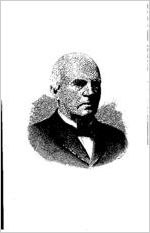
FERDINAND PHINIZY.
Ferdinand Phinizy, the eldest son and child of Jacob Phinizy and Matilda Stewart, was born at Bowling Green, in the county of Oglethorpe, Georgia, January 20th, 1819.
Bowling Green, the place of his birth, was the home of his father and paternal grandfather. Here they had lived useful and honorable lives, and here in time and season were gathered to their fathers. The family of Jacob Phinizy consisted of Ferdinand, the eldest, Sarah, Margaret, Marco, Jacob and John. Sarah married John M. Billups of Columbus, Miss., and died in that city during the eventful days of the late war. Margaret, the second daughter was wedded to Col. T. D. Lockhardt of Nashville, Tennessee, and departed this life, after a short married life, in the City of Atlanta. Jacob fell on the field oi Manassas, gallantly leading the Oglethorpe Rifles, of which he was Captain, a part of the famous Eighth Georgia Regiment, that Beauregard saluted for heroic conduct and unparalleled bravery. John died at his home in North Alabama a few years ago a faithful, Christian man; and Marco, the last of that family, remains at his brothers late residence in Athens, awaiting with calm and resignation the call that must summon him soon too before the Judgment Seat of God. Each of these children bore the name of some dead relative, Ferdinand being called after his paternal grandfather.
At Bowling Green, the subject of this sketch spent his boy hood days, attending the schooJe of his native county. Here he imbibed that love of nature and its works that ever remained with him, and here amid the rural scenes of that simple, country neighborhood, enjoying the innocent pastimes of that old fashioned Southern society, that is gone, and can never be replaced or equalled, he laid the foundation of that healthful and robust constitution that made in after life sickness a stranger to him. When still a mere lad, his father
6
moved to Athene, where Ferdinand was entered as a student at Franklin College, University of Georgia. Alonzo Church was at the head of this famous institution then, and the faculty was in every way a strong and able one. For three years he pursued his studies at this venerable foundation, his career as a student being marked by diligence and honor. His scholas tic attainments can best be stated by saying he was graduated with honor in the class of 1838, that gave to the world such men as Benjamin Palmer, the distinguished Presbyterian Divine of New Orleans, John LeConte, the well known scientist of California, Shelton P. Sanford, the mathematician, Williams Rutherford, lately Professor in the University of Georgia, and others equally well known and famous.
Leaving the University, he passed a few years on his fathers plantation at Bowling Green, overlooking the paternal interests there, but the Georgia Railroad being then in process of construction from Augusta to Athens, he obtained the con tract to grade the first eleven miles of the road from Athens.
This work he prosecuted to a successful completion, and may be said to have achieved here his first business success.
Soon afterwards he moved to the City of Augusta, where he had numerous relatives, and fomed a copartnership with the late Edward P. Clayton, an old college classmate, and engaged in the cotton trade. The firm of Phinizy & Clayton soon became one of the largest and best known houses in the South. This firm dissolving by mutual consent after some years of prosperous life, he took with him as partners, his two kinsmen Charles H. Phinizy and Joseph M. Burdell, and established the cotton house of F. Phinizy & Co; this was the style and name of the firm when he retired from active business, but, up to the day of his death, he was connected in some way with the cotton houses of C. H. Phinizy & Co., F. B. Phinizy, and Phinizy & Co.
He was for many years a director and leading spirit in the Georgia Railroad and Banking Co., an organization he always loved and in whose safety he had absolute reliance. He was a director also in the Atlanta and West Point Railroad, the Augusta and Savannah Railroad, the North Eastern Railroad of Georgia, the Augusta Factory, the Bank of the University, the Southern Mutual Insurance Company, and the University of
Georgia. For a long period he was the resident agent of the Southern Mutual Insurance Company in Augusta, and even at his death the business of the agency was conducted in his name. Some years ago he retired from the directorship of the various companies, retaining only his seat at the council board of the Southern Mutual.
Ferdinand Phinizy did not enter the Confederate armies in the struggle of 1861-65, but served the cause he loved well, ably and honorably as a financial agent of the Confederate govern ment. As such he successfully handled large amounts of cotton that ran the blockade of Union war vessels, and succeeded in floating large blocks of Confederate bonds. He lost heavily by the failure of the Confederate arms.
He was married on the 22nd of February, 1849, to Harriet H., the only child of Haves Bowdre, a well known citizen of August*. He was thirty and his wife twenty when they began life to gether, and for fourteen yeai-s lived a life of perfect happiness and harmony. On the 7th of February, 1863, his wife died, leaving to the care of her husband eight children seven sons and a daughter, all of whom survive their parents, save the eldest. The children were Ferdinand Bowdre (deceased), Stewart, Leonard, Mary Louise (now Mrs. Dr. A. W. Calhoun of Atlanta), Jacob, Marion Daniel, Billups, and Harry Hays. On the llth of August, 1865, he was married the second time to Anne S., the second daughter of Thomas Barrett and Savannah Glascock of Augusta. This union resulted in the birth of three children, Savannah Barrett (deceased), Barrett, and Charles Henry. Thus it will be seen that eight sons and a daughter, together with the son-owing widow are left to mourn the loss of the kindest and most generous of men, the most affectionate father a family ever had; and they cherish as the richest ot their possessions the unsullied life and untar nished name of him, who in life was honored and respected of men, and in death was sincerely mourned by rich and poor, high and low.
Ferdinand Phinizy was not an ostentatious man. His manners were simple, but cordial and unaffected; he disliked anything that bordered upon display, and disproved of any thing that was done for show. He could not bear to be con spicuous, and knowing this his family and friends frequently
8
said to him his severe simplicity attracted attention. He was proud of but one thing, and that was his family. He loved the name he bore and he loved and respected his ancestry. He was a gentleman by birth and training and, in all his long life, he never forgot that fact. To outsiders he never spoke of his forefathers, but there were rare occasions in the family circle when he would tell his children much of those who pre ceded them. He was proud of his paternal grandfather the Italian refugee who landed penniless upon American shores and by indomitable will and persevering industry built up a large fortune. This gentleman, marrying Margaret Condow, raised a family of three sons and two daughters: Jacob, the father of Ferdinand; Marco, the father ofJohn F. Phinizy; John, the father of Charles H. Phinizy of Augusta; Sarah who mar ried Thomas Burdell, and Eliza, who married Thomas McGran of Mobile. Jacob Phinizy, the father of Ferdinand, married Matilda Stewart, the daughter of General John B. Stewart of Virginia, who settled in Georgia after the Revolution, and who won his title in that struggle. The wife of General Stewart, Ferdinand Phinizys maternal grandmother, was Mourning Floyd of Virginia", an aunt of John B. Floyd, Secretary of War under President Buchanan, and an aunt also of John C. Brecken ridge of Kentucky. On both his paternal and maternal sides he belonged to the best families in Virginia and Georgia, and nothing ever gave him so much pleasure as to meet a dis tant relative and trace relationship through its various descents, thus establishing the precise degree of kinship.
Essentially a man of sentiment, he loved and treasured everything that came down to him from the dead past. He treasured every relic and memento, and religiously preserved them. The place where he was born and reared he kept up as long as he lived, and before he died entailed it, as far as the law permits, upon his eldest son, and his son after him. The house in which he wooed and won his fair young bride, and where his younger married life was spent, he gave to his only daughter, and charged her to forever maintain it, as it was her mothers home; the cane he loved to walk with was that his eldest boy had carried in life, and the watch he wore was always the one his own mother had fastened to his side when he began life for himself In the separation of families, and in
the pursuit of various vocations, many of his relatives had died in distant cities their bodies were disentombed by him, brought back to the old family burial grounds, and laid to rest by the side of kith and kin. With such a feeling of sentiment for those removed from him in some degree, what must have been his affection for his family ? We, his children, alone can tell. He loved his home as men rarely love their domestic habitation. He was happiest there. Supremely happy, when wife, sons, daughter, and grandchildren formed an unbroken circle about his own hearthstone. There is no word that will convey the love he had for his children there was nothiug too good for them in his possessions he liked to see them enjoy in moderation every comfort and luxury that wealth and culture could secure, and as each one attained his or her major ity, he gave to them as a start in life what many men work for for many years. Generous, hospitable, cordial, and above all sin cere, no guest ever crossed his threshold who was not genuinely welcome. If I was asked to name the most prominent charac teristics of my lamented fathers life, I would unhesitatingly answer -truthfulness and sincerity. No man living or dead can or could say that Ferdinand Phinizy ever deceived him in word or deed, and no one, be he prince or peasant, who ever enjoyed his hospitality, was ever welcomed for formality sake. He loved to entertain, he delighted in having friends at his table. There were strange groupings sometimes George F. Pierce, Bishop, of sainted memory, his life-long friend, and the humblest exponent of Methodist itineracy sat side by side: Robert Toombs, another life-long friend, and the old time farmer from Oglethorpe, elbow by elbow: and if the most punctilious could detect the least difference in that courtesy he showed his priestly and distinguished friends from that he bestowed upon the circuit rider and the peasant, it has never been revealed. He taught his children to hate a lie, and for over seventy years lived as he taught them all good men should live, absolutely truthful and honest. Though for many years actively engaged in business, his standard of commercial ethics was high, his hands were ever clean. He was never known to say aught of any man even his most intimate friends cannot recall one harsh expression he ever uttered against his fellowman. If he liked not a man he had nothing to do with him,
10
but he stooped never to say aught against him. A favorite expression with him was "give many thine ear, but few thy voice," and it was remarkable that in a man of such strong convictions his tongue should be under such absolute control. He had more moral courage than any man I ever knew. If he believed he was light, no power on earth could deter him from pursuing that course; and I have known him to jeopardize life-long friendships for his conception of duty and right. And yet no man was more open to conviction never bigoted nor intolerant, he gave attention and oftentimes heed to the advice of those in whom he had confidence and respect. If he made an error he was not slow to acknowledge it; if he did one an injury no man was ever so quick to apologize and atone for it. His charity and generosity were boundless known only to his God for he literally allowed his right hand to be in ignorance of that which his left bestowed. No needy person or object ever appealed to him in vain, but with that caution and foresight ever characteristic of his business affairs, he looked into and investigated such matters personally or through others. His charities were never misdirected. He talked not to his family of his gifts rarely even to his best friends. He made no parade of his generosity; on the contrary, it was in the cottage of the humble, by the bedside of the poor and sick that his almoner stood, and his checks sought not the proud city church with its dome and steeple, but descended in quiet and in peace upon the modest country sanctuary or upon the humble itinerant as he pursued his lonely journey from county to county.
Ferdinand Phinizy was a Christian. He was always an attendant upon divine service, but it was late in life when he gave himself publicly to the services of his Master He had little to change in his life when he connected himself with the church. All his life he had been temperate and moderate, honest, truthful, and sincere. His friends oftentimes had endeavored to induce him to join the church his invariable reply was "I am not good enough." But those who knew him best could see little difference in his conduct after his connec tion with the church and his life before, so admirable had it been. He loved to discuss religious matters and converse upon spiritual topics with his intimate and good friends, Rev.
11
P. A. Heard of LaGrange, and the HOD. Young L. G. Harris
of Athens, with them he had many a conversation upon things
not of the earth, earthy. A few weeks before he died, he said
to his friend, Mr. Harris, "I want you to talk to-day in the
prayer meeting upon this text," "It is not every one who saith
unto me, Lord, Lord, etc.." and his friend promised he would,
but alas! the occasion never came. He was a friend to ministers
of all denominations, but especially did he take under his
protection the humble exponents of the Methodist itineracy. He
loved the religion of his fathers, as practiced by them. It was
his delight to worship at a country church set in the midst of a
grove, -where the horses of the honest yeomanry were fastened
to the trees, with the neighbors filling the sacred edifice; here
he loved to listen to the Gospel as expounded by the sincere
and honest preacher, whose speech was as homely as his dress
and his presence. He delighted in congregational singing, the
words lined out in the old fashioned way, the human voice
swelling to its full compass, the harmony unassisted by cornet
or organ. It was at just such a church that he gave himself
to God, and it was the kind of music he desired and had at his
funeral.
Ferdinand Phinizy was a man of fine presence and magnifi
cent physique. Though over seventy years of age, one who
saw him a few weeks befoi-e death would hardly have believed
he was a doomed man, but in his last illness it was discovered
t.hat for years he must have been afflicted with a disease of
i
whose existence he himself and his family were in ignorance.
While a carbuncle and the complications it brought about
were the immediate, if not the direct causes, of his death, the
physicians declared that even had he recovered from his other
afflictions, his life would have bsen bub a few montln longer
as diabetes in a man of his age was incurable. On the 6th of
October, 1889, he took his bed, the carbuncle having become so
painful, that no longer could he fight against it. For two
weeks he suffered as men are rarely called upon to suffer, but
with that intense will power managed no doubt to conceal his
agony in great part. He had a presentment he was going to
die, and constantly talked of his funeral arrangements. It
was hard to believe that such a man could die, certainly none
of his family expected his death. On the 17th of October his
12
mind began to wander, and perhaps after that, he was never wholly conscious. Several times, however, he made desperate attempts to speak to the writer, evidently having something of supreme importance to say, but no one could understand him. For two days he had been slowly sinking, when Sunday, Octo ber 20th, 1889, dawned. It was a beautiful, almost summer day. The sky was cloudless, the air was as balmy as in June, and the mocking birds that make their home in his garden sat singing by his windows. All during the night he had been agonized, his mind constantly wandering; he thought himself again actively engaged in business; he called for his clothes, ordered his horse to be hitched to his buggy, and made frequent, but vain efforts to rise; then again, he would dwell upon other things, and once or twice called the name of one dear to him and his children. It was heartrending to see his suffering, agonizing to hear him, who had always commanded men, beg sons and nurses to be taken up when powerless to gratify him. All hope was gone. It was a question of time, and when at ten oclock the physician injected morphine into his arm, be fell into a deep sleep and, for the first time in many days, his face resumed that peaceful, pleasant expression characteristic of it in healthful life. All day long he slept a dreamless sleep, when just before five in the afternoon, as the sun was preparing to go behind the western horizon, he opened his eyes, looked for the last time upon wife, sons, and daughter, gave one long sigh and died.
Like his life his end was calm and peaceful; he had faith in the power of the Saviour; he trusted implicitly; he was prepared, and ready and willing to go. He has entered upon his reward.
The best of fathers, the kindest and most generous of men, the staiinchest friend man ever had an honest, truthful, sincere man is dead.
On Tuesday morning, October 22nd, 1889, friends and neighbors in large numbers assembled at the family residence on Hill, Cobb, and Billups streets in the City ol Athens, where the last sad rites were to be paid the dead noble man. The
13
Rev. Peter A. Heard of La Grange, and the Rev. Howell H. Parks of Atlanta had arrived, and in accordance with the last wishes of the deceased were present to conduct the funeral ceremonies. As he liked in life to be surrounded by those he loved, so in death it was his wish that these tried and true soldiers of the cross should see that the la st sad tribute should be paid in the manner he liked and approved. About the bier sat thirteen Methodist ministers, men he had long known and liked. Doctor Parks arose and lined out the words of that sweet old song
"Where Shall Rest Be Found?"
and the voices of those he loved to hear in life sang sweetly the notes of that beautiful hymn, the favorite of his dead wife, and by association, the best beloved by him. Prayer was offered by Dr. Parks, after which the Rev. Mr. Heard arose, and in a voice that oftentimes was tremulous with deep emotion, and which finally gave way altogether, spoke beautifully, feelingly, and briefly of the dead friend before him. It was not the usual funeral oration there was no mention of achievements gained, no parade of honors won: it was the simple, heart felt tribute of a friend just that which the dead man would have liked only that which would have received his approval. Dr. Parks following in a speech for twenty minutes, this venera ble man of God spoke of his dead friend as only friend can speak of friend; and as he narrated a few touching incidents of the dead mans generous nature and love for his fellow man, he too gave way to his emotion, and tears followed one another down his cheeks, silent, but eloquent tributes to the friend before him. That old song
"O sing to me of heaven When I am called to die,"
was then sung by the friends present, after which the body was borne to the hearse; the Hon Samuel C Dunlap of Gainesville, Ga., Judge HowellCobb, Colonel L. H. Charbounier, Hon. Rufus K Reaves, Judge Alexander S. Erwin, George Dudley Thomas, Esq., Mr. Arthur E. Grifferth, Mr. James S. King carrying the coffin, and those older friends those with whora^ he had formed life-long associations ex-State Treasurer D. N. Speer, Mr. Barney S. Dunbar of Augusta, Colonel John G. McHenry of Madison, Colonel J. J. Howard of Cartersville,
14
Professor Williams Rutherford, Mr. A. W. Mitchell of Atlanta, Mr. Reuben Nickerson of Athens, his life-long friend Mr. Stevens Thomas of Athens, forming the honorary escort. That other life-long associate and friend, one he dearly loved and taught his children to love, Young L. G. Harris of Athens was prevented by sickness from performing the last duty.
Down the familiar streets they bore him, past the offices he had so long tenanted, to the silent city of the dead. A solemn quiet pervaded the city, and the few who did not par ticipate in the ceremonies stood in reverent attitude as the funeral cortege passed on its way to the beautiful river cemetery. Here by the side of the gently flowing Oconee. alongside the young wife he had wooed, won, and lost, they laid him to rest, and those pregnant words, "Hark from the tomb a dolefnl sound," were sung as his friends piled the sod above his head. Flowers from those he loved were placed upon his grave, bright, fresh and beautiful. Hands he had often taken in friendship and iu love smoothed the floral pillows, and strong men wept when Rev. Mr. Heard pronounced the last words,
"The Lord gave, the Lord hath taken away, Blessed be the name of the Lord."
By the banks of the gently flowing river, typical of that bright river he has already crossed, he was laid to rest. Good men die but are never forgotten. Ferdinand Phinizy was one of natures noble men the record of his gentle life, his gener ous deeds, and his love for his fellow man will keep his name and memory green in the recollection of those who knew and loved him in life.
"A Prince has fallen this day in Israel."
H. H. PHINIZY.
15
COMMENTS OF THE PRESS, Etc.
ON THE DEATH OF
FERDINAND PHINIZY.
AUGUSTA CHRONICLE.
The Chronicle regrets to know that Mr. Ferdinand Phinizy, of Athens, is criti cally ill. A malady, which at an early period his strong constitution might easily have thrown off, is now aggravated by age and feeble health. In many respects Mr. Phinizy is one of the most remarkable men in Georgia. The pos sessor of large wealth, he cultivated the simplest tastes and adhered to the strictest rule of conduct. He has passed the three score years and ten. and lived a temperate and exemplary life. His sons are with him, and he has long since made his peace with God. The physicians hold out but little hope, and his hours are believed to be numbered.
ATHENS EVENING CHRONICLE.
Yesterday was a sad day to many homes and many people in Athens. The angel of death was in our midst and robbed our city of some of its best beloved and best known residents. Few have been the days in Athens when sorrow has been more universal in our city, and yesterday evenings sadness settled, with the shades of night, upon a number of homes which a week ago were the scenes of gaiety and joy. Out of a heart fall of sympathy The Uhronicle only expresses that sympathy which, by its very incapacity to comfort, fails of the purpose for which it is intended. In such a time as this words are but empty sounding sylla bles. The only good purpose which they can serve is to commend the sorrowing heart to that Source from which alone comfort can come.
The Chronicle regrets to have to publish the announcement of the death of Mr. Ferdinand Phinizy, one of the wealthiest and most respected of Georgias citizens.
TTii? death occurred yesterday afternoon about 5 oclock. As published in Sat urdays Chrorude, Mr. Phinizys death was not altogether unexpected. He has been a sufferer from diabetes for some time, and it was this disease that so im poverished his system as to make a terrible carbuncle upon his person possible. It is to this carbuncle that his death is to be attributed.
Mr. Phinizy died as he lived, in peace with his God and with his fellow man. He has for some time anticipated his death, and having reached the age of seventy-one, he was ready, having accomplished his three score years and ten, to
16
leave this life, which has been one so full of business cares and business respon sibilities. Mr. Phinizys life is what may well be called a successful one.
It is the story of the lives of such men as these that proves an incentive to virtue, a discouragement to the evil doer. Mr. Phinizy was born in Oglethorpe county in 1818, passing his life in Augusta and Athens. He was one of the honor graduates of the University of Georgia, where he was regarded as one of the most earnest and diligent students. Going into life with a splendid education, with industrious habits and a brilliant mind, Mr. Phinizy spurned all offers of pecuniary aid from his wealthy connections, but embarked for himself in the employ of the Georgia Railroad. His rapid rise from the position of depot agent to the wealthiest stockholder in the road presents a story of diligence worthy of careful study. Leaving the railroad business, Mr. Phinizy embarked in the cotton business in Augusta. The Napoleon-like deals which he made in this field of action soon secured^him a splendid foundation upon which to build up the colossal wealth which he leaves behind him. The death of his father, more over, augmented the snug fortune which he obtained by his own labors.
Mr. Phinizy was married twice. His first wife was Miss Harriet Bowdre, of Augusta, and his second bride, Miss Barrett, also of that city. He had, in all, nine children, eight of whom survive him. It is a family of which any father may well be proud. His children by his first wife were Messrs. Bowdre Phinizy, who died some years ago; Stewart Phinizy. who is in the cotton business in Augusta ; Leonard Phinizy, a lawyer in the Fountain City ; Mrs. A. W. Calhoun, of Atlanta, an only and much beloved daughter; Mr. Jacob Phinizy, who is in the cotton business in Augusta; and Marion, Billups and Harry Phinizy, all of whom live in Athens, and are well known here. By his second wife, Mr. Phinizy had two sons, Barrett and Charlie, both of whom survive him. Since his second marriage, Mr. Phinizy has resided in Athens, and his beautiful suburban home has ever been in our city a synonym for elegance and hospitality. Mr. Phinizy, during his life time, has taken no hand in politics; he was emphatically a man of business The bulk of the property he leaves behind is in bonds and money at interest. He owned several hundred thousand dollars stock in the Georgia Railroad, and a large amount in the Atlanta and West Point Railroad. A gen tleman who "keeps up" was heard to say, a few days ago, that Mr. Phinizy was next to the richest man in Georgia, Senator Joseph E. Brown being considered the wealthiest. It is not altogether certain that Mr. Phinizy is not the richest; his wealth is estimated at over a million, and it is possible that an examination of his estate will show him to be the wealthiest man in the State.
Mr. Phinizys life has always been one of the upright Christian man, and of late years he made profession of faith, connecting himself wit h the Methodist Church. He was a loving husband, an affectionate father, a faithful friend and a valuable citizen. Some years ago Mr. Pbinizy deposited at his down-town office sealed directions as to the conduct of his funeral. The services, which occur to morrow, will be in accordance with them. The funeral occurs from the residence to-morrow morning at 10 oclock.
Revs. P. A. Heard, of LaGrange, nd H. H. Parks, of Atlanta, both of whom were held in great admiration by Mr Phinizy, have been telegraphed for, to conduct the funeral services. In his death all Athens mourns with his immediate family. Such a departure, however, has much of the sorrow usually incident to death taken away from it "I am willing and ready to go at the call of nay Maker,"
17
were words often on his lips during his last illness. Truly it was at the bidding of his Maker that he departed, and that bidding found him ready and willing to meet his Saviour and his God. Such a life and such a death are epitaphs more eloquent and more impressive than columns of panegyrics. May his mantle fall upot> some of us he leaves behind.
ATHENS DAILY BANNER.
Athens and this whole section of the State have been thrown into a solemn gloom over the death of Mr. Ferdinand Phinizy. He died Sunday afternoon at five oclock, after suffering intensely from a carbuncle on the back of his neck for about three weeks. He was surrounded by his entire family and a number of friends at his death.
Mr. Ferdinand Phinizy was born at Bowling Green, Oglethorpe county, on Jan. 20th, 1819, and was in the seventy-first year of his age when he died. He began life on his fathers farm in Oglethorpe county, and lived there a good many years. He left Bowling Green some time before the war and went to Augusta, engaging in the cotton business as commission merchant, which pursuit he followed many years, accumulating a great portion of his wealth while in this profession.
It was while he was in Augusta that he became enamored of and married his first wife. Miss Harriet Bowdre, of that city.
Mr. Phinizy is quoted to have remarked in his lifetime that to this lady was due much of his success in life, as it was she who counselled him into many undertakings that proved of great benefit in the end.
From his first marriage Mr. Phinizy had eight children born to him, as follows:
Bowdre, who was the oldest, and is now dead. Leonard, Stewart, Jacob, Mrs. Calhonn, now of Atlanta; Harry, Marion and Billups.
In 1863 Mr. Phinizys first wife died, and in 1865 he married the wife who has lately been made a widow by his death.
From his last marriage he leaves two children, Barrett and Charles. Mr. Phinizys life is marked by many deeds of public charity and by many public duties faithfully discharged. During his life he held many responsible positions in the financial world, having been director in several banks and insurance companies. He was, during his life, a director of the Bank of the University, a director of the Georgia Rail road and Banking Company of Augusta, a trustee of the University of Georgia and a director of the Southern Mutual Insurance Company. He also owned a great deal of stock in many other railroads, mills and banking companies, and is said to have been the largest stockholder in the Georgia Railroad, having owned two hundred shares in the company. He was a man of positive and determined character, and was true and faithful to his opinions, and strictly conscientious in his belief. He was a member of the Methodist Church, having joined one year before his death out at the little suburban church, BoggsChapel, which he sustained almost alone with his charity. He attended this chnrch very regularly, and kept it up by his unceasing liberality. He was a pious and faithful Christian at the time of his death, and on his death-bed expressed a bright hope of future and eternal rewards in Heaven.
2
18
A truly touching little incident of Mr. Pliinizys last days is that when he realized that the awful end was inevitable, he arranged his own funeral ceremo nies, chose his own pall-bearers, and named those whom he wished to sing at his funeral, also giving the hymns he desired to be sung.
The death of Mr. Phinizy is an event that will be felt, net only in Athens, but throughout the entire State. He was widely known and greatly beloved, and the intelligence of his death will cast a sorrowful gloom over the entire State of Georgia.
In behalf of scores of loving friends and ourselves we tender our profound sympathy to the bereaved family.
The funeral will lake place to-day at 10:30 a. m., and a host of friends will be present to pay a last tribute of respect to the deceased.
ATLANTA CONSTITUTION.
Mr. Ferdinand Phinizy, one of Georgias wealthiest and most respected citi zens, died at his residence in Athens yesterday afternoon, at five oclock.
Mr. Phinizy was seventy-one years old. Three weeks ago he was as vigorous and healthy as he had been at any time within the past fifteen or twenty years, and the intelligence of his death was a surprise to his many friends and acquaintances in Atlanta yesterday afternoon Bis death was the result of a complication of diseases. A few weeks ago a carbuncle appeared upon the back of Mr. Phinizys neck. It was quite painful, but no attention was given it at first except such as would relieve the pain. The inflammation, however, continued to increase. In a few days the gentlemans condition began to alarm his family, and medical aid was called in. During that time, however, there came a general giving away of the system, and Mr. Phinizy continued to grow worse. Still his recovery was anticipated by those about him. On Monday, though, a week ago to-day, the physicians became doubtful, and Mrs. Dr. A. \V. Calhoun, of this city, his only daughter, was summoned. There was no change in his condition the next two days, but on Thursday he commenced sinking rapidly, and his sons in Augusta, Dr. Calhoun, of Atlanta, and Mr. Harry Phinizy, who was then in Brunswick, were telegraphed for. On Friday Mr. Harry Phinizy reached Atlanta, and with Dr. Calhoun went to Athens. The physicians in attendance on Mr. Phinizy detected Brights disease, and attributing his rapid failure to it, informed the sons that there wag little or no chance for his recovery. Sunday morning Mr. Phinizy was very weak, and was barely alive. During the day he appeared to remain unchanged until the afternoon set in. Then he sank rapidly, and as the day was disappearing his soul took its flight to the Master he loved so well. His death was peaceful and quiet, and, with a happy smile upon his face, he passed away surrounded by his wife, sons and daughter. He was not afraid to go, because he was at peace with his God, and frequently during his illness, remarked : " I am willing to go at the call of my Maker, and ready too."
19
In Athens his death created a deep, sincere regret, for all there loved him well. During his illness there were constant inquiries at the residence as to his condi tion, and upon the streets the information was eagerly sought.
Mr. Phinizy was born in Oglethorpe county in ISIS, and passed his life in Augusta and Athens. When he was quite young his father moved to Augusta, and in that city Mr. Phinizy lived his boyhood days, and there he prepared him self for college. At an early age he went to Athens and entered the old Franklin College, now the State University. He was a careful, industrious student, and before gaining his majority, graduated high up in his class.
He was one of the honor students. With a thorough collegiate education, a fine reputation, a spotless character, and an abundance of energy, Mr. Phinizy stepped forth from his college ready for the battle of life. His father was well off; but the son declined the pecuniary assistance tendered him and began looking around for something to do. In a short time he secured an appointment as agent for the Georgia road at some small station, and the first dollar of the vast fortune he leaves behind was paid him by the railroad. Soon after taking the agency Mr. Phinizy opened an eating house, and from it increased his income. But the business at a small side track station was not enough for Mr. Phinizys capacity, and in a short time he resigned the agency and, with the small sum of money he had made, went to Augusta. That same caution which marked his successful career throughout life was exercised by Mr. Phinizy then. He did not enter business at once, but carefully and cautiously looked over the field of commerce, trying to decide which avenue to wealth he would take. Finally he entered the cotton market, and from the very first day of his work up to the time he went out of business, some twenty years ago, he was an important factor in the trade a factor whose influence was felt in the cotton market throughout the South. His first deal was a successful one, and before the first season was over Mr. Phinizy had not only made for himself a name in the trade, but had made a snug sum. His ambition appeared to be the acquisition of a fortune, and wherever a good investment appeared Mr. Phinizy put his money. Plantations and slaves were both valuable in those days. The money made in cotton was invested in that staple again, or was turned into land or slaves, just as the market appeared to Mr. Phinizy. So in a few years he owned several fine places and quite a number of negroes. During these years when he was building the foundations of his million and more, his father died, leaving him quite a nice little fortune. This, added to what he had made, put
Mr. Phinizy in easy reach of wealth. Mr. Phinizy was one of the handsomest and most sociable, as well as one of the
most successful young gentlemen of Augusta, and in society was a favorite. In 1844, about, he won the belle of the Fountain City, Miss Harriet Bowdre, and the wedding was the social event of the season. They were peculiarly suited to each other, and up to the time of her death lived happily, admired, respected and loved by a large circle of friends. Before her death Mr. Phinizy reared a large family, seven boys and one girl, all of whom are alive to-day, except the eldest son. They are, too, all bright, finely educated, successful business men, known
throughout the State.
20
No father ever lived to see his sons more respected and admired for their own worth than Mr. Phinizy.
TTJH wife was a cousin to Mrs. Noah Fowler, of Atlanta. The family, which was well Mr. Phinizys pride, is: Bowdre Phinizy, his eldest SOD, who succeeded his father in the cotton busi ness, with Mr. Charles Phinizy, has been dead ten years. He married a Miss Yancey, and left two children. His widow is now the wife of Mr. Charles L Phinizy, President of the Georgia Railroad and the Atlanta and West Point Railway. His second son is Stewart Phinizy, who is now in the cotton business in Au gusta. He is married, too. His wife was Miss Coles, granddaughter of Gover- . nor Pickens, of South Carolina. Leonard Phinizy is the third son. He is a successful attorney in Augusta, and married Miss Martin, a sister to Mrs. Albert Howell, jr., of Atlanta. The only daughter, and fourth child, is Mrs. Dr. A. W. Calhoun, of Atlanta. Mr. Jacob Phinizy is the fifth child. He is now in the cotton business in Augusta. Mr. Phinizy married Miss Gartrell, who is now dead. The sixth child is Mr. Marion Phinizy, who lives in Athens. Mr. Billups Phinizy comes next, and has been with his father several years attending to his business. He married Miss Stovall. Mr. Harry Phinizy, the journalist, is the youngest son by the first wife, and is now in the newspaper business in Brunswick. Five years after the death of his wife Air. Phinizy married again. His second wife was Miss Barrett, of Augusta, who, with two sons, Barrett, aged about six teen, and Charles, two years younger, survive him. Since his second marriage Mr. Phinizy has lived in Athens, and his life has been a happy, quiet one. He was exceedingly fond of company, and was one of the most royal hosts imaginable. He was not at all ostentatious, but no guest ever came away without carrying the warmest feeling of friendship for the entire household. His children were de voted to him and made frequent visits to the home, and the old father was never so happy as when with one of them. He was their friend and companion as well as their father, and by no one will be more missed. Mr. Phinizy had three brothers and two sisters. One of his brothers, Jacob Phinizy, was killed during the war while lighting gallantly and bravely for the South. Another one, Mr. John Phinizy, resides in Alabama, where he has acquired wealth and distinction. One of his sisters, Mrs. Phillips, resides in Alabama. Her husband is a suc cessful business man. Mrs. Lockhart, well known iii Atlanta before her death, was the other sister. Mr. Phinizys father was a native of Italy, and came to America long before the birth of his children. He settled in Georgia, and was one of the best ante bellum citizens of the old State. He lived neatly all his life upon Georgia soil, honored and respected by all who knew him. During his life Mr. Phinizy took no stock in the political side.of life and never sought or held an office. He was happy in his family and business, and apart from these cared for nothing except the respect and confidence of his acquain tances, and these he got. An inventory of his wealth will show large blocks ofrailroad and other stocks, and in any of these companies he could have secured any office, but he never aspired to any position except that of a director.
21
He was a director, too, in many companies. He owns large blocks in both the Georgia Railroad and the Atlanta and West Point Railway. At one time he was the largest stockholder in both lines, bnt within the past few years disposed of a great deal of his Atlantaand West Point. In the Georgia, however, he is probably the largest stockholder, owning over $400,000 of stock. Recently he sold off considerable real estate, and his fortune consists almost entirely of bonds and money at interest. He was one of the richest, if not the richest, gentlemen in the State. It is impossible to estimate his wealth, but those in position to know say that he is worth anywhere from a million to a million and a quarter. He was very much attached to anything endeared to him by association, and to-day the piece of property in Augusta upon which his boyhood days were passed is still in the family. It is on Broad street, near THE CHRCXKICXE office, and when Mr. Phinizy gave it to one of his heir? he said: " My fathers house was upon that lot. Theres where I grew up, and I want you to keep it." Mr. Phinizy was one of the most generous and devoted fathers. His children were his great treasure, and each one was abundantly provided for during his life. He gave them all classical educations and a start in life. Every one of his sons, except the youngest two, graduated from the State University, his alma mater. Father and sons alike love the school from which their diplomas came. Like their father, the boys all made fine business men, and they were his great pride. His kindness was not confined to his family either. Many poor of the State have received aid from him, and to the destitute he was always liberal. When the war closed he owned nearly one hundred slaves. He was a kind master, and since the negroes were given their freedom has assisted them. One old couple came to Atlanta soon after the war, and for a few years were able to take care of themselves. But when old age came upon them they were homeless and without food. Mrs. Fowler, who spent many years with her cousin, knew the negroes, and when ehe heard of their condition she sought them out, and with a liberal hand supplied their wants. They were both blind. Mr. Phinizy heard of their condition and came to Atlanta. He went to see them, and after talking to them took the old couple to Athens. There he gave them a house, and for them he provided until they died. Then he buried them. Mr. Phinizy was a member of the Methodist church. Through his entire life he was a good, kind-hearted man, but never joined the church until a few years ago. When he did join he went to the country, and it was several weeks after .his name had been enrolled on the church registry that his family knew anything of it. Rev. P. A. Heard, now of LaGrange, was the minister by whom Mr. Phinizy was accepted, and since then he has frequently expressed a desire that Dr. Heard should preach his funeral.
The following special from Athens tells of the death:
ATHENS, GA., October 20. [Special.] Mr. Ferdinand Phinizy, one of the oldest and most prominent citizens of Athens, died this afternoon at 5 oclock, after an illness of several days. The news of his death has cast a gloom over
22
the entire city where he was honored and loved by a large circle of friends. Mr. Phinizy was born in. Oglethorpe county, Georgia, and in a short time would have reached his seventy-first year. Early in life he moved to our city, where he has since lived. He was a devoted member of the Methodist church, and often during his last sickness, expressed his willingness to go at the call of his Maker. It has been the wish of Mr. Phinizy that his funeral sermon should be preached by Rev. P. A. Heard, of LaGrange, who was his personal friend, assisted by Rev. Mr. Parks, who was at one time pastor of the First Methodist church of this city. They have been telegraphed for and are expected tomorrow. The funeral ser vices will be held from the family residence on Tuesday morning at 10 oclock. He leaves a wife and nine children to mourn his death.
No arrangements for the funeral have been made as yet.
AUGUSTA CHRONICLE.
Mr. Ferdinand Phinizy, of Athens, is dead. The news of his death was received in Augusta with regret Sunday evening. He died at his home in Athens, surrounded by his family, at 5 oclock Sunday afternoon. His sons left on a special train for his bedside Saturday evening, as was stated in Sundays CHRONICLE, and arrived in Athens in less than three hours, running over fifty miles an hour. At Winterville on the Athens branch they had a slight collision with a freight car, which was left on a side track too near the turn out, and extended over the main track. The damage was principally to the freight car, and the delay was brief. They found their father very low, and realized they had been summoned none too soon. Sunday morning he was barely alive, and the family were grouped about him fearing the worst at any time. In the afternoon he sank rapidly, and at 5 oclock passed peacefully away, surrounded by those who were near and dear to him. His illness began a few weeks ago with a carbuncle on his neck, but towards the last there was a complication of troubles, his rapid decline being attributed to Brights disease by his physicians. The death of Mr. Ferdinand Phinizy removes a well known and valuable citizen of Georgia. Mr. Phinizy was a native of Georgia, and a citizen of Augusta for many years He was born in Oglethorpe county in 1819, but his father moved to Augusta when he was quite youug." He went to Athens when in his teens, and graduated with honors at an early age. TTia first work was as station agent on the Georgia railroad, and he ran an eating house in connection with it. Whether it was because he made his first money out of the Georgia Railroad or for other causes, he was throughout his life a warm friend of the company and invested heavily in it. At the time of his death he was perhaps the largest owner of Georgia Railroad stock, holding, it is said, over $400,000 worth of it. He did not remain long as station agent on the Georgia road, but removed to Augusta to begin a bigger business with the money he had saved. He entered the cotton business here, and was one of the most prominent and successful factors in the city. The death of his father about this time gave him a comfort able sum to do business with, and his remarkable financial ability and business capacity made his means double rapidly. It was said of him that everything he
23
touched turned to money, and he never made a failure of anything he
undertook. In 1844 he married Miss Harriet Bowdre, a reigning belle at the time, and the
wedding is said to have been the social event of that season in Augusta. When he retired from the cotton business, about twenty years ago, he estab
lished his oldest son, Mr. F. Bowdre Phinizy, in the firm in his place. On the death of Mr. Bowdre Phinizy he came back into the business, establishing the firm of Phinizy & Co, and brought his second son, Mr. Stewart Phinizy into the partnership. About a year later when the new firm was prospering finely he withdrew from the business and put Mr. Jacob Phinizy in his place.
Mr. Phinizy was married twice. He had seven sons and one daughter by his first marriage, and two sons are the fruit of his second. All of his children
survive him except his first son. Bowdre Phinizy, his eldest son, who succeeded his father in the cotton business
with Mr. Charles Phinizy, has been dead ten years He married Miss Yancey and lea two children. His widow is now the wife of Col. Charles H. Phinizy, President of the Georgia Railroad and Atlanta and West Point Railway.
His second son is Stewart Phinizy, who is now in the cotton business in this city, and President of the Augusta Factory. His wife was Miss Coles, grand daughter of Gov. Pickens of South Carolina.
Leonard Phinizy is the third son. He is a successful attorney of this city, and married Miss Annie Martin.
The only daughter, and the fourth child is Mrs. Dr. A. W. Calhoun, of Atlanta. Mr. Jacob Phinizy is the fifth child. He is now in the cotton business in Augusta. Mr. Phinizy married Miss Gartrell of Atlanta, who is now dead. The sixth child is Mr. Marion Phinizy, who lives in Athens. Mr. Billups Phinizy comes next, and has been with his father for several years attending to his business. He married Miss Stovall. Mr. Harry Phinizy is the youngest son by the first wife, and is now in the newspaper business in Brunswick. Five years after the death of his wife, Mr. Phinizy married again. H1 second wife was Miss Barrett, of Augusta, who, with two sons Barrett, aged about sixteen, and Charlie, two years younger survive him. Since his second marriage, Mr. Phinizy has lived in Athens, and his life has been a happy, quiet one.
Mr. Phinizy was a wise father, and was careful to rear his boys with practical ideas of business, and free from the vanities and follies which are common to rich mens sons. Mr. Phinizy did not like ostentation, and encouraged sensible and sober living among his sons. But though deprecating any ostentatious show of wealth and extravagant living, he was never niggardly nor miserly, and did not encourage anything of the kind among his sons.
At his home he had every comfort, and was a princely host. Illustrative of his thoughtfulness for the comfort of his guest and his desire to make every one feel at home in his house, was his course in the following incident: A country min ister was his guest one summer day. The weather was hot, and before dinner the minister had removed his coat: When dinner was announced, the preacher started into the dining room without his coat. Fearing lest his guest might become embarrassed to find himself the only one at the table without a coat, Mr. Phinizy removed his own, and quietly directed his sons to do the same. Mrs.
24
Phinizy was greatly surprised to see the party file in the dining room in their shirt sleeves, but the green old countryman was saved from mortification, and never knew that he had been guilty of any breach of conduct.
Mr. Phinizy did not hold his fortune to await his death before dividing it among his children. He gave to each one liberally as he came of age, and ad vised with him about his business, and how best to succeed. Starting each one off with a snug sum, he added to it from year to year, as the demands of business required, and had the pleasure of seeing his sons all prosperous and successful business men. It is probable that he distributed in this way a half million of dollar* among his children. This enabled them to do business on a paying basis themselves, and he had the pleasure of seeing them adding each year to the tal ents which he placed in their keeping.
Mr. Phinizy was one of the richest men in Georgia, and his fortune is estima ted at considerably over a million of dollars.
Mr. Phinizy was very conservative and guarded in his speech. He would hear anything that others chose to say, but he was always prudent in his own speech.
He never cared for the reputation of being generous. Indeed, he was indiffer ent to the fact that many people thought him close and uncharitable. His giv ing, like everything else about him, was without ostentation; but there are many people living who will testify to his kindness. At the State convention of the W. C. T. U., in Augusta last year, an estimable lady from Greene county, speaking of their making quilts and selling them to get money to support their society, said that whenever they were unable to sell a quilt, they sent it to Mr. Ferdinand Phinizy, and he always paid for it. Said she: "Mr. Phinizy has been to us struggling women like the shadow of a great rock in a weary land."
This eloquent tribute was from the grateful heart of a woman who said they had never called upon Mr. Phinizy in vain.
The funeral will take place in Athens, at 10:30 oclock this morning. Rev. P. A. Heard, now of LaGrange, under whom Mr. Phinizy joined the Methodist church a few years ago, will conduct the services.
Last night Col. Charles H. Phinizy left in his private car for Athens, accom panied by Mr. Barney Dunbar, Hon. J. C. C. Black, Mr. H. H.HickmanandMr. James Tobin, to attend the funeral. A special engine met them at Union Point and took them to Athens. The funeral this morning will doubtless be one of the most largely attended ever known in Georgia.
MADISON MADISONIAN.
The death of Mr. Ferdinand Phinizy, which took place on Sunday last, at his residence in Athens, removes a prominent figure from the list of Georgias remarkable men.
As a capitalist and public spirited citizen, Mr. Phinizy had made his mark in our State, and impressed himself on his times, and his place will be hard to fill.
He leaves a large and well known family, all of whom have followed in his footsteps and distinguished themselves among their fellows.
t
-25
WE8LEYAN CHRISTIAN ADVOCATE.
This distinguished citizen passed away from earth on Sunday last. His death was not unexpected, as he had been critically ill for some time. Brother Phinizy was a faithful member of the Methodist church in the Athens circuit. He was a man of immense wealth, and was very charitable and liberal, especially to the church. He began his career as a business man near Antioch, in Oglethorpe county, and he paid an annual sum to both the Methodist and Baptist churches near that place. He was ready when the summons came. He said: " I am willing to go at the call of my Maker, and ready, too." Brother Phinizy was seventy-one years of age, and was loved and respected by all.
CAINESVILLE EACLE.
There is not, perhaps, a city or county in the State outside of those wherein he permanently resided the greater portion of his life, where the above named gen tleman was better known and more universally honored and respected than in Gainesville and Hall county.
From early life he has been, almost every year, a regular visitor here ; he has had for many years interests in our county, and by his frequent visits made friends and acquaintances, who came to regard him as a neighbor and a fellow citizen. Mr. Phinizys appearance on our streets, or in fact, in any part of our county, was always hailed with pleasure, especially by our older people.
Though a man of wealth and culture, his manners were so simple and unaf fected, so unpretentious, yet so courteous and dignified, that he was equally popu lar with and admired by people in every walk in life, from the humblest to the highest. Consequently the news of his death, which occurred at his home in Athens on last Sunday, 20th instant, was received by our people with unfeigned sorrow.
He was a devoted and consistent member of the Methodist Episcopal Church South, and illustrated in life the beauty of holiness, and in death the calmness and resignation with which the true Christian alone can meet the King of Terrors.
Conscious of his approaching dissolution, he gave full directions for his funeral, naming Rev. P. A. Heard, of LaGrange and Rev. H. H. Parks, of Atlanta, as the ministers he desired to officiate, and the gentlemen whom he wished to act as pall bearers, among the latter, Col. S. C. Dunlap, of this city.
His remains were laid to rest in Oconee cemetery, at Athens, on last Tuesday morning, and a large crowd of friends were present to pay tribute to the memory of one whom all honored, loved and respected. All the ceremonies were in accordance with his dying request, conducted with great simplicity, and were in every respect in strict accord with the noble and beautiful simplicity of his life and character. Truly a good man has fallen; one whose place will be hard to fill.
CREENESBORO HERALD-JOURNAL
A brief local notice was published in our columns last week referring to the death of this prominent Georgia gentleman.
Mr. Phinizy was in many respects a remarkable man. He possessed judgment and business ability of the highest order, and was, in all his transactions, prudent
26
and wise. He possessed a highly charitable disposition, and it was ever a pleasure to him to aid in smoothing the pathway of those who were unfortunate.
He was a patron of young men, and hundreds in Georgia who have attained prominence and position can truly attribute their success to the wisdom of his counsels. In the commercial world he was a leader, but coupled with the judg ment of the man of business the more admirable characteristics of the philan thropist.
In his death Georgia has lost an honorable, true and upright man, whose influ ence for the good and useful was exercised on all occasions. His loss will be keenly felt in all circles and lamented by hundreds of his fellow-citizens.
ATHENS DAILY BANNER.
"Mr.Phinizyisdead!" These were the words that passed from lip to lip, and as each ear received the sad tidings, the expressions of sorrowful gloom following the announcement showed the universal esteem and reverence in which the deceased was held by the people among whom he lived and who knew him so well. There has passed away one of Georgias most successful business men; and who, while accumulating large possessions on earth, did not neglect to lay up treasures where neither thieves break in and steal nor rust doth corrupt. No deserving object of charity has ever appealed to the deceased for aid and was turned away empty handed. The rule of Mr. Phinizys life was never to let his right hand know what his left hand doeth ; but his thousands of acts of kindness and charity are recorded at the Bar before which he now stands. Mr. Phinizy was one of the few men on whom wealth made no impress. It mattered not whether the visitor at his home was prince or peasant, he was met by the same kind, courteous welcome. He judged mankind by their acts, and not by their social position and worldly possessions ; and among his intimate friends were poor mechanics, small farmers and laborers. He made no vain display or idle boast of bis wealth, and never used it to oppress others, or attain further acquisitions, except through the legitimate channels of business. We never knew a man of Mr. Phinizys wealth so democratic in his ideas and practice. He was by nature and training a gentleman, and never permitted a word to escape his lips that would wound the feelings of any one. Not only Athens, but the entire State, has experienced in the death of this gentleman an irreparable loss. He was a man of broad ideas, and whatever he undertook was carried to success on the largest and most liberal plan. He did not court popularity, and nothing he disliked more than notoriety. As an illustration of Mr. Phinizys democratic tastes, when he united with the church he selected Bogg*s Chapel a little house of worship in the country, built and endowed by himself in which to place his membership. He wag a sincere and consistent member of the Methodist denomination, and his walk and every act showed him to be a true Christian. A good and true man has been taken from among us, and alike to his sorrowing family and host of friends, we extend our deepest sympathy.
27
DR. E. W. SPEER IN ATHENS EVENING CHRONICLE.
For some days past the community has been agitated by the apprehension, alas! only too well founded, that we would be called upon to lament the loss, the irreparable loss, of Mr. Ferdinand Phinizy.
This melancholy anticipation has been realized, and before these lines are read the grave will have closed over a character of such sterling worth, of such rare and varied excellence that his death will be deplored, not only in Athens, but throughout all parts of this great commonwealth.
It is difficult to repress the feeling that his death was premature, although it was the resigned and tranquil close of a long and honored life of more than " three score years and ten."
Having cherished for him feelings of the warmest personal regard, the fruit of the friendly intercourse of thirty years, I cannot restrain the foiling tear at the thought that I shall greet him no more on our streets, and see him no more a devout worshipper, or an interested listener in our sanctuaries of religion.
Born in a neighboring county, educated in our schools of learning, his career is too well known to demand a minute recital. Indeed a formal and elaborate eulogium belongs not to the first moments of bereavement.
By general concession he stood at the head of our citizenship, and this position was assigned him not merely on account of his unrivalled wealth, but also on ac count of the universal confidence in his personal character. Endowed by nature with qualities peculiarly adapted to a practical business life, he early embarked in commercial pursuits, and prosecuted them with marvellous success. He has long been regarded as a striking example of the high social position, the com manding influence, the overflowing abundance of this worlds goods, which may be attained by the persevering exercise of those home-bred virtues and practical qualities which are the common birthright of the young men of Georgia. His success was not the product of chance, but of sound judgment and indomitable industry. No business interest confided to him ever suffered for want of ability or attention on his part; while, to the utmost energy and firmness in the dis charge of duty, he united manners affable and popular in the highest degree. No man was ever more free from supercilious airs and snobbish self-importance. The unaffected plainness, the beautiful simplicity of his character stamped him with the authentic seal of genuine nobility. Great as was the wealth which he acquired, the moderation with which he enjoyed, and the liberality with which he dispensed it, raised him above envy; and the admirable qualities of his well balanced character secured for him the esteem of the lofty and lowly. He ful filled, indeed, in the letter and in the spirit, the apostolic precept "condescend to men of low estate." The plainest of our farmers, and the most noted of our statesmen sat down together at his table. The humblest itinerant from our mountain missions were entertained by him with all the cordiality exhibited to his life-long and distinguished friend, Bishop George F. Pierce.
Genial, unostentatious hospitality was the presiding genius within his doors. He lived in an atmosphere of humanity. With him it was more than a languid sentiment, an empty profession, it was substantial, effective good will. What Washington Irving said* of the domestic life of John Pendleton Kennedy might be truthfully said of his home: " To be under his roof was to be in a constant state of enjoyment. Everything I saw in and about him, and those about him, in hie
28
tastes, habits, mode of life, in his domestic relations and chosen intimacies, con tinually struck some happy chord in my own bosom, and put me in tune with the world and human nature."
We mean not to convey the idea that our deceased friend was a stranger to the love of accumulation. But, happily for him, and for the community in which he lived, his love of wealth and his wonderful sagacity in acquiring it, never obtained the mastery over his higher and nobler attributes. In the words of Mr. Glad stone: " He taught us how a man may be the master of his fortune and not its slave."
He ever cherished a conscientious spirit of Christian beneficence. His bounty sometimes descended in copious showers, oftener distilled like the silent, but refreshing dews. Sometimes he would bestow large sums to build churches and sustain the Gospel among the poor. But oftener his charity followed humble want to its obscure retreats, and relieved destitution and misery known only to God and the stewards of his bounty. The private charities which he dispensed year by year and day by day, could they be recounted in full, would surprise his nearest friends. But if unknown on earth, they have secured a record on high, compared with which earthly fame is but as a sounding brass or tinkling cymbal.
In this world, little can be known "Of that best portion of a good mans life; His little, nameless, unremembered acts Of kindness and of love."
But let not the young men of Athens imagine that Ferdinand Phinizys claim on their respect and reverence consisted alone in great wealth and munificent charities.
The noblest contribution which any man can make for the benefit of his fellow men is that of a good character. The richest bequest he can leave to his children is a shining, spotless example. In all the relations of private life, as a son, a brother, a husband, a father, a friend, he was a model worthy of imitation. He was unsurpassed in the courtesy which is theessential charm of social intercourse. Even when far advanced in life, he was of so genial and buoyant a temperament, and sympathized so warmly with the young, that the idea of his being an old man hardly occurred to any one but himself. To his friends he seemed to have nothing of age but its wisdom and mellowness.
He was not insensible, however, to the inexorable hour. He did not content himself with a life of unsullied integrity, and of unstinted benevolence. Nor did he postpone the preparation for death to the scanty and precarious oppor tunities of a death-bed. For years he had been a sincere believer in the truths of the Gospel, and within a year had united himself to the Methodist Church.
From all that I have been able to learn it seems scarcely possible to conceive the close of a life in more perfect harmony with the character displayed in its progress. For days before his departure be was steadily and consciously sinking under a malady which baffled all medical skill. But thongh beholding the King of Terrors face to face, he evinced neither surprise or dismay. All needful ar rangements for his departure were made with a composure and resignation only to be learned in the school of Christian faith and hope.
29
Such a life and death is never wholly lost. His example will not die with him. It was of such men as Ferdinand Phinizy that the poet sung:
" The dead are like the stars by day Withdrawn from mortal eye;
But not extinct they hold their way In glory through the sky."
AUGUSTA CHRONICLE.
A good man died when Ferdinand Phinizy breathed his last at his home in Athens on Sunday. He was honored by his neighbors and loved by his family. He goes down to his grave ripe in years, surrounded like Israel by his sons, with his house in order and his lamp trimmed and burning.
The most active part of his life was spent in Augusta. He graduated from Franklin college, at Athens, in the year 1838. There were some prominent men in that class. There was Benjamin M. Palmer, of New Orleans, the most eminent of Presbyterian divines. There was Wm. Hope Hull, one of Georgias most noted lawyers. There was Josiah T. Irvin, John LeConte, now of the University of California; Williams Rutherford, professor of mathematics in the State University, and Shelton P. Sanford, professor of mathematics in Mercer University. Among this number was Edward P. Clayton, who afterwards became Mr. Phinizys partner in the cotton business here. This house was one of the strongest and most successful in the State. Twenty years ago Ferdinand Phinizy retired from business a wealthy man. Since then he has been engaged in looking after his large and growing interests. He built two beautiful homes in Athens, where he lived a greater part of his time, although he made frequent visits to Augusta. Mr. Phinizy continued until the day of his death a firm friend of his alma mater. He kept up a lively interest in the university, from which he had graduated, and where all his sons had been schooled. A Ithough his life had been a commercial rather than a business one, he was a patron of education, and in this, as in all his tastes, he adhered to the conservative and solid rather than to the advanced and showy methods. This was characteristic of the man. Wealth did not bring with it pomp or affectation. His domestic life, while accompanied by ease and eloquence, adhered in its rigidity to the old time methods which he had followed from childhood. Early hours and temperate living were never abandoned. He loved the good old forms of worship, where men preached the pure gospel of repentance and love, and where the congregation chanted Gods praises without operatic forms or dramatic innovation. The old-fashioned Georgia gentleman of fifty years ago was Mr. Phinizys model, and he had friends in every class, even including the primitive sect, where men were taught to believe in God and pay their debts. Long before he connected himself with any church, Mr. Phinizys home was the stopping place for ministers of various denominations who passed through Athens. George F. Pierce, of sainted memory, was his close friend and not long after Robert Toombs became a Methodist, his other friend, Ferdinand Phinizy gave in his allegiance at the altar. He gave liberally of his land and means to Gods people. Charity found in him a warm but unostentatious friend. Old friends
30
were cherished regardless of means he was true in every way to early attachments and influences.
Mr. Phinizy was probably the largest stockholder in the Georgia Railroad. He owned over $400,000 in this favorite security. He was constantly increasing his holding, and had seen it in the last eight years double in value. Several years ago he resigned all his directorships, including one in the Georgia Railroad, Atlanta and West Point, Augusta and Savannah Railroad, Southern Mutual Insurance Company and Bank of the University, Athens. He was at one time a trustee in the State University. Mr. Phinizy was a large planter and owned several farms to which, up to a few years ago, he gave his personal supervision. He was successful in everything because he was cautious, closely-observant, diligent and honorable. He neglected no detail in business. He reared his family according to the strict code of life to which he had held himself, and they are good citizens and upright, prosperous men.
Mr. Phinizy was a modest man. He avoided, rather than courted, positions of prominence. He took an active interest, however, in State affairs, and on one occasion after the war, came forward with one or two citizens of Georgia and advanced money to save the credit of the State. He kept his own counsel, and could not bear notoriety in any form. His right hand literally did not know what his left hand did. We never knew a man feel more keenly the instinct of personal and commercial honor. Gratitude had a strong, warm place in his heart, and his pride in his children was proverbial. He was a man who loved his home, and best liked to live in quiet there, and although his large means and diverse interests led him to live an active life, he was best satisfied when he turned his head homeward. His life was simple without affectation; his liberality ready without ostentation. His industry bad won millions; but his wants were few and his pathway straight. There is a lesson in his life this love for old times, old ways, old forms and old friends. He loved to adhere to those simpler days when hospitality was prompt and unquestioned, when a man was* received for what he was, not what he wore. He loved to tread the path his fathers trod. There was a strong vein of English conservatism about him. He lived faithfully an eventful but a quiet life; he goes down to his grave with an unfaltering trust in God and a full hope of blessed immortality.
SOUTHERN MUTUAL INSURANCE CO., ATHENS, CA.
OFFICE OF SOUTHERN MUTUAL INSURANCE COMPANY, 1
November 1st, 1889.
/.
The committee appointed to prepare a tribute to the memory of Mr. Ferdinand
Phinizy submit the following report:
Again has the messenger of death invaded our ranks, and taken from our
midst Mr. Ferdinand Phinizy, who has been officially identified with the Com
pany almost from its organization, and who bad always taken a great interest in
its success.
He departed this life on the 20th ultimo., in the midst of his family, calmly
and peacefully, amid the tender sympathy and kind offices of those he loved best
on earth.
Absorbed, as we are, with the cares of our daily lives, it nevertheless becomes
31
us, his associate directors, to pause and think of the strong man so suddenly called from our midst, and place upon the records of the Company our apprecia tion of his life and character.
Few men have taken such strong hold upon the confidence and regard of this community, as evidenced by the large concourse of sympathizing friends from this, and other citizens who attended his obsequies.
He was truthful, direct, manly, sincere, charitable and of spotless integrity, and these qualities enshrined him in the affections of his friends and in the con fidence of the community.
His sincerity and truthfulness, the basis of all excellence in character, were beyond all question ; he always had the courage to express and maintain what he believed to be right, regardless of consequences.
He was a m:m of convictions, never a man of policy or compromise, nor was he capricious in his friendships, but true and loyal through evil and through good report; the humble and the exalted were his fast friends and even, if need be, shared his sympathy and his friendly offices.
He filled many responsible offices of trust in various corporations in which, by his force of character, he exercised a controlling influence; his powers of organition and combination were rarely equalled. He did not drift into such influential positions, but earned them by his great common sense, his integrity of purpose and his intuitive knowledge of men and their motives.
Without relaxing his diligence in earthly things, to those most intimately associated with him it was evident during the last few years of his life, that he was coming daily more under ihe influence of thoughts spiritual and eternal, which culminated in his uniting with that church whose ministers and services he loved so well.
In his relations to the community in which he lived and died he was eminently public spirited, ever willing to aid in every enterprise for the advancement of the public weal. To no one is Athens so much indebted for its growth and pros perity as to our departed friend, who, by hb means and influence, secured the completion of the competitive railroad which has made it the entrepot of North east Georgia.
This tribute to his memory would be incomplete without some reference to his hospitality, which was so prominent a virtue in his character. He dispensed a liberal hospitality to unnumbered guests; his friendly greeting, and that of his estimable wife, who presided over that home from which the light has gone out forever, will long be cherished by those who shared them.
But it is not in his relations to the public alone that we love to contemplate his character; in nothing was the kindness of his heart more touchingly shown than in his attentions and benefactions to relatives and needy dependents. No one, perhaps, knew the extent of his benefactions, not alone in timely gifts, but in the way of ministrations and valuable counsel and advice. He, however, did not speak of these charities, and it may be truly said of him -
" He did good by stealth and blushed to own it fame."
To those of us who were in almost daily intercourse with him, his loss is irre parable. No man could know him without respect and admiration for him.
Most of us, and hosts of others, in times of trial, have felt the touch or his friendly and generous sympathy, and now, in this sad hour, all the generous
32
qualities of bis character shone only the purer and brighter in contrast with the gloom of death. But he is gone forever from our midst, and in view of the solemn event, we can but painfully realize
" What shadows we are and what shadows we pursue."
As an expression of the feelings of the Board, the Committee submit the
following resolutions and commend their adoption:
RESOLVED, That in the death of Mr. Ferdinand Pbinizy this Board has lost from its counsels one of its most intelligent and useful members, the community
one of its worthiest and most useful citizens, who has left upon it the impress of
his sagacity and enterprise, and his friends one whose memory will long be held
in affectionate remembrance.
Resolved, That this Board tenders to the devoted widow and family of our
deceased associate the expression of its sincere sympathy and respect in their great affliction.
Resolved, That a copy of these proceedings be sent to the family of the deceased
and to the press of the city for publication.
S. THOMAS, Y. L. G. HABRIS, L. H. CHARBONNIEB,
R. K. REAVES,
Committee.
ATLANTA CONSTITUTION.
ATHENS, GA., October 22. [Special.] The remains of Mr. Ferdinand Phinizy were laid to rest this morning in Oconee cemetery. A large crowd of friends gathered at the family residence to attend the funeral services, which were conducted by Rev. P. A. Heard, ofLaGrange, and Rev. H. H. Parks, of Atlanta. In accordance with a request of the deceased, the hymns were given out two lines at a time, in old Methodist style. The procession was one of the largest ever seen in Athens, which was a testimonial of the high esteem in which Mr. Phinizy was held by his fellow citizens. The pall bearers were B. K. Reaves, L. H. Charbonnier, J. S. King, Samuel Dunlap of Gainesville, A. S. Erwin, Howell Cobb, G. JD. Thomas, and A. E. Grifferth. Besides these was an honorary escort, consisting of Messrs. Barney Dunbar, of Augusta; D. N. Speer, of Atlanta; Rj Nickerson, of Athens; Mitchell, of Atlanta ; J. J. Howard, of Cartersville; Colonel W. H. McHenry, of Madison; Prof. \V. Rutherford and S. Thomas, of Athens.
AUGUSTA CHRONICLE.
The gentlemen who went up from Augusta to attend the funeral of Mr. Ferdinand Phinizy, in Athens yesterday, returned on the fast train last night.
They declare the funeral to have been one of the largest ever seen in Georgia. Few titled officials have been honored by a more generous outpouring of all classes than was this plain citizen, whose funeral was as simple and free from ostentation as was his life.
33
Not only was everybody in Athens present at the funeral, but it is said the people came from every section of Clarke county as well as from neighboring cities.
With that methodical habit which characterized his life, Mr. Phinizy had arranged in advance every detail of his funeral. He named the preachers who were to officiate, the pall bearers, the hymns to be sung, and went so far as to prescribe that they should be lined out by the minister, as it was the old time custom.
The services were simple and impressive. The funeral took place from the house at 10:30 oclock. The people of Athens feel the loss which the city h?s sustained, and the feeling of sadness which pervades the community is genuine and universal. Messrs. Stewart and Leonard Phinizy, Major J. C. C. Black, Mr. Barney S. Dunbar, Mr. James Tobin, Major John W. Green and Mr. Johu Jay Cohen came down from Athens on the fast train. ATHENS, GA., Oct. 23. [Special.] The remains of Mr. Ferdinand Phinizy were laid at rest this morning in Oconee cemetery. A large circle of friends gathered at the family residence to attend the funeral services, which were conducted by Rev. P. A. Heard, of LaGrange, and Rev. H. H. Parks, of Atlanta. In accordance with a request of the deceased the hymns were given out two lines at a time, in the old Methodist style. The procession was one of the largest ever seen in Athens, and was a testi monial of the high esteem in which Mr. Phinizy was held by his fellow-citizens. The pall bearers were B. K. Reaves, L. H. Charbonnier, J. S. King, A. S. Erwin, Howell Cobb, G. D. Thomas and A. E. Grifferth, of Athens, and Samuel Dunlap, of Gainesville. Besids these there was an honorary escort consisting of Messrs. Barney S. Dunbar, of Augusta; D. N. Speer, of Atlanta; R. Xickerson, of Athens; J. W. Mitchell, of Atlanta; J. J. Howard, of Cartersville; Col. W. H. McHenry, of Madison; Prof. Williams Rutherford and Stephens Thomas, of Athens.
ATHENS EVENING CHRONICLE.
The funeral of Mr. Ferdinand Phinizy, at his late residence in the suburbs
of Athens, was attended by a large concourse of friends and relatives, this morn
ing. The ceremonies were solemn, and derived special interest from the fact that
every portion of the service was in accordance with instructions which had been
left behind for observation by Mr. Phinizy. Every prayer offered, portion of
scripture read, or song sung, was in direct response to Mr. Phinizys written
request, and even the arrangements of the concourse of friends at the funeral
was in obedience to his directions on the subject. In response to a special request
left by Mr. Phinizy, all the Methodist preachers of Athens and vicinity, arranged
themselves on one side of his casket, and the immediate family on the other.
The following hymn, which, like all the others, had been selected by Mr. Phinizy,
was then sung:
"Oh, sing to me of heaven,
When I am called to die."
In accordance with his request, the hymns were "lined" out in the old Methodist style, and the last two lines of each hymn were repeated, this having
3
M
been the Methodist custom some years ago. The Scripture readings were taken from the 90th Psalm and 1st Corinthians, 15th chapter. A fervent prayer was then offered by Kev. H. H. Parks, of Atlanta. Then followed short talks from Rev. P. A. Heard, of LaGrange, and Rev. H. H. Parks. These addresses did not consume more than twenty minutes each, and were reviews of the life of this good man, and the lessons to be drawn therefrom. They were touching tributes \o the Christian integrity and worth of this good man. The singing of the beautiful hymn, " O where shall rest be found," concluded the services at the house.
At the cemetery the casket was placed over the giave, and then was sung, "Hark, from the tomb a doleful sound." Mr. Heard then read the Methodist burial service, and after the singing of one verse of "Jerusalem, my happy home," all that was mortal of this eminent citizen and faithful friend was com mitted to earth, there to await the summons to come in at the last Great Day. The grave was covered with many beautiful floral tributes, testimonials alike of the love and esteem in which Mr. Phinizy was held by all who were associated with him iu life. The pall bearers were R. K. Reaves, L. H. Charbonnier, J. 8. King, Samuel Dunlap, of Gainesville ; A. S. Erwin, Howell Cobb, G. D. Thomas and A. E. Grifferth. Besides these, there was an honorary escort, consisting of Messrs. Barney Dimbar, of Augusta; D. N. Speer, of Atlanta; R. Nickerson, of Athens; J. W. Mitchell, of Atlanta; 3:3. Howard, of Cartersville; Col. W. H. McHenry, of Madison; Prof. W. Rutherford and S. Thomas, of Athens.
35
RESOLUTIONS OF RESPECT
Southern
WY THE
The following preamble and resolutions, offered by Hugh Dempsey, Superintendent, and seconded by Henry R Plant, President, were unanimously adopted by the meeting, M. .1. OBrien, V. P. and (j. M.. presiding:
S.VVAXXAH, GA., March 5th. 1S!>0.
WHKREAS, On the lith day of March, 188.*, at the annual meeting of the stockholders of the Southern Express (ompany, held at Savannah, Ga., Ferdinand Phinizy presided; ami whereas, on life 20th day of < )ctober, same year, by dispensation of Divine Providence, Mr. Pluni/.y died at his home at Athens, (Ja. Therefore,
Resolved, That we deeply deplore the loss to the JKxpress Company of the wise counsels and friendship of one so highly esteemed and appreciated by the members of the Board of Directors and officers of said company.
Resolved, second, That we extend to the widow of deceased and the immediate family our profound and heartfelt sympathy in their irreparable loss of husband.
and father.
Resolved, third, That these preamble and resolutions be made a part of the minutes of this meeting, and that a copy of the same be transmitted to Mrs. Phinizy, widow of Ferdinand Phini/.y, herein named.
t>. H. TILLEY, Secretary.
H. B. PLANT, President.