


- Collection:
- Georgia Historic Books
- Title:
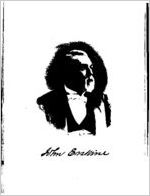
- Testimonials to the Honorable John Erskine, U.S. Judge for Georgia on his retirement from the bench; including speeches made by eminent members of the Georgia bar upon the occasion of the presentation of portraits of Judge Erskine to the U.S. courts at Atlanta and Savannah
- Publisher:
- Testimonials to the Honorable John Erskine, U.S. Judge for Georgia on his retirement from the bench; including speeches made by eminent members of the Georgia bar upon the occasion of the presentation of portraits of Judge Erskine to the U.S. courts at Atlanta and Savannah. <Printed for private circulation> [New York, J.J. Little & Co., pref. 1885]
- Date of Original:
- 1885
- Subject:
- Judges--Georgia--Biography
- Location:
- United States, Georgia, 32.75042, -83.50018
- Medium:
- books
texts (document genres) - Type:
- Text
- Format:
- application/pdf
- Local Identifier:
- gb5060
- External Identifiers:
- Metadata URL:
- https://dlg.galileo.usg.edu/id:dlg_zlgb_gb5060
- Digital Object URL:
- https://dlg.galileo.usg.edu/georgiabooks/do-pdf:gb5060
- Extent:
- 42 p. 23 cm.
- Holding Institution:
- University of Georgia. Libraries
- Rights:
-

11
TESTIMONIALS
HONORABLE JOHN ERSKINE
U. S. JUDGE FOR GEORGIA
ON HIS RETIREMENT FROM THE BENCH
SPEECHES MADE BY EMINENT MEMBERS OF THE GEORGIA BAR
VTON TUB OCCASION OP TH
PRESENTATION OF PORTRAITS
OF
JUDGE ERSKINE
TO THR
U. S. COURTS AT ATLANTA AND SAVANNAH
[PRIHTXD FOR PRIVATE CIRCULATION]
Press of J. J. Little & Co., Nos. 10 to 20 Astor Place, New York.
F
TO THOSE WHO HAVK PAID SO GRACEFUL A COMPLIMENT TO
JUDGE ERSKINK, THIS LITTLE VOLUME is GRATEFULLY INSCRIBED
BY HIS DAUGHTER AND HER HUSBAND,
WILIARD P. AND RUBY ERSKINE WARD.
JUDGE JOHN ERSKINK having served for nineteen years on the bench of the Federal Courts in Georgia, and hav ing attained the age at which U. S. Judges are permitted by law to retire from active work, was paid, on his retire ment, a very graceful compliment by the members of the Bar in Georgia. This consisted in their having two por traits of him painted, and presenting one to the Court in the Northern District and one to the Court in the Southern District These portraits were presented with feeling and eloquent remarks by several members of the Bar in Atlanta and Savannah, and were received by the Judges now pre siding in the respective districts, and ordered by them to be hung on the walls of the court-rooms.
To preserve in permanent form the kindly sentiments then expressed regarding her father, for the use of herself and of his numerous friends, both at the Bar and in social life, and as a mark of filial esteem and love, his daughter has collected the speeches of presentation and acceptance, and brought them together in this little volume.
605 MADISON AVEXVE, Naw YORK CITY, June 80, 1885.
PRESENTATION AT ATLANTA.
ON the i4th of June, 1884, at a meeting of the Bar, held in the United States Court-Room in Atlanta, an oil portrait of Mr. Justice Erskine was presented to the Court.
At ii A.M. Judge McCay was upon the bench and announced that the hour for the presentation ceremonies had arrived. The space within the bar was filled with representatives of the legal profession of the city. Con spicuous among these were ex-Supreme Court Justices Bleckley and Trippe, Judge W. R. Hammond, ex-Judges Hopkins, Hillyer, Lester, Ezzard and Bigby, United States District Attorney Speer, ex-Attorney General Ely, Solicitor General B. H. Hill, Jr., General James Longstreet, United States Marshal; ex-Congressman Candler, Ordinary Calhoun, and Messrs. Julius L. Brown, Henry Jackson, W. H. Hulsey, T. P. Westmorland, Frank A. Arnold, W. D. Ellis, G. A. Howell, L. J. Winn, M. J. Clarke, George S. Thomas, Frank Gordon, J. T. Pendleton, J. C. Reed, A. B. Culberson, A. H. Cox, Porter King, Assistant United States District Attorney Jenkins, and many others.
Mr. Julius L. Brown, Chairman of the Bar Committee, arose and presented the resolutions as follows:
May it please the Court: We, the undersigned, a committee appointed by the Bar of At
lanta, at a meeting thereof held in the city of Atlanta on the loth day of June, 1884, to make suitable arrangements for presenting
PRESENTATION AT ATLANTA.
to the United States Courts for the Northern District of Georgia, a portrait of Hon. John Erskine, to be placed, with the permission of the Court, in the court room of the Circuit Court, beg leave to report the following preamble and resolutions:
Whereas, Hon. John Erskine was in July, 1865, appointed by President Johnson United States Judge for the District of Georgia, and was confirmed by the Senate in January, 1866 :
And, whereas, for a period of sixteen years from September, 1866, the time he first opened his Court in this city, until two judges were appointed for Georgia by virtue of the act of Congress, approved April 25, 1882, and he became the Judge of the Southern District of Georgia, the district in which his only child resided, he presided over this Court and this Bar.
And, whereas, in December, 1883, having on the I3th day of September previously thereto, arrived at the age of seventy years, he tendered to President Arthur his resignation as Judge of the Southem District of Georgia, under and by virtue of section 714 of the Revised Statutes of the United States:
And, whereas, the Bar of Atlanta, at the close of this, the first term of the Court over which he so long presided, begun and holden after his resignation was sent to the President under said laws of the United States, have caused a portrait of him to be painted by the artist Guillaume, to be placed upon the walls of this court room as a tribute to his worth, and for a memorial of the respect and esteem they who personally know him and his worth have for him and his many virtues, and of their desire to do honor to a judge who, in times of trial, revolution and changes in government; who in times of financial ruin and bankruptcy; who when the laws of the United States were more sought and more enforced in this Court than in all the prior history of Georgia, when its dockets were crowded with causes making novel, interesting and important questions arising from the altered conditions of society, and from constitutional changes, and new laws passed by Congress were constantly present ing themselves in this Court for his adjudication, proved himself to be a man and judge equal to every emergency in which he was placed ; a judge who, while never forgetting the government .whose commission he held, or the dignity and respect due to the laws he was appointed to enforce, would not permit his Court to be used as
PRESEffTATION AT ATLANTA.
an engine to oppress the people among whom he lived, and who by a fair interpretation, and just enforcement of the laws of the United States, did much to make hearts once estranged feel anew a love for the national government; a judge who, in his dealings and inter course with this Bar, was always kind, accommodating and consider ate of their feelings and wishes; a judge, who in times of tempta tion, when the honesty of others was questioned, and charges were rife against them, passed among his fellow-men without reproach, unchallenged for what he was, an honest man, a good citizen, respected and beloved, and a judge able, intelligent, learned, labo rious, upright and impartial. Therefore,
Resolved 1st That His Honor, Judge McCay, be requested to receive the portrait of Judge Erskine for the Court of the United States, and that the same be placed upon the walls of this court room, there to remain forever.
Resolved 3d. That the life of Judge Erskine illustrates to our profession what can be done in this country, even in the face of ad verse conditions, by a young man possessing industry, zeal, honesty and integrity. Bom in Strabane, Tyrone County, North of Ireland, on the I3th of September, 1813, he came to America with his parents in 1821 and returned to Ireland in 1828, where he remained at school until 1832, when he came back to the United States, and traveled over many of the States, and after going abroad several times was forced by failing health threatened consumption in the latter part of 1838 to go to Florida, where, and in lower Georgia, he taught school for four years. Admitted to the Bar of Florida in 1846, he early took a place in the front rank of his profession, as the reports indicate. In 1851 he married the daughter of General Gabriel Smith, and con tinued to reside in Florida, practicing his profession there and in Georgia, until his removal to upper Georgia with his wife and daugh ter in 1855. Soon afterward he became a citizen of Atlanta, and practiced his profession here, being retained in very many impor tant causes. And in 1865, at tbe close of the war, he was appointed Judge of this Court
Resolved 3d. That His Honor, Judge McCay, be requested to have this preamble and these resolutions entered upon the minutes of this Court, and that a permanent record may be made thereof.
10
PRESENTATlOff AT ATLANTA.
Resolved 4th. That the clerk of this Court be requested to send a certified copy of these proceedings to Judge Erskine.
JULIUS L. BROWN, Chairman.
GEO. HILLYER, MILTON A. CANDLKR, J. S. BIGBY, JNO. L. HOPKINS, MARSHALL J. CLARKE, L. E. BLECKLEY.
After the reading of the preamble and resolutions Mr. Brown spoke with feeling and eloquence as follows :
May itplease the Court : This is one of the most pleasant duties I have ever been called
upon to perform. I thank the members of the Bar and the Com mittee for making me the medium of presenting to this Court the report which I have just read. I cordially indorse every word con tained in it. I respect Judge Erskine as a man, I honor him as an upright, intelligent, fearless judge, and I love him as a friend.
Called to the Bench when we of the South, suffering from defeat, naturally felt sore and looked upon all Federal appointees with sus picion, he bore himself with such manly yet modest dignity, and dealt out justice with so exact and impartial a measure, that all with whom he dealt learned to respect, and soon delighted to honor him.
Soon after entering upon the discharge of the duties of his office, he made a decision in which he laid down the rule which should govern his course as a judge. He said : " In declaring and carry ing into effect the laws, my action will ever be to use the least pos sible power adequate to the end proposed." And when calling the attention of the Grand Jury of this Court to certain outrages perpe trated by revenue officials upon citizens of this State, he charged them thus: " It is the duty of this Court and it will be my pleasure while I have the power to preside here, to execute and enforce the laws and at the same time to retain the respect and affections of the citizens of the nation.
PRESENTATlOff AT ATLANTA.
11
" Let all then make it a vigilant duty to so act as to prevent any one from casting even, the shadow of odium on its laws." How
well he succeeded, we all know. A strong partisan paper, in the heat of a political contest, when
referring to a decision upon an unpopular law, said of him : " Throughout his administration he has administered the obnoxious laws of Congress with an evident desire to inflict the least possible hardship upon the people of his District, consistent with the de mands of official duty." And ex-Governor Howell Cobb made this statement about him to a friend, who published it years ago : "Judge Erskine is entitled to the thanks of the State, or at least he has my thanks, for refusing to add to the wretchedness of my people, which he could easily have done, but which he has certainly refused to do." We all know how careful he was to investigate authorities, not following the rivers alone, but going to the fountain sources of the law, and how patiently he labored to reach correct conclusions before he rendered a decision. And we know, that while he was rigidly just in the discharge of the duties of his high office, that he tempered justice with mercy to the poor violators of the laws con victed in this Court.
While conscious of his own merit, he possesses a modesty and a sense of propriety which caused him to refuse to allow a compli ment personal to himself contained in the presentments of the Grand Jury of this Court to be entered upon its minutes, and he requested the jury to omit it. While he is as gentle as a woman, he possesses all that courage which enables a man to adhere to the right at all times, and under all circumstances to do his duty. A loving hus band, a fond parent, a devoted friend, a good citizen, an upright judge, faithful in all the duties of life, he lived and walked among us, and when he is called hence to his eternal home no prouder thing can be said of him than this, " In all things he did his duty."
In honoring him, in thus showing our appreciation of his many virtues, we show our respect not only to him but to the Courts over which he presided and the laws which he administered. In behalf of this Committee, acting for the Bar of Atlanta, I present to your Honor for the .Courts over which you preside, this portrait of him, of whom I have spoken, and move that the report of the Committee be adopted.
I2
PRESENTATlOff AT ATLANTA.
The resolutions were seconded by ex-Judge John L. Hopkins, who spoke as follows:
May itplease the Court: In December, 1869, at a meeting of the Georgia Bar, at which
Chief-Justice Brown presided, a committee, composed in part of Judges Lyon, Bleckley, Hawkins and Hillyer, reported resolutions, one of which I copy.
" Resolved: That the Bar of Georgia, here met, has full confidence in the ability, integrity and capacity of Judge Ersldne ; they there fore, without distinction of party, present his name for the position, and respectfully but earnestly petition the President of the United States, if consistent with his sense of duty, to nominate Judge Erskine to fill the position left vacant by the death of Mr. Justice Wayne."
This action of the Georgia Bar illustrates the esteem in which Judge Erskine was held with us as a lawyer. It is hardly possible to pay a higher compliment to any lawyer than for such men as Chief-Justice Brown and Judges Lyon, Bleckley, Hawkins and Hill yer to recommend him in this manner to the high position of Judge of the Supreme Court of the United States.
The Justices of the Supreme Court of Alabama and the Supreme Court of Florida (Judge Erskines old State) also recommended him to President Grant for the office of Associate Justice of the Supreme Court of the United States, and he was pressed for this office by Major-General John Pope, U. S. A., Major-General Meade, U. S. A., Major-General Alfred Terry, U. S. A., successively com manders of the Department of the South, and by General McKee Dunn, late Judge-Advocate General of the U. S. Army.
In a review of the 35th volume of Georgia Reports (ad Bleckley), written by the late John William Wallace, Esq., reporter of the U. S. Supreme Court, the following passage occurs, and it shows what was thought of Judge Erskine as a lawyer outside of the State :
" His present book gives us seventy-one cases of decisions in the Supreme Court in the State; but in addition to these we have a number of cases decided in the Federal Courts by Mr. Justice Erskine, well known to the Bar as one of the ablest Jurists in the South. It is by these decisions of the learned Justice, which to the
PRESENTATION AT ATLANTA.
13
reader outside the State limits form the most interesting portion of the volume, that our attention has been more especially arrested. They are characterized by unusual clearness of conception and of argument, and by an exact apprehension of the force and value of the precedents. It is quite a curious incident that some of the same great constitutional questions which have come before the Supreme Court of the United States of late, came before the Circuit or Dis trict Courts of Georgia at about the same time or shortly before ; and that the decisions upon them have been identical with those of the highest Courts in the land, anticipating them, in fact, by a short interval. In ex farte William Law (at page 286 of the volume we are reviewing) the same question arose before, and was adjudged by Mr. Justice Erskine, that arose and was adjudged by the Supreme Court in ex parte Garland (4 Wallace, 222). The superior authority of the decision in the higher Court throws, of course, into some shade the mere decision in the lower one ; but the opinion of the District Judge, as given in the latter Court, and as preserved in this volume, deserves, by its force and learning, to rank even with the able opinion given, after arguments by the first men of the Bar in the Supreme Court We cannot say more of it."
Your Honor : After the lapse of so many years, we cannot realize the
condition of the people of Georgia as it was in the year 1865. They had been overcome, they were conquered, their properly was gone, their civil institutions overturned, the State in the hands of the Federal government, and the people in the hands of strangers. The machinery of government with which they had been familiar was displaced, and the novel process of reconstruction lay before them. It was for others to devise, plan, direct; their part was to suffer, fulfill, obey. Added to the ordinary incidents of the results of such a war, was the important fact that this prostrate people were largely indebted to the conqueror and, as is usual, creditors wished debtors to make payment. Opulence and power demanded of pov erty and helplessness what was due. Payment had long been de layed. The sword had suspended the running of the statute of limitations, and the court-house had been closed for the carnival of death. But few persons were then able to rise above the passions of the times and look to the good of the whole country. The man
14
PRESENTATION AT ATLANTA.
who had presided in the councils of the government, just when all his great and noble qualities appeared to find the largest opportu nity for their exercise, was taken away by the assassin, and, so far as we could then see or know, humanity had lost its most powerful friend when Lincoln fell.
At that time two classes of men stepped into view: one sought to press the situation to what was supposed to be its logical conclusion, that was to complete the work of the sword ; the other, to hold matters where they were until passion could subside and reason re appear. The latter was the nobler and more difficult task. To restrain and hold and wait, required the courage of the patriot. It was to this class that Judge Erskine belonged. When he went upon the bench he had the opportunity of falling in with the pre vailing current, and in the language of that day, " let the law take its course," that was, to let seizure, forfeiture, confiscation, do their work. Another way open to him was to administer the law, as he found it written, without fear, favor or affection, not forgetting the times. The latter course he pursued. It is personally known to me that he did it. Faithful to the Judgeship, as he certainly was, he nevertheless never took his eye from the real condition of the people. With ample power to oppress, he stood between the peo ple and the oppressor. He preserved himself as a Judge, and he upheld the official trust, but he saw to it that the least possible in jury was done as he went along. For what he did, and for what he refused to do, I profoundly respect and honor him. In the hearts of those who know and understand him, there is a memorial to his worth, far more enduring than the tracing that canvas bears. Al low me, your Honor, to second the resolutions.
The preamble and resolutions were thereupon unani mously adopted.
The remarks of ex-Judge Hillyer were as follows:
May it pleaseyour Honor: An unusual pressure of business has prevented me from mak
ing such careful preparation to take part in these ceremonies as I would like to have done, and as the occasion deserves. But such thoughts as occur to me I beg to submit.
It was my privilege to know Judge Erskine in the private walks
PRESENTATION AT ATLANTA.
of life, and to have his friendship before he was called to this bench. Sentiments of regard began between us at that time, which I believe I may say grew with the years, and I am sure yet bloom in my heart, and it is with gladness and willingness that I here appear to add a tribute to his worth.
If I were asked to say what is Judge Erskines main leading char acteristic, I would answer a conscientious desire to find the truth, a painstaking search after it, and a fixed purpose when found, to speak and act by its light.
We have heard allusion made by Mr. Brown and Judge Hopkins to the novel and difficult questions which confronted Judge Erskine on his first accession to office, and to the courage and address with which he met and overcame such difficulties.
The ordinary ship captain can guide his vessel where he is pro vided with compass and charts, and the known ways of the sea are open to him ; but it is when sailing the unknown deep, like Vespucius among the islands of the South, or Kane in the frozen re gions of the North, that the real discoverer makes his fame. . In the laws of nations there are abundant precedents for deter mining the rights of the public, and of individuals after a war, but precisely such conditions as were raised with us of the South after the late war between the States was not before known in history. There was the parent government, sovereign in its sphere ; there were the governments of the several States, in their positions sov ereign as States could be, but their people conquered, as conquered coald be; and here were in these States four millions of people, of a wholly different race, lately slaves, but then standing newly clothed with freedom.
Who could then tell what was born or lost of human rights, or human hopes ? It was chaos!! At this creative stage in our new order of society, Judge Erskine succeeded pre-eminently well in dealing wisely and justly, and, let it ever be remembered, kindly, with the singularly novel and complex questions involving the powers of government and the rights of the people.
Give me a moments attention whilst I make brief mention of some of them.
One of the first questions which arose in the new order of things, after the Courts began to exercise their functions, especially the
16
PRESENTATION AT ATLANTA.
Federal Courts, was what should be the status of the members of the legal profession. It was gravely argued by many that the lawyers of the State, all of them who had taken part in the rebellion, were under disabilities (and this I may say, without any apology, was true of nearly every one), and that for this cause they should be dis barred from appearing or pleading in the Courts.
And the attack on the legal profession was so urgent and vigorous, and their future involved in so much doubt, that it was deemed wise and prudent not to trust their pleadings to go down upon the records, authenticated alone by the signatures of gentlemen themselves, such as Governor Brown, Judges Trippe, Blecldey, Ezzard, Hopkins and scores of others, the brightest lights of our profession whom I could name, and many of whom I see sitting around me here to day ; but to give the pleadngs validity by an assured signature, it was deemed wise to procure the name of some one who could take the test oath, by reason of having fought on the Federal side, and who moved to the South after the surrender, or of some youth who had been too young to go into the war at all, and was not under any disability. And if the Clerk sitting now there before us should refer to the files and records of the Court of that day, the curious monument of the uncertainty and dangers of the times would be manifested by these apparently incongruous double signa tures.
The instinct of justice speaking from that honored bench, re coiled from such sweeping outlawry, and the legal profession of the State was lifted out of the darkness and set in the light of day by Judge Erskines decision in " Exparte Wm. Law." Afterward, in exparte Garland, and in the Missouri Test Oath case, both reported in 4th Wallace, the Supreme Court of the United States took the same view and coincided in the ruling of Judge Erskine made in ex partt Wm. Law.
In the case of Atkins vs. the State of Georgia, Judge Erskine up held the sovereignty of the State, and decided that the property of a State could not be taxed as if it were a corporation. It may seem strange at this distance of time, that such a proposition could ever have been urged ; but those of us whose memories go back to that day and time, and who can realize how far military power had drawn the public mind away from the safeguards of the Constitution, can
PRESENTATION AT ATLANTA.
17
better understand it, and it is just because there were lawyers like Judge Erslcine on the Federal bench, to bring mens minds back to the true path, that matters in many respects grew better instead of worse.
It was in some case, I cannot recall the name of the party, but a case tried before Judge Erskine, in which the question first arose as to the power of a common carrier, to provide separate accommoda tion for the races, and his decision on that subject, to wit: that the carrier did have such power, was a dozen years afterward followed, and the same principle held, by the Supreme Court of the United States.
In the case of Hobbs alias Johnson, Judge Erskine decided against marriages between the races, on a State statute prohibiting such marriages, and further held that such statute was not repealed by the Fourteenth Amendment to the Constitution of the United States. This was the pioneer decision on that subject, and, as all men know, has now become established law.
In the demoralization of the times, Bench and Bar too much, as well as people, went astray in what is known as the " stay laws" and relief laws ; but Judge Erskine upheld the constitutional limitation by which contracts are protected ; and notably in the Tumlin case, long before any other Court had given him a precedent, expressly decided that what were known as slave debts were collectable, and that all State laws prohibiting their enforcement were unconstitu
tional. In the leading case of the Athens Armory, Judge Erskine upheld
the efficacy of the Presidents pardon to prevent confiscation ; and decided other important and unique legal questions.
When the Courts were beginning to be flooded with informations, contemplating a general and sweeping confiscation of property in all parts of the State, and I believe that in the first case of this kind, that came before him, Judge Erskine held that, where an informa tion was filed by the U. S. Attorney, seeking to confiscate the prop erty of a citizen, being a seizure of land, and personalty situated on land, it must be tried according to the course of the Common Law ; and not as was insisted on by the U. S. Attorney as in admiralty.
The Judge said as the claimant or respondent asserted that the property was non-forfeitable under any statute to the United States,
18
PRESENTATION AT ATLANTA.
and as he has pleaded in bar to the information he is entitled to a trial by jury.
The magic words " trial by jury," scattered the informers to the four winds ; that particular prosecution was abandoned, and others like it perished with it. These are but a few of the novel and com plex cases coming before Judge Erskine in those trying times.
I remember on one occasion asking my former law partner and long-time friend, well known to all of you, and loved by as many, that singularly wise and gifted man William Hope Hull; why it was in his opinion that so little opened to informers, and why, under the confiscatory statutes so few cases had been presented for adjudi cation iu the U. S. Courts. He said, in substance, he thought it was because Judge Erskine was too learned a lawyer and too good a man to be an instrument of such evils.
It is but a moderate tribute when I say that whilst some of the Southern States in the early years just after the war, suffered cruelly with the severest costs and penalties and judgments, in harsh exfarte proceedings, it is true that not an acre of land, or a dollars worth of personal property was ever, for political offences growing out of the late war, confiscated in the State of Georgia ; and it is to Judge Erskine, more than to any other man, nay to his wisdom, justice, and moderation, more than any other known cause, that our people are indebted for their escape from these menacing dangers.
Our hearts I know all unite in the hope that this much valued friend now temporarily absent from our borders, but whose virtues and attainments we hold in such pleasing remembrance will be long spared to adorn the annals of our profession.
Remarks of Hon. L. E. Bleckley, ex-Justice of the State Supreme Court:
I feel deeply that my testimony to Judge Erskines worth ought to be largely discounted, because of my warm personal attachment for him as a man. He is my friend of a quarter of a century, and I am disqualified to submit with cold impartiality anything by way of compliment to his personal or professional merit. I am aware that anything that I can say must necessarily be colored by my feelings. There is, however, one thing that I wish all Georgia could know,
PRESENTATION AT ATLANTA.
19
and I wish there was a. better witness to it than I am, and that is, his sincere friendship for the people of the State. I wish that they could know how thoroughly he regarded their interest and their wel fare while he was on the bench, before he went upon the bench, and since he has retired. The judicial office is hedged in with an environ ment which prevents the real feelings of an occupant of the bench, as a man, from appearing to the casual spectator. It was my privilege while Judge Erskine was upon the bench, in the early part of his judicial career, to have many conversations with him, and to know certain facts in bis surroundings, that upon some minds would have amounted almost to prohibition to adhere to the line of judicial clemency and mildness that was natural to him, and which he had determined to pursue, and did pursue. I remember that he showed me once a letter written by a person who would be benefited by con fiscation, and that letter made a very low appeal to the Judge to en force the confiscation laws, on account of some very derogatory ex pressions about himself, that had been heard in some Georgia city. He treated the letter with contempt, and said the writer was much mistaken if he thought he could be influenced in that way. That was one instance known to me of the pressure that was sometimes at tempted to make him pursue a harsh and unfriendly course toward the people in those trying times. I know that if it were possible for all Georgians to understand him as thoroughly as I do, they would re gard him as one of their best and truest friends in one of the greatest trials through which they have ever passed. I might say much more, but what I have said will serve my purpose, on this occasion, which ismerelyto unite with my brethren in testifying ourregard for Jndge Erskine, and a sincere desire that he should upon his retirement, re ceive the honor and estimation which he deserves as ajudge.
Remarks of. Hon. Emory Speer, U. S. Attorney, N. D. Georgia.
May itplease Your Ifoner: It is with unaffected pleasure that I rise to express my gennine
sympathy with the felicitous and appropriate resolutions which have been so happily proposed and so ably seconded and supported by our gifted professional brethren.
From the earliest annals of our race, and of every race not entirely
3
20
PRESENTATION AT ATLANTA.
barbarian, tbe judicial office has been honored of all men. There has not been an interval when it was unbecoming in the Common wealth to contribute all reasonable means which tend to the elevation of the judiciary, and to widen the appreciation in the public mind, of its distinguished character, its eminent rank, its supreme and vital functions. Especially is this true in this day and time ; espe cially are such contributions of respect due from the learned and honorable profession whose representatives have gathered to-day in the performance of that pleasing duty; especially are they due in this land of liberty and law, where popular respect for the Courts is the guarantee of that" pure and impartial administration of justice," which we are told by the mighty Junius " is the firmest bond of the people to Government."
Of the eminent jurist, in whose honor we have assembled, I am per haps from the lack of personal or professional intimacy with him, less qualified to speak than any of the gentlemen around me, and yet who is there so poorly acquainted with his reputation who does not know the profound impression he has made upon the records of our juris prudence ; whom so casually in his presence, who does not gratefully remember the exquisite urbanity with which he tempered the auster ity of the judge and the highly bred refinement which pervaded the discharge of duties often necessarily repugnant to his kindly nature.
Erskine! Were he less the lawyer and the gentleman that he is he would be unworthy the famous name he bears. What tyro of our profession is there whose emotions do not kindle at the name of Erskine, that other Erskine whose brilliant achievements in West minster Hall have fired the imagination of ambitious youth wherever the English tongue is the vehicle of thought and of whose persuasive oratory it has been written :
" Some strains of eloquence which hung. In ancient times on Tollys tongue, But which concealed and lost have lain, Till Erskine found them out again."
I will not, gentlemen, detain you from the privilege of listening to the eulogies of those who knew our Georgia Erskine well and inti mately. They have been well merited from the Bench, the Bar and the people of Georgia. His have not been the plain and flowery
PRESENTATION AT ATLANTA.
21
paths of jurisprudence. He assumed the ermine while the throes of revolution were still convulsing the country, and the after-birth of revolution is ever more portentous than the parturition. Skillfully he handled the novel, grave and momentous questions of the hour. His decisions are many of them precedents of a most important bearing. They have received the approval of eminent jurists of all
parties. He has, a good and faithful servant of his country, uow entered on
that " otium cum dignitate" for which ample provision has been made by the thoughtful providence of a great and generous people.
May I venture to hope that he is not lost to our profession. May I hope that he will, as Grattan said of Chatham, come " occasionally into our system to counsel and decide." May "honor, love, obe dience, troops of friends," those blessed attributes that the great Master of the human heart instructs us should accompany the declining years, attend his pathway, and maybe live to enjoy a green and hale old age, the fitting consummation of a life consecrated to the service of his country and the happiness of the people.
Remarks of Hon. Robert M. Trippe, ex-Justice of the
Supreme Court of Georgia :
I desire in a few words only, to declare my cordial indorsement of the compliments paid Judge Erskine in the resolutions. The late Judge of this Court will be remembered long, may I not say always? by us and each of us, not only for his judicial qualifications, but for his eminent worth and many striking and lovable character istics. Judge Erskine has left a record containing many important decisions, full, thorough and able, that would be a credit to any Jurist, and which were rendered under circumstances that would do honor to the man and to the fearless and upright magistrate. I may, in truth, say the Bar of Georgia, and the people of Georgia, owe Judge Erskine a debt of gratitude which, to some extent, we attempt to discharge to-day. As to Judge Erskine as a man, I can still further truly say, that they who knew him best esteemed him most. I would not speak of him so as to incline him, if he were present, to think me given to flattery, but I will say he is one of those against whom, if one were to attempt a rigid criticism, one would find him self so urged and controlled by many affectionate remembrances,
22
PRESENTATION AT ATLANTA.
that the result would be a portrait drawn by the hand of a friend rather than by that of a critic. He was so desirous of ascertaining the truth and declaring it, that it might be said of him he found its temple in every place. So kind, so genial, with a heait so full of tenderness, and with sensibilities that would do honor to woman herself, he could render all times cheerful, and " all seasons summer." I have no doubt that when he hears of our tribute his whole nature will respond, and he will appreciate at its full worth the honor and compliment tendered him this day.
Hon. Robert N. Ely, ex-Attorney-General of Georgia, said:
I rise but to add a word to what has already been said in regard to the distinguished Jurist to whom we have met to show a tribute of affection to-day. It has been our pleasure to know him in a twofold capacity, as a man and as a judge. We meet to-day to testify our affec tion for him in the former capacity, and our respect and gratitude to him as a judicial officer. We have already heard discussed the quali ties which endeared him to the people, and I will only advert for a moment to one other circumstance that characterizes the distin guished man, and that is his relations to the Bar. And I think I may say on the part of all those who have known him, or been under his administration of the law for twenty years, I dont think there is a single member of the Bar who will say he has received anything at his hands but kindness, consideration, and that regard which a Court should ever entertain toward the Bar. I think, your Honor, that Judge Erskine appreciated the great importance that the Bar occu pies toward the Court. A thorough lawyer himself, he fully agrees with that sentiment expressed by an eminent judge of the Supreme Court of the United States, Mr. Justice Grier, on his retirement from the bench in 1870, when he said: " A well-read and noble Bar must always exist if the Courts are themselves to be greatly distin guished." As an evidence of this, your Honor, no judge has ever been more patient in listening to the arguments produced before him by the Bar; no judge more painstaking in endeavoring to find out the truth of the law and the right of the case presented to him ; in fact, the only consideration that seemed to move him, and the only
PRESENTATION AT ATLANTA.
23
interest he ever seemed to take in any case, was in getting at the very right and the very legal principles that were at the bottom of it As a consequence, the Bar feel regret at his retirement. They honored and respected him while he was here amongst us, and they now regret that old age and infirmities have come to him as they must soon come to us all. They have summoned him from active duties, and forced him to retire into the shades of private life ; and in coming years, as we look up to that genial face, may we always remember the example he has set us as a citizen, and a judge, and a lawyer of this country, and may many years of his long and useful life be spared to the country.
Remarks of Henry Jackson, Esq.
May it please your Honor : I desire formally to enter my solemn protest against the tone of
sad solemnity which has characterized these proceedings, and made mournful music of the remarks of my learned brethren of the Bar who have preceded me. We are not standing upon the threshold of the mausoleum, where are to rest the remains of the distinguished gentleman whose portrait graces the walls of this court-room, nor are we engaged, with trembling tones and weeping eyes, in pro nouncing funeral orations, portraying the wisdom and virtues of the departed. I should say, rather, that we ought not to be thus en gaged ; because, should a stranger enter this room, which has known the departed so well, he would, from the sadness and gloom of these ceremonies, inevitably conclude that we were engaged in the most heart-rending funeral services over an open grave. Tis true, the Judge has departed but in reference to him the marshal of the court cannot yet make the celebrated return of the bailiff, reporting his effort to serve a dead defendant: " Departed to parts unknown." The Judge has indeed " departed " departed to New York and Saratoga, "on health and pleasure best."
So much has been said in reference to Justice Erskines judicial career by the older members of the Bar, that it would be useless for me to attempt to add to the lustrous portrayal of the splendid at tributes which he developed as a public officer. Contemporaneously with his first holding the Circuit Court in this city, I came to the Bar. The ermine that he wore had been placed upon him by a power
24
PRESENTATION AT ATLANTA.
that cur people believed inimical and disastrous to their liberties and interests. The opening of the Circuit Court was regarded with distrust and enmity. A period of political revolution was upon the country, and it had followed closely upon a fearful and bloody war. The successful and dominant section had placed him in position, and many supposed that he would simply become the tool of the political forces then in power. Imprisonments, confiscations, in formations, and all such proceedings, so destructive of civil liberty, were anticipated. But it was soon demonstrated that the Judge was not the politician nor the partisan. The law was enforced, but temperately and with mercy. The people of Georgia promptly re alized that a gentleman was on the bench, and that within his breast beat a tender and sympathetic heart. The law was always vindi cated, the official dignity preserved, but wisdom, moderation and mercy constituted, in strong combination, the controlling features of all the proceedings of his Court.
I prefer, however, to speak of Justice Erskine as the man, rather than as the Judge, because I knew him better in the social relations of life. Emerson has beautifully said : " Give me health and a day, and I will make the pomp of emperors ridiculous. The dawn is my Assyria, the sunset and moonrise my Paphos, and unimaginable realms of faerie; broad noon shall be my England of the sense and the understanding; the night shall be my Germany of mystic philos ophy and dreams." But all of this beautiful imagery, even if possi ble to be appropriated as a part of practical daily life, does not afford happiness, without the development of that essence of joy, peace, and contentment, congenial friendship. Judge Erskine was my friend in the morning of life. He was my near neighbor, and my children were reared almost beneath his roof, and in the constant companionship of his inestimable wife and daughter. The wife has turned
" The golden key Which opes the palace of eternity ;"
but I cannot see this honor done to the affectionate husband, to whom she was so true and so devoted, without wishing that a de scending ray of light could bear her living into this presence, that she might rejoice in these proceedings.
The artist has not only placed upon the canvas the abstracted look
PRESENTATION AT ATLANTA.
25
of the profound jurist, but regarded from my standpoint, I see also, distinctly portrayed, the love of literature, in the refined cast of countenance; the flash of wit, in the sparkle of the eye; the merri ment of humor, in the curve of the month; and the joy and conviv iality of friendship, in the coloring of the whole. Some lawyer, a hundred years hence, entering this court room, with books and brief in hand, as he glances at the portrait, whilst the minutes are being read, will argue to himself, " That venerable old gentleman doubt less exclaimed, many a time:
" What though love be at an end. And life no longer merry.
Heres at trne and trusty friend. Aromatic sherry."
Judge Erskine is more than the lawyer! Biography would seem to have been a favorite study, and no man has lived in American, English, or French history, with whose life he is not perfectly familiar. What he knows, either by intuition, observation, or study, he has the faculty of expressing in the most charming manner. It has been said that " there is an art better than painting, poetry, music, or architecture better than botany, geology, or any science the art of conversation. Wise, genial, cultivated conversation is the last flower of our civilization, and the best result which life has to offer us the cup of the gods, and without repentance." Judge Erskine was a-master of the art, and therefore those who had the honor of his friendship, and an entrance to his home, realized in him an unfailing delight.
The charming circle is broken, the wife is no more, and the lovely daughter is married and gone, but the Judge is still with us, and I trust will be spared many years of health and enjoyment. My af fection for this little family is so great, that I am compelled to guard my language to avoid the appearance of extravagance. Therefore, suffice it to say that, reviewing the career of Judge Erskine as a man and an officer, the action of the Bar in placing his noble feat ures upon the imperishable canvas, for the adornment of these walls, was most appropriate. Many of us, lawyers and laymen, as we enter the precincts of this Court, where he presided so long, and glance at the portrait, will remember, with a throbbing heart and a quickening pnlse, many a gentle word spoken, many a kind act
26
PRESSXTATTON AT ATLANTA.
done, which, at last, in my humble judgment, are worthier of im mortality than the cold crown of the mere jurist.
Address of Judge McCay:
The Court joins heartily in the compliments paid to Judge Erskine. My own official position during a great portion of the time in which he filled his place as Judge of this Court was such that I had very few relations with his Court; but in social life I met him frequently and had many opportunies of judging of his good sense and kindly sen sibilities, and I join most heartily in every expression of compliment made to him to-day. He came into office under peculiar circum stances, when mens minds were wild and people on both sides had their passions stirred up; and he stepped in amongst them, seeking for justice and mercy, throwing oil upon the troubled waters, pre senting considerations calculated to lead to peace, and good-will, and kindness, mixed with a thorough appreciation of his own posi tion and his sworn duties. And this, gentlemen, is the characteris tic of our profession. The old republics of the world had no prac tical judiciary. They tried Socrates by two or three hundred men. In this country and in modem times the " fierce democracy " is tempered by a judiciary which it has learned to honor and respect. Under the circumstances through which we have passed what strik ing instances have we of this truth ? As I said, mens minds ran wild on both sides and were not capable by reason of their passions, of taking fair views of their duties. How has the judiciary stepped in, calmly and firmly, and said to one side : " Thus far shalt thou go " and to the other " Further than this thou shalt not go!"
Take our Bar. What would the negroes have done without it ? Its members have been the Joshuas who have led them into the land of Canaan, and who protect their rights now, without money and without price. The Bar, through which the judiciary carries out its decisions, is the great leverage that keeps the " fierce democracy" straight.
Judge Erskine came to his position under these circumstances ; that he filled the place well is to his honor. It was a difficult posi tion to fill. Very few men could have done it so well. He was able to rise above the turmoil of the times and do justice. It is to the credit of the Bar of Georgia that it has at length appreciated his
PRESENTATION AT ATLANTA.
VJ
qualities and to his credit that he has deserved this mark of es teem.
The Resolutions the Court will direct to be spread upon the min utes as a memorial of the expression of the Bar, and the portrait is accepted and placed in the conspicuous position it now occupies.
Later in the day Mr. Julius L. Brown telegraphed to Jndge Etstine a brief account of the events of the day, and received the following reply:
NEW YORK,/T 14, 4:58 P.M., 1884. Juuus L. BROWN, ESQ.,
Counselor at Law,
ATLANTA, GA : Telegram received. Thanks from my heart to yon and the other friends who have so honored me. May the dew of heaven fall upon the home of each.
JOHN ERSKIKB. 4
PRESENTATION AT SAVANNAH.
ON Thursday morning May 14, 1885, a meeting of the members of the Savannah Bar was held in the United States Court Room in that city. Among those present were: Gen. Henry R. Jackson, Col. Win. Garrard, Hon. Robert G. Falligant, Hon. J. R. Sanssy, Hon. Geo. A. Mercer, C. N. West, Maj. A. B. Smith, William M. Heyward, P. J. OConor, Col. James Atkins, A. R. Lawton, Jr., Judge D. A. OByrne, Capt. H. C. Cunningham, M. A. OByrne, Col. J. L. Whatley, Hon. Wm. D. Harden, Judge of City Court, Hon. A. Pratt Adams, Judge of the Superior Court, George W. Owens, R. G. Erwin, W. R. Leakin, Isaac Beckett and Henry McAIpin. Col. E. C. Wade, United States Marshal, opened the Court in due form of law, and Hon. Emery Speer, the Judge thereof, who had invited Hon. A. Pratt Adams to a seat on the bench, said that inasmuch as the Bar had assembled for a particular pur pose, the Court would take a recess until the business was transacted.
Colonel Garrard then moved that Gen. Henry R. Jackson take the chair. On motion, M. A. OByrne, Esq., was appointed secretary. Colonel Garrard then moved that a committee of three or five, as the chair thought feasible, be appointed to draft proper resolutions in the presentation of the portrait of Hon. John Erskine to the Court. The chair appointed the following members of the Bar for that pur-
3
PRESENTATION AT SAVANNAH.
pose : Col. William Garrard, Hon. George A. Mercer, Hon. Robert G. Falligant, Judge D. A. OByrne and Col. James Atkins.
The committee after a brief recess, reported the following through Col. Wm. Garrard:
The Hon. John Erskine, having attained the age of 70 years, re signed the office of United States District Judge for the Southern District of Georgia, in December, 1883, having performed the duties thereof since January, 1866. , The services of Judge Erskine were invaluable.
He took his place on the bench just as the smoke of the late civil war was clearing away, and when society was in a chaotic state.
A new order of things was about to be established; peculiar con stitutional amendments and statutes incident to the times had been and were being enacted; the people of Georgia were bleeding from their wounds, and this State, ravaged by war, was practically bankrupt.
The position of the presiding Federal Judge in Georgia was neces sarily a most trying and delicate one. Finn as a rock and entirely fearless, Judge Erskine so discharged the functions of his trust that, while the law was administered, the people were not oppressed, and the prosperity of Georgia was advanced.
We are not here to praise him, nor to delineate his entire career. Enough that he was a judge, able, learned and impartial, who did his full duty, under all circumstances. What more can be said ?
His intercourse with the Bar was marked by uniform courtesy, affability and friendliness.
We are not forgetful of his worth, and desire to attest our regard for him as a jurist and a man.
To this end we have caused this portrait of him to be painted, and we now present it to the Federal Courts for the Southern District of Georgia, to be hung on the walls of the court room in Savannah, there to remain for all time, as a memorial of our personal esteem and of the profound respect entertained for him by us, in common with the people of Georgia.
i. Be it resolved, That his Honor, Judge Speer, is requested to receive this portrait of Judge Erskine for the Courts ol
PRESENTATION AT SAVANNAH.
31
the United States for this District, and to cause the same to be placed upon the walls of the court-room, there to remain forever.
2. That His Honor is requested to direct that this preamble and these resolutions be spread upon the Minutes of the Court, and to cause the clerk to send a certified copy of these proceedings to Judge Erskine.
The committee requested that if the resolutions were adopted they should be presented to the Court by Gen. Jackson. The resolutions were unanimously adopted, and the Bar meeting adjourned. Judge Speer then took his seat and the Court was called to order.
GENERAL JACKSONS ADDRESS.
Gen. Jackson thereupon arose and with much eloquence addressed the Court in the following language:
May it pleast your Honor : It has been made my grateful duty to present to the Court this,
the portrait of the Hon. John Erskine, and to pray that an order be granted which shall fix it permanently in this hall. I am further instructed to submit the following preamble and resolutions, unan imously adopted at a meeting of the Bar this day held, and to pray that they be placed upon the Minutes of the Court.
The resolutions given above were then presented to the Court, and Gen. Jackson continued :
By these proceedings the members of the Bar, whose willing rep resentative I am, desire to pay honor to whom they feel that honor is justly due to the Judge who ascended the bench in the darkest days, when the results of disastrous war had thickly populated the dockets of the Court with questions of gravest import, and who brought to their solution a head so clear, a learning so large, and a labor so patient that few judges have so rarely erred. To him the opportunity was given by a harsh, nay, by an inconsiderate exercise of official power, to make the administration even of justice itself painfully oppressive in a court-room, whose very air was electric with voiceless, because it might be regarded as lawless, emotion; but he soothed the perturbed elements by the emanations of a kindly
3*
PRESENTATION AT SAVANNAH.
heart, and by a bearing always gentle, always patient the bearing inspired by a generous nature, and, therefore, the bearing of a courteous gentleman. A distrustful community was loth to receive him when he came. I venture to say that the same community did not hold a solitary man who knew him at all who was not loth to part with him when he left. And to-day no spectacle can be more welcome to its people than his venerable form revisiting our streets and our homes. So by being true, at one and at the same time, to the inexorable dictates of official duty and the warm impulses of a brave, generous and affectionate nature, he has won for himself a triumph, and for his name a memory of which any man might be justly proud.
Remarks of Hon. George A. Mercer :
May itplease your Honor : It affords me very great gratification to be able to participate
personally in rendering this tribute from the Bar of Savannah to the ability, integrity and popularity of your immediate predecessor. Pending the period of Judge Erskines appointment to the position occupied by your Honor, there existed in this section of our country a critical condition of anxiety and unrest.
Amidst the recent clash of arms, legal institutions had been silent. The Courts of the States in many localities were either barred or impotent The great central power had not yet begun to exert its authority through the regular operation of its laws in its organized courts of justice. Military tribunals untied every gordian knot with the sword, and doubtful questions were resolved in accordance with the crude notions, prejudices or passions of the presiding provost. Disquietude and alarm as to the outcome of the future pervaded all classes; and to the members of our profession, who, after gallantly serving their section, had doffed their military harness and returned to resume, if possible, their legal labors, it did indeed seem that, like Othello, their occupation was gone. Judge Erskine received his appointment in January, 1866, and held his first term of this Court in the ensuing May. He was a stranger in oar midst. It was well understood that he differed with us in political sentiment, and that he earnestly opposed the movement which most of us had so ardently embraced. We had been instructed in the liberty-loving
PRESENTAnotr AT SAVANNAtt. 33
methods of the common law, and we yearned for a return to its es tablished principles and its safe precedents. Onr professional knowledge and sense of propriety had been shocked by the lawless administration of military tribunals and the travesties of justice wit nessed in the Provost Courts. How would this stranger, imbued, at we supposed, with the views of oar late enemies, wield the rod of justice intrusted to his hands. Would the scales maintain their even equipoise ? Would this dread arbiter of an angry nations law behold with faultless vision the truth and right, and remain blind only to the passions and prejudices of the day ? Would this august figure, lifted into the lofty seat of Federal justice pre-eminently the embodiment to Bar and people of the might as well as mercy of the general government so administer his high and delicate prerogative as not only to dispense justice, but to quiet apprehension, to repel passion, to win confidence, and, in his own personality, to smooth the yet wrinkled front of war? These were the anxious questions that suggested themselves to us.
One of the earliest and most important questions which came be fore Judge Erskine for decision involved the right of lawyers to prac tice their profession without first taking an oath, which those of us who had been faithful to our State and the dictates of our conscience found it impossible to take.
Judge Eiskine, in a learned and able opinion, held that the retro spective portions of the oath required to be taken by attorneys, un der the Act of Congress generally known as the " Attorneys Test Oath Act," was an ex postfacto law, and was also substantially, and by its inherent force, a bill of pains and penalties, having the char acter of a bill of attainder, except the death penalty; and, conse quently, was repugnant to the Constitution of the United States prohibiting the passage of such bills.
Had Judge Erskine made no other decision, the Bar of Georgia became his lasting debtor for this. If his determination of this and other questions involving the issues and passions of the late conflict, served to quiet the apprehensions of the Bar, and to assure them that a just and fearless Judge, and not an ermined partisan, sat upon the bench. His uniform courtesy and grace of manner, and evident kindness of heart, soon drew our members into closer personal con tact, and revealed to them the fine and attractive qualities of the
34
PRESENTATION AT SAVANNAH.
incumbent. Judge Erskine in no instance failed to exact the just dues of the central authority, and in those troubled times its plain justice often pressed sorely upon the suitors; but with the fortiter in rt was the suaviter in moiio which extracted the sting, and com mended to Bar and people the power he so fitly represented, as well in the strength and firmness of his judicial attitude as in the bending and attractive qualities of his nature.
Suffice it to say that, after presiding in this Court for a period of nearly two decades, he has retired full of years and honors, having achieved the reputation of a learned, just and upright Judge, having performed his full measure of duty to the government, which he honored in his character and person, and leaving behind him in the ranks of the profession which knew him best and among their clients not a single enemy and very many warmly attached and abiding friends.
The picture which is to be hung in the court-room is a truthful and beautiful delineation of the respected original, and his fine qualities of head and heart glow legibly upon the canvas.
By this generation of lawyers it can never be regarded with care less eye or with pulseless heart; and to other generations it will be transmitted with the tradition of our profession, as the " counterfeit presentment" of a cultured gentlemen, of a good man, and of a Judge wise, learned, upright and just
Remarks of Col. William Garrard :
This occasion, may it please your Honor, is to me one of intense pleasure.
The Bar of Savannah tender to the keeping of the Federal Courts this portrait, to be suspended on these walls for all time, a tribute by an appreciative profession to an able and an upright Judge.
But a short time since the Honorable John Erskine occupied with great dignity and to the satisfaction of the Government, the people, and the Bar, the judicial chair which your Honor now so accept ably fills.
For nearly a score of years he dispensed justice here. We knew him, honored him and loved him, and now, that he has resigned his high trust and has retired to the shades of private life, with " Well done, good and faithful servant," sounding in his ears
PRESENTATION AT SAVANNAH.
35
from the people at large, there can be no impropriety in this slight attempt on our part to express our regard for him and our appre ciation of his judicial services.
When he took his seat upon the bench, a great civil war had torn this country almost asunder, and the gravest of questions presented themselves at once for his decision.
He was equal to the emergency and to the delicate requirements of the crisis, and not only displayed in the solution of these issues wisdom, justice and moderation, but also unshaken nerve and con summate tact
To the end, sir, that the law was respected and vindicated, right triumphed, the government lost nothing, and the people of Georgia became his everlasting debtors.
When passions calmed, when the hot blood of war cooled, when once more gentle peace prevailed, this impartial and learned Judge, who had met bold issues boldly, settled down to the calm routine of his duties, and the dockets of these courts criminal, equity, common law, bankruptcy and admiralty testify to the immense volume of business disposed of by him.
In the Court, he was " every inch " a Judge ; out of it, he was our social friend; always urbane and genial, whether he looked down on us from that bench or broke bread with us around " the mahogany."
He loved the common law, and always insisted on going up to its sources; he was at home in the broad fields of commercial law ; in the admiralty he delighted, and in this branch he especially ex celled.
But, sir, why apply the dissecting knife ? Judge Erskine is not dead, thank God ! This is no funeral occasion, nor a time for panegyrics. He is in fair health ; his merits and his virtues are his still, and we trust, in the dispensation of Providence, that many more years of life will be accorded to him, that he may be among us, may come and go among these familiar scenes, and often look upon his own portrait in this room where his judicial voice was once heard. The electric wires stretch between him and us, and to-day his good heart shall thrill with pleasure as the result of these proceed ings is flashed to him. Sir, I conclude as I began this event is most delightful to me.
5
36
PRESENTATION AT SAVANNAH.
Almost since the day when Judge Erskine signed the order ad mitting me to this Bar, he has been and still is my firm and fast personal Mend.
In the future, when amid the busy scenes of these courts, my eyes fall upon this portrait, I will not only recall the Judge, but also the charming companionship my friend has permitted me to enjoy with him.
Mr. A. R. Lawton, Jr., followed with these pertinent remarks.
May it please your Honor ; I regret exceedingly the unavoidable absence of a member of this
Bar with whom my personal and professional relations are of the closest I am sure that he would be glad to add his testimony as to Judge Erskines character to that which has already been given. I will not undertake to speak for him, but I cannot omit so favorable an opportunity to speak of Judge Erskines kind consideration for younger members of the Bar. He was always ready and anxious to assist them in their awkward stumbling up the steep path to success, to correct their errors, to encourage their efforts, to make suggestions to them when in doubt, and always ready to lend them a helping hand. Experience teaches that they are often sorely in need of encouragement and wise suggestion, and I can never forget how much of both they received at his hands. I will not speak of his other virtues, which have been so eloquently presented by my seniors; but I feel that the junior Bar cannot be silent on this occasion. They join heartily in the sentiments expressed by the resolutions, and in the prayer that they will be adopted by the Court.
Mr. R. G. Erwin arose and stated his regret at the absence of his partner, but that he could not omit the opportunity to pay tribute to the kindness and considera tion always shown the junior members of the Bar by Judge Erskine.
At the close of Mr. Erwins remarks Hon. Emory Speer thus addressed the Bar.
PRESENTATION AT SAVANNAH.
37
Remarks of Judge Speer :
The Court has listened with unaffected gratification to the resolu tions of the Bar and to the grateful and affecting observations from the gentlemen who have spoken in furtherance of their scope of purpose.
Surely no occasion could so appropriately enkindle the enthusiasm or suggest the eloquent utterance of the members of a profession whose generous admiration for distinguished ability and public ser vices, is one of its best-known and most valuable traditions. Nor could that admiration possibly find so adequate and felicitous expres sion as in this speaking canvas. Nor has it been more richly merited than by the distinguished jurist, the memory of whose judicial ex cellence and charming social virtues you have assembled to perpet uate. The Court accepts, and will take proper order that this noble work of art shall be carefully preserved to adorn this Chamber, and that the faithful portraiture of the benignant and lofty features and highly bred bearing of the Honorable John Erskine shall remain a perpetual reminder how an honorable and gifted Bar have loved and admired a just and eminent Judge; a monument of honor both to the Court and to the Bar.
Happy must be that venerable man in the possession of the un stinted meed of the approbation and affection from the gifted and the great which this day and these proceedings have so amply tes tified. Well do we know that bis sensitive and refined nature will delightedly and with exquisite accordance respond to the sentiments, the congratulations, the animating impulses of this hour. He is in deed fortunate in that he may adopt the noble consolation for the presence of those lengthening shadows, which attend the declining pathway of life to be found in the simple, and yet majestic thoughts of the great jurist of the English Revolution, Sir Mathew Hale : " Doth not thy conscience bear thee witness that even in the worst of times thy actions have been good and for the service of the unquestionable interest of the nation, notwithstanding they be prej udiced or misinterpreted? Content thyself with the serenity of thine own conscience and the testimony it gives to thy integrity ; good actions, happening in a time when there were many evil, may, in the tumult and hurry of change, undergo the same, or very little
38
PRESENTATlOff AT SA VANNAS.
better, interpretation than the worst actions. The indignation against the latter, or the times wherein they were acted, may cover the best actions or intentions with prejudice and censure ; but when things and persons grow a little calmer, they may be restored to their due estimate. Wait, therefore, with patience, upon the Great Searcher and Judge of hearts, who, in His due time, will bring forth thy righteousness as the noonday."
It is ordered by the Court that the portrait now presented by the Honorable Henry R. Jackson, on behalf of the Bar of the city of Savannah,.be formally accepted and received into the special custody of the Court, and that the resolutions with which it is accompanied be spread upon the minutes for this day of the Circuit and District Courts of the United States, and that the Clerk of the Court certify and forward a copy thereof to the Honorable John Erskine.
Mr. William Garrard, who sent a congratulatory tele gram to Judge Erskine, received the following reply :
COL. W. GARRARD,
NEW YORK, May 14, 1885.
Counselor at Law,
SAVANNAH, GA. :
Telegram received. I tender to you, to his Honor Judge Speer
and to the Savannah Bar, my thanks for the honor conferred
upon me. And having the assurance, dear brethren, of your good
opinion, my judicial life ends happily. In return for the generous
mark of your esteem, all I have to offer is gratitude, a fair and
spotless flower which springs from the heart, and fades only when
the faculties of the soul are bereft of the power of thought.
JOHN ERSKINE.
APPENDIX.
[From an editorial in the Albany Law Journal, May 23,1885.] Ex-Judge Erskine, of the Georgia Federal Circuits, is the recipi ent of a double and perhaps unprecedented honor on his voluntary retirement. Appointed by President Johnson, at a time when it was always a disgrace for a Southern citizen to accept Federal office, and almost a crime to be a Republican there, he, a Republican, acted so uprightly and impartially, and exhibited such learning and industry, that the lawyers of the Northern District, without regard to politics, procured bis portrait, for the Atlanta court-room, on bis resignation, and now a similar honor is conferred by those of Savannah. Any true lawyer would deem such a dual distinction worth the labor of a life. We have spoken of Judge Erskine before. We need only now refer to his case as an exception to the rule of the prophet at home. As a poet unknown to fame says:
" Tis sweet to be beloved, I know. Bat solemn, thus to be revered."
TRIBUTE TO HON. JOHN ERSK1XE. [From the Atlanta Constitution.}
At the banquet given by the members of the Atlanta Bar to Hon. Henry K. McCay upon his appointment as United States Judge for the Northern District of Georgia, the following toast was offered Judge Erskine, United States Judge for the Southern District:
" Hon. John Erskine Able and just Judge, accomplished gen tleman, kind-hearted and true ; he deserves well of the State."
Hon. John S. Bigby, United States Attorney, being called upon, responded as follows:
" The toast which has just been announced, and to which I have been called upon to respond, beautifully outlines the leading char-
40
APPENDIX.
acteristics of the distinguished Judge in whose honor it is given. About twenty-five years ago he made his entrance into the little town in which I reside and opened an office for the practice of his profession, a stranger among strangers. His fine personal bearing and sterling social virtues, his finished scholarly acquirements and profound legal learning, soon won for him not only the warm friend ship and sincere esteem of the most worthy citizens of the place, but attracted to him also the best and most influential litigants in the Courts, and in an incredible short period of time he found him self in the possession of an important and lucrative practice. That practice he retained as long as he continued at the Bar. His clients clung to him with that abiding friendship and confiding devotion which sterling worth and substantial merit never fail to command.
" At the commencement of the late war he changed his residence and settled in this progressive city. After its close, upon the reestablishment of the Federal judiciary in the State, he had bestowed upon him the honorable office of United States District Judge for the District of Georgia. How worthily he has worn the ermine, and with what distinguished ability he has performed the responsible duties of his high position, those of us who have been accustomed to at tend upon his Courts are altogether familiar. Eminent as a jurist, as a man the very soul of honor, with all the finer feelings of a noble nature ripened into perfect development, he could not have been other than an able and upright Judge. Entering upon the duties of his high position at the time he did, with the affairs of men and of the country in the condition they were, the task of administering the law was at once both extremely delicate and unusually responsible. That responsibility he met with a manly nature and an honest heart. With his ardent love of law, his strong sense of justice, and a mind disciplined in the practice of right, he discharged the duties of his high trust with distinguished credit to himself, and with entire satis faction to the Bar, the people and the Government. To his other ex alted traits of character he added the charms of modesty and gentle ness, and when he found these virtues strongly developed in those with whom he came in contact they always commanded his earnest ap preciation. In the course of events he has well-nigh finished the measure of his usefulness, and when age and failing health shall de prive the country of his services upon the bench, and force him into
APPENDIX.
41
the retirement of private life, he will carry with him not only the good-will and generous esteem of the members of Bar, whose pro fessional and social intercourse with him has always been so pleas ant and agreeable, and the kind sympathies and high consideration of the people whom he has served so faithfully and so well, but he will take also the priceless consciousness of a judicial career marred by no act of injustice during his long and eventful administration."
[From the New York Times, May 15,1885.]
HONORING JUDGE ERSKINE.
A FEDERAL JURIST WHOM THE PUBLIC ESTEEMED.
SAVANNAH, GA., May 14. The scene to-day of the presentation of the picture of Judge Erskine to the United States Court by the Bar of Savannah was a notable one in several respects. When Judge John Erskine was appointed by President Johnson to be United States Judge for the Northern and Southern Districts of Georgia, that Court was looked upon as alien in character and the instrument of oppression. The misfortune that in many instances the agents of the Federal Courts, and even the Judges, were men wholly unfit for their positions, lent conviction to this feeling. In this State the test of local patriotism was the contempt which could be held for the Federal Courts. For an attorney even to practice in the Court was regarded by many as compromising, and nowhere was this petty feeling stronger than in this city.
It was under such circumstances that Judge Erskine opened his first Court Having respect for the prejudices of the people, refus ing to allow his Court to assume a political bias, doing his duty and curbing maladministration, he soon won the respect of the com munity. This was followed by respect for the court over which he presided, and gradually led the people to esteem that Court as one of the legitimate tribunals of the country. Had Judge Erskine de sired he could have lent himself to political schemes, and fostered ill-feeling among a suspicious people jealous of their rights. On the contrary he assumed the role of a patriot in reconciling the people to the institutions of their country. When Judge Erskine went upon the retired list his departure from public life was a remark-
42
APPENDIX.
able contrast to his advent into it All over the State regret was expressed that the country should be deprived of his labors, and Democratic lawyers were unstinted in their laudations of the Re publican Judge. In the United States Court-Room in Atlanta glow ing tributes were paid him. In this city the lawyers resolved to se cure a portrait of Judge Erskine to be hung in the United States Court-Room. The commission to paint it was awarded to Guillaume, the celebrated Washington artist, and the result is a mag nificent likeness of the Judge. Judge Speer, who is now holding Court in Macon, came here to-day especially to do his part in re ceiving it. The speeches gave expression to the high reputation which a just Judge may leave behind him on his retirement from the Bench.