


- Collection:
- Georgia Historic Books
- Title:
- History of the siege and battles of Atlanta / by W.P. Archer
- Creator:
- Archer, W. P.
- Publisher:
- [N.p., n.d.]
- Date of Original:
- 1865/1923
- Subject:
- Atlanta Campaign, 1864
War songs, American
United States--History--Civil War, 1861-1865--Poetry--Confederate - Location:
- United States, Georgia, Fulton County, Atlanta, 33.749, -84.38798
- Medium:
- books
- Type:
- Text
- Format:
- application/pdf
- Description:
- The songs are without music.
- Local Identifier:
- gb0472
- External Identifiers:
- Metadata URL:
- https://dlg.galileo.usg.edu/id:dlg_zlgb_gb0472
- Digital Object URL:
- https://dlg.galileo.usg.edu/georgiabooks/do-pdf:gb0472
- Extent:
- 31 [1] p. front., ports. 20 cm.
- Holding Institution:
- University of Georgia. Libraries
- Rights:
-

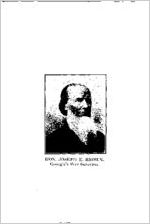
HON. JOSKIH K. IWCHVV, Gi-orgias \V;ir Governor.
HISTORY
OF THE
SIEGE AND BATTLES
OF ATLANTA.
-BY--
W. P. ARCHER.
Adjutant of Joceph E. Brown Camp. No. 1776. U.C.V.
PRICE, 25 CENTS.
1S
if s
*
n<.u -J. eat ^<
J. M. STANLEY, Commander Joseph E. Brown Camp,
No. 1776, U. C. V.
zo
IN TRODUCTORY
W. P. Archer, a Confederate Veteran and Adju tant of the Joseph E. Brown Camp No. 1776, United Confederate Veterans, and one who was on the firing line during the siege and hard fighting around Atlanta, which lasted for ten weeks, has from actual experience endeavored to give a cor rect and true history of the battles and other events that took place during these terrible times in 1864. He has endeavored without any red-tape, to make this little history so plain that any per son, young or old, whether they live in the frozen regions of the North or dwell in our beautiful Dix ieland, or hail from the far-away West where the yellow roses of Texas nod their beautiful heads, and seem to say good morning, may read its pages and go with us through all the hardships and disap pointments that we underwent as if they had been in line with us during our struggles for the mas tery and possession of our beautiful Gate City of the South for which so many brave boys gave up their lives.
i
READ IT. IT WILL INTEREST YOU.
After General Joe Johnston had given battle to Sherman's well-fed and well-equipped army, never retreating unless flanked, the Confederate army lame to the Chattahoochee river, and being pressed in front and also threatened with a large flank movement on both our flanks the Confederates hastily threw in their pontoons and were soon on the south side of the Chattahoochee next to the city. The Confederates as they had fallen back had torn up the W. & A. railroad behind them. Our command made a stand after crossing the riv er for a few days, with several pieces of artillery at a point where Hollywood cemetery now is; and to give an idea of the ingenuity and strategy of these Western Yankees that we were fighting, on the third day after we had crossed the river they had repaired the railroad, as we learned from the exhaust and whistle of their engines on the other side.
Only a few days passed until the whole of the Confederate army came into the fortifications
5
around the city, except scouting parties thrown out between the city and the river, in order to detect any movement that the Federals might make in crossing. The Confederates had not occupied the entrenchment but a few days when a gloom came over the whole of the army, caused by an order coming from Richmond removing General Joe Johnston and putting General John B. Hood in command, who was known to be a reck less fighter. It is said that when General Sherman heard of this change, he said to his fellow officers, "Boys, we will get them now; heretofore we have had to be the aggressors, but I know Hood, he will come at us any old way and we will get them sure."
BATTLE OF PEACHTREE CREEK JULY 20TH, 1864.
Only a few days after General Hood was placed in command couriers and scouts began to come in and report that Sherman was crossing the river between where the W. & A. R. R. now crosses the river and Roswell. He was allowed to come over un molested. Only the crack of a Confederate sharp shooter's rifle was heard. Now, then, Sherman had not been on this side long until he began to pick a fuss with Hood. He began this by display ing Schofield's Federal division, down the left side of the river (our right side). Except some skir mishing with our outer-post there was nothing of much interest transpired, until on the night of
July 19th, when Schofield's division of Federals came and camped on the south side of Peachtree creek next to the city. This was Sherman's bait for Hood. General Sherman having attended mil itary college with Hood and knowing his disposi tion could make no mistake. On the early morn ing of July 20th Schofield's men were busily en gaged eating their breakfast when a division of Hood's Confederates surprised them and the battle of Peachtree creek was on good and strong. At first the Federals seemed demoralized and panicstricken and everything seemed to favor the Con federates, but this situation did not last long, for just over beyond the creek lay thousands of other bluecoats, who came sweeping down like a thunder bolt upon the thin lines of Hood's Confederates. For two hours and thirty minutes the battle raged. At last, when it seemed that it was impossible to withstand the onslaught of the Federal reinforce ments we were compelled to withdraw and fall back into the main line of fortifications north of the city, leaving our dead and wounded on the field, amounting to about four thousand killed and wounded, besides those who were missing, also leaving our rifle-pits in possession of the enemy. The wounded were taken prisoners and sent back to the Rock Island prison. Some of them lived to get home after the war, others died of their wounds and never returned.
The advantages gained by the Federals in this fight were great, as they came near enough to the city to knock the steeples and tall buildings into atoms. Directly north of the old Union Depot, out about where Kimball street now is, the Yanks obtained a position for a lialf mile or three-quarters in our front, not more than two or three hundred yards from our main line; here the deadly aim of their sharpshooters, with their trained riflemen, with their fine Whitsworth rifles, sent
7
many o.f our brave boys to tlioir long homes. It was here at this terrible place that John Shropshire, brother of ex-deputy Sheriff Andrew .J. Shropshire, was killed while at the PouderIIOIIPC well getting water, be making the twenty-seventh man Ilia Ili:ul born tilled at this well. The roof and curbing around the top of ti'is well was literally perforated with minie bails. ,'lohti Shropshire was a. prince of a feliow but he had his lif shot out of him in an effort to obtain water for his comrades who were suffering in the ditches, as he had as many as a dozen canteens strapped on him when he was killed. It was risk your life or perish for water. The battle of Peachtree creek was one of the bloodiest lights of short duration that took place during the war. Shermau could not have led Joe .lohnston into this trap
BATTLE OF ATLANTA, JULY 22,186-1.
After the battle of Peachtree creek on July 20th, on July 21st heavy skirmishing and artillery fire was heard all along the lines. On the night of July 2 l:;t it was o^thn.itsd, by elo.se observers, ths.i Gen eral Sherman fired about twenty-eight hundred shells and solid shot foto the city, these mis siles being fired high tip over our lines of forti fication and dropping over into the city. On the 21st a portion of MeFherson's command attack ed and carried by assault a position known as Legget's Hill, which \va? of much .ndviuitag? to the Federals. On the morning- of the 22d about four o'clock, we were ordered to leave the works north cf the city, without making any noiss, not to speak above a whisper or to allow a cantes:i or sabre to rattle, and move ?.s rapidly as pos sible by right oblique in the direction, of whera Grant Park jiow is. About daylight our com mand reached the old Fair Ground out about where Broyles street is now in East Atlanta. Here we were halted and drew ?. small ration of hard tacks and sow belly, and a water bucket full of bourbon whiskey, with a small tin dipper to dip
8
W. P. ARCHER, Adjutant, Joseph E. Brown Camp, Xo. 1776,
U. C. V., and Author of This Book.
it with on the side. About eight o'clock we had orders to move hurriedly due north until the road leading out to the old Atlanta Rolling Mill was reached, and to form along the road. When we had reached this point our command formed on both sides of the road. While in this position Claiborn's division of Hardee's corps passed, and here I wish to say that in all of my experience I never saw a more graceful rider astride a horse, or a grander looking man than Pat Claiborn, or at least I thought so on that eventful morning of July 22, 1864. When Claiborn's command had passed us we were ordered to fall in behind them. When the old rolling mill had been reached our com mand was ordered to deploy to the right. Clai born's division kept straight on in the direction of where the Yanks were tearing up the Geor gia Railroad, between Atlanta and Decatur. Our command went in rather a southeast direc tion. We had not gone a great way until the rattle of musketry told us that Old Pat had flush ed them,' and that the fight was on. Our command soon came to an old pine field, out beyond where Grant Park now is. Here we had come in range of their guns. Minie balls were rattling like hail up among the pines, cutting off limbs and twigs everywhere. Occasionally a shell or solid shot would come screaming through the pines like so many wild animals. Here we were ordered to lie Hat down on the ground, as every shell seemed to be hunting for us, as they came lower and
9
lower. We had been in this position about thirty minutes, when we were ordered to double-quick forward. About one hundred yards from where we were in the old pine field was a piece of cleared land about one hundred yards wide, inclining to wards the east. At the lower side of this strip of land was a good set of entrenchments, with no soldiers in them, and the plan was to fill up this va cancy with our command. On double-quicking through this open space into the works, we lost five men, killed outright, and several wounded, and about the same ratio throughout the regi ment. Over to our left the Yankees had installed one of the finest batteries that ever had been sent out. It was known as DeGress Washington battery. It worked eight fine cannon, and was playing havoc with everything in its reach. CoL Thomas, an Atlantan, who after the war was con nected with Sheriff John Nelms' office, was in command of the Forty-Second Georgia regiment. He decided that he would stop their depredations, by taking it by assault. He rallied his men, made them a short speech in which he told them that every man that was willing to follow him in tak ing the battery to step forward with present arms. At the word, it is said that every man in that bloody Forty-Second Georgia regiment stepped forward. When they had advanced to a certain
point the Confederates raised the Rebel yell and charged bayonets right on to the battery. The fighting was terrific; hand to hand fighting, with
10
butts of their guns, etc., was general around the battery. Finally the men who commanded the guns, routed and panic-stricken, fled and left their guns in the hands of the victorious Forty-Second Georgia. But General Logan, who commanded a division of Western Federals, on hearing of the loss of their fine battery, addressed his men, tell ing them that it never would do to let Washington hear that the Rebels had their fine battery; to follow him, that he would retake it. Over behind a large clump of woods his division formed, and at the command charge, they came like a storm above the thunder of artillery and the rattle of musketry. You could hear the Yankee battle cry, "Husa! Husa!" etc. Astride a fine dapple gray horse, with hat in hand he led his men. Time and time again the little band of Confederates stood their ground, repulsing the blue lines of Logan's Federals, only to see them rally again, and come with more men than ever. Finally after desperate hand to hand fighting, three or four to one, the Confederates had to give up and get away as best they could, leaving the guns again in the hands of the victorious Logan. How General Logan escaped that day has always been a mystery to me. I guess his time had not come. During the fighting General McPherson, while out on his horse reconnoitering, came too close to a bunch of Confederates, who occupied a clump of bushes. General McPherson, on riding out into the open, not more than one hundred yards away,
11
was discovered by the Confederates, who began to yell at the top of their voices: "Shoot the man on the horse! Shoot the man on the horse!" Gen eral McPherson wheeled his horse, in an effort to get out of the way, but he was too late, as a volley of Confederate bullets had gone straight at him. As he turned he reeled in his saddle and fell from his horse mortally wounded.
When it became known that General McPher son had been killed, you could hear above the rat tle of musketry and the thunder of artillery the Rebel yell, and shouts of the Confederates all along the line. Soon after this Had taken place and while we were being pressed in front by numbers double ours, couriers began to rush in and report that a division of Federals was turning our rignt flank, in the direction of where the Federal Prison now is, in an effort to get in our rear, and destroy the West Point and Central railroads, the only two roads left open to the city. This called for quick action. As much as he was needed at the front, General W. H. T. Walker was ordered to take his command and meet them in the open, and if possible check this turning movement.
General Walker with his division responded quickly and met the Federal advance guard about one mile northeast of where the Federal Prison now is. In this portion of the battle the fighting was terrific and very deadly, as both sides fought in the open. While leading his men in the be-
12
ginning of this attack, General Walker was shot from off his horse and instantly killed. When it became known along the Federal lines that they had killed General Walker, it seemed that ten thousand men were yelling and shouting, "Husa! Husa!" etc. Husa was the Yanks' battle cry, and the Rebel yell was the Confederates'.
Though they had killed General Walker, this did not stop his men. They gave the Rebel yell and gave them cold steel, which they could not stand, and the flank movement failed in part, but had the desired effect of drawing Walker's divi sion away from the front, thereby so weakening our lines that they were broken in several places, causing the Confederates to have to fall back to wards the city to a line of works running along about where the Home of the Incurables is now. Night came on and a general fire of small arms was kept up all night, the firing extending in a half circle around the east, north and west sides of the city. On July the twenty-third both sides were engaged in getting up the wounded that had not been brought in the day before, and burying of the dead. Just back of the old Union Depot and where Wall street now is, was a park, ex tending from Pryor street to Central avenue, and back north to Decatur street. At the far side, next to Decatur street, they had set up some large tents; ambulances were running bringing in the wounded from the battlefield. This park was covered with wounded soldiers, some of them dy-
13
ing in the hot sun. Under these tents upon large plank tables, a large crowd of doctors were busily engaged in cutting off legs and arms. Among the wounded were many Yankees. You could not put your finger down on any part of a man's person that you could not find some soldier hit by a minie ball or piece of shell.
Reports on both sides agree that the loss was about eight to ten thousand on each side, probably more on the Federal side, from the fact that they were mostly aggressors. This battle gave the Federals another big advantage, as they after the battle obtained a position east of the city where they could fire their shells and solid shot into the heart of the city with ease, which they did. Out on the railroad, about where the Terminal Station now is, non-combatants, women and childen, who were unable to refugee and get out of the way, tunneled under the banks of the railroad cuts, and lived there, to keep from being killed by Sherman's shells. These shells being fired high up over our lines of fortification, in a kind of rainbow fashion, would come screaming and drop over into the city, bursting and sending their missiles in every direction. Early on the morning of July twenty-eighth, our scouts began to come in and report that the Yankees in large numbers were turning our left flank and moving in the direction of the Central of Georgia and West Point railroads at East Point. This brought on the battle of Ezra Church, west of Atlanta.
14
BATTLE OF EZ RA CHURCH, JULY 28, 1864.
On July the 27th we were reinforced by Rhoddy's Mississippi brigade, who had come in over the Atlanta and West Point Railroad. They left their trains at a point out where Oakland City now is (as that was as near as the trains could come in on account of being shelled) and came and camped in the hollow out where Lowe street now is, in West Atlanta. Rhoddy's brigade was a fine look ing set of young fellows, clean and nice, who had never done any actual service, and they were spoil ing for a fight. On the morning of the 28th, by sunrise the reveille was beaten and they were or dered to form and march in the direction of Ezard's Church by the way of where West End and Oakland City now is. About two and a half miles west of Oakland City the Confederates flushed the Federals' advance guard and soon drove them back to their main line. The Federals having got onto the fact that Hood would attack them, had hur riedly thrown up temporary works out of fence rails rocks, logs, dirt or anything that would pro tect them, and behind these defenses they lay waiting the approach of the Confederates. (If I mistake not, Rhoddy's Mississippi brigade, Walthall and Claiborn's divisions.) When they had come near enough to receive the Yankee fire from behind their works, they raised the yell and charg ed. And it is said by the men who were in that charge that the Confederates were halted within forty yeards of the Federal works, and made to
15
stand and fight them for thirty minutes, when they could see nothing of them but their arms and hands when they were reloading their guns. Hav ing failed to rout them from their strong posi tion, and Rhoddy's brigade and Gibson's Louisiana brigade being almost cut to pieces, a retreat was ordered, leaving hundreds of dead and wounded on the field. Rhoddy's brigade, or what was left of it, returned to the same place that afternoon that they occupied before going into the fight that same morning. It was here that your humble servant heard them relate the many bloody events that took place during that fight. Their litters were as bloody as if hogs had been stuck on them; their flagstaffs were shot to pieces; their colors were shot into ribbons, and not more than onehalf of that fine brigade that left that morning returned. It was one of the most pitiful sights that I witnessed during the war to hear them lament, and even shed tears, when they thought of their brother or some close friend that had been left on the field, either to be carried back to a Northern prison to die, or left dead on the field. Oh, it was awful, but these young Mississippians wanted to see the elephant and hear the lion roar, and they saw him. After the fight the Federals did not follow up the retreat of the Con federates, but were content on holding and mak ing stronger their defenses. The main body of the Confederates fell back into line of breastworks, running west of where Oakland City now is, ex-
is
tending in the direction of East Point. This line of works was very strong, having what was known as head-logs to shoot through, with trees cut down in front with the tops thrown towards the Yan kees, with all the limbs trimmed, as sharp as pitch forks, with spaces left open, so that our pickets could pass in and out. When there was no timber in front, they had carried in long bogs, bored holes in them and had driven hard seasoned spikes in them, looking somewhat like fodder racks. The Yanks would frequently, when our pickets were close together, hollow at the Confeds and say: "Hello, Johnnie, what are you going to do with them fodder racks over there. Be good and take them down. We don't want any of your fodder," etc.
THE EVACUATION OF ATLANTA.
For two or three weeks, both armies lay watch ing each other in a kind of half circle around the city, artillery duels, sharp-shooting, being kept up almost day and night. About the latter part of August,, couriers and scouts began to come in and report that forty thousand Yankees were crossing the Chattahoochee river at old Campbellton, about sixteen or eighteen miles southwest of Atlanta. When this was made known there was great con fusion in the Conferedate ranks, and officers and privates all understood that something had to be done. General Hood called together his division and corps commanders and when it became known that Atlanta was to be given up such times as fol lowed that night will never happen again. Heavy
17
cannon that we could not carry was left spiked on the breastworks. Commissary stores and ammu nition that we could not carry was either burned or blown up; the blowing up of our own arsenal shook the earth for miles around. It seemed that the world was coming to an end. On leaving the city, straggling Confederates for no other purpose than to satisfy their hellish desires, set fire to a number of houses that had been left vacant by refugees, and on leaving the city going south, the elements were red as though they were on fire. The reflection was so great that you could have picked up a pin. All kinds of explosions were heard back in the city. The Federals having suc cessfully crossed the river at old Campbellton, were advancing rapidly in the direction of the West Point Railroad at Fairburn. The only thing that the Confederates could do was to hurry on to Jonesboro, twenty-one miles away, and save the Central of Georgia Railroad. After getting
possession of the West Point road at Fairburn they began to move in the direction of Jonesboro, twelve miles distant from Fairburn by the way of old Bethsada church. They were met there by Confederates, which brought on the battle of Jonesboro, where the Confederates, having to fight two or three to one, and having no cavalry except General Boss's handful of Texans to assist them, were again beaten, and had to fall back to Lovejoy Station, six miles south of Jonesboro, where General Hood divided his little army in
18
two, sending one down the Central Railroad in the direction of Macon and the other around through Alabama back into Tennessee, where at Franklin, Tennessee, they were almost annihilated, and never any more good. At Franklin the Confeder ates lost thirteen generals, killed and wounded, in cluding General Pat Claiborn, who was shot from his horse on the Yankees' works.
SOME EVENTS THAT TOOK PLACE DURING THE SEIGE OF ATLANTA.
Just after the battle of Peachtree Creek, on July 20th, a sixteen-year-old Confederate soldier, who belonged to a Walton county company, Lieu tenant Gibbs in command of the company, went back in the rear of the works to a vacant house near the old Ponderhouse, where so many men had been killed by the Yankee sharpshooters, to write a letter home to his mother, telling her that he was all right. I heard Lieutenant Gibbs tell him that he would be in danger, that he had better remain in the works, but the young fellow did not heed the warning; he went on into the house and sat down on an empty box in front of a glass window, and began his letter. He had not proceeded far when he was located by the Federal sharpshooters. A sharp crack of a Whitsworth rifle, a big bullet came crashing through the window, striking the young fellow square in the breast. With a bound and a loud cry of "O Lord, I am killed," he fell to the floor.
19
The litter-bearers of his company made a kind of circle out the redoubts, getting the house be tween them and the sharpshooters, and suc ceeded in getting him out. I went with them in order to assist if needed, and also to satisfy my own curiosity. We found him down on the floor, spinning around like a chicken with its head cut off; blood was spouting from his breast in a stream as large as your finger. The floor was a pool of blood. We put him on the litter and went as fast as we could down under the hill to a big tent, where the doctors were, but when we low- j' ered the litter the poor fellow was dead. This f incident is as fresh in my mind today as it was ',: the day it happened, but the lapse of time has caused me to forget the young soldier's name, but I do know that he was from Walton county, and Lieutenant Gibbs, one of the most painstak ing industrious officers that I ever knew, was in command of the company.
THE DEATH OF THE HABERSHAM BROTH
ERS, BATTLE OF ATLANTA, JULY 22,1864.
Out beyond Grant Park was some mighty hard fighting. In Pat Claiborn's division were two young Confederates who were brothers. One of them, the elder one of the two, was a captain of a company, the younger one was a private in his brother's company. While gallantly leading his company in a desperate charge on McPherson's Federals, he fell dying with a big minie ball through his body. His brother seeing him
20
fall, went to his assistance, when he was also killed, falling across his dead brother. I have a picture of these two young Confederates, taken when they left their homes to join the army.
GENERAL ROSS WITH HIS LITTLE BAND OF TEXAS RANGERS ANNIHILATES A DE TACHMENT OF KILPATRICKS YAN KEE SCOUTS ON JULY 24, 1864.
General Ross was stationed out on our left wing, out near where the old camp ground is now, southwest of Atlanta, to watch any move ment that might be made by the Federals in the direction of the West Point Railroad, between Atlanta and Fairburn. On the early morning of July 24th his scouts began to report that a large party of Yankee cavalry had formed a scouting party and was moving slowly down the public road in the direction of the railroad. General Ross immediately ordered his men to dismount, detailing one man to hold six horses, over under a hill, and the balance of them to double-quick to a thick piece of woods that the road passed through, and when they were in 40 yards of the road to lie flat down on the ground and that when their column got fully in front of them to give them a volley of buck and ball from their carbines, and give the Rebel yell. They had not been in this position long until the head of the Federal column began to come in sight. In talking with Ross's men afterwards, who were present and participated in this event, I learned from them
21
that the Yankees seemed perfectly averse to any
danger whatever, riding along the road two and
two, talking and laughing, some of them with
their reins hanging on the horns of their saddles.
When their column had got fully in front of Rosas
men, who were as flat as flounders on the ground,
they were ordered to give them a volley of buck
and ball, accompanied with the Rebel yell. At the
first volley it is said by men who were present
that the road was almost blocked with dead and
wounded horses and men. A general panic took place. Wheeling their horses, dashing through the woods on the opposite side, it is said no mor
complete stampeae ever took place than this. Panic-stricken and frantic, all of them that were
not killed or wounded rode over their dead and
wounded comrades back in the direction from which they had come. General Ross, knowing
that they would come back at him with more men
than he could fight, went back to his horses, mounted and rode off, after having blocked the
road for a quarter of a mile with dead and wounded
men and horses. An old farmer living at the time near where this took place, told me that the stench from the dead horses was fearful. For some reason this event of the Civil War has never found its way into public print, yet it happened and the little Texan, General Ross, did the work in true cowboy style. Ross never lost a man or horse in this scrap.
Note.--Buck and ball is a large ball about the size of a muscadine, with three buckshot. At close range they were very deadly.
22
OLD MAN BURTON JONES.
Down in Fayette county, Georgia, there lived an old man by the name of Burton Jones. He was an honest, conscientious old farmer, and was a devout Union man and voted against secession. Finally in 1864, when they called out from the cradle to the grave, they conscripted the old man and sent him to the front. He had not been at the front long until things began to take shape for the battle of Missionary Ridge. When it be came known from the officers that we were going to have a fight old man Jones (who was a Hard shell Baptist at home) got down by one of the officers' tents and began to pray along this line, he says: "O Lord, Thou knowest that I had nothing to do with getting up this terrible war, and thou also knowest that by some means they have got me into it. Now Lord, inasmuch as it has been about six months since I have asked you for anything, I want to ask one more favor of you, and that is this: The officers tell us that we are going to have a big fight with the Yankees today. Now Lord, if you can't consist ently be on our side, don't be on the Yankees' side. Just get off to one side, set down on a stump and keep your mouth shut and you will see some of the d-m-est fighting that you have seen since you moved out here." The old man rose up with a smile on his face, picked up his old Enfield rifle, examined the triggers good, pulled back the ham-
23
mers until they cracked three times, and says: "Boys, old Betsy is all right, let them come. They said down in old Fayette county if they brought me here I wouldn't fight. Now watch me today." Prom that day until Lee surrendered at Appomattox there never was a better soldier ever shoul dered a musket or carried a canteen than old man Jones. He lived to get home after the war, and lived to be eighty-six years of age, but he is dead now.
HOW CONFEDERATE SOLDIERS AMUSED
THEMSELVES AROUND THE CAMPS.
A Confederate soldier was prone to want to gamble and engage in all manner of games of chance. Three up, five up, seven up, poker, string games, and high dice were the games mostly en gaged in. The army would scarcely come to a standstill until the boys would bring out their craps, high dice and other paraphernalia and the games were on. Sometimes they would become tired of these games and would get up something new. And here I wish to relate something that I know my readers will be loath to believe, yet true, and can be verified by Confederate veterans now living. There was scarcely a Confederate soldier but that was pretty well stocked with what we called gray-backs. And the boys learned some how or other that if you would procure a grayback off a redhead man and one off a black-haired man and put them down on a piece of white paper that they would fight like bulldogs. I have seen
24
DAVID GANN, Color Bearer, Joseph E. Brown Camp,
No. 1776, U. C. V.
them bring up these gray-backs, borrow the offi cer's field glasses and give them over to two sol diers, who were to act as judges, and amuse themselves a half a day at a time with these lice fights, hundreds of dollars of Confederate money being won and lost on these fights. Whenever a gray-back was whipped and run, he never would fight any more. The bets were then taken down and another gray-back was brought up, and thus the fun would go on. These louse fights gave rise to as much genuine pastime and amusement as anything that took place around the camp. Look ing through a good pair of glasses a gray-back would look as large as a small grasshopper, and you could easily detect every movement made during the fight.
LITTLE WILLIFORD BROWN SHOT RIGHT
THROUGH THE HEART.
In our company was a little dried-up looking fellow by the name of Williford Brown. He was the least man in the regiment, and the boys nick named him and called him Bullbat. Out where Bellwood now is our lines and the Yankee lines were so near each other that any movement of our troops had to be made in the night. After dark one night our regiment was ordered to move some little distance to our right, and in doing so we were told not to speak above a whisper, or allow anything to rattle, as any noise would draw the fire of the Yankee sharpshooters, who were right at us. We had not gon--e 2a8--great way when there
was a flash of a rifle, accompanied by a sharp
report, and a big bullet came and hit Bullbat
square in his breast; the ball having struck, or
having spent its force, barely pierced his old
gray jacket, and had about halfway buried itself in the flesh, but it knocked him down. Bullbat thought his time had come. Somebody yelled out that a man was shot from Company C, Fourth Georgia regiment. Somebody else yelled out: "Who is it?" It being very dark and nobody could see who it was, Bullbat began to hollow as loud as he could: "It is me, boys. It's me, little
Williford Brown of Company C, Fourth Georgia
regiment. Shot plum through the heart. Oh Lordy, I'm dead." The incident caused so much confusion and the Yankee fire became so sharp that we were ordered to lie flat down on the ground until everything become quiet and the firing ceased. Bullbat was carried into the works and the bullet was pulled out, and the next morn ing at roll-call he answered present. He delighted in sitting in the ditches, pulling open his old greasy gray jacket, showing the boys where the big bullet killed him. Bullbat kept that bullet and took it home with him after the war, and no little money could have bought it. When he showed it to any one he would always say, "Let me show you the big minie ball that killed me up at Atlanta during the war."
--26--
BONXIE BLUE FLAG.
We are a band of brothers, and native to the soil Fighting for our liberty, with treasure blood and toil And when our rights were threatened, the cry rose
near and far Hurrah for the Bonnie Blue Flag that bears a sin
gle Star. Chorus.
Hurrah, hurrah for Southern Rights; hurrah! Hurrah for the Bonnie Blue Flag that bears a sin
gle Star.
First gallant South Carolina nobly made the stand, Then quicly came Alabama, who took her by the
hand; Next followed Mississippi, Georgia, Florida-- All raised on high the Bonnie Blue Flag that bears
a single Star. Chorus--
Ye men of valor, gather round the Banner of the Right;
Texas and Louisiana join us in the fight. Davis, our loved president, and Stephens statesmen
are, Now rally round the Bonnie Blue Flag that bears a
single Star. Chorus--
And here's to brave Virginia, the old Dominion state,
--27--
With the young Confederacy at length has linked her fate.
Impelled by her example, now other states prepare To hoist on high the Bonnie Blue Flag that bears a
single Star.
HOME-SPUN DRESS.
Bonnie Blue Flag.
O yes, I am a Southern girl, and glory in the name, And boast it with far greater pride than glittering
wealth or fame; I envy not the Northern maid her robes of beauty
rare, Tho' diamonds grace her snowy neck and pearls
bedeck her hair. Chorus.
Hurrah, hurrah for the Sunny South so dear, Three cheers for the home-spun dress the Southern
ladies wear.
My home-spun dress is plain, I know--my hat's pal
metto, too,
But then it shows what Southern girls for Southern
rights will do.
We scorn to wear a bit of silk, a bit of Northern
lace,
But make our home-spun dresses up, and wear them
with such grace.
Chorus--
--28--
Our Southland is a glorious land and her's a glorious cause,
Then here's three cheers for Southern rights, and for our Southern boys.
We send the bravest of our land to battle with the foe,
And we would lend a helping hand--we love the South you know.
A soldier is the lad for me, a brave heart I adore, And when the Sunny South is free and fighting is
no more I'll choose me then a lover brave from out that gal
lant band, The soldier lad I love the best shall have my heart
and hand. Chorus--
THE BOYS IN GRAY.
A. B. Finley.
Air: See Chorus. Our ranks are growing thinner, boys,
Our steps are growing slow, Our eyes are getting dimmer,
Our heads are bending low,
Our forms are bent, but people We are ever proud to see,
The boys who fought with Jackson, With Johnson and Lee.
Chorus.
Then
palms
of
victory, --29--
crowns
of
glory,
Palms of victory we shall wear. (Repeat chorus.)
We are not so lithe and limber As we were in sixty-one,
Our eyes are not so sparkling, For we see our setting sun.
But the hero spirit's in us, As 'twas ever wont to be,
The boys who fought with Jackson, Bragg, Beauregard and Lee. Chorus--
Our days are being numbered, And soon we'll pass to rest
Beneath the sod of Dixie, The land we loved the best;
But grand will be our memory, Till time shall cease to be,
The boys who fought with Jackson, Hood, Gordon, and with Lee. Chorus--
We were never much in numbers, But I know we did our part,
And won the whole world's honor And our native country's heart.
And when this life is over, And we from the earth have gone,
We'll join Pap Price, Dick Taylor And Dowling 'round God's throne. Chorus--
We have shown to all creation How the world's affairs should run; 30
Future men will gaze in wonder At work we have done.
We have helped to build your cities And made the old South new,
But soon we'll go to glory And leave it all with you.
RELIGIOUS SERVICES IN THE ARMY.
Some of the more devoted Confederate soldiers in camp kept up religious services, holding prayer meetings and song services, sometimes preaching, when the Yanks were not too close, as a Yankee sharpshooter's bullet was blind, and could not tell a preacher from an ordinary soldier. Here are some of the old time songs they would sing, as follows:
"A Charge to Keep I Have; a God to Glorify," etc., and then they would break out on "Amazing Grace, How Sweet the Sound," etc., and then they would turn loose and make the woods ring with this old song: "On Jordan's Stormy Banks 1 Stand," etc., and they never would dismiss with out singing: "How Firm a Foundation, Ye Saints of the Lord," etc.
Everybody, saint and sinner, seemed to enjoy these old songs, but they won't sing them for you now. Why don't they?
THE OLD CONFEDERATE VETERAN.
He stands erect among meii, if his body is bent by
the weight of years. The fire flashes in his eye as
bright as it was on the fields of Gettysburg and
Chickamauga, the Wilderness and other famous bat
tlefields of the war. Time lets him down slowly, but
it lets him down nevertheless. A few more years
and there will be no survivor of the Confederate
armies to tell the story.
]
Fraternally, THE AUTHOR.