


- Collection:
- Georgia Historic Books
- Title:
- Life and labors of Francis Asbury, bishop of the Methodist Episcopal Church in America / by George G. Smith
- Creator:
- Smith, George Gilman, 1836-1913
- Publisher:
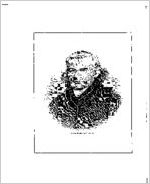
- Smith, George Gilman, 1836-1913. Life and labors of Francis Asbury, Bishop of the Methodist Episcopal Church in America. Nashville, Pub. House M.E. Church, South; Barbee & Smith, agents [c1896] xv, 311 p. port.
- Date of Original:
- 1896
- Subject:
- Methodist Episcopal Church--History
Bishops--Georgia--Biography - Location:
- United States, Georgia, 32.75042, -83.50018
- Medium:
- books
texts (document genres) - Type:
- Text
- Format:
- application/pdf
- Local Identifier:
- gb0244
- External Identifiers:
- Metadata URL:
- https://dlg.galileo.usg.edu/id:dlg_zlgb_gb0244
- Digital Object URL:
- https://dlg.galileo.usg.edu/georgiabooks/do-pdf:gb0244
- Holding Institution:
- University of Georgia. Libraries
- Rights:
-

LIFE AND LABORS
FRANCIS ASBURY,
BISHOP OF THE METHODIST EPISCOPAL CHURCH IN AMERICA.
GEORGE G. SMITH, D.D.,
IDedicatiort,
CArtst/an Jtvtrae c? 92?&tA0ctiS f tZ^SsvVjVezS C
3?o&jtc Jts tDeetecatect.-
PREFACE.
SOON after the death of Bishop Asbury measures were put on foot to have a full biography of him. prepared. Dr. S. K. Jennings, at that time one of the most schol arly men of the Church, -was selected to do the -work. After a considerable lapse of time, he returned the ma terial placed in his hands and declined to go any farther. In the meantime the journals of* Bishop Asbury -were published; and as they partly served the purpose of a memoir, none was prepared. Then the history of Dr. Bangs and the more extensive work of Dr. Abel Stovens gave a full account of his labors; and over forty years ago the Rov. Dr. Striolcland sent to press "The Pioneer Bishop," -which -was a biography of Bishop Asbury. The Uev. Dr. Janes made selections from his journals, and thus prepared also a memoir in Asburys own words.
It has seemed to me, however, that a now life was demanded, and I have written it. I have relied very largely on his journals, but have by no means confined myself to them. I have freely availed myself of the la bors of those who have gone before me. I do not think I have allowed any available source of information to be neglected. I do not think a biographer is an historian in a general sense, and think that, however one may be tempted to turn aside from the direct line his work marks out, he should resist the temptation, and so I have confined myself as strictly as T could to the part which Asbury himself acted in the history of tho Church. Nor do I think a biographer is an advocate or
O)
an apologist. It, is his business to toll -what the subject
of hia writing was, and what ho did, and leave others
to form conclusions for themselves. There are always
matters in which the biographer and the subject of hia
writing- arc not frilly ag-rced, and things of whose non-
existence he would have been glad; but above all else,
lie must be honest and conceal nothing. There are few
things in Anburys life "which ask for defense, and iiono
which ask for concealment. He "was so closely con
nected with the beginnings of things in the -Methodism,
in America that the story of his life is largely the story
of early .Methodism, and I have traced his journeys and
given an account of hia personal connection with men
arid places with a particularity "which may sometimes
seem monotonous.
I do not think Asbuiy has had the place he ia entitled
to in the history of the nation or of the Church. To no
one man was America more indebted than to him.
I have not given my authority for statements in
many cases. Those familiar with his journal will see
how closely I have followed it and how freely I have
used it. I have found it difficult, if not impossible, to
point out the page on which the statements were found
ed in many eases. Where I could give my author, I
have done so.
I think this book is needed, and I hope it will do good.
Macon (Vineville), Ga.
GEORGE Gr. SMITH.
CONTENTS.
CHAPTER I.
1743-1771.
r
Asbury's Birth--Family of .Joseph Asbury--ChildhoodConversion--Apprenticeship--The .Local Preacher--On a, Circuit--The Missionary ...--.---....-...-.....-..-.-
CHAPTER II. 177.1-177S.
mary--Passage from Bristol--Incidents
CHAPTER ITI.
irrz.
Journey to Maryland -- Bohemia Manor -- Strawbridge -- Frederick County --View of Maryland -- Asbury's First Round -- Goes to Baltimore -- View of Baltimore -- Into Kent Comity--Conflict with the Parson--Sickness. ..... 14
CHAPTER IV. 2773-2774.
Asbury in Maryland Again--Goes to New "York --To Phil adelphia- -Mr. Rankin's Arrival--The First General Con ference--Maryland Once More ........................ 26
Mr. Asbury in New York and Baltimore- -New York Again --FJiscourageinents --Mr. Ttaiikin and Mr. Asbury- -Rich ard Wright Goes Home--Asbury's Discipline--Religious Experience -- Feebleness of Body -- Goes Southward-- Maryland Again ...................................... 34 (vii)
CONTENTS*
Isaac Luke--County Work --Brunswick Circuit. ........ 42
CHAPTER VII. 1776.
The War Time--Mr. Wesdey's Mistake--Asbury's View-- Asbury Kick--.Berkley Bath--Preaching--Conference at Deer Creek -- Discussion on the Sacraments---Trouble with Mr. Rankin-- Asbury left Out of the Minutes -- Goes to Annapolis--Test Oath--Retires into Delaware. . 47
CHAPTER VIII. J77S.
Life in Delaware -- Thomas White--Asbury's Studies -- Stormy Times The Conference at Leesburg---Asbury's Called Conference---Troubles in the Conferences -- An bury's Hard Condition--A Truce Made ................ 53
CHAPTER IX. 1781-1733.
General Assistant--Conference in Baltimore--Settlement of Troubles---Through the Valley of Virginia--Allusion to Straw bridge--Through Eastern Virginia--First, Visit to North Carolina--His Friends Aiuonj? tho Episcopal Clergy--Visits Xew York, Pennsylvania, Kew Jersey-- Barratt's Chapel, 1784 -- Letter from Asbury to Shadibfd.................................................. 00
CHAPTER X. 1181.
Dr. Coke--Mr. Wesley's Will--Mr. Asbury Refuses to be Ordained Till a Conference \s Called--The Conference Meets--Mr. Asbury and Dr. Coke Elected Bishops and Called Superintendents. .............................. 72
CHAPTER XI. 17fij.
Mr. Asbury's Views on Episcopacy. ....,...-.--.......,., 77
CHAPTER XII.
Pjl
Thomas Coke -- The Welsh Gentleman -- Tn Oxford -- Coke's Curacy--Jlis Conversion--Mr. Wesley's .Favor-- His Labors- -Jlis Death ..............................
CHATTER XIII. Z785.
The New Bishop---Tour Southward--Henry Willis--Jessc Lee--Visits Charleston, S. O.--Edgar Wells--Journey Northward--Cokesbury College- -Visit to Mount Vernori --Corner Stone of College Laid . ......................
CHAPTER XTV. 1786.
.Asbury's Second Episcopal Tour-- Hanover, Virginia -- North Carolina -- Sinclair Capers -- Charley to ti --Hope Hull--John Dickins and the "Revised Discipline--Cen tral North Carolina- -The Baltimore Conference --The Valley of Virginia--lie! igious Experience at Bath --iieturii Southward .......................... ...........
CHAPTER XV. 1787.
The Tout- of the Two Bishops--Dr. Coke Again--The Blue Meetinghouse in Charleston--Prosperity of the Work in South Carolina and Georgia--Central South Carolina-- Journey North-ward----Virginia Conference--Baltimore Conference--Dr. Coke in Trouble---The New Discipline - -Mr. Wesley's Displeasure--Kffbrt to Appoint a Bishop -Failure ............................................ :
77SS. Charleston Again--Kiot-- Georgia--Hoi ston--Green brier-
Conference at Umonfown, Pa.--CoJlege Troubles. ...... 107
CHAPTER XVII. 1789.
Mr. AVesley's Famous Leiter and the Council--Georgia-- "Daniel Grant--Wesley and Whitefield School--Mr. AVesley's Letter--North Carolina--The Council.......... ... 116
x
CONTENTS.
CHAPTKLt XVIII.
1190.
P
Over the Continent--JSforth Carolina--Charleston---Geor gia--Western North Carolina--Over the Mountains-- General Russell's -- Kentucky -- Virginia --Pennsylvania Cokes-bury ...........................................
CHAPTER XIX.
Arminian Magazine -- Coke's Arrival in Charleston -- WiJliam Hainmett -- Georgia Conference--Virginia- - Wesloy's Death.-- Coke's Return to England--Jesse Lee-- New England--Asbury's Visit ......................... 128
CHAPTER XX.
1792. Returns Southward.--Cokesbury Troubles--Virginia Confer
ence--North Carolina Conference--Troubles in Charles ton -- Georgia Conference---Beverly Alien's Expulsion --Tour to Ken tucky---Northward Again. ............... 136
CHATTER XXI.
1793-1794.
--Great Exposure--William McKeiirlree- -
CHAPTER XXTT.
1195. Episcopal Journeyings--Death of Judge White--The En-
jialls Family--Governor Van Cortlandt--Return South.. 160
CHAPTER XXIII.
1796. South Carolina -- Georgia--North Carolina -- Tennessee --
Virginia -- Views on Education -- Bridal Party in the Mountains--Methodism in Brooklyn--Southward Again --Francis Acuff....................................... 166
CONTENTS. CHAPTER XXIV.
--
--
Northward -- Jesse Lee--He turns South--Gives Up at Brunswick, Virginia, and Retires for the Winter.. ...... 170
CHAPTER XXV. 1798.
Asbury Oat of His Sick Room--Recovery--Views on Slav ery--On Local Preachers--Some of His Mistakes--Vir ginia, Conference--O'Kelly--Tour oSTorth.ward--Death of Dickina.............................. ................ 177
CHAPTER XXVI. 1799.
Asbury in the Last Year of the Century -- Charleston -- North Carolina --Advice of Physicians -- .Feebleness of Whatcoat--Jesse Lee and Benjamin Blanton -- Henry Parks -- Tait's, Pope's, and Grant's -- Extensive Tour Through Georgia--Charleston Again................... 183
CHAPTKR XXVII. J800.
Beginning of the New Century- --Ashury Rests a MonthWashington's Death -- Nicholas Snethen--General Con ference--Great Revival--Whatcoat's Election as Bishop --Journey Northward ................................ 188
CHAPTER XX"VIII. 1SO1.
Troubles About Slavery --Death of Jarratt--Northern Tour --Revival Days--Southern Tour---Charleston Again.... , 198
CHAPTER XXIX.
1SOS. Northward Again--A View of the Virginia Conference--
Baltimore--His Mother's Death--Meeting with O'Kelly --Over the Alleghaiiies--Exposure in Tennessee--Sick ness--McKendree--Reaches Ca-mden and Rembert's,. . . 205
xii
CONTENTS,
CHAPTER XXX.
1803.
1'AGK
The South Carolina Conference--Scotch in North Carolina
--Mr. Meredith's Work in Wilmington-- Cumberland
Street Church in Norfolk---Northward Journey--Mer
chandise of Priests in Boston --- Southward Again --Trip to Ohio--Kentucky--L>r. Hi fide and His Blister--Journey
to Charleston--Conference at Augusta.................. 209
CHAPTER XXXI.
1804. Conference in Augusta--IJoasons for Never Marrying1--
Journey Northward--General Conference-- Slavery Ques tion Again--Confined by Sickness--T^etter to Hitt--Jour ney to the West, and Thence to Charleston.. ........... 218
CHAPTER XXXII. 1806.
Journey Northward--Letter Co Hitt--Conference in North Carolina--Episcopal Trials--Journey to the North--Jour ney to the West and the South........................ 225
CHAPTER XXXIII. l&'OG.
Ashury Alone--Coke Offers to Come to America--Offer Declined - -Camp Meetings In the J5ast-- Whatcoat's Death--Western Tout- -Southern Tour, ................ 233
CHAPTER XXXIV. 7.9-97.
Asbury Alone--.Tournoy Northward--Western New York --AT isits Ohio, and Goes Through Kentucky to Georgia -- Views on Education .................................. 240
CHAPTIsn XXXV.
1808. South Carolina Conference--George Dough erty--North
ward Journey Through New Virginia--Baltimore--Gen eral Conference- Death of Harry Gough--Conference legislation--Election of M<-Kendree--Tour of the Bish ops--Metts William Capers--Capers's Recollections..... 246
CHAPTER XXXVI.
1800.
PACE
McKendree'a New Departure--Northward Tour--Confer ence at Harrisonburg--Journey to New England--West ern Now York--Western Conference in Cincinnati-- Journey to Charleston................................ 257
. CHAPTER XXXVII.
1810.
Ashury and McKondree oii^Their Second Tour--The Vir ginia Conference--Mary SVithey's Funeral---New York Conference--New England--Jesse life's History--Doe and Asfoury--Genesee Conference--Western Conference -- Senator Taylor...................................... 266
CHAPTER XXX'VIII. 1811.
Asbury in His O!d A g--S \veet ness of His Character-
CHAPTER X 1812.
Near the Close--General Conference --Presiding Eldership --Benaoii's T.ifo of Fletchcr--Ohio--Naphville. . ........ 277
CHAPTER XU.
1814-1835.
The vSun Going Down--Goes Northward--T.ong Attack of Sickness in Pennsylvania--John Wesley Bond--IVIcKendree Crippled --Reaches Nashville--Georgia for the .Last Time--Goes Northward--The West Again--Surren ders All Control to McKeiirtree ........................ 2S8
CONTENTS.
CHAPTER XLIT. 1816.
CHAPTER XLIIT. Ap/bury's Religious Experience.. ......................... 301
CHAPTER, 3LLTV. The Character of Francis Asbury......................... 306
LIFE AND LABORS OF FRANCIS ASBURY.
FRANCIS ASBURY.
CHAPTER I.
3:745-1771.
Asbury's Birth--Family of Joseph Asbury--Childhood -- Con version---Apprenticeship--The I^ocal Preacher---On n. Cir cuit--Tkc Missionary,
~FpRANClS ASBURY was the son of Joseph As_!-' bury and Elizabeth liogers, his wife, lie w.ns born on the 20th or 2-1st day of August, 1745, about ilve miles i'roiu Birmingham, Staffordshire, Kuglnnd, His father was a stut-dy yeoman, a gardener for the great folks, or perhaps n manager of the gentlemen's estates. He had a home of his o\vti, was industrious, sober, thrifty, and might have be i u weniMiy. Asbury a-ak'I, if he Iiad not been so liberal,
The family whose name he bears, and from whom ' he probably sprang, were lai-ge landholders in ^Ifif-
t'ordshire, and J"t>hu Evaaw. tht: fat'ner of '""(ieoi-gi 1 Eliot." was *i tcMiaut: ou their estate, if Joseph. As bury sprang from this stock, he was evidently one of its poorer members; but what he hu-Ued in vested funds he made up in industry and (;;ij>;K'Uy, JUH! no lord in England was its ore independent than HJP good gardener of Staffordshire.
There were I rut two rhiKifeii in the UMle fniuiiy, one of wlioni, a girl, ilied in liii'jn'n'y. Josepli Awbnry was able and willing1 to give iilw only N^n n good i'ttueiiiion, Jiiiii went him io -scSiool (i.-u-iv, jiisd
(1)
he was able to read at between sis and seven years of age. But the master of the school used to beat the sensitive; boy so cruelly that his distaste for the school became fixed, and lie was permitted to dis continue attendance upon it before lie was twelve years old. He was then employed as a. servant in a wealthy and ungodly family; but when he was near fourteen years old, he chose ihe trade ol' a saddler, and. was apprenticed to a kind master, with whom he remained until he was nearly of age.
liis parents were Churc.h-of-England people of the best type, and he was carefully brought up. "He never," he says, "dared an oath or hazarded a He, and -was always a prayerful, religious child, abhor ring mischief and wickedness." His comrades called him parson; and when the brutal schoolmaster so cruelly tiogged him, he found relief in prayer. The good mother, always hospitable, and especially so to preachers, invited a pious man--not a, Methodist, however--(o her home. The young son was awak ened by hearing' him talk, and began to be more care ful in attention to his religious duties. The parish priest, -at whose church the family worshiped, was not a converted man, and so the young inquirer went to another church, opened to Whitcneld's preachers. Here he heard the leading evangelical preachers of th.it day, find into his hands came the sermons of White-field and Oennick, which he read with great interest. He became anxious to hear the WesTeynns, and sought them out, and joined their society; nnd while praying with a young companion in his father's barn, he was consciously converted. He now began to go among the laborers and farmers.
and talk to them of religion, and at his father's house lie. frequently held meetings. He met a class regularly. He seems to have luvd no license to preach, bul lie was really a local preacher before Lie was seventeen. Alter some months, he exercised his gifts in the Methodist chape), and became, while a saddler's apprentice, a regular local preacher. Ho was a cheerful and ready helper of the traveling preachers, and worked diligently in the shires about, preaching three, four, and even live times a week. After thus laboring for fire years as a local preach er, he entered the traveling connection.
He says little of his v/ork in Kng'land, and we do not know from him what were the circuits that lie traveled; nor does he mention any interviews he had with Mr. Wesley, but be met him every year, doubt less, and Mr. "VVesley learned to value the honest, sturdy voting man, so faithful to the work put into his hands.
Mr. Wesley had Iienrd the call for more laborers-! for America, and went Roardman and Pilmoor; and now, in 1771, ho needed others .to help them, l^onng Asbury volunteered to go,and,with Richard Wriglit, he was chosen for the distant field. It was his in tention to remain six years, and then return to En gland, but he never went back. The ten years which had elapsed since he began his work as a preacher had not been idle ones. He had studied hard, and improved greatly. Tt is evident that he had become a preacher of no me-nn parts and of no insignificant attainments before he began his work in the new world. It was a hard thing for him to leave the good parents who had done so much for him. nnd for
them to surrender their only child, but they cheer fully gave Iiii 11 up, find be \vent to Bristol by Mr. Wcsley's order to take his departure on his mis sion work.
Of Joseph As Lm ry the sou saj-s little more than has been written above. He lived to lie quite an old man, passing beyond bis fourscore years, lie was evidently a good man of no remarkable parts. Asbury's mother was a woman of good mind, and good culture for those times; a woman of deep piety, and of great devotion to the Church. Asbury was an affectionate son, .and used n liberal part of his small income to add to the comfort of the good people in Kngland as long as they lived.
His enrly life was spent in close contact with the best English people, and in his boyhood he was an initiate of a gentleman's family,and was thus trained in the beet school of manners, and acquired the most refined tastes. His access to and welcome into the best families of America after he became an Ameri can itinerant were perhaps due in no small degree to his parly training.
While his early education was not advanced, it" was correct as far as it went, and very great dili gence in after time made him a scholar of no me-an kind. When he began the study of the languages ho does not say, bnt not in oil probability till after he came to America; but before he took his depart ure from Kn gland he had secured a very respectable acquaintance with the best religious literature, and especially with that excellent selection of books from the old Puritans which Mr. "SYesley had republished.
i this equipment lie presented himself as a candidate for what was really a foreign mission, and with little idea of the great work he was to do, bade England a long and, as it proved, a last fare well. He says but little of the circumstances at tending Ilia appointment, and no one perhaps of all Air. TVes3ey ? s preachers expected leys what was to be his future than lie did. Ko man ever went to a work with purer intent than this young circuit preacher, lie came, with -a spirit of perfect conse cration, to Bristol, which was the seaport from which the American ships generally sailed to the western" shores, and, in company with Richard VYright, took shipping in the fall of 1771. to come to America and assist Boardman and Pilmoor.
CHAPTER II.
T I1K missionary to Japan or China in 1896 imikes an easier and a quicker passage than the two young Englishmen made from ISristol to Philadel phia in 1771.
Richard W right, the companion of Asbury, seems to have been unsuited to the work for which he volunteered? and his career in America was not cred itable.
Aslmry \v-ns now in his twenty-sixth year, ami had been a preacher for ten years. lie was intense ly in earnest, and no man ever went on a mission with greater purity of intention. His father and mother were poor, and it was evident that he had made little by his preaching' or his s-addle-making-. for when he reached "Bristol, from which port he wan to take shipping1 (o Philadelphia, he had not n shil ling in his pocket.
The Rristoi Methodists were, next to those of IJGJIdon, the weallhiest Methodists in England, and they raised a purse of ten pounds to supply the needs of the missionaries. They forgot, however, that the voyagers would need beds to sleep OIK and when the whip w-ns luifler \vny the you up: preachers found that
ITIt AX CIS jA.SJ3UJ.tY.
7
they must be content with two blankets as a, couch across the seas.
The voyage was more than eight weeks long, and they had preaching every Sunday. Home times the winds were fresh, but the young preacher stood propped by the inixzeniuast and preached to the somewhat insensible sailors, and in the weary week days gave himself to the reading of good books. Me does not seem to have had many, lie read the ''Pilgrim's Progress;'' Edwards's account of the great revival in New England which took place thirty-five years before, and of which the good man found but few traces when, a score of years after Ibis, he entered New England himself; and the life of M. de R-eiitVj the Catholic ascetic, who had no little to do with the austerities to which the early preachers unwisely subjected themselves. These books, with the Bible, gave him employment during the weary days of a tedious voyage. At last, after having been nearly two months on the way, Phila delphia was reached. There was a society here and a hundred members, and a meetinghouse; and Mr. Francis Harris met the long-looked-for reinforce ments, and took them to his home. There was a meeting that night, and Mr. Asbury and Mr. W right went to it and wore introduced to the American Methodists. Mr, Pilmoor- was here as pastor and Mr. Roar dm a n was in New York, and after a few days' stay, during which Mr. Asbury preached, lie then began Ids? journey through the .Terseys to Vork. as he called New "Fork. The societies in those days furnished a horse to the helpers and on horseback the journey was made.
8
I^HANCIS ^iaUUHY.
Bo me years before this an English captain who liad lost one eye at Ijouisbnrg was in Batn, England, and heard Air. Wesley preaeii. lie \viis converted and began to work as a lay preacher, and when he was made barrack master in Albauy, in America, au. office which seems to have demanded little atten tion., he began to work as a lay preacher in New York, and went thence into the Jerseys and to Phil adelphia. He became a leading spirit among the Methodists In both cities, and" marked out a circuit for himself between them.
Asbury met in Philadelphia a Mr. Van Pelt, a farmer from Staten Island, who had heard him preach, and consented, at Ma instance, to visit the island on Ms way to New York. There were a few small societies in Kew Jersey which had been organ ized by Captain Webb, but there seems to Lave been none in Stateii Island. Mr. Van Pelt and Justice Wright, however, gave Mm their houses as preach ing places, and before lie reached New York' City he preadied in the island.
About five years before Asbury came, in the house of Philip Kmbury, an Irish carpenter, the first Meth odist sermon in Kew York had been preached by Kmburyhiinself,and he ivad meetings there. Captain "Webb came to his help, and when the house proved to be too small they went to a rigging loft, and then a, stone church was projected and built, and in it the little society was now worsTn'piiipf. "Wlien Asbnry came to the city he found the society already organ ised and in working order. Captain Webb, Robert "Williams, and Mr. Boardman had all worked here. New York was now quite a growing: town, almost
as laL-ge as Philadelphia. There were in it seven teen churches. Of these the Episcopalians had three; the High Dutch, or Reformed German, one; the J^ow Dutch, or Dutch Reformed, two; the Lu therans, two; the French Protestants, one; the Pres byterians, two; the Receders, one; the Tjaptists, one; and the Methodists, one. The Methodists had gath ered a small society, and some of its members were men of substance. Among these WHS William Lupton, who had married a rich widow and was a wellto-do merchant. The clergymen of the Church of England in the city were evidently friendly to the new society, and each of them made a generous contribution when the new church was built. Near by the stone church a. little parsonage had been erected, and a, colored woman was secured as house keeper and maid of all work. Such supplies as the preachers needed were furnished by Mr. Newton, the steward. The barber was employed to shove them, the physician to attend them, and the charge for castor oil indicates a proper, if not pleasant, pro vision for the cure of their ailments. Mr. Pihnoor, Mr. Williams, and now Mr. TJoardman, had pre ceded Mr. Asbury. Mr. Williams and Mr. TMlmoor had each boon furnished by liberal stewards with a heaver Tint which cost 2 5s. a piece.*
When the young Rnglishrnan, full of missionary nrdor, came into the city he found Captain Webb and Mr. TBotirdrnan both there. H"e beg'an to feel restless in -a little while, fnd he expressed his dis satisfaction to himself in his journal. The preachers, he thought, ought to circulate; they we^e too fond
* Wakeley,
10
FttANCIS ASBURY.
of the city. Aiitl so, after a, little while, lie struck out for himself to form his circuit in the country arum id. He went to Btaten Island, ILong Island, liasfc Chester, and West Farms. He preached every day iu the week in the country, and then returned to the city for his Sunday work.
If Mr. Asbury had been a vigorous man in En gland, his health failed soon after he came to Amer ica, it was a rare thing for him to be perfectly well after thai, if we may judge from his journal; and, indeed, living as he did, he con Id scarcely have hoped for health. He rose at four in the morning, or soon after, preached when he could at five, trav
eled fifteen or twenty miles a day over wretched roads, faced all kinds of severe weather, and ob served an entire fast one day in the week and a par tial fast on another, lie did not And things to suit him in New York, Tie was not well, and perhaps he was a little exacting. Methodism was new in A.nieru'9, and Mr. Newton and Mr. Ijnptoii and the other trustees h-j'd he-ads of their OWTI. and did not
see things as he did; tint as bewaa only to stay a little while now, and as Mr. l*oardinsui was in charge, lie snid nothing about it save in his journal. After a few months around New York and in it, he turned Ins face toward Philadelphia, preaching in the villages in Jersey along the way. Tfew Jersey was thickly peopled in that dny, but it was not fruitful ground for the Methodists. The Presbyterians had a strong hold in the colony, and during the days of the Tonnerjts and Mr, Whit'efiold there had boon n. groat re
vival among them, and twenty years before this the college at I'rin eel on had been established. The
FRANCIS AaBunir.
11
Quakers were numerous, "but the Church peojjle among wliom Llie early Methodists found their iirst adliereuls were not many, yet in the towns Captain Webb had founded a few societies.
Asbury now came to Philadelphia, where lie took charge. Philadelphia was tiL that time the most important city in America. It had been settled now a. hundred, years; all around it was a fertile land, and it way (he market and trading center of the new ly-set lied valleys of 31aryland and Virginia, as well as of Pennsylvania. The Quakers had now become wealthy, respectable, and worldly. They had the garb of Oeorge Fox, but the utilitarian spirit of their townsman, the enterprising' printer, Benjamin Franklin, was more common than the heavenly mind of the earnest reformer. There were fervent souls among them, but the mass was absorbed in the one idea, of making- gain. There was a very friendly feeling toward the society on the part of the Cliurch people, and Captain "Webb had organizer! a society of a, hundred souls, and ("hey had bought an old church am! had services regularly. There were a number of country appointments attached to the city charge, and Mr. Asbury preached somewhere every dny. He was a boi-n disciplinarian. lie de manded strict obedience to orders. Tie gave it him self, arid he expected it from everyone else. In his endeavor to carrv out these measures in Philadel phia, he met very stern opposition, but while he fellit keenly, it did not cause him to swerve, TTo re mained hix three months m Philadelphia, and then he went to Kew "Fork again and relieved Mr. Wright. This young man, he said, had nearly ruined every-
12
FtfANClS AtittUltY'*
tiling by having si general love feast. It was ev ident to him that Mr. W right bad been spoiled, and lie determined to be on bis guard. He watched ail men closely, and (Mr. Rankin thought) somewhat suspiciously; but lie watched no one as be watched himself, and demanded from no one what he did not ask from himself. He was naturally genial and cheerful, and could have been -a bright companion, but he thought it was wrong to be so, and reproached himself for being too light, lie was troubled on his first visit to New York by certain things which need ed to be mended, and now when he was in charge be found himself whore it was his duty to mend them. His journal gives us an insight into the usages of the strongest society in America. There was pub lic preaching on Tuesday, Thursday, and Friday nights. On Sunday there were two sermons, evi dently out of Episcopal Church hours. The society was to have a. private meeting on Sunday night. The preacher was to meet the children and the stew ards once a week.
There was evidently a good understanding be tween the society and the Church, and the rector of one of the churches seems to have had a sacra mental service at the chapel, and at this communion there were negro coraiminieoiris. much to Astxury's delight. Things, however, did not go to suit him. TTe was sure that he was right, but the stewards did not see it so, and at last ho was constrained to Inke the chief among thorn, Mr. Tjuptoii, to task. J-Te fold him pin inly of bow he avoided him, of bow be did not attend the leaders* meeting, how be appeared to dissimulate, opposed the rules, and consulted peo-
I-''J,'A J\CJS Ast'.vity.
18
pie not in the society. Air. Asbury was not twentyseven yearn old, and had been less than a year in America, an'd Mr. Luptoii wi-is a- portly inerchant, the wealthiest man iu his charge; and so the dnrhii;1 young man was taken to task by Mr. Xewlon, as ail who have done the like are to this day. Mr. New ton complained of the manner in -which the worthy Lupton had been treated, and told Mr. Asbury plain ly that he pleached the people away, and that the whole work would be destroyed by him. This was very painful, all of it; but just then he received a letter from Mr. \Vesley urging liiiii to mind all things, great and small, in the discipline; and so lie read the letter to the society, and went on his way iu spite of Mr. I'jiiptoii and Mr. Newton. The three months of his iinie in "New York, however, were nearly over, and they soon ended, and he left for his new work In Maryland.*
*The facts concerning the JSTew York society are hirg-el drawn from that valuable book, " Wakcloy's Lost Chapters."
CilAI'TIOU HI.
1772.
Journey to Maryland--Bolieiiua Manor-- Strawlji'iilge-- Freder ick County--View of Maryland--Anbury's l^iryt Round--
Goes to Baltimore--View of Baltimore--Into Kent County-- Conflict with the Par son.--Sick ness.
r"|~l O no mail docs M-aryland owe a greater debt -I- than to Francis Asbury. He worked a part of every year for nearly fifty years in her borders, and 111 his palmy days gave to her his best labor, lie claimed Maryland as Ms "home,"his dearest friends were-among- her people, and near Baltimore his body rests. Be came to America in the fall of 1771, find in the fall of 1772 he went to Maryland to aid Ktrawbridge, who had been at work for six years, and who had laid out the circuit which Asbury was now to travel. Strawbridge had joined him in PTiilad el phi a, and he and Asbury began their journey to Maryland. They made their first stop at Bohemia Manor. This was in Cecil county, Maryland, near the Delaware line, find had been a favorite stopping place of White-field's. The section was settled by old English and Huguenot families; and as Mr. Whiteiield came southward he found warm sympa thisers among these large planters. The Rayards, Bouchellew, and Kerseys lived here; and Mr. AVright, Mr. Asbury's colleague, had been so delighted with the people that he had spent his first three months almost altogether among them. Be was so much attached to them that it was feared ho would settle
JSttsL^cit; AS&VRY.
25
there. Wo find many allusions to this excellent neighborhood in the journal a of tJie earlier preach ers. To reach Bohemia they came through New castle and Chester, in Delaware, crossed the river at a place he calls SSusquehanna, and began (.heir first round in western Maryland.
Wix years before, Ktra.wbridge, a fervid young Irishman, found himself in Frederick county, a pen niless immigrant. Around him was a large and comparatively new settlement of .English people. Some of them were Quakers; many of them, like him self, Church-of-England people, but, unlike himself, they were merely nominal Christians. They were many of (.hem well-to-do tobacco planters, with quite a number of slaves, comfortable in their circum stances, easy in their lives, orthodox in their faith, but entirely ignorant of anything like spiritual re ligion. The gifted, earnest, pious young Irishman began on his own motion to hold meetings among them, and organized them into Methodist societies. His preaching made a profound impression on the community, and some of the best people in it joined the society. They built a. little log church, which Asbury said was the first in America, and of which v,e shall hear after awhile. When Boardmnn and Pilmoor came, they found Strawbridge hard nt work; and now that a regular circuit had been laid ont, Asbury came to aid him. Asbury had been only among the small farmers of New Tork and JSTew Jersey, but he now found himself in a colony where there were large plantations and many slaves. The interior part of this country had been settled for not much more than fifty -years; and as land was very
cheap, and when first opened very fertile, and as ueg-ro labor was easily secured, the wealth of the country was already considerable.
Although Alary land had been settled by the Cath olics, the "Episcopal Church was now the established one; but all classes of Christian people were tol erated, and in this colony alone were the Koman Catholics in any number. They were, however, conlined to the western shore, and were not many in proportion to the 1'rot.eslant population. The Quak ers were numerous, and there were a few Baptists. The bulk of tho population were Church-of-Enprhmd people in their affiliations. The journals of Asbury, which -were very full, reveal the religions destitu tion of this part of Maryland. He mentions the ('l)urcli in lialtimore, the church in which Parson West preached in upper liar ford, a church in Fred erick City, and a church at Chestertown in Kent. These were all the established churches be mentionsThere were in Baltimore (then a city of perhaps six thousand people) churches of several denominations, but, as far as we can see, few of any name outside of it.
The preaching of Strawbridge had beon in private houses, and Asbury found these various stations opened to him. A view of the condition of thing's in Maryland at that time can be secured only by looking with some care into the mention he makes of ilie various homes which received him. Tie says that before Strawbridge came the people had "been swearers, cock-fighters, horse-racers, ami drunkards. but hnd become greatly changed, William Wntters nn<l "loslmn Owiriivs, two sterling young men, had
%'jtANClS ASBUKY.
17
been led by f^trawbridge to give themselves to Hie iraveling ministry, while .Nathan I.'erigau and Hen ry "SVatters were lay preachers, Strawbridge Lad preached, extensively in Baltimore, liarford, Carroll, and Howard counties, nnd had secured the con version of a number of most excellent people. The work of Strawbridge lias not received its proper con sideration. Mr. Asbury-and the strong-willed Irish nian did not always agree, t.md, it may be, he did not rate his work as highly as it should have been rated; but the journals of Asbnry show at least somethingof what had already been accomplished by his pred ecessor.
The two preachers had begun their round in liarford,, and turned their course toward t.he northwest ern part of the state. They wore received into the homes of the planters, and for the first time since Asbnry had been in America he found himself, in their houses. lie was a stern young Englishman of the straiiest "VVesleyan views, and when he visited Dr. "WnriieM he was much shocked by the extrava gant headdresses of the polite ladies Tie met there. Tie went to Frederick City on this round, TTere he found a considerable town. It had in it now two German churches (the Tjiit'heran and the "Reformed), nn Episcopal and a Roman Catholic church. He went over into the Virginia Colony to Winchester, where he preached in an unfinished house. On Ms return to Maryland he stopped and preached at Joshua Owmgs's, who had been ono of Straw-bridge's first adherents. The -widow Bond, -whose husband was -a. Qual?er. and whose descendants have been so rtistinp-uishefl as Methodists (for she was tile gi'nnd-
2
18
mother of Thomas E, Bond, Sr., and the great-grand mother of Thomas E. Bond, Jr., the distinguished editor), received him into her house, which was a preaching place; and Henry Watters, the brother of \YilIiaiu and Nicholas Watters, both of whom be came distinguished as Methodist preachers, was an other "whom he met on his journey. Samuel Merryman, a pious Church-of-En g-land man, who lived in a Jocautiilul valley some twenty miles from 15a Himore, and John Emory, the father of Bishop Emory and the grandfather of Kobert Emory, were already Methodists. ITrom the homo of one of the hos pitable planters near Baltimore, he made his first entry into Baltimore town on December 25, 1772. An old map of Baltimore town, made some thirty years before Asbury came, shows that where the busy city is now there were at that time only the pos sibilities of one; but iii these thirty years it hd grown rapidly, and from Jones's Run on the east to what is now Hanover street on the west, and from Main (now Baltimore) street to the Bay, it was some what thickly settled. M. de Warville, who visited it in 3789, says the streets were unpaved and very filthy, and there were about fourteen thousand peo pie in it. The country through which he passed to roach it- was badly tilled, and the slaves were naked and poorly fed; but the philosopher wns in no hu mor to see anything good in a slavehoJding- colony.
Where Asbury preached on this visit he does not say, nor do we know who entertained him; but on his return we know lie preached in the house of the widow Tribulet. a member of the German Reformed Church, at the corner of Tribulet alley and Main
A.SBUUY.
19
(now Baltimore) street, and in the house of Captain I'ateii., a clever and well-lo-do Irishman, at tiie Point, From Baltimore, in company with several good women -- the widow lluling, Mrs. Rogers, and some others--he went to Nathaniel Perigau's, six miles from the city. Nathaniel Perigau was con verted under the preaching of Strawbridge, and be gan at once to work, as did Owings and Walters. He was the means of the conversion of Philip Gatch.
Baltimore county was a very large county, in cluding what is now several counties. Baltimore, which was at this tiivie a small town, and Joppa, on the Gunpowder Kiver, wliich was at tliat time n de clining port, were the only towns of any SIKC in this western part of Maryland. Most of the people were poor, and lived in a plain way. Some families pos sessed a large holding" of land and a considerable body of negroes. There were the Howards, Croughs, Ridgelers, Car rolls, Eagers, and others, who had large estates near the new city; but the mass of the people were like Strawbridge--if they owned their land, they had little besides. They lived in log houses, and in a very simple way. The country im mediately around Baltimore was fertile, and the country people came to the Point to hear this zeal ous young Englishman. It is likely that at this "time he became the means of the conversion of Sarah dough, who, with her hiisbnndi, was for so long a time his most devoted, friend. According to Dr. Atlunson, Mr. Pi!moor had organized n society in the city some time before Asbury came; if so, Asbury makes no mention of it, nor does he speak of organiz ing one himself on this visit. TTe had a large circuit,
20
FltAXCIS AzSUURY.
which included all western Maryland, lie belonged to the race of circuit riders. He preached in the city on Sunday, and wen i. Lo the country, where he preached every day. The roads were execrable; the cold was very severe. In going to an appointment, the very tears, as they fell, were frozen; but still he went on.
The preachers met in quarterly meeting to divide out tue work, to receive their stipends, and to consult about matters. Mr. Asbury, Mr. Strawbridge, Mr. King:, and Isaac Rollins were at the Conference. The Conference met at James Presbury's, in what was then Baltimore county., now Hari'ord county, Maryland, on the 23d of December, 1772. Although this is the first Quarterly Conference of which we have record, it is evident that others had been held by Mr. Strawbridge, who hod begun to work on his own responsibility, and at these he administered the sacrament. Mr. "Boardman had quietly acqui esced in that innovation, but Mr. Asbury did not think it the thing- to do. Mr. Wesley had not done so, nor had he permitted his preachers to do so. Mr. Hoard man had not, Mr. Asbury had not, and lie could not consent to this young Irishman's course; but for the sake of peace he withdrew his objec tions, and FUra wbridge administered the sacrament to no one's hurt as far as we cnn see. On Sunday Mr. Asbury took the sacrament from the regularly ordained parson West. The funds were divided. and for "his three months' work Mr. StrawbHdge reeeired 8 and King and A sbury .CO e.fieh. Tie preached at this quarterly meeting, and gives u^ Its bis journal a skeleton of Tus nermoii, which wns sn.f-
tfiiAXCix A.aauitY,
21
hcientiy practical., and, like moat of the sei-motis or those days, covered all the ground. The text was, ''Take heed unto yourselves." * 1. Take heed io your spirits. 2. Take heed to your practices. '. Take heed to your doctrines. 4. Take heed to your iloeks: (L) Tboso under conviction; (2) Those that are true believers; (3) Those that are sorely tempted ; (-1J Those g'roanIny for full redemption; (5) Tlio^e \vlio have backslidden." The appointments were now made by a kind of mutual agreement- and Mr. Asbury came to the Baltimore Circuit again. .Be fore tins Conference he opened a new field.
On the eastern shore of the Chesapeake Bay. nearly opposite the counties of Baltimore and Harfordj is and was the old county of Kent. It was the first part of the state of Maryland which was set tled, and was at this time thickly populated. The settlers were almost entirely Knglisli people. The large German element in western Maryland had no place here. The people were generally well-to-do planters, who lived in the easy way of those times, and were connected with the Establishment. Meth odism had not made any decided impression on them up to this time, but they were not, perhaps, entirely unacquainted with the Methodist preacher, and woine of them were quite friendly to the Methodist movement. Rtrawbrid^e and Tviny had probably iiu'ide -a. four through TCent; bill if so, they had or)raui7,ed no societies.
The rector of the parish, however, was not dis posed to welcome ilie intruder on his domain. F^'nd Mr. Asbury: "Mr. R. came to me. and desired to know \vho I \v;is and whether I was licenscMl. 1
22
FHAXCIS ^ASBCK r.
told Jam who J was. He spoke great swelling words, and told me he had authority over the people, as he was charged with the care of their sonls, and that 1 could not and should not preach; and if I did, he would proceed against me according to the law. I let him knowT that I came to preach, and preach I would, and further asked him if he had authority over the people and was charged with the en re of their souls, and if he was a justice of the peace, and said I thought he had nothing to do with me. He charged me with making a schism. 1 told him that I did not draw the people from the church, and asked him if his church was then open. He told me I hindered the people from their work. But I asked him if fairs and horse races did not hinder them. I further told him that I came to help him. He said he had not hired an assistant, and did not want my help. I told him if there were no swearers or other sinners, he was sufficient. But he said, "What did yon come for?' I replied, 'To turn sinners to Grod.' lie said, 'Cannot I do that as well as you?' I told him I had an 'authority from God.' TTe then laughed at me, and said, 'Yon are a fine fellow in deed.' I told him I did not do this to invalidate his
rage.
egn o preac, an urge
e people o
repent and turn from their transgressions, that in
iquity should not be their ruin. After preaching,
the parson wenl out and toTrl th^ people they <lid
wrong in coming to hear me; that T spoke si^ainst
learning."
fi'ltAXCIS As WHY.
23
AH the people Iiad little use for the parson, and little taste lor paying the tobacco demanded for his support, this encounter did the young circuit rider no harm, but rather added to hia popularity. Ho fouud -a. good Held for his work here, but he seems to have tarried but a little while, and tlieii he went northward to the head of the Elk Elver and over into Delaware. His work during this visit seems to have been that, of an expl^fcer. He does not ap pear to have organised societie^ but preached, as he went, to white and black.
His stay in Maryland was Hearing its close. Mr. Pilinoor was, perhaps, the ruling spirit among the preachers, and he \vas not please% with some things his younger colleague did; and wliUe Asbury was on this visit he received a letter froiiv^mi. He does not tell us what was in it, but speaks of it as "swc.'fta letter.'* The fact was doubtless ("hat the younger man had shown his independence, aiid 31r. Pilmoor thought it was his duty i:o curb him. X-\sbury com forted himself with saying and feeling that God knew. Poor Francis, as lie called himself, was doomed all lus life, -find, as far as that is concerned, for all the years since he passed away, to be misun derstood, and his motives misread; jisid perhaps he did no little of the same work when he made up his verdict concerning other people.
The upper part of Maryland bordering on Penn sylvania was In his circuit, -and Mr. Wtrawbridge, Abraham Wliitworth, and Mr. Tving met him at tlio quarterly meeting at Busqiiebanna. The sacrament does not seem to have been administered at rhitf time, bul istricf. hnpiiry w;s mad* 1 Into vlir- w(-ate of
tlie societies. It was thought there were no disor derly members in the societies. The people paid their debts, but the questions as to whether there was no drani-drinking, whether band meetings were kept up,and aw to whether the preachers were blameLess, are not answered.
]Mij . Asbury, after this Conference, went to Titaltimore, but only to get ready for his journey to New Y~ork. He luid spent his first six months in .Mary land, and had gone over nearly all the western part of the state, but did his main work in what are now Baltimore and Harford counties, in the meantime paying a visit to Kent and "Delaware.
The families he met with give us a glimpse of what kind of people the first Maryland Methodists were. Henry Walters, the brother of William and Nicholas Wallers, was one of his first hearers, lie was already in the society. Charles Uidgcley, Or. Warlielci, Mr. Oiles, Joseph Dallam, and Joshua Owings, Mrs. Hnling, Mrs. Rogers, ~N"atlum Perigan, James Presbury, who was a relative of Freeborn Garrettson, Mr. Merry man, and Mr. Emory, were all of them among his hearers, and at many of their houses he had a preaching place. The Quak ers were particularly kind to the early Methodists, and he mentions them very often. Over in Kent iSami'iel llinson, one of the old settlers, and a mem ber of a, distinguished family, entertained him, -and became a, <'oiislaj.it friend. There was in Kent a 7 Tin son's chapel named, doubi less, for liim. Tie preached very earnestly on his fnvorife theme, "T'erf''<*t TjO'Ve;" and while he did not profess if- him self, lie n"-!H euJ'nesf- in ^eeklug if ;n\t{ ur.'jlisg all fo seek It.
FRANCIS AsBuitY.
25
Those who are familiar with Mary Inn (1 and the families of Mnrj.3a.nci can see what impression "had even now been made. Mr. Asbury seems to have m-atle a grealer impression upon Baltimore and the Point tban any who had preceded him. There wore now at work in tha.t part of Maryland quite a num ber ol! workers, and at the Conference which met in June, 1773. there "were four preachers sent to T->altiTiiore, and five hundred members of the society were reported. In 'New "York and Philadelphia there were one hundred -and eighty each ; in Virginia, one hundred; in TvTew Jersey, two hundred; bat in Alaryland, five hundred. They were chiefly found in Hnrford? .Baltimore, and Frederick counties.
After tills Conference he returned to "Baltimore, but only to get ready i'or his journey to New York, to which place he went early in 1773.
CHAPTER IV.
177.3-1774-.
Asbury in Maryland Again--Goes to New York--To Philadel phia--Mr. llankiii'y Arrival--The First General Conference-- Maryland Once More.
M R. WESIvEY had appointed Asbury assintant in charge of the work, but he took bo sude a reg-uf-ar circuit, and was in New York in May. Tie only remained one week, however, and then went to Philadelphia, visiting Staten Island by the way. lie kept his journal with care, but says little of the incidents of his outer life, and merely makes record of his religions experience and of the sermons he preached. He was not thirty years old, but his pi ety was of the solidest sort, verging toward asceti cism. Judging from his journal there seems never to have been a single inter mission in his religions fervor, bnt he hud seasons of great depression.
Reinforcements had been called for from 10Ti ght rid and sent, and on June 1st Mr. Thomas K;mkin, Mr. George Shndford, and Mr. Yearby readied J/hihidelphia direct from Kngland, and from Mr. WewJey.
Mr. Rniikm superseded Mr. Asbury as general as sistant, arrd immediately took charge-1 of the socie ties. Tie i*reached his first sermon in America in Philadelphia, and Mr. Asbury thought he would not be :id mired as <i preac-her, but lift hnd good hope that .Ds a (liseipMr.nvisu'i he would do well.
While ho waa in Philadelphia, like a good ehnrrh (26)
FRANCIS .Assriiy.
27
man a,s Ix? WM, he went to church to receive the sac rament; ;ind then the next week Mr. Kanld.ii and himself went to New York, where Mr. KichaiMl W right was. Mr. W right does not seem to hare done anything grievously wrong, but he did not please Ids more serious brothers; and the sight of Mm and other concurring circumstances "affected Mr. Kaiikin so that he seemed to be cast down in Ids mind," but after Mr. Asbury's sermon his spirits revived, and in the afternoon Mr. Kaiikiii, Captain Webb, Mr. W right, and Mr. Asbury all went to Bt. Paul's and received the sacrament.
Mr. Asbury left liis new superintendent in the city and visited Ms old friend Justice \Vright on Stnten Island, lie here found -at his house one who really believed that we were regenerate before we repent ed. He gavq the obstinate Presbyterian Mr. Fietclier's second Check, then just from the press, fully persuaded, we doubt not, that if that failed to curt1 his heresy, his case w-as hopeless. Mr. Asbury soon returned to "New York and went to work.
Mr. Lupton was still a little hard to please, and charged the stern Asbury with winking at the fol lies of the people, and said some other hard things sufficiently painful to the sensitive young preacher; but as he was no longer general assistant, and was not likely to stay Jong if- jYow York, he bore t.lie in dignity that the portly steward put upon him, and went calmly on his way.
There Lad not been up to this time a Conference of nil the preachers. Some of them hml met together ii. their quarterly meetings, but it was now decided lo eaH-u Genera! Conference. Tlie name given, to f??e
28
ANas AsBURY.
little assembly of Methodist preachers which met in Philadelphia in June, 1773, is the only feature of re semblance to the body of delegates who now meet un der that name every four years. The minutes of this Conference have been preserved. They cover about half a page of octavo paper. There were ten preach ers present and one thousand one hunderd and sixty members reported as in the society, of which Mary land had five hundred, and Virginia one hundred. Thomas Kankin. presided, and fixed the appoint ments. Mr. Asbury, Mr. Whit worth, and Mr. Yearby were sent to Maryland, to take up the work so well begun.
Mr. Asbury went to his circuit and came again to Baltimore; and Mrs. Tribulet's new house, on Main street and Tribulet's alley, was freely lent for a preaching place. When it was known that there was to be preaching, he had a good congregation. He made another visit to Kent, and to his friend Mr. Hinson's. He had sent poor, rough, and, alas! unreliable Isaac Kollins to work in Kent, but the people would not bear with his rough address and perhaps slack morals.
We may now get an outline of Asbury's circuit. With Baltimore for a center, he went to Patapsco Neck; then to Charles Harriman's; then to James Presbury's, up the Bay; then over to Kent, on the eastern shore; then, recrossin-g the Bay, he went to W-atters'a and Oallam's, and to Pipe Creek. His circuit took him into the midst of the most malari ous section of Maryland and at the sickly season, and he lino* a severe bilious attack which terminated in a quartan ague. In studying- his journal, which
FR A NCIS As BURY.
29
is an exceedingly dry detail of events, we are able to make out only the bare outlines of the -work. There are evidences in it of a deep religious interest among some of the people. The doctrine of -a sound, conscious conversion and the duty of a rigid adher ence to the General Rules, and seeking with all ear nestness for perfect love, "were the burden of every ^ sermon. He made no compromises; he was intense ly in earnest, and so impressed himself on all "who heard him. A protracted meeting was then an un known thing. The preacher preached and went on his way.
He was now introduced by his good sister HuKng into a family which did much for the struggling society. This was the family of Philip Rogers. Asbury's prayer was that the wicked man might be come a disciple of Jesus, which prayer was gracious ly answered. The first revival in Baltimore began now to cheer him. He remained in Baltimore for a month, but no service like to the modern pro tracted meeting was held. He preached on Sunday three times, and on Wednesday night, and expected results at the regular service. During all this lime he was really an invalid; a most obstinate attack of ague kept him in torture a large part of the time, , but no sooner was the fever gone than he was at work again.
He was not a man to be trifled with. He knew his rights, and asserted them. He had taken out a regular license from the authorities under the tol eration act, and demanded protection; and when certain drunken fellows of the baser sort raised a riot at the widow Tribulet's, whicJi was promptly
30
FRANCIS ASBUUY.
suppressed, by Philip Rogers, wlio had l>een their companion in sin., Mr. Asbury -advised lier to iiave them prosecuted, and it was no fault of bis that they did not receive the punishment which they justly deserved.
The house of the good widow was not large enough to hold the people, and Mr. Moore invited them to his house. A church building was a neces sity, but Asbury felt that it was too great a burden for him to undertake to build it. He went out on his country tour, and when lie returned he found that William Moore had raised 100 and Philip Rog ers liad takers, up two lots. These lots were on Love ly Lane. The November before this Jesse H'ellingsworth, George Wells, Richard Moale, G-eorge Rob inson, and John Woodward purchased a lot on Strawberry Alley on which to erect a church, and "on the 30th of the mouth/' Mr. Asbury said, "we agreed with Mr. Tu. to begin the brick work of the church," which, according to Stevens, was com menced in jSTovember, 1774. On April 18, 1774, the foundation of the house in Baltimore was laid, and by the middle of October it was so far completed that they were able to preach in it. Stevens says the Strawberry Alley church was of brick, forty-one feet in length and thirty in width; that its opening was on Fleet street; that its pulpit was very high, and over
it hung the sounding board. It" was given to the ne groes as early as 1801.
There seems to have been a constant revival in Baltimore, and Methodism made another inroad on the ranks of the godless and wealthy planters about the city, Mr. Oough and Mr. Charles Ridgeley and
FttANOfX ASBUK'I\
31
Mr. Cari'oII attended the preaching of Mr. As bury; and Captain Kidgeley was awakened, and Mr. Go ugh alter Uiis was converted and joined the society. Asbury had now two very plain bfick chapels in which to preach, one at the Point and one in the city. Uno.i'iiamented, uncomfortable houses they were, but they were for Ms use. They were simply brick, barn-like buildings, with rows of backless benches, a high pulpit, and a S-Gunding board. The Methodists who attended the services here were drilled according to the English model,, fox* Asbury was almost a Methodist ritualist- The lively song, the fervent prayer, the noisy sermon., -then the ear nest song came in regular order. The last two lines of the hymn sung, I he congregation "wheeled right about face, and, after repeating them, they all bowed on their knees for prayer. All were dressed alike in sober stuff, cut In tho Methodist pattern, and all alike eschewed rullles, rings, and feathers, There was no stove iii tlie chapel, but they Blade up for the want of artificial heaf: by their zea'L These noisy meetings and lively sermons drew quite a con gregation to the chapel, and in the Strawberry Alley and Lovely iLane chapels there was a decided niterest all the time, and probably Mr. Anbury was the most interesting preacher in Baltimore, lie could, however, stay only three months, nnd then he wont to Norfolk, and it was quite a twelvemonth be/orc? he was in Maryland again.
Asbrir.v'.s jojjf'JK'i] ot only gfi>'-es ns an nceouDi: of his work for the Olinrch, bvit ist filled with personal allusions, and we see what were his spiritual exer cises and what hi intellectual pursuits..
32
F/i
The wholo story of his religious liile at this time may be found in a few statements. All is presented in them, lie was thoroughly consecrated to God, and had but one nim ? and that was to do Ms will perfectly. He had a varying experience as far as feeling wa& concerned; sometimes lie was much tiepressed, sometimes he was full of peace, sometimes severely tempted, but he was always triumphant. It mattered not how lie felt, his work was always done.
Mr. Kankin did not understand him. He under rated him, and perhaps Mi-. Asbury was a little sus picions of Mr. Rankin, and thought his motives oth er tha.n they were. He had, however, no serious dis agreement with him while lie was in Maryland <7uriup; this stay.
He was very diligent in rending, and his reading was of the solidest kind--Xeal's History of the Puri tans, the Life of Calvin, the Keigii of Christ, by Guiso, and Church history. One can hardly see how he could have found time for any reading or study, but he was constantly at "work.
His old friend Captain Webb came out to see him, and remained in Haltimore for n little while. The Conference was to meet at Philadelphia, the last of May, end after a year of useful work in Mary land he went to its session. At this Conference the young; Englishman who had come over the year be fore, .Joseph Ycarby, was admitted into the con nection, and Pin lip Catch, a young- M-arylander: but StrawbHdge was left out of the minutes, and Asbury's old companion, Richard Wright, was sent home. The stuff of which lie was made was not
FRANCIS Asm:-n Y,
33
stern enough, for the Spartan demands of men like liaukiii and Asbury, and he w-as sent back to Mr. \Vesley to be used by him in ICngland, and disappears as far as we are concerned.
Poor, brave, conscientious Strawbridge was not willing to submit to the demands made upon him. He was willing to preach, and willing to suffer, and willing to die; but lie was not willing to refuse the ordinances to people who otherwise could not have (.hem because these good churchmen said BO. Tie was not punished, but simply ignored; and now there were only nine assistants, but seven young helpers were admitted on trial.
3
CHAPTER V.
2774.
Mr. Asbury in New York and Baltimore--New York .Again-- Discouragements--Mr. Ilunkiu and Air. Asbviry --liichard Wriglit (Joes Home--Asbury's Discipline--Religious F.xpi:rieuce---Feebleness of Body-- Goes Southward--Maryland Again.
T HE Conference of 1774 closed, and Mr. Anbury was appointed again to New York, and he was soon at Ins place. He was sick and tired. Mr. lianldii was overbearing- and inconsiderate, siiifl Mr. Asbury said that but tor the fact that he was con scious of the truth and goodness of the cause he would have gone back to England. lie always found preaching; a great help for his depressed spir its, and al'tez1 preaching ho went to see the incorri gible Wrigbt. Alas! \Vright had little taste for spiritual subjects, aud his more pious associate says: "Lord, keep me from all superfluity of dress and from pi-caching empty stuif to please the car. Thus he has fulfilled as a hireling his day."
Asbury did not find all the congregation at the stone church glad to see him; indeed, it was de cidedly otherwise, "Mr. C. hod written him an abusive letter,, aud was still exerting his on friendly force." Nearly all, however, were pleased to have him come again, and some -were comforted wiih tho assurance he gave that the society should be purged. He believed, in drastic remedies, as one can see by
(34)
I.<*ItANCJS ASHL'HY.
35
reference to his memoranda, of the medicines lie used on himself, and lie was not iiicliued Co spare those; committed to his care.
The most rig-id Montanist was not more uncom promising than Asbury was. The society was no hospital to help the sick to convalescence, and if the tares were in the field, up the tares must come. The society was intended to help men and women to be good who were anxious to be so ? and .Its rules were laid down for that purpose, and those rules "could be observed., and ought to be observed, and must be obsei'ved." lie went to the St. Paul's Church as usual, but clearly saw where the gospel ministry was. Evidently it was in his view at the Methodist meetinghouse on John street. He went out inlo the meadowy--where that was we do "not know, but long- lines of buildings have doubtless covered those meado\vs long ago--ami there preached with plain ness and power, and then preached iu the city on Tuesday evening, mid on 'Wednesday felt hiw heart glowiiip; with divine love. ( IJlessed be (Jod," liesays, "my soul is kepi: in peace and power and love." His Rtay in "Xew York was uneventful; he spent the larger part of his time in the city and made regular preaching tours into the country round about. His old adversary, Mr. iLuptoii, was entirely changed. Tie was on ihe best of terms with Asbury now that his old favorite, Wright, was gone.
The year in Xew York was one of great trial in many ways. The society was not what he thought it ought to be. There had been undue haste in re ceiving people into it,and their hearts wore riot right. Mr. Rankiii was not agreeable, ami wroie him mi-
3C>
FRA N~CIS A SB vn Y.
pleasant letters; his health was not good, for he had now been sick ton months and many days close ly confined, but yet hud preached three hundred limes and ridden nearly two thousand miles. In all these trials an<l toils the heart of the pure young unin was moving heavenward, and one day he says: "My soul is not so intently devoted to God as I would Stave it, though my desires for spirituality are very strong." Then again: "My heart enjoys great free dom azid much peace, and love both toward God and man. Lord, ever keep mo from all sin and in crease the graces of the Holy Spirit in ruy soul." "I was much blessed," he says, "at intercession to-day, but shut up in preaching to-night." He makes great discoveries of defects and weaknesses. He risesearly, but is weak in body and mind. "Now his . mind is calm and comfortable, then he is assaulted by heavy trials." "His soul is ut peace, but longH for "to be more devoted to God," "He feefs some conviction for sleeping too long, and his mind is troubled about a conversation between Mr. R.,Mr. S., and himself." Then MB mind is free, and his soul delights in G-od. "He taketh such possession of my heart as to keep out all desire for created objects. Tn due time I hope through Christ to enter into full fruition."
I have cited these extracts from his journal, not. that they are important as giving us a true insight into the man, but to show how varying was the rec ord he made--as varying as the record of any con scientious man who morbidly chronicles all the phas es of his changing sensations, Tn all thiK time his faith iievet- wavered, his love iiovr-r aba lor], and lus
FUANCIS ASBUKY.
37
loyalty to God had not the slightest weakening; and one cannot but regret that he evidently put such great stress upon these phases of mere sensation, and cannot but regret as well the morbidity with which he looked upon the violation of some arbi trary rules he had adopted as sains against God. Mr. William Law thought people slept too much, and Mr. John Wesley became his disciple, and he decided that six hours were enough for auy man to sleep; and now poor Francis Asbury, sick and worn down, instead of staying in bed till he used nature's sweet restorer as physical health demanded, was dragging himself out of bed at an untimely Iiour or reproach ing himself for sleeping too late because he Cid not do as Mr. Wesley said. One could only wish that his good old mother could have bad the sick, tired preacher at her cottage for a few weeks, that she might hare given him the benefit of her matronly counsel and care, and have put him to bed early in the night, and kept all things still and dark until the poor invalid had rested his fill. He, however, gives himself and his feelings -what seems to us to be a little higher relative position than they were entitled to, and these extracts taken from his jour nal almost as they come show how varying; were his experiences. His pilgrim's progress had more than seven stacres: "My soul is in peace, but longs to be more spiritual." "1 do not sufficiently love God nor live by faith. 7 ' "Oh, what happiness did my soul enjoy with God!" "My mind was much taken up with God, but I must lament that I am not per fectly crucified with Christ." "My body was weak and my mind much tempted," "'My soul is strength-
38
I^J;ANCIS AsJWitY.
cued with might and filled with peace." "3J.y heart is grieved and groaneth for want of more holiness." '' Unguarded and trivial conversation lias brought a degree of spiritual deadiiess." There are in Ms journal many like entries, which we mig-ht extract, but these ore sufficient. The man who never Las a thrill of spiritual joy i- a sadly to be pitied,, but he is to be pitied also who longs to be thrilling all the time. The man who has no sense of sorrow for sin, and to whom a conscience never wakes, is certainly to be pitied; but so is he who is ever searching' for some reason why God should condemn him.
He gives us a. little insight into the way in which he prepared to preach, and his failure sometimes to succeed in expressing himself satisfactorily. lie was diligent as a pastor, and mentions the case of a poor lost girl who sent for him when she was dying, and to whose bedside he went at the risk of cen sure.
lie kept up his week-day appointments in the country, and spent Ms time otherwise entirely in the city. There were then in all New York city and state only two hundred and twenty-two members, and while care had been used to purge the societies, there were still those whose wniit. of consistency .greatly grieved the young pastor's heart. The insprudence of some and the loose conduct of others, he said, grieved him. He went regularly to hear the Dr. "E. who filled St. Paul's pulpit. As he does not give Ms full name, mid Ms remarks ai-o by no means complimentary, wo need not try to discover who he was, lie went to church because he was a
FRANCIS AsuuttY.
39
good Christian, find if was liis duly to go there; but the "doctor went on with Ins trumpery in his old strain, or was 011 Ida old tedious subject of tlie Lord's Supper. He cannot be at a loss in saying the same thing over and over."
Mr. Asbury's friends wished him to return to Baltimore, where his heart was, and where he was much needed., but Mr. Kaiildn refused him permis sion to go. There were now in Xew York Runkin, Webb, and Asbury; and A sbury asks wliat need can there be for two preachers to preach three times a week to aixtj7 people. "On Thursday night about sixty people attended to hour Captain Webb. This is indeed a gloomy prospect."
Mr. Asbnry was sick, and tilings bore to him a somewhat somber look, and he was much grieved at M P. Rank 111' s con versa ti on. YVh at tl le genial Scotchman said which grieved him, we do not know. In truth, like some other young invalids of real good ness., he seems to have been somewhat easily grieved by the shortcoming's of other people as well as by his own. The charge was too small for two men like Rankin nnd Asbury, and matters did not go smooth ly. Asbury wrote Wesley, and read the letters to Kaiikiii on the matters of difference. K-ankiu, Asbnry said, "drove the people nway by telling thorn how bad they were and what wonders he intended to do." At this 'day it looks to us that honest Tornmie Rankin was a. little arbitrary, and Mr. Asbury certainly so regarded him.
One of Asbnry's numerous ailments came early in the new year, with more thoii nstiol severity. It was an ulcerated throat, for which he kindly gives
40
FUA.NCIS A.UUUHY.
lis a receipt for a gargle which is worth preserving: Huge tea, honey, vinegar, and mustard; and after
that another gargle of sage tea, alum, rose leaves, and loaf sugar, to strengthen the parts," The ail ing throat brought Mr. Rankiu to his bedside, and there was sweetness and love between them. At last Mr. Asbury decided to follow his heart and go southward, and so he took his journey to Baltimore. Whether Mr. Kankisi consented we do not know, but there art; intimations that Mr. Asbury acted on his own judgment.
He rode on horseback, and preached as he went. One of his happiest homes when he was first in Maryland had been that of Joseph Dallam, where the good old matron had treated him like a son; and as it was on his way, he called to spend an hour, and mentions it in his journal. No man ever had a ten derer love for his friends than Asbury had for those who had dealt kindly with him, and in Maryland he had made his attachments which lasted through his life. The good Eliza Dallam is enshrined in the
hearts of Methodists because of her tenderness to the young ami often suffering missionary. Asbury never forgot a kindness, and was never ungrateful for one, and she had nursed him like a child when he was ill; he, therefore, never fails to mention her.
He reached Baltimore, and found both at the Point mid in the city large congregations to attend the ministry of their favorite preacher. It is evident that Asbury at this time was a preacher of greater power then lie was in after years. After he became a bishop he was burdened with so many cares, and so constantly in motion and preached so frequently,
JfliAUfClS ASUUMY.
41
that lie did not impress men from the pulpit MS lie did at this time. He still kept up his country appoint ments, and mentions preaching at William Lyuch's, where the wealthy Charles Ridgcley was present. Charles Ridgeley was the planter who gave fcVtrawbridge a home. Here at Lynch's he met Strawbridge, and they agreed fully in their estimate of Mr. Rankiu; but "all these matters/' Mr. Asbury says, " I can silently commit to God,-who overrules both In earth and heaven."
He went into the country, into the ^eck, and preached on the week days. Mr. Otterbein, the good German pietist, who was Asbury's lifelong friend, and Benedict Swope, his colleague, were living in Baltimore and at the Point, and were ready to co operate with him in his work.
Thus in labors abundant and successful he spent his appointed time in Maryland.
CHAPTER VI.
Asbury'ri First Work: in Virginia,--Norfolk--"Portsmouth--Isaac i/uke--County Work--Brunswick Circuit.
A T the Conference of 1775 Francis Asbury was appointed to Norfolk, and in the last of May lie stepped from the deck of OIK? of tlie Bay sailing boats, and entered upon his new field. One hundred and forty years before this the vestry of the Es tablished Clitircli in lower Norfolk had called Mr. Thomas 1-la.rrison., at a salary of 100, to take charge of Elizabeth River parish, and there was a preach ing place In a private Iiouse; but now there was a new town on the right bank of the Elizabeth Hivor, as well as the older on the other side. Norfolk, the younger of the twin sisters, was quite a flourishing; little city. The tobacco which came from the then western counties oC Virginia and from North Caro lina, much of it, found shipment to Kngland here; and into the port came the cargoes of rum, sugar, and molasses from the West Indies. There were two churches of the Church, of England, one in Fortsmonth and one in Norfolk. A few years before this Robert Williams had preached his first sermon in Portsmouth on the courthouse steps, and Mr. Isaac Luke had become his adherent. Mr. T.uke secured an old. storeroom for him to preach in, and an old playhouse had been utilized in Norfolk. Mr. Pi] moor and Mr. W right had been there, and there had
(42)
FttANCIS ASBUL'Y.
43
been at I oust a foothold secured, and Mr. Asbury found the way laid out.
The people of the twin cities were noted for their wickedness. Nothing else perhaps could have been expected from their surroundings; biit now, to add to Mi*. Asbury's difficulties, the war excitement ran very high. The contrary winds which had tossed the little bark for a week on the Bay were but typical of the trials which were before him. There were only thirty nominal members, ;md i'ew of thene were willing to keep the rules; but yet he could gather these early summer mornings fifty people for morn ing service, aud one hundred and fifty at night. The change from the well-appointed charge in New York and the hospitable counties around Baltimore to the frieiidlessness of Norfolk was rather chilling, but he consoles himself with the thought that much ballast is necessary to keep the ship stead3% and that he needed humility. He went on with his work, preaching in Norfolk and Portsmouth three times on Sunday, and meeting the society besides. On Tuesday he skirted the Dismal S\vamp, and went into St. liride's parish and worked between Norfolk and Portsmouth. Gloomy as was the prospect, they tried to get a subscription for a church building1, but could raise only a little over $150. He had an ap pointment six miles from Portsmouth toward Suf folk, one at Mill Creek, one a,t Northwest "Woods,OTIO at Mr. H.'s, and one at Oraney Island. The people came in from the country to Norfolk to hear him, and he went as lie could into the country during the week, and in the cities on Sunday. He tried to en force the rules, and as usual met with opposition.
44
l^M^A'cis ASBITHY.
While he was in the midst of these troubles, Mr. Ran kin, Mr. Kodda, and Mr. Droiugoole wrote him that they had decided to go back to England; but he would not consent to leave these three thousand souls, and so he wrote to Mr, Shad ford. His letter to them seems to have had its effect, for it was two years after this before the Englishmen did return, lie worked faithfully and zealously, and in Septem ber he had a three weeks' -attack of fever. The British marines landed soon after, and sacked the printing office, and carried off the press of the rebel lions printer, and altogether the times were out of joint. He, however, remained his four mouths out, aud in November he began his journey southwest to Brunswick. During these days of almost exile, when his work seemed so fruitless, the devoted young preacher was filled with one earnest yearning; it was to be a holy man. He had peace and joy and constant communion with God, but he longed for perfect love.
la Brunswick there was a glorious revival fire blazing. This section of Virginia at that time was very populous and very prosperous. The Bruns wick Circuit included in its boundaries Brunswick, Sussex, Surry, Southampton.. Isle of Wight, Dinwiddie, Tjuiienburg, and Mecklenburg, and George Shadford had under his charge a corps of most ef ficient assistants. There had been a most wonder ful reviral which -began under the ministry of Devere'us -Tarratt, and! which Robert Williams, who died while Asbury was in Portsmouth, had done so much to advance. The country was thickly settled,
and the well-to-do farmers, who peopled it and who
FRANCIS ASKURY.
45
lived plainly, but in solid comfort, had been brought up us Ohurch-of-England people, but the Church had secured no hold upon them. When the fervid Jarratt, and the saintly Williams, and the gifted Shadford had preached to these simple-hearted peo ple the doctrines of the Methodists, they spoke in an unknown tongue, but at last such a revival as had not been known to this time in America began among them. After passing Southampton Courthouse, Asfoury entered the circuit, and met Shadf ord and Francis Poythress, John Huey and James Hartley, who had such a hard time in Delaware a few years afterwards. Unhappily for us, Mr. Asbury adopted the English custom in his journal of merely using initials, and we are at a loss to mark out his line of work. He went through Brunswick into Dinwiddie, and met Mrs. Jarratt, who asked him to come into their parish. He went on by Parham's to Peters burg, On Sunday he preached twice in Petersburg, where he said many of the people seemed to care for none of these things. He went to see Jarratt, and a friendship was thus begun which was never ended; and after the death of the good churchman, Asbury preached his funeral sermon. After having gone around this large circuit twice, which took him three months, he left Virginia for Philadelphia.
It will be noticed that Shadford, Asbury, and Rankin. seem to have made no allusions whatever to slav ery in these their first visits. Their silence on this subject, and their keeping themselves closely to their legitimate work, was in decided contrast with the course taken years afterwards. It is not likely that wluvery ~wn..s mope fi>"t*eenb?e to tlie yomiiy proachor*
now than it was ten years afterwards, but he did not then feel that his special mission was its over throw. When he did yield to this pressure, lie found that the course lie had at first adopted was the only wise one.
lie now began his journey to Philadelphia, and calling 011 some I'rienus in Alary land, preaching as he went, he at last reached liis destination.
CHAPTER VII.
77761 .
The "War Time--Mr. Wosley's Miskikc--Asbury's View--Asbnry Kick--Berkley Uath--Preaching--Conference iit Deer Creek-- Discussion on the Sacraments---Trouble with. Mr. "Liankm-- Asbury Left Out of the Minutes--Goes to Annapolis--Tessfc Oath--Retires into Delaware.
MHHE good Mr. Wesley, not satisfied with the -fi- troubles lie had at home, and the paper battles with the Oalvinists, and not content with making rules wliich his preachers were to keep arid not to mend, had taken the colonies in hand, and was try ing to show the English people that the taxation of the Americans was no tynmuy, and that the rebels should disperse; but, -alas! the rebels did not dis perse; and little good did his honestly-written pam phlets do, arid much embarrassment did they cause his preachers in America. Tt was thirty years after the wnr before the Methodist could purye himself from the eh;irg-e of.' l>eiii- a Tory. Mi'. Rankm and Mr. "Uodda, a.rid Mr. Boardman fully indorsed Mr. Wesley, but Mr, Asbury thought his course very un wise. The Continental Congress met in Philadel phia, and here Asbury was stationed, but it was to him ns though it had not been. He had still that pertinacious ague, and was unable to get to Confer ence. It met in May, and he was appointed to Maryland again. When he found that lie was appointed to Balti more, he began his journey southward; reached his
(47)
48
FRANCIS AsWRY.
old friend Dallam's, and thence came to the city. He began his work with his accustomed earnest ness. On the week days lie went out into the coun try to preach, and returned to the city for his Bunday work. His child in the gospel, Philip Rogers, and his good wife were still faithful, and the rich Harry Chough and his lovely wife had been con verted. Their elegant home at Perry Hall had now been opened to the Methodist preachers, and re mained so for forty years. Cough was of noble family, and was the heir of a large estate in Eu~ gland. He then was worth $300,000, and at this time would be rated as worth largely over $1,000,000. He had been a frivolous, dissolute man, who had been influenced by his desire for amusement to go and hear Asbury. His wife had already been awakened, and he had opposed her; but now, when he heard Asbury, he was awakened and genuinely converted. He became a warm friend of Asbury, and we shall see him often in the course of his life.
These were stirring times. The battles around Boston had been fought, and the Continental army had been organized; the Declaration of Independ ence had been made; but Asbury in his journal makes no mention of these events as having taken place. He went on oblivious of everything but his work. The fact that Mr. Wesley had so unwisely intermeddled with the American matter, and writ ten so sharply against the course of the colonies, and that so many of his preachers were Englishmen, made it a very disagreeable thing for Mr. Afsbnry to remain where ho was exposed to .suspicion, and at Nnthnn PoHgnn'a ho wnp fined H for preaching with-
AS BURY,
49
out taking a license; but he went on Ins way, saying nothing on Hie great political questions of the day. He says that while riding along the highway, soaring out of the regions of his duty, he became inattentive to what immediately concerned him, and overset and badly broke his chaise. He could not get entirely well. The quartan ague that two years before bad iixcd itself on him, and the terrible putrid sore" throat he had in New York, had so reduced him that he resolved to take a little respite from toil, and seek health; and as Mr. G-ouyh and Mr. Merry man were going to the springs in I-ierfcley, lie went also.
There were a number of people at the springs, and at the cottages of Mr. Gough and Mr. Merrymau they had. services every evening. His stay at the springs was very profitable to him botli in soul and body. lie preached nearly every day, visited the sick, went to the German settlement nine miles away and preached to the Germans; read De Reiity and Haliburton and Walsh and Bramerd; prayed a great deal, and found much comfort in Siis soli tary musing-ss; and after a two weeks' stay left Bath with the opinion that it was the worst and best place in which he had been: the best for health, the worst for religion.
He returned to his work in September. lie preached at Bush Forest, "Doer Creek, Nathan Peri gnu's, the Porks, Merry man's, Oreer's, and. kept up his weekly appointments at the Point and in the city. His circuit was large, but he had two young helpers. Appointments in the city were sometimes filled by others, and the services seem to have been kept up regularly. Watch-night services were not
4
50
I^liANCIS ASBURY,
only held then, as (.hey are now, at tlie going out of the old year and the coming in of the new, but were also held occasionally without reference to any par ticular time.
The seat of war was somewhat remote from Mary land, and while there was agitation there was little of actual disturbance. Mr. Asbury's companions, Mr. Rankin, Mr. Shadford, and Mr. Rodda, were pro nounced Englishmen, and it is likely they sympa thized with the mother country in the contest; at any rate, they determined to go back to England. Sir. Asbury had been longer in America than any of them, and if he did not sympathize with America be had no disposition to take sides against her nor to desert his flock, and could not make up his mind to go back, and so decided to remain. The Englishmen did not go back for the present, and, as Mr. Shndford was willing to take his place on the Baltimore Cir cuit, Asbury decided to go to Annapolis and begin n new work!
Annapolis was then, as it is now, the capital of Ma ryland, and was the seat of much elegance, and, alas! of much wickedness, and especially infidelity. Tie went to the city, and preached his first sermon at the widow D.'s, and then preached in an old playhouse used as a church. In and around Annapolis he preached with small success until the yearly Confer ence, which met in Deer Creek the 20th of May. This "was the Conference at which the first note of serious discord -was struck. The American preach
ers were restless under the condition of things, and, as they were largely in the majority, they were1 dis posed to have the ordinances. Asbury and his Eng-
Fit AX CIS AS BURY.
51
Jisli brethren recognized this as the beginning of di vision from the English. Wesleyana, and they sternly opposed it. When the appointments were made, Mr. Asbury's name did not appear as having an ap pointment. Rodda and Shadford were appointed, and Mr. Ran kin was general assistant. Mr. Asbury is mentioned as one of the assistants, but not other wise. The Conference pledged itself to take no step to separate Itself from the English brethren.
Wiry his name was left out has not been explained, but the fact was that Mr. Wesley had ordered Mr. Asbury to return to England, and he would not go. Mr. Kankiu did not understand his colleague, and wrote freely, if not favorably, about him to Mr. Wcsley, and Mr. Wesley said in a letter to Mr. Rankin: "I doubt not that yoxi and brother Asbury will part friends. I shall hope to see him at the Conference, lie is quite an upright man. I apprehend he will go through his work more cheerfully when he is within a little distance from me." And again: "I rejoice over honest Francis Asbury, and hope he will no more enter into temptation." Mr. Asbury could not take out a license to preach in Maryland without taking the oath, and he was not willing to do that; but the same thing was true of Shadford, and he was sent to Baltimore. As Mr. Ran kin ran.de the minute, it is likely that Mr. Asbury's name was left off by his authority.
Asbury went from the Conference to the circuit he had traveled before he went to Conference. He spent a. little while at trough's, and mentions that he had left off his wig. To us of this day the custom of cutting1 off the natural hair and wearing on UTV
comfortable wig seems to rise to the height of ab surdity; but even Mr. Asbnry, who had great fear of the good women of society conforming to the world in their headdresses, wore his wig for five years after he came to America..
He had a rather unfruitful field around Annapolis. lie preached at the widow TVs, at Mr. H.'s, Air. J. P.'s, the schoolhouye, South River, and Maggoty. The congregation in Annapolis sometimes amounted to fifty, cvhieliy women. ITe preached very earnestly, if not very successfully. Mr. Raiikiii and himself had their usual collisions about appointments, and at last, in September, Mr. Kodda and Mr. Rankiiv went home.
Mr. Asbury, in a letter to Joseph Benson, says: "Mr. Rankin was in favor of bringing the colonies into subjection at once/' Mr. Rcddu distributer! the king's proclamation and ran away to the liritish lieet. Mr. Shad ford and Mr. A sbury found matters getting too warm for their comfort. Mr. Bhndford decided to go to England, and Mr. Asbury crossed the bay to the eastern shore early in January, 1778. TTcre, in Kent, he found his old friend Sin son, and saw that the seed he had sown when he came to Kent four year3 before had been fruitful, and there were flourishing societies now; but Maryland was not a safe refuge for him, and he went on to Delaware, where, near Dover, his old friend Thomas White had a home, and there he was gladly welcomed.
He never returned to Maryland for pastoral work. He next came as Mr. Wesley's nssistant, and then as the Bishop of the Methodist Episcopal Church in America,
CHAPTER VIII.
1778.
Ivifb in Delaware--Thomas "White--Asbury's Studies--Stormy Times--The Conference at iLeesburg--Asbiiry's Galled Con ference--Troubles in the Conferences--Asbury's Hard Con dition--A Truce Made,
r J1 HE oath which WHS prescribed in Maryland, and JL -which Asbury refused to take, was designed for those ministers who were suspected of secret sympathy with the king. The fine of 5, to which he alludes as collected three years before, was uiidei" the colonial law,, and was laid on. all unlicensed preachers. When he found, as he did early in .1778, that he must take an oath that he could not con scientiously take, lie resolved quietly to withdraw from Maryland. Not far from Dover, in Delaware, lived a well-to-do farmer, Thomas White. lie was judge of the county court, and was known as Judge White. He was a stanch Cliurch-of-Kngland man, and while lie was not an enemy to the American cause he was not an active participant in the Rev olution. He was a profoundly religions man, and was deeply attached to Asbury, who sought his home for seclusion. Here he remained for a part of throe years, and had more time for study than at any other time in his life.
Mr. Asbury had found time to study Greek and Hebrew, but his journal doos not tell us when. For several roars after he came to America there is no mention of this fact, but now in the quietude of his
(5-0
Delaware retreat he spends much time on the Greek Testament. He read the Testaments in Latin and Greek and the Old Testament Scriptures in Hebrew, and at Thomas White's home, and at that of Edward White, Ms brother, he now had his preaching places. it was dangerous to move about in Delaware at that time. J. Hartley had been arrested in Queen Anne county, Maryland, and imprisoned. Gatch had been assaulted and lost his eye, and Gacrettson had been knocked from his horse, and shortly after this Thom as White himself was arrested and carried to pris on; and these were Americans, not Englishmen. Mr. Fletcher and Mr. Wesley had both rendered themselves obnoxious to the Americans by their course, and Mr. Asbury was Mr. Wesley's special representative. Mr. Asbury was afraid of no man; he seems never to have known what fear was; but he was afraid of reckless daring1, and of refusing to heed the directions of Providence; and so he re mained in seclusion, only preaching as he could get an opportunity. lie had a good preaching place in the tobacco barn of Judge White, and while ho did not leave his retreat to go any considerable distance, he preached somewhere nearly every day. He laid a plan for himself to travel and preach nine days in two weeks. He was constantly engaged in preach ing or study, and especially in earnest spiritual ex ercises. He did not think he had secured that high est of earthly boons to him, perfect love, but he was groaning after it.
The Conference met in "Loesburg', Virginia, May 10, and while it was in session Mr. Cox held a quar terly meeting in Judge White's barn in Delaware,
and Mr. Asbury preached. Mr, Asbury does not mention the Annual Conference in Virginia at all in his journal; but while be says nothing of it, it is evident that he was greatly concerned on account of tile state of the Church. The young Americans wlto were now in control of the Conference were without a leader. Kankin was gone from Amer ica with all the English preachers except Asbury. Asbury iiad seen the temper of the young Amer icans it Deer Creek the year before, when, as he*t said in his letter to Shadford, he had been una ble to resiwt the tide in favor of separation. Per haps he had no special desire to go to Leesburg, and as he did not go, the Conference entirely ig nored him. He was not mentioned at all iii the min utes. It was evident to Asbury that matters wer^ getting into a shape by no means pleasing to him, and he feared all the hard labor of these past years would come to naught. It was no time to discuss theories, he had to face a condition. He was the senior preacher on the continent. Tlie Conference was entirely cut off from Mr, \Vesley, and he decided as the senior to take an extraordinary step. He re solved to call a Conference of such preachers as were within his reach, and take control of it. The regular Conference had assembled, r and had made provision for a separation. He believed that unless something was done separation was inevitable, arid he determined, if possible, to prevent it. Tt is not my province to express opinions, but to state facts, yet one can do no less than say for Asimry that 7ic bcUe.vcfl he was not usurping authority, and that ho was doing what Mr. Weslov wished; mid in that be-
56
tfltANCIS ASBURY.
lief lie waa sustained by after facts, and his course had Mr. Wesley's full indorsement.
lie wrote to his old friends Gatch, Uickinss and Dromgoole, urging ihein to interpose; aud he called uistj Look charge of a Conference in 1778. It is for the historian to give a full account of the little Con ference, as Jesse T.ee calls it. It recognized Asbury as chief pastor, and passed sundry resolutions, and proceeded as if it was the only ecclesiastical body janiong the Methodists,
The few brethren who met with him were willing to cooperate with him, and lie gave them their ap pointments, took one for himself, and soon was hard at work. Though tlie war was going on, the revival in Delaware under Oarrettson and others was truly "wonderful. Asbury began, now to venture out at greater distances from Judge "White's, but he -was still in seclusion and was diligent in the work of ad vancing his spiritual welfare. One cannot but re gret his attention to a certain class of books which led him, always so distrustful of himself, to draw such invidious comparisons between himself and others. The lives of T>e Renty, Haliburtoii, and Walsh he seems to have read more than any other books but his "Bible, and they had no little to do with the deep depression under which oftentimes he sank. Tie was, however, no recluse. Philip Cox, the pren cher in cha rge, had quarterly mootings at which he was present that were much like the camp meetings of an after day. People en me from Sussex, Somerset, Queen Anne, Kent, Newen stle in Delaware, and Philadelphia in Pennsyl vania. Mr. MeOaw, an Episcopal rector, adnmvis-
I^A'siA-cis AsituitY.
57
tered the sacraments, and there were six or seven hundred present. Mr. Asbury was an Episcopalian --lie believed in bishops, and had no objection, to prayer books. lie says, September 10, 1770: "1 be gan reading Camper on Ordination. Much pomp was annexed to the clerical order. Though plausi ble in its way, I believe the episcopal mode of ordi nation to be more proper than that of presbyters.'' To tiiis view lie always hold. To get a view of his untiring toils we take the record of i.i few days.
On Sunday he says: "I went to a people I tried near two years ago in vain. Monday 1 read thirteen chapters in Revelation, a hundred pages in Camper OH the Consecrating of Bishops, and fifty pages in Salmon's Grammar." '*It is plain to me the devil will let us read always if: we will not pray."
'Tuesday I read a few chapters in the New Testa ment and seventy pages in Salmon's Grammar.
"Wednesday, 1 am going up to Kent, and thence to Lewistown.
"Thursday, called at the widow Beau champ's, who was sick but happy in the Lord."
Rode to Tjewistown: "I rode thirty miles, and on my way called to hear an Episcopal minister, lie was legal to all intents and purposes."
"Sunday, went to Tjewistown, -preached in the courthouse twice. Preached Monday at nine o'clock. Preached on Tuesday, "Wednesday, Thursday, "Fri day." Never wearying, never ceasing, he was al ways at work.
These extracts are but samples of the entries in his journal when ho was hi retirement. No wonder he said he never did harder or better -work nt nny
58
I<'ttsl.NC2S ASBU&IT.
time than in these days of exile. Hartley, who had been licensed to preach when Asbury wag in Vir ginia, and who hud been imprisoned in Maryland for preaching, had yielded to the temptation to mar
ry, and was wedded. The somewhat cynical Asbury says; "I find the care of a wife begins to hum ble my young friend, and makes him very teachable. I have always thought he carried great sail, but he will have ballast now." The part of Delaware "where ho was at work was very populous, and perhaps few spots of earth have been blessed with a more able ministry than this section of Maryland was at this time. Freeborn Garrettsoii, Philip Cos, Francis Asbury, and Mr. McOaw, the Episcopal minister who was the Devereux Jarratt of that state, were among the workers, and their success was great.
The Conference of the year 1779, which Mr, Asbury had called, had adjourned to meet in Haitimore in 1780, and Mr. Asbury was in charge of it when it met. Of no one thing was he more firmly convinced than that he and those who were with him were the only regular Methodists in America. He had resolved at first to cut loose entirely from the Virginia brethren,then he decided if they'would com ply with certain terms he would again affiliate with them. They had sent a peace commission, GatcU and Ellis, to Baltimore. Asbury offered them cer1ain conditions, which they promptly rejected. He then proposed that the matter of administering be deferred a twelvemonth. They thought that might do, and Asbury. Oarrettson, and Waiters decided to go to Pluvanna, which they did. Here, after J1 hope of reconciliation seems to liavc been lost, while
FliANCIS AS
59
Oarrettsou and Waiters were praying, the noble Vir ginians decided to wait another year, and there was harmony. Mr. Asbury was recognized as general Lissistant, and began what was really his episcopal work.
CHAPTER IX.
1781-1783.
General Assistant--Conference in Baltimore--Settlement of Troubles--Througli the Valley of Virginia--Allusion to Strawbridge--Through Eastern Virginia--Firtst Viwil to North. Carolina--His Friends Among the Episcopal Clergy--Visits New York, Pennsylvania, Xew Jersey--Burratt's Chapel, 17S4 --Letter from Asbury to Shaclford.
A BBITliY. began his journal for tlie year 1781 with this entry: "January 1, 2, 3, 4. Pain, pain, pain!" Xo wonder, lie had been troubled again wiLli liis ulcerated throat, and took physio, and ap plied two blisters afterwards--put, one on the back of liis neck and another behind the ear; had some blood taken from. Ms tongue and some from the arm. This was on December 31, 17SO; but he was soon able, despite this medication, to g-o on his way, and did most earnest work around his home in Delaware. He now went into Pennsylvania, where he met that wonderful man, IJeiJJnrrari Abbott, or, as he writes it, Benjamin Abbitt. lie visited the Philadelphia society, and preached in Pennsylvania and Dela ware until April, when he crossed the Chesapeake I*ay, arid rode to Mr. trough's to meet the Baltimore Conference.
The Conference was to meet in Baltimore in May. Mr. Asbury determined to recognize none but those who stood with him on the old plan, as making the
Conference. During this year. 1781. according to the minutes,
(60)
FliANCIS A.Sf!VJtY.
01
there were two Conferences held--one at Chop-lank, April 16, 1781; the other at Baltimore, April 24. Mr. Asbury inserts the minute which recognizes the smaller Conference as the true oue. He says, May 1(>: "After nieeling', we rode about twenty miles to brother "White's, where about twenty preachers met to hold a Conference." On the 24th he says: "Our Conference began at Baltimore, where several of the preachers attended from Virginia and Xorth Caro lina. All but one agreed to return to the old plan, and give up the administration of the ordinances. Our troubles seem to be over in that quarter. All was conducted in peace and love."
When this Conference inet, a pledge was asked for from those who would preach old Methodist doctrine and discountenance a separation. There were thir ty-nine who signed this pledge. "Why was this Conference begun at Choptank?" Say the minutes: "To examine those who could not go to Baltimore/' "Is there any precedent for this in the economy of Methodism?" "Yes; Mr. Wesley generally holds a Conference in Ireland." As Choptank was only a few days' ride from Baltimore, and as all the preach ers who were there were in all likelihood in Balti more afterwards, the answer does not seem quite satisfactory. John Dickins would not submit, and he desisted from traveling, to come back some years afterwards and die in the work. This was the end of the trouble about ordination.
Asbnry visited Marlinsburg now for the first time. The beautiful section of Virginia known as the Val ley of Virginia had been exposed to Indian forays until a very few years before thin time, and had boon
62
FRANCIS ASBURY*
occupied by daring settlers of an entirely different class from those with whom Mr. Asbury had been associated in eastern Virginia and Maryland. Ger mans and Scotch-Irish people, intermixed with east ern Virginians who were willing to face perils, made the population. Much of the country was very rug ged, and the forests were wTild; but he says: "Al though alone, I have blessed company, and some times think who so nappy as myself." He found Methodists and a Methodist preacher even here. He says: "We had twelve miles to R/s along a bushy, hilly road. A poor woman, "with a little horse without a saddle, went with us up and down the hills; and when she came to the place appointed, the Lord met with and blessed her soul."
He now went southward along the south branch of the Potomac. "Blessed be G-od," he says, "for health and peace. We found some difficulty in cross ing the Capon Hirer, Three men very/ kindly car ried us over in a canoe, and afterwards rode our horses over the stream without fee or reward. About five we reached W. R.'s. I laid me down to rest on a chest, and, using my clothes for a covering, slept pretty well. Here I found need of patience. The scenery was grand, though the roads were rough." He had, he says, about three hundred peo ple to hear him, but there were many whisky-drink ers who brought with them so much of the powers of the devil that lie had but little satisfaction in preaching.
He found even here a few who were striving to be entirely sanctified, and says: "It is hard for those to preach this doctrine who have not experimentally
63
attained it or are not striving with all their hearts to possess it." In these wilds lie was reading Flctcher's Checks, which had been greatly blessed to him.
In crossing the mountains with "William Par tridge, they wore overtaken by night, so they secured their horses to some trees and waited quietly till the return of the day. They slept among the roeka, though much annoyed by the gnats. In all this tour, when he was in a house, he was compelled to sleep on the floor every night, but was full of grati tude to God that he fared so well.
Etc reached Leesburg July 31st, crossed over into Maryland, and went to the quarterly meeting., preaching as he went. He makes a somewhat pain ful allusion, evidently to Strawbridge. He says: "Monday, September 2d, I visited the Bush Chapel. The people here once left us to follow another. Time was when the labor of their leader was made a blessing to them ; but pride is a busy sin. He is no more. Upon the whole, I am inclined to think that the TjOrd took him away in judgment because he was in the way to do hurt to the cause, and that he saved him in mercy, because from his deathbed conversation he appears to have hope in his end."
One could wish this paragraph had not been writ ten, and a partial biographer would be glad to ex punge it; but an honest one cannot. Mr. Asbur.v was perhaps given to judging harshly those who did not see things as he saw them, and to attributing to them motives from which they were often free. Those who knew Strawbrid^e best had the highest confidence in him and; respect for him, and his death was, according to Garrettson, a very peaceful and
G4
happy one. Happy is lie who can jndge justly one who he thinks is in grave error!
Mr. Asbury was very busy visiting his old friends and the churches, and, under great weakness of body, preaching every da,}'. He made a short visit to I'hiladelphia, and came into Delaware again, and once more came into Baltimore. While tilings in Virgin, ia were not so bad as he feared, yet there was need for him, if he would stamp out this spirit of separa tion, to go there as speedily as possible; and so at the close of this year he went into Virginia again.
In January, 1782, Mr. Asbury again entered Vir ginia and worked with all ardor to suppress the spirit which clamored (or the ordinances. His in domitable will had nearly crashed it out, bat still -there was to be another Conference of the disaf fected at Manaklntowri. lie believed this would be the last struggle of a yielding party, but the yield ing party in two years' time was the victorious one so far as the main issue was concerned. Pie rode into King Oeorge county to Rtedhnm'r,. Stedham had been a famous racer in those days, but now be was the servant of Jesus Christ, and had given up his race horses. In October, 3781, ihe surrender at. Yorkto-wn had taken place, and Mr. Asbury was now in the midst of the desolations caused by the war. He says: "We find the smallpox and camp fever raging, and heard of several poor creatures, white and Mack, that hod died on the road. Ah! we little know what belongs to war, and with all its train of evils, churches converted into hospitals and barracks, home:-! pillnged or burned." Tie rode to "Mr. .Tarratt'p.. Mow Petersburg, and met him again.
l*'j-tANCJS ^LsVUltF.
65
The influence of Air. Jurratt over Mr. Asbury was manifestly very great, and It is quite evident that Mr, Aabury had a hope that the evangelical party of the Established Cliurch and the ilethodists would in some way coalesce, and that all the Episcopalians in the southern provinces would become Metiiodisiw while till continued to l>o Episcopalians. The na ture of the situation., for which the party that ITc. Asbury was so sternly opposing- was trying' to pro vide a remedy, is seen when he sa\~s in the entry: " JMr. Jarra.tt baptized A. O.,OIIG of our young- preach ers." He went on his way from Jarratt's through Russex and Naiiacniondj and preached at Ellis's; went to Lane's and "AFiAhry'y,; met Ida good fviern3 Dromgoole, in Mecklenburg-, and passed again into "Korih Carolina and into tlie njiper couniies of that si'fite, and then 1'ecrossed the line into Virginia. PTe says: "In that country I have to lodge half my nights in lofts where light may "be seen through a hundred places, and it may be the cold wind at the snnie time blowing through as many, but thi'OXigh mercy I am kept from murmuring." Tic was at that time most earnest in 'preaching' on sa.ncti.fication; and while he makes no positive statement with regard to his own experience ho says many things which would lead one to suppose that lie claimed, If lie did not profess. a grace he so constantly pressed upon othcr-s; and yet after saying one day, "My soul re&teth in Got* from day to day and from moment to moment," a week later he says: "T have been much tried in vari ous ways. I feel myself greatly hnmWert. This morning T poured out my soul to (rod in the j>Tarinrr, niifl was refVosTio-d iis my sp
lie was hard at work trying- to In-uig nil the preachers who had been disaffected to harmonize with him in his views about the ordinances, uncl he had succeeded most wonderfully up to this time, and now Philip l>mcc mid -Tames O'Kelly also wore reconciled to him. JMr, Jisrratt was in full accord with Asbiiry in all these measures, and wns ready to cooperate T\"ith him, and attended the (.'ouferonce at Kllis's ineeting-honse nud preached; and as soon as U "\vas over, Mr. Aslmry preached at Mr. J-arratt's 1)arn.
A.al)-ury, v.-ji.h his determined will and admirable management., had now checked, it lie had not com pletely crushed out, the movement toward inde pendency in Virginia; but it is evident from 3ns after course that he knew the matter was merely in suspense, and that the old plan was only to be ad hered to until Mr. Wesley could be heard from; and after result;-? showed that even when 'Mr. Wesley was lieard from the jsre^chers were not disposed to blind ly follow his directions. The preachers at the Con ference, however, all signed the agreement, both nt Kills's and afterwards at IValliinore, ae;reeinj>- to wait, and there was now concord.
Asbnry now made a visit to the western shore, to Calvert county, Ma.ryland. Tliiy is the first metrlion (if his visitation to this part of Maryland,where Melliodism won snch conciTiests 111 ,'ifter time. It ~\van t\ secluded peninsula on the western shore, inhabited by "English people of simple tastes and warm hearts. From the western shore he went to "Leesbnrg-. Va., and made another journey through the northern parf of what was tlieTj lrirg"inin and "vvh'it Is now "West ^"ir^'iiiin. TTe rode sixty rniles over iiicredilily T>.firl
roads in two days, and preached in Sliophcrdstown to about two hundred people. lie returned to Mary land, and then went to Pennsylvania; then to Dela ware ;md ijiLo .East Virginia, .and down through, the war-desolated sections of the tide-water country, where he ended the year 1782. He was in constant motion, and in the first part of 1783 he made a very extensive tour through the upper part of IN"oi*th Car olina, lie passed through Hal en i and went down as far south as Guilford, then back to Caswell. and then turned his face toward the eastern part of North Carolina, where he made- another visit to Green Hill, "at whose house lie preached," he said, " l.o a proud and prayer-less people;" and it was while oil this tour he heard the rumor of peace between England and America.
The de facto bishop had established his lines, and now extended them across the mountains into ITolwtoii, and all over upper North Carolina, and Vir ginia, and Eastern Pennsylvania and Xew Jersey. Whenever it was practicable he had made a circuit and found a preacher for it, until now there were thirty-seven circuits and nearly fourteen thousand members. He now had his hands full, as ho made a yearly visitation to all parts of the work. His cir cuit began at Xew lr ork, and took in New -Jersey, the eastern parts of Pennsylvania, Delaware, the en stern shore of Virginia ami Maryland, and all <>(: the theti settled parts of Virginia, and along the northern part of North Carolina, lie was still try ing to keep on good terms with the Episcopal clergy, and Ifr. .Tarratt, Dr. McCraw,and Mr. Pettigrew were his spe.-ial friends. But his hope that by making
08
FIIANCIH Atnivny.
concessions lie might secure something of the same nature from the .Established Chiirch seems to have been a baseless one. After ilie Conference lie went as usual to the western b or tier, preaching in Shep herds (.own and "Winchester, and during' the hot weather of early August went into .Pennsylvania. Here lie heard of the sad death of Isaac .Roll in,-;, whom he had leii years before Introduced into the ministry 'which 1-Jolliiis had so shamefully dis graced. There is perhaps no comfort to vis in these latter days in finding' out that the early preachers were not nil saints, and learning1 that ol' the four earliest American preachers A.bram "Whitworth and Isaac Rollins became apostates, arid, alas! that the gifted and zealous Joseph Cromwell, having- done most excellent work, fell into grievous drunkenness and died and made no sign. The demands -which Asbury made upon those who were associated with him were perhaps sometimes too great for weak- men, and perhaps lie was sometimes mistaken in the mor al stamina of I hose whose zeal was so ardent. Tie visited Philadelphia, where after the war all things were prosperous but' religion, and came again to Xo\v York. I-Ie had persuaded John Die-kins to leave North Carolina, and take charge 1 of the church in .Xevv York, which came out of the Revolution even stronger than when ii went into it. He now vis ited him, and preached earnestly to the people, and went ngain into the eastern shore of ^Maryland, and into Virginia and along the old route he had trav eled the year before and traveled so often after wards. He went in1o >Torth Carolina, where he rec.pi---ed the "Lord's Supper from -Mr. Pe Hi grew, and
J^R^LXCIH -A.sjLiuit.y~.
69
received a letter from Mr. Wesley appointing him to a work lie iiad been doing for tour years. Again lie pressed through the middle counties of .Xorth Car olina, and was sadly disappointed because he could not roach the Yadkiu Circuit once more; but an inilametl foot kept him from it, and it was by the aid of a stick that he could limp to the barn ;md the stable. The Tar River Circuit, in (Jranville and Warreu, was very populous and was then in a prosperous state. He found the people numcroiih?; the congre gations in all the southern section of Virginia and the northern counties of Xorth Carolina largely at tended, lie attended the two Conferences, one at Ellis's and one at Baltimore, and found that poos-, half-crazy "William Gleiidenniiig was beginning ;i fight against him, which he kept up for years.
The Conference of 17S-1 over, he turned his face ;ignin toward the newly-settled Valley of Virginia and the borders of north western Virginia, where he Rayy they were tlireo (hide on the floor. lie went in to. western I'eiinsylvnnia, and i\\ July wns in Phil adelphia, lie went ns f;ir north as NeT\T York, and met his old friend William T.upton. This portly rnercliaiit, wlso Iiad given him some ("rouble, was still alive, and despite the war the society was still prosperous. He was in lSTew York hi August, and possibly learned something of what \vns designed in 'England by Mr. Weyley, but got only mi inkling. He came southward, preaching aw he came, and after passing- 111rough (he eastern shore of Virginia he made a circuit and reached Barratt's Chapel in Maryland, \vhero he met Dr. Coke, in November, 1784; and Ins next tour was as Bishop Asbury.
?0
ftJt AX CIS AHHUI-IY.
Slovens gives a letter from him to Shadford which throws some light on these times:"
' Long lias been thy absence," lie says, "and many, many have been my thoughts about thee, and my tri als and consolations in loving- and gaining friends. We liave about fourteen thousand members, and between seventy and eighty traveling preachers, and between thirty and forty circuits. Four clergymen have behaved themselves friendly in attending quar terly jneei:ing-s, and recommending us by word and lelter. They are Mr. Jarratl in Virginia, as you know; Mr. "Pettigrew, North Carolina; Dr. McG-aw, Philadelphia; and Mr. Ogxlcii, of East Jersey. Y'ou have heard of the divisions about that improper question proposed at Deer Creel; Conference: '"What shall be done about the ordinances?' You know we stood foot by foot to oppose it. I cannot tell you what I suffered in this affair. However, God has broug'ht g'ood out of evil, and it has so cured them that I think there will never be anything formidable in that way again. I hope if any preachers are to come over here at any future day, yon will be one. 1 admire the simplicity of our preachers. I do not think there has appeared another such company of young1, devoted men. The gospel has taken a uni versal spread. You have heard what great things God has done in the "Peninsula, since about these eighteen months that 1 thought it most prudent to stay iu Delaware, and an exceeding great work we have had there, and on the eastern shore of Mary land, so that my labors were not in vain. Since 1 have been ranging through Virginia toward the Al-
*Stevens's History of the Methodist 35piac:opal Church.
FiiANCIS ASJIUKY.
71
leghany and Maryland, Pennsylvania and Bust and West Jerseys and the -Peninsula, I enjoy more health than I have for twenty years back. J travel fonr thousand miles in a year, all weathers, among- rich and poor, Dutch and Kiiglisli. O, my dear Brad ford, it would take a mouth to write out and speak what I want yon to know. The most momentous is my constant communion with God as niy God."
He wrote to Wesley near the same time, and said of !North Carolina,: "The present preachers suiTer much, being often obliged to dwell in dirty cabins, to sleep in poor beds. My soul is daily fed, and I have abundant sweetness in (rod. I see the neces sity of preaching a full and present salvation from all sin/*
CHATTER X.
Dr. Coke--Mr. Wesley's Will--Mr. Asbury Refuses to be Ordaiiicd Till a Conference is Called---The Conference Moots-- Mr. Asbury and Dr. Coke Elected Bisnops and Called Super intendents.
WHEI'f Mr. Asbury rode up to Barratt's Chapel on Sunday morning., November 14, 1784, lie found in this chapel in the forest a great crowd of people assembled. When lie entered the church he saw in the puljjit a clergyman in his gown. He was si small man with feminine features, long hair, and a hooked nose, lie had never seen him before, but he knew he was Thomas Coke, T/L.D., Mr. Wesley's favorite lieutenant. The thin-visaged Thomas Vasey and the doctor he had not known, but the sc,'eno-looking YThatcoat, who was with them, he had known before in 'Rngland. Dr. Goke come from the pulpit as the sunburned, sturdy traveler came in whom he rightly conjectured to be the man he had. come to And, and embraced him warmly. The serv ice was concluded with the communion, and to Mr. Asbury's astonishment his old friend Whatcoat assisted the clergyman in handing around the elements. Mr. Asbnry was not taken entire ly by surprise, and the meeting was not acciden tal. When he was in New York a short time be fore he had learned from John Oiolcins something of what was designed; bnt now in an interview with
(72)
Dr. Coke the whole plau of Mr. Wesley was opened before liini.
I have with design coniined my self as closely as 1 could to my office as Mi'. Asbury's biographer, and have not allowed the temptation, to turn to other closely connected subjects to influence me; and I shall not do so now, but will leave to those who write the histories of Methodism, or who feel it incumbent on them to defend Mr. Wesley's position, and to put his theory of Cburch government in its true place, to do so. I ran simply to give Mr. Asbury's part in the transaction. "When they had now gone to the home of their host, Dr. Coke laid before Mr. Asbnry the matter in hand. The facts brought out seem to be that Mr. Wesley had decided that he had a right to ordain not only deacons and elders, bat su perintendents or bishops for his societies; that he had selected Dr. Coke to be one of the superintend ents of the American societies, and ordained him to the office; that he had selected Francis Asbury to be joint superintendent with Dr.Ooke,and Dr. Coke had been commissioned to ordain him deacon, elder, and superintendent:; and that he had sent iti chard Whatcoat and Thomas Vasey to act as elders and subordi nate assistants to Mr. Asbnry.
The doctor said lie was now ready to go forward and carry out Mr. "Wesley's orders, and he presented to Mr. A.sbury Mr. \Yesley's letter, "with "which letter all the students of Methodist history are familiar. Mr. Wesley gives in if the Treason why he exercised a right which Tie believed was legitimately his, and why he did in America what he had not done in
England.
In Dr. Tiger t's Constitutional History of Ameri can Episcopal Methodism, in Stevens's History oi* the Methodist Episcopal Church, in liangs, in McTyeire, the whole story of this ailtiir is given, and there is an able defense of the propriety of Mr, \Vesley's course, but with that we have little to do in this biography.
Mr. Asbury says when Le heard why they had come to America he was shocked; and well he might have been, for a greater change of position w.'js rarely demanded of anyone than that he was required to make. I think it is certain that the Church of En gland did not have in it a more loyal member than Mr. Asbury was. lie was an Episcopalian of the "\Yeslcyan type, and not Charles Wesley himself was more attached to the Establishment than he was. With saeramentarinnism, or high-chnvchism, he had 110 sympathy, but he loved the Church of Buunet and Tillotson. He had no liking for Presbyterians or Congregationalisms. He believed there were three orders--bisbops, elders, and deacons; and while he was as evangelical in liis theology as J/Jimyaii or l^lavel, he vras, as far as his views of Church govern ment were concerned, thoroughly an Episcopalian. When his young brethren in Virginia had broken away from the old traditions and were determined to exercise the right to administer the sacraments, almost single-handed he had withstood them and won the field; nnd now he was startled by a propo sition that he who would not even administer the sacrament of baptism, because he was not ordained by a bishop, should consent to take ordination as n bishop. lie was not at all misled by the use of what
J.<'itAArcj& AtijjuM y.
/G
seemed to be the Jess offensive term of superintend ent, instead of bishop. lie knew well that lie waa to do in America all that a bishop did in England; and while he might not have the name, he certainly was to liave tlie office, of a bishop.
Mr. Asbury h;.id now the whole plan laid before him. A Church was to be organized, orders were to be given, sacraments were to be administered, a lit urgy was to be used, and articles of faith were to be accepted. It was only necessnry for him to say aye, and Dr. Co"ke would lay his litmus upon him. "Rich ard %Vhatcoat and Thomas Vasey would remain with liim as elders, and lie would continue to do the work he had been doing, and add to it the office of ordaining'. B-ut lie did not s<uj aye. He was willing lo do all asked of him, provided his brethren said so, and nothing unless they did say so; and more than this, with his consent Dr. Coke could not exercise his TVcs ley- confer red function unless they said so, and a Conference must be called.
Mr, \Vesley 'had not designed this. He was not accustomed to consult his helpers They were to keep his rules, not to mend then 1.; but there wns no time to consult Mr. "Wesley, and Dr. Coke yielded, and that saintly young- man, Freeborn Garrettson, who had done such wonderful work in Delaware, was sent like* an arrow front a bow through Virginia to call the prenchors to meet in Baltimore on Christ inas day for consnltntion.
Mr. Astmry gave up his traveling companion, "Black Harry, to Dr. Coke; and while Dr. Coke went one way lie went another, and a week before the time for the preachers to report he and Dr. Coke
aud sundry others met at Perry Hall. Here there was n free consultation, and on Friday, the 2ith day of December, the preachers who could be gathered together met iu Lovely ILane meetinghouse in Bal timore, in which the good stewards had had backs put to the "benches ;md placed a stove. The Con ference was tenacious of its rights, but not unwilling to regard, as far as possible, all Mr. Wesley's wishes. They were not willing1 to accept bishops or litm-giow or declarations ol' faith at his dictation, but were willing to adopt his suggestions; and so they settled all things as he wished by a majority vote, and unan imously elected Mr. Asbury and Dr. Coke to the su per hit end eiiey, accepted the service-book provided, and did sundry other things at Dr.Coke's suggestion. "William Philip Otierbein, of whom we have had men tion, a German-Reformed preacher, joined with Dr. Coke, Mr. "Whatcoat, ami Mr. "Vasey, and Francis As bury was Ret opart first as deacon, then as elder, and then as superintendent.and for two years was Mr. Su perintendent Asbury. Ifor two years he was known by the people as Bishop Asbury, aud appeared in tlte minutes as superintendent; and then the silly trib ute to high-church prejudice was paid no longer, and Superintendent Asbury became Bishop Asbnry in name a>s he was IB fact.
NOTE.--It has be
them are so presented at length in the .journal of 1784, ^ fan be consulted.
CHAPTER XI.
1784,
Mr. Asbury's Views on .Episcopacy.
r 1 THIS is perhaps tlte proper place to give Mr. -L AsbiiL'j'a views concerning- tUe episcopal office with which Tie had been invested. In this chap ter I shall aim rather to state his views titan to dofend them, and in doing this T shall make no ell'out to fit them into any theory of Church government whatsoever.
Mr. Wesley said a bishop and an elder were the same order. Bo said Dr. Coke, bnt Mr. Asbuvy liel<l to the three orders as decidedly as the judicious Hooker, lie writes explicitly on this subject in his journal after he had been a bishop for some years. !n April, 1801, he writes: "I recollect having read some years since Ostervnld's Christian Theology,and wishing- to transcribe a few sentences, I met with it and extracted from Chapter 11., page 317, what follows: 'Vet it cannot be denied that in the prim itive Church there was always a president who pre sided over others who were in n state of equality with himself. TTiiw is clearly proved by the cata logue of bishops to be fonnd in Kusebius and others. In them we may see the names of the bishops helonging to the principal Churches, many of whom were ordained while the apostles, especially John, were still living.' Po far Mr. Ostervald was, T prer-.nmo, a I^renbyteria n. In CJIVP'M TJfe of the Kn-
. 78
I'^RANCIS Asnujiir.
thers and in the writings of the ancients it will ap pear that the churches of Alexandria, and eVewhere had large congregations of many elders, that the apostles might appoint or ordain bishops. Mr. Osicrvald, who it appears is a candid and well - in formed mail; lias gone as far as con Id be expected from a Presbyterian. For myself I see but a hair's breadth difference between the sentiments of the learned author of the Christian Theology and the practice of the Methodist Episcopal Church. There is not, nor indeed to my mind can there be. a. perfect equality between a constant president and those over whom he always presides."
Bishop Asbury does not here enter into any dis cussion as to the manner in which bishops are made, bnt concerns himself with the position they occupy. The question which interested him was not how came he a bishop, bnt, as he was one, what were his prerogatives; but a little later he says: "I will tell the world what I rest my authority on: First, divine authority; second, seniority in America; third, the election of the General Conference; fourth, my ordi nation by Thomas Coke, William Philip Otterbein (flei-maii Presbyterian minister), Richard Wliateoat, and Thomas Vasey; fifth, "because the signs of an apostle have been seen in me.'"' Tie was no lord over the heritage. He was not self-appointed, nor did he, as he once had done, exercise rule because Mr. \Yesley had chosen him to do so, lie was the serv ant of his brethren, but the office they conferred on .him required him to command, and the authority they gave him was almost absolute, limited only by the conscience of the chosen commniider. ~No pope
I! 'jtAXCIS A-SRUil.
79
ever claimed a more unlimited power than IHshop Asbury claimed., but iL was conferred Tor public good, and could have been withheld. As the blade pope, the liead of the Jesuits, has but to speak and he is obeyed, so Asbury expected those who had made him commanding- gen oral to lieed his orders. lie claimed no superiority save that which was of office, and an office given, and he would gladly have resigned it at any time if it had been possible. While he was bishop he realized the responsibility of his position and tried to meet it. The Asburyan episco pacy, as it is sometimes called, is more fully set forth in his letter to Bishop 3 JY-Kernel rec, written at a late period of his life, but is substantially the one I have given. The letter is too long- to be inserted here. It was dictated to Thomas Mason, and was written in 1813. It is somewhat rambling- and in coherent, and evidences the decay of his mental pow ers. The reader can find it in full in Paine's Life of Mclvendrec, Vol. T., p. 310. It is made up largely or extracts from Haweis's Church History. In it h states the position which lie held. There were three orders--the bishop, the elder, the deacon. The bish op was the successor of the apostles. The apostolic order of things, which was that of a traveling super intendence, was lost in the first century. Mr. "Wesley ordained Dr. Coke, and Dr. Coke ordained him. Mr. TVcsley was ordained by two bishops, deacon and elder, and had an apostolic right to ordain also. The apostolic order was lost in fifty years after the death of the apostles, and we must restore it. The regular order of succession was in John AYesley, Thomas Poke, Francis Aslmry, Richard Whatcoat,
80
I^IIA xcis A s n rif Y.
and \Yilliam ALcKeiidrce. It Is needless to follow tliis rainbiiny letter to iiw close, lie believed that he was a legitimate successor of the apostles, and his utterances rather indicate that he thought tlie Methodist bishop alone was that successor. But lie held as decidedly to Hie opinion that he was only n bishop or superintendent of his brethren, because they, by their selection of him, conferred that office on him. These are his views,
"While lie felt as fully as any pope ever did that he " was called of Gou to the office of bishop, he recog nized the fact that he h.;ul been placed in this posi
tion by the snffrag'es of his "bretliren. "For myself," he says, "1 pity those who cannot distinguish, "be tween a pope of IJoine and an old worn man of sixty years who has the power given him of riding iivo thousand, miles a yetir, at a salary of eighty dollars, through sunnnei-'s Iie:i1 and winter's cold; travelino111 all weathers, preaching in all places; his best covering from rain often l>ni: a blanket; the surest sharpener of ids wit hunger, from fasts voluntary and mvoluntfiry; his "best fare for BIX months of the twelve coarse kindness; and his - reward from too tuany suspicion, envy, and ivuirumriiv.'fe all around. He says ho felt the ^reat responsibility of his office, and would have been g-lad to have surrendered it i'i he could have done so. lie was always very sensi tive, and. the intimation that lie was par-tin! to men and sections in the discharge of his office R'avo him p;reat pain. The careful itinerary his journal skives shows how he labored to meet 1he demand for the oversight of every section of the laud.
CHAPTER SIT
Thomas Coke--The Welsh Gentleman--In Oxford--Coke's Cu racy--His Conversion--Mr. Wesley's Favor--Mis Jlitibora-- His Death.
r I l111] President of the Christmas Conference
-L of 178-1 was Thomas Coke, L/L.D. lie was
a Welshman by birth, and was born thirty-seven
years before this time, the only child of a family of
wealth and position in the province from which he
came. He began his university studies in Oxford
in his seventeenth year. John Wesley had founded
his first Alethodist society in London, ten years be
fore Coke's birth, and Methodism was a strong and
healthy plant when he entered on his Oxford life.
He WHS a handsome boy, and, living in ease nnd
affluence, he became very frivolous and fond of
the ordinary amusements of those days, especially
of dancing-. Oxford was the university to which
wealthy nnd titled Tories sent their sons; and the
pure though irreligious young Welshman found him
self in a hotbed of vice and, of course, of infidelity.
T-Te soon became infected with the virus of nnbelief,
nnd, boy as he was, gave up the faith. Although lie
was the boon companion of the dissipated, lie did
not fall into their grosser vices; and while he in
dulged in wine, he never ran into great excess, and
though fond of cards, lie did not game deeply. He
was very unhappy in the midst of this gaycty. At
this time he was visited by a clergyman from his
6
(SI)
82
.FRANCIS AsftJ/Rir.
native province. IVe heard him preach, and was impressed. When lie spoke to Tlie clergyman of Ids sermon, however, he was shocked to licar from his lips an avowal of entire disbelief in the Christianity he was dei'emlmg. This course so disgusted the high-toned young Welshman that he began to ex amine the evidences of the Christian religion, and so became theoretically a Christian. In studying' the subject of regeneration he became satisfied that he had not received the new nature. He resolved to seek it, and in the meantime gave himself with greatassiduity to his studies, and improved rapidly. He left Oxford before he ~\vas twenty-one, and was soon elevated to an important, position in hi& borough. lie resolved to enter into holy orders, and, naturally ambitions, he expected a high place. He took or ders, and, seeking- for the worldly rewards of his of fice, lie lost sight of his religious needs; after being disappointed in his expectations of rapid promo tion, he took a curacy in the charmiug- county of Somersetshire, m the center oi' .England. Here lie preached with great earnestness; and without com punction, when he found a better sermon than his own, following Sir Roger's advice, lie nsed the one he found; but now lie became convicted under his own preaching, and began to nreaeh with real ear nestness the great necessity of the new birth. His church became crowded, and lie built a gallery at his own expense. Tie was at once accused of being a Methodist, which was the one term of odium given to anyone who preached as he did.
Thomas Maxfield. Mr. Wesley's first lay preacher, who left liiin in the great excitement on the subject of Perfection in Tendon, in 1763, was now an or-
S3
dained clergyman. He was not far from Dr. Coke, and he sought him out. His conversation aroused Coke still more, and that stirring book, Alleine's Alarm, fairly awakened him. He wan yet unde cided on the Caivinistic question, which was stirring the evangelical world. A clergyman handed him Mr. IHetcheir's Checks. This settled his doubts on this question- An interview" with a friendly clergyman among the dissenters brought him on has way; but he was led to clear and correct views by a pious rus tic and a class leader. He had now found the way of life intellectually, and he began to pi-each as he had never done before, and work with an ardor which fold how deeply he was in earnest for the souls of his people. A few days after the interview with the laborer, peace came to his soul. He told others of it. He laid aside his manuscript and preached with divine unction. l^ew things give formalists of any name greater oil'ense than pro fessions of a deeper experience than they know, and few things were more unendurable in such a parish as the average one in England then was than re ligion in the curate. They could tolerate a little gaining, a little too much wine, and all such minor matters; but for him to have religion, and to urge it upon others, was another thing, and was unpardon able; and so .Dr. Coke was dismissed from the curacy, and the bells rang him out of the parish.
He was educated, wealthy, and not yet thirty years old, a stanch churchman and an earnest Christian; he heard that Mr. Wesley was to be in twenty miles of him, and he rode to meet him. Mr. Wesle.v was now an old man (seventy-four years old), and his heart warmed toward this brave young cler-
84
FEAircrf? As'j$uRY~.
gyman. He invited him to meet the preachers at "Bristol, and from this time to his death Thomas Coke was Mr. Wesley's bosom friend. His expul sion from liis parish took place after the Methodist societies had outlived their days of weakness and persecution; and when Dr. Coke appeared in .Lon don, crowds came to hear him. Following- Mr. Wesley's example, he preached in the fields, and great success followed his ministry everywhere.
Mr. Wesley had long- needed an assistant in his episcopal work. His brother Charles had left him to bear the burden alone. Mr. Fletchcr, who he had hoped, would succeed him, was unwilling to take the position. Here 'Mr. AYesley thought was the man he had been seeking and praying for. So he re ceived the zealous young- doctor, and gave him the warmest affection and confidence; and so Coke en tered into the connection. lie came to America, as we have seen, and entered earnestly into the work before him. lie found simple-hearted Francis AsImry trying- to build up a high school for Methodist boys at Abingdon, Maryland. He decided at once on a college to be called Cokesbury, after himself and Asbury, The scheme was about as sensible as White-field's college in Savannah; but at it he went with all xeal. He made all the plans; he set to work to raise the funds; raised enough to start the affair, and then left poor Asbury to do the rest, and went back to England. The rules of the school were drawn up by him, and were about as practicable as the constitution John "Locke gave to the South Caro lina colony, or the measures of James Oglethorpe in Ooorgia's early settlement. Happily and merciful ly, the schoolbouse was burner! down, and Cokes
I^RAXCIS ^IsBUtt'Y.
85
bury, JTarylaridj with its iirtpracticable ruies, passed away from the earth, much to Mr. Asbury's relief.
Coke had been about a month in America when lie began a crusade against slavery. The preachers were all agreed about the matter. It was an evil to be put down. Asbury had been doing his best to put it down, and so Had the preachers; but now the little doctor was going to beard the lion in his den. He would have an act passed at Baltimore, and put it into effect on My first tour, which would extirpate the crying evil; and much good he did,, to be sure. He was going to kill or to cure; but the preachers would not let him kill., and certain it is he did not cure.
The good doctor was now a bishop, and had as sincere a, desire to do the Church good service as ever man had. He had spoken out in no uncertain tones at Baltimore, and was imprudent enough to say things which, while they pleased (lie Methodists and the Republicans in .America, wore not at all pleas ant to Church people and the Tories of Knglaiid, sore enough over the loss of the colonies. He now began bis tour through Virginia. The warm-hearted peo ple received him as an angel; but before he had been among them many weeks lie made the fiercest as sault against slavery, and aroused no small amount of displeasure. His biographer thinks tliat lie "wa.s in danger of bodily harm, and just escaped--well, he escaped all bad treatment, and thus had better fare than he had in his English parish. "But the Virginians were glad to see him go back to Kngland. He was a brave, unselfish man, and like a hero faced the many dangers of the American traveler in fording and swimming streams, and sometimes made
86
J^n^iNCJs Asuujtr.
very narrow escapes in this way. The Methodist preachers in England were in no very good humor with him; and even Mr. Weslcy, who had a very dim vision when the faults of his favorites were to be searched, for, received him very coldly 011 bis re turn to .England, and his name was left oil' the min utes for the year. He now began his great missiona ry work by securing some missionaries for Xova Kcotia. Tie took his collections for these missionaries, and even then opened a correspondence with refer ence to a mission in l-liudoostaii; and this desire then expressed, to reach India with the gospel, lingered with him to the last. This was four years before Carey. He now secured three missionaries for ]STova Scotia,and set sa.il from England.; but there was nev er smooth sailing for the good doctor, and there was a stormy voyage this time. When a fierce storm came on and continued, the superstitious sailors, somewhat angered alreadv, were about to throw him overboard as a Jonah, and he barely escaped. At last they landed in the West Indies, instead of Xova Scotia.
Methodism had been introduced into these islands by a slave owner, Mr. Xathaniel Gilbert, and Dr. Coke found some societies and a missionary already there. TTe did good work on the island on which he landed; and. leaving Mr. ITammelt behind him, he took shipping for Charleston, in South Carolina, lie did not receive a very cordial greeting from Mri American brethren, and when he reached A'irginia again he found the people much exasperated at his pin in dealing. Tie saw that lie wan doing neither slaves nor masters any good by his course, ami IIP desisted from it. "He could not be still nor remain
ill one place; so lie returned to Kngland and Ire land. Me swept over England; then preached in the Isle of Jersey; then came again to the West In dies; and was the nest year once more in Charles ton. The second Conference in the state of Georgia, at that time the southern frontier of the United States, was to be held in Wilkes county. It was to be rea died 011ly on horscbnck; and so, 1 caving Charleston, he began his journey through the wil derness; and, after over a hundred miles through pine woods and swamps, he reached the higher and better lands of South Carolina, where great crowds were gathered to hear a, real bishop and a doctor of Jatva. Pie found a vigorous young Conference in Georgia; and, as usual, enterprising some great scheme, lie set on foot the \Veslcy and Whitefield College of Georgia, which never became an institu tion. Tobacco wus the Georgia staple then, and twelve, thousand five hundred pounds of tobacco, worth 500, was subscribed for the school. The doctor, now wise from experience, let social ques tions alone. Pie remained in America this time nearly sis months, and then he crossed the sea, again. He was nominally a bishop of the Methodist TCpiscopal Church in America, but lie was really the mis sionary bishop of all Methodism. This restless, de voted, heroic mau felt that there was no man for whom Christ had not died, and no man Christ could not save. Mr. YVesley said thai, the world was his parish, yet England and Ireland gave him all he could do; but P>r. Coke found the l*ritish empire too small a field for his enterprise. Po, after a few months in Kngland, he returned again to America. As a bishop lie was not a very pleasant man to an
88
.American Conference. He had his views, and did not expect others, especially the backwoods preach ers of America, to have theirs; and as he did but lit tle of the work in America, they insisted on holding their -way and holding- their opinions. While really valuing the good doctor, they refused to be ruled by turn; and at last they told him that lie might stay in England if it suited Mm best.
Mi*. Wesley died while (Joke was in America, and he hurried back to England. The \Vesleyan preach ers there never felt very cordially toward Imn. They thought his aim in returning was perhaps to lake Mr. AVesley's place. This is very doubtful; bnt if it was, little he made of it.
!Xot satisfied wilh his great work in supervising missions and being Bishop of America, the good doctor now prepared a commentary. He did not take time to make it short, and drew largely upon Dr. Dodd's work. The Conference refused to print the folios, font he published, them on his own account. After spending some fifty thousand dollars on it, and having a world of: trouble out of it, he sold out to the Conference on a long1 time for fifteen thousand dollars, and retired from book printing. He was rich, he married rich, and gave away all he had. He eiiterprised a mission in Africa, which, failed; and at last, at his own expense, fitted out a mission to Ceylon. On his way -there lie died. They buried him in the sea, and its waves never sung their requi em over a nobler soul.
OHAPTEK XIII.
1765.
The ZTew Bishop--Tour Southward--Henry Willis--Josse TXJU --Visits Charleston, S. C.---Edgar Wells--Journey North ward--Cokesbury College--"Visit to Mount Vernon--Coruer Stone of College bald.
W HEN tlie Conference of 1784 ended, Bishop Asbury at once began his journey to the south. He rode through central Virginia, where he found Henry Willis, who had not attended the? Christmas Conference. JTo ordained him a deacon and an elder, and took him with him on his journey. In two weeks he was in central North Carolina, and mentions ns stopping places Thompson's,, Short's, Fisher's Itiver, Witlierspoon's, Klsbury, and Salis bury. Here at Salisbury he met ,Tesse L,oc, who had not been at the Christmas Conference. The new bishop preached at Salisbury, and used the liturgy and wore the gown and bands. Jesse T.ee had had enough of liturgies and gowns in his Virginia bring ing up, and he gave the new bishop his mind on this subject, and as far as we know the gown and bands vanished forever, to the gratification of American Methodists. Jesse Lee wns to go wilh the bishop to Charleston, and the big-bodied, big--brained, bighearted Virginian was just the companion the some what gloomy bishop needed, and he says that lie was greatly comforted by brother "Lee's company. As bury, Willis, nml "Lee jnnde their wny to Georgetown, where William Wavne, nephew of Mad Anthony
<89)
00
FRANCIS .AsiiuitY,
\Vayne., received them into his home and heartily entertained them. They rode into Charleston a few days afterwards, but not to find themselves entirely among strangers. A Mr. Edgar Wells, who was a merchant there, to whom Mr. "Willis was commend ed by Mr. Wayne, now welcomed the three evan gelists to Ids home, and entertained them "while there. They found themselves in the largest city Mouth of Philadelphia. There were of Christian de nominations: "The Church" people, who had two churches, St. Michael's and St. Philip's; the Inde pendents, the Huguenots, the Baptists, one each. In the lower part of the city, near the bay, there was an old Baptist church, which had been perhaps one of the first churches built in the city, and being' aban doned by the Baptists, it was secured by Mr. AVells as a preaching place. Charleston was now nearly one hundred years old. Peculiar advantages of location made it a most important city. The back country for hundreds of miles sent its products here for sale, and the people bought here their supplies. There was a large number of slaves on the Sea Islands and rice plantations near by. These ne groes do not seem to have had any special attention religiously till Asbury began his work among them. Among the white population there was much lax ity of morals and much formality in religion. It evinced the daring character of Asbury's ministry titnt he should have fastened his eye on Charleston y.'ith a determination to establish Methodism there, and while its success in this city has not been re markable tts compared to some other places, it has been won over perhaps greater difficulties than in
FltANClti ^LSHUtiY.
91
any other city on the eastern coast. TJie now bisiiop preached every day for a week. Jtsso JL-ee re mained with him and helped him both by preaching and Ringing- for a few clays. The strangers attract ed a considerable amount of attention, and at least one person was converted, and he was worth the journey. It was their host, 31r. Edgar Wells, A society was formed and Methodism was established in Charleston. After laying- the foundation for the future, he left Charleston and made his wnv along the eastern border of South Carolina to Wilmitigton, in North Carolina, it was a somewhat impor tant commercial town, and Asbury says: "We went to ------? but he was not prepared to receive us; after wards to -----, \vhere we had a crowd of merry, sing ing1, drunken raftsmen. To this merriment T soon put a stop. T felt the power of the devil here. The bell went round to give notice of preaching', <md I preached to a largo congregation. When I had done, behold F. Kill came into the room powdered oiT, with a number of ladies and gentlemen. As T could not get my horse and bags, J heard him out. I verily believe Ins sermon was his own, it -was so much like his conversation." He does not say who F. Hill was, nor where he had met him before, but he was probably a relative; oC G-reon Hill. He rode to meet the Conference at Croon Hill's.
We cannot get ft very w;itisf;u;tory view of this Conference. We know it met at Green Hill's, in eastern 'North Carolina, and (hat he entertained the entire body. He was n hirp;e slaveholder, a wealthy planter, and a local Methodist preacher. T>r. Coke was with. Asbury, and Asbury simply remarks: "Here we held our Conference in great peace." Who
92
FHAXCIS ASBURY.
were present we do not know, but at this Conference new work was laid out. The saintly John Tuunell was sent to Charleston. The distant settlements on the Holston and on the Yadkin, as well as the thick ly-settled counties of Halifax, Rowan. Caswell, and Gruilford, and the New River. Tar River, and Roanoke River settlements, were provided with preach ers. At this Conference we find the first mention of presiding elders. Richard Ivey, Reuben Ellis, and Henry Willis were made ''president elders," as Bishop Asbury called them. Asbury had a milita ry mind, and his organization of forces was com plete. The bishop first, then the elder, the preacher in charge, the junior preacher, the local preacher, the class leader; there was supervision from the top to the bottom. The selection of certain men as subbishops, which was begun now, was not done with out a certain amount of opposition.
This Conference was merely the assembling of a few preachers, called together by the bishop, at a place chosen by him for the convenience of the preachers. The Conference, as it was called, met now in sections, but no section was authorized to do anything of a general nature until the other sections were consulted and had agreed to it. Dr. Coke was with him at this Conference, and he and Asbury be gan their journey together to Baltimore, but parted company, and Asbury rode through eastern Vir ginia. On the way he passed through Yorktown. He says the inhabitants were dissolute and careless, but he preached to a few serious women at one o'clock, and by request to the ladies again at four. He crossed the York and Rappahannock rivers and went into the Northern Neck. The first settlements of a
FRANCIS AsHUBY.
93
new country are naturally along the water ways, and when laud is cheap and easily secured it is nat ural that large bodies should be taken up by the first settlers and large fortunes should be the result; and thus it was in this tide-water country. The country between the Kappahannock and the Potomac was very fertile, and for over a hundred years had been settled by Englishmen. Those who lived in it were among the wealthiest and most aristocrat ic in Virginia. From these people came the Lees, the Washingtons, the Masons, and others who have been distinguished in the councils of Virginia. Across the Potomac from there was the western shore of Maryland, where the first Catholic settle ments had been made. Asbury says at Hoe's Ferry lie found the people wretchedly wicked. He paid a dollar for ferriage, and left them and rode to Alex andria. Here he joined Dr. Coke, and together they called on General Washington at his home at Mount Vernon, and asked him to sign a petition to the as sembly of Virginia, which they were circulating, for the immediate abolition of slavery. The general received them very courteously, invited them to dine with him, and gave them his views about slavery, and then refused to sign their petition. They took their departure that afternoon, and, as far as I can find any record, that was the first and last and only time Bishop Asbury was ever in Mount Vernon, Dr. Ptrieldand to the contrary notwithstanding.
When Mr. Asbury met John Dickins in North Car olina, at Dickins's suggestion he resolved to attempt a school like the Kingswood School in England, which he felt was much needed; but when Dr. Coke came and heard of the plan, he was taken with the
idea of a college--a real Methodist college, the first in the world. The history of this ill-fated Cokesbury College belongs largely to annals of the Meth odist historian; suffice it to say that after Dr. Coke, who knew all about colleges, had made his plans on a sufficiently extensive scale, he went back to Kiigland to meet his astonished and indignant brethren of the connection there, and left poor Asbury to bear the burden of carrying them out. Asbury v/as not well, but he rode up to Abingdon and preached the foundation sermon of Cokesbury College. The only biographer of Asbury, Strickland, evidently draws upon bis fancy Tor a picture which Sterens repro duces in his history. If there is any proof that An bury was attired in a long gown, witli flowing bands, T have not been able to lind. it. The incident is like some of the other things, related by his biographer, given more to add. pieturesqueness to a somewhat prosy story than because it was a fact known to be true. We would fain hope that after the vestments disappeared a.t Salisbury they never came forth again. What the home of Ebenezer Blackwell was to Wesley, so was the home of OJough to Asbury. He always turned his footsteps thitherward after his long journeys., and paused longer here in his ceaseless travel than he did anywhere else. He rested less than a week, however, and then went into a German settlement in Maryland, near Sharpsburg. He rode by his favorite -watering place, Hath, in Berkley, up the soutli branch of the Potomne, and after a dreary ride came to Morg-antown, Virginia, and returned to the springs, where he spent nearly a week nursing his sick throat.
Then through the broiling sun in August he came
FRANCIS ASHUR r.
95
to Baltimore, where lie hiid an attack of fever wlucli kept liini two weeks in bed at Perry Hall. Wliilo lie was sick here his dear friend Mrs. Cliauiier died. From Asbnry's account of the attendance jit lier fu neral service, and other allusions to her, she seeimi to have been a gentlewoman of deep piety, lie wa able to creep from his sick bed, and performed the funeral rites and preached to about a tlioussmd peo ple, and two day,s afterwards, sot oif to Philadelphia, He made a flying trip to New York, where his olO friends supplied his needs,, ami then started south ward again. He bought a light jersey wagon iu New Jersey, but-after trying- to use it a few weeks he went back to his sulky again, and continued hif* journey south,ward.
CHAPTER XIV,
17sa.
Aabury's Second Episcopal Tour--Hanover, Virginia--North. Carolina--Sinclair Capers--Charleston--Hope Hull--John Dickins and the Revised Discipline--Cent ml North Carolina --The Baltimore Conference--The Valley of Virginia--Re ligious Experience at Bath--lieturn Southward.
I N Virginia, 011 his way, Asbury's throat became in flamed, and lie had to lie by at tlie widow Chain berlayne's, in Hanover county. She "was very kind, and beiiig a somewhat skillful leech, and witbal a motherly "woman, she put him on his feet again in a short time. lie had a rheumatic affection of one oT hia feet, and was led to reflect upon the dark provi dence. To those who read the story of his exposure find toils, his long fasts and exhausting labors, the providence winch called a halt by a severe twinge of pain does not seem so dark.
He went now into North Carolina. He was on the eastern shore, riding parallel with the coast. The rains had been very heavy, and the whole coun try was under water, but they floundered on, lie says they toiled over swampy routes and crazy bridges until they arrived at New Berne, then the cajntal of North Carolina, where the assembly was in session. He sailed down to Beaufort, where the people were very kind, but had little religion. The journey overland was largely through a dreary waste until they reached Georgetown. Here the
(96) .
JfxANcis AsnuiiY.
97
faithful Willis met them, and these were cheered to see on tlie way the frame for a preaching house go ing up. On this journey he stopped fit the home oi: S. Capers. This was Sinclair Capers, the uncle of William Gapers. He was a well-to-do rice-planter, converted under Die ministry oi' Henry Wiliis, and was one of Asbury's earliest and warmest friends.
On the l.ith of January be came again into Charleston, where lie rested a few days, then turned iiis face to the northwest, and went with labor, but without anything- of special interest, into Xorth Car olina. At Htalisbury he met the preachers and spent three days in the Conference. One of these, Hope Hull, lie speaks of as "a smooth-tongued, pretty speaker? that promises fair for future usefulness." The promise was not belied, i'or he was in after time a power for good. We shall see him often as A.shury's cherished helper, whether in the Itinerant or local ranks, lie was from the eastern shore of Mary land, and had spent his last years in Georgia, where he was a leading man in Church and State. The bishop rode through the central parts of North Car olina, and was not at all pleased with tlie state of af fairs. Tn Hillslioro lie found ilmigs so discouraging that he resolved to corne no more till they were bet tered. John Oickins, who was now married, and had returned from Xew York to North Carolina, had been aiding Asbury in getting the Discipline ready for the press. Dickins, who had been at Eton, was at that time the most scholarly man in the connection. He had been so opposed to Asbury's course, when he resisted tlie preachers who worked to Repnrnte tlie societies from the Established Church, that he desisted from traveling, ar-fl it was
08
&RA.XGIS A.SBURY.
evident from his course then that the sturdy Engiislmian had little use for the .Eiiglish establish
ment, and little disposition to keep on good terms with it; and it is probable that the change of the name of Asbury's ollice in the Discipline from su
perintendent to bishop was at his instance. He had good literary taste, and was the first book agent in the connection. The country along Asbury's route, although perhaps the oldest part of central North Carolina, was by no means prosperous, and it was somewhat difficult to get good food or tolerable lodgings, and the religious condition of things was not flourishing; but when he crossed over into Vir ginia he found things in a very lively state. The Conference was held at Lane's, and there were some spirits which were tried, he said, before it ended. There were, however, ten new probationers added to the preaching force. His journals, never full, are exceedingly bniTeii here, and we know but little of what occurred. He went on northward, and at Al exandria, where ]ie preached in the courthouse, he drew a plan and set on foot a subscription for a
meetinghouse. The Baltimore Conference was to be held at Ab-
ingdon, Maryland, where the new college was lo cated. He found it now only ready for the roof, but a debt of nine hundred dollars hung over it. It was never free from debt, and lie was never free from worry MS long as it stood. Money was scarce, and yet he must beg. The good brethren in Baltimore
had built a new meetinghouse, and on Light street the congregation, which had worshiped in Lovely Lniie, a few blocks away, were now in better quar ters. Asbiiry preached for them twice on Sunday,
1< 'itA NCTS As /> un 3 -.
99
and \Yhntcoat held a watch-night with them on Tuesday night.
In the west of Maryland there -was a large settle ment of Germans, and lie preached at Aiitietam, where, nearly a century afterwards, the Confederate and Federal armies met in hostile combat, lie tlien crossed the Z>otomac, and entered into tlie northern part of the Valley of Virginia. He preaelied in a grove in AYinehester, and went on to !Newtowu, where lie met Otterbein, with whom lie consulted about the formation of the Church of the United Brethren. Asbury was laine and weary, arid the country was ue\v and rough. The section of -west ern Maryland and west Virginia and Pennsylvania was then being peopled by new settlers, and Asbury was always with the advanced guard. lie rode out to Coxe's fort on the Ohio River and then into the lower counties of Pennsylvania. He had."ridden one hundred and fifty miles on as bad roads as any lie had seen on the continent. Tie had now reached the point from which he started southward on his first tour, and in <July he went to the waters at Bath, in Berkley, and as lie had no appointment for three weeks he resolved to spend the time recruiting JTI Bath; but he was not -willing to be idle, and lie preached every other night and spent his days of solitude in much prayer.
Several times in his life he hoped that wondrous change for which he had sought and prayed, when all sinful tendencies would be destroyed, had come; but then he doubted, and gave up his confidence and sought again, and now he sny 1?: "A pleasing thought passed through my mind; it was this: that [ was Raved from the remains of sin." He now
100
J^RANCIS AgliUItY.
wont northward., and worn and weary lie readied .New York. ie was sick, and for eight days was in bed., but ay BOOH as lie- was able to travel lie started, for the soutli, and made hi is usual lorn' through the eastern shore,, and then came again to the trouble some college. It had now cost ten thousand dollars, and was ready for a president. Mr. \Yesley had rec ommended a Mr. Heath, and lie was put in charge, and then Asbury began his journey southward. The i'amiJv from which Mary TVa shiny ton caiue, the IJalla, lived in Lancaster* couiity, ;ind one of the wealthy and aristocratic Balls, a widow, had become a Methodist. "A lady," said Asbury, "came by craftand tool-; lior from her lionise, and will's tears, threats, and entreaties urg-ed Tier to desist from receiving' the
preacjsers and Methodist preaching; and nil in vain/' This most excellent \vom;-m was for a long time the stanch friend and warn.i supporter of Asbury.
Coming through Gloucester, Vork, and preaching ns he Yv-ent, he came to Portsmouth, joined Francis PoythresH, waded the Dismal Swamp and along the eastern shore of North and South Carolina, and at last, in Mnreli of 1787, reached Charleston, where ho joined Dr. Coke once more.
CHAPTiSTC XV.
Xhe Tour of the Two Bishops--Dr. Coke Again--The Blue Meetinghouse in Charleston--Prosperity of the Work in South Carolina and Georgia--Central South Carolina--Jour ney Nofthwavd--Virginia Conference--Baltimore Confer ence--Dr. Coke in Trouble--The i\T c\v Discipline--Mr. Wesley's Displeasure--Kfibrt to .Appoint ti Bishop--failure.
r~|HHE journals of Asbury are for tiie most part -L mere memoranda of comparatively uninterest ing events. They show us the bishop flitting from place to place, but say little of what he did, save that he preached; and we are dependent upon other sources for a knowledge of times and places and men.
Dr. Coke had made a rapid tour through a p?!rt o?: the country immediately after he was made a bishop., in which he had done many unwise things in his anx iety to abolish what he thought was the great evil of slavery, and had. gone back to I"]iigland, After two rather stormy years there he returned to America, coming by the West Indies, where lie had done some valuable work. JTe was to meet Hi shop Asbury in Charleston. The plucky little congregation of white Methodists there, assisted by the lnrp;e body of negro members, had built a commodious arid unpretentious wooden church in the lower part of OharTestoii, known for a long- fimo as the Tllue Meetinghouse, and afterwords as the Cumberland-street Church. This was the largest church south of Baltimore; and while (here were not twentv-five white members in tlie so-
(101)
102
FRANCIS ASBURY.
ciety, the church was self-sustaining, as all the churches were of necessity forced to be in those days.
Asbury's plans for advancing the work in the sec tion which way in the South Carolina Conference had been very wise and successful. The states of South. Carolina, North Carolina, and Georgia were included in this Conference. There was an arrange ment of the entire work by which the great circuits touched each other from Virginia to Georgia. The historians of Methodism have had much to say of the faithful companions of Asbury and of their doings, and to them we must leave all else than an account of those men and that wor]< with which the good bishop was immediately connected.
The eastern parts of North Carolina and South Carolina near the ocean had been settled nearly a hundred years, but the central and -western parts of both of these states, and much of the most desirable portions, had only been settled some thirty or forty years. They had been rapidly peopled by a motley body of Protestants--Germans, Scotch, Scotch-Irish, and pure Irish--and since the Revolutionary War very many families had removed from Virginia and Maryland into South Carolina, Georgia, and North Carolina., and people from these states were now moving continually to these newly-opened and fer
tile fields. As soon as the South Carolina Conference was
over, Asbury and Coke began their journey to the A'irgima Conference. They went directly to Cainden, nnd thence through the pine woods to North Carolina, and without adventure rapidly rode across
the state to Charlotte county, Virginia, where, at the residence of William WliiLe? the preachers of middle and lower Virginia were called to Conference.
Uialiop Coke, who had his ideas of an episcopacy drawn from his English training., could not divest himself of the idea that he was a prelate, and while he was in England he had of his own will changed the time and place of the meeting of the Conferences after they had been fixed. He was astonished at the dissatisfaction which was manifested, and manifest ed very decidedly in the Conferences he met. There was a very large crowd present in this then new couii try; three thousand were supposed to be assembled, As soon as the Virginia Conference was over, the two bishops hurried to the Baltimore Conference, which met in Baltimore the nest week. They reached the city on Monday, and on Tuesday the Conference met. It was evident that there was a storm brewing. The doctor was nettled at the prospect, and when Kelson Reed -was making his protest, Coke said: "you must think you are my equals." "Yes, sir," said the in trepid Marylander, "we do; and we are not only the equals of Dr. Coke, but of Dr. Coke's king."
Tlie impetuous little doctor was ns ready to yield when he was wrong as he was to assert his authority, and so he signed a very humble statement that while lie was out of America he would exercise no govern ment over the American churches, and while he wa& in it he would simply preside at Conferences, ordain according to law, and travel at large.
Asbury simply says: "We had some warm and close debates at Conference, but all ended in love and peace."
The two bishops went together to ISTew York, Bish-
104
op Coke doing all the preaching, Asbury silent from necessity, for his throat was in bad condition. When lie was able, lie began to preach again, and now in the city, now in the country, he was at work. In New York he met the leaders and trustees, find after some explanation, "settled matters" relative to singing in public worship. If he settled them then, they have become sadly uiiseUled since thai lime. He weni lo New RochellGj, and found it as it was sixteen years before, when he was on the New York Circuit. '"'If there Is no change," he says, "I will trouble them no more."
lie says "his body was weak, his soul peaceful, and he had power over all sin." 3?or the first: time in his ministry he went up the Hudson as far as West Point. PTe merely surveyed the field, aud then turned his face southward again through northern New Jersey to Philadelphia, through northern Mary land and to the springs at Rath.
The "Discipline, upon which he and John Dickins had been at work the year before, was now pub lished. In the Discipline of 1784, adopted by the Christmas Conference, the second question was as follows: "What can be clone in order to the future union of the Methodists?" Answer: '''Din/ing the life of the Rev. Mr, Weslcy wo acknowledge our selves his sons in the gospel, ready in all matters be longing to Church government to obey his com mands." This second question and answer were left out of the "Discipline? in 1787, and to add to the of fensive-ness of this act to Mr. Wesley the two super intendents were called bishops.
Tl-io miblicn-f ion of the Discipline, with the changes rondo in it, way not the only ground of oHouse which
J?KA.KVia ASB'JRY,
105
Mr. Asbury gave Mr. Wesley. He was known by Mr. Wesley to be the ruling spirit in the connection. Mr. AVesley had never been willing to surrender any part of the power with wliich he honestly believed he had been divinely invested, and lie had no idea of giving up his control of the American societies to Mr. Asbury or anyone olso. So ho sont tho Conferonce, through Dr. Coke, peremptory orders to ordain. Mr. Whatcoat a bishop, which the Conference as peremptorily refused to do. They had introduced into the minutes the bit)ding minute in 1784, by which lie understood that they bound themselves to do what they now positively refused to do, and now to prevent any further misunderstanding they sim ply repealed the minute, and left off the name of Mr. Wesley. Of course, Mr. Asbary incurred all the blame for their action.'3
Dr. Coke was silly enough to say in his funeral sermon on Mr. Wesley that this act of discourtesy from the Coii Terence hastened Mr. Wesloy'p. death. The Conference did not intend to leave Mr. Wesley in any doubt of where it stood, aud while it rnny not have been pleasant for him to know it, yet that it had the effect which Dr. Coke intimated was not at all probable.
Mr. Vaaey, who came over with Dr. Coke, was so offended that he obtained ordination from Bishop White, arid said very InHer things of Bishop AsbTirr- Tie retracted thorn afterwards, but returned to Kngland, and by Mr. Westey's consent obtained a
106
FRANCIS ASBURY.
curacy, and afterwards came back into the English Wesleyan connection, in which he died. This act of Mr. Asbury in changing the wording of the Disci pline was concurred in by Dr. Coke, but was muck to the displeasure of Mr. Wesley, who some time after wrote a very sharp and somewhat indignant letter to Mr. Asbury, lo which we will hereafter refer.
Asbury had so outlined the work that the nlling in was comparatively easy. A wonderful response to the call for laborers enabled him to provide work ers for these new fields. In every direction he was establishing outposts, and by his admirable military system he was having1 each detachment of the army properly officered, and under his own eye.
CHAPTER XVI.
Charleston Agiiin--Riot--Georgia--Holston--Greenbrier--Con ference at Uniontown, Pennsylvania--College Troubles.
AFTEK Dr. Coke returned to England, Asbury caine south, passing through tlio western shore counties of Maryland, which he said was the only part of the state unoccupied by the Methodists, lie then crossed the Potomac, rode through the North ern Neck of Virginia and the tide-water counties of North and South Carolina until he reached Charles ton again. The Conference session was not a long one, but long enough to arouse certain lewd fellows of the baser sort. Asbury says: "On Sunday morn ing the house was crowded, and there were many at the door. A man made a riot near it, and an alarm at once took place. The ladies leaped out of the windows, and si dreadful confusion ensued." Again he says: "While I was speaking at night a stone was Ihrown against the north side of the church, another on the south, a third came through the pulpit win dow and struck near me inside the pulpit." But he adds: "Upon the whole, I have had more liberty to speak in Charleston on this visit than T ever did be fore, and am of the opinion that God will work here, but our friends are afraid of the cross/' As he came through Virginia he heard from Philip Cox of the wonderful revival in Sussex county, Virginia, in which Cox said he thought not less than fourteen hundred people had been converted, and John Eas-
(107)
108
ASBURY.
tor wrote him that lie thought there was a still larger number in 1-5 rnnswick. These state.meji S.B would appeiir incredible to us if we failed to remem ber liow thick was the rural population of those counties at that time, and how destitute the people had been of evangelical preaching before the itiner ant evangelists had come among them. Methodism, was not. now new in this section, and as the number of preachers increased it. had been able to enter hitherto unentered fields., and had secured a large body of clerical and lay workers to till them.
The effoi-t to advance the work had led to the ap pointment in 1786 of John Major and Thomas Hum phreys to Georgia., and now Asbury went to the first Conference in that state. It was held in the forks of Broad River, probably near the home of James Marks, one of Asbiiry's old Virginia friends who
had removed to Georgia. After the session of the Conference Asbury passed
through the foothills and mountains of "North Caro lina. His aim was now to g~o into the Tlolston coun try. He had held the Georgia Conference in the early part of April, and, crossing the Savannah River into South Carolina, he came on into western North Carolina and into the Yadkin country, and there he and his companions had their horses shod, preparatory to a hard ride across the mountains of Xorth Carolina, into what is now Johnson county, Tennessee. He crossed three ranges of mountains: the first he called steel, the second stone, the third iron. He nnd his companions were moving' north ward toward General Russell's, whose home was where Saltville now is. The trail (for it was nothing
more) led across the head waters of the Watauga
l^i-iANds Asuunr.
109
River. The country was almost entirely unsettled, and there was a terrific thunder storm while they were on their way. They found a dirty house, ^ here the 411th mig'ht have been taken from the floor with a
spade, ;uid sought shelter in it. They could not get wood to kindle a fire, but managed to get through the night, and the next, day they reached the head waters of the \Yatauga ? and fed, and reached Ward's that night. When they reached the river the next day, the preachers crossed m a canoe, swmimijtgtheir horses beside it; and in order to avoid high water they took an old trail through the mountains. Night came on in the svild, and, with a severe head ache, he pressed on toward Greer's. In answer to prayer his head was eased and his fever abated, and at nine o'clock he reached G-reer's; and set out the next day to find Cox's, on one of the* branches of the Ilolsfon River. The road was through n wood; he had two horses, one to carry liis bnprgage and one to ride, and the weary paekhorse, delighted with the rich herbage along his way, would neither lead nor drive. ]f he was prevented from grazing by tying his head up, he ran back; and if he was permitted to graze, he would not follow. The good bishop was not a little tried. He crossed the north fork of the T-Tolston and met Turmell in Washington county, and together they went to where Saltvllle cow is.
In one of the most picturesque valleys of south western Virginia is the village of Haltville, where for over a hundred years a wonderful spring lias furnished its saline waters for the kettle. Here General William Campbell had brought his bonnie bride, the sister of Patrick Henry, and vvhen he died General Russell had wedded her. They lived here
110
l^iiA.NCis Asiiuitr.
in. great comfort. John Tunnell had found a home at this hospitable house, and uow Bishop Asbury and his companion, were welcomed to it. The bish op preached on Sunday, and on Tuesday he went to Kasley's, on the Holston, thence to K.'s. He entered East Tennessee, probably about where Bristol is. and went on to Owens's, "where the delegation from Kentucky met him. He came to a place lie calls "Half Acres and liey Woods," and held his Confer ence with the few preachers that were in the Llolstou country and that had come from Kentucky to meet him. Tennessee was the rather rebellious daughter of Noi'th Carolina, and was now trying to set up the new state of Franklin, and there was civil "war; how ever, Asbury did not allow this to disturb linn, but made this brief visit, and then returned to General Russell's, where lie again received his rested horse, and began his journey through upper North Carolina eastward. This was his first visit to the Holston country.
FTe made Jus way as far south, as Greensboro, ^North Carolina, and thence northward to Peters burg, Virginia, where the Virginia Conference met. After its adjournment he began his journey to a, hitherto unvisited section--the Grecnbrier country, in the present West Virginia.
General Assistant Asbury had some years before sent missionaries to the beautiful country which lies beyond the Alleghauy Mountains in Virginia. It had been only a few years since the land had been freed from the dangers of Indian invasion, and it had now been settled by an enterprising, sturdy race of Scotch-Irish and German people. The pure English element was very small, but German and Scotch-
FRANCIS AiSBUin''
111
Irish Protestants -- generally Presbyterians or Lu therans--were in numbers. They found themselves away from pastors and churches; living in remote sections widely separated from each other, with no churches built nor even schoolhouses estab lished, they were without clerical care. The circuit preacher had found them out, and began a work in au apparently unfriendly soil, which brought forth a large harvest. One of the first churches west of the Alleghantes had been built in what was then called Greenbrier county. It was called liehoboth. This church still stands, as does another which bears its name, in what is now Monroe county, West Vir ginia.
To this remote part of Greenbrier Bishop Asbury and llichard \Vhatcont now came. The bishop was to hold a quarterly meeting there. His faithful colaborer, Le Roy Cole, was on the district, and John Smith, a young preacher, was on the circuit. Bishop Asbury and his companion left I/ynchburg, ailfj passed westward through Buckingham, Bedford, and Botetourt Into Greenbrier. His journal merely states the fact tit at the journey "was made, but says nothing of the toil of making it; and one must know something of the old trail to the west through Fincastle, of the mountains which were to be climbed, and the long rides through almost unpeopled wilds, before he can appreciate the labors of the bishop in making the journey a hundred years ago. He sim ply says: "Heavy rains, bad roads, straying bewil dered in the woods: through all these I worried. I had a high fever, and was otherwise distressed In body and ill at ease In mind." tie preached as he went, and was the first American bishop of any name
112
who was ever seen in tills remote section of Virginia. At last lie crossed tiie great Alleghnny range, bat by no menus passed out of the mountains; his entire journej-, alter lie entered tliem, was up and down from one mountain to another. He makes little complaint, lie mere!.}' says the journey was made, and that after preaching at liehoboth he started noi'tliward. His aim was to reach Clarksburg, which was in northwestern Virginia, and to do this he had to ride over the wildest mountains in the state.
The beautiful prairies, or savannas as they were called, were covered with rich native grass, and many cattle were fattened on these plains; and while the country was new. yet in these valleys there were settlers whose humble homes were opened to Asbury and his companions. The travelers rode from what is now Monroe county into the Great Levels, as the rich Greenbrier valley is called, and crossed a mountain range into the Little Levels, a fertile val ley in what is now Pocaiiontaa county. Here the McNiels, a family of Scotch-Irish people who had be come Methodists, had iheir-comfortable homes, and Asbury mentions them in his journal. The descend ants of these people still live in their old homes, and the home which sheltered Asbury and McKendree was still standing a few years ago.
A fler leaving this valley, lie started to Clarksburg, entering Tigert's valley, which he calls "Tyger's Val ley." He says: "TVe came to an old forsaken habita tion. Here our horses grazed while we boiled our meat; at midnight we brought up at Jones's. At four in the morning we journeyed on through devious, lonely wilds, where no food might be found, except what grew in the woods or woe carried with us. We
FRANCIS AsnuRy.
113
met tw^owomen going to quarterly meeting atdarksburg. .Near midnight we stopped at A.'s, who hissed his dogs at us, but tlie women were determined to get to the quarterly meeting, aud so we went in. Our supper was tea; brothers Phoebus raid Cook took to the woods. Old ------ gave up his bed to the women; I lay along' the lloor, on a few deer skins, with tlie fleas. That night our poor horses got no corn., and the next morning they had to swim the Monongahehi. After a t \vciity miles' ride we came to Clarksburg, but we were so outdone it took us ten hours to accomplish it."
The journey he made led him through Pocahoutas, Webster, Brnxton, T.ewis, and llarrison counties. At Clarksburg lie lodged with Col or el Jackson. This Colonel Jackson was the grandfather of "Stone wall" Jackson, the great general.
The Baptists were in these mountains before the Methodists came, and had a long, close room in which the Methodists held their Conference. There were seven hundred persons present to attend the quarterly meeting.
The journey was resumed on Monday, and it was still through the mountains. "Oh, how glad I should be [he says] of plain, clean plank as preferable to most of the beds! and where the beds are in a bad state, the floors are worse," The gna.ts were as bad as mosquitoes, and the wild frontiersmen were hard ly acquainted with the decencies of life. "They had been fighting Indians [Asbury said] till it made them cruel, arid then the only preaching they heard was* the hyper-Calvinism of Antiuomians. Good moral ists they are not, and good Christians they cannot be till they are better taught."
114
FVAXCIS ASBUUY.
He preached in ilorgantown., and after riding for two days reached Uniontown, Pennsylvania, where the Conference met.
The journey lie had made from Xorth Carolina to Pennsylvania had led him almost entirely through the frontier settlements, and much of it through wild mountains, many of which at the present time are as wild us they were when he passed through them. The people were then as wild as the mount ains, and the preachers he had sent out to evangelize them were exposed to every trial; and he was will ing, in order to save them from long journeys to Con ference, to expose himself to the fatigue and priva tion of this weary tour.
Richard ^Yhatcoat was his traveling companion, and the journey had made both ill. They, however, returned to Virginia, and stopped a little while at Bath. There be tried to preach a sermon on "The Lame and Blind." "The discourse," he said, "was lame, and the people were blind.''
The college, so unwisely begun, had given him al most as much care as Ivingswood School gave Mr. Wesley, and now at Bath he heard that both the teachers were gone.
During this journey, rough as it was, he had been busy reading Mosheim, a book which one would not likely take for reading on the wing. lie went from Rath to RaitImore, where he met the Maryland preachers in September, 1788. The view Tie gives of the Conference is a pleasing one. The old Lightstreet church was now completed, and Conference met in it. The Dutch church of Mr. Otterbeiii was also nt the service of the Conference. There began on Sunday a gracious revival, and sinners cried for
&XANCI8 ASXURY.
115
mercy; and perhaps twenty souls were converted be fore the meeting closed on Tuesday. The puzzling college atfairs were settled as best they could be, and he begun his north ward journey again.
In three days he was in Philadelphia, and the Con ference fur the eastern part of Pennsylvania and New Jersey was attended to, and lie beg:in his move southward. On the eastern shore of Maryland and Virginia, and through Delaware, he preached in grent feebleness and weariness, bnt with great power and earnestness, finding a gracious revival in fluence wherever he went. He was troubled about college debts, but his friends helped him out, and, visiting Gokesbury, he tried to put things in order in the college, and then rode through the western shore of Maryland into Virginia, and by his old ronte to Charleston, South Carolina, once more.
OlIAl'TEIl XVII.
Mr. Wesley's Famous Letter and the Council--Georgia,--Daniel Grant--Wesley and Wbitcfickl School--Air. "Wesley's Letter --.North Carolina--The Council.
"plSHOP AHBURY had perhaps delayed his com. Jl..3 lug to the south in 1789 because lie expected to meet Dr. Coke in Charleston; but when he reached there Coke had not arrived, and a, few days sifter lie. began his journey to Georgia. He had gone only a short distance, however, before Coke joined him. He had reached Charleston a few hours after Asbury left. They crossed the Savannah lliver at Snnd-biir "Ferry and rode on by the old road to Washington and to Grant's, -where the Conference was to be held.
Daniel Grant was the descendant of an old Scotch family. He was a man of good culture for those times, and of profound piety. He had at one time been a Presbyterian elder- in Hanover comity. Vir ginia, in the church of Samuel Davies, and afterwnrds Jived in Grmiville county, North Carolina, where he had been an elder in the Grassy Creek church. Thence lie had removed to Georgia. When he heard the Methodists, he invited them to Ms house to preacu, and -finally joined them and built a church, "the first Methodist church in Georgia. His son, Thomas, hnd become a member of the Church also, and lived near him. They carried on a. uirgo mercantile business at Grant's Store, in. WiJkes
tfjiAjxcjs Asuuur.
117
county, and being well off in the world's goods, tliey were able to dispense a generous hospitality. The Conference met at their house and held its sessions in the church near by. Mr. Asbury approved the scheme which some of the pre;u-iierM had made for u Methodist school in Georgia. This was to be called the "Wesley and WhiLeiteld. School, and the scheme AT as to buy live hundred acres of land and establish the school and get donations of land for its endow ment. Hi shop Coke, who was with Asbury, second
ed the idea with great heartiness, and a subscription was started. The subscriptions were to be paid in cattle or land or tobacco or money. In the county of vnikcH there were, besides Grant's, rvleri wether's and Scott's meetinghouses which Asbnry mentions. David Meriwelher had become a Methodist. He heloiig-ed to a distinguished and wealthy Virginia fam ily who had been, as far as they were anything, Cliuroh-of-England people; lie was the first Metho dist among them. The bishops hud, however, no time for a tour through Georgia, and pressed on to South Carolina. They rode the two hundred miles to Charleston in four days.
Here Asbnry received a letter from Mr.TVeslcy, the last lie ever had from his pen. He says of it: "Here I received a bitter piM from one of my greatest friends. Praise the Lord for my trials also! May they be sanctified." This letter hns been often parnded by those who had lit Me love for Mr. \Vesley as n means of rebuking the pretensions of those for whom they had still less. It was written by an old man eighty-six years old, and written to one whom lie regarded almost as Ins child. It ran only bo ex fused because of this fact. The chnrge that As-
bury was striving to make himself great, because he strove to keep himself from being ridiculous, was only to be passed by since a somewhat childish old man made it. If Mr. Wesley liad not designed to make Mr. Asbury a bishop, what had he designed? If he had not believed he was an episcopos himself, why had lie acted as one? Perhaps next to God, Asbury venerated ilr. \Vesley, and yet he had been misread by him time and again. We, however, give
the letter just as it was:
LOIN-IK^-, September 20, 17SS.
There is, indeed, a wide difference between the relations wherein you stand to the Americans and the relations where in I stand to all Methodists. You are the elder brother of the American Methodists: I am, under God, the father of the whole family. Therefore, I naturally care for you all in a manner no other person can do. Therefore, I, in a measure, provide for you all; for the supplies which Dr. Coke provides for you, he could not provide were it not for me--were it not that T not only permit him to collect, but also support him in so doing. But in one point, my dear brother, I am a little afraid both the doctor and you differ from me. I study to be little; you study to be great. I creep; you strut along. I found a school; you a college! Nay.anci call it after your own names! O, beware! Do not seek to be something! Let me be nothing, and "Christ be all in all!"
One instance of this, of your greatness, has given me great concern. How can you, how dare you, suffer yourself to be called bishop? I shudder, I start at the very thought! Men may call me a knave or a fool, a rasca.1, a scoundrel, and I am content; but they shall never,by my consent, call me a l/ixhop* For my sake, for God's sake, for Christ's sake, put a full end to this! Let the Presbyterians do what they please, but let the Methodists know their calling better. Thus, my dear Fronky, I have told you all that is in my heart. And let this, when I am no more seen, bear witness how sincerely I am
Your affectionate friend and brother.
PRANCIS A.SBU.KY.
119
The letter pained him, but did not cause him to abate liis work, for as soon as the Conference ended its session lie was on his way again.
lie vent northward to North Carolina, where, at McKniglit's, in a month's time he was to have an
other Conference, and by the 3d of April he had rid den tliret? hundred miles, and the poor horses had suffered because of it. They reached McKniglit's on the Yadkhij and the llolston brethren met wikh them, and their next stop w^as in Petersburg- Vir ginia. Asbury allowed Bishop Coke to do all the preaching. On one Sunday, having no appointment, they pushed on until they reached T^eesbiirg. They found a lively religions state all along the way through Virginia and Maryland, and when they reached Baltimore " the meetings were very live ly," he says, "and one night the people continued together till three o'clock in the morning; many have professed to be convicted, converted, sancti fied."
It would bo monotonous to follow him in his wan derings the remainder of this year. They covered very much the same ground that he had been over before, find were amid much the same scenes. His heart was greatly cheered by the great revival which he found everywhere, and much to his plcnsnre there was much noise in it. "??oblc shouting" delighted his heroic heart. 3Te was now trying to raise money to keep the needy at the schools and raising the first educational collection.
It had been now nearly nvn years since the ChristmaM Conference which organized tno Methodist npiscopnl Churrb nad held its session and ad joumed, and there had l*een Tio general meeting <*f
130
FSANCIS ASBURY.
the preacher6. In order to do anytiling it was neces sary to pass the measure round among the Confer ences, and the veto of one could defeat the will of the rest. TSisliop Asbury did not see the need of a Gen eral Conference, nor possibly of any more legisla tion, but he felt the need of a general body of advis ers, and he proposed the formation of a council, which should be composed of the men of his choice, and they were to be invested with almost plenary powers. He hoped the Conferences would accede to his plan, and the council was selected and called to gether. They were among the best meu he had, and he thought the plan would be eminently satisfactory to his bretkren; nnd he was now hurrying to Haiti more to be at the first session of this celebrated and shortlived council.
TMshop Asbury says, December 6, 1780 : "Our council was seated, consisting of the following pwsons, namely: Hiclmrd Jvoy, from (Georgia; It. Ellis, K. Morris, Phil Rruce, Jumes O'Kiclly, Tj. Green, Iselson Iteed, J. Everett, John Dickins, J. O. Cromwell, Freebom Garrettson. All onr business ivns done in love and unanimity." Tie was highly pleased with the result of his c^rperimcnt, and lie had certainly shown good judgment m the selection of the con clave.
This was the beginning of the council. The legal izing of this conclave and defining its powers were dependent upon what ibe Conferences would say. There was Mttlo nunstion in the mind of Rishop Asbnry that the plnn he had devised would he ;tc<'cpteo% bnt hn henrd the uiuttermga of the ptorm brfore th o conn ril ha d n rljoum ed its spRRi on m n n y wpoke. Tlmt dfar man, Jnmpw O*l?eny, wnn hn<? ris
en from his bed at midnight to pray for Asbury when they first met, and who had been made a meiubei- oi the council, did not like the trend of things; and As bury Bays on tlie 12th of January, 1790: "I received a letter from the presiding- elder of this district, James O'Kelly." lie makes heavy complaints of my power, and bids me slop for one year or he must uyc his In fluence against me. Power! power! there is not a vote given in a Conference in which the presiding elder has not greatly the advantage of me. All the influence I am to gain over n company of young1 men in a district must be done in three weeks. The greater part of them are perlii-ips seen by me alone at Conference, while the presiding elder lias been with them all the year and has the greatest opportu nity of gaining influence. This advantage may be abused. T^et the bishops look to it. 3Jut who lias the power to lay an embargo on me and to make of none effect the decision of all the Conferences of the union?-" The battle was now on. O'Kelly wrote Coke and presented lily side of the cnse, and in the meantime Asbury used his personal influence to se cure the indorsement of the Conferences. When the council met in Philip Kogers's house it coolly re solved that "it had the right to manage the temporal concerns of the Church and college decisively, and to recommend to the Con Terences for ratification whatever we judged might be advantageous to 1he spiritual well-being of the whole body." This wns certainly a rather sweeping proposition from a body whose hold on life was so frail, but at the Virginia Conference it received its deathblow7 , and the Gen eral Conference was called for? to meet in Balti more in 1793.
122
FRANCIS ASBUHY.
1 have preferred to interrupt the current of the ytory and give the whole history of this matter as Asbury's journal gives it. He had conceived the idea of the council and had selected the best men of the Church to form it, but he says comparatively IHtle about it, and the general minutes make no men tion at all of its origin, its beginning, or of its ending. The various Churcli histories give its history in extenso. It no doubt originated with Bishop .Asbury, and was designed to supersede tho necessity for the calling of a General Conference. Mr. Asbury did not have great confidence in the vox' popitli even among the preachers. lie thought he knew best what ought to be done, and while he was not unwill ing to take advice if he thought it good, he was anx ious to select those -whose duty it would be to give it. The council was well designed, but it had in it the seeds of death, and it had but two unsatisfactory sessions. In order to meet the convenience of the preachers, they had been acting by sections; but so jealous were they of their rights that no act was obligatory on any until all of them had had an op portunity to vote and speak upon it, and the negative of one Conference defeated the measure. The council "was composed of tlte best men in the connection whom Mr. Asbury could select, but it was after all Mr. Anbury's voice which was heard. He himself was much pleased at the results of its two sessions, and much disappointed when it failed.
The council adjourned in the early part of Decem ber, and with Richard WTiatcoaf as a companion As bury began his journey to the south, and at the end of the year 1789 he found himself in Gloucester, Vir-
ASBURY.
123
giniu. This part of the tide-water country was at that time the wealthiest section of thai then wealthy state, and here Methodism had made an impression upon the leading people, and he was accustomed, to pay them an annual visit.
He was now hurrying to the south, that he might meet the South Carolina Conference, which was to meet in Charleston in February.
CHAl'TKR XVIII.
Over the Continent--Xortli Carolina--Charleston--Georgia-- Western North Carolina--Over the Mountains--General llusscil's---Kentucky--Virginia--Pennsylvania--Cokeabury.
rTTllLK beginning' of .1790 found Asbury in the cen-I- ter of Uie tide-water country in Virginia, has tening as rapidly as possible toward the south. The rivers were crossed with great difficulty, and he had the FotomaCj the James, and the Ronoake to cross near their mouths. The cost for ferriage alone, he says, was 3. He passed through the section in which James G'Kelly had long exerted great influ ence, and it was on this journey that O'lCelly made the complaint alluded to in our last chapter. Aft er crossing the Roanoke River into Isorth Carolina, he rode westward through the then thickly-settlcd counties of centra 1 North Carolina. The journey was free from incident, and by the 1 Oth of February he was in Charleston once more, where he met the South Carolina Conference.
This Conference, which did not nt that time in clude Georgia, was a small body, and after a short session the good bishop rode on his way to Georgia, ancl entering it near Augusta lie preached at Old Cliurcli in Burke county, which is still an appoint ment in the Burke Circuit, and at a church near Perm's Bridge in Jefferson county. ~FTe\vas now mak ing search for a section of I;md on wlric?i to locate the "Wesley and Wlntefielrl school. The Inrid he exam
(121)
FRANCIS AsDUB Y.
125
inetl did not suit him, and tbe purchase was not made. He met the Conference of Georgia preachers again at Grant's, and after a, short session he began his journey northward. On his way he rested at a brother Herbert's, in Elbert county, where the saint ly Major had passed away. Asbury said that a poor sinner was struck with conviction at the grave of this weeping prophet, whose voice he heard calling him to repentance, John Andrew, the father of James O. Andrew,, was on the circuit at this (Mine, and Asbury says he heard of a woman who sent for him to preach her funeral sermon while she was liv ing. The quaint preacher did so, and she was blessed under the word and died in peace.
With a rapid vide he came into western North Car olina. Here he was taken. with a disorder that proved fatal to his grandfather, and he was serious and despondent. Dentl), he thought, was not far away, and he says somewhat innocently: "T conld give iip the Church, the colleges, and the schools; nevertheless there is one drawback. What will my enemies and mistaken friends say? AVhy, that 'he hath offended the Lord, and he hath taken him away.'" He was on Ms way to Kentucky, and the journey was made by crossing the mountains into Johnson county, Tennessee, across the head waters of the Watauga and the Hoist on. The house in which they slept w^as without a cover; the wolves howted, and rain fell in torrents. They crossed the mountain in the rain, and while the good bishop was looking- for the guide lie was carried with full" force agninst n tree, bvrt with no serious damage. To add to his misfortunes, when they reached the Hoipton country they turned the horses out to graze,
126
FRANCIS AsBURY.
and they could not find them. They had either been stolen by the Indians or strayed afar. At last the estrays were recovered,, and he pursued the same course he had taken on his iirst journey to the ilolston country, going from North Carolina into Ten nessee, and thence to his friend General Russell's, where there was a little time to rest and prepare for the dangerous journey to Kentucky. The Indians had been on the war path, and there was constant danger from them. The road was dreary and he was sick, but the untiring man pressed on. Peter Massie and John Clark, from Kentucky., met him, and then the footsteps of the sick man were turned toward Kentucky. They came into Kentucky from Tennessee, traveling along- the north branch of tho Holston and the Clinch, and through the wilds across the Kentucky River, until at length they reached the settlement at T^exington. When he returned he came by the Crab Orchard and by Cumberland Gap, and back again to General Russell's. He now made his way as rapidly as possible to McKnight's, on the Yadkin, where the Conference had been awaiting his coming for two weeks. There was no rest for him. The Conference here was no sooner over than he pressed on to Petersburg, in Virginia, where he met the Virginia Conference, and where lie had the trou ble he looked for about the council.
Although the year was only half gone, he had al ready crossed the Alleghanies and the other ranges of the grent Appalachian chain four times, but was to climb thorn again before the year ended; for after leaving Petersburg he made the same journey tliroilgh Botetourt and Grccnbrier to Uniontown, Pennsylvania, by the route of which we have given
FRANCIS A.SJIURY.
127
account in our last chapter. Then the weary man turned his face toward, the east, where the comforts of an old civilization were to bo found. To one who had been for long months among the rocks, mount ains, rattlesnakes, fleas, and cabins, the change to a, land of comfortable and often elegant homes must have been a relief as much as a pleasure. He had but little time to tarry anywhere, and he made a hur ried journey through Maryland, during which time he visited Cokesbury.
The college was now fairly under way, and there were forty-six students. There were some public ex ercises, evidently for his benefit, some philosophical lectures by the faculty, and in the afternoon the boys declaimed. Borne parts of this exercise were very ex ceptionable to the stern bishop who took note of them. The rules adopted were revised. Impracticable be fore, they were doubtless more so afterwards.
Asbury presided over the Philadelphia Conference in September and the ]STev-T Tork Conference in Octo ber. Then he journeyed through Chester, where he found that the good widow Withey, who kept the best inn on the continent and always entertained the preachers, was feeble in body and depressed in mind; from which depression, one is glad to know, the good Mary made a happy recovery. He came through the eastern shore of Delaware and Maryland, the bright cst spot to him in all the land, and finally reached Baltimore in December, where the council met at his friend Philip Eogers's, and had its second and last session. He ended the year of immense labor in the heart of Virginia, having made a circuit that extend ed from ISTew "Vork and the Atlantic on the north ami east to the remotest points on the "western frontier.
CHAPTER XIX.
Arminian Magazine--Coke's Arrival in. Charleston--William Hammett--Georgia Conference--Virginia--\Vesl ey's Death. --Coke's Return to England--Jease Lee--Now England--As"bury's Visit.
TIRING the year 1790 the second volume of the A.T'rninian Jttfigasine had been issued. It was
almost an exact reproduction of the A.r-minian Maga zine in England, and seems to us of this day a some what dull and dreary volume, filled with the inter minable discussions of Calvinistic errors. Asbury says he finished reading- the second volume, and not withstanding its defects it was one of the best and cheapest books in America. He says the poetry might be better, and no one will be likely to contro vert him.
The route that Asbury took to reach Charleston was the same he had traveled before. He found, however, much to his gratification, that Methodism ,was securing a stronger footliold in all this tide water country. The journey, always a disagreeable one iu winter, at last ended in Charleston,
An entry in the journal shows that Asbury still used the Church service provided by Wesley in 1784. He says: "T read prayers, after winch "brother Ellis pren died."
The young preachers in Georgia were now engaged in a controversy. History does not say with whom, but likely with the Baptists, then beginning a very
(128)
FRANCIS AsBURY.
129
aggressive campaign under Silas Mercer, and the Calvinistlc Presbyterians. Asbury objected serious ly to it, and said we had better work to do.
The indefatigable Dr. Coke, at Mr. Wesley's in stance, had come by the West Indies to South Caro lina. Xear Charleston he had been wrecked on Edisto Island, but he made his way to Charleston, and brought with him 'William llammett, a young Irishman, who afterwards gave Asbury a world of trouble. The people were anxious to hare the gifted Irishman appointed as their preacher; but it wvas a thing unheard of among the Methodists that the peo ple should choose their own preacher, and so Mr. As bury sent Ellis and Parks instead, much to the dis satisfaction of the peop!e? and as much to the dissat isfaction of Mr. Hammett. After the Conference in Charleston was over, Bishop Coke took one route and Bishop Asbury another to unite at Scott's, in Wilkes county, where the Conference was to be held. It is evident that the meeting between the two bish ops was not very cordial, and that their relations were somewhat strained. Dr. Coke had evidently been in correspondence with O'Kelly, and he had come to America, possibly after consultation with Mr. Wesley, to put a speedy end to the council. The good bishops came to an understanding, however, and de cided that the council was to be among the things of the past, and that a General Conference was to be called.
Asbnry made his way to Georgia by going through Beaufort and Barnwell, S. O. 5 and into 33m'ko county in Georgia. When in Waynesboro he spoilt a night with an intelligent Jew, Henry by name, who joined with him in reading the Hobrew .Bible till late in the
0
130
FRANCIS ASWJ&Y,
night. The people in the very insignificant Tillage of Waynesboro, as it was then, paid little heed to the
earnest bishop when lie tried to gather them into the courthouse for service, and lie says: " Catch me here again till things are changed and mended."
The Conference met at Scott's, a church in Wilkes county, and Asbury and Coke were both present.
Mattel's in Georgia were not prosperous as far as re ligion was concerned. Everything was in a bustle, the new lands were being settled, emigrants were crowding into the new state, negroes were now being hurried into the newly-settled country by the Old nd NewEngland slave dealers, since the slave trade was to end in a few years, and nothing was favorable to religion. Decline had begun, and decline con tin ucd for several weary? gloomy years. As the two
bishops passed on their way northward through South Carolina, they preached to the Catawba In dians who were still there. They made their way to McTv night's on the Yadkln, and thence through the middle of Virginia to Petersburg', -where the Virginia Conference was to meet. Here a crumb of comfort was given to those who were so displeased with the condition of things, and they were now assured that the council should meet no more, and the General Conference should meet during the nez year.
Jt was on this tour that the tidings reached them
that the good Wesloy was dead. It was high time Jhat his trnatrd Hontmnnt, T)i% Coke, should set off for England, :ind so the two bishops hurried to the
first seaport where shipping could be secured. WliiTe they were in Ralfimore, Dr. Coke was re
quested to preach a memorial sermon. The little doctor wns never discreet, and he wounded his breth-
F/tA.\<.'lM AfJ/^r/.'Y.
181
ren deeply by telling them tliat the good Wesley's death was no doubt hastened by their leaving Iris name oil the minutes and repealing the celebrated resolution. As Mr. Wesley was eighty-eight years old, and had outlived all the male, members of his family, it is hardly likely that the conjecture of the good doctor was correct.
Coke was needed in .England, where things were in much of a chnos, despite the chancery bill with its legal hundred, and so he left Mr. Asbury alone and hurried home.
The Charleston people had been much charmed by the fervid Irishman Dr. Coke had brought with him, and wanted him as their preacher; and not satisfied with Mr. Asbury's first refusal, they sent Mr. I-Iairimett himself with a petition all the way to Philadel phia only to have their labor for their trouble, for Mr. Asbury refused them again. Mr. Hammett was, however, put up to preach in New York and Philadel phia, which preaching was less acceptable to the people than it had been to those in Charleston.
The bishop now presided over the New York Con ference, which then included Xew England, and made ready for his first trip to New ^England.
When Asbury was on his first southern tour, in company with Jessc Lee and Henry Willis, he passed through Oheraw, South Carolina, and I.ee was thrown in company with a young New Eiiglander. The New Englandor told the companion able Virginian what was to him a doleful story of the religious destitution in New England. A land where the people were all Cnlvinists--where there were no class meetings and love feasts, where no body ever shouted in meeting---was a land demand-
132
FRANCIS ASBURY.
ing missionary care, and the young man was anxious to go there at once, but Asbury liad otlier work for him, and he did not go until five years had. passed; then he went. He had far from a cordial reception, but he went on his way hammering, as he said, 011 the Saybrook platform, and running- u tilt against al most everything the good New Er.glanders held dear. lie roamed over Connecticut., Rhode Island, and Massachusetts, and at last secured a foothold in sev eral places. He was now a member of the New York Conference, and was appointed to the New England
Circuit. The time had now7 come for Asbury to visit New
England, and after the close of the New York Con ference he, in company with Jcsse Lee, turned his face toward the land of the Presbyterians, as he called the Congregntionalists. New England had been settled for nearly one hundred and seventy-five years, and certainly did seem to need missionaries as little as any part of America. It was the land of steady habits and stalwart theology. As yet the Unitarian had not dared to promulgate his views, and was not bold enough to attack the orthodox faith. Arminiariism, -which had been so dreaded in the days of Jonathan Edwards fifty years before that a great revival had resulted from prayers to avert the heresy, had only now como with the stalwart, unceremonious, irreverent Lee. Tho New England legislatures still levied a tax to support the standing order. The morals of the people were un exceptionable, and their customs were in strict accord
with the best puritanic models. Mr. Anbury had been twenty years in America be
fore he put foot in New England, and now he began
FRANCIS AsBURY.
133
his tour by entering Connecticut. It is not probable that lie expected a cordial reception, and he certain ly did not have it. It was, however, not likely that when the strong, portly JLec and his delicate com panion came into a quiet JSTew England town and be gan a service they would fail to draw attention to themselves; and if they did not please the people, they certainly interested them. Sometimes they found a church open, and sometimes the selectmen allowed them a house to preach in7 but often they were homeless.
The larger part of the country in which Asbury had been at work for all these years, and especially since he had been bishop, was a country of broad acres and scattered people. Much of it was new, and the houses were uncomely cabins, but now he found himself where he was never out of sight of a iieat house, and rarely out of sight of a church. The country reminded him of Derbyshire in En gland. The people to whom he had been preach ing were generally sinners outright. They did not claim to be Christians, and wTere not formalists; but now he found himself where Church mem bership "was expected from all respectable people. He came to his conclusion as to the religious condi tion of the states, one wr ould think, somewhat pre cipitately, since he made up his verdict in less than forty-eight hours after he reached Connecticut. He thought "there had been religion there once, bxit doubted if there was much left. There had doubt less been a praying ministry and membership, but he thought now both were dead." Perhaps the good bishop saw through brother Tree's spectacles. The churches were, of course, generally closed against
134
l^HANCIS A.SBUUY.
him, but the barns were open, and he preached his first sermon in a barn. The effect of his preaching wa,s very decided. Some smiled, some wept; some laughed outright, and some swore. He and his com panion came to Xew Haven, where Yale College, with President Stiles, was. It was a somewhat ven turesome step, and they found 110 church to receive them. Asbury preached what he evidently thought was a poor sermon,, with the sun shining in his face.
The next day they visited Yale College, but the visitors received scant courtesy. Little did Presi dent Stiles and his faculty know that one of his vis itors controlled a college himself, or he might have been more courteous. Asbury was not unmindful of the rudeness, and promised himself that if they came to Cokesbury he would treat them in a more gen tlemanly way. Well, perhaps there was much to be said on the other side. If ever men appeared to be impudent intruders on the domain of others, Asbury and Lee so appeared to President Stiles and his asso ciates. To intimate that anything more was needed than Yale was doing might have come with some grace from some people, but from these unlearned, fanatical men it was the height of absurdity; and then, too, that Armenians and prelatists should come on a mission to New England was both impudent and presumptuous.
The bishop and his companion went on a tour through Rhode Island. They found sundry churches at Providence and Newport, but met a chilling re ception in both cities; and after a hasty ride through the country, they reached Boston. It then had in its borders nine Congregational churches, one Quaker meetinghouse, one Sanden:*?inai3, one Roman Catho-
l^MANGIS ASBURF.
135
lie,one Universalist.,aud two Episcopal. The church of Mr. Murray was opened to them, but the hospital ity the visitors received was limited. Asbury said oven in wicked Charleston he -was invited to sundry homes, but now no one opened his door to him. His congregations, too, were very small; at first not more than twenty-six in a large church came to hear him. He decided that he had done with Boston until he could get a house to preach in and some one to enter tain him, and made his way to Lyjin. Here Meth odism had made an impression and secured a foot hold. Here there was a home at least, and here he was able to hold sundry profitable services. He went to Salem, "where the witches were burned, and soug-ht the graves of those whom the Puritans had put to death for their religion." There was no place here for this weary evangelist; although there were five churoh.es, none was open to him, and he decided to put Salem in the same catalogue with Boston.
At Manchester Mr. Poster, of honored memory, re ceived him with great kindness, and the selectmen gave him the courthouse to preach in. There was a place where provision was made to entertain minis ters, and an amount of money offered for their serv ices. The high-spirited bishop refused their hospi tality and their compensation. He made quite a tour in Massachusetts, and was much struck with the earnest wish of those with whom he dined In a certain pl;:ce, who said that the people were now united and did not -wish to divide the parish., "Their fathers, the Puritans, divided the kingdom and Church, too," Asbnry said. After a little longer stay in Massachusetts and Connecticut, he reeutered New York and en me southward.
CHAPTER XX.
Returns Southward--Cokesbury Troubles--Virginia Conference -- North. Carolina Conference -- Troubles in Charleston -- Georgia Conference--Beverly Alien's .Expulsion--Tour to Kentucky--Northward Again.
IN the early fall Asbury returned from New En gland, and, preaching as he went, made his way through New York, New Jersey, and Delaware to Baltimore. lie was still burdened with Cokesbury, and when he reached Baltimore he trudged through the snow begging money to board and educate the orphans "who came there. He was anxious to found a female school, and made some plans looking in that direction. With Thomas Morrill he began his jour ney to the farther south, and along his accustomed route he made his way to Green Hill's in North Car olina. The journey was an uneventful one, but was fatiguing. The plan of holding the Conference in small sections was still adhered to, and did not un dergo any change till the next year. The Virginia Conference met at Dickinson's, in Caroline county, and the North Carolina Conference at that excellent local preacher's Grreen Hill's, where it held several of its sessions.
During this tour he thought at one time he had se cured the blessing of perfect love, and cautiously qo expressed himself; but a few months afterwards he speaks in another strain. In October he says: "I am afraid of losing the pence I feel; for months past I have seemed to be in the possession of perfect love."
^
13V
But lie says ou tlic 2lst of tlie same montli: "Tempta tions oppressed my soul and disease my body; 1 fear I am not so constant in prayer us 1 should be."
He did not reach Charleston as soon as usual, and January, 1792, found Mm in Norfolk, where his heart was gladdened by the evidences of a revival. The North Carolina Conference was to meet early the next week at Green Hill's; and though the weather was very cold, and liis exposure very great, lie and his companion, Thomas Morrill, pressed on. His chief cordial, he says, was to preach at night; and despite his weary ride, he was always ready for his pulpit. Except in Georgetown and Charleston, he says his congregations were generally good. It was in February before he reached Charleston.
His companion in this journey was Thomas Mor rill, who had been an officer in the Revolutionary army,, and who was long one of his most trusted help ers as well as one of his most intimate friends. Asbury's custom was always to have a traveling com panion, and his companion generally found that pleasant as it was to be in the bishop's company the price paid for the pleasure was not a small one.
We noted in the last chapter the arrival in Charles ton of the young Irishman, William Hammett, and bis vain effort to get the appointment of Parks and Ellis changed to secure the position for himself. Although Dr. Coke had brought him from the West Indies, he seems to have turned from him, much to Hammett's vexation. After failing in Philadelphia to get Asbury to change his decision, he came bnck to Charleston and established an independent church. This was the first schism in the societies Hammett was very popular with many of the Meth-
odists in Charleston, and with many who were friends, although not members, of society; and after he had preached in a hail for some time, they rallied to his help, and built him a neat, and, for the Meth odists of that time, a handsome church, which he
called Trinity. The disaffection reached the country round about,
and in Georgetown he had another congregation. He wTas very popular for a short time, but only lived
a few years. Pie was very bitter in his denunciation of Coke and Asbury, and never was reconciled to them or the connection. Lorenxo Dow, on a visit to Charleston some years after this, made an entry in his journal which was published, in which he said Ilainmett died drunk. Hammett's son sued Tjoreiizo for libel, and he was convicted and mildly punished for slandering the dead inan. Some years after Hammett's death the church fell into the hands of the Asburyan Methodists, among whom it still re mains. Asbury said TTamniett charged the Amer ican preachers with having insulted him. and said his name had been left off the minutes, and that the cautioning minute was against him. Asbury not only had trouble with Mr. Hammett, but some one else, who he thinks was Mr. S., wrote him an abu sive, anonymous letter containing several charges; and Mr. Philip Matthews sent in his resignation as a traveling preacher and withdrew from the connec tion. The year opened as the last had, in a storm, but the determined Asbury never turned aside for a
moment. Immediately after the Conference closed T>p turned his face toward Georgia. There was trou ble here, as there had been in Charleston. TSeverly Alien had been f\ prominent figure in the history of
FXAXCIS Asuuuy.
130
The early Glmrcli. ile was energetic, gifted, find a man of good lineage, who had married into an excel lent family in Houj.ii Carolina. Be had not worked in good accord with Asbury, who always distrusted him. lie had become involved in serious trouble, and when Asbury, after a fatiguing journey, met the Conference fit Washington, he had the painful task of pronouncing his expulsion. There was quite a sifting and searching, and others were involved in censure. When the Conference closed he look Har dy Herbert and Hope Mull and began his journey toward the distant west. He aimed to reach Ken tucky, and with his companions went through west ern North Carolina directly to General Russell's in southwestern Virginia. The gateway to Kentucky was by the route traveled before through Cumberhind Gap. Tt was a wild trail till he reached the first settlements at the Crab Orchard. The huts in which these first settlers lived were small and filthy, and a severe dysentery fastened upon him; but he found in. these wilds a little good claret wine, which set him up again, and he pressed on to their thicker'settlemcnts. Kentucky was rapidly filling up, and the question of its status after its admission into the Un ion was now being settled. Should it be a slave or a free state? Ten years before this, David Bice, a Vir ginia Presbyterian, had come from Virginia wMh the first Virginian immigrants and established the first T*resbyterian Church in Kentucky. He hnd also es tablished a hi^h school, and was n lending man in the territory. TTc was bitterly opposed to slavery, and had writ+pn a letter to the convention protecting against a Mowing it in Kentucky. This letter Asbnry re?d with rreat pleasure, and while in Kentucky ne
140
ASBUHY,
wrote a letter to Rice encouraging him. and applaud ing' his course. Francis Poythress, who belonged to one of the oldest families in Virginia, who had been licensed to preach by Asbury, and who had been one of his trusted helpers, was now in charge of the Ken tucky District. He had planned a high school, and live hundred acres of land had been given for its en dowment. He was now trying to raise money for the buildings, and Asbury made the school a visit. iSfo one at the present day can have any true idea of the difficulties encountered by those who projected and attempted to build houses for schools in these last days of the last century, and it is not to be wondered at that the effort of Poythress was not fully success ful. The times were greatly disordered. The con vention to form a constitution was to be called. The Indian tribes wrere in revolt. The Cherokees on the south and the Wyandots on the north were both on the warpath, and between all these excitements the little band that composed the Conference had a rath er unea,sy session.
The-session, however, was held: and new as the country was, Asbury preached to large crowds. De spite all the hardships of the wilderness and the dan gers from the Indians, the spirit of matrimony, he says, was very prevalent. In one circuit the preach ers were all settled. Tliis was a serious matter to one who wanted men on horseback. The land, he said, was good, the country new, there were all the facilities for family maintenance, and so the suscep tible preachers were drawn into the marriage net.
He finished his work in Kentucky and started on the same route back toward Virginia. In passing through the mountains he came near the hostile sav-
FRANCIS
141
ages; guards wore posted., and He stood guard ail night, lie met the Hoiston Conference, and tlience went back again to his old friend General Kussell's.
Although parts of eastern Virginia had been set tled nearly two hundred years and the country was aged and worn, the western slope had only been oc cupied by "white people since just before the Revolu tion. The beautiful valleys of Kentucky and of the llolstoii country, and even of what is now Middle Tennessee, were being rapidly populated, but the mountains of Virginia, in whose bosoms were hid the great treasures of coal and iron, were as they had stood for all the centuries. There was, however, a rich and narrow valley along' the liana wha, which wns even then being occupied. The adventurous sur veyor, George Washington, had explored these lands while he was a young man, and had preempted a large part of this almost matchless valley.
Asbury left General Knssell's and made his way northward through this valley, and thence rode the one hundred weary miles through almost unbroken forests to meet his few western preachers in the older settlements among the grass-clad hills of Greenbrier. With him labor and exposure were so common that his scant records give but a faint idea of the sacrifice their toils demanded; but let one acquainted with the topography of this western section follow him in his journeyings, and he "will see something of the la bor lie must have undergone. His trip to Uniontown, in Pennsylvania, where he met the western section of the Pennsylvania, Maryland, and western Virginia preachers, was by the same wearisome route of which we have already given account. He turned eastward, and now for the first time in weary
142
tflZAXCJS S\.SfiURY.
months found himself in the midst of comfort and re finement. Ho paused but a lit lie while, uiicl pressed on to .New lilngiand to make Ivis second visit. .Here in JLynn, in a ha If-finished house, lie held the second [New England Conference. The contrast between the old civilization and the new Church was as marked in JNTew England as the new settlements and the new Church in the Tar west. Old England had over one hundred and fifty years before almost transferred u part of herself to the section in which this little Conference now met. It might be said that this country was never new, and it y/:is especially true that its religious features were fixed, and yet all the hardships of the frontier were found here in the midst of this old civilization. The visit to Lyrm a/id the effort to provide preachers for the old east, while fur less exciting than the journey to Kentucky, was scarcely less trying.
The western part of New York was being rapidly peopled. Xew Englanders and those from the older parts of the state were pressing their way toward Ihe If ikes. ITreeborn G-arrcttsoti had for sis years been laboring: in this section and had established Methodism permanently in it, and he and his sturdv corps of evangelists met Asbury in Albany. During this year (larrettson, the elegant Maryland gentle man, married into the distinguished T^ivingston fam ily; find this marriage introduced Asbury into the old famlliesof the Hudson,among whom he found kindly friends for many years after this. A.I though Meth odism worked largely among the poor and unedu cated both in England and America, she numbered among her truest friends and wnrrnest supporters some from the most distinguished of its noble and
F*KA NCIS ASliUKY.
14-3
aristocratic families; and the Livings tons, Van Cortlands, Carrolls, Bidgleys, "Balls, Bemberts, Grants, jMei'i wethers, Goughs, and others, were not inferior In social position to any families in the land.
During this tour Asbury was accompanied by Hope IIull, of whom we have spoken before, and he left the young Mary hinder in Hartford,, where he spent a year. During this time he was the instrument in the conversioii of a youth who became one o* the most striking personages in the early part of the century. This wns Loreiizo Dow. He was an ill-balanced but remarkably gifted Connecticut boy, who tried to be ;i, traveling1 preacher in the regular connection.but who found the restraints of its discipline too great for him and became a free lance in theology, who preached from Maine to Mississippi, then the western frontier, and who for the first ten years of this centu ry had perhaps a stronger hold on public attention than any oilier Methodist preacher on the continent.
When the bishop readied New York City on his return, the warm-hearted Methodists of the society replenished his empty purse and provided him with a new -wardrobe. This supplied his needs, and he com placently says that this was better tlinn 500 a year. It is evident that the good bishop, contrasting the position of the comfortably placed pastor of one of the rich churches of the east with the Methodist bishop and his $80 a year, traveling from Mnine to G-eorgia, was not disposed to discount tlie Methodist.
Going from ISTew York he stopped in Philadelphia where he found things in the Kbenezer church in a lively sfnte. His description of the meeting gives us nn insight info many of the meetings of those days: "The mobility then came in like the roaring of the
14'i
2' 'RANO 18 ^LSBL'li Y.
sea. They had been alarmed the night before by a shout, which probably was one cause why the congregation was so large. Brother A. went to prayer; a person cried out; brother G. joined in; the wicked were collected to oppose. I felt the power of darkness wag very strong. , . . This Is a wick ed, a horribly wicked city; for their unfaithfulness they will be smitten in anger for their sleepy silence in the house of God, which ought to resound with the voice of praise arid frequent prayer; tho Lord will visit their streets with the silence of desolation."
He left Philadelphia for the eastern shore and made his annual tour, and then went with a heavy heart to Baltimore. His heart w^as heavy because the General Conference was to meet. It is useless to deny the fact, Bishop Asbury did not wish the General Conference to assemble. He did not wish to be hampered. He thought he knew the necessity of the times and that he was master of the situation. While he cared not a jot for power, except as a means to do good, he believed every restriction put upon him would be to the injury of the work; but the An nual Conferences had called the Conference, and now he went to meet it.
The General Conference mot November 1, 1792. It was simply a mass meeting of the traveling preach ers. The Christmas Conference of 1784 had done little more than to legalize the suggestions of Dr. Coke, who brought over the service-book, and the regulations suggested by Mr. Wesley, and any legislation since that time had been done by the preachers acting through their "District or Annual Conferences. Bishop Asbury, ns we have said, did not wish a General Conference called; but Dr. Coke
FRANCIS ASBUKY.
145
did, and he expressed tlie wish of the preachers. Bishop Asbury expected what was the fact, that there would be a complete revision of the Discipline, and feared that there would be sundry very unpleas ant alterations. He says, October 31st: "Came to Baltimore in a storm of rain. Whilst wTe were sit ting in the room at Mr. lioss's in came Dr. Coke, of whose arrival I had not heard and whom we em braced with great love. I felt awful at the General Conference which began Xovember 1, 1702. At my desire they appointed a moderator and preparatory committee to keep order and bring forward the busi ness with regularity. We had heavy debates on the first, second, and third sections of our form of dis cipline. My power to station the preachers without an appeal was much debated, but finally carried by a large majority. Perhaps a new bishop, new Confer ence, and new laws would have better pleased some."
The bishop was not well, and after sitting with the Conference a week he went to bed, and wrote to the body the letter which is found below. The real ground of conflict was as to the power to be allowed him. Should the American preachers have the lib erty of the English connection, and should one dis satisfied with his appointment be allowed to appeal to the Conference and ask for a change? Jamos O'Kelly led those who asked for this privilege. He was seconded by strong men who had been closely connected with Asbury, and "were much at tached to him personally. Among them were Rich ard Ivey, Hope Hull, and Preeborn Garrettson. Their devotion to the Church .could not "be ques tioned, and their ability was conceded; but opposed to them were men of equal ability, and some of these
10
146
FRANCIS AsBURY.
were not favorites with Asbnry, nor was he in high favor with them. Jesse Lee., who in after years was a leader of the liberals, stood by Asbnry in this con test, and did as much to defeat O'Kelly as any one of the body. "While the matter was being discussed, Asbury withdrew and wrote the following letter:
My Jieur Brethren: Let my absence give you no pain. Dr. Coke presides. I am happily excused from assist!" g to make laws by which. I myself am to be governed. I have only to obey and execute. I am happy in the consideration that I have never stationed a preacher through enmity or as a pun ishment. I have acted for the glgry of God, the good of the people, and to promote the usefulness of the preachers. Are you sure that if you please yourselves the people will be as fully satisfied? They often say, "Let us have such a preach er;" and sometimes, "We "will not have such a preacher; we will sooner pay him to stay at home." Perhaps, I must say, his appeal forced him upon you. I am one, you are many; I am as -willing to serve you as ever. I -want not to sit in any man's way; I scorn to solicit your votes; I am a very trembling poor creature to hear praise or dispraise. Speak your minds freely, but remember you are only making laws for the present' time. It may be that, as in some other things, so in this, a future day may give you further light.
The Conference refused to make the change asked for, and O'Kelly, disappointed and angered, gath ered up his saddlebags r.nd, with some of those as sociated with him, withdrew from the Conference room and returned to his home in Virginia. The Conference was anxious to conciliate him. but ho was not willing; to be reconciled, and after a few months of silence he "withdrew entirely from the con nection and formed the Republican Methodists. He was in after times very bitter toward his old asso ciate; but they met when O'TCelly was on his death bed, and Asbury prayed for him and with him, and
JF&ANCIS AS BURY.
147
they parted to meet no more on earth. The positive old Irishman had been too long in control of things in his section to submit to another's dictation, and a separation between the two was inevitable. There was, however, nothing in O'lvelly's motives which seems to have been censurable. He really thought the arbitrary course which a bishop might take ought to be anticipated and provided against, but Asbury could not see any danger from that direction.
As Asbury came southward after the General Con ference adjourned, he found the leaven at work, and Kice Haggard and William McKendree both with drew from the connection. McKendree afterwards returned, and when he was a bishop stood as firmly for the episcopal prerogative as he had opposed it in Baltimore; and no man wns ever nearer to Asbury than he was in after days.
Bishop Asbury rode through central North Caro lina to Eembert Hall, in South Carolina. Col. James Kembert, a wealthy slave owner who lived on Black River, was one of the wealthiest arid most pious men of Ms section. Kembert Hall was on Asbury's route to Charleston^ and once a year he found shelter there. After a brief stay the bishop went on to Charleston, and found that the eloquent Hammett had raised a grand house and written an appeal to the British Conference, in which he said some very hard things of Dr. Coke, and doubtless of Asbury. As soon as Conference wns over, he made his journey to Geor gia. He found a resting place at Thomas "Haynes's. TTaynes was one of those sturdy Virginians who set tled in Georgia, and whose life was devoted to the building up of the Methodist Church, and whose dis tinguished family has done so much for it.
148
FRANCIS ASBURY.
The Conference met at Grant's, and it was decided to unite the South Carolina and Georgia Confer ences, or districts as they "were then called, and thenceforth the,)- were known as the South Carolina Conference, until the division again nearly forty years afterwards.
Mr. A.sbury now resolved to take a tour through the older settled parts of Georgia and South Caro lina. He rode through the pine woods, and over the sand beds through Warren, Burke, Screven, and Ef fing-ham counties, to Savannah. The settlers along the way were few, and he says the time between meals was long. He stopped with an old friend who had received a letter from Mr. Philip Matthews, in which the charge was made by Mr. Hammett "that Mr. Wesley's absolute authority over the societies was not established in America because of Bishop Asbury's opposition." Bishop Asbury admits this, but says the "Americans were too jealous to bind themselves to yield to him in all things relative to Church government."
The travelers reached Savannah, to which Hope Hull had been sent, but where no society had yet been formed. Hishop Asbury saw W^iitetleld's Or phan House in ruins, and came by Ebenezer where1 the Salzburghers -were then established. The court house in Savannah was offered him, but he preached at Mr. M.'s. This was doubtless at Mr. Millen's, a good Presbyterian who always befriended the strug gling Methodists. Mr. Asbury supposed Savannah had then two thousand people in it. There was an Independent, an Episcopal, a Baptist, and a T-,utheran church there. He crossed the Savannah River at Sister's ferry, in Effinghnm county, preached nt
FRANCIS ASBURY.
149
Black Swamp, and rode to Purysburg, and from thence, along what is now the Charleston and Sa vannah railroad, to Charleston. Much of the coun try was an unbroken pine wood, though along the rivers there were occasional rice plantations. This journey took him over inucn the same country which Mr. Wesley had traveled, on foot, when he left Sa vannah the last time. After a wearisome travel he readied. Charleston. At this time the congregation there consisted of five hundred, of whom two hun dred were whites. In no city in the United States has the Methodist Church suffered so much from in testine troubles as in Charleston, and the progress made in spite of Mr. Ilammett's division was really remarkable. The bishop expected to remain in Charleston a little while, but a sick frieiid came from the north who needed the country air. and he hurried
away. For nearly a hundred miles from Charleston, in ev
ery direction, there are swarnps and rivers, and his journal of travel is little more than a wearisome ac count of rivers ferried or creeks swum. Pie reached f he newly-established capital of South Carolina, Co lumbia, and then through the high waters made his
way toward North Carolina. His rule was to have appointments to preach at ev
ery place where he stopped. Pie rose in the morning at four o'clock, rend his T>iblc and prayed till six, and iis soon as breakfast could be lu-id he began his trav el again. The country was comparatively new and was being rapidly peopled, chiefly by emigrants from Virginia ond Maryland. TTe kept the question of where a new preacher should be sent continually be fore him, and kept wntoh for the preaclier. He
150
XS A.SBUKY.
went into the question of where the preachers should be stationed with a perfect acquaintance with the work.
He was untiring, and though feeble, worn, and often realiy sick, ho did not spare himself, but pressed on his way. His life story is almost a mo notonous one, for days but repeat themselves, and they all tell the same story. Despite the fatigue oi! travel, he was not neglectful of his books. .He car ried a few with him, and during his long rides he read and studied. His Hebrew Bible was his con stant companion, and while he was making his jour ney through the hills of upper South Carolina he was studying Hebrew points and planning a new school.
He was making his way to the Holston country, and traveled through the mountains of !Xorth Caro lina, going his most direct route to General Russell's, in southwest Virginia. The western part of !North Carolina was then a comparatively new country, and was largely peopled by settlers from Germany and Ireland, or their immediate descendants. There were few comforts to be found on any line of travel, and very few indeed on the rough mountain trail he and his companions pursued. They were glad to get a few Irish potatoes, some (lax for bedding, and a few boards to shelter them. The bishop, however, made the journey safely, preaching as he went, and after crossing the Watauga River and climbing the Stone and Iron mountains, and descending that steep side where it was impossible to ride, and where his rheumatism made it very painful to go on foot, he finally reached the hospitable home of his good old friend Madam Russell. This excellent woman was n second time a widow.
fc'iiANcjs Afjttifjt r.
151
General Itussell, the brave old soi'dier, who had become in later life a happy, useful Christian, Lad gone to his reward. Asbury preached at the home of the widow, and there followed several exhorta tions. They were five hours In the exercise, and there was shouting and weeping among the people. No wonder he adds: "I have little rest by day or night; I^ord, help thy poor dust." "I feel unexpect ed storms from various quarters. 1'erhaps it is de signed for my humiliation. It is sin ill thought 1 am afraid of; none but Jesus can supply us, by his merit, his spirit, his righteousness, his intercession/'
He made his way again to Kehoboth, in Monroe county, Virginia, where he met the preachers of southwest Virginia, and then through the wild Allegbauies one hundred miles to the then small but lively village of Staunton. There was an Episcopal church, a courthouse, a tavern, and some good stores. Then down the valley to Winchester, where "we had an excellent new house," and then to his rest at wicked Bath.
After recruiting, he crossed the mountains of east ern Pennsylvania and upper New Jersey and went up the Hudson to Albany. The people of Albany, he says, "roll in "wealth, but they had no heart to ask the poor preachers to their homes."
Although it was but the middle of the year, this indefatigable man had gone from Charleston, South Carolina, through the -wildest mountains of the Allegliany range, to Connecticut.
Methodism had come to New England to stay, and She Conference was to meet at Tolland. With a blis1 ter behind his ear for a sore throat and a poultice on his foot for rheumatism, he consented to rest n little
while, but only for two days. He was again at tacked by the rheumatism, and was nut able lo walk from his horse to the house, and had to be lilted down from the saddle and up again.
On his way back, when he came near Whitehall, in New York, his horse started and threw him into a mill race, and his shoulder was hurt by the fall, lie stopped at a house, changed his wet clothes, and prayed with the people. "If any of these people are awakened by my stopping here/' says he, "all will be well."
The calamity he had predicted the year before had fallen on Philadelphia--the yellow fever was there, and there was silence in the streets. It was almost recklessness that would lead one to go into the plague-stricken town, but he never turned his horse's head. He rode at once into the midst of the pesti lence, delivered his Tnessage, and then went on his w::y. lie had spent nearly three weeks in the midst of the sickness, and then made his annual visit to the eastern shore. TTc attended the last Conference of the year, at Baltimore. Here he raised a collection for the distressed preachers which amounted to f43.
CHAPTEIl XXI.
1793-1794.
Southern Tour--Great lixposure--William MoKeiidree--Tour to the North -- Southward Again -- The College -- 11. li. Eoberts.
rip! HE Conference sessions began with the later _L fall mouths, so after leaving Baltimore the bishop made his way into Virginia and passed rap idly through the center of the state, going as far west as Prince lid ward, returning eastward, and leaving the state from Brunswick county. He found that the O'Kelly trouble had not been so serious as he feared. McKendree, finding he had been misled, re turned to the old fold, and was going on with, him to the south. He again passed through the eastern part of North Carolina, met the Conference again at Green Hill's, and feeble and worn he came to Broad River in South Carolina, where the South Carolina Conference was to have its session, Philip Bruce, presiding elder, was very sick, and so was the bishop, but he managed to go through with the work, and on the 20th of January reached Charleston, where he had time to rest. It is a positive relief to the reader to know that for thirty days the earnest and afflicted man was as still as JIG could be. Dr. Ramsay, the first of our historians, whose histories of South Car olina and of the Revolution are so eagerly sought for, attended him; but though Asbury was willing to be blistered anct to take nauseous doses,he was not will ing to do the most important thing lie could do--to rest. He read, he visited, he p readied, while he was
here. Poor Beverly Alien, who had gone from bad to worse, killed the United States marshal in Au gusta and fled to the wilderness of Kentucky. Alien hud done the bishop much harm by his misrepresen tations, and Asbury had always distrusted him, but now his sad fate aii'ected him painfully. The bish op's stay in Charleston at this time was the longest stop he had made in many months; but he was eager to get to work again, and as soon as he could safely <lo so he was on his "way to Kembert's. The country through which he rode was a peculiar one--along the river affected by the tide sufficiently to make the water available for flooding the fields were magnifi cent rice plantations, worked by large gangs of slaves, and then came wide stretches of uncultivated pine forests. He says, after riding twenty-seven miles without eating: "How good were the potatoes and fried gammon! \V"e then had only two miles to brother Remberl's, where we arrived at seven o'clock. What blanks are in this country, and how much worse are the rice plantations! If a man-ofwar is a floating- hell,, these are standing ones: wick ed masters, overseers, and negroes, cursing, drink ing, no Sabbath, no sermons."
He had said little en the subject of slavery for some time. He had found that the greatest success won by Methodists lind been among slave owners; tfo that one rni^lit have thought thnt he was satisfied that his views were too extreme, or that other mat ters seemed to him to be more important than eman cipation. He, however, says now: "Rome are afraid that if we retain among ns none who trrule in slaves, the preachers will not be supported; but my foar is, we shall not T>o able to supply tho stnte with prench-
FtiANClti
155
ers." He left the hospitable home of Colonel Keinbert for u journey north ward. Passing tkrungh the Waxhaws, where Andrew Jackson was born, he made his way into JSTortli Carolina, as he says, through discouraging prospects. lie came through Charlotte, in Mecklenburg, where the Scotch-Irish had their large settlement, and with Tobias Gibsou for a companioii went into the Dutch settlement on the Catawba. This he found a barren place for re ligion. In attempting to cross the Catawba he near ly lost his life by getting into the wrong ford. There was rain, rain, and only when he reached dear old father Harper's alter midnight, having been wet for sis or seven hours, did he find shelter. The next day he was off again.
"It has been a heavy campaign/' he said, "but my soul enjoys peace; but oh, for men of God! This campaign has made me groan, being burdened. I have provided brother Gibson, for the westward. I wrote a plan for stationing. I desired the dear preachers to be ns I am in the work. I have no in terest, no passions in the appointments; my only aim is to care for the flock of Christ. I feel resolved to be wholly for the Lord, weak as I am. I have done nothing, I ant nothing, only for Christ, or I had been long since cut off as an unfaithful servant. Christ is all nnd in all I do, or it had riot been done, or when done had by no means been acceptable." He did not spare himself; Ive did not spare anyone else, and complains that McKendree had not visited this ob scure part of !N"ortl"i Carolina in which lie was, and adds: "If I could think myself of any nccount. I might say with Mr. "Wesley, f lf it be so while T ara plive, what will it bo after mv death?' "
156
FRANCIS A.SBURY.
!No man ever lived who did not make a real merit of self-sacrifice, who had less disposition to spare himself hardships than LSishop Asbury. Livingstone inspired by his dream of mapping out Africa and destroying the slave trade, I^rancis Xavier in his zeal for the conversion of India to the Catholic faith, or Las Casas in his devotion to the Indiana, were not more untiring in toil nor daring in exposure than was this heroic man.
One sometimes pauses to ask, " Was this martyr dom?'' for martyrdom it was--a needless sacrifice; or, "Was it a demand that had to be met?" When. one studies the history of those, times, the rapid movement of population westward, the influence of the wild environments upon character, the need for quick, energetic, discreet action, and sees how tiie heroic spirit of this man made the-heroes that Use day demanded, he cannot Imt feel that there was nothing morbid in the anxiety of Asbury to make every sacrifice that the work might be pushed for ward. That he might have overestimated his per sonal importance was but natural; and that he should have exacted too much of others, would likely have followed from his own entire disregard of ev erything like personal ease, when he thought duty to the work was involved.
William McTCendree, to whom Asbnry evidently refers under the initials, W. M., and who was after wards to be his trusted lieutenant, and to do more for Methodism than any other man of his day, save Asbury himself, was now on the Union Circuit, in South Carolina. In those days circuits had no defi nite boundaries, nnd McKondree's parish stretched from middle South Carolina away toward the Hoi-
./'ViMJVcja. ASBU&Y.
157
fston country. MeKendree had been a preacher now for seven years. He stood by O'KLelly in his contest with Asbury, and when O'Kclly withdrew he with drew also; but lie afterwards changed his opinion, and accepted the decision of the Conference as a wise one, and thirty years afterwards the same question, in another form, found him occupying the place that Asbury occupied in 1792.
The side lights which Asbury in his journal cast on times which many have looked upon as the golden days of Methodism are important. He was very happy, he says, while riding along toward Dr. Brew er's; 011 his way he saw Babel, the Baptist-Methodist house,"about which there had been so much quarrel ing. It was made of logs, and is 110 great matter." And again lie says: "I am astonished at professors neglecting family and private prayer. Lord, help; for tit ere is little genuine religion in the world.''
On his way, in Surrey county, Xorth Carolina, he found some old disciples from Maryland, Virginia, and Delaware. He found also a schoolhouse twenty feet square, two stories high, well set out with doors and windows, on a beautiful eminence overlooking the Yadkin, and known as CoJccsbury School, This school was located in the bounds of what is now the Farming-ton Circuit, in the Western North Carolina Conference. He rode now to Salem, where 'the Mo ravians had a village, and thence through Guilford into Pittsylvania county, Virginia, and north by his old route through central Virginia. G-omg along the foothills of the Blue Ridge, he preached in the courthouse at Liberty, the county site of Bedford; but he did not find freedom to eat bread and drink water in the little village where there is now the
158
FRANCIS ASBURT.
magnificent Randolph - Macon Academy. His soul was in peace and perfect love, he says, and lie pro posed to preach present conviction, conversion, and sunctification. "I might do many things better thaw I do," he says, "but this I do not discover till after wards."
He went over the hills into Rockbridge, Virginia, preached at Lexington, and at length reached Win chester, where, sick and weary, he found a restingplace at R. Harrison's, and gargled his poor throat with rose-leaf water and spirits of vitriol. Perhaps if the gargle had been substituted by rest, and he liad felt it less a duty to make a loud noise in preaching, his throat might have recruited sooner. Though his throat was sore and his ear inliamed, and he had a chill and high fever? he attended Conference and preached, and then went on his way to brother Phelps's, in northern Virginia. The people came from every side to hear him; arid though sick and weary, he took his staff and climbed the hill, and did his best.
Me came again to Baltimore, where, as the people would have it, he consented to. have his likeness taken. This is the portrait of him so commonly seen, nnd was taken when he was forty-nine years old. He made his northward trip, and in Philadelphia he had a talk with Mr. Pilmoor about Mr. GL, in which there was some question about his administration of affairs. Bishop Asbury stated his position: (1) He did not make rules, but had to execute them. (2) That anyone who desired him to act in disregard of these laws either insulted1 him as an individual or the Conference as a body of men. These two prin ciples controlled hiin. Believing fully that he was
FRANCIS ASBURY.
159
divinely called to the office and work of a bishop, yet unlike Mr. Wesley? who made the rules others were not to mend, he made no rules, but left liia brethren to do that, and merely kept those made for him.
He came as far nortli as Providence, Rhode Island, but had no freedom to eat bread and drink water in that place. He found a goad prospect ut !NTew Lon don, and passed from thenee through the Valley of the Connecticut. B. R. Roberts, afterwards the bishop, traveled with him on this tour and assisted him in his work. He could find but little of what he thought religion in this section. The Conference met on September 5th, and they went through with the business. On Sunday they spent from eight to nine in prayer; a sermon, three exhortations, and the sacrament followed. They were engaged in the service till three o'clock in the afternoon, and he broke his fast at seven. Then he came southward., attending Conference in Kew York and Philadel phia, and rode to Cokesbury. The college was in debt 1,200, and 300 ought to be paid at once. Thence he came to the Virginia Conference, which met at Mabry's, in Brunswick. The Conference had decided that extreme measures against slaveholding, ass far as the laity -was concerned, were not now wise; but that as far as the preachers were con cerned, they should not remain in the traveling con nection and hold slaves. After the Conference was? over he began his usual journey southward. "When he left Mrs. Mabry's, where he held Conference, he continued Ms journey, through rain and snow anrl
cold,'to Charleston once more.
CHAPTER XXII.
Episcopal Journeyings--Death of Judge White--The Ennalls Family--Governor Van Cortlaudt--Return South.
rT^HE bishop remained inOharleston several weeks _i_ trying- to recruit his strength. He preached, visited the people, and met the classes. The mob was very violent, breaking the church windows, dis turbing the congregation while at service, and sneer ing at the preacher on the streets, lie read diligent ly, and read Wesley's Journal, Plavel on Keeping the Heart, and the History of the French Revolution, but he was impatient to be gone. lie, however, spent two months in the city, and labored as best he could. He says he "was very much dejected the while, and worldly people are intolerably ignorant of God. Playing., dancing, swearing, racing--these are their common practices and pursuits. Our few male members do not attend preaching, and I fear there is hardly one who -walks with God. Oh, how I should prize a quiet retreat in the woods!"
He now went to the northwestern part of South Carolina, where he was trying to collect one hundred pounds to finish Bethel school. He says that on this journey he met the negroes apart from the whites, and said "for obvious reasons it was the only way in which to meet them." He ordained a deacon and married the deacon's daughter to a husband, nnd it was ail he could do, he said, to keep the wedding company serious. Then he rode northward
(1GO)
FRANCIS A.SBUHY.
161
through western North Carolina, to Ernest's, on the Nolachucky, in Tennessee, where he met the Holston Conference, thence through the mountains of western Virginia to Charlestown, and through Freder ick, in Maryland, to his old friends, the Warfields, and on to Baltimore, and to Perry Hall. Then came to him the sad news of the death of one who had been dearer to him than any other friend he had made in America, Thomas White, whose house had been his place of refuge when he was driven from Maryland. Judge White had lived a pure life, and died a happy death. Asbury was now fifty years old, and was as dead to the world as though he had not been in it. He says: "I feel happy in speaking to all I find, whether parents, children, or servants, and I see no other way; common means will not do." While on this visit he made arrangements to build in Balti more the first church for negroes in that city, and, I think, the first in the United States.
He was very low in health and still, he says, under awful depression. "I am not- conscious," he says, "of any sin, even in thought, but the imprudence and unfaithfulness of some bear heavily on my heart."
He made a visit to Ihe eastern shore to his friends, the Eniialls, in Dorchester, and then passed through Delaware to Philadelphia. On his way he called on the good sister Withey, "who kept the best inn on the continent, and who had entertained him when he made his first journey southward;" and one is sorry to hear that the good old sister was not well, and in trouble.
These little personal allusions show the tender na ture ot tl\e fonrlesHj str-ong'-ljoafloclj and sstronjf-wiilofl man who bovo nil tlio bimlon of the* oomieeHon on TUB
TJ
162
FRANCIS A sis us r.
heart. One of his entries is especially amusing in the light of tlie full information lie lias given us of his use of the many and various remedies for his often infirmities, lie says: "I came to Elizabethtown and found brother Morrel, who 7iad been bled and plii/sicked almost to death, on the road to re covery." He now went through New York and into New England. Roberts was still with him, but partod from him when lie entered Vermont, which he now for the first time visited. TTe preached at IJeiinington and went to Ash Grove, in New York, to which place the good Embury had removed from New York City, and in which he died. He was now in northern New York, and at Plattsburg he had a high day. As he descended the Hudson, he came to his brother Garrettson's at Rhinebeck. Garrettson, by his marriage with Miss Livingston, had come into possession of a large property. He used it "well, and never relaxed his ministerial efforts to the end of his useful life, twenty years after this.
Governor Van Cortlandt, Asbiiry's early friend, lived near Garrettson,, and he dined with him. On his return southward lie passed through New Jersey, and when he heard of a light in which the one party had his eye gouged out, and another had his nose and ear cut off, lie concluded that Jersey was worse than New England, for at least they were civil there. The Conference met in Philadelphia, and remained in session a week. Asbury then came by Chester, where we are glad to find that his old friend, Mary "Withey, had made an advantageous sale of her inn, nnd in three -weeks was to give place to the pur chaser.
The Baltimore Conference, with its fifty - five
preachers, met on Tuesday and remained in session till Friday night.
The Africans in whom he liacl taken such au inter est, and whose new cliurcli lie liad helped forward, now asked greater privileges than white stewards or trustees ever had a right to ask.
In his journal of this year he mentions, as far as I can find, the first bequest made to the Church by anyone in America. It was made by Stephen Davies, of Virginia, and Asbury was made his trustee. At Salem, in Brunswick, the Virginia Conference ^was held. After its close he made his way through North Carolina. On his journey, he says of one day's travel: "My feet were wet, my body cold, and my stomach empty, having had no dinner. I found a good fire, a warm bed, and a little medicine, each necessary in its place." "No people," he says of the good North Carolinians, "make you more welcome to thMr hojnes." "After riding twenty miles,! preached at father V.'s. I felt strangely set at liberty, and was uncommonly happy."
He says of Georgetown, South Carolina, that after ten years of circuit preaching they had done but lit tle, but that if we could station a preacher there he still hoped for success. Brother Cannon had not la bored in vain. There was now less dancing, and the playhouse was closed. lie had brought with him from Virginia Benjamin Blanton, and he had him to preach, and "we had," he says, "a number of very modest and attentive hearers." He now reached Charleston, to be ready for the South Carolina Con ference, which was to meet there.
As he was traveling through Virginia where there was quite a number of Quakers, he found time to ad-
164:
FRANCIS ASBURY.
dress one of tliem in a plain., outspoken letter, which Si~ricklaiid lias given us in his " Pioneer Bishop." It very strikingly illustrates the character of the g-ood bishop, and casts some light upon the histo ry oi' tlie times. It was written, says Stricklaiid, to a friend in Delaware :
NKWTON-, VA., Seventh Month, 1795.
truth, their friendship to each other, and the care they t of one another, render them "worthy of praise. Would it be of use for that society that makes it a point not to come near any others, whether good or bad, to try all means -within themselves--would it not be -well, think est thou, for them to sit every night and. morning, and, if they find liberty, to go to prayer after reading a portion of God's word? As epistles are read from the Friends, "would it not be well to introduce the reading of some portion of the Scriptures at public meetings? "Would it not be well to have a congregation and a society, an outer and an inner court? In the former, let children and servants and unawaken eel people come; in the inward, let mourners in Zion come.
The Presbyterians have reforired; the Episcopalians and the Methodists. "Why should not the Friends?
It was a dark time one hundred and fifty years bark. We are near the edge of the -wilderness. If this inward court or society were divided into small bands or classes, and to be called together weekly by men and women of the deepest ex perience and appointed for that work, and asked about their souls and the dealing's of God with them, and to join in prayer one or two or all of them that have freedom, I thinly die Lord would come upon them. I give this advice as tho roa! friend of your souls, as there are hun'dreds and thousands that never have nor -will come near others. These might get more religion if your people were to- hear others; they might get properly awakened; and if you had close meetings for speaking, they would not leave you. YOTC must not think that G. Fox and R. Barclay were the only men in the world.
FRANCIS
165
I ara sure there must be a reform if you could move it in quarterly and yearly meetings for family and society-meet ings, and adopt rules for these meetings.
Would it be well, thinkest thou, to preach against covetousness? God lias blessed Friends. They are a temperate, industrious, and frugal people. Tell them to feed the hun gry, clothe the naked, visit the sick, and always feel the spir it of prayer at such times. Would it not be well to deliver a testimony at other places if Friends felt freedom, and allow others to come into their meetings without forbidding them? Our houses are open to any that come in a Christian spirit.
I "wish Methodists and Friends would be a stronger testi mony against races, fairs, plays, and balls. I wish they would reprove swearing, lying, and foolish talking; watch their young people in tlieir companies, instruct them in the doctrines of the Church, call upon them to feel after the spirit of prayer morning and evening, and strive to "bring them to God. If I know my own heart, I write from love to souls; and although it is the general cry, "You can do noth ing "with these people," I wish to lay before you these things, which I think are contrary to the ancient principles of Friends, and I am sure that we are taught them in the -word of God. Think upon them. My soul pities and loves you. You may fi^ht against God in not inculcating these things.
I am, with real friendship to thee and thy poople, FRANCIS ASBIJEY.
CHAPTEH XXIII.
South Carolina -- Georgia--North Carolina -- Tennessee--Vir ginia--Views of Education--Bridal Party in tlie Momiluins --Methodism in Brooklyn--Southward Again--Francis Acuff.
rT^HE Conference met in Charleston in January, -L 1796, and Asbury rested here longer than any time in his journeyings. He was virtually a pastor of the little flock, and paid great attention to the blacks, who composed so large a part of it. He met the slaves in the kitchen of Mr. Wells and in the church, where he had often two hundred and fifty in love feast. He had few social qualities, and "what time he did not spend in regular pastoral work he spent in reading. All well acquainted with Ameri can history know that Washington at this time was* not popular with many of the American people, who thought he leaned too much to the English and the aristocracy. This incensed the sturdy bishop, who expressed a. somewhat burning indignation at those who detracted from one he so highly esteemed. As usual, when, he was sedentary and spent much time in retrospection, tie was despondent, as he says: <; For my unholiness and unfaithfulness my soul is humbled. Were I to stand on my own merit, where should I go but to hell?" After a month in Charleston, he started to Augus ta. The country through which he rode was very flat, and it had been a season of heavy rains. The cre>eks arid rivers were full, and his feet were con tin-
J-^JtslNCfS j&SISURY.
107
ually wet. But despite his wet feet, and despite the severity of the weather, he preached in au open house as he was on his way, and administered the sacra ment. He reached Augusta, and found that one of those occasional floods which mark the Savannah had inundated the streets. He said if they would know his just view they would mob him, for he be lieved it an "African flood, sent on them because of slavery." He rode through a few of the upper east ern counties of Georgia and reentered South Caro lina. Here he was concerned about a free school, called Bethel, out of which Cokesbury came, and afterwards Wofford College. Dr. Bangs, who "was a
great admirer of Asbury. says that one of the errors of his life was his failure to value education. I can not think this stricture is just. lie planned schools over the whole connection. There were Ebenezcr in Virginia, Cokesbury in Maryland, Bethel in Ken tucky, Bethel in South Carolina, Cokesbury in North Carolina, and Wesley and Whitefleld in Georgia. If these enterprises failed, as they did, largely, it was not for his \vant of interest, but experience taught bini that there were some things he could not do, and he wisely left the local Conferences to provide for their own needs. Passing out of South Carolina, he entered the mountains of western North Carolina. The rides were long, and homes were few, and he mentions a dinner of dried peach pies that he and his companions made in the "woods. The society in that section was rude,arid hcwrites of a jolly bridal party
lie met, with their flag, a white handkerchief, flying
as they dashed by him and paused at a distillery to fill up with new-made apple brandy. He was soon in Tennessee, p.t A cuff's Chapel, built by Francis A cuff,
168
I-I'HANCIS AsBURY.
who was .first a fiddler, then a Christian, then a preacher, and then, he trusts, a glorified saint. The journey was much the same as he had made several times before, leading him through the mountains of northeast Tennessee mid southwest Virginia. Sometimes he rode for- forty miles without finding a place to break his fast. A very fatiguing journey was made through G reenbrier and northwest Vir ginia into I'eimsylvania; the Conference met at TJiiiontown, and then through western Maryland he came to Cokesbury, where he beheld the ruins of the building which had cost him so much anxiety and toil. For nearly twelve'years it had been an un ceasing care to him, and it is not likely that he wept scalding tears over the death of the feeble invalid. It was now the midst of summer, and he hurried through the heat northward.
When lie reached ]STew York, he spent some days in visiting chapels., and preached in the village of Brooklyn, where the Methodists were trying to get a foothold. The General Conference of 1790 met rri October. The presiding elder matter was not any more agreeable than it had been at the first, and there was a stroke at it as there was afterwards for marry years, but it came to naught. The .deter mined mr.n had his will in this matter as in most others, but not without a contest. He came from Baltimore southward through the coast counties of Virginia, !North and South Carolina, and held a meet ing at Xew Berne, North Carolina, on his way to Charleston. lie predicted future greatness for tlie yonnpr seaj>ort, and was much pleased at the kind ness he received from the people. There was little of incident in his journey to Charleston, but when
l<'i;.A.ycj$ ^LSISURY.
lOO
lie reached (.lie city he beard the stunning news that the new cliurch in Baltimore and the new collect; just built near by were burned, and a loss of twentythousand dollars had fallen on the society and the Church. No wonder, with the burning of two col leges find the failure of another, the good bishop should have felt that lie was not called to build 'them, and retired forever from the business of doing so. He had met every appointment during the year, and had traveled from Charleston to Boston and from the Atlantic coast to the mountains of Kentucky. It had been a year of excessive exposure and toil. The story of his journeys is, after all, the chief story of his laborious life, and one must refer to his homely but invaluable journal to get a true insight into the social and religious history of America at that time. No man of his day traveled so much, or so minutely tells what he saw of the people, but one who looks for startling or oven striking incident in his story will be disappointed.
CHAPTER XXIV.
Charleston--Sickness -- Northward Journey--Breaks Down, in Kentucky--Beaches Ualtimore --oea on Ilia Tour North ward--Jcsse Liee--lieturiis South.--Gives Up at Brunswick, Virginia, and Retires for the Winter.
S IXGE Mr. Asbury's election to tlie bishopric, while never very well, he had been able to do nil the heavy work demanded of him; but he was now (in 1797) attacked by a long-protracted and severe intermittent fever, which came near ending- Lis IH'e. lie liad reached Charleston, January, 1797, in com pany with Dr. Coke, in his usual health. The winter was very severe, aud he was much exposed. His old i'riend Kdgar \Vells, who had done so much for the church in Charleston, was very ill, and died not long after Awbury readied the city. Asbury attended his funeral service and paid his tribute to the good man's memory, and then was himself attacked, as he had been in Maryland years before, with a severe and persistent intermittent fever. He was kindly attend ed by Dr. David Ramsay, the famous historian, and as skillfully treated as the science of that day permitted. TTe would take the nauseous remedies prescribed, and get out of bed and work till his chill ciime on and the fever followed. Tie tried to meet the negroes every morning- at six o'clock for morning prayer, and preached as often as he conld. He planned the erection of another house in another part of the city, and put the matter in such Khai>e
(170)
FR^NCIX ASUUH r,
171
that Bethel church was the outcome. He was anx ious to get away from Charleston. The Holston and Kentucky* work seemed to demand his presence, and he was impatient at confinement in the city. Late 111 February, somewhat better in health, he turned his face toward the northwest. He was delighted to be in the woods once more. The southern spring way in its glory. The white dogwood, the golden jas mine, the red bud? the earliest of the flowering forest, were in bloom. He hailed them with the delight of an escaped captive. He said 3je came to a gentle man's house i-md found them playing cards. He asked for dinner, but said blunt Frank Asbury could not dine on cards; whereupon they politely put them aside. On his way to Rembert's his feet were steeped as he swam the creeks,but he seems not then to have experienced the ill effects of his exposure. Leaving Camden, he turned his course northwest wardly, aiming at the part of East Tennessee in which the Holston Conference was to meet. After he left Jredell Courthouse (now Ktatesville), in west ern "NTorth Carolina, lie found himself in the rugged mountains, in the severe weather of early Marcb. The exposure was very great. The weather was stormy, the streams were dangerous, the ascent of the mountains was made with great difficulty and the descent with greater, lie had an inflamed limb; he was crippled -path rheumatism; it was impossible for him to walk, and dangerous to ride. There were very poor accommodations for man or beast, and he was really a very sick man. He pressed on, how ever, to the seat of the Holston Conference and held the session. He intended to go on to Kentucky, but his brethren insisted that he should not attempt it;
172
FliANCIS ^LSUURY.
and reluctantly, after sending- Jioblei- lo take his place there, lie decided to try to reach. Baltimore. He and his companions began their weary journey eastward. The fever returned and held him thirty hours. After a ride of forty miles, he reached the hospitable home of his lifelong friend, Madam Rus sell. One could not but hope that the sick and weary man would have rested here; but he preached the day after he came, and only remained two days, and then began his journey again. 1-Ie found good homes along the way, asid although he could make but slow progress, yet by riding ten and fifteen miles a, day he managed to make the journey. His diet, he said, was tea, potatoes, gruel, and chicken broth; but in two months' time he had gone over the moun tains and through the valleys to Baltimore. At the home of brother Hawkins, a mile from the city, he found a resting place.
His old friends in Maryland, rich and poor, crowded around him ministering to his comfort in every way in their power. He rode out every day, led a prayer meeting1 when he could, preached a few short ser mons, and visited Ms old friends. The Goughs sent their chariot for Mm to come to Perry Hall, and he went and spoke freely about his soul to his old friend, who seems to have backslidden. "He talked to the negro servants, -wrote a few letters, and was able on Sunday to preach at G-ough's. Mr. G-ough now detailed a negro servant to go with him to Mr. Sher idan's in Cecil county, and lie sent another -with him to WilmingtoTi, arid from thence Tie went in his sulky to Philadelphia. He could not he idle, but all ex ertion, threw him back. He, however, managed to get to the widow Sherwood's in New York; and find-
ASBUl-lY.
173
ingr himself swelling in the face, bowels, and feet., lie applied leaves of burdock and drew a desperate blis ter with, a mustard plaster. He had such very sore feet that only after two weeks was lie able to set them on the ground. He was confined for two weeks, when he made the effort to reach Wilbraham, Massa chusetts; but he was not able to make the journey, and .Joshua Wells! went on for him while he recruited at the widow Slier wood's. He said he could, write a little, but for two months he had not preached. He grew despondent, and complains gently that he is left too much alone. "Lord,help me," lie says; "J am poor and needy. The hand of G-ocl hath touched me.' 1 A few days after this season of depression his sky was brighter, "The clouds," he says "are dispelled from my iriind. Oh, that my future life may be holi ness to the Lord! I wished to speak to a poor Af rican whom I saw in the field. I went out, and as I came along on my return lie "was at a stone wall, eight or ten feet of me. Poor creature! He seemed struck at my counsel, and gave me thanks. Oh, it was going down into the "Rg.ypt of South Carolina, after these poor souls of Africans, and I have lost my health, if not my life, in the end. The will of the Lord be done." The members of this good family were especially kind to Mm, and he mentions them by name.' Mamma. Betsey, Jonathan, and Bishop deserve to be held in lasting memory for their great kindness to the suffering apostle.
Tie detailed Jesse Lee to travel with him, and to gether they began their journey southward. He was very unwell, and made no effort to preside at the Conference, leaving this office, as he says, to tlie pre siding- elders. He made the appointments, and man-
174
FSANCIS ASHUKY.
ayed to preach a few times. A_fter he luul presided over the Baltimore Conference, he "began liiy weary journey to the south; and sick as lie was, lie man aged to keep in motion until after he had made half the journey to Charleston. He had reached "Brunswick county, Virginia, when it became evident that if Tie attempted to go on lie would likely forfeit his life, and reluctantly he yielded to the inevitable. For nearly twelve months Tie Tiad been seriously ill, and vet he had persisted in working. But it was ev ident to all that if lie ever did any more work he must now seek a shelter. So he prepared his plan of ap pointments for the South Carolina Conference and sent it by Jessc Lee to Jonathan Jackson, and re solved to lie by in Brunswick for the winter. He could not have found, a better place for resting. Brunswick was the home of the Methodists. Here they had won their greatest victories. The people were all known, to him, and were all liis friends. He fixed his retreat at the home of Edward Oromgoole.
Edward Dromg'oole was an Irishman; a. local preacher who had traveled for some years and now was living on a plantation of his own. His circum stances were easy, and he was glad to give his old friend a home during these weary days of invalid life. "Dr. Sims kindly attended him. and the local preachers, Hane, Moore, Smith, and Phillips, en me to see him and cheer him up. lie "was in confine ment here for three months. He was not confined to his bed, but was unable to go far from the house. The weather was very severe, find he was very fee ble. He took fearful quantities of medicine. Tar tar emetic in large doses was his favorite remedy. and the exhausted, feeble man was well bled by his
1> ^ItAN CIS A ti Si U U Y.
17 5
kind physician; and at last lie took a diet, as lie calls it, wliicli was so remarkable that it deserves mention. It was one quart of hard cider; one hun dred nails; a handful of suakeroot; a handful of penncll seed; u handful of wormwood. Boiled from one quart to a pint, one wine glassful was taken every morning for nine or ten days, the patient using no butter or milk or meat. He says, what one may well believe: "It will make the stomach very sick."
Confined to a qniet country home, he had much time for reflection, and he tried to solve some very hard questions. "How could God have condoned polygamy, slavery, and such like, under the earlier dispensation, and condemned them now?'" lie an swered these questions perhaps as well as any oth ers have been able to answer them, lie drew the conclusion that while men may of two evils choose the least, Christians should of two evils choose nei ther. He was especially puzzled on the question of slave-owning. ^Xo man was ever more bitterly op posed to slavery; no man was on better terms with slave owners. They were his dearest friends, and in their piety lie had the greatest confidence. They knew his views and respected them, but did not emancipate their slaves. Despite all his efforts, the sentiment in favor of immediate emancipation did not grow. He says: "I am brought to conclude that slavery will exist in Virginia perhaps for ages. There is not sufficient sense of religion nor of liberty to destroy it. Methodists, Baptists, Presbyterians, in the highest flights of rapturous piety, still main tain and defend it." He realized the character of his peculiar situation -- denouncing slavery, yet. friendly -with slave owners, and supported by the
176
Fft AN CIS ASBUEY.
proceeds of slave labor. And sometimes lie irets under it, feeling' that it almost made a slave of him,
when lie was free born. lie could, do little, lie wrote a lew letters, read
his Bible, and wrote up his journal. The class met at his home, ana he ventured lo give a short exhor tation and a prayer. Despite his diet and his heroic doses of tartar, he did not recover his strength; and as he was confined to the house, he assisted the good dame In winding1 broaches and pickh.sg cotton. In those days there were no cotton gins, and the cotton which made the clothing was prepared by hand for the loom, and to the little children was committed the tedious task of winding broaches. The sick bishop spent his time in helping- them in this work, .{.iiicl spent a little time in revising- his journal. His brethren sent him loving hitters.,,-which cheered him up. His feebleness nnd his confinement depressed him; but while he was with the women, and children, winding cotton and hearing them read Allcine and Doddridge, his sou! wns much, blessed. The snow fell nnd he was low-spirited; but good Betsey and jSTancy TPelham, young Virginia, maids, helped Iiim by read ing to Mm. "Doddridg-e's Sermons to Young People.
Thus matters went on in "Brunswick, where, in the homes of Pelham arid Dromgoole, he spent the whole winter of 1797. He scorned to be idle, and spent his days in. teaching the children grammar and in little tasks around the home until the last of March, wrheii he began to venture out again. He wns now so far recruited as to enter upon his work; and while he did not: fully recover his strength, he wsis able to do efiicieui' work for over ten years after
tliiw -trying attnek.
CHAPTmt XXV.
1798.
Asbury Out of T-Iis Sick lioom--.Recovery--Views on Slavery-- On Local -Preachers--Some of His Mistakes--Virginia Con ference--O'Kclly--Tour Nortliward--Death of Dickins.
r I 1HE early spring of 1789 found Asbury able to
- JL stir out again, lie was in the midst of slave
owners, and these were Iiis kind friends; but, as we
have seen, he was by no means reconciled to slavery,
and was as decided as ever that it should, if possible,
be abolished; and when Philip Sands visited him, he
consulted with him about taking some measures i;o
drive it at least from the local ministry. There
were few, perhaps none, of the traveling1 preachers
v/ho owned slaves or were likely to own any; but the
local preachers, who were more numerous, and who
were men of families, were, many of them, owners?,
of plantations worked by slaves.
Asbury never seemed to think that a slave under
the guardianship of a. pious local preacher might
have been better off than if he were free. lie name
to that conclusion in sifter years, but now he was for
rooting the evil out by stern measures, and succeed
ed, not in getting rid of slavery, but in driving from
the Church some excellent people. "Some of our
local preachers," he snys, "complain that they have
not a seat in the general Annual Conference. \V"e
answer, if they will do the duty of n member of the
Annual Conference, they may have the seat and
privilege of the traveling line. The local preachers
12
(177)
178
FRANCIS ASDURY.
go where and when they please; can preach any
where., or nowhere; can keep plantations and slaves; can receive iifty or a hundred dollars per year for marriages, and all the fees we receive we most re turn at the Conference." lie was confident th:it the law for traveling preachers and that for lay preach
ers should be different. Mr. .Asbory was not very niTich given to look on
two sides of a question at the same time. Indeed, to him moral questions had but t\vo sidea^ one was
the right, the other the wrong side, find he did not care to ace uny but the aide he thought was right. TTc knew it was wrong for the ministry to be coveboua or self-indulgent, or e*tger for human praise; and it never seemed to occur to Mm that in his effort to provide a ministry, who knew nothing but self-
abnegation, he might educate a membership to grupp and hold and develop in themselves a selfishness which demanded everything and gave nothing. Some of his members in Maryland and Virginia could have paid the entire salary or quarterage of his preacher with a week's income, but that member would content himself with his quarterly contribu tion of a contemptible sum, and rejoice in the hero ism of the self-sacrificing itinerant. Sixty-four dol lars, find no more, wns the allowance to pastor, bish op, or elder. If the people gave either of them onything, he must report that to the Conference, and it should be deducted from his stipend. If be was un fortunately married, his wife should have the snmo allowance, nd his children not fourteen years old should have sixteen dollars. If over that, they must take care of themselves. TTe knew sixty-four dul-
Inrs was enough for a single man with tastes as sim-
- I-i'XANClS ASBVBY.
179
pie as his own; with that lie could buy books and clothing- and a horse now and then. If one had slaves he must free them., a farm he must leave it. In all this the good bishop saw only the noble spirit of self-sacrifice on the part of his guild, and by such demands lie did develop a nobility of soul and an he roic unselfishness unsurpassed since the days of the early apostles. The ell'ect upon the Church, howev er, was so harmful that it was a, long time before a proper reaction came. ^Vhether tliat reaction has not gone too far is a question still unsettled. The Baptists and the Quakers, in their opposition to a hireling ministry, were seconded by the early Meth odists in their cheap gospel. The compulsory tax to support priests, levied over the entire country by the Established Church, aroused the spirit of oppo sition to a salaried ministry., which gave great ex cuse in after time for men to cover their avarice un der the guise of religious simplicity. A. fair biog raphy must exhibit the weaknesses of the subject, if they exist, as well as the excellences, but Asbury's failings leaned to virtue's side. lie had been a sad dler--it was certainly not to his discredit that he had been; and poor, deranged William (rlendening. who had an insane hostility to him, told it as if it was something to be ashamed of. Asbury says: "A friend of mine was inquisitive of my trade and. ap prenticeship, as William Glendening had reported. As he asked me so plainly. I told him that I counted it no reproach to have been taught to get my own living."
Tie was nble to get to Salem in B runs wick, where the Virginia Conference met, and then rode slowly toward Baltimore, trying to preach as he went.
180
FliANCiS ASBURY. .
There was yet no Methodist church in Uie city of Richmond, but lie preached in the courthouse. He reached Baltimore on the 25th of April. The Con ference began May 2. lie says: "It was half-yearly, to bring- on an equality by Lhe change from fall to spring. We had to correct the many oft'enses giv en at many Conferences to one particular man. I pleased myself with the idea that I was out of the quarrel; bnt no, I was in deeper than ever, and never was wounded in so deep a manner. It was us much as I could bear. T cannot stand such strokes."
1 confess my inability to understand sonic of these allusions. Some one had wounded the sensitive sick man. Who that one was I do not know, but it is evident from other parts of his journal that Asbury was not able to separate the personal from the official, find counted all opposition to his measures as opposition to himself. He left Baltimore in his sulky, and without meeting with anything of special interest lie readied Philadelphia and presided over his Conferences there and at New York, and visited New England. The cities gave him trouble; they wished, he said, to have the connection drafted, an*l some of the most acceptable preachers detailed to serve them. In Xew 'York he heard of his father's death. The good man was eighty-five years old; had lived well, and died happy. O'Kelly, after some years of persistent agitation, now attacked Asbury in a severe pamphlet. He had, Asbnry said, taken the butt end of his whip to him, and among other charges lie made was that Aabury wished to be called a bishop. The journal says: "James O'Kelly hath told a tale of me, which I think it is my duty to tell better. Tie writes, 'Francis ordered the preach-
era to entitle him bishop in directing their letters/ The secret truth of the matter was this: The preach ers having had great difficulties about the appella tion of Mr. and Kev., it was talked over in the yearly Conference, for then we had no General Confer ence established. So we concluded that it would be by far the best to give each man his official title, as deacon, elder, and bishop. To this the majority agreed. James O'Klelly giveth ull the good, the bad, und middling of all the order of our Church to me. What can be the cause of all this il! treatment. which I receive from him? Was it because I could not settle him for life in the South District of Vir ginia ? Is this his gratitude? He was in this dis trict for ten years as presiding older, and there was no peace with James, until Dr. Coke took the matter out of my hands. After we had agreed to hold a General Conference to settle the dispute, and beItold when the General Conference by a majority went against him, he treated the General Confer ence with as miich contempt almost as he had treat ed me, only 1 am the butt of all his spleen."
Tie made quite an extensive toiir through ^NewEngland. Tie received small hospitality, and says: "We frequently spend a dollar a day to feed our selves and horses. T never received as T recollect, any personal beneficence, 110, not a farthing, in !N"ew England, and perhaps never shall, unless I shall be totally out of cash."
Ho now went to New Hampshire and Maine, and attended the first Conference ever held in Maine. Despite his fatigue, he improved in health. He met the Xew England Conference at Granville, and then returned soutli wa rd.
182
-F
Ills dour old friend, Jolin "Dickins, who passed safely through one epidemic of yellow fever in Phil adelphia, had fallen a victim to another. "For pi ety, probity, profitable teaching, holy living, Chris tian education of his children, secret closet prayer," he says, "I doubt whether his superior is to be found in America."
His horse was worn down, but his friend Philip Rogers, converted under his ministry in Baltimore twenty years before, lent him another; and with Hichard "YYhatcoat as a, companion, he made his way by his usual route to Rembert/s in South Carolina, where lie spent a, week; and after (tailing at Robert Bowman's, he came to Charleston, where he received a cooling letter from the north.
CHAPTER XXVI.
1799,
Asbury in tlic "Last Tear of the Century--Charleston.--Korth Carolina--Advice of Physicians--Feebleness of Whatcoat-- Jetee -Lee mid Benjamin Blantoii^ Henry Parka -- Tait's, Pope's, and. (ji rant's -- Extensive Tour Through Georgia -- Charleston Again.
B ISHOP ASIH7KY remained in Charleston a iiioiith, and then returned northward. To fol low him every day would be a somewhat wearisome task to the general reader, but there is an interest attached to the names of persons and places along U.e route which makes the otherwise dull journal interesting, lit? went by I?a gin's and llawkins's, in South Carolina, into Bladen, in North Carolina, where he preached at Shallott Church ; then by Town Creek, where his dear friends, Stephen Daniel and hi,i j>-ood wife, used to entertain him; to Xixon and Stone Bay.nnd friend Johns-son's; (o William Bryaii's and Colonel Rryan's; to Trenton, th.en lo New Berne, and then twenty-four miles to Cox's, on Neuse Riv er. 1 have given this extract from his journal merely to show how close was his attOTiiion to little things, as well as to present names which are still promi nent in Southern Methodism. The people among whom he found Ins chief friends in South Carolina and North Carolina were nearly all of the same class--plain, independent, well-to-do farmers, with a few slaves, and a sufficient quantity of arable land on which to make a n'ood living. They knew little
184
FSAWCIS AsttujtY.
of luxury', but lived in comfort. They were Inde pendent yeomanry, who were generally of .English descent.., and most of whom had made what they had by hard toil. A few of the wealthy were Metho dists, but the most of them had IHtle use for Meth odism, and Methodism less use for them and their ways. There was, however, a boundless hospital ity, and from Charleston to Baltimore lie had free euteri n inment.
lie presided over the Conference in Baltimore, and then went to the eastern shore, going down to the lowest county in Maryland, and then through Del aware northward, lie called n consultation of phy sicians in Delaware, and they advised that lie should discontinue preaching entirely,because they feared a consumption or dropsy in the chest. Lie, however, pressed on through Philadelphia Into eastern ISTew York, and then back down the Hudson, stopping at Kinderhook. Kluiiebeck, Albany, and Cocyivum's landing, through rain and damp into 'Xew Jersey., and then through southern Pennsylvania into Mary land. Tie came through Loudoun, Berkley, Fred erick, Sheiiandoali, Culpepper, Madison, Orange, Louisa, and FFonovcr, and thence to Richmond, lie says: " V need much faith and good water." I ft* found a plensant retreat at JoJin Kllis's, within t^'O miles of Richmond, and would have preached in the walls of the new house at Kichmond, but the heavy rain prevented.
lie put a blister or> his breast, and went, on-his wa.T through Chesterfield, Powhataii, Cumberland, and^ ^ueldiigham, into Prince Edward. The weather was hot, tlie blister was running, he had no rest night or dav---no -wonder he says, "I would not live always/'
1S5
Boor, aged Whateoat \vas with him. lie Lad a sore on his leg, and Asbury a sore breast inside and out. Jolm Spencer, however, gave them a good home, and lie rested two days; then he rode into Halifax
na.
.,
through Roekingham, Stokes, and Guilford, sick and
tired, he came into Rowan, and thence through Ire-
dell, Wilkes, and "Lincoln into York county, South
Carolina. Benjamin Blanto-n met him there. His
famous horse was dead of the staggers, and in four
years the hard-working young elder had received
two hundred and fifty dollars.
Bishop Asbnry preached at Golden Grove, on the
Salnda, where the land was rich, and at Cox's meet
inghouse, where there waa the best society in South
Carolina , and went thence into Bendletoii, " where
yic. Jarues 'Nash and his family, though not in so
ciety, were our kindest friends."
He crossed the Savannah River at Cherokee ford,
and came safe to \VIlIiam Tait's, in Klbert county,
Georgia. He was attended by Jesse Lee, who was
with him in all this journey, and by Benjamin
Blaiiton. He rode in a covered gig, which was called
"The Felicity," and kept dry. while Blaiiton ami T..ee
took- the rain. There was now at the forks, near l*e-
(erwburj?, a chapel, built by \YiIliam Tait, who had
moved from Cokesbnry, in Maryland, and who was
the falher of Judge Tait; and here lie was made ex
ceedingly comfortable for a little time, and then, on
a raw day, rode twenty miles, where he preached in
n cold mpptinfjhon.se to a warm -hearted people, and
where his friend Ralph Banks entertained him, and
186
FRANCIS AsjjtutY.
Ma wife, Uio hearty yuung inuLhei' of thirteen chil dren, gave him a Virginia welcome. Ralph lUiuks was one of Hie leading- men of that country, and Asburj often afterwards i'ound lodging at his home. Henry Parks, the father of William J. Parks, fa mous in Georgia, had been converted and built his cabin chapel in the woods of Franklin, and Asbury found it. He was now in a new country, just be ing settled by a body of sturdy imniigraiUs from XorLh Carolina and Virginia. The preachers came to Charles AVakeneld's, in the new county of Oglethorpe, -when poor Blantoii broke down and went to bed with a high fever, and Asbury sent the hearty, happy, healthy L,ee on to the head waters of the Oconee, while he stayed behind to nurse his sick companion, Avliom he housed in his carriage, and rode Ulaiiton's stiff-jointed horse, that he would only ride, he said, "to save souls or the heaHh of a. broth er." He went now to the hospitable home of l*urrell Pope. These Popes, Henry and Burrell, had come from Virginia, and had a. meetinghouse, hi which the congregation, the journal says, "seemed more wealthy than religious.-'''
He went on his tour, stopping at the widow Stewart's, and reaching the village of Greensboro, then quite a sprightly county town. Then to T>tirke's and to John Orutchfield's, and to Mark's meetinghouse, in the forks of Broad River, and to Hope Hull's and David Men wether's, f* n d to his old friend Thomas Grant's. They now turned their faces eastward, and passed the wagons laden with ruin: and stopping nt Thomas Hnynos's and -Tames Alien's, !hey rode once more into Augusta. The little cify had much im proved in every respect but religion. There was as
FRANCIS AsBURY.
18?
yet no organized religious body in it, though there was sometimes preaching, lie heard a sermon in tlie morning and preached one in the afternoon, and over wretched roads lie traveled on till he reached Charleston.
The itinerary I have given will perhaps only in terest those who will take the map and mark the course he and his companion took. Journeys such as this will never be made again, and if made now would be vain labor. Rut T^ec and Asbury planted seed as they went along which is ripening' yet.
The Conference was soon held. There was really but litUe to do. The re (.'Hal of religious experiences, the careful examination of character, the preaching, then the appointments, and all was over. There were now twenty-three members present in the Con ference, whose work extended, into three stntes, where, on his first visit, T-.ee and Willis and himself Itad begun the work on]y fifteen years before-
CHAPTU11 XXV11.
1SOO.
Beginning of tlio Xow Century--Asbury Hosts a Month--Wash ington's JJenth -Nicholas Snelheu-- General Conference -- Great Ivcvival--TV'hatcoat's Election as Bishop -- Journey Northward.
A 1-T"TER a year of immense labor, during- which lie had. traveled incessantly, Asbury now de cided to rest for a njoritli in the balmy air of Charles ton. The Bout.li Carolina Conference convened 011 the lirst of January. The "work was all hard and there was little choice in appointments, and so they were easily made. In no Conference was Asbury'a administration recognized as wise to a greater de gree than here. Jesse Lee was -with him, to relieve him of much of the fatigue of preaching und of presiding, and in three days the Conference session closed.
While the Conference was in session the tidings came that Washington -was dead. Asbury had met him twice. Til company with l>r. Coke, he called oil him once at Mount Verrion to get his signature to a petition to the Virginia legislature for the abolition of slavery, and dined with him; and a second time, in Xew York, after he was elected to the presidency. Coke and Asbury called to present him the address of the Conference. Other than this he had no com munication, with him, but he had for him the high est admiration. He calls him "the intrepid chief, the disinterested friend, the temporal savior of his
(188)
J^HANCIS ASBUXY.
189
country, the matchless man." ile paid a tribute to him in Ills Sunday sermon.
Asbury now decided to take a little needed rest, and Jesse Lee., who was strong and active,, though he weighed two hundred and fifty pounds, took John Garviii with him and rode to HI. Mary on Asbury's old gray. St. iiary was then the remotest English settlement in the United. States, The "weather was exceedinglysevcre,snowfalling to the depth, of eight een. ID chew in South Carolina. Nicholas Sue then, a gifted young Jersey man, was with Asbury. ami during the snowy -weather read to the bishop from the sermons of Bauriu. Asbury was not at all well, but kept up with hia correspondence, preached oc casionally, visited the Orphan House, which was then superior to any institution in America, and on Jesse Lee's return, after a rest of six weeks, he left Charleston. The roads were bad., the weather cold, and it was a week before he reached Rembert's, and went thence into North Carolina. Appointments had been sent ahead, and there was preaching every day. The journey was through the central part of North Carolina, and the travelers came by the rough roads to the university, to llaleigh, and through the upper counties into Virginia.
A friend asked him for the loan of fifty pounds. "He might as well have asked," he said, "tor Peru. 1 showed him all the money I had in the world-- twelve dollars -- and gave him five," It was the same oft-told story of Virginia travel: wretched roads, bad weather, but hospitable homes and com fortable lodgings. He presided at th<> Virginia Con ference, which met at Norfolk and remained in sos-
190
sioii three days; lie then pressed on toward Balti more, where the General Conference was to meet. There was now quite a company of preachers, for Lemuel Andrews and William Melveiidree, as well as Siietlieii and Lee, were with him,
They made their way to Baltimore. There the fourth General Conference of the Methodists opened its work on the IHh oif May, and continued in ses sion two weeks. I>i% Coke was there and presided. Ashury had fully made up his mind to resign his of fice as bishop, and so expressed himself to his breth ren, but they insisted so earnestly on his remaining; a bishop that lie consented (o do so. It was evident that the American preachers did not: wish to have Dr. Coke in Asbury-'s place, or even as his associate, and yet it was as evident that some one must be chosen for the place. Perhaps before the Conference met there had been little question as to who that associ ate should be, and that one was Jesse Lee. For two years he had been in training- for this office, for which he had every qualification. ITe no doubt ex pected it, and Asbury jvas perhaps as confident as Iiis traveling" companion that he would be chosen: but the vote was cast, and there was a tie between Whatcoat and Lee. Another vote came later, and by a majority of four votes the feeble* ami ag-ed Whatcoat, whom the Conference had refused to re ceive as bishop by Mr. Wosley's appointment, was elected. Mr. Asbury was Whatcoat's bosom friend, lie believed, and truly, that there was no better man. Tie did not, it may be, do anything- to elect him, or to defeat the strong- and somewhat ang'ular Lee, but he was neutral, A. word from him would
probably have secured the result which Lee's friends. expected. I think It unquestionable that "Lee mid his friends were seriously hurt with him, and while Uishop Asbury disclaimed saying anything to Lee's disparagement, Lee's defeat was largely attributed to his indifference. If he made a mistake, as. many tliink lie did, he suil'crcd severely for it. "Whiitcoat was a good man, the country had in it no better; but save that he was a. good man, and a good preacher, he seems to have had no other qualification for the episcopacy- ITc was sixty-four years old, in feeble health, and a man of such quiet, mystie.nl spirit thai he "\va.s utterly unsiilted to taking' the Important com mand now devolving on. him; and instead of reliev ing Asbury, lie burdened him. The Conference did little more than make this, election. If decided, however, that hereafter the preachers might have eighty dollars instead of sixty-four, and need not ac count for all their presents.
Astanry visited his ohl iVU'j/d Holers, nt Green wood, and then went to (lough's, and with What coat began his northward journey.
The General Conference which "had .-just udjonriied was perhaps the most remarkable for the religions effect on tlie community of nriy which ever assem bled in America. In Old Town---Baltimore--a grent rovival began, which continued during the en t i ro session, and over one hundred professed conversion during the- sitting of the? Confer em co. This was the1 beginning in the oasr of that wonderful revival ep och which continued for nearly ten years, and which swept over tiie whole country. T'Ue revival tire was burning in Delaware., whither the two bishops wort
193
FliANCIS
to Conference; and at Dover the love feast began at ciyht and continued until four, and sonic people never left the house till midnight. At Duck Creek, a little country hamlet, where the preachers of the Philadelphia Conference assembled, a revival began, and over a hundred were converted. Asbury mid his companion, however, hastened on to W timing tou, and then on to Chester, where the good Mary Wit hey still lived; and happily raised above her doubts, and rejoicing in God, she gladly received them, as she had the Lord's prophets for twenty-eight or twentynine years. Asbury was gladdened by the news which reached him from all sections/ There were great revivals everywhere. He thought our Pente cost had come. In "Rdiytc (South Carolina), Guilford (North Carolina), Fratiklin, Amelia., (Gloucester (Vir ginia), Baltimore, Cecil (Maryland), Dover, Duck Creek, and Milford (Delaware), the work was glori ous; and to add to his joy, to the astonishment of his friends as well as his own, his health was restored. In New York City, where the next Conference was held, there was a gracious revival. One evening the services continued till after midnight, and twenty souls found the T^or-d. lie made his annual visit to the Sherwood farm, and found that his dear old nurse, Ketsy Sherwood, was gone to glory. He made his usual tour through JSrew England. It is very ev ident that the land of the Puriiarm was not to his taste, bnt there were many things among the people he thought very praiseworthy. The roads were built for ages, and the simplicity and frugality of the New Filmland matron were admirable. "She, as a moth er, mistresH, maid, or wife, IB n worthy woman. Here
are no noisy negroes running and laughing. If you wish breakfast at. six or seven, there is no setting the table an hour before the breakfast can be produced.-'' lie made his way to the place of Conference session in Massachusetts and congratulated himself that after riding thirteen hundred miles he had finished the six Conferences in seven mouths. lie did not relish the compulsory church tax, and when he rode through Westoii and saw the grand steeple and porches, and even the stalls for tlie horses, he says: "It is well if they do not make the Methodists pay to support their pomp. Oh, religion in New England!"
The tour was a long one, leading the two bishops through New England during the hot days of tlie summer. Poor Whatcoat found it hard work to keep up with his senior colleague, and came so near fainting that Asbury had to give up his carriage to him. lie now returned through Connecticut, and joined. Garrettson. The saintly lady of T^ivingston
Manor, who had been the first to invite the Meth odist preachers to Rhinebeek and receive them into
her home, was dead. She gave her daughter, Cath erine, to a Methodist preacher, but. never herself left the Reformed Church, in which she had been con verted. Tho two bishops returned to New YorkCity, and, preaching on the way, went through New Jersey into Pennsylvania., and reached Tifiltirnoro again by the first of September. On every breeze
Asbury heard news of victory, and he shouts, ^Glo ry! glory! glory!*' Perhaps six hundred souls had been converted in Maryland alone since the General
Conference. After traveling through Maryland he osuue mto
13
194
ASBUHY.
Ijoudoun, Virginia., and here mentions for the first time his visit to the widow Roszel. She was the saintly mother of that great man Stephen G-eorge Rosnelj who in obedience to his mandate began to travel a circuit. He came to Itectortown, and the hospitable gentry did the best thing for the two bishops they knew. They gave them a barbecue, or, as Asbury calls it? a green-corn feast, with a roasted animal, cooked and eaten out of doors under a booth. The nest barbecue he came to was not intended for the bishops, since there was a horse race attached to it. His journey was through the midst of Virgin ia, and he mentions a visit to Lynchburg, then a sprightly young town on the Jamea, w*here he preached in a town hall. Through the hills they rode to liberty, now Bedford City, where he found the people so anxious to see a live bishop that they gathered around his carriage as if he had a cake-nndcider cart. TTe preached in the courthouse, and went to brother Paterson's and to Black well's.
lie then climbed the mountains of. Botctourt and went to Fin cast] e. He was on his way to the Hoi st on country,, and rode to Christians, now Christiansburg., and down the line of the present Norfolk and Western railway through Wytheville, Abingdon, and what is now Bristol, and rested at Ms old friend Van T*elt's in East Tennessee. Here he left his tired horse and, with another furnished by his host, began his journey to Kentucky Tt had been several years since he had made a visitation to this then remote section. McKendree was now with the bishops, and together they crossed the mountains, and riding one hundred and forty miles, they reached the new school
projected by Francis Poythress and known as liethel. Asbury was inucli dejected at the prospect. Here in an obscure place, surrounded by the Kentucky Riv er in part, was a. large, expensive building, only part ly finished. The lowest sum which could keep the school designed at work would be -.00, without which it would be useless, and there was in sight nei ther funds nor principal nor pupils. Poythrcss had worn himself! out, and was to be relieved. The work in Kentucky had grown much in interest, and de manded a careful supervision. Settlers "by thou sands had poured into the new state, and while there were not many Methodists among them, so few that in traveling two or three hundred miles he had only been entertained in six homes, yet there was on. im^ perative call to provide for the surging immig-ration. After a few days at Rethel, the bishops and their companion, McKendree, struck out through the new ly-opened country for the settlements on the banks of the Cumberland. They made llieir way through the prairies, then known as the barrens, and soaked by rain and exhausted by fatigue they at last reached" Nashville, the new town on the Cumberland River. The pioneers had been here before them, and a new church was projected. It was to be of stone; it would hold when completed a thousand people; it was as yet neither floored, ceiled, nor glazed. lie now came in contact with the celebrated coalition between Presbyterians ar.d Methodists, which cre ated such a sensation and brought about such re sults, in which the McG-ees, Craig, Tlodge, Rarikm, and Adair took part with the Methodist McOee and others of the early Methodist preachers. The camp
19G
FKANCIH ASBUK^,
meeting was now begun by these people, and Asbury, "What coat, and. MitKeiidree were at the cloe of one held at Drake's meetinghouse. There wove a thou sand present on the week-day and two thousand on Sunday. The stand was in the open air, in a grove of beech trees. At night iires were blazing here and there, and the religions excitement rose high, and the services were protracted into the midnight. Asbury was delighted that God was visiting the sons of Hie Puritans, who, he says somewhat complacently, were candid enough to acknowledge their obliga tions to the Methodists. The travelers were now compelled to return to the east, going' by a route which led them through the Indian nation. They entered the white settlements, and finally reached Knoxville. As yet there was no Methodist church Ihcre, and Asbury preached to about seven hundred persons in the statehouse. Two days' riding on horseback brought him to Van Pelt's, where he had left his horse and chaise. TTis host, who had come to these wilds from Xew Vork, kindly took care of him until he and his companions had recruited, and then they made their way by what is uow the rail way route by Paint I?oek and Asheville toward tlie east. Tie was walking over the mountain at Paint Kock, ami his horse, which was led by another, reeled and fell over, taking the chaise with him. The horse turned a complete somersault, and the carriage was as completely turned over, but by a heavy lift they were both, righted, and, strange to say, neither horse nor carriage had received any serious damage. Without further accident they reached Ashevillo. TTe had now pretty well made the entire circuit, and
FltANCIS
found himself in November near the same point he had passed in January.
Be had wonderfully recovered his strength, and his religious life had a soreneness which was not usual to him, but he was not as strong as he thought he was, and these labors told upon him. The jour ney through the mountains, however, was not yet over, and the travelers pressed on into what is now thickens, South Carolina; then into Georgia, where they made a circoil of almost half the then settled part of the state; and then intoRouthCarolina again, bringing op at Camdcn, where the South Carolina Conference was to hold its session.
CHAPTER XXVIII.
1801.
Troubles About Slavery--Death of Jarratt--Northern Tour-- lievival T>ays--Southern Tour--Charleston Again.
rT^ JJtl bishop had made the entire circuit of the -L Conferences without any failure to meet each on time, and the new year of 1801 found him at Camden. Isaac Smith, his old friend at whose home he made an annual halt, had settled in this little village, and had established a Methodist society and built a church, and now with two others he proposed to enCertain the South Carolina Conference. "The Conference remained in session for five days and then adjourned. The bishops decided to rest a few days, but on January 9th started on their northward jour ney. They entered into Xorth Carolina, and then re turned into South Carolina and made quite a tour through that state. The General Conference had made a very decided utterance on the question of negro slavery, and it had aroused great hostility to the Methodists in South Carolina. Asbury indorsed the utterance fully, but felt the embarrassment under which it placed him tind his brethren. He advised that by increasing effort and faithful preaching they should live down the prejudice against them. He said nothing could so effectually alarm some of the citizens of South Carolina against the Methodists as the address of the General Conference. "The rich among the people never thought us worthy to preach
FRANCIS ASBUKY,
199
to them; they did indeed give their slaves liberty to hear, and join our Church, and now it appears that the poor African will no longer have this privilege." No wonder that Asbury afterwards doubled the wis dom of a course which had produced such a result. BishoxJ Whatcoat had been with him since his elec tion in May; indeed., it is evident that Asbury was not willing to give into any other hands the work or any part of it winch he had so long directed, lie was willing1 enough to have Whateoat with him to relieve him of the labor of preaching, but he had lit tle confidence in his ability to plan and arrange the work. Generally there were; two sermons a day. Whatcoat followed Asbury, or Asbury followed Whatcoat, and three hours were often taken up by the service. They made their way through lower North Carolina, and at Wilniington Asbury was in vited to preach in the St. dames Episcopal Church, which he did to a large congregation. The route pursued by the bishops was the one so often taken by Asbury in going to and from Charleston, and the journey was void of any special interest. The Vir ginia Conference was to meet at Dromgoole's April 1. and the two bishops were engaged* in preaching- in eastern North Carolina and easternVirgima until the session commenced. The congregations at the Con ference were very large. While the preachers wT ere holding their indoor session the people wrere being preached to out of doors; and on Sunday, while As^bnry was preaching in the house, "William Ormond was preaching outside.
Hi old friend Devereaux Jarratt was dead. This Episcopal minister was the first man to preach the
300
IfltANClS ^.LSBUIIY.
doctrines of Methodism in "Virginia. TTe liad been alienated from the Methodists in latter years, but was never in good accord with his own .Episcopal brethren. He loved Asbury, and between them there was never any discord or even coolness. The good old clergyman had been cruelly wounded by Dr. CO'ke? and especially by some (hing-s in Coke's journal; bnt as the time ca-me for him to go to the world beyond, his affection for Asbury grew strong er, and when he died his wife requested Asbury to preach his funeral sermon, which lie did. "FTc hur ried northward to the Conference in Maryland,which met at Pipe Creek. Here, Asbury says, Mr. Ktrawbridge formed the first society in Maryland and izi America. The effort to give any other meaning to this expression than it bears has not been successful; and while the argument in favor of the first society in America, having been formed in ISTcw Vork is not to be despised, it cannot very well stand against this positive state resent of Asbviry's, made after that lu the Discipline by himself, and Dr. Coke, in which lie gave to the !N"ew York society the priority.
The T'altimore Conference remained in session four days, and the bishops spent the interval be tween the adjourmneiit and the beginning of iho Philadelphia Conference in visiting- the churches on the eastern shore. One day Asbury preached and What coat exhorted, and the next day Whatcoat preached and Asbury exhorted; and thus they went on toward. Philadelphia. TTe mentions a little inci dent, illustrating the character of those primitive .days, that is worth reciting-. A Mr. TTnghcs, an Irish Methodist, had conducted a school., and the bishop
s' -AsBuitr.
201
was urged to go to tiie examination, lie went, and was greatly pleased at the pedagogue's success. The master had provided a medal, but the committee thotiglit it proper to keep it for a future examinalion, and a subscription in money was taken to fur nish the children each with a small silver piece, and so make them equal in. a "free country."' The bish op's foot was seriously inflamed, but Dr. Physick applied caustic; and while he was crippled for two months,the treatment was eifective for his iinal cure.
The Philadelphia society was sadly divided. Asbui-y had been harassed by the condition of things there even while in South Carolina; but here, con fined to his room and forced to contend with the sons of Belial who had so wretchedly divided the Church, it was specially trying. After two months' stay in Sodom, as he calls Philadelphia, he began his tour among the churches, and went direct to lia.ltii.nore. JTere he found things in a- very cheering condition. for at Perry Hal], where Mr. Qough had a chapel, he found a, revival going on.
lie was to join Bishop \Vhatcont in Frederick. lie made his journey among his old friends and met \Vhatcoat at TJ"redericktown, and they mapped out the work. Bishop 'Whatcoat was to go eastward arid -Anbury, with Nicholas Hiiethen, was to go west ward. II* went up the valley, preaching at Wiuchester, Woodstock, Plnrriwburg, Btnunton, ^airfield, and Jjexiiigton. This beaul iful section was popu lated largely by Presbyterians, but the Methodists had established themselves all through the country, even then. The travelers came again to Madam Rus sell's. Biicthen. his young companion, who after-
wards was one of the great men of the Methodist Protestant Ghurcli. was a preacher of great power,
and as lie was a vigorous man, he relieved the feeble bishop of much labor. While Asbury hoped the year before that he had fully recovered, he was painfully reminded of his weakness by a return of the same trouble; but his will kept liim in motion, and in spite of mountains and execrable roads he made his way to JCbenexcr in the Ifolston country, where the Con ference met. In reaching this place lie passed through the beautiful Klk Garden, and Snetlien preached in the church. .Here, in this remote part of southern Virginia, shut in by the mountains, there were valleys of matchless fertility, and hills clad in richest robes of native blue grass. A class of ex cellent people had settled here and built a church. Asbury sought them out. The route to East Tennes see was through the rugged AUe-glianies, and it was only after a week of hard riding that they reached the scat of the Conference. At that time the .Ken tucky country and the Ilolston were in the same Conference, but such was the revival in Kentucky that the preach el's in that section were not able to leave the work. McKendrce was now in charge of this Kentucky District, as it is wri tten in the min utes, and had a diocese extending from the banks of the Scioto to the Solston and from the A^Ueghanies to the Mississippi. Snethen did moat of the preach ing, but Asbury was able to Jill the appointment on Sunday, when there was much praise and shouting.
The circuit of the Conferences was now over, and, with his eloquent young brother, Asbury came south ward on an evangelistic tour through the connection.
FitA NCis ASHUBY;
203
Asbui^ was in his own view a Pauline bishop, and certainly no bishop of the primitive Church, was ever more abundant in labors. Crossing- the mountains of! Korih Carolina, he came turough the -western counties of the state into the upper part of South Carolina; and preaching every day, they made then' way through Greenville,.Laurents, Spartanburg, Newberry, and Edgefield to Augusta, Georgia. After years of fruitful and fitful work on the part of oth ers, Stith Mead, a young Virginian, whose family resided in Augusta, had by his earnest ministry or ganized a society in Augusta, and by giving live hun dred dollars of Ms own money for a lot he had suc ceeded in securing a subscription sufficient to build in the city what Aslmry thought a very large and most elegant house. It was a plain, barn-like wood en building which is now owned by the negroes of the Springfield Baptist Church. There was earnest preaching by Snetheri, who excited considerable at tention, bnt there "were no conversions. They left the city and went on through Columbia and Wilkes counties. Bishop What coat had joined them, and while he went on to the southern part of the state, Asbury and Snethen went northward. This part of Georgia was now thickly settled with excellent peo ple from Virginia and Maryland, and churches had been built all over the country. They were homely houses of logs, almost universally, but as good as the residences of the people. Asbury said: u The people, however, are extremedy kind. I have experienced great sensible enjoyment of God; our cab ins are courts when Jesus i there."
The two bishops now agreed to divide out the ter-
204:
rUory, one going east, the other west, and Aslmry struck out for the frontier, the more westerly coun ties in Georg-iu. Stith Mead was a great revivalist, and in the rural districta of Georgia religious ex cite meat run very high. At Little .River the meetingheld for eight Lours. In Warren they held a meet ing from nine in the morning till three o'clock in the afternoon. These new central counties of Georgia, were then bordering on the Indian nation. They were very fertile, and many settlers from Virginia. and Maryland were crowding into them. Asbury went to the very border of the Indian country, and then turned his face eastward and made his way by the oft-traveled route to Charleston. There are now (1S9G) in lower South Carolina churches still sta Tid ing in the pine forests and swamps which Asbury visited on this journey.
CilAPTEli XXIX.
Northward Again--A. View of the Virginia. Conference--Enltimore--His 'Mother's Death--Meeting with O'Kelly--- Over the Alley haniea-- Exposure in Tennessee -- Sickness -- McKendree--Reaches Cainden and liembert's.
rTTETK Conference convened at Camden again, and -M- when it adjourned, with iXjclioIos Snelhen Uie good bishop turned his face northward, and preach ing as they went, Siietheii and himself came to &nleiii in Urunswick comity, Virginia, where ''the close Conference- was held for four days. There was great strictness observed in the examination of the preach ers" characters. Some were reproved before the Conference for their lightness and other follies."1 This extract front Ins journal gives us a glimpse into the usages of those times which liave long- since passed away. There was no open session. There was but little to do except to examine character, and it was done witL rigid strictness. The name of the preacher was called, and if there was anything against him that was the time to spoak. The inci dents related by the old preachers show how .strict they wore in their examination of each other. One young man w-as complained of because lie had put on n girl's bonnet, and asked if ho was not a pretty girl; one had shared on Sunday, and one had not shaved off all his beard; one wore a dress coat; one was too light in his conversation, and one was too dressy in apparel -- these as well as more serious
(205)
206
FitANCIS ASHU.BY.
things were brought out in these secret sessions; but as a general thing there was commendation, rather than censure. Philip Brtice, Jesse Lee, Jon athan Jackson, and ^Nicholas Snethen, a thundering legion, were preaching from the pulpit to the great crowds that came to Conference "while this secret session" was being held, and there was. the bishop said, "a great shaking." As soon as this Conference was over the bishop and his companions were on llieir way to the next Conference which met in ]~!altimore. This was Asbnry's favorite Conference, the strongest and best of them all. All the quarterage this year was paid, three thousand souls had been added to the society, money was raised to buy horses for poor preachers, and donations made to those who had long distances to go.
It was while he was in Baltimore that ne received the account of his dear mother's death, lie had loft her thirty-one years before, and he had never gone back to see her again. She had fully surrendered him to his work, nor asked him to leave it. TTe had not neglected liis old parents, bnt had ministered to them. Bis letters had been regular and his remit tances as generous as he had been able to make them. She died January 8, 1H02, aged eighty-seven or eighty eight years.
The l?luludclphia Conference had been in some i rouble. The golden days when Churches will be always at peace are to come yet; they had not come in 3802. Asbnry was delighted, however, when the difficulty, of which we know nothing, was settled. Bis tour northward led him into l^ew England again, and he went as far north as l^ew Hampshire. Tte
JliT^rh?.AA Avf(JTlKvi J/Ai6</?j/(>-!''At>Jv.
^9U (1(7
was not a little indignant that Methodists had to pay tax for the' support of the standing order, not perhaps considering the fact that this compulsory support of the Congregational clergy was doing not a little to drive men into the Methodist fold. He came by his old friend Garrettson's on. the Hudson, who had the most elegant home of any Methodist preacher on tlie continent, and returning to the south he took Nicholas Snetlien, whom he had had as a traveling companion the year before, as his associ ate again, and made his way to the Valley of Vir ginia. In passing through Winchester, as he was going southward,-lit? heard that James O'Kelly was in the village and was sick. Asbury sent him -word that he would call and see him if it was agreeable, and the two old men met once more. They made no allusion to differences. Asbury prayed for his old friend, and they parted to meet no more on earth.
He now moved up the valley, preaching as Tie went. It was a time of revival, and nothing so de lighted him as lively, noisy meetings, and they were to be found all along tlie route. He went on through liotetourt to the Salt Works, where, lie said, there was a little salt, but when sister Russell was gone he thought tliere would be a deficiency. Then he entered the Holston country, preaching every clay. "NT ear Jonesboro, Tennessee, lie attended a camp meeting. William McKendree, who was the presid ing elder of the Western District, now joined him and accompanied him toward tlie Conference, which was to meet at Station Camp, in Roane county. They had to camp out in the woods, and lying too far from the camp fire, he caught cold, and as a result his
throat Itcaiiiie involved, lie was soon a very sick mail,, but AlcKendree nursed him tenderly, lie grew worse, rheumatism followed, and sick as he was they were forced to camp izi Cue mountains. McKendree made a teat for him out of his blankets, where he caught a little sleep. By au unfortunate accident he was hurt severely In his feet, and was unable to get 011 or oft' his horse without help. McKendree lifted him like a sick child in his arms and bore him into the houses at which they stopped, Imt despite it all the unconquerable man preached at a meeting appointed for him. Ai Justice Huil'aker's he heard that Snetuen had gone to till his appointments in Georgia, and he then consented to rest a week. Then he clambered over the mountains, and with incredi ble dillioulty readied South Carolina and came to Rembert's, where lie remained for ten days, and here spent the closing- days of the year 1802. McTCeiidrer>, who accompanied .Mm on this four a consider able part of the way, was his trusted corps command er; and a few years before when Francis Poytbress lost his "mental balance, Asbury had ordered him to Kentucky. ITe went just m time- That wonderful revival which marks the close of the lost century and the beginning of this had just begun when ho reached the field. Never was there a greater de mand for a cool head and a strong arm., and McK>ndrop had them in a high degree. We shall see him often in the future.
CHAPTER
The South Carolina Conference--Scotch in North CarolinaMr. Meredith's Work in Wilmington -- Cumberland Street Church in JS'orfolk--Northward ,7 ourney--Merchandise of Priests in Boston--Southward Again--Trip to Ohio--Ken tucky--Dv. Ilinde and His Blister--Journey to Charleston-- Conference at Augusta.
ri^HE South Carolina Conference met at Camdeii
JL in January, 1803. It met 011 Saturday, and re
mained in session till Wednesday. This had been a
year of great revivals, and over three thousand had
united with the Church in the bounds of this Confer
ence. Asbury read the appointments, as was'his cus
tom, and then mounted his horse and rode immedi
ately away. He went at once to Charleston, and
after a 1'ew days there, with his companions took the
oft-traveled road through Georgetown and through
the pines of South Carolina into North Carolina.
Snethen, young, vigorous, and eloquent, did most of
the preaching; but the bishop preached now and
then, and generally on "Christian Perfection," which
lie was still striving to attain. He says : " I feel it my
duty to speak chiefly on perfection, and above all to
strive to attain that which I preach." Through mud
and cold, preaching in houses open as a sieve, they
made their way in the pine forests of North Carolina.
After the battle of Culloden, in Scotland, many of
the malcontented Highlanders who were on that ill-
fated field were exiled to the colony of North Caro
14
(209)
210
FRANCIS ASHURY.
Una, and m Bladen, Robinson, and Cumberland coun ties they had their koines. They had ministers of (he Kirk, from Scotland, to preach to them. They read their Gaelic .Ribles and sang their G-aelic hymns. They were a thrifty,, religious people, and prospered. In Fayelteville they had a strong hold. Here, through the agency of Henry Evans, a colored man, the Methodists had not only gathered a society of blacks and a few whites, bill they had built a small chapel. In \Vilm iiigton, also, Mr. Meredith had gathered a society of seven hundred blacks and M few whites, and a little two-room parsonage was built on the church lot. The negroes here hired their time of their masters, and were growing in wealth. At this time (1896), nearly a hundred years since Asbury preached there, not only have the whites several handsome churches, but the descend ants of these negroes have some of the largest and handsomest churches in the city.
They rode for miles through, slashes, or through wild pine forests with now and then a cabin, and at night lodged in the humble home of some poor set tler. The bishop evidently found the people of Onslow county, through which he passftl, rather hard to move, for he says: "I conclude I shall have no more appointments between Wilmington and Xew Berne. There is a description of people we must not preach to. The people of Onslow seem to resemble the ancient Jews, 'they please not God, and are con trary to all men.' "
In !N"ew Berne they rested for a few days, then went northward. "In William ston there were twen ty families, in Tarborough there were thirty-three.
FRANCIS A.SBURY.
211
and the people had more trade than religion. In Halifax there was a decent and respectable congre gation from the forty families there." The Confer ence met at Drorngoole's, in Virginia., and after a. Session of five days closed in great peace. There was preacliing out of doors, although it was in March. \Vhatcoatj then quite a feeble man, was
with him on this tour. Then eastward they rode lo Xorfolk and Ports
mouth, lie says: "The new church in Cumberland street, Norfolk, is the best in Virginia belonging to our society. The pulpit is high, with a witness, like ihat awkward thing in Baltimore, calculated for the gallery, and high at that." In Petersburg he found them building a new church, sixty by forty, and two* stories high. He went now to Baltimore, stopping as usual on the way to preach as often as possible. The Conference met in Baltimore April 1; there was preaching three times every day. After the ses sion he went to Perry Hall, and then made a short visit to his old friends in Harford, and through storms of wind and snow on through northern Mary land to the eastern shore. He slops long enough to say: "My mind is in a great calm. I have felt much self-possession; indeed, age, grace, and the weight of responsibility of one of the greatest charges upon earth, ought to make me serious. Tn addition to this charge of superintendence, I strive to feel and live
perfect love." As he went through the eastern shore on his way
to the meeting of the Philadelphia Conference, which rnet at Thick Creek, he could not but rejoice in the changes which had passed over that section since
212
FRANCIS ASJJURY.
lie had first entered it. He loved the eastern shore of Maryland, and as long as he lived paid it an an nual visit, and now he saw everywhere the fruits of his early labors. The Conference met at Duck Creek town, and in a Quaker meetinghouse. He seems to have hftd an unusual rest from bodily af fliction for some time, but when he reached Duclt Creek town he had to submit to tooth drawing, en thnrtics, and bleeding; but despite it all he sat in the Conference for tlic four days of its session. Ear ly in May he left for !Xew ^ork, and preached in his old church home at John Street, and took legal steps to secure a legacy made by Miss l)e t*eyster.
Without any special adventure he reached Con^necticut. Jf the Methodists were now disposed to fret at the legal support given to the clergy of the standing order, the baptists were not so submissive, and supposing the Methodists would join with them, they sent a request to Asbury and ^Vhatcoat to pe tition the legislature for relief. ])ut Asbnry said: "\Ve are neither popes nor politicians; let our breth
ren assert their own liberties/' At length he reached JRoston, where, with eighteen
members present, the l^ew Rngland Conference met in the solitary little cha^x?!. Joshua Sonle was or dained an elder at this Conference. The great want of Hoston, Asbury said, was "good religion and good water; but how can this city and Massachusetts be in any other thnn a melancholy state--worse, per haps, for true piety than any other part of the Un ion? What! reading priests and alive! no; dead, by nature, by formality, by sin/* "I will not men tion names, but T could tell of a congregation which
FRANCIS AsitntY.
213
sold their priest to another in LSo&ton for one thou sand dollars and hired the money out at the unlaw ful interest of twenty-live or thirty per cent. Lord, have mercy upon the priest and people who can think of buying the kingdom of heaven with money' How would it tell in the south that priests were among- the notions of Yankee traffic?" This priest thus disposed of was the father of Ralph \Yaldo Em erson. It is evident that Mr. Asbury did noL have a high estimate of 'New England piety; and between the contempt of the standing order for the fanatical Methodists, and the want of faith which the Metho dists had in the standing order, there was but little room to choose. Jesse Lee began fifteen years be fore the work of hammering away on the Saybrook platform, and there had now followed him a body of sterling young men who were doing the same work; and despite the fact of the establishment and its taxes, the societies grew and the preachers multi plied. There were among them Sylvester Hutchiiison, Martin TC liter, Joshua Soule, Daniel Ostrander, and Elijah. Heddiug. They had been distributed in all parts of the New England states, and were win ning their way more and more each year. At ihis time New Hampshire, Vermont, and Connecticut rmd not been drawn upon "by the richer fields of Ohio and the farther west, and Asbury found the rural sections full of sturdy people who lived in solid comfort. It must be said in justice to New England that the good bishop was a little given to somewhnt harsh judg ments upon Oalviiiists and a well-paid clergy, and
that lie had little vise for rend pennons, and was a very Quaker in his dislike of steeples and bells.
214
FRANCIS AsBURY.
From Xew England lie came through New York back to Philadelphia, where lie made ready for his jour ney to the far west. He turned his lace to the west and passed through the lower tier of counties in Pennsylvania. Uejiry Uoelim, a German, whose fa ther, Martin Boehm, had been driven from the Meunoiiites because of his pietist views., and who had joined the Methodists, -went v.'ith him as a traveling companion., preaching in German to his countrymen, of whom there were many. The bishop says of this part of Pennsylvania in which they were now trav eling: "I feel and have felt for thirty-two years for Pennsylvania, the most wealthy, and the most care less of God and the things of God. but I hope God will shake the state and the churches. There are now upward of twenty German preachers; some have connected with Mr. Otterbein and Martin Roehm, but they want authority and the Church wants disci pline." In Pittsburg the Methodists had no church,
and he preached in the courthouse. Poor \Vhatcoat, who had been with him, was not
able to go farther, and the saintly ami useful AVilson L,ee was compelled also to leave him ; but Asbury went on his way with young Boehm, crossing through Ohio county, Virginia, into the new state of Ohio. He was himself suffering with dysentery, and the journey was a trying one, but he kept on his way. In Ohio the Church was making rapid prog ress. Governor Edward Tiffin was a Methodist and n. local preacher. Asbury visited Mm, and on the 28th of September crossed the Ohio "River into ICentucky. TTe passed rapidly to Mount Geriziui, where the Kentucky Conference was to hold its session.
I'^ANCJ.S A.SBU2tY.
215
Sere the Western Conference, which embraced the Holslon, the Middle Tennessee, and the Kentucky ;jud Ohio country, held its session. Mclvendree \vas In charge of the Iven lucky District, and men like \Villimn "Burke, Thomas Wilkeraon,, I^ewis Garrell, James Gwin, Tobias Cril)son, Jesse Walker, and Heury Smith were among the workers. It was a lime of revival, and there was preaching every day, and twenty sou Is were converted. Asbury was qnite un well, but he pressed on, passing thi'ough Paris, ICeiitucky, which had in it even then about four hundred houses and a stone preaching house of the Presby terians. He visited Dr. Hinde, the grandfather of Bishop Kavanaug'h, once a surgeon under General Wolfc, and au infidel. The doctor had married into a Virginia family, and when his wife was awakened among the Methodists, he had blistered her head to cure her of her madness; but he was converled, and was now a Methodist. The highways were crowded with travelers, and while they may have broken the spell of loneliness they by no means improved the character of the roads, and as he returned Asbnry found the way through the Gap info Tennessee but little better than when he came over it the first time fifteen years before. T-Te could endure a great deal of discomfort without complaint; indeed, one has to know much of the times and of the topography uf tlie country in order to realt/,e what he did enulvii'e., but the story of his hardships will sometimes come out in his narrative. Stopping now at a house un finished and filled with brutal travelers, and then in a little house ten by twelve feet in size, where there were within a man and his wife and six children--
216
tfltAU'CIS ASBURT.
ono of them always in motion--and without there were raiu and wind; sleeping in beds from which he contracted a royal "but rather nameless disorder, against which a brimstone shirt was his only protec tion, and (.hen pushing across the mountains, over the worst road iii America, he at last reached a rest ing place; but lie says, "My soul is tranquil, the air is pure, and the house of G-od is near." The remain der of the trying journey was through the moun tains of Tennessee and North Carolina until lie final ly reached fattier John Douthat's, in South Carolina, where he bade farewell for awhile, as he said, to the " tilth, fleas, rattlesnakes, Mils., mountains, rocks, and rivers.'' lie now went across the western part of Sou th Carolina, and going through Greenville, jLaureiis, and Kichlancl counties., he came into Colum bia, like an Indian chief, with his blanket around him to protect him from rain, and went to John Har per's. in whose house he held a family union, preach ing- to a respectable body of hearers. The South Carolina, Conference was to meet in Augusta, but, as always, he visited Charleston, and now took pos session of the parsonage, the first in the South Caro lina Conference; or, as he calls it, "tl.ie new house built for the preacher, near the new chapel." This little parsonage is described by "Bishop Andrew in his " Kem i 11 i sconces" : "The old, odd-sliced house de fying all sorts of architectural style, was a house of shreds and patches, and stood almost touching Beth el church. Below stairs was the dining-room stuck up in one corner; at the other you went into the yard, from a Iii tie cuddy in which was the writer pml; "but the grand room of the lower story was the Confer-
FRANCIS ASB at i".
217
ence room. In this was transacted all the business oi' the session. Here you met every week either stewards or leaders, white or black; and here the preachers had to have all cases of complaints or tri al, especially among- the blacks; and to this room also came, at stated intervals, all who wished to join on trial. Here Asbury had prayer at sunrise for all who came."
After a two weeks' rest in Charleston, he made his way by the old route to Augusta, whore the South Carolina Conference was to hold its session, which it did in the Janunry following. Among the exiles from llayti was a Frenchman, Peter Cantalou. PTe became a Protestant and a Methodist, and at liiw home the Conference w^as held. As there was a month between the Conferences, Asbury went up the country and made an extensive tour through all 1he settled portions of the stnte. He was enter tained in Louisville by Mr. Flournoy. lie speaks of FSournoy as a new convert. Alas! his conversion was not of long- duration; but his wife, to whom the bishop alludes as one of "the respectables," and who was one of the -famous Cobb family, long1 continued to bless the Church by a bemrtiful and saintly life. She was the aunt of Ho well Cobb, and the grand mother of l?ev. II. J. Adams, and a kinswoman of Chief Justice Jackson. Bishop Coke had joined As bury in AugTista, ond they wore together for the ses sion of the Conference, which began on January !, 1804.
CHAPTEH XXXI.
Conference in Augusta--Reasons fur Never Marrying--Journey Northward--Geneva! Conference--Slavery Question Again-- Confined by Sicknesn--Letter to Hitt --Journey to the West, and Thence to Charleston.
T I1J3 new year began with the meeting of the South Carolina Conference in the home of Pe ter Cantalou, on TCllis street in Augusta. Ti opened its session on Monday and closed on Tlmrsday, and (he next Monday Asbnry reached Camdeii, where, at the house of one of Ins brethren (probably Isaac Smith's), lie parted with Dr. Coke, giving him a plan for a journey :IK far as Boston before the General Conference met in May. After a week in Camden he began his tour to the east by riding to James Kembert's, where he rested for a week, and then went as far south as Georgetown. After years of hard work \i\ Georgetown, there were only twenty whites in the society, but there were four hundred blacks. Mr. TTammet t had built a church there which now fell into the hands of Asbnry. aw had the churches in Charleston ;md YTilmmgton, With Alex. "MrCnme as a traveling comj)anion, he went northward.
Tie was now sixty years old. FTe had decided never to marry, and when lie was in Georgetown lie wrote in his journal the reason for tins final decision. He was twenty-six years old when he came to .America,
f 2 f R-)
.
219
and it had not been a proper tiling to marry up to rliat time. He expected to return to England in iivc years, but it was ten years before his return could be considered, "because of the war. Tlicu lie was chosen bishop. His duties demanded constant travel, and lie could not think it was just or kind for him to mar ry one whom he must leave for so much of the time. His salary was.small; hi a mother needed all the help lie could give her, and he was an old man when she died. He hoped G-od and the sex would forgive In in if lie had done wrong' in thus remaining unmarried.
His journey into South and Xorth Carolina was through the count-lea on the coast. He visited YTilramgtoii, Xew Be rue, Washington, El dent on, and JCHxabeth City--wheve there \vas as yet no homo for the Methodists--and through Norfolk and Suffolk back into the circuit he had traveled thirty years be fore to Snleni, in Mecklenburg, where the Virginia Conference held its session. The Baltimore Coni'erence was to .meet in Alexandria, and lie rode direct ly (rlirough the midland counties of Virginia to its place of session. The new church was then built, and lie preached in it, and after a short session the Conference adjourned. The General Conference was to meet in May. Asbury had little taste for t-'litUiges of any kind, and lie dirt not relish these quadrennial sessions when the Discipline was to be revised from beginning to end. He was sorry when ihe Conference assembled and relieved when it ad journed.
The presiding eldership had not given perfect sat isfaction, and there were aftemjrfs made, lie said, ''upon the ruling eldership." He says, "We had
220
I^BANCIS A.snuHY.
yroi.it talk." It is the province of tlic historian to tell of the doing's of this Conference, wliicli was one of the last general conventions which was lield. This Conference consisted of one hundred and twelve member's, and the inequality of the representation is seen by the figures: The Boston Conference, four; Virginia Conference, seventeen; Baltimore Confer ence, twenty-nine; Philadelphia Conference, fortyone; !N"ow York Conference, twelve.
Or. Coke was present, Asbury, according to the journals, made several motions: first, that the doors should be kept closed ; second, that an assistant book agent should be chosen; and third, that the Annual Conferences should he advised to restrict the preach ers from preaching improper matter.
The Conference desired that he should assist in forming a chapter on slavery to suit northern and southern sections. Asbury knew the absurdity of the proposition, and decided to have rio part in it. A. committee attempted if, and egregiously failed. Up to this time there had been 110 limit to the bish op1* s authority to appoint preachers for as long a -time as lie chose, but George Dougherty moved ttmt n time limit be fixed, and it was decided that it should be at two years. The General Conference of 1X00 had been the revival Conference, and Asbury hoped for the same gracious results at this one, but was sadly disappointed. ,
As soon a s the Conference was over he left for the Philadelphia Conference. Tt sat five days and a half, and the bishop then started on his journey to "Xew Vork. For yenrs Ihe fmlhfnl animal who bor<> him was a marc whom he called "Tittle Jane," and
to whom. lie was tenderly Jittuehed. Oil this journey he says: "Sere my little Jane was horned by a. cow and was lamed. She is done, perhaps, forever for me, but it may be all for the best. 1 am unwell, the weather is bad, but except my feelings for the poor beast T am peaceful and resigned. I was able to write but not to preach on the Sabbnth." Pour lit tle Jane! How ninny weary miles had she borne the faithful apostle, and how tender was his love for her! We cannot bnt hope that the ignominious wound \vas not fatal; that Jane had greener pastures and an easier life than she had had in days gone by.
Procuring another Jane, he went on his way ?o New Tork and into JSTew England. The constant travel on horseback and the very hot weather of June were trying to him, bnt not so much so as the trials
of his office. He was very sensitive, and felt keenly the misjudgments and censures of some of those with whom he had to do. He could not give satisfaction to many, and they poured upon his head their vials of wrath. "O man! thou hidest thy face and changest thy voice," he says, "and T mnst be troubled forsooth. But I 11121 just as serene as ever as to what man can say or do. Whom shall T trust? Why, who but a, good and true and never-failing (rod." His journey through New "England was by much the same route; throug'ri Connecticut, Khode Island, Ifa n clinsetta, and over the rough hi]la of "N"ew Hampshire and Ver mont bonk into New Torlc:. Tt was a very fatiguing journey, and he says, "I suffered from hunger and was skinned several times/* T-Tc had spent fifteen dollars in traveling from the 20th of June to the 27th of July, This was to him a very heavy outlay, and
222
FRANCIS As BUR r.
seemed extravagant. He rarely had a bill to pay in ike south, and but 1'cw in the west? and this outlay for food for man and beast seemed to him to be very extraordinary. He came on rapidly through Penn
sylvania, and upper Delaware, and by September was in the west of Pennsylvania, riding over the steep hills of AY ay ne county; but it was not in the power of his feeble frame to bear up under all, and he was forced to yield. For thirty days he was in a sick room. In the kind family of Harry Stevcns he "was
attended by two doctors, who at last happily left him to himself. They were seldom right in their treat
ment, he said, and medicines were not to be had. He was not able to travel, but travel he must, and he began his farther journey to the west. Riding brought on a feve,r and cough. Whatcoat, feeble too, was with him., and the self-sacrificing Asbury gave
him his easier riding horse and took What coat's jolting steed. They could not hope to reach the Kentucky Conference, and barely hoped to get to the South Carolina in time. \Vhatcoat persisted in going into the west, and Asbury wrote Daniel Hitt,
who was on a district in Ohio:
PT-TKTYFS'S., November 7, 1804.
My Dear Daniel: You will be surprised to hear of my pass ing this way. I have been sick upon Monongahcla and Ohio about sixty days. I must needs preach at Union and Jacob Murphey's; ride twelve miles through the hot siin, and some rain. This brought on a ohm arid burning- fever every day, with, a most inveterate cough. I used, emetics, two; the sec ond cleared me. I was bled four times, and blistered foxir. I was part of my time at Harry Stevens's, and two weeks at Beclt's. I hud no Intermission, but only a remission, for fifty days. I gave up my visit to the eastern. Brother What-
FRANCIS AsBUR r,
223
coat came" up with me, and stayed till two days of my recov
ery. I came off as soon as tlie Indian summer came oil. 1
came from Beck's (from Sabbath, to Sabbath) to Cresap",-;.
I am now on my way Lo Charleston. 1 must make Uie best
of good -weather. I have written lo appoint a president; I
believe it will come to that in time. I am. in no doubt or
fear but the connection will do as well or better without me
as with me. The president elders have more local knowl
edge; they have more personal information of the preachers
and circuits. I only go because it is my appointment from
the Conference, and to cast in my mite; and I cannot be idle.
I am happy to find the work of God is reviving to the west
ward. I shall be pleased to have a narrative of the work in.
this district. God certainly lias a controversy with this Inn ft,
Many that will not. be mended will be ended, or mended and
ended both. America is the infant, of Divine Providence.
He must begin to correct--he will correct us himself; he will
not let others do it. I make no doubt there is not a single
spot but will feel in time (arid turn) the rod of God. The
sinners in the cities are not sinners above all the Galileans.
I anticipated tlie pleasure of seeing you; but time is short:
I must improve every hour of fair "weather and sun.
I am, as ever, thine,
P. ASBTJTIY.
Ffe received constant kindness from everybody, for, g'o whither lie would, lie was never among' stran gers. He was now, perhaps, the best known and the most beloved man in America. While he was at Ookesbury he had to punish a, refractory student. Thirty years had p'one, and as he passed near him ho called to see him. Tie sayR: "We rode to James Cresap's. Xot withstanding what passed at Cokesbury. Tie received me as a father. That matter mio;ht have been better maiiKjred. "We were to have all The boys to "become angels. -John TTosselms sent vno a note of invitation to see him. I did RO. He re minded me of his respectable father who took me to
234
F.UANCIS A-SBURY.
hiw house thirty years ago, in the time I was exposed to daily reproach and contempt."
The bishop made the journey by the most direct route to Charleston, and without incident roach* 1*! there better, despite his fatigue and exposure, than when he started from Pennsylvania, the 10th of Oc tober. When one lakes into consideration the char acter of the roads, and the feebleness of the man, and the greatness of the distance, he is imum>d at the fact tliat. ilto jonrney wn& isuule,
CHAPTER XXXII.
1805,
Journey Northward--Letter to Hitt--Conference in North Car olina--Episcopal Trials--Journey to the North--Journey to
the West mid the South,
T HE Conference at Charleston, which was the beginning of the series, met Jannary 1, 1805.
The bishop was feeble, but was able to preach, and
after resting a week and preparing the minutes for
publication, he beg'au his tour. In a month's time
he was to meet with the Virginia brethren at Tay-
lov's, in Granyille comity. North Carolina. He and
his companions nearly always chose a different route
fur each velum northward, and he now made his way
through the high waters and over the wretched
(.Miuaewa.ys through eastern South Carolina and into
eastern ISToi-tli Carolina. The ferries were numerous
nnd the boats were very poor. Sometimes the trav
elers had to swim their horses, and ill doing so \ve('
their own limbs; sometimes they eroded in a canoe
with their horses swimming beaide them, Tim ferry
boats were shackling, and more than once they were
In great danger. Poor, aged, Feeble Whateoat suf
fered much, mid the chronic trouble which ((mneni-
ed him was fearfully aggravated by this exposure.
Asbory himself was bleeding at the Ivmgs, but, de
spite all this, he kept in tnoMon and kept the work
going. Wherever there was a place w'hiob 7H-e<!ed u
pron oli or. and a preacher eon Id lw* had. A sbn t*y or-
15'
'(225)
FRANCIS -
dered him there. The battle was at Its height. Re vivals were everywhere, and never hart such success attended the evangelical labors of tiie itinerants. At that lime the pastoral relation, MS it at present exits, was hardly known. Kvery preacher was an evangelist, and every nerve was strained to keep up with the demand for aggressive work. The leading spirit who directed all these movements, the general commanding- this array, was this feeble old mnn of sixty years, breaking down with fatigue, but still clear-headed and untiring'. "When he reached "Fayetteville, North Carolina, where the Presbyterians were strong- and the Methodists weak, 13r. Flinn, the Presbyterian minister, politely asked the good bish op to take his pulpit, which he as politely declined. He was offered the ,sf atebou.se, but refused it. Hen ry Kvuus, a most remarkable negro, had built a plain, homely church, which was known as the African meetinghouse, and in It Asbury preached. While in the low lands near Wilmrngtou he was riding through a rice plantation when lie came to an unbridged canal. The negro overseer came and made si way for them to cross, orid Asbury found, to his delight, that he was oisc of the Methodist sheep. The housekeeper gladly received the bishop into the hospitable home of the absent planter. The poor people, black and white, who formed the "Wilmington congregation had built, Asbury said, an elegant meetinghouse, sixty-six by thirty-six feet in dimen sion. At New T5c?me he wrote to J>aniel Hitt:
NEW B-UKI-TE, N. C., Jan. 20th, 1805. Mil Dear Daniel: May the spirit of lioly DaTnel and a holy God fill thy scral! I received thy two letters at too late a period to be a,nswarpfl from Charleston. I found it proper
FtiANCIS A&BURF.
227
to move as soon as Conference expired. Cod is good to me. 1 found, as I proceeded souLliward, my healLli increased. To
my joy, I found brother Wliatcoat had returned from ihe western slates in good health--all things in good order, al most everything done my letter anticipated; but my letter not received till after the Conference; increase of eighteen preachers in the Kentucky Conference; two thousand mem bers: South Conference, eleven preachers, few located; in crease of members, fifteen hundred, notwithstanding the deaths and great removals to the west, whose membership must be suspended for a time. We had great love and union, but little money. I believe the Conference in the south was near one thousand dollars insolvent. Our married men sweep us off in the circuits, and share a great part of the "bounty of two hundred and sixty dollars, Charter, and Book Concern. Yet such is the consequence 01 the wrork: we em ploy all we judge worthy, I calculate upon twenty thousand added to the societies, and twenty thousand dollars insol vency. We must not have gold and grace. God will give us souls for wages. We overseers find this the very nick of time, in the winter season, to visit the seaports: these give us an opportunity of preaching to hundreds of the inhabitants of the sea. Our town stands are of great magnitude: by be ing present, I feel their importance, especially when, we can get the Jews and Gentiles to work it right. I find it matter of very great heartfelt concern to settle the frontiers of the sea, as well as the frontiers of the east, west, and north. We have the following towns "which call for stationed preachers: Augusta, Columbia, Camden, Georgetown--yes, oh Ibat I could command Savannah also! In the North State, Fayetteville, .Raleigh, Wilmington, New Berno, Washington, JUdenton, poor Halifax, tbcn Portsmouth, Norfolk, Peters burg, Richmond, and some others; for when we can come at a square of two miles, and two thousand souls, it is an object that we shall not perhaps find in a circuit; besides comers and goers, as we generally say. We gain in this town, upon Trent, a dark place. A poor old local preacher labored and preached till he was called home: now God has visited his children and neighbors; one hundred souls have been brought in. The work grows in Georgia and the Car-
228
J?RAX~CJS A. si: iat Y.
olinas. I can see a surprising difference everywhere since the year 1785- Oh, what prospects open in 1805! I am lengthy; I tim loving; you are liberal in writing to me. You have my Jet tor tliat was lost by this time, I have a letter from Joshua Taylor informing me of the success of our Con ference in. the Maine--of a, carnp meeting and several happy reasons in the Maine. Glory! I thank you. for the printed account. I have a -written one from Billy Thaclier.
The famous Aimer Wood is turned Baptist from stem lo stern. He was going on till they suspended, him preaching Baptist-like upon the New London Circuit: now our Dis cipline is a human, invention: Jocelin is rebaptized. See our great Conference men. We must have some drawbacks.
They judged the camp meeting near Suffolk was the great est ever known. Four hundred professed in four days. Bal timore and the Point look up. The fire of God is broken out in the city of Brotherly Love (Philadelphia): near one hundred souls converted. God's thoughts are not as ours, nor his ways as our ways. I received a long letter from brother "Willis. I have only to add, hs and myself have served the Church, the one above forty years, local and traveling-, the other between twenty and thirty. We must leave the gov ernment to younger men now. You know my thoughts on the local eldership; they arc yours. As to any valuable ends he contemplates, I can see none in his letter that might not be answered, as to their usefulness; but a judicious presiding elder might secure. The South Conference wrote a letter to the trustees of the Charter Fund, applauding gratitude for their attention. By brother Cooper a letter is sent that they are well under way in York, and much work on hand. At least I am happily disappointed, he is gone to York to stay. T am always pleased to be disappointed for the best. B. Jones, Gibson, N. Watters, and W. Lee, all I have heard of the deaths. Now, brother, perfect love; live it, preach it. I have marked the kindling of a fire in the Latin and Greek Oliurohes, so nalTecl, the French and Russians, the British at the bottom. I saw tt some time, but it is likely to break out: it will probably fnvoTve the whole world. What can we say? Let us make haste to promote the work of God. Tt shall "be well with the rigbfeous. I am thine, P. Aere TOY.
FRANCIS AsRTJItY.
220
From iSr ew Berne lie went on Uis northern joiii'iiey, in company with poor Whatcoat, who was suffering agony at limes wif.li that physical ill that y t last took him off. There had been a great deal of rain and there were heavy floods, but they managed to reach Norfolk and Portsmouth; and then, through the counties in which Methodism had won her lirat tri umphs, and where Asbury and AVhateoat had both traveled for many years, they made their way to Granville county, Koi'th Carolina.
While that class of: Americana, known in these days as gentry, had little to do as a common thing wUh Iho Methodists, there were in every state repre sentatives of the leading families among her ad herents, and Edmond Taylor was one of the beat of these people. He lived in C-Jranvillc, and around him were other Methodist families of the same char acter, and no doubt nt his instance the "Virginia Con ference held its session at his home. When the Con ference concluded, Asbury and Whatcoat began their journey to Winchester, Virginia, where the Baltimore Conference was to meet. The weather was severe, the roads were bad. and the roiite led them directly over the Bine Ridge Mountains, but they made the journey in time, and Asbury presided over the Con ference.
He had the usual trials of a Methodist bishop. Lawrence McOontbs, one of his leading preachers, re fused positively to take his appointment, and had to be changed; and at the Philadelphia Conference one of the five days of the session was taken up in hear ing an appeal case.
As he passed through Baltimore on his way to the
230
1?HAXC1S ^.IS-UUltY.
eastj tlic bishop preaclied for the Light-street peo ple, but they were dull of hearing, "lie feared the
people wore preached to death." As he did every year, he visited Perry Hall. "It had been repainted and newly furnished, and the grandchildren were gay and playful, but he and his host felt that the evening had come to them." Two years after he fol lowed his friend of thirty years to the grave. The Philadelphia Conference met at Chestertown, mid he presided over it, and came on to T^hiladelphia, ITis lifelong friend. Dr. McGaw, one of the few evan gelicals among the Episcopal clergy, was dying. His mind was affected, but his heart was full of joy, and Asbury prayed at his bedside. So perfectly dead was Asbnry to the world that he was sometimes un duly depressed because others did not regard his somewhat arbitrary dictates. One of these was that there should be vocal prayer after each menl in every Methodist home; and he feared, he said, snch was hta poor success, after eighteen years of faithful labor, that some Methodists did not do so. "God be gra cious to us and to such families and unfaithful
souls!" The 3?ew "Fork Conference met at Aahgrove, 13ew
Tork, where Emhury died, and after its close the bishop went into Kcw England. They went the usu al round, and Asbury made his usual comments, and then, with Joseph Grnwford as a companion, he started to the west. A jersey wngon was purchased in Philadelphia, and by the usual difficult route he went to Ohio. Ohio wns being rapidly peopled, and great numbers were crowding the highways. He had but entered the state when hie traveling com-
A-SBU11Y.
231
panion was taken seriously III. Governor Tiffin was a local preacher and physician, us well as governor of the state, and ministered to the sick preacher, who was soon able to go on his journey. Philip Gatch, his old associate and his stern antagonist in the sac ramental controversy, had now removed to Ohio, and was a leading- man in the state. lie was still a de voted Methodist and doing much to build up the Church, and the two old companions met in those wilds. Many of his old Maryland friends had re moved to Ohio, many of his Virginia friends to Ken tucky, and he found himself now in the homes of those whose grandfathers he had received into the societies in the east. The journey through Ohio was made with difficulty, but it was at last made, and he reached the Conference at Mount G-erixim,, in Ken tucky. Tie had not been able to meet these frontier preachers the year before, but in the hands of the matchless MeKcndree the work had not suffered. The heroic band of twenty-five received their ap pointments, and then by a new, but by no means an improved, route they came southward. There was but little that Avas unusual in their journey to South Carolina and into Georgia, and despite this constant journeying, Asbury found time to read Judge Mar shall's Tjife of Washington, which, he greatly en joyed. ^Vben he reached Charleston, many colored, people came to see him, and he hnd prayer Avith all who came. The Conference was to meet at Oarnden, mid on the 30th of December the two bishops came into Camden. Asbury had met every appointment and had traveled the entire circuit, going from the frontiers of Georgia to the borders of Maine, and
232
i '.tf-4 Ncix A 8& vi-t y.
from (,he Atlantic to the Mississippi. He had been wonderfully strong and cheerful. For some time Iiis spiritual contticts and his conflicts wiUi depres sion seem to have ceased. Doubting- Castle had been left: far beliiud. There was no question now that he way filled with pure love, and his soul was flooded with constant peace.
The work had been so wonderful and was g-oiiiftforward wTith such great rapidity that his heart was cheered with the good news of victory. The preachers were true and heroic, the people respon sive, and he was now strangely well, and \vhile all the burden of the bishopric rested on him he had been able to bear up under it; but it was evidently impossible that this heavy labor could be loug con tinued, and it became evident to him, as to others, that the episcopacy must be strengthened. Dr. Coke was nominally a bishop, but his relationship was merely nominal. "Whatcoat was an invalid, and on the shoulders of Asbury rested the whole burden. Tie felt the weight, but bravely bent himself to the work before him.
OHAPTEU XXXIII.
Asbttry Alone--Coke Oilers to Come to America--OiTer De clined--Camp Meetings in the .East--V/hatcoat's Death -- Western Tour--Southern Tour.
rrillE Conferences of the year 1806 began -with _L South Carolina, wliicli the bishop called the South Conference. The condition of things was anomalous. There were apparently three bishops-- Coke, Asbury, and What coal.--and there was in factbut one. Whatcoat was superannuated, Coke WHS in England, and on Asbury alone all the labor ex cept that of travel rested. Coke had married a rich. wife of deep piety, and -was willing now to return to America to stay all the time. At least he thought he was, but the fact was he could not have remained in any one place lone;. Tie would not Lave been con tent had he corne to America, but he wi'ote to the preachers that he was willing- under certain condi tions to come and remain.
As there was no General Conference in session, this letter was presented to the Annual Conferences for their consideration. Asbury said of the way in which it was received at Baltimore: "An answer was given to Dr. Coke's letter, I fear in a manner that will not please him. An order was passed that the answer should be presented to all the Annual Con ferences. Tt was also recommended to the Annual Conferences to consider on the propriety of having
(233)
234
Fa A NC is A .s-. UR Y.
a select delegated Conference. The eastern.,western, and southern Conferences were counseled to take such measures as theyin their wisdom might see best, to produce a more equal representation from their several bodies to the General Conference." The Conference did not recall Dr. Coke then, and never did; and while his mime remained on the minutes they recited the fact that he.was permitted to remain in ^England. It will be remembered, however, that this was done by the preachers as a body, find not by a delegated General Conference. The effort of As bury to have a delegated General Conference pro vided for at this time was defeated, as well as his plan to have a select number who should elect an other bishop before the regular General Conference of 1808.
After the Baltimore Conference, Asbury left for the Philadelphia Conference, winch met in Phila delphia. He made his usual detour through the eastern shore country, separated from What coat, but met hirn again in Delaware, and took him in his carriage. On the journey the saintly old man was taken with a severe illness, and Asbury was forced to leave him. The attack ended fatally; What coat died near 13over.
The Conference at Philadelphia answered Dr. Coke's letter in much the way in which it had been answered from Baltimore, and so did the Conference in Kew York. This no doubt was very -much to Asbury's mind, TTe had little disposition to surrender the entire control of any part of the work, which had co?3t him so much, into the hands of anyone; and while he loved Dr. Coke very tenderly, he knew him
too well to be willing voluntarily to step aside, and yield place to one in whose judgment he had so little confidence, lie went from J^ew York to the Xew England Conference. These N~ew England preach ers had two defects, in his eye; they would get mar ried, and they would stay in town. He says the Con ference sat seven hours a day. The address con cerning a new bishop was concurred in, but he adds: "We did not, to my grief, tell our experiences, nor make observations as to what we had known of the work of God; the members were impatient to be g-oue, particularly the married town-men." "Why did I not visit this country sooner?" he says again. "Ah! what is the toil of beating over rocks, liills. mountains, and deserts live thousand miles a year? Nothing, when we reflect it is done for God, for Christ, for the Holy Spirit, the Church of God. the souls of poor sinners, Use preachers of the gospel in the seven Conferences, one hundred and thirty thou sand members, and one or two millions who congre gate with us iu the solemn worship of God. Oh, it is nothing."
In order to attend the Conferences the preachers, we learn from Ins journal, were absent from their work for two or three months. This is only to be accounted for by considering the vast distances the preachers had to travel on horseback, and even then the time taken in the journey seems excessive.
Camp meetings had now made their way from Kentucky to this far east. If is impossible proporly to estimate the ultimate effect of this accidental assemblage in the barrens of Kentucky, and Asbnry's journals are full of allusions to the great work
ASBUHY.
wrought at them. He made It his special aim to reach as many of tlieni as lie possibly could, and lie visited a number on this tour. As he feared, Whatcoat was dead, and he pays this beautiful tribute to the good man's memory: "My faithful friend for forty years, who ever heard him speak an idle word? when was guile found in. his month? A man so uni formly good, I have not known in Europe or Amer ica." He turned now to the west. The route he took this time was tip the Valley of Virginia, through Salem and Wytheville, to the widow Kussell's, nt Saltville, where he found, the dear old saint as happy and cheerful as ever. The route he took to the Hol ts ton Conference, which met fit Ebenexer, on the Nolachucky, was a rough one, and he was not well; but
he reached the place where the Conference was to be held in good time.
The work of these noble pioneers was still the hardest on the continent. He found the poor preach ers ragged, so he parted with liis watch, his coat and shirt. There were not far from two thousand people present on Sunday, and he says: "'If good were done, which I trust and hope, it is some compensation for my sufferings. Thirteen hundred miles in heat and sickness on the road, and in the house restless hours, the noise of barking dogs, impatient children and people trotting about, and opening and shutting doors at all hours. 7 '
He was lost on his way through the mountains of North Carolina, and had to spend a night in an old school house. He had no fire, and no bed save a bare bench. Moses Tjnwrence, who traveled with him, had a bear skin on the floor.
J
l^RANCIB AS23U11 IT.
237
In descending the mountains into Kulherford county, North Carolina, "one of tlie descents." he says, ; 'is like the roof of a house for nearly a mile. I rode, I walked, 1 sweat, I trembled; my old knees failed. Mere are gullies and rocks and precipices/' He attended a camp meeting in Kuthert'ord, then passed on through -Lincoln to iSouth Carolina, and rested a woek at his old home at Rembert Hall. He had long since ceased to antagonize slaveholding, as much as he disliked it, and realizing' the fact that it might, be an evil for which the proposed remedy of immediate emancipation "was no cure, he contented himself with preaching the gospel to master and slave. The idea that T>r. Coke had so pressed--the svnfnlness of slaveholding under all circumstances-- lie never entertained; and us he grew older, and re alized more aii<3 more the difficulties in the way of emancipation, lie was still Jess disposed to speak pos itively as to what should be done. Gougli, Rembert, Grant, Tnit, and many others of his most valued friends, were large slave owners. lit their homes he rested, and in their piety he had perfect confidence, but ho never became reconciled to slavery, and had it been in his power he would have ended it speedily.
On Sunday, November 4, he was in Ohfirlestoii once more. Here he remained over a. week, and then when to Augusta. The good old bishop was a little worried with one of the young preachers. Tie was not exactly pleased when any one differed with him, nut when that one was a young man he hnd to lie looker! after. He -says: "TTng-fc Porter had written to this town about a station; and added to the mischief he hnd formerly done. And behold, here is a
238
FJZAXCIS ASBURY.
bell over the gallery! and cracked too; may it break. It is tlie lirst I ever saw in a. liouse of ours in .America. I hope it will be the last."
lie made his usual tour through Georgia, calling on his old friends Thomas Grant and Ralph Banks, and thence to Judge Charles Tail's, lie "did not present himself," he said, "in. the character of a gen tleman, but as a Christian, and a Christian minister. 1 -won't visit the President of the TJnited States in any other character. As to Presbyterian ministers, and all ministers of the gospel, I will treat them with great respect, and ask no favors of them. To hum ble ourselves before those who think themselves so much above the Methodist preachers by worldly hon ors, by learning, and especially by salary, will do them no good." The man who was the welcome guest of Ridgley, Van Oortlandt, Bassett, L-iviugston, and Gougb, and the friend of Otterbein and Jarratt, need scarcely to have feared the chnrge of toadyism because he visited a Georgia judge, and treated respectfully Messrs. Cummings and Doak; but he was a little sensitive to the lowly estimate in which his people were held, as he thought, by the Presbyterians. His letters told Lim that the camp meetings in Maryland and Delaware -were having amazing results. Five hundred and twenty-eight persons converted at one in Maryland and hundreds in Delaware. " But what a rumpus was raised! Grand juries in Virginia and Delaware have prose cuted the noisy preachers. Lawyers and doctors are in arms. The lives, blood, and livers of the poor Methodists nre threatened. Poor, crazy sinners, see ye not that the Lord is "with us?"
FRANCIS AS/IURY.
239
The Conference in Georgia met in the village of Sparta, and Asbnry's favorite scheme of a called General Conference went through without serious
objection, only two opposing. The close of this year found him in the heart of
Georgia. Pie seems to have been in firmer health than at any other period oi! his life in America. He was the sole bishop, and at no time has the episco pacy of the American Church had so precarious a tenure. Coke was in Europe. Whatcoat was dead, and there was no General Conference for a year ahead. Upon his life depended more perhaps than he himself knew. He was, however, sufficient for the "work demanded, and as soon as the Conference
closed he made ready for his northward flitting.
CHAPTER XXXIV.
Asbury Alone--Journey Northward--Western New "York--Vis its Ohio, and Goes Through Kentucky to Georgia,--"Views on Education.
W HATCOAT was dead, Coke was in Europe, Asbury was alone, and the first day of Jan uary, 1807, found hiii) on the road from Augusta mov ing toward Kembert Hall. The weather was very cold and the exposure very great, but he made the journey in a few* days, and found shelter at his old friend's house, where lie took time to answer his letters. The Virginia Conference was to meet early in February, in New Berne, North Carolina, and he pressed on to meet it. He had now the whole work to visit, and ho took the easiest and quickest route'-- his oft-traveled way along the tide-water counties of North Carolina and Virginia--to Norfolk, where he turned westward. He says little of the Virginia Conference, and makes no mention of the fact that it defeated his plans for a called Conference.
After its adjournment, through the cold March winds, by Petersburg nnd Fredericksburg, he pushed 011 to Baltimore, where he met the Conference. It, began its session on Monday, and remained in ses sion till Saturday evening. As soon as it was over he visited his friends at Perry Hall, and then made his usual visitation to the eastern shore, going as far down fls Aeromnr, and thence through Delaware to
(240)
FJMNCIS ASBVRY.
241
Philadelphia, where he held the Philadelphia Con
ference. The New York Conference met at Coeyman's Pat
ent, near Albany, beginning on Saturday and. dos ing in seven days, and then Asbui'y crossed into "Ver mont. He entered the state in Ziutland county and struck the Green Mountains, and, though it was the 34th of May, snow was in the mountains still, and the roads across the mountains were fearful. "We were obliged," he says, "to lead the horses as they dragged the carriage up the heights, over rocks, logs, and caving in of the earth; .when we arrived at the Nar rows we found that the bank ]iad given way and sliddeu down. I proposed to work the carriage along the road by hand while Daniel I-Iitt led the horses. He preferred my leading them, so on we went; but I was weak and not attentive enough, perhaps, and the mare ran me on a rock. Tip went the wheel hanging balanced over a precipice forty feet, rocks, trees, and the river beneath us. I felt lame by the mare's trending on my foot; we un hitched the beast, and righted the carriage after un loading the baggage, and so we J?ot over the danger and the difficulty; but never in my life have I been in sneh apparent danger."
It was his custom, whenever lie stopped, to have prayer, whether in taverns or private houses, among saints or sinners, friends or strangers, and to speak to everyone about his soul. The travelers went across "Vermont to New Hampshire, into the Dis trict of Maine, through Berwick, Kennebeck, Saco, and Scarboro to Portland, and tften back into "N"ew Hampshire. On June 1 he was ill Boston, where the
16
242
FRANCIS A.SBURY.
Conference was to assemble. The Conference held an agreeable session, and he started west.
He entered 3STew York on the 15th of June, "faint, sick, and lame." The old rheumatic trouble in his feet had so lamed him that he had to walk on crutch es, but despite his lameness he now decided on a visit to the newly-settled country in the western.'part of New York, among the lakes. Methodism bad made quite a conquest there, and was growing rapidly. The camp meeting- had been introduced, and had come to stay for a long time, and to have great In fluence on its future. The country was wild, and there was trouble with drunken men on the camp grounds, which he notes.
He now came through the mountains of eastern Pennsylvania, following along the course of the Susqnehanna. On his way south he passed through Xazareth and Bethlehem, where nearly a century be fore the Moravians had made their settlement. lie was as little pleased with the Moravians as he bad been with the Congregationalisms. He could not but note, however, their good arrangement, their ele gant buildings, and their delightful surroundings, and be was of the opinion that Bethlehem, and Naz areth were good places for the men of the world who did not want their children spoiled by religion. "They could send them here with safety."
Across the. Lehigh road, on down through Tjancaster, he came to York, where for some days he re mained, writing- up bis correspondence and prepar ing for his western tour. He bad ridden twenty-five hundred miles since he left Baltimore.
He had rheumatism in both feet, and now his old
FRANCIS AS&URIT,
243
throat trouble returned; but he did not pause on his jouvney to Ohio, where the first Conference ever held in the state was to convene at Chillicothe, on the 14th of September. He reached the seat of the Con ference while there was a cainp meeting", and pre sided. He had made this long-, hard journey in his jersey wagon, but as be now wished to visit the fron tier settlements on the Miami, he sold his wagon and resolved to make the visitation on horseback, lie was in poor health for such an attempt, but he never allowed anything to thwart him in what lie thought was his duty; so he pushed forward, visited his old friends in Ohio, and crossed the river into Kentucky. There was little of note in the weary journey which he made through Kentucky, Tennessee, and Georgia.
He was very happy in Ms experience, and preached as often as he could, pressing upon the people ev erywhere the necessity for, and the possibility of, perfect love. He says of Georgia: "Oh. what a ne cessity to urge the doctrine of sanctification f. a doc trine almost forgotten here." He entered Soulh Carolina and visited Rembert Hall, and on Janunry 1 opened the South Carolina Conference in Charles ton. He had made the circuit of the continent again.
This is a somewhat brief and uninteresting story of a tour which cost him great labor, and which he made in great pain, and ii is substantially the story so often told in his life. There was generally some thing new in his travels, for nearly every year he vis ited some new field; but the necessity for reaching certain jjlaees at certain times led him often over the same routes of travel, and at that time the pathways across the mountains "were so few that each year
244:
FHANCIS ASBUEY.
he traveled the same road, and his journal, upon which one must depend largely for authentic ac counts, is rather a dry detail of similar accounts very
hastily made, and often very unsatisfactory. He gives no tiling but a very short statement of the places he reached and how he reached them, and says little at any time of those who were with him, and of the incidents of travel. We could, with the assistance of other books, fill in the vacant places by historic details; but a life of Asbury thu,s written would be a history of early Methodism, and not a
simple biography of the primitive bishop.
The work which he had so largely laid out was wonderfully successful. He was a man of remarka ble common sense, lie knew what ought to be done,
and generally who was the best man to do it. He never hesitated to do any work himself, and allowed
no hardships to discourage him, and no danger to daunt him. He had explored the whole territory, he knew the conditions, and his plans were always wisely conceived. The corps of assistant bishops whom he had chosen were men admirably selected; and when he was unable to direct the campaign per sonally, he had a lieutenant on whom lie could fully rely. It has been charged against him that he was not concerned enough about schools, colleges, an ed ucated ministry, and a comfortable maintenance of
these in the work. This may have been to some ex tent true, but the immense issues at stake, the de mand for the most earnest evangelistic work, in his
mind, outranked everything else. The camp meet
ing had come. He saw the opportunity. The field preaching of John Wesley and George Whitefield,
FRANCIS ASBURY.
'245
which made Methodism in England and Ireland, was now fairly begun in America, and by a strange prov idence begun'in the ranks of another denomination. The experiment born of necessity had resulted \\\ an institution. There was a class of camp-meeting preachers who were admirably fitted to conduct these meetings, and they were used in every section. The excitements and the extravagances \vhich were in these meetings were not offensive to him. The deadiiess, the formality, the lifeless prayer meetingwere far more obnoxious to him than the noise and confusion of the battlefield. As he went on his way, he received tidings by every mail of the glorious vic tories that were being won in these fields.
He was a bright, happy old man--older, in fact, than his years. He saw the fruits of his untiring toil on every side, and while he realized the slender thread on which the superintendent.y hung, and the serious nature of the situation, he did not allow it to distress him. He had done all he could to have mat ters bettered, and had failed; and now he patiently went on, not knowing whence relief would come.
One thing was plain, the American preachers were not walling to be ruled by Or. Coke as they had been by Asbury, and were not willing; to have any man in Asbury's place whom they had not chosen and upon whom they could not rely. Who that one was, per haps none knew. The General Conference was to convene in Mny, J80S, and there were certain changes that would be made then; and at last, after twentyfour years of trying labor, there was a prospect of some relief to the weary old bishop. That relief came when McKendree was chosen.
CHAPTER XXXV.
1SOS.
South Carolina Conference--George Douglierty--Northward Journey Through New Virginia.--Baltimore--General Con ference--Death of Hairy Gough--Conference Legislation-- Election of McKondree--Tour of the Bishops--Meets William Capers--Oapers'w Heool lections.
T Hl^ beginning of 1808 found the South Carolina Conference in session in Gainden, only twenty miles away from Kerubcrt Hall. In the twenty years during which this Conference had been in existence it had grown wonderfully, and had already produced some of those remarkable men of whoni it has had so many. One of the most wonderful men it ever had produced had now passed away, and Asbury paid a tribute to him in his sermon. This was George Doug'herty, an Irishman by descent". He had worked with great success in South Carolina and Georgia. He was a man of unusual cultivation for those days, a fine Greek and Hebrew scholar, who had studied the advanced books on mental and moral science, and was a fearless and eloquent preacher. To him the Church owes the important law limiting the pastoral term. Up to the time that he-suggested the law to limit it to two years, the bishops had been at their owrn will as to how long a preacher should remain in a charge. He had been the means of es tablishing a rule in the South Carolina Conference by which if a preacher left his circuit in times of
(246)
J.''J1ANOIS A.SKURY.
247
pestilence lie should travel no more amongst us. M_is courage in rebuking sin in Charleston liad so angered the mob that they had dragged him to the town pump, and would have murdered him but for the Intrepidity of a good woman, who stuffed her apron in the mouth of the pump, lie had died a comparatively young man, and now A sfoury preached his funeral sermon.
This South Conference, as Asbur-y called it, had a supply of: preachers brought, up within it. lie was no longer compelled to go to Virginia for Ids preacliers, but promising boys, as he called them, were com ing forward to take the<:hurges, much to his grati fication. James Russell, Lovick Pierce, Ifeddlck Pierce, AVilliam Arnold, W. M. Kennedy, John Oollinsworth, Samuel Dunwody, men who were to act the yeomen's part in the future, were now receivingappointments from his hand. He still was as indif ferent to any rules of order as he had been when the Conferences were composed of less than a dozen men, but his will was regarded as law by thpse who were under his charge. He gave all his thought to arranging the work and advancing it. He kept ev ery part of it under his eye, and was on the watch continually for some devoted man to go to a new field. Everything in these frontier Conferences was formative, but he saw to it that no large section of the country was left unsupplied. The Conferences were not then business meetings, and every day at noon at this Conference there was preaching. As soon as tlie Conference was over he returned to Reuibert's, and after a week's rest he began his journey northward.
Through the forest, over bad roads, on a lame horse, cold, hungry, lie journeyed. This, he says, was one side; but then he had prayer, patience, peace, and love, and he says he had the odds greatly in his favor. He was sixty-three years old, and all the burden of supermtendency rested on his shoulders, but he preached as regularly as the humblest circuit preacher in the connection; and riding his lame mare and preaching every day, he says his soul was very happy in the Lord. He passed through the western part of Xorth Carolina, skirting the foothills, and thence into Henry county--NewT Virginia, as it was called. This was a comparatively new country, and quite a rugged one. The frequent changes of weath er and the -wretched road made traveling disagree able, but it was much worse in the cabins, crowded with men, women, and children; no quiet place for reading, wT riting, or meditation, and the woods too cold for solitude. "\Ve are weather-bound. I employ my time in writing, reading, praying, and planning." He was moving toward Lynchburg, which he reached in good time, and on Sunday preached to about six hundred hearers, when he was paid for all his toil. The Conference session began on. Tuesday. The Virginia Conference was a very large, strong Conference,extendmg'from ~Ne~w Berne, jNTorth Carolina, to the Peaks of Otter. It had a strong corps of preachers, and they were led by Jesse Lee. They had more than once thwarted A_sbury in his aims, and had not only defeated his plan for a council, but his plan for a called OeneraJ Couference which should be a delegated body; but now the Con ference consented to do what he wished--to accept
FHA.NCIS A.SBURY.
%4$)
the ISTew York proposition for a. delegated General (Conference.
Leaving Lynchburg, and traveling along through the Virginia midland counties, he made his way to Loudoun, where at the widow lioszel's he made a short stay. He preached at Leesburg, and arrived in Alexandria i>n the Sunday before the Conference began. The Conference convened in session for a week, and after traveling -without fire, food, or wa ter, on Wednesday afternoon lie reached the city. He was not able to tarry long anywhere. H.e way anxious to complete Ms round, so that the Confer ences should act before the General Conference in May, and he hurried northward, where he held the Philadelphia, then the N~ew York, and then the New England Conference; and after having made his round, he reached Perry Hall again on May 2.
It was a sad coming. His dearest friend, after Judge White and James Rembert, Harry Gough, was dying. We have often had occasion to refer to him. He was perhaps the wealthiest Methodist in Amer ica. He belonged to the English nobility, and had inherited a. large estate from England, married into the Kidgley family, and had begun life a rollicking gentleman of those wild days. His wife, as we have seen, had been converted through Asbury's influ ence; he had been converted also, and was for a time very zealous. Then there was a time of backsliding and an alienation from Asbury, but his spiritual fa ther had been the means of his recovery again, and for many years his country seat,PerryHall,had been Asbury's home. It was n elegant old colonial man sion with a chapel in which his many slaves assem-
250
FRANCIS ASBURY,
bled for family worship, ;md where tlie circuit preachers liad service, Grough had been very dear to Asbury and a true friend to the Church, and the General Conference paid him no higher honors than he deserved when many of the members walked in procession to his grave. Asbury had long hoped for a General Conference such as would give the west and far south a fair place in the councils of the Church, and the delegated Conference, he hoped, would do that. In the histories of Methodism there is a full account of this Conference. With it Asbury individually had little io do. The idea which As bury had of discipline led him to interfere whenever he thought there was any danger of weakening au thority. His favorite expression was that men who did not know how to obey would not know how to rule, but during this Conference he seems to have taken even a less part than in those which went be fore. This -was the last general convention of Meth odist preachers; the last General Conference of un restricted powers. From this time forth the dele gated Conference had to act in a limited sphere, and the bishops were less under its control. The Con ference elected William McKendree an associate bishop. It is somewhat amusing that Bishop As bury should refer to this election as he does in his journal. "Dear brother Mclveiulree/' he says, "was elected assistant hi;.hop.' ? As McTCetidree was not elected assistant but associate bishop, with coordi nate powers, the manner in which the old man reg'arcletl it was characteristic. rTe had been from 1784 to 1808, for twenty-four years, unrestrained and with undivided powers, and he had little idea of
FRANCIS ASBURY.
251
being now superseded or hampered. Mc-Kendree was in the prime of his mature manhood, strongminded, strong-bodied, strong-willed; a man of won derful self-poise,, of the most heroic mold, and withal of the deepest piety. He had been in fact if not in law a bishop for eight years, presiding over a dio cese of immense area, and one which demanded the highest qualities in its superintendent, and he had met all its demands. If Asbury could have chosen from the whole body the man he would have pre ferred as his associate, it is likely that Mclvendree would have been that man. And now for the first time in the fourth of a century Asbury felt that he could take a little rest; but he did not do so. There was a respite from imperious calls, but lie sj>ent this month going on visiting and preaching among old friends and old scenes.
When Asbury iirst came to Maryland in 1773, he was a guest at Dr. Warfield's, where the elaborate headdresses of the ladies distressed the strict young bachelor. The doctor w;is living still, and he cnme quite a distance to meet his old acquaintance. The good bishop speaks as if the dear old doctor was still out of the fold, for he says: "I should not regret coming so many miles if I could be the means of converting this dear man to God." lie saw his old friends the \Villises, went to the parts of western Maryland, that he had visited years before, and with his associate. Henry Tloelim. went into southwestern Pennsylvania. Some of his old friends rode sixty miles to see him. Again the Western Conference was to meet in Tennessee in October, and he had planned a long Itinerary to cover the land till the
time came. He was in Wheeling August 1, but the hot days and long lulls almost made him cry out. lie reached Ohio, and went to a camp ground, and then to the home of General \Vorthingtoii, who had married the daughter of his old friend Governor Tif fin. Mary Tiilin, the governor's wife, had been very door to the bishop, and speaking of Tier loss ? lie says: '' The world little knows how dear to me are my many friends, and how deeply I feel this loss."
He was now riding through Ohio. It was .August. lie was feeble and worn, the heat was great, and the flies wretchedly annoying, but his heart "was glad dened by tiie promise of great results from the camp meetings.
There was only one district in Ohio, and the coun try was only now being settled. The discomforts of the journey would have been great to a well man, but to him they must have been distressing. At brother G-atchoir's he saw an unfeeling- man about to take away a poor widow's horse, and it so trou bled liijn that brother Gate-hell, to relieve him, paid the debt and gave the animal to the widow for Tier lifetime.
During this trip he went into Indiana, where there were already twenty thousand people, and crossing the Ohio was again in Kentucky, and then made his way through Kentucky--passing from its extreme northern countv through the entire state into Ten nessee. On his way lie met Benedict Shvope, his old German friend of thirty years before. McKendree and Thompson came miles to meet him, and together they marie the journey to the camp meeting at which the Western Conference was held. It was the first
FRANCIS ASBURY.
253
Conference McKoiidree had attended since he was made bishop. Asbury, following his old habit, says : "I began Conference, and preached twice on Sab bath, day and again on Tuesday." .As soon as this Conference, which was largely cared for by his old friend Green Hill, had concluded its session lie start ed for the South Carolina Conference, which was to meet in the heart of middle Georgia.., December 2G. The Conference which ended its session was held in William sou county, Tennessee, a little south of oSTash-ville. There was no direct route to Georgia, and the two bishops, with their companions, started into the wilderness. They had to journey over the moun tains almost all the way. They crossed the Cumber land range and then the A.lleg'ht\njes. Asbury was on a stumbling horse that would not only stumble but run away. They had rain and high rivers, he liad several severe ailments, the houses were crowded, the roads were rough, and the men were bad, but despite it all, he says, he kept on Ins way. They crossed the mountains into j^orth Carolina, and then along the foothills iis South Carolina, and then to Cam den, where he lodged, with, the good old Sammy Matthews,
They had n camp meeting at Ilembert's, late as the season was. The weather was cold, and the super intendents had a hut with a, chimney to it. At this camp meeting Asbury met his old friend Major "Wil liam Capers nnd his gifted son. whose after history is so 'well Icnowii. "Major Capers was converted years before under the ministry of Henry Willis, and under the influence- of William TTammett had been alien ated from Asbury, and gradually backslid. He had
254
FllAlfCXS ASBTJ'HY,
now been reclaimed, and Ms young son William, a law student, liad been converted. They were at camp meeting, and Major Capers a^d Asbnry met for the first time in eighteen years. Asbnry liad not seen William since he was an infant. He took him ten derly in his arms, as he did his aged father. A year after this, when the young lawyer had become a cir cuit preacher, as Asbury arid Boclim passed through the young man's circuit, the incident occurred -which, told in the inimitable way of Bishop Capers, ctis*ts such a mellow light on the lovely character of the old bishop. Bishop Capers says:
I met him when a heavy snow had just fallen, and the northwest wind blowing hard made it extremely cold. The snow had not been expected, and our host was out of "wood, so that what we had to use had heen picked up from under the snow and was damp and incombustible. Our bedroom was a loft with, a fireplace to it and a plenty of wood, but how to make the "wood birm was the question. T had been at work blowing- and blowing long before bedtime till to my mortification the aged bishop came up, and there was still no fire to warm him. "O, Billy Sugar." said he as he ap proached the fireplace, "never mind, give it up, -we will get warm in bed;" and then stepping to his bed as if to ascertain the-certainty Of it, and lifting the bedclothes, he continued! ""Ves, give it up, Sugar; blankets a plenty." So T gave it up, thinking that the play of my pretty strong lungs might dis turb his devotions, for he was instantly on his knees.
But then how might I be aiire of waking early enough to kindle a fire at four o'clock? My usual hour had been six, and to meet the difficulty I concluded to wrap myself in my overcoat and lie on the bed without using the bedclothes. In this predicament I was not likely to oversleep myself on so cold a night. But there might he danger of my not know ing what hour it was when I happened to wake. Nap after nap was dreamed away, as I lay shivering in the cold, till I
FMANCIS AsHURT.
2.55
thought it must be four o'clock; and then, creeping" to the fire and applying- the breath of my live bellows as I held the watch to the reluctant coals, to see the hour, I had just made it out when the soft accents saluted me: "Go to, bed", Sugar, It is hardly three o'clock yet."
Another night he says:
It "was past four o'clock, and the bishop was np, but Billy Sugar lay fast asleep. So he whispered to brother Boehm not to disturb him, and the fire was made. They were dressed, had had their devotions, and were at their books before I was awake. This seemed shockingly out of order; and my confusion was. complete, as, waking and springing out of bed, I saw them sitting before a binding fire. I could scarcely say good-morning, and the bishop, as if he might have been offended at my neglect, affected not to hear it. Boehm, -who knew him better, smiled pleasantly, and I whis pered in his ear; "Why didn't you wake me?" The bishop seemed to hear this, and closing his book, and turning to me with a look of downright mischief, had an anecdote for me. "I -was traveling," said he, "quite lately, and came to a cir cuit "where we had one of our good boys. Oh, he was so good, and the weather -was as cold as it -was this night at brother Hancock's, and, as I \vas Bishop Asbury, he got up in. the cold at three, o'clock to make a. fire for me. And "what do you think? He slept last night till six." And he tickled at it as if he might have been a boy himself. And this was Bishop Asbury, whom I have heard called austere? a inan p confessedly, "who never ahed tears, and who seldom laughed, hut -whose sympathies were nevertheless as soft as. a sancti fied spirit might possess.
After the camp meeting was over the travelers went on to Clu-u'leston, and from thence to the South Carolina Conference, which mcf: at a camp ground in Green county, In Georgia. This was the first and only Annual Conference in this section held in con-
iiection "with a camp meeting1 or near a country
cluirch. At this Conference WUHarn Capers was ad-
nutted into the traveling connection. Asbury intro duced McKeiidree, the new bishop, to the Confer ence, and one by one they came forward and look him by the hand.
At the General Conference of 1800 a resolution was passed allowing1 an elder to travel constantly with Bishop Asbury. He had had Hull, I^ee, and What coat to accompany him as companions before the resolution was adopted, and after that Orawford, 8netheii, and Daniel Plitt; and now he selected Hen ry Boehm, the son of his old friend Martin Boehm, the German pietist. Henry Boehm was now a steady young German, thii-ty-three years old, who had been a Methodist preacher for eight years. He was Asbury's traveling companion for six years, arid assisted him greatly in his arduous work. Boehm could preach in German and English, and as there were scattered through the land a large number of native Germans who did not speak English, Bochm's services were of great value. Boehm lived to be over a hundred years old, and during his hundredth year a volume of his Reminiscences was issued. His journal runs parallel to that of Asbury, and lie says little iii ii; which Asbury does not say in his record. During the year he traveled with the bishop from the first of May. He was to meet him at Perry Hall on a, certain day, but he stopped at a camp meeting and was detained a day beyond his lime. When he reached Perry Hall, Asbury was gone, By hard rid ing he caught up witli him, and accompanied him on this long tour which left them at the end of the year in the heart of middle Georgia.
CHAPTEK XXXVI.
McKendree's New Departure--Northward Tour--Conference at Harrisonburg--Journey to New England--"Western New York -- Western Conference in Cincinnati -- Journey to
Charleston.
S INGE Asbury had taken the control of the Meth odist societies in Delaware in 1780 until now he
had been the virtual dictator- in the connection, at
least so far as directing the work was concerned.
Although Coke was legally his colleague, practically
he had no more to do with the work than if his name
had not been on the minutes. Whatcoat had been a
legal bishop, but he had yielded the entire control
to Asbury, and for all these years no -will save As-
bury's own had been considered in making appoint
ments. In making laws and regulations, and in
executing discipline, the Conferences had never been
at all interfered with by him, but in arranging the
work and appointing the men to do it he had con
sulted no one. He appointed presiding elders, and
when he was out of the way they acted as vicar-gen
erals, and ruled things as arbitrarily as he did, but
when he w.as on the ground, they were not his cab
inet to counsel, but his lieutenants to execute. He
felt the weight upon him, and longed for relief. He
had once determined to resign, but had been per
suaded not to do so. The time had now come when
there was some possibility of securing relief. Mc-
Ivendree, who had been elected ir. May, 1808, had
17
" (257)
258
Jt'jLAjycis AsBuxr.
l>een Aslmry's trusted, helper in tlie superintendency for over ten years. He had been presiding' over districts in the east which covered half a state, and in the west over a district which swept from the Alleghany Mountains to the Mississippi River. He had been in sole charge of tins work for the years that Asbnry was an invalid, and in all the excite ment and confusion resulting from the great awak ening in the west out of which came such deplorable results to other Churches, McKendree, by his strong nerve and -wonderful common sense, protected the Methodist charges from greater harm. He had been unknown in the east, but when he preached his first serniou in Baltimore he" was at once chosen as a bish op. He had not accepted the office expecting anoth er to do the work, and Asbury soon found he had a colleague, and not an assistant. Wlien McKendree took the presidency of the Conference he made some striking changes in the manner of conducting bus iness. It had been conducted by Asbury in an in formal and somewhat disorderly way. After Mc Kendree had read his address in the Oeneral Con ference of 1812, the old man rose and said, turning to McKendree: "I have something to say to you be fore all the brethren. ~Yon have done to-day what I never did. I -want to know wliy." McKendree calm ly said: "You are our father, and do not need these rules. I a.m a son, and do." "So, so!" said the old bishop with a smile, as he sv'it down.
It would have been greatly to the relief of Asbury's brethren, as -well as to his own, if he had con sented to take a season of rest, arid if he had left to his younger arid stronger companions the harder
part of the work at least, but this he could not do. Me had been so unceasingly on the wing for nearly fifty years that rest was not relief, and although it was not really necessary for him to travel, he thought it was, and did not abate his labors at all. The beginning of the new year of 1809 found him with ilcTvendrec, in a thirty-dollar chaise, riding through middle Georgia on his way to Tarborough, Is'orth Carolina, where the Virginia Conference was to meet. He and his companion reached it in good time and presided. This Conference included a large part of North Carolina and all oi' Virginia east of the Blue Ridge. There was one thing about it which pleased Asbury greatly: there were but three married men in it. He thought the opposition of these high-toned southerners to the marriage of their daughters to Methodist preachers w? as, after all, a blessing, in that it kept the preachers single. Asbury was not opposed to the marriage of laymen, nor was he in favor of a coerced celibacy among the preachers, but he found it so much easier to use single men in the hard'work demanded, and so much easier to support them, tit at lie looked upon the mar riage of the preacher as a calamity, expecting that soon after marriage there would come location.
I have already intimated that Asbury's view with reference to the immediate abolition of slavery had undergone a modification. He had ceased to write in favor of emancipation in his journal, or to urge It in the Conferences and from the pulpit. His hatred of slavery as a system had not changed, Ms love for the nngro race was not at all diminished, but Tie was satisfied that immediate emancipation was neither
260
IfjRANCIS ANBURY.
practicable nor judicious. He says in his journal., .February, 1809: "Would not the amelioration of the condition and treatment of slaves have produced more practical good than any attempt at emancipa tion? The state of society unhappily does not admit this; besides, the blacks are thus deprived of the means of instruction."
The Conference ended, the bishops rode by Suffolk and .Portsmouth, and on through central Virginia across the mountains into the valley, where, at llarrisonburg, the Baltimore Conference was to have its session. A large body of German pietists, Mennoiiites, Dunkards, and Lutherans had settled in this rich Valley of Virginia, as had quite a number of families from eastern Virginia. Among the eastern Virginians was a young physician named Harrison. He was the father of the distinguished Gessner Har rison. so famous as the Professor of Greek at the University of Virginia, and the grandfather of the distinguished authoress, Mrs. Mary Stuart Smith, wife of Professor F. H. Smith, of the University of Virginia. As soon as the Conference had conclud ed its session the bishop went northward, and pass ing through the Valley of Virginia entered Maryland by Frederick City, and on to Baltimore. He spent only a few days in the city of his early love. Al though it was March, a camp meeting; was held near Perry Hall, and the heart of the bishop was sad as he passed near the home of his friend Henry Gough. The Conference that met in Philadelphia, as well as that which met in New York, gave him trouble: arid he said thatwliile he was not conscious of wrong tem pers, he was not willing to hold a Conference again
&BANCIS ASBUlilT.
261
in Philadelphia, and that he should hold his peace about some things which occurred in New York.
He had received .much kindness from tlie Quakers in his early days in Maryland, New Jersey, and .Del aware, but he felt it his duty now to rebuke them, much to their annoyance, and to say that he feared the reproach of Christ had been wiped away from them. The reader has of course seen that the good old bishop had a high standard of religions excel lence, and perhaps in his opinion none but Metho dists reached that, and very few of them. He went on his way to New England. He had not been very well pleased with matters on his iirst visit, and on each succeeding one he had seen things in no better light, and it was not very likely that as he grew old er and more exacting he would find less to censure. As they came into Newport he was horrified when he saw a grand house, with a high steeple and pews, built by a lottery. Hut when he came to Bristol "the Methodists here had a house with pews and a preacher who hrnl not half enough to do. Poor work! I have as much as T can bear," he said, "in body and mind. I see what has been doing for nine years past to make Presbyterian Methodists." If the piety of the New Englanders had not improved, their hospi tality had, for the bishop called at but one tavern.
When he reached TVynn, and had an interview with the official brethren, they gave hi:rn a doleful account of the condition of thing's: "the preachers
did not preach evangelically, did not visit the fam ilies, and neglected the classes." The old bishop listened respectfully enough, but said: "One story
was good till another was told." The New England
Conference was to meet in Maine on the loth of June, and at New Gloucester it was held, and then the travelers returned through New Hampshire into Vermont, and across into upper New \r ork, and then into western New York5 where they preached in barns and slept on the floor, and now and then preached in the courthouses. The Congregatioiialists, whom Asbury always calls Presbyterians, were laboring to preempt the country by building churches and establishing congregations. Asbury says some what complacently: "They will nourish awhile, but a despised people will possess the land. Oh, the terrors of a camp meeting to these men of pay and show!" The country was quite new, and accommo dations were very poor. Tie says: "In the eArening we mounted our horses in the rain and came six miles, dripping wet, to Asa Cuminmgs's cabin, twelve feet square. On Tuesday morning we were well soaked before we reached David Kddy's. We had an awful time on Thursday in the -woods, amongst rocks and trees, and behold the backwater liad covered the causeway. One finds it hard to re alize that less than a hundred years ago, in so old a state as New York, there was such a new and un settled state of things. In upper Pennsylvania mat ters were worse. "Such roads, such rains, and such lodgings!" he says. "Why should I wish to stay in this land? I have no possessions or babes to bind me to the soil. \\rhat are called the comforts of life T rarely enjoy. The wish to live an hour such a life would be strange to so suffering, so toil-worn a wretch. But God is with me, and souls are my re ward. I may yet rejoice; yea, I will rejoice."
The sensitive eld man generally, indeed almost universally, received great kindness, but sometimes it was not his good portion. "I called at a certain house," lie says. "It would not do. I was com pelled to turn out again to the pelting of the wind and rain. Though old I have eyes. The hand of God will come upon them. .As for the young lady, shame and contempt will fall on her. Stark the event." Asbury nearly always preached on Sunday, and rarely traveled on that day; but sometimes he did, and on this journey he says: "Sunday 23.--We must needs ride to-day; our route lay through Wal nut Bottom, but we missed our way and the preach ing of George Lane. A twenty - four mile ride brought us to breakfast at Otis's. Brother Boehm upset the sulky and broke the shaft. Night closed upon us at Osterout's tavern." They made their way through the mountains, and although the roads were so rough, he says he was simple enough to put plasters on his knees, and they drew huge blisters, so he neither stood to preach nor kneeled to pray. Two days afterwards he preached in the courthouse, and while he was preaching the presiding elder put his feet on the banister of his pulpit; "it was like thorns in his flesh till they were taken down." He had supplied himself with tracts in German and English, which he gave away. Cold and chilly as he was, he went to camp meeting and preached; and the two bishops made their way to Pittsburgh where the "Rev. Mr. Steel offered, unsolicited, in the name of the Presbyterian eldership, their elegant house for my Sunday exercises."
The bishops were moving toward Ohio to meet
264=
.FBANC
the Western Conference, which was to meet in Cin cinnati on the 30th of September; and passing through Wheeling, in which Colonel Zane had given ground for a chapel, he preached in the courthouse, and went into Ohio. He said he was weak and weary, but had great consolation in God and a witness of holiness in his soul. Why he said it then I cannot conjecture, but he adds to this: "We have our diffi culties with married preachers, their wives and chil dren, but "while Grod is with us these difficulties musl be borne." The camp meeting was now spreading all over the west. It was a very primitive affair. A grove was chosen near a stream, logs were cut down for seats, a simple stand was made for the preacher, and the people literally camped out for days. These meetings Asbury so heartily indorsed that he wished there might be twenty in a week in the various parts of the -work. His old friend Gov ernor Tiffin was now pJain I>r. Tiffin, and he called to see him. While the talk of others was of politics, and of land, he had little taste for these topics. i O Jjord, give me souls," he says, "and keep me holy." IVTclvendree had gone in one direction, and he "was going in another. Ohio was being peopled with marvelous rapidity, and there had been but lit tle time for comforts to be provided. Asbury says: "I slept about five hours last night. I had excessive labor, a crowd of company and hogs, dogs, and other annoyances to weary me." At last the. bishops met at Cincinnati, which Asbury calls "fair Cincinnati." where they had the Western Conference, and after its close he went into Kentucky.
The Conference was to meet in South Carolina in
two months' time, but Asbury and McKendree were in K-entucky, and there was a ride of several hun dred miles to Charleston where the Conference was to meet. Eight times, he says, within nine years nad he crossed these Alps, and was under the neces sity of putting- up at the wretched inns where there were drinking and carousing. He made the journey safely, and at last on the 10th of December was again in Charleston. Here for two weeks he re mained and recruited, and the first day of 1810 found the untiring man again on the highway.
Henry Boehm, who was Asbury's traveling com panion, kept a journal, from which, fifty years after Asbury's death, he published extracts, which add something to the information given by the bishop himself. The journey through the mountains of eastern Pennsylvania, when Boehm was thrown from the sulky and badly hurt, though not disabled, was specially memorable. The roads were awful, and the rain poured in torrents. The mountain streams were dangerously high, and they were in a wilderness. On the banks of the Elk, where it was too high to cross, they met an eccentric Englishman who was living alone in the wilds, four miles from any other person, and in a homely cabin. He re ceived the strangers and kept them with him for several days. Boehm said as he held the purse and knew that they had but two dollars between them, tha hospitality of the hermit was for more than one reason grateful to them. The sturdy young German -was required to put out his full strength to keep tip with the untiring old man, who never knew the meaning of the word rest.
CHAPTER XXXVII.
1810.
Asbury and McKendree oil Their Second Tour--The Virginia Conference--Mary Withey's Funeral--New York Conference --New England--Jesse Lee's History--I<ee and Asbury-- Genesee Conference--Western Conference--Senator Taylor.
rTTlH-E Virginia Conference was to meet early in. JL February in Petersburg and to meet it the bishops were compelled to push forward very rapid ly. The winter was very severe, and they had rain and snow in abundance. Pressing on through up per South Carolina, they passed through Fayetteville in North Carolina, on to Wilmington, where Asbury was gratified to find things greatly bettered, and on through New Berne and Edenton into east ern Virginia. Rising at four, they were often on the road at five, and rode fifty miles a day. Poor Henry Boehm, the youngest of the company, with an awful cough and fevers, suffered more than his older associates. The ride was made, however, in time to meet the Conference on the 9th of February, and on the 25th he was in Baltimore. After the Conference he tnao*e his usual visit to the eastern shore. It was McKendree's first visit, but here As bury had labored for over thirty years, and those who in infancy were dandled on his knee received him into their homes. The Philadelphia Confer ence met at Easton, in Maryland, and after its ad journment he went northward. At Chester he
C266-)
Fjt4.1VCIS A.SBUR5T.
267
preached the funeral of a good woman whom he often mentions. Mary Withey, ",who kept the bewt inn on the continent, and always received the preach ers/' entertained the young- English missionary in 1772. Under his prayer in family worship she was convicted, and afterwards happily converted. She formed a society in Chester, and for all these years her house had been his home. Asbm-y said "she had Martha's anxieties and Mary's humility." Thus his old friends -wei'e leading him: Eliza Dalham, Sarah Grough, Mary Tiffin, Mary Rembert--all sis ters to the tender-hearted, homeless exile, "who de serve to be mentioned in the story of Methodism. He was now passing over ground he had often trav eled, and preaching- in churches in "which he had ministered for twoscore years.
The Xew York Conference met at Pittsfield, Mas sachusetts, and the !N"ew England Conference at Winchester, New Hampshire. After the Conference closed he came into Massachusetts again. He says: "Our preachers get wives and a home and run to their dears almost every night. How can they by personal observation know the state of the families it is a part of their duty to watch, over for good?" In Rhode Island Tie says: "Oh, the death--the for mality in religion! Surely the zealous, noisy Meth odists cannot but do good here." At Bristol where they had the church with pews and a steeple, he spoke with power to their consciences, "out "their favorite preacher was removed, and saints and sin ners were displeased." "We are on our Tees here-- no riding of circuits, local preaching and stations filled in the towns."
268
FjtAifCJS jZSBUJur.
Jesse Lee had written his History; the General Con ference refused to publish it, and. Lee had published it on his own account. Asbury says of it: "I have seen Jesse Lee's History for the first time; it is bet ter than I expected. He has not always presented me under the most favorable aspects. We are all liable to mistakes, and I am unmoved by his. I cor rect him in one fact: my compelled seclusion at the beginning of the war was in nowise a season of in activity. On the contrary, except about two months of retirement, it'was the most active, most useful, and most afflictive part of my life. If I spent a few dumb Sabbaths, if I did not, for a short time, steal after dark, or through the gloom of the woods, as was my wont, from house to house, to enforce the truth, I (an only child) had left father and mother to proclaim, I shall not be blamed, I hope, when it is known that my patron, Thomas White, was taken into custody by the light-horse patrol; if such things happened to him, what might I expect, a fugitive and an Englishman?" Those who have read the journal of these years can see the justice of this de fense. The fact was that the burly Virginian and the delicate, sensitive Englishman were not likely to understand each other. They were equally good men, and each filled well the place in which a good Providence had placed him, but they were as little likely to understand each other as Luther "was to understand Calvin. They could each work and work "well, but they could not work together. Those who have studied Mr. Wesley's life have seen how impossible it was for him to see eye to eye with any of his equals, 'No one had a gentler and less selfish
F^-ANCIS ASBUBY.
269
spirit than Asbury, but it was witli him " Caesar or no one." The two men who did the most for Meth
odism in the east were Lee and Asbury, but the two were as different as Paul and Peter, and agreed no better.
The bishops had, by their volition, set off a part of western New York and Pennsylvania into a Con ference, to be called the Genesee, and its first ses sion was to be held at Lyons, in western ]STcw York; and after the tour in iSr ew England, they made their way toward the village in which it was to be held. After a hard and rapid ride they reached Lyons and held the Conference, July 20, 1810. It included a part of ~New York, Pennsylvania, and Canada. Asbury spent the rest of the summer visiting camp meetings and preaching in the villages and country places of western Pennsylvania. He was not well, and he saidr "Lord, prepare me by thy grace for the patient endurance of hunger, heat, labor, the clownishness of ignorant piety, the impudence of the Im pious, unreasonable preachers, and more unreason able heretics and heresy."
The Western Conference was to meet the 1st of November, and the two bishops made a visitation, such as they had made the year before, to the rapid ly growing churches of Ohio, and into Kentucky. Bishop Asbury at this time was, perhaps, better ac quainted with all parts of the United States than any one man in its boundary. He was known and honored everywhere. The people whom he met, as he trudged along over the hills and mountains of western Pennsylvania,, knew him by name. He was no longer what he had once been in the pulpit. His
sermons were disconnected, bat earnest--often pa thetic--talks. He was sometimes severe, and,he said, he feared too strong in his censures; but all knew
the warm, tender heart which lay back of it all. He was sometimes petulant and childish in his inter course with the preachers, but all who knew him. and by this time nearly all did know him, knew how
warmly lie loved those he chided. His travels were much over the same routes, and his journals are monotonous accounts of the same hardships. He ought not at his age to have attempted what lie did attempt, but on he went untiring and undaunted. The journey through Kentucky was without adven ture. He passed through Frankfort, where as yet the Methodists had no house of "worship. He preached in Xicholasville and "Winchester, and here he saw his old friend Francis Poytliress, whose mind had given way, and who was being cared for by his sister, Mrs. T^yons. He says: "If thou be'st he, oh how fallen!"
With much difficulty they made their way to Columbia, "where the South Carolina Conference had its session. Senator Taylor, of the United States Congress, was a Methodist, and he lent the Conference his home for its session. As soon as the Conference adjourned Asbury started on his annual visit to Charleston, and in a few days he was in his old quarters in the Bethel parsonage.
CHAPTER XXXVIII.
Asbiiry in His Old Age--Sweetness of His Character--Criticism on Adam Clarke--Visits Canada--Returns to the States-- Goes to Ohio and Southward to Georgia.
A SB UKY was now sixty-six years old, and had been forty years in America. He was not really an old man, but hard labor, great exposure, and needless austerity had taxed a naturally frail constitution too heavily; and while he was not old in years, lie "was in fact. He ought to have rested, but he could not. He had been traveling1 constantly for forty-six years, and he could not be still. So he left South Carolina immediately after the Confer ence closed, and went to the Virginia Conference at Raleigh, North Carolina, and to the Baltimore Con ference at Pipe Creek. He saw the widow of his old friend Henry "Willis, and says: "Henry "Willis! ah, when shall I look on his like again?" He trembled for these T_laltimore preachers, who had such ease and comfort, and "wondered Tiow they coiild retain the spirit of religion amid such pleasant surround ings; and he was much distressed over the marriage of four young preachers, which would take $800 from the funds.
It was a pleasing thing to liim now to meet the children of his old parishioners, and find a shelter in their homes. There was no place so dear to him as Maryland. The Howards, the Warfields, the Hig-
'271)
272
FRANCIS A.SBURY.
ginses, the Owings, the IJallams, the Goughs, the Rogerses, and others, had been his friends for forty years.
The good old man, always gentle and tender, had become more so in his later years, and in his anxiety to do good, so far as we can see, he taxed himself needlessly, and inflicted upon himself such suffer ings by ills persistence in doing what he believed to be his duty that reading his journal becomes posi tively painful; but his religious comfort was now continuous. He says: " Sometimes I am ready to cry out, 'Lord, take me home to rest;' courage, my soul!" "At Benjamin Sherwood's I stopped a mo ment and called the family to prayer." "Came to night to Major Taylor's. Monday my kind enter tainer and family made me a promise' to be hence forth for God." "I feel great consolation and per fect love." "I rode sixteen miles to see brother Wilson in his affliction." "Oh, the clover of Balti more Circuit! Ease, ease, not for me--toil, suffer ing, coarse food, hard lodging, bugs, fleas, and cer tain etceteras besides."
He went over the same ground he had traversed in 1772, and found a few of his old friends living. The seed he had then sown had brought forth abun dantly, and the Methodists were now numerous, and Methodist churches were all along his route. The old homes which received him then were here still, and he sought them out. The Dallam and Bennett and Garrettson homes were still here, and, while the old people were gone, the children welcomed the patriarchal bishop whom they had loved from their infancy.
F&ANCIS A.8BURY.
27B
It was liis rule to speak to all who came into his presence on tnelr soul's interest., which soinetimeBj lie says, he was not ready to do. " I covenanted witii General liurleson to pray for liim every day.'' "A poor afflicted widow called on me; for what do I live but to do good and teach others so to do by precept and example?"
JSTew Jersey had not been fruitful ground for the Methodists, and he says: -'I am unknown in Jersey and ever shall be, I presume; after forty years' labor we have not ten thousand in membership." "I read Adam Clarke, and am amused as well as instructed. He indirectly unckristianizes all old bachelors. Woeis me! It was not good for Adam to be alone for bet ter reasons than any Adam Clarke has given."
"^\re came to Middleburg (Vermont); here is col lege craft and priestcraft." The heat was great, the roads were wretched, and he was suffering much with his feet; but he pressed on into Canada, where there were quite a number of Methodists, and made his first and only visit to that province. Along the banks of the St. Lawrence and the shores of Lake Ontario a considerable body of settlers, most of them Americans, had fixed their homes; and to them mis sionaries from the states had been sent, and now there were several circuits supplied with preachers from the Genesee Conference. Bishop Asbury part ed from McICendree in Vermont, and with Bela Smith as his guide and Boehm as a companion, he struck out for the new settlements. He crossed Lake Champlain, and preached in a barroom at Plattsburg, ana* then began his journey to the settle ments by entering the wilderness. He came out of
18
274:
FRANCIS ASBURT.
it at the village of the Indians where the St. Regis River enters the St. Lawrence. The Indians put the travelers across the wide and rapid river by lashing their eaiioes together and putting the horses and men in them. Safely over the river, the mission aries made their way from settlement to settlement, preacMng as they went, until they readied Lake Ontario. Here they took a scow as a ferryboat to go across the lake to Sackctt's Harbor. It was a fearful voyage, for a storm burst on the rickety old boat; and after being in great peril of wreck, the captain anchored the scow near an island, where Asbury, lying on a pile of hay, and covered with the saddle blankets, passed the night. The next day the weary man, tortured with rheumatism, was in the wilds of western New York. He was too ill to travel, and Boehm, who tells of this journey, left him and went himself to fill an appointment forty miles away, and then by an all-night ride returned and accompanied him to the Genesee Conference, which met in Oneida. This section of western New York was comparatively new, and the rides were hard at the best, but Ms feet were in a wretched condition; and poor "Spark," his faithful beast, was lame. He was forced to sell him; and as the bish op rode off on his new mare, poor "Spark" nickered Ms "goo'd-by," and it went to Ms heart. "Jane," "Fox," and "Spark," the three beasts who bore him, do much to make one hope that Mr. Wesley's theory of the second life of good quadrupeds may be true. The eight Conferences had furnished twenty-five dol lars each for traveling expenses, of which the bishop had expended one hundred1 and thirty dollars.
He says he was unspeakably happy in God, and when he readied father Boehnrs he wished to rest, but they would have him away to the camp meeting; and witli inflamed feet, and a high fever, and a wast ing dysentery, he went and preached. Good father Uoehm had some old Khenish wine of his own make which refreshed him; and could the weary old bishop have rested long enough he might have sooner re covered, but he could only rest a little while, and then he was on his way again.
Through southern Pennsylvania he went again into Ohio. He crossed the center of the state, and was among1 old friends, some of whom he had known in Virginia and Maryland. He searched for his old friends, and among tliem found John Death, whom he had known in the Monongahela. He had been spiritually dead, the bishop said, but his old friend dug him up.
The Western Conference met at Cincinnati, and at this Conference in 1811 James B. Finley was or dained a deacon. Mr. Finley wrote in an after time some very interesting reminiscences of these times, and gives an incident of this Conference which was characteristic. "Bishop Asbury said to the preach ers: * Brethren, if any of you shall have anything peculiar in your circumstances that should be known to the superintendent in making your ap pointment., if you will drop me a note, I will, as far as will be compatible with the great interests of the Church, endeavor to accommodate you.' I had a great desire to go "west, because I "had relatives, which called me in thot direction, and it -would be more pleasant to be -with them; so I sat down and
376
FRA.NCIS A.SBUKY.
addressed a polite note to the bishop, requesting him to send me west. Aly request was not granted. I was sent a hundred miles east. I said to him: 'If that's the way you answer prayers, you will get no more prayers from me/ 'Well,' lie said, *be a good son, James, and all tilings will work together for good/"
Jle then came into Kentucky, and here there is a break in his journal, for the next entry puts Mm in the center of Georgia, at Littlcbcrry Bostwick's, in Tjouisville. He went to Rurke, Scriven, EfQngham, nnd reached Ravannnh, where the new^ church was just begun, and back again to Camden, South Cnrolina, where the Conference was held, and to Charles ton, where he ended the year 1811.
OHAPTEK XXXIX.
Near the Close--General Conference--Presiding Eldership-- Benson's Lift: of l?letcher--Ohio--Nashville.
r i THE Virginia Conference was to meet in K-ich_L_ niond, February 20, and Asbury made his way directly to it. It was the first session of a Methodist Conference in Richmond. The old parts of Virginia where Methodism had won such triumphs were now being largely dra.wn upon for emigrants to the south and west, but the newer parts of the state were rap idly filling up. He says little of the Conference sesaion, save that the number of preachers stationed was smaller than usual. The Conference began, on Thursday, the 20th. Among the preachers who at tended the Conference was Dr. Samuel K. Jennings, who was selected afterwards as Aybury's biogra pher, and who, he says, was much followed. T_<eaving Richmond as soon aft Conference adjourned, lie rode down the James and visited again TVillianisburg and Yorktown. He found this ancient city declining in numbers and in wealth because of the decrease of trade and the prevalence of strong drink. fie was on his way to the Baltimore Conference, which wns to meet at Leesburg on the. 20th of MarchHere in this good old city there was a happy Confer ence, as there was in Phildelptna. The General Conference of 1812, the first delegated General Con ference, was to meet in New York, and on May 1st
(277) '
278
FRANCIS ASBURY.
it convened. The General Convention of 1808 had restricted the powers of the General Conference, and Asbury, who was very jealous of any limit upon the powers of the bishops to appoint, had hoped that after the decisive action of the General Conference of 1808 the agitation about the eldership would cease, but he found himself greatly deceived. His old colleagues. T^ee and Ruethen, were on the side of the progressives, who desired to make the presiding elders elective. These, us Asbury said, were great men, but they were defeated. While Asbury was traveling through Georgia, twenty years before, he liad met Colonel Few, who was a Marylander and one of the first senators from Georgia. He had re moved to New York, and here Asbury met him and breakfasted with him. The wife of brother Seney, whose descendant, George I. Seney, has made his name and memory so precious, hart been a leader in the good work of raising a handsome contribution for the poor preachers of the New England Confer ence, which Asbury carried with him. One of his striking characteristics was Ins attachment to old friends and to the homes in which he had stayed. For years together he never changed his stopping places, and w'hat Perry Hall in Maryland, and Ix>tt Ballard's in North Carolina, and Rembert's in South Carolina, aisd Grant's in Georgia were, was mother Sherwood's, twenty-four miles from New York. At Albany the New York- Conference was to convene. It met at the same time with the Synod of the Re formed Butch Church, Tn I/vnn, where the first Methodist chapel wfis built, he wns disturbed by the proposition to place a steeple on the new meeting-
&&A.Ncfs AsBUSY.
379
house, and he said if it was done it must not be by Methodist order or by Methodist money. Alter leaving Lynn, they went without adventure to west ern I'Tew York., where, in Lyons again, the Genesee Conference was to be held. He found his old friends scattered all over this new country, and reached I-yons in good time, where he had a pleasant session of the Conference, and then through the excessive heat of July he pressed over these wild hills into Pennsylvania. In tho^e days there was a general laxity in the matter of drinking alcoholic liquors, and among these bibulous Germans drinking was all but universal. Asbury was always an un compromising foe of drink of all kinds. He says: "The Germans are decent in their behavior in 11 vis neighborhood., and it would be more so were it not for vile whisky--this is the prime curse of the Unit ed States."
On his way southward he passed tlitough Middletown, Maryland, where Tie had at last a small chapel, and to Hagerstown, where he preached in the now church. He rode on through Cumberland, and vis ited the camp ground near by. He made it a rule to speak to all lie met on the subject of their soul's in terest, and Ms gray hairs find saintly aspect always secured to him a hearing. While he was on this trip he read, as lie rested, Benson's TAfe of Fleteher, and says: "Comparing myself with Fletcher, what am T in piety, wisdom, labor, or usefulness? God be gracious unto me," The recluse of IVTadeley and the \voi*ldng bishop of America could not -well be compared; but if they were to be, the American bish op 5s not the one wlio would stand lowest in the
280
FlljlNCIS A.SBUMY.
popular verdict. The old man's heart was glad dened by seeing the immense crowds who nocked to the camp grounds which he visited on his way to the growing west, lie passed through Ohio, and attended the first session of the Ohio Conference, which met in Chillicothe, October 1. His rest at night had been broken. A severe neuralgia had kept him awake, and yet he preached three times at this Conference. On the last day he says MB strength failed. "I want sleep, sleep, sleep. 7 ' On Wednesday, exhausted, he stole away and slept for three hours, and then they called Mm up to read the stations.
The Tennessee Conference was to meet near Nash ville on the 1st of ^November, and he must try to reach it; and though feverish and worn as he was, he began the journey. Through Ohio they came into Kentucky, and then through Kentucky into Middle Tennessee. On this tour he made his first visit to Louisville, Kentucky, which ne says was "a growing town, where we had a neat brick house, thirty by thirty-eight;' 7 and then directly to Nashville, -where the land jailer took them in charge and entertained them. There was now in Nashville a new neat brick house, thirty-four feet square, with galleries. C-reen TTill, his old North Carolina friend, was living not far from Nashville, and he visited Turn and went on to the camp ground at Fountain Head, where the Conference was held: and then over rocks, hills, roots, and stumps he made his way to Kast Tennes see, across the Cumberland -mountains; and then ^ironsrli North Carolina into South Carolina; and exposed to the intense cold of December, he readier)
FRANCIS -Asiiuiey
281
Charleston, where the Conference was to meet, De cember 19.
He made the long circuit without resting a week. Mile by mile he kept up with his more vigorous com panions. He had virtually given the bishop's work into the hands of his colleague. He ordained and preached and advised about appointments, but he realized the fact that he was no longer able to do the work of a bishop. He had now but one work, and it was to do as much good as he could, lie carried Bibles with him to give away. He scattered tracts. He visited the sick and dying. He spoke to all about their souls, and prayed wherever he stopped, either at inn or private house. He had reached a period of perfect rest in his religious experience. The revival fire was burning -wherever he wont, the burdens of the superintendency were no longer resting heavily upon him, and his health, though "by no means good, was as strong as it had been for some years. He was greatly beloved, and lie was very happy in knowing that lie was. Of no man could it be said more truly than of him that his walk was in heaven and that his life was hid with Christ in God. He had now neared the end of his labors, and was to have only one more year of really efficient -work. Henceforth the shadows deepened, and the time when no mnn can work drew on rapidly, but as yet he did not real ize tlie fact that the time for rest "was nesir at hand, and worked on as aforetime.
CHAPTEK XL.
1813.
Asibury's Last Jiffective Year--Northward Again--Whitelieacl'a Life oi' Wesley--Things in New England--Western Journal --Epistle to McKendree--Charleston Again.
I N 1813 tiie good old bishop was steadily declining. He had now been forty-two years in America and nearly fifty years in the regular ministry. Expos ure, and perhaps injudicious medication, had done much to break him down, but his indomitable will kept him on his feet- T2ie first of January, 1813, found liim in Georgetown, Sou Hi Carolina. After twenty-nine years of labor they had a church and u preacher's home in Georgetown, and they had one thousand black and one hundred white members-- most of them women--in the society. He spent a few days catching up with his correspondence, and (hen, lame arid with high fever, through, the rain he came to .FayettevilJe, North Carolina, "With, a blis tered foot, too feeble to walk to church, he was car ried into it, where he preached sitting, and ordained two deacons and one elder. TTe came back to his lodgings with a high fever and applied four blisters, and for two days was closely confined to his bed. At Wilmington he was carried into the church and preached morning and evening, and then with swoll en feet he made his way by his usual route, stemming the cold wind, to his friend Tiallard's. He was sadly lame, and could not wear his leather shoe, but he
(282)
JfXAXCIS ASBUJtY.
283
pressed on, preachiixg and working. At Thomas Lee's he preached and gained a fever and a clear con science by Ms labors. On his way he got an insight into Whitehead's Life of Wesley. His only com ment ou this book, so offensive to the early Meth odists, is: "I have looked into Whiteliead's Life of \Yesley. He is vilified. Oil, shame!" Through south eastern Virginia and eastern Virginia he made his way by the usual route into Maryland, preaching as he went, though he could not stand. At last ho reached Baltimore. His old friend Otterhein came to see him, Asbury was remarkable for the strength and duration of his friendships. He never seems io have lost a friend to whom he had given Ms heart y, itliout reserve, and this good old German was es pecially dear to him. Conference was in session, and Asbury ordained the deacons and Mclveiidree the elders. If the good old bishop had any weakness v/hich was apparently pronounced, it was his failure
to recognize in his journal Hie labors of others be sides himself; and unless one knew it to be a fact, he would not learn from the journal that McKendree was with him at this or at other Conferences. The war was on the land, and there were confusion and danger, but he pressed on; liis friends would gladly have sheltered him arid relieved him from toil and exposure, but he felt that he must work on, and, fee ble as he was, he says he "preached nearly two hours nnd had gracious access to God." And on the next day he says: "I was weary and faint, and returned to my sick bed to take medicine." The dear old bishop needed some protection from his friends as well as from himself, for lie says: "After a ride of twenty-five
^84
FRANCIS AsBURY.
miles I was requested to preach at a moment r s warn ing, and I found an assembly ready- It wT ould seem as if the preachers think they are committing a sin if they do not appoint preaching for me every day, and often twice a day. Lord, support us in our labor, and we will not murmur." The New York Confer ence was held, and he went into New England and to New Hampshire, where he stopped to dine with the "nice Websters, in Greenlield." "My knee," he said, *''is swelled again." He was not pleased with YVinchester, where the Conference met, nor, for all that, with the state of religion in the country. "Like priest, like people, in these parts, both judicially blind. This town is not reformed, by Methodist Con ference or Methodist preaching." He made his an nual tour through the New England states, preach ing as he went. ITe was never quite able to get rec onciled to New England ways, and says: "I have diffi culties to encounter, but I must be silent; my mine! is in God. In New England we sing, we build houses, we eat, and stand at prayer. Here preachers locate and people support them, and have traveling preach ers also. Were I to labor forty-two years more, I suppose I should not succeed in getting things right. Preachers have been sent away from Newport by an apostate. Oh, vain steeple houses, bells (organs by and by)! these things are against me and contrary to the simplicity of Christ. We have made a stand in the New England Conferences against steeples and pews, and shall probably give up the houses unless
the pews are taken out." The old bishop's favorite remedy for his many
physical ills seem en! to be tartar emetic. No Thomp-
FXANCIS Asiiu&r.
285
sonian of later day ever relied more on the tincture of lobelia than he did on tartar, and when lie was very unwell he had recourse to this remedy, lie said: "My dinner and supper to-day have been tartar emetic."
He was an intense Methodist, there could be no question of that; and it could not be said that he had a lofty opinion of the piety of other Churches, &nd especially of Congregation**lists, or, as he called them, Presbyterians; but he despised narrow bigot ry, and says: "I never knew the state of the Metho dist chapel in New Durham until now. It was bought of the Presbyterians,, carried five miles and rebuilt within hearing of the Independents' church. There is surely little of the mind of Christ in all tliis, and I will preach no more in it. Should the Meth odists have imitated the low Dutch who treated them exactly thus in Albany?"
The travelers pressed on to New York to the Genesee Conference, which met in Oneida county. The dear old man says pathetically: "I have suffered much from hunger, heat, and sickness iii the last two hundred and seventy miles. If we were disposed to stop at taverns, which we are not, our funds would not allow it always when we need refreshment and food, We have not brethren in every place, and the east la not hospitable Maryland, or the south." The journey southward, through the rough country of southern New York and northern Pennsylvania, was one of usual difficulty those rude days. At all the houses at which he stopped, either to spend the night or to dine, he had religious service; and generally his services were respectfully received, but not .always
286
I^BANCIS ASBUfiY*
so. He says: "We put into a house at the Great Bend; in Pennsylvania,, and stopped to dine. Here 1 lectured, sung-, and prayed with the infidels of the house; some stared, some smiled, and some wept. The lady asked me to call again as I passed. 'Yes, madam; on condition you will do two things: read your Bible, and betake yourself to prayer/ " On his way lie stopped at Daniel Montgomery's. His wife, he said, was his old friend Jlollie Wallis; "but oh, how changed in forty-two years! Time has been eighty years at work on her wrinkled face." At Ja cob Oerhart's the company went to bed and "I," he says, "sat up hulling peas, and I am to preach at sis o'clock." On the next day, as they traveled, "we asked for food, and were told a tavern was near. Our money was scarce. We had borrowed five dol lars, which will barely be enough, perhaps, to bring us through this inhospitable district."
It was during this tour that he wrote that long, rambling- epistle to McKendree, which is published in full in Paine's Life of McKendree, giving his views of the episcopacy. Feeble as he was, he went to camp meetings, aud pressed on his "way to the Ohio Conference, which met at Chillicothe on September 1; and then to Kentucky to the Tennessee Confer ence, which met at Reese Chapel. TTe realized that Ms sun was setting, and as he stopped to rest he wrote his valedictory address to the presiding elders. TTe says little in his journal of the toils of this wea ry journey. Te came through N"orth Carolina and Bo-nth. Carolina into Georgia. "He rocte through Georgia as far as Savannah, and into South Carolina again; spent a little while in Charleston, and closed
the last year of unbroken toil at Reinbert's. This, was Asbury's last year of continuous toil. The next two years of liis lile were broken into by repeated attacks which, con&ned him to his bed. He realized that the end was not far off, and very grandly he prepared for his departure. He surrendered to his colleague the entire charge of the work, wrote his farewell to the presiding elders, made his will, .and then went on doing all he coiiltl. The work he had done during the year had been at great cost of suffer ing; and all could see, save Llie man himselfs that he ought to have sought some quiet home and waited for his change; but the feebler he grew the harder lie worked.
CHAPTER XLI.
The Sun Going Down---Goes Northward--Long Attack of Sick ness in Pennsylvania--John V/esley Bond--MuKendrue Crippled --lieaches Nashville--Georgia for the Last Time-- Goes North ward--The West Again--.Surrenders All Contro] to MaKendree.
A SB UKY spent ten days In Charleston and re cruited his strength somewhat, and if he could have been persuaded to remsiin longer in its bracing and. balmy air his life migJit have been prolonged; but lie had suffered so much and was so accustomed to the invalid life he hnd led that while he could ride he felt that he could not rest. Time was so short, he said, he must go. On January 1, 181-1, he preached at Rembert's, r.nd in company with some of Ids South Carolina brethren he began his journey. lie visited and prayed with his old friends along the route, and reached Fayefteville in five days.
Pfe now had but one topic in every sermon. "He was divinely impressed," he said, "to preach sanctifi cation in every sermon." The South Carolina, Con ference met in Fnyetteville, and was a heavenly, spiritual., and united Conference^ After its adjourn ment he remained a week, and then, enjoying great peace of mind, he came away. On this journey he met William Olendening-. The old Scotchman had once been his warm friend, and afterwards his stern opponent; hnt as was the case with O'TCeHy, so now with Grlondenmj?-, the old veterans met and embraced
(2R81
I^RANCIS
289
each other, and. patted iii peace. Preaching and vis iting his brethren, lie made his way to ^Norfolk, where the Virginia Conference was to meet; but the expos ure had been too great for hini, and wheri: lie reached JX'orfoIk he had a severe attack of. pleurisy, which confined him for two weeks; but he gpot out of his sick bed., and through excessive cold made his way to Baltimore. During the whole session he was sick, but he preached tlie funeral sermon of his dear friend Otterbeiu. He says of him: "Forty years have 1 known the retiring modesty of this man of God, tow ering', majestic, above his fellows in learning, wis dom, and grace, and yet seeking to be known only of God and the people of God. He had been sixty years a minister, fifty years a converted one." The friend ship between Otterbein arid Asbury was very beauti ful. The quiet, self-poised, cultivated German was worthy of the love the sturdy, self-taught English man felt for him.
Feeble as Asbury was, he still pressed on, but it was evident to all that he could not long continue this course. He left Baltimore on his northern tour, and his journal says: "On the 25th of April T preached at Bethel. We had a rainy day, and my fiesli failed. T rested at I-Sales's, greatly spent with labor. We should have failed in our march through Jersey, but we nave great kindness and attentions, and have great accommodations." The next entry is in <Tuly: "I return to my journal after an interval
of twelve "weeks. T have been ill indeed." The at tention the dear old bishop received! was all that could be rendered, bnt as soon as he could be lifted into his little covered wagon he began his journey.
19
290
FRANCIS A.SBURY.
The kind people of Philadelphia sent him a neat car riage,, and the Baltimore Conference detailed John Wesley Bond to attend him on his journey. This young1 man* who was so dear to Asbury, was the brother of the distinguished Thomas E. Bond, who was the famous editor of the Christian Advocate and Journal., and the uncle of the not less distinguished Thomas E. l>ond, Jr., editor of the Baltimore Chris tian A.dvocatv* John AVesley Hond was a very pious., very earnest young man, and devoted to Asbury. He did much for the relief of the poor invalid, and per haps shortened his own life by his devotion to him. Despite his feebleness. Asbury started with his com panion westward. He was very happy in his reli gious life. He says: "I groan one minute with pain and shout glory the next." In their comfortable two-horse carriage they made their way over horri ble roads toward Ohio, and then through the state to Cincinnati. He was riding over bad ro;ids, sick and weary, trying to preach and exhort at every stopping place. To add to his distress, McKendree had been thrown from his horse and badly crippled, and was unable to get to Cincinnati to the Conference. As neither bishop could preside, John Sale did so. The old bishop made out a plan of appointments and then hurried away through Kentucky to the seat of the Tennessee Conference, which included a considera ble part of Kentucky.
Sick as he was, he had intended to make an effort to reach the !N"atchez country; but Bishop McTCen<Jree was so lame that Bishop Asbury said it was doubtful as to wlietlier he could reach the South Car olina Conference in time, and for that reason alone
tfjiAHCIS ASHUBT.
291
lie gave up the attempt. With Ms colleague he braved the oft-crossed Cumberland and Alleghany mountains again, passed through South Carolina, and went into Georgia, and reached Milledgeville. He was so feeble that he could not be heard, but he attempted to preach at the ordination, and after the adjournment of Conference he and his assistants moved toward Charleston. In Augusta, in the house of Asajjh Waterman, he preached his last sermon in Georgia, and left the state the next day to return to it no more, lie did not go, as was his custom, to Charleston, but made his way through South Caro lina and North Carolina and by his oft-traveled route to Maryland. There is nothing in the account he gives save the same story of travel and suffering until the reader feels the pain, and longs for some one to lay Ids hand on him and stay him in his prog ress.
lie was dying with senile consumption, but he would not pause. Through the eastern shore, through Delaware, through 1'ennsylvania and New Jersey, the weary man moved to New York. "Poor, wheezing, groaning, coughing Francis," as he called himself, came into the New York Conference and spent a few hours. Although he could not preach or talk long, he could plan; and he did that, and went on toward New England, to go on to the seat of the New England Conference. He was unable to pre side, but George Pickering did that for him, and he clid the ordaining and the planning. Although it was the 10th of June, they had rain and snow. McKendree had gone to western New York to meet the Oenesee Conference, and they were to meet again at
292
FRANCIS
the Ohio Conference in September. It was with the usual difficulty that he made this journey, but he reached. Lebanon in good time. On the way he dis tributed hundreds of Testaments, visited many of Ms old friends, and preached at the camp meetings. Of course he was too feeble to be heard, but the peo ple -were anxious to get only a sight: of the aged and venerated apostle. He and Bishop McKendree had now an earnest talk. "I told Bishop McICeiidree the "western part of the empire would be the glory of America for the poor and pious; that it ought to have five Conferences, and as far as I could I traced out the lines and boundaries. I told my colleague that having passed the first allotted period--seventy years--and being, as he knew, out of health, it could not be expected that I could visit the extremities, every year, sitting in eig'ht, and it might be twelve, Conferences, and traveling six thousand miles in eight months. If I was able to keep up with the Conferences I could not be expected to preside at more than every other one. As to the stations, I should never exhibit a plan unfinished, but still get all the information in my power. The plan I might be laboring on "would always be submitted to such eyes as ought to see it, and the measure I meted to others I should expect to receive." This was a characteristic utterance, and there is a pathos in the statement that lie would not expect to preside over more than half of the Conferences, find his appoint ments should be made by himself. He attempted to preach the memorial sermon for Dr. Coke, and then went into Tennessee to meet the Tennessee Confer ence in Wilsoti county. Although he had spoken sr>
I^JI^-NCIS As&UKY.
21)3
decidedly to Bishop McKendree at the Ohio Confer ence, when lie reached the Tennessee Conference he said: "My eyes fail; I "will resign the stations to Bishop McKendree; I will take away my feet. It is my fifty-fifth year of ministry and forty-fifth of laborin America. My mind enjoys great peace and divine consolation; my health is better, but whether health, life, or death, good is the will of the Lord. I will trust him and will praise him. He is the strength of my heart and my portion forever. G-Iory! glory! glory!"
And thus lie surrendered his commission. He had been in sole command of the army for all these years, and had allowed none to interfere with his mandate; but now he lays it down, and henceforth leaves to an other to do the duty so long resting upon him. He turned his face eastward, and by the 5th of Decem ber he stopped at the home of Wesley Harrison, the son of Thomas Harrison, who had been the first to receive him in his visit to Harrisonburg, Virginia; find from his house he turned his face southward on his way to Charleston. By December 20th, finding that he would not be able to make the journey, he turned back at Granby, South Carolina, and the last entry in his journal was made, according to the print ed page, on the 7th of December. The journal says he was in Virginia "November 1. This was an error. He was in Middle Tennessee the first of November, and could not possibly have reached Virginia in five days. The editor has evidently "been misled by the names of "Wesley nnd Thomns Harrison, and the fnct stated that their fatTier received him at "FTnrrisonburg. Virginia. He evidently took the nearest route
to South Carolina, and passed again over tiie mouiitaius into Buncombe county and tiien into the upper part of South Carolina. Tiie entry was no doubt made by the editor, who, careful as he was, made a number of small mistakes. Aslmry says he came to Wesley Harrison's, theii to Tnomas Harrison's. He was in Sumnei1 county, Tennessee, wlien he started to Charleston. He says: "\Ve came upon the turn pike--a disgrace to the state." He came to father Holt's, and in a few days was at Wesley Harrison's, then by Robert Harrison's., Boliug's, Bamett's, Mills's, Glover's, Arriugton's, Mcans's, These names indicate the route he pursued, which was through Kast Tennessee, western North Carolina, and upper South Carolina to Columbia. He had taken a month for tiie tour, and. now turned his course from Colum bia toward Charleston; but at Granby he found It would be useless to attempt to make the journey, and he turned his face northward. ~ The last entry he ever made in his journal was made here, and is Thursday, 7th of December: "We met a storm and stopped at William Baker's, G-ranby." He was dy ing with consumption, and the disease was aggra vated by a severe influenza. He knew it -would be useless to go farther, and he turned his way toward Marvland.
CHAPTEli XLU.
A_sbury's Last Journey--The Sun Goes Down--Granby, South Carolina--Journey to liiehinond--.Last Sermon--lleaches Mr. Arnold's--Death Scene.
a KANUY was a small village iu tlie central part of South Carolina, and when the invalid bishop realized the fact that he could not reach Charleston for the Conference he decided to return to Maryland, so as to be at the session of the General Conference in May. We have no record of this journey, the last he made. It is likely that he went by Camden and ITayetteville and TVilmington, and along the eastern ssliore of North Carolina and Virginia to Xorfolk, and then turned toward Richmond. Along this route he had many friends and many homes, and the journey could be made in easy stages. He preached, or at tempted to preach-,, to the last. He was wasted to a skeleton, and could not do more than speak while sit ting, in tones too low for any but a very few to hear, but he would not allow himself any repose. It was nearly three months after he left Granby before lie reached Richmond, Virginia. He wished, he said, once more to preach here, and he was borne in the arms of his brethren to the church and seated upon a table, and with feeble voice, after pausing to re cover his "breath, -he proncbed for nearly an hour witTi much feeling from Romans ix. 2S: "For he will finish the work, and cut it short in righteousness: because
(295)
29G
frj$jNCI8 AS&(7&Y,
a short work will the Lord make upon the earth." The audience were much affected. It was to them us a voice from another world, lie felt that he was speaking- to them for the last time, and he spoke with the earnestness and tenderness of a dying man. Wlien tbo rambling,, tender talk was linishcd they bore the attenuated form of the dying man to the car riage, and he left the pulpit which he had entered at sixteen rears old to return to it no more. He had probably preached more sermons at the time lie ceased his work than any other man then in the world. Mr. Wesley, who went to crowded cities and populous villages by easy riding, may have preached oftener when he lived, but it is, I think, a fact that Asbury, up to the time he died, had preached more sermons than any other man then living in the world. From Maine to Tennessee., from Ohio to tlie borders of Florida, his voice had been heard. His zeal never knew any abatement., and he never stayed on his way, unless he was too ill to ride. But now his work was done. In October, 1771, he preached his first sermon In America in Philadel phia; iii March, 1816, forty-five years afterwards, he preached for the last time in Richmond, Virginia.
He rested on Monday, and started on his journey on Tuesday. He went by-slow stag'es until Friday, when he reached the home of his old friend George Arnold,in Spottsylvania,"Virginia,twenty miles from Fredericksburg, which lie -was trying to reach by the Sabbath. Finding it impossible to go forward, he did not make the attempt. He grew worse, and his friends wished to send for a physician, but he would not consent, saying; that before he could reach
him he would be gone. He was asked if, in view oi' death, he had anything to communicate. He said he had fully expressed his mind in relation to the Church in his address to tlie bishop and to the Gen eral Conference, lie had nothing more to add.
Sunday morning1 came, and he asked if it was nottime for service, and, recollecting himself, he re quested the family to be called together. This was done, and his young companion, at his request, chose the twenty-first chapter of lievelation, which he read and expounded. During1 these exercises he appeared calm and much engaged in devotion. He grew fee bler, and his speech began to fail. Seeing the dis tress of his son John, as he called young Bond, he raised his hand and looked upon him with a smile of joy, and then, raising both hands, he bent his head on the hand of his dear son and breathed his life out. He was in his seventy-first year. IJis death took place on the 2lst day of March, 131(5. He was buried by those who were with him in the family burying ground of Mr, Arnold, but at the session of the Gen eral Conference the remains were brought to Balti more and deposited in a. vault under the pulpit of tlie Kutaw-street Church.
The insignificant town he had entered forty years before, and in which he had begun a meeting that seemed to promise so little, -was now a large and wealthy city. He -was known to all its people and honored by them all. A vast concourse of citizens an<J several clergymen of other denominations fol lowed the corpse from Taght street to the burial rdace on Kutaw, and the G-enernl Conference, "with McTCendvee ano1 the "English representative. Black,
298
Fl-lANVIS As BURY.
at its head, walked, in sad procession to tlie church, aud lie was laid to rest. Tiio Methodists of the city afterwards purchased a handsome body of land near the city and opened Mount Olivet cemetery, to which
Ms remains wore removed, and in which they now lie; and not far from these remains lie those of his old associate and companion Jesse Lee, who died Ihe latter part of the same year in which Aginary died.
With the death of Asbury passed away the man who had exerted a mightier inliuence over America than any other who had ever lived in it. He had
entered upon the work of the ministry in America when the Methodists were but a mere handful. He had become the most influential man among the Methodist preachers before he was appointed to
the superintendency, and that influence continued unlimited for forty years after he was elected a bishop. His voice was the most potent in the laud. Neither Ignatius T^oyola nor John "\Vesley had a greater power over those associated with them than this saddler apprentice of Birmingham, and neither of them had so mighty a personal influence upon
so many people. His place in the history of Amer ican civilization has not l>een accorded, and even many of those who have entered into the fruit of his labor have not properly rated this man who planned so well and did so much. He was not like T/iither, or "YVesley, or Calvin, a man of many sides. Tie was remarkable in that he had but one aim and but one way to advance it. His aim was simply to
save men from sin, and his way to advance that was by the simple preaching of the gosnel. He had full
faitli in the gospel, and lie believed if it was preached
&H4.NCIS A.SBUB.Y*
299
anu accepted that all otlicr things would follow in its wake, lie ttad no faith ill government or education or in anything human apart from the gospel, and he believed that he had but one work to do, and that was to preach it; and from the time he left his place on the saddler's bench for his circuit till the eud7 this was his work.
The story written in these pages has been a story of most heroic encounter with difficulties and of un ceasing1 toil. Tlie opening" of the western country, the subjugation of the Indian tribes, the impetus given to emigration from tlie older to the newer states, demanded action quick and sharp. The over throw of the state churches in the south, the wouderful interest which had been aroused in religious mat ters all over tlie land, had called for some great lead er who knew what to do and how to do it. Asbury was eminently adapted to that place, and filled it as perhaps no other man conld have "done. PTe began Ids work when there was not a t^iirnpilce nor a stage line in America, and when the paths to the wilderness were Indian trails. He had" gone into the wil derness while the war whoop of the savage was still in the ears of those to whom "he preached. The hard ships he was compelled1 to endure were never inter mitted, and to add to it all he was an invalid n large part of the time. He saw, however, the labor of his hands as no other man perhaps liny ever seen it. The year he began his work there were less than five hun dred Methodists in America; when he died tno"e were two hundred ancl fourteen thousand. The Olmrr-h Tsar! foee-n organized an<T wns in working or der in every part of the field. He had breathed his
spirit into hundreds of itinerant and local preachers, and when he ceased at once to work and live the Church to which he gave his life was established over all the United States.
Kealizing a few years before his death that he was near his end, he made his will. He had never made or tried to make a dollar. Mis small income, the same as that allowed every traveling preacher, suf ficed for his moderate wants, and from that he was able to assist his aged parents. After they died he gave what he could save to the -widows of itinerant preachers and to the needy preachers he met on his tours. Some friends made him sundry bequests, and he had two thousand dollars of his own in his old age. He bequeathed that to the widows of his old associates, providing that every child who bore his name should have a Bible furnished to him by his executors.
CHAPTER XLIII.
ASBURY'S HE.LICHOUS EXPERIENCE.
N O honest biography of Asbury can be written which does not give prominence to his account of his personal religious experience. In no private diary is there a fuller exhibit given of all the phases of one's inner life than Asbury gives in the pages of his honest and homely journal. He was a good child -- prayerful, obedient, and truthful. When quite a child he was awakened to the need of conver sion, and at twelve years of age "was converted. He knew it and rejoiced in it, and, though through a child's ignorance he afterwards lost the evidence, he never lost the character of a Christian, and when he was sixteen he began to preach. His religious life was serious, self-denying, and emotional. All Meth odists in that day, after a conscious conversion, be gan to seek for what they called the removal of the least and last remains of the carnal mind, and As bury began to seek for it -with all his heart, and in the ardor of boyhood and in his early and happy experi ence he thought he had attained it, but he afterwards decided that he was mistaken. He had almost an uninterrupted witness of acceptance with C-od, and had a constant dominion over sin and the witness of his own spirit that he "was pure in his intentions; but he was confident that that lofty experience Mr. Wesley pictured as Christian perfection he had not reached when he came to America, nor for many years afterwards.
302
During his first years in America, \viiile he records a. story of great comforts, ue wrote bitter things against himself oftentimes, and censures himself lor sundry failings. Thus in 177:2: "Found an Inatten tion to study, an unsettled frame of mind, and much backwardness in prayer. Lord, help me with active warmth to move." " Visited an old man who was sick, but came away without prayer, and was justly blamed, both by my friends and myself. Lord, for give my secret and open faults." "My heart is still distressed for want of more religion. I long to be wholly given up, and to seek no favor but what comcth from God alone." "A cloud rested on my mind, which was occasioned by talking and jesting. J also feel at times tempted To inipa.tienee and pvide of heart." "In this journey I have my soul comforta ble and alive to God/' "On Saturday all my soul was love. No desire for anything, but God had place in my heart. Keep me, O Lord, in this de lightful, blessed frame!" On Txiosday lie says: "My foolish heart felt rather disposed to murmuring, pride, and discontent. Lord, pardon me, and grant me grace." The next day he says: "My conscience reproves me for the appearance of levity."
These are "but specimen extracts from his early journal. Sometimes he is very happy after being very much depressed, condemning himself for what appears to ns to liave been neither errors nor sins; but, despite his changing mood's, he was always faithful. He had one desire: to live entirely for God. Resigned, submissive, untiring, he pressed on
the "way. Or* June 14,1774, he says; "My beart seems wholly
ftitAN'cis A.SBUMT,
303
devoted to God, and lie lavors me with power over all outward and inward, sin. Some people^ if they felt as \ feel at present, would, perhaps, conclude they were saved from all indwelling sin/' The nest day he says; "My soul was under heavy exercises and much troubled by manifold temptations. I feel it hurtful to lay too much on myself. Lord, make thy face to slime upon me, and make me always joy ful in thy salvation."
These extracts from his journal are merely sam ples of numerous entries, and they tell the same story; a constant reaching: forward after the high- est attainments and varying sensations--sometimes very happy, sometimes very much depressed.
On Sunday, August 6, 1786, he says; "A pleasingthought passed through my mintj. It was this: that I was saved from the remains of sin. As yet, I have felt no returns thereof." But on October 5, of the same year, he says: "My soul is under deep exercise on account of the deadnesiS of the people and my own want of fervor and holiness of heart,"
The effort to arrive at a satisfactory conclusion about the extent of the good work wrought in his soul had been so unsatisfactory that for some years he seems to have almost given over any effort to make an exact record of it. His affections never varied; Tiis devotion to duty knew no intermission; his prayerfulness find his attentioir*to his religious duties never slackened; but his introspection was "to a large degree interfered with by the demands of Iris work upon lilm. His sky grew brighter as the years passed on, and during the days of his long in
valid life there was a constant serenity. He had re-
304.
FRANCIS ASBURY.
ceivedj as ail tlie Methodists had,, the teachings 01 Mr. Wesley on the possibility of Christian perfection secured instantly by faith, and was patiently wait ing, as he was earnestly groaning, for the hour when the consciousness would be given him tliat his soul was filled with pure love.
In 1803 he said: "My general experience is: close communion with God, holy fellowship with the Fa ther and his Son Jesus Christ, a will resigned, fre quent addresses to the throne of grace." And Jan uary 9 he says: "I feel it my duty to speak chiefly . upon perfection, and, above all, to strive to attain unto that which I preach." March 7: "I find tlie way of holiness very narrow7 to walk in or to preach." In April, 180'J, he says: "My mind is in a great calm after the tumult of the IJaltiraore Conference--in ad dition to the charge of the superintendency to feel and to live perfect love."
This was thirty-two years after lie came to Amer ica, when he was fifty-eight years old; and, as far as I can find it, this is the first positive statement that what he sought for he had found. As in tlie case of Mr. ATesley and Mr. Fletcher, there is nowhere a marked line when he, by a wonderful transition, passed into the land of perfect peace. It was, as far as his journal tells the story, a constant progress, leading him at last into tiie land of Betilah.
The study of a life like his, where all the throfobings of an earnest heart are seen, cannot but be a profitable exercise, When we note tlie experiences through which he passed, and when his life in its external features is looked at, we find that an ex
ample of advanced holiness is presented whicn has
iB ABBURY.
305
rarely been equaled in this "world. Perhaps lie erred, I may say confidently he did err, in following his ideas of self-denial to the extent lie did. Not Loyola, with his scourge, had less pity on his poor, feeble frame tlian Asbury on himself- He pitied every being bnt himself. The poorest slave, who was so much the object of his pity, was better treat ed, by the cruelest master than Asbury treated his poor, frail, emaciated body. Fasting when he was barely able to walk, facing bleak winter when God's laws called him to shelter, riding in hot suns when he needed shade, rising from a bed wlien exhausted na ture bade him stay, he suffered when God would have spared him. His austerity toward himself made him not sour, but did make him exacting to ward others, and he had less love for the things God had marie lovely than was his privilege and, perhaps, his duty. God honored him greatly, and for years, lie walked in the secret place of the Almighty. His life was'hid with Christ in God.
Augustine, Luther, Calvin., Knox, Wcsley, were good men all; but in the holiness of his life and in the extent of his usefulness, Francis Asbury was behind
none of them. - 20
CHAPTER XL.IV.
THE CiiAitAcrKR OJL>' FRANCIS ASBURV,
I N my opinion Francis Asbury has been, the worst misread irian in tlie history of the first men of American Methodism. When fair and well-informed historians give an estimate of him so different from that I entertain, I inny hesitate in giving utterance to my conclusions; but a long* and very careful study* of a very transparent lii'e has, I think, qualified me for making a verdict.
By the older class of Methodists lie was looked upon almost with awe. He was the ideal Christian. Mr, "Wesley had no more the confidence of the Eng lish Wesleyans, Calvin's followers were not blinder in their attachment to the great reformer, than- the preachers brought into the work in America -were to Asbury. Many of the latter-day Methodists do not place him on this high pedestal. They know little of him, and judging him from the alhtsions to him in history they have failed by a great deal to recognize his true worth.
I do not think, rating men as they are rated ~bj men, that Asbury was intellectually a great man. Many of the leaders of the Methodist movement were be yond him in extraordinary endowments, but in prac tical common sense lie was "behind none of them. Mr. Weslev's wondrous power to rule men, and his correct idea of what was to "be done, was not.beyond
(306)
307
that of A&bTiry. In directing the work of the Church as a pastor lie made few mistakes, and when he was invested with tne bishopric his judgment was nearly always to be relied on. Sometimes he overrated a man, sometimes lie undervalued him, but generally his estimate was a correct one. He saw the field, he realized the need of the times; and he had at once a man to supply the need. He was a general com manding, and his campaign was always well planned and wide-sweeping;.
He was a diligent student. He knew enough of Greek, Latin, and Hebrew to read the Bible in them. He was "well read in the theology of the Wesleyans, was acquainted with tlie best of! the old Puritan di vines, and he read much history, both profane and sacred, and was very fond of religious biography. With polite literature he had no acquaintance at all, and perhaps he regarded its study as something rather to be avoided than to be pursued. He was a, very decided and unswerving man. The sturdiness of his race found its best example in him. He was absolutely fearless, and was as immovable as granite when principle was involved. There have been a few points at which I was compelled to admit that the adhering to what he believed to be right led Mm to do sonie violence to what T thought were the rights of others, bnt he never did anything Tie could not de fend, nor ever asked one to do anything when Tie did not believe he ought to 6*0 it.
I would not be perfectly fair if I did not admit that in some respects Mr. Asbury seems to have been a narrow man. Hi's ideas of ministerial support, of the obligations of a people to their pastor, and of a
308
FRANCIS ASBUST.
pastor to his family, were exceedingly contracted. He unwittingly encouraged g-ood men to be shame fully penurious in their gifts to good causes, and laid such, stress upon plainness that he encouraged covetousness. The gold on a schoolgirl's person seemed more offensive to him than the gold hid in her fa ther's coffers, if that father was a plain man of steady ways. He could not recognize the fact that the Methodists were growing rich. They were poor when he first know them, and he wanted them to stay so. He cared comparatively little for advanced ed ucation among ministers. He wanted piety, zeal, and heroism in his preachers, and then he was con tent if they knew how to use the English tongue. He was more concerned about the circuit in the wilder ness than the cathedral in the city. He was not al ways tolerant. What he said as true he thought was true, and he had 110 disposition to reopen the ques tion. When men differed with him they were wrong, and that was the end of it.
His idea of the piety of other preachers but the Methodists was not high, Especially did he dispar age the N"ew Englanders- That he was prepared to do them justice one will not be likely to admit who takes into consideration his very rapid transit through the states, and the little intercourse he had with Oalvinists.
The story of his life is the story of heroic self-sac rifice, and the magnificent campaigns which he planned and which he so successfully carried out are without a parallel in the history of the world.
He was imperious, a very autocrat in the domain in which he had been made dictator, but he was a die-
FRANCIS ASBU&Y.
309
tator for the good of others alone. Me required in stant obedience to his commands, even when he or dered difficult and sometimes apparently impossible things to be done, but he was as willing to share the danger as he was to ask another to face it-
That he was sometimes petulant, and sometimes said things which were unduly severe, was doubtless true, lie did not admire Rankin, nor Jesse Lee, nor O'Kelly, nor G lendenmg, nor sundry others who op posed him; they thought he was overbearing, and he thought they were untrustworthy, and to Ms inti mate friends he spoke his mind freely of these men, and in no mild terms. We of this day clearly see lhat he misread some of them. Once he turned his back on Jesse Lee, when he was speaking, and Lee said "one of his brethren bad said no man of com mon sense would speak as he did, and he supposed he was a man of uncommon sense." "Yes," said Asbury, "yes, yes, brother Lee, you are a man of un common sense," "Then," said Lee? "I beg that un common attention be paid to what I am about to say."
Once Asbury said petulantly that he would not give one single preacher for three married ones. "I ask a location, sir/' said one; "And so do I," said an other; "And so do I," sain* another of the married men. "Why, brethren, what do you mean?" said thjs alarmed bishop. "Why, sir, you said you had rather have one single preacher than three of us." "Did I say that?" "Yes, sir, you did." "Then I'll take it back; I'll take it back," "
He did not like opposition, nor any moA7ement that lessened his episcopal power, and when the men of
310
FHA.NCIS ASBUHY.
the presbyterial party, as* he called it, persisted in their effort to make the presiding eldership electoral, he avowed his determination to use his position to prevent it? as far as possible, saying to T. L. l>ouglas iu a letter quoted by Uennett (Memorials, p. 584); " In former times I have been impartial, indifferent, and have appointed good men, that I knew were for a presbyterial party; but since they liave made such an unwarrantable attack upon the constitution, in the very first General Conference after its adoption, I will only trust such men as far as I can see them, and let such men know that I know their pi'ineiples and disapprove them."
He was sternly opposed to innovations, and as he grew older was always on the alert lest there should be any made. Young Nathan Bangs had been sent to New Tork as one of the preachers. ITe found a state of things which lie thought ought to be correct ed. There was a wild excitement in the meetings, which was very offensive to the young preacher, and at considerable cost to himself lie sternly suppressed these excesses. It -was reported to Asbnry that He was making- a concession to the demands of the fas tidious, and the old bishop mildly alluded to it in a letter to the young pastor. Bangs asked for an ex planation, but showed that he was hurt. Tbe dear old man replied, saying among other things: "I am sorry I am not more prudent, but. when I am called upon so often to speak and write I am not sufficiently on my guard. I hope you will bear with me. You will pardon me, and pray that I may sav, do, preach, and write better."
He had no children of his own, and he looked on
FSANCIS AsBURY.
311
tlie young preachers as his family. lie wa i as gen tle and tender toward tliein as a grandfather could have beeii toward the members of a son's household. Ee was in the habit of tenderly embracing them, and kissed them affectionately on the cheek. He called them by the most endearing names--but he allowed none to oppose him. He was sure lie was right, and if any opposed him they were to be resisted and sternly stood against. lie made no compromises, no concessions, and was not always just in his censures.
While these features of his character must be rec ognized, one has not to search far before he finds that there was no malevolence in the good man's heart. He had never come in contact with a strong man without a contest, but it was the brave tilt of a stain less knight, and always in defense of what he be lieved to be the right. He was as devoid of selfish ness as he was of fear, and as ready to forgive as he was quick to strike; nnd while his course was un swerving in the prosecution of duty, personal rancor had no place in his heart. Rankin,Wesley, Coke, "Lee, O'Kelly, had all found him a sturdy antagonist, but lie always contended for a principle. He called no man rabbi, and he asked from others nothing more than he gave.
!N"o man ever did so much for Methodism inAmerica as Francis Asbury, and no man ever had an eye more single to God's glory in the work he did. anfl no man ever labored more unselfishly for those among whom his lot was cast.