


- Collection:
- Georgia Government Publications
- Serial:
- Rural domestic violence child victimization enforcement application.
- Title:
- Rural domestic violence child victimization enforcement application, fy 2003
- Creator:
- Criminal Justice Coordinating Council (Ga.)
- Contributor to Resource:
- Criminal Justice Coordinating Council (Ga.)
- Publisher:
- Atlanta, GA. : Governor, Criminal Justice Coordinating Council, 2003
- Date of Original:
- 2003/2004
- Subject:
- Family violence--Georgia
Federal aid to law enforcement agencies--Georgia - Location:
- United States, Georgia, 32.75042, -83.50018
- Medium:
- state government records
- Type:
- Text
- Format:
- application/pdf
- Description:
- Title from issues list screen (GALILEO, viewed July 28, 2008)
- External Identifiers:
- Call Number GA G630.C73 S1 R84 2003
- Metadata URL:
- https://dlg.galileo.usg.edu/id:dlg_ggpd_y-ga-bg630-pc73-bs1-br84-b2003-belec-p-btext
- Digital Object URL:
- https://dlg.galileo.usg.edu/do:dlg_ggpd_y-ga-bg630-pc73-bs1-br84-b2003-belec-p-btext
- Language:
- eng
- Holding Institution:
- University of Georgia. Map and Government Information Library
- Rights:
-

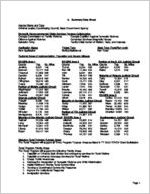
A. Summary Data Sheet
Agency Name and Type Criminal Justice Coordinating Council, State Government Agency
Nonprofit, Nongovernmental Victim Services Program Collaborative
Georgia Commission on Family Violence
Georgia Coalition Against Domestic Violence
Citizens Against Violence
Concerted Services (Magnolia House)
Salvation Army
Family Crisis Center of Walker, Dade, and Catoosa
Application Status New Application
Project Type Multi-jurisdictional
State Type (Rural/Non-rural) Non-Rural
Regional Areas of Implementation, Population and Square Mileage
DV/CPS Area 1
DV/CPS Area 3
Portion of the S. GA Judicial Circuit
County
Pop. Sq. Miles
County
Pop. Sq. Miles County
Pop. Sq. Miles
Jenkins
8,637 149
Turner
9,504 290
Calhoun 6,320 284
Screven
15,177 648
Ben Hill
17,484 254
Baker
4,074 349
Emanuel
21,859 686
Irwin
9,931 363
Candler
9,508 247
Tift
38,407 269
Majority of Pataula Judicial Circuit
Bulloch
56,918 682
Berrien
16,235 458
Early
12,354 516
Effingham
39,616 483
Cook
15,771 233
Clay
3,357 217
Evans
10,495 187
Atkinson
7,609 344
Quitman 2,598 161
Portion of Middle Judicial Circuit Lanier
7,241 200
Randolph 7,791 431
Washington 21,042 680
Brooks
16,450 498
Terrell
10,970 338
Jefferson
17,266 530
Lowndes
92,115 511
Miller
6,383 284
Toombs
26,067 369
Echols
3,754 421
DV/CPS Area 2
Oconee Judicial Circuit
Clinch
6,878 824
Coffee 37,413 603
Pulaski
9,588 250
Majority of Cordele Judicial Circuit Bacon 10,103 286
Bleckley
11,666 219
Dooly
11,525 397
Ware 35,483 906
Dodge
19,171 503
Crisp
21,996 281
Pierce 15,636 344
Telfair
11,794 444
Wilcox
8,577 383
Brantley 14629 447
Wheeler
6,179 300
Portion of Tift Judicial Circuit
Charlton 10282 783
Montgomery 8,270 247
Worth
21,967 575
Majority of the Atlantic Judicial Circuit DV/CPS Area 4
Southwestern Judicial Circuit
Tattnall
22,305 488
Mitchell
23,932 514
Lee
24,757 362
Long
10,304 403
Colquitt
42,053 557
Sumter 33,200 493
McIntosh
10,847 575
Seminole 9,369 257
Schley
3,766 168
Liberty
61,610 603
Decatur
28,240 623
Macon
14,074 406
Bryan
23,417 454
Grady
23,659 460
Stewart 5,252 463
Thomas
42,737 552
Webster 2,390 210
Statutory Rural Program Purpose Areas The Rural Program will support all Three Program Purpose Areas as listed in FY 2003 RDVCV Grant Solicitation.
Rural Program Priority Areas The Rural Program will support the following Priority Areas:
1. Establish or Enhance Safe Shelter and emergency services for Rural Victims 2. Establish or enhance Advocacy Services for Rural Victims 3. Create Public Awareness 4. Address the Intersection of Domestic Violence and Child Victimization 5. Assist Victims of Diverse Rural Communities 6. Develop a Coordinated Community Response 7. Improve the Institutional Response 8. Immigration Services
Page 1
B. ABSTRACT
Addressing the overlap between child abuse and domestic violence remains a great challenge for
the State of Georgia. While child protective services and domestic violence service agencies in the State
often have separately established programs to address one of these forms of family violence, there are
relatively few programs as well as collaborative efforts in existence to address the problems when co-
occurring in families. Collaboration is critical in paving the road to safety for all family members affected
by violence. The resources and expertise of both child protective service workers and domestic violence
advocates must be blended to maximize the protection of women and children in abusive homes.
The purpose of this proposal is two-fold. First, it is aimed at obtaining funds to provide for RDVCV
Advocates in four rural Georgia shelters whose responsibility will be to assist in the design and
implementation of a multi-disciplinary community response for addressing co-occurring cases of child
abuse and domestic violence. This effort will increase coordination in child maltreatment and domestic
violence cases through both direct services and community system changes. The advocates will
collaborate with child protective service workers, public and private agencies (law enforcement,
prosecution, mental health, domestic violence task forces, etc.) and community service programs in
mobilizing within the respective geographic areas to assess co-occurring cases and facilitate service
provision (e.g. safety planning, transitional housing, counseling, TANF assistance). Currently, funds are
not available to provide for RDVCV liaisons within the shelters serving the aforementioned areas.
Secondly, the proposal seeks to implement a task force enhancement component, which will provide
critical training and technical assistance to rural task forces in developing a community-wide plan for the
safety of battered women and their children. There is an absence of funds to assist with this effort--often
leaving local task forces ill-equipped in providing the essential skills needed to promulgate an effective
community
response.
Page 2
B. NEED FOR THE PROJECT
Current strategies in Rural Georgia to ensure child safety often overlook one of the most significant factors in impacting children's safety in the home---domestic violence. Research clearly indicates that child abuse and domestic violence often occur in the same family and are linked in a number of ways. Productive collaborations between child protective services and domestic violence programs in Rural Georgia are virtually non-existent and have culminated in fewer protective interventions at the service and system policy levels being offered to families affected by both child abuse and domestic violence.
At the core of an improved system for protecting battered children and women must be a comprehensive multi-disciplinary community response for safety. Four rural regions (See Attached Map) in Georgia lack such a system. The proposed target areas for the RDVCV Project comprise 63 rural counties, which will consist of the four primary regions to be served by the project. These regions are located in the southern most portion of the state, maintain more than one-third of the states' land area, and includes 14 percent of the state's overall population. While local domestic violence shelters in the regions are interested in coordinating with child welfare agencies, funding is not available to hire the additional staffing necessary to facilitate such efforts. There also exists an absence of funds in these regions to provide intensive trainings and guidance to local domestic violence task forces. The availability of funding through the 2003 Rural Domestic Violence and Child Victimization Enforcement (RDVCV) Grant would allow multiple partners---mobilized within a specific geographic area, acting together, and sharing responsibilities in new ways---to provide critical assistance in increasing safety for battered women and children in rural communities.
Page 3
D. RELATED FEDERAL PROJECTS Funding outside of the VAWA Formula Grant Program and the VAWA RDVCV Grant is administered by other state agencies or is directly allocated to local agencies. The VAWA Civil Legal Assistance Grant Program was awarded to Atlanta Legal Aid in the amount of $266,024 in October of 2000 for an 18-month period, followed by an additional 12-month award effective October 1, 2002 in the amount of $87,150. Specifically, the Atlanta Legal Aid Project will establish and expand legal services to victims of domestic violence in the Metro-Atlanta area. The Victims of Crime Act (VOCA) Grant Program from the Department of Justice is administered by the Council, and the amount of funding awarded in 2002 was $10,702,000. For the past four grant years, the Council combined the VOCA/VAWA application and award process to ensure the most efficient use of federal dollars. The VOCA Program, for direct victim services only, is used to fund all victims of crime related projects (e.g. prosecution-based victim witness assistance programs and elder abuse services). Those specifically addressing violence against women and maintaining a component such as training or coalition building (which are ineligible under VOCA) are funded through the VAWA Grant Program. The Council has found that this strategy enables Georgia to fund the majority of the projects applying for assistance. Two related programs are funded out of the U.S. Department of Health and Human Services. The first is the Preventive Health and Health Services Block Grant, administered by the Georgia Department of Human Resources, through their Women's Health Division. The purpose of the funding is to provide services to victims of sex offenses and provide support for the prevention of sex offenses. Education programs also are eligible for this funding. Currently, the grant program provides funding to rape crisis centers in the State for direct services and/or prevention. The total amount of funding allocated to rape crisis centers for the Year 2002 was approximately $1,202,000.
Page 4
The second type of U.S. Department of Health and Human Services funding is entitled the Family Violence Prevention Grant Program. This program is also administered by the Department of Human Resources (DHR). Funding is provided to shelters throughout Georgia to support services to victims of domestic violence. DHR contracts with 43 certified nonprofit agencies, and services include 24-hour emergency shelter and crisis lines, legal advocacy, counseling, children programs, referral, and prevention programs. New programs in underserved areas are given special emphasis. The amount of funding for FY 2002 was $2,190,616. The Council schedules periodic planning meetings for both DHR programs.
The 2003 Rural Project will be complemented by the STOP Formula Grant as well as the Byrne Formula Grant, which are administered by the Council. Both grants have components that are geared specifically to the prevention and investigation of violence against women and children through various subgrant programs. For example, the Georgia Bureau of Investigation's Child Abuse Investigative Support Center is funded with Byrne funds to assist with the investigative efforts of local and state law enforcement in the investigation of child abuse and child fatality cases where foul play is suspected.
E. WHAT WILL BE DONE The 2003 RDVCV Planning Team has designed a comprehensive system of care that seeks to expand and strengthen direct services and community response regarding co-occurring cases of domestic violence and child abuse. The design includes an expansion of current resources allocated to both types of victimizations through the establishment of linkages between the child abuse and domestic violence service fields. Targeted Population The RDVCV project will serve abused children, battered women, and their families who have experienced abuse and violence. The project will also work with children who are at risk of abuse or
Page 5
neglect. The designed system will include multiple entry points for clients. These entry points will seek to serve the victims and their families; make referrals; provide access to resources, services and support. RDVCV Multi-Disciplinary Team (MDT) Approach
The 2003 RDVCV Project seeks to offer a team approach to working with abused children and battered women in rural communities. Each team (located in the four targeted regions) will consist of a RDVCV Advocate who will be trained and guided by Coordinators at the Georgia Coalition Against Domestic Violence and Georgia Commission on Family Violence. RDVCV Advocates will facilitate case management services through collaboration with the MDT and will develop, expand, access, and link resources in the community to the needs of abused children and battered women. The two Coordinators will provide oversight and expertise to the RDVCV Advocates. Flow of the RDVCV Project
1. Abused children and battered women will be referred to the MDT. An initial screening process will determine the immediate level of care. The case will then be assigned to the RDVCV Advocate. The advocate will assist in coordinating services and resources via partners represented on the MDT for the victim from intake through discharge.
2. A strength and needs assessment process will begin for victims and their families requiring services.
3. RDVCV Advocates, with the victim and the victim's identified support system, domestic violence advocates, child protective service agencies, law enforcement, and other service providers will comprise the MDT. These individuals will develop a service plan that addresses the safety needs of both the victim of domestic violence and child victimization.
4. Systemic needs and responses will be identified by the MDT and communicated to the local RDVCV Task force. The Task Force will then integrate these identified needs into protocol, policy, procedure and public awareness responses. The Task Force will have representatives from substance abuse, mental health, education, developmental services, and corrections as participating partners.
Page 6
GOAL #1:
CASE MANAGEMENT Improve the availability and coordination of services for women and children exposed to domestic violence and child maltreatment in four targeted rural regions of Georgia (Reference attached map for target areas)
Objective 1.1: Objective 1.2: Objective 1.3:
Increase or enhance service capacity by linking current domestic violence and child protective services program infrastructure. Objective will be realized through the establishment of a MultiDisciplinary Team (MDT) in each of the four targeted rural regions including two communities where Community Partnerships for the Protection of Children are forming (RDVCV Advocates will also participate in the CPPC Initiative). Teams will focus on providing direct services in co-occurring cases of domestic violence and child abuse and will comprise, at a minimum, representatives from the following fields child protective services, law enforcement, domestic violence shelters, child advocacy agencies; Advocates will participate in case plan development and provide direct services, including: safety planning, crisis intervention, advocacy and emotional support, education concerning legal options, and linkage to shelter and community support services for the abused parent and children.
Increase MDT's capacity to serve and work with co-occurring cases involving women and children exposed to violence (i.e. impact of violence on abused children and battered women, developmental needs of children exposed to violence, provider awareness concerning skills to address child and family exposure to violence); Georgia Coalition Against Domestic Violence (GCADV) will coordinate training, assist in other staff development activities (e.g. job shadowing across disciplines) ,provide on-going consultation and national materials and updates regarding similar initiatives around the country; GCADV will also meet regularly with the four advocates to assist with problem solving and will monitor progress toward outcomes.
Increase the system's capacity to work as an integrated system of care for children and women exposed to violence by linking and integrating MDT services with other initiatives in the region which seek to address and respond to the needs of women and children exposed to violence
Page 7
GOAL #1-Case Management
Activities
Recruit, interview, and hire a RDVCV Advocate in each of the four targeted regions to coordinate services in co-occuring cases with child protective service agencies. Advocates will also be charged with the responsibility of coordinating the logistics for establishing their respective region's multi-disciplinary team and will participate on local domestic violence task forces. Logistics will include among others, collaborating with Child Protective Services in scheduling meetings, case review processes, protocol development and on-going case coordination processes. Advocates will be employed by the local domestic violence shelter.
Recruit, interview, and hire a RDVCV Coordinator at the Georgia Coalition Against Domestic Violence to provide technical assistance to the above referenced advocates. The Coordinator will provide on-going guidance in creating a multi-disciplinary response to addressing the needs of abused children and battered women.
Implement a Memorandum of Understanding with MDT Partners; Develop MDT Roles/Responsibilities and Membership; Develop MDT Member Job Descriptions
Target Date 1-3 months
1-3 months 1-6 months
Assess MDT Training Needs; Create MDT Training Curriculum; Deliver 1-3 months Training Curriculum to MDT members
Develop Referral and Case Management Protocol for MDT
1-6 months
Refer Cases and Perform Case Management
1-12 months
Develop partnerships with Georgia Department of Labor, Department of Human Resources' Division of Mental Health/Mental and Retardation/Substance Abuse, local school systems, hospitals, faith based communities
Present RDVCV Project at the Criminal Justice Coordinating Council's Victims Conference (statewide conference) and Georgia Commission on Family Violence Conference to VAWA subgrantees and other parties interested in establishing a multi-disciplinary team approach to addressing co-occurring cases of child abuse and domestic violence
Provide performance data to the Criminal Justice Coordinating Council for submission to VAWO.
1-12 months 1-12 months Every 3 months
Page 8
GOAL #2:
TASK FORCE DEVELOPMENT To implement policy, protocol, and response change regarding child abuse and domestic violence in rural communities by strengthening rural domestic task forces.
Objective 2.1
To establish and maintain a continuing forum for improving communication, collaboration, and coordination of local community agencies
Objective 2.2
To develop continuing education, information, and prevention programs for the local community, service agencies and victims regarding domestic violence with special emphasis on co-occurring cases of child abuse and domestic violence
Objective 2.3
To encourage and support the development of protocols by local law enforcement, health care providers, courts, probation/ parole, faith-based leaders, family violence intervention programs, child protective services and victim service providers
Objective 2.4
To explore and develop funding sources to support task force efforts
Objective 2.5
To serve as a partner of the MDT in each of the four targeted rural regions
GOAL 2-Task Force Development
Actions
Target Date
Recruit, interview, and hire a RDVCV Coordinator at the Georgia Commission on Family Violence to provide technical assistance to the four RDVCV Advocates in developing local rural domestic violence task forces within the targeted regions. See attached resume for coordinator responsibilities.
Months 1-3
Identify Task Force members within the 4 rural regions (regions
Months 1-3
cover 13 judicial circuits)
Implement a Memorandum of Understanding with Task Force Members; Develop Task Force Roles/Responsibilities
Months 1-6
Assess Task Force Training Needs; Create Training Curriculum;
Months 1-6
Georgia Commission on Family Violence will conduct intensive 3- Months 1-12 day training for task force members to include the following topics: policy/ protocol/ procedure development and enhancement; MOU development; co-occurrence of domestic violence and child victimization; team building and establishing a coordinated community response; case reviews for strengthening a coordinated response; strengthening referral system and services in collaboration with task forces.
Page 9
Actions
Target Date
Determine key community stakeholders who are missing from each Months 1-6
Task Force and develop a strategy for their involvement.
Create operating subcommittees for each of the RDVCV Task
Force Teams that represent the judicial circuits encompassed within
the 4 four targeted rural regions:
o Public awareness 2 events per region per year.
Within 12 months
o Prevention/ Teen dating violence awareness establish Within 18 months
strategy for addressing teen dating violence.
o Committee to review cases and determine opportunities for
systems change and improvement.
Within 12 months
o Signed protocols by key stakeholders in the community
that articulate responses to victims by child advocacy/ CPS Within 18 months
community, health care professions, courts, law
enforcement, probation/ parole, faith community and
victims service advocates.
Provide performance data to CJCC to forward to VAWO.
Every 3 months
Present RDVCV Project at the Criminal Justice Coordinating 1-12 months Council's Victims Conference (statewide conference) and Georgia Commission on Family Violence Conference to VAWA subgrantees and other parties interested in establishing a community response to addressing domestic violence and child abuse.
Provide training materials for duplication purposes from GCFV 1-12 months intense 3-4 day training on rural task force development, coordinated community response and team building.
F. WHO WILL IMPLEMENT
Please refer to the attached Memorandum of Understanding for detailed information concerning 2003 RDVCV Project Partners.
G. PRODUCTS Products will include a detailed review of project accomplishments, comparison of before and after data, and Semi-Annual and Annual progress reports. Additional products will comprise: Training manual for service agencies in establishing collaboration in co-occurring cases of child abuse and domestic violence
Page 10
Training manual for Rural Task Forces regarding task force development and creating system change in communities regarding child abuse and domestic violence
Signed and implemented protocols by the targeted rural regions involved in the RDVCV Grant Signed memorandums of understanding for participation in RDVCV Task Force by key
community stakeholders (law enforcement, courts, prosecutors, advocates, faith-based communities, school systems, health care representatives, representatives from underserved populations, pardons & parole, probation) Written plan for prevention education developed by each of the region's RDVCV Task Forces Prepared PowerPoint presentations by partners at the Council and GCFV conferences Publication of results at 6 month, 12 month, 18 month and 24 month intervals on www.gasafesite.org. Publication of a RDVCV Task Force Report by the Georgia Commission on Family Violence regarding the progress and accomplishments of the entities
H. SUSTAINABILITY PLAN Once the project becomes fully established, it will be possible for the sites to apply for funding through the Violence Against Women Act Grant Program. The sites must also seek local support from county agencies and local businesses. Additional funding can be sought through the Georgia Department of Human Resources, Preventive Health and Health Services Block Grants and the State's collection of criminal fines for victim services.
Page 11
The following information provides a description of the activities which will be performed by the Georgia Coalition Against Domestic Violence (GCADV) and the Georgia Commission on Family Violence (GCFV). Please note that the primary difference in responsibilities for both agencies is the provision of direct services by GCADV and task force development through GCFV.
Georgia Coalition Against Domestic Violence Coordinator Provide oversight of intensive services to child abuse/ domestic violence cases in targeted rural regions. Provide technical assistance to staff employed by domestic violence shelter staff serving rural regions in providing services to these cases identified by the child protective service system. Overall staff training to include specialized training on the overlap of child abuse and domestic violence and methods of providing safety to battered women and their children. Require caseworker and shelter director to participate in CPPC meetings. Require caseworker and shelter director to participate in quarterly task force meetings and to participate in at least one subcommittee of the task force, specifically to design protocol and policy that addresses safety for battered women and children through child abuse/ domestic violence protocol. Provide training and technical assistance to Shelter Boards of Directors about the project and their role in overseeing the project through their governance of the organization. Present progress of project at statewide CJCC conference. Present progress of project at statewide GCFV conference. Recruit, interview, and hire the project coordinator for the initiative; Serve on the CPPC state team; Supervise and ensure on-going training for the project coordinator; Provide technical assistance to rural domestic violence shelters regarding collaboration on simultaneous child maltreatment and domestic violence cases; Make regular visits and on-going contact with the four rural domestic violence programs and the local two CPPC teams; Disseminate national materials on child maltreatment and domestic violence which are relevant to the project. Coordinate the initial training and the quarterly meetings of the four sites, in cooperation with state and local CPPC personnel. Participate in evaluation of project.
Georgia Commission of Family Violence Coordinator Provide an intensive 3-4 day training to the four task forces partnering on this grant in order to strengthen these task forces, establish clear goals, and develop products outlined in this grant Provide training to local community, civic, and professional groups to educate the community on domestic violence, child abuse, and methods of providing safety to both adult and child victims. Work within task force to develop or strengthen protocol, revise policies in order to adhere to protocol and obtain agreements from all community leaders to follow protocol. Supervise, train and provide assistance to the position that will build the task forces in each of these four communities.
Develop, with each task force, a strategic plan with clear goals identified by each community.
Assist task forces in getting key stakeholders and community leaders involved in task forces, including the Chief of Police, Sheriff, Prosecutor, Judges, Faith-based leaders, Civic Leaders, and Commerce Leaders.
Provide established statewide model protocols for law enforcement, prosecution, health care and family violence intervention programs (batterer intervention) to four communities for their use in adopting or developing their own.
Publish updates of progress from four communities on GCFV collaborative website: www.gasafesite.org.
Present task force progress at Statewide GCFV conference. Participate in evaluation of project.
I. BUDGET DETAIL
A. Personnel
Name/Position Criminal Justice Coordinating Council Auditor I
An Auditor I will process reimbursements to the appropriate partners for expenses incurred as a result of project implementation
Criminal Justice Coordinating Council Planner I
A Planner I will process statistical reports from the each of the partners for statistics reported as a result of project implementation
Computation
5% Time X $39,030 (Annual Salary) X 24 Months
5% Time X $39,030 (Annual Salary) X 24 Months
Total
Cost $3,903
$3,903 $7,806.00
B. Fringe Benefits Name/Position
Criminal Justice Coordinating Council Auditor I
Criminal Justice Coordinating Council Planner I
Total
Computation
Cost
31.41% Fringe Benefit Rate X $1,952 (5% of $39,030 Annual Salary) X 24 Months
$1,226
31.41% Fringe Benefit Rate X $1,952 (5% of $39,030 Annual Salary) X 24 Months
$1,226 $2,452
C. Travel
Purpose of Travel Criminal Justice Coordinating Council Travel Costs associated with technical assistance and capacity building activities sponsored by OJP/OVW designated technical assistance providers (These funds will be utilized by all agencies involved in the working group.)
These funds are to cover OVW Technical Assistance. Georgia Coalition Against
Domestic Violence RDVCV Coordinator
Location To Be Announced by OJP/OVW
Rural Program Service Area
Item
Airfare 5 persons X 5 trips X $450
Hotel 5 persons X 5 trips X
$115/night X 5 nights
Meals 5 persons X 5 trips X $35/day
X 5 days
Travel Cost to Provide Technical Assistance to the MultiDisciplinary Teams and advocates within the four targeted rural regions.
Cost $11,250 $14,375 $4,375
$6,000
Georgia Commission on Family Violence
RDVCV Task Force Coordinator
Rural Program Service Area
Travel costs for GCFV Coordinator to provide Technical Assistance to the Rural Region Task Force Coordinators
$6,000
Total
$42,000
D. Equipment No funds are requested for equipment.
Georgia Commission on Family Violence
Georgia Coalition Against Family Violence Total
E. Supplies Item
Postage and General Office Supplies Postage and General Office Supplies
Cost $909.50
$909.50
$1819.00
F. Construction No funds are requested for construction.
G. Consultants/Contracts
Name of Consultant
Service Provided
Georgia Commission Technical Assistance by
on Family Violence RDVCV Task Force
Coordinator
Computation
Cost
1 Coordinator X $27,000 Per $54,000 Year X 2 years
Local Domestic Violence Shelters .
Georgia Coalition Against Domestic
Violence
Task Force trainings
The shelters will hire four RDVCV Advocates who will be charged with establishing and facilitating local Multi-Disciplinary Child Abuse/Domestic Violence Teams and RDVCV Task Forces RDVCV Coordinator
2 trainings (1 per year X $16,000 each) 100% time X $22.11/hour X 3120 hours (18 months) X 4
100% time X $20.19/hour X 4160 hours (24 months)
$32,000 $275,933
$83,990
Total
$445,923
A. Personnel B. Fringe Benefits C. Travel D. Equipment E. Supplies F. Construction G. Consultants/Contracts
Total Direct Costs Federal Request
$ 7,806
$ 2,452
$ 42,000
$
0
$ 1,819
$
0
$ 445,923
$ 500,000 $ 500,000
Non-Federal Request
$
0
Sonny Perdue Governor
C JC C
Crim inal Just ice Coordinatin g Council
January 14, 2002
L. Gale Buckner Executive Director
Ms. Diane M. Stuart, Director Office on Violence Against Women Office of Justice Programs 810 Seventh Street, NW Washington, D.C. 20531
Re: Certification of Non-Supplantation/Application #2003-X0283-GA-WR
Dear Ms. Stuart:
As the Governor of the State of Georgia and on behalf of the Criminal Justice Coordinating Council (Council), I am designating Executive Director L. Gale Buckner as the official authorized to apply and accept funds under the Rural Domestic Violence Child Victimization Enforcement Grant Program.
The Council certifies that funds awarded through the Program will be used to supplement existing funds for program activities. These funds will not replace (supplant) non-federal funds that have been appropriated for the purpose of providing services to victims of domestic violence and child victimization. The Council is aware that supplanting violations can result in a range of penalties. Those include suspension of future funds for the program, suspension or debarment from federal grants, recoupement of monies provided by this grant, civil and/or criminal penalties.
Please do not hesitate to contact Ms. Buckner should you necessitate additional information. She may be reached at (404) 559-4949 extension 101.
Sincerely,
SP:etb
Sonny Perdue Governor
503 Oak Place Suite 540 Atlanta, GA 30349 (404) 559-4949 TOLL-FREE (877) 231-6590 FAX 559-4960 TTY 559-4177 www.ganet.org/cjcc
An Equal Opportunity Employer
Memorandum of Understanding Rural Domestic Violence and
Child Victimization Enforcement Grant
Partners and Representatives on the Planning and Development Team
Criminal Justice Coordinating Council, L. Gale Buckner, Executive Director Georgia Coalition Against Domestic Violence, Nancy Grigsby, Executive Director Community Partnerships to Protect Children (CPPC), Janet Bittner, Coordinator Georgia Department of Human Resources, Wilfred Hamm, Deputy Director, Department of Family and Children Services, Child Protective Services Georgia Commission on Family Violence, Julianna Koob, Executive Director Tapestri Refugee & Immigrant Coalition Challenging Gender Based Oppression Danuta Przadka, Executive Director Magnolia House/Concerted Services, serving Ware, Brantley, Bacon, Coffee and Pierce counties; The Haven, serving Brooks, Colquit, Echols, Lowndes, Lanier, Berrien, Cook, Irwin, Clinch, Atkinson, Tift, Thomas Safe Haven, Citizens Against Violence, serving Bulloch, Effingham, Jenkins, Screven, Candler, Washington and Emanuel counties; Halcyon Home; serving Grady, Thomas, Seminole, Mitchell, Decatur counties.
State-wide Organizations: Tapestri Refugee & Immigrant Coalition Challenging Gender Based Oppression Georgia Coalition Against Domestic Violence (GCADV) Georgia Commission on Family Violence (GCFV) Criminal Justice Coordinating Council (CJCC) Georgia Sheriff's Association, Terry Norris, Executive Vice President Georgia Chiefs of Police Association, Frank V. Rotondo, GACP Executive Director Georgia Department of Human Resources, Department of Family and Children Services,
Child Protective Services
Child Protective Service Agencies: Community Partnerships to Protect Children (CPPC) Family Connections (See Georgia Department of Human Resources as Listed in Previous Section)
PROJECT PLANNING COMMITMENT: The 2003 RDVCV Project will consist of two planning goals:
GOAL#1: To implement a multi-disciplinary response regarding case planning specific to the occurrence of both child and adult victimization
GOAL #2: To implement policy, protocol and response change in communities by strengthening domestic violence task forces. The Planning Team will commit to both goals as follows:
Case Management: 2003 RDVCV Planning Team will meet monthly for one quarter to facilitate planning
efforts and begin project implementation. Thereafter, all team members will attend quarterly planning and implementation meetings, which will include each of the four domestic violence advocates hired under the project, the project coordinator hired by GCADV, the Georgia Department of Family and Children Services, and CPPC coordinators. The team will focus on both processes and outcomes and will monitor whether the desired linkages and inter-disciplinary work is occurring as planned. The team will review randomly selected case plans to ensure that the nature of the interdisciplinary work is following the model set forth in the application. Finally, the team will assist in problem solving to ensure that barriers encountered are worked through early in the project so as not to prohibit desired outcomes from occurring.
Task Force Enhancement: Members of the Planning Team will meet within the first month of the grant to
determine the timeline and review the plan of action for strengthening the targeted rural region task forces. The timeline for the development of each task force will be established and implemented. Members will meet on a quarterly basis thereafter to make revisions to timelines, goals or objectives or to implement additional strategies. Members will assess progress of task force goals, including:
Public awareness events Consistent, collaborative, signed protocols Signed memorandums of understanding to follow protocols Committees to review cases and determine system-wide community needs Teen dating violence prevention activities and education Specialized outreach to underserved populations and faith-based
communities
HISTORY The partners involved in this project have had a variety of collaborative relationships in the past. The Criminal Justice Coordinating Council (CJCC), as the administrator of a large portion of funds from the Department of Justice, has worked with the majority of the organizations listed below. In addition, in its role as a statewide association of shelter services, the Georgia Coalition Against Domestic Violence (GCADV) has collaborated at both local and state levels with many of the listed organizations.
The Georgia Commission on Family Violence (GCFV) was legislatively created in 1992 with a mandated structure of collaboration. On its governing commission is appointed members representing law enforcement, shelters, prosecution, academia, health care, courts and many other partners. GCFV, GCADV, CJCC, the Sheriff's Association, the Chiefs of Police and Tapestri have worked together on projects including the design, creation and implementation of a statewide protective order registry, training, public awareness.
2003 PROJECT OBJECTIVES (Refer to Attached Map for Targeted Regions) Provide direct services in co-occurring cases of child abuse and domestic violence via
a multi-disciplinary response team with representatives from child protective service agencies and domestic violence shelters Develop and implement policies, protocols, and services designed to promote the early identification, intervention and prevention of domestic violence and child victimization Address domestic violence and child abuse service needs of immigrant and refugee populations, including the delivery of translation and interpreting services Strengthen and coordinate with an existing CPPC project Provide community domestic violence task forces with tools and skills to actively address barriers to preventing domestic violence through protocol development, case review, public awareness, youth education, and faith-based outreach. Enhance the investigation and prosecution of domestic violence and child abuse cases in four rural regions Provide evaluation and success components to other communities in the state and nation for duplication and education purposes
ROLES AND RESPONSIBILITIES: To accomplish the aforementioned goals and objectives, the undersigned designed a comprehensive strategy to unify social service agencies, local service providers and community leaders in ending domestic violence and child victimization in the four targeted regions.
CJCC Serve as administrator for the RDVCV Grant Program. Provide statistical reporting tools. Provide technical assistance on required CJCC financial and evaluation reports to the
participating partners Reimburse partners for services covered under the grant Direct participants to grants and other funding resources for their program's future
development and growth Provide technical assistance on writing the RDVCV grant application Meet with shelter boards, task forces, CPPC teams or others, when requested, to assist
with resource development plans Provide project performance data to the Violence Against Women Office.
GCADV Provide oversight of intense direct services to child abuse/ domestic violence cases in
the targeted regions Provide technical assistance to advocates employed by the local domestic violence
shelter to assist with providing direct services in co-occurring cases of child abuse and domestic violence. Technical assistance will be aimed at providing services in co-occurring cases identified by the child protective service system. Provide training which will address the overlap of child abuse and domestic violence as well as methods of providing safety to battered women and their children. Present progress of project at statewide CJCC conference.
Present progress of project at statewide GCFV conference. Recruit, interview, and hire the project coordinator for the initiative; Serve on the CPPC state team; Supervise and ensure on-going training for the project coordinator; Make regular visits and on-going contact with the four rural domestic violence
programs and the local CPPC teams; Disseminate national materials on child maltreatment and domestic violence which
are relevant to the project. Coordinate the initial training and the quarterly meetings of the four sites, in
cooperation with state and local CPPC personnel. Provide performance data to CJCC for submission to VAWA.
GCFV Provide intense 3-4 day training to the 13 domestic violence task forces that are encompassed in the 4 rural regions served in order to strengthen the task forces, establish clear goals, and develop products outlined within the 2003 RDVCV Grant Application Provide training to local community, civic, and professional groups to educate the community on domestic violence, child abuse, and methods of providing safety to both adult and child victims. Work within task forces to develop or strengthen protocols; revise policies in order to adhere to protocols; and obtain agreements from community leaders to follow protocols. Supervise, train and provide assistance to the position that will build the task forces in each of these four communities. Develop, with each task force, a strategic plan with clear goals identified by each community. Assist task forces in getting key stakeholders and community leaders involved in task forces, including the Chief of Police, Sheriff, Prosecutor, Judges, Faith-based leaders, Civic Leaders, and Commerce Leaders. Develop child abuse/ domestic violence protocols within each community. Provide established statewide model protocols for law enforcement, prosecution, health care and family violence intervention programs (batterer intervention) to the four targeted regions for use in adopting or developing a protocol for their communities. Publish updates of progress from four rural regions on GCFV collaborative website: www.gasafesite.org. Present task force progress at Statewide GCFV conference. Provide performance data to CJCC for submission to VAWA.
Domestic Violence Shelters: Ensure that caseworker and relevant staff attend the GCADV specialized training. Ensure that caseworker and relevant staff attend GCFV specialized task force training
Participate actively in task force functions (attend meetings, assist in the development of protocol, development of policy change, public awareness and case review)
Recruit, interview, and hire the domestic violence advocates to coordinate services in co-occurring cases with child protective service agencies in the targeted regions;
Supervise and ensure the provision of on-going training to the advocates Ensure that cases of co-occurring child abuse and domestic violence coming into
the respective shelter from their targeted regions are assigned to the domestic violence advocate under this grant; Ensure that their domestic violence advocate actively participates on both the CPPC team and the local domestic violence task force; Coordinate on a regular basis with the GCADV concerning project progress; Ensure caseworker and shelter director participate in CPPC meetings. Provide performance data to GCADV for submission to CJCC.
Georgia Association of Chiefs of Police (Chiefs): Provide necessary technical assistance for leadership in revising policy and response to meet the developed goals of the protocol or to establish a protocol that is specific to the needs of the local community. Collaborate with Georgia Police Departments and other local law enforcement jurisdictions to encourage the protocol established. Provide leadership in participation on task force and CPPC team meetings Have a representative participate in task force subcommittee conducting reviews Have a representative participate in 3-4 day task force training provided by GCFV Provide ongoing training to task force members on challenges that child abuse and domestic violence present to law enforcement as a part of the VAWA training grant currently in place with the Association. Provide performance data to CJCC for submission to VAWA.
Georgia Sheriff's Association (Sheriff's): Provide necessary technical assistance for leadership in revising policy and response to meet the developed goals of the protocol or to establish a protocol that is specific to the needs of the local community. Collaborate with the Georgia Sheriffs and other local law enforcement jurisdictions to adhere with the protocol established. Provide leadership in participation on task force and CPPC team meetings Have a representative participate in task force subcommittee conducting reviews Have a representative participate in 3-4 day task force training provided by GCFV Provide ongoing training to task force members on challenges that child abuse and domestic violence present to law enforcement as a part of the VAWA training grant currently in place with the Association. Provide performance data to CJCC for submission to VAWA.
Tapestri Refugee & Immigrant Coalition Challenging Gender Based Oppression will:
Provide training on refugee and immigration issues to child welfare and domestic violence personnel.
Provide technical assistance as needed to task forces and domestic violence shelter staff
Participate in update given to CJCC conference participants Provide performance data to CJCC for submission to VAWA.
CPPC, DHR and Family Connection will: Participate on the Multi-Disciplinary Child Abuse/Domestic Violence Planning Team Provide training of CPPC project to task forces. Participate in update given at CJCC conference
Signature Sheet-Local Agencies
BUDGET/ Resources
The undersigned acknowledges receipt and approval of the budget proposal submitted via application to the United States Department of Justice, Office of Justice Programs by the Criminal Justice Coordinating Council for the Rural Domestic Violence and Child Victimization Grant. By their signature below, each partner affirms they have reviewed and approve of the project budget in this application, as appropriate and necessary to carry out the goals of the initiative.
Demonstrated Commitment
Each of the identified partners, through their signature below, attests to their strong enthusiasm for this project. All the partners involved are aware of the real challenges involved in multi-disciplinary work, particularly in cases of simultaneous child maltreatment and domestic violence. The partners understand the resource limitations facing all of Georgia's domestic violence programs and see these programs as crucial to addressing the needs of families where there is both adult and child abuse. Each partner commits, through signature, to the duties and roles specified in this Memorandum of Understanding.
_____________________________________ Magnolia House/Concerted Services Michelle Girtman, Executive Director
_____________________________________ The Haven - Silke Deeley, Executive Director
______________________________________ Safe Haven, Citizens Against ViolenceAnne Hilderbrant, Executive Director
_______________________________________ Halcyon Home Chris Marsh, Executive Director
Signature Sheet-Statewide Agencies
BUDGET/ Resources
The undersigned acknowledges receipt and approval of the budget proposal submitted via application to the United States Department of Justice, Office of Justice Programs by the Criminal Justice Coordinating Council for the Rural Domestic Violence and Child Victimization Grant. By their signature below, each partner affirms they have reviewed and approve of the project budget in this application, as appropriate and necessary to carry out the goals of the initiative.
Demonstrated Commitment
Each of the identified partners, through their signature below, attests to their strong enthusiasm for this project. All the partners involved are aware of the real challenges involved in multi-disciplinary work, particularly in cases of simultaneous child maltreatment and domestic violence. The partners understand the resource limitations facing all of Georgia's domestic violence programs and see these programs as crucial to addressing the needs of families where there is both adult and child abuse. Each partner commits, through signature, to the duties and roles specified in this Memorandum of Understanding.
______________________________________
Criminal Justice Coordinating Council, L. Gale Buckner, Executive Director
_______________________________________ Georgia Coalition Against Domestic Violence, Nancy Grigsby, Executive Director
______________________________________ Community Partnerships to Protect Children, Janet Bittner, Coordinator
______________________________________ Georgia Department of Human Resources, Wilfred Hamm, Deputy Director, DFCS, Child Protective Services
_______________________________________ Georgia Commission on Family Violence, Juliana Koob, Executive Director
______________________________________ Tapestri Refugee & Immigrant Coalition Challenging Gender Based Oppression Danuta Przadka, Executive Director
______________________________________ Georgia Sheriff's Association Terry Norris, Executive Vice President
______________________________________ Georgia Chiefs of Police Frank V. Rotondo, GACP Executive Director
Sonny Perdue Governor
C JC C
Crim inal Just ice Coordinatin g Council
November 24, 2003
L. Gale Buckner Executive Director
MEMO
To: File
From: Edwin Bell
Re: Contents of 2003 RDVCVE Grant Program File
Please be advised that the listed contents of the original program file cannot be located at this time due to a possible filing error. They are as follows:
1. Copy of the application package (submitted on-line through the GMS system). SF-424 is in file
2. Copy of the signed MOU by all parties 3. Copy of the original grant solicitation 4. Support letters 5. Copies of e-mail correspondence 6. Copies of facsimile correspondence 7. Copies of written and signed correspondence by staff or partners
503 Oak Place Suite 540 Atlanta, GA 30349 (404) 559-4949 TOLL-FREE (877) 231-6590 FAX 559-4960 TTY 559-4177 www.ganet.org/cjcc
An Equal Opportunity Employer