


- Collection:
- Georgia Government Publications
- Title:
- Outdoors in Georgia, 1976 February
- Creator:
- Georgia. Department of Natural Resources
- Contributor to Resource:
- Georgia. Department of Natural Resources
- Publisher:
- Atlanta, Ga. : Georgia. Department of Natural Resources
- Date of Original:
- 1976-02
- Subject:
- Georgia
- Location:
- United States, Georgia, 32.75042, -83.50018
- Medium:
- publications (documents)
- Type:
- Text
- Format:
- application/pdf
- External Identifiers:
- Call Number GA N200 .P1 O9 1976/2
- Metadata URL:
- https://dlg.galileo.usg.edu/id:dlg_ggpd_i-ga-bn200-b-pp1-bo9-b1976-s2
- Digital Object URL:
- https://dlg.galileo.usg.edu/do:dlg_ggpd_i-ga-bn200-b-pp1-bo9-b1976-s2
- Language:
- eng
- Holding Institution:
- University of Georgia. Map and Government Information Library
- Rights:
-

Outdoors
Georgia
February 1976 50c
4
\
George Busbee
Governor
Joe D. Tanner
Commissioner
George T. Bagby
Deputy Commissioner
BOARD OF NATURAL RESOURCES
Leonard E. Foote Chairman
Waleska-- State-at-Large Wade H. Coleman Vice Chairman
Valdosta-- State-at-Large
Leo T. Barber, Jr. Secretary
Moultrie-- 2nd District James F. Darby
Vidalia-- 1st District
Dr. Robert A. Collins, Jr. Americus-- 3rd District George P. Dillard Decatur--4th District
Mary Bailey Izard Atlanta-- 5th District
James A. Mankin Griffin-- 6th District Lloyd L. Summer, Jr.
Rome-- 7th District
J. Wimbric Walker McRae-- 8th District
Donald J. Carter Gainesville-- 9th District
Leonard Bassford Augusta-- 10th District
Sam Cofer
St. Simons Island Coastal District James D. Cone Decatur-- State-at-Large A. Calhoun Todd, Jr.
Macon-- State-at-Large
DIVISION DIRECTORS
Parks and Historic Sites Division Henry D. Strubte, Director
Game and Fish Division
Jack Crockford, Director
Environmental Protection Division J. Leonard Ledbejter, Director
Earth and Water Division Sam M. Pickering, Jr., Director
Office of Planning and Research
Office of Administrative Services James H. Pittman, Director
Public Relations and Information David Cranshaw, Director
OutdOOrS \ty Georgia
Volume 5
February 1976
Number 2
FEATURES
The Nightstalkers
Jingle Davis 2
Purple Martins
R. A. Romanes 7
Martin Gourds
Gib Johnston 10
.... Getting Rid of Trash
Rebecca N. Marshall 13
.... Lighter Than Air, a photo essay
Bob Busby 15
The Rifle
Bill Morehead 19
Seashells
John Young 21
Dangerous Dan McGirth
Bill Morehead 25
DEPARTMENTS
Knapsack
Bill Hammock 30
Letters
32
Sportsman's Calendar
32
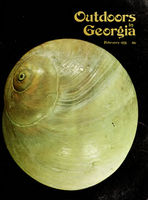
FRONT COVER: The Shark's Eye, a seashell often called a "baby nautilus," but the two are not related. Photo by Cathy Cardarelli.
BACK COVER: Two hot-air balloons prepare to ascend. Photo by Bob Busby.
MAGAZINE STAFF
Phone- 656-5660
David Cranshaw Editor-in-Chief
Bill Morehead
Editor
Aaron Pass . . Rebecca N. Marshall Dick Davis Bill Hommack Jingle Davis
Susan Wood
Managing Editor
Writer Writer Writer Writer Writer Priscilla C. Powell
Liz Carmichael Jones Jose Vinas Bob Busby Edward Brock
.... Cathy Cardarelli
Jim Couch Circulation Manager
Art Director Artist
Photo Editor Photographer Photographer Photographer
Outdoors in Georgia is the official monthly magazine of the Georgia Department of Natural Resources, published at the Department's offices, Room 713, 270 Washington Street, Atlanta, Georgia 30334. No advertising accepted. Subscriptions are $3 for one year or $6 for three years. Printed by Williams Printing Company, Atlanta, Georgia. Articles and photographs may be reprinted when proper credit given. Contributions are welcome, but the editors assume no responsibility or liability for loss or damage of articles, photographs, or illustrations. Second-class postage paid at Atlanta, Georgia. 35,000 copies printed at an approximate cost of $14,500. The Department of Natural Resources is an Equal Opportunity employer, and employs without regard to race, creed, color, sex, age, or national origin.
Coastal Choice
This bicentennial year is sure to focus
attention on many parts of our state. Georgia's
lovely coastline will certainly be one of those areas most prominently displayed.
As the Coastal Zone Management Program
enters its second year in the planning
phase, more and more Georgians will be called upon to give their ideas and expertise
to the future of Georgia's coast.
Also, the Department of the Interior's Bureau of Land Management has announced plans to issue offshore oil and gas drilling leases, beginning this September. Georgia's outer continental shelf is considered extremely promising by several major petroleum companies.
Both the Coastal Zone Management Program and the outer continental shelf
leases will be issues of prime importance to all
Georgians, especially those who live in the six coastal counties. Some Georgians will voice
environmental concerns over the issues, while
others will be more concerned with economic ramifications. Others, hopefully,
will be deeply involved with both the environmental and the economic-industrial
aspects.
There will be meetings. There will be discussions. There will be speeches. And, because even sincere Georgians don't always
agree on the best approach to any issue, there will be controversy.
There's nothing wrong with thoughtful disagreement, but no genuinely motivated Georgian wants to see issues as important as these become nothing more than snouting
matches.
-- -- Let's hope that all Georgians who get
involved as every Georgian should will get
involved with a warm heart, a cool head, but
not with hot-blooded, unthinking emotionalism. It's our state and our future that will be
at stake. We're the ones who stand to benefit from decisions we make this year.
We'll undoubtedly make far reaching decisions on Coastal Zone Management and
outer continental shelf and other issues. If we're careful to keep the atmosphere of all
discussions thoughtful, we can make the best
decisions, and in the final analysis, that means we shall all be winners.
/jA^nJ &itiu^A
February 1976
the
NIGHT STALKERS
by Jingle Davis
Photography by the author and Duane Harris
The night stalkers shuffled, three abreast, through the shallow water of the coastal Georgia sandbar, lights tram their Coleman lanterns directed downward by strips of aluminum foil wrapped around the glass globes.
One of the group was a novice flounder gigger, night
stalking for the first time. She kept remembering the expedition leader's final words before they set out.
"You want to watch out for sting rays," the leader
-- said casually. "They bury down in the sand look a
lot like flounder. But don't step on one. Man stepped on
a ray last week and almost bled to death before they got him to a doctor."
The fact that the novice was wearing tennis shoes was not especially comforting. At night, everything
-- looked different strange and faintly menacing. Light
from the lanterns reflected crazily off the still water, distorting images on the sandy bottom. Shadows darted back and forth near the rims of the circles of light.
Outdoors ip Georgia
never coming quite close enough to be identified as
friend or foe.
She gripped the broom-handle shaft of her gig more tightly and stared down. She saw a tlutter in the sand just ahead and froze, heart pounding. But it was only an underwater current swirling the sand.
She started to breathe again and moved on, remembering to shuffle. Suddenly something exploded
under her feet, nearly knocking her off balance. She yelled, did a wild splashing dance; nearly dropped the lantern, but didn't; did drop the gig, almost spearing her right foot.
Her companions regarded her with disgust. "Well, that should scare off every flounder in the neighborhood," one said crisply.
"But I stepped on a sting ray!" she protested. "It almost got me."
-- The expedition leader an expert flounder gigger of -- some years' experience silently raised his gig. Impaled
on the head was a large flounder, still flopping. He'd speared the fish after the novice had spooked it from its hiding place under the sand.
Since that first night, she has become fairly proficient at carrying a lantern, balancing a gig, and keeping her mouth shut no matter what flutters under her tennisshod feet. Though she has yet to spear her first flounder, she can clean and filet one and have it cooking over a beach fire in less than five minutes.
She has since added night seining and mullet jumping to her night stalking activities. Though these sports are not without their heart-stopping moments, she knows she at least has a better chance of catching something. Seining and mullet jumping do not require the coordination required by flounder gigging.
She made her first night seine, again under the tutelage of experts, and was fascinated by the variety of sea life which came in on every haul.
The seine they used was a fifty-footer, with a mesh scarcely larger than that of a ping-pong net. Lead sinkers were sewed into the net's bottom line, and cork
February 1976
floats were spaced at intervals along the top. At either
end of the net were six-foot poles. An experienced
seiner carried one pole out to chest-deep water, while she stayed close to the beach.
As the two pulled in unison, parallel to the beach, the net arced out in a bow. She'd been told to drag the end of her pole through the sand, which made pulling more difficult, but which also kept the weighted net line on the bottom and prevented shrimp and fish from
escaping underneath. After a minute or two of dragging, the seiners felt
the net begin to jerk and sway as fish and shrimp were overtaken and trapped inside. The shrimp leaped high out of the water, sometimes jumping over the net
and streaking for safety. Often they made end-runs,
stinging the novice's bare legs as they passed. She tried not to think of what would happen if a sand shark careened around her end of the net.
Five minutes later, the deep-end seiner signaled he
was ready to haul in. He gradually started to pull his end in a curve toward the beach, and the novice was careful to keep tension on her end of the net. The
seine, winking phosphorescence, flowed slowly up through the shallows toward the beach, the top folding over on itself as it left the supporting water.
She learned that cleaning a seine net is an adventure,
different every time. Armed with a lantern or flash
light and a bucket, she staked out her territory and
carefully began to separate the bounty from the trash.
Big blue crabs, claws snapping, made the work harder and more hazardous. Bucking shrimp, hard to hold, were equipped with sharp horns on tail and head. The
stinging tentacles of jellyfish were almost invisible against the seine's fine mesh. Small, brightly colored
-- -- fish returned quickly to the sea studded the
net like jewels.
The sorters threw back conch shells tenanted by crusty black and orange hermit crabs, the emerald sheets of sea lettuce, the clammy brown clusters of sea life called dead man's fingers, and the random oyster shells. If they came across a sting ray or horseshoe crab,
they'd ease the creature carefully out of the net with a stick.
The bulk of their catch was usually shrimp. Sometimes the night stalkers would head them on the beach and boil the shrimp in seawater in an iron pot
over a driftwood fire.
The novice was beginning to get the idea she knew all there was to know about night stalking the beaches when one of her fishing pals invited her to go mullet jumping. It turned out to be the most exciting trip of all.
Their equipment was a small batteau outfitted with a three-horsepower motor, a burlap bag, and the inevitable Coleman lantern.
As she stepped into the boat, she noticed the conspicuous absence of a cast net. She wondered about
that, but, not wanting to advertise her ignorance.
didn't ask. If the captain thought he could catch fish without net or pole, that was his business.
The captain seated her in the bow of the boat and
handed her the lantern, its brilliant white light hidden under the burlap bag. She could see the logic in that. The exposed light would blind the captain as he guided the small boat through the twisting marsh creeks. Besides, with the Coleman under wraps, they could see
all the subtler night lights: stars sprinkling the velvety
sky; the winking red and green eyes of channel markers and buoys; the sweep of a distant lighthouse beam:
the warm golden glow from the windows of faraway houses on shore. Even the wake of their boat glowed
like a comet tail as millions of tiny bioluminescent creatures, stirred up by the churning propeller, flashed their miniature distress signals.
When they reached the tidal inlet between two barrier
islands, the captain cut the motor and let the boat drift with the current. For the first time, she could hear the small night sounds all around them.
A clapper rail called hoarsely from a nearby marsh.
Terns voiced their shrill and lonely night cries from a sandbar. Wavelets slapped softly against the hull.
A mullet jumped and fell back with a sullen splash.
The captain heard the mullet, too. "Get ready to hold the lantern up when 1 give you the word," he ordered,
cranking the motor.
Now, he shoved the throttle wide open. She shivered
as the cool night air whistled past, whipping her hair
-'-'
'
'
I
f*M
^~
against her cheeks. She clutched the bow line with
one hand; in the other, she held the handle of the lantern, ready to raise it on cue.
"Now! Hold the light up!" the captain called. Still not sure what he had in mind, she yanked off the burlap and held the light aloft, blinded by its glare.
The first mullet hit her squarely in the back of the neck; the second landed in her lap, and the third, fourth and fifth whizzed dangerously close to her face. She yelped, astonished by the sudden flashes of silver that came rocketing toward her out of the darkness.
"Grab those fish!" the captain shouted. "They'll jump back out if we don't get them in the bag!"
Still holding the lantern and dodging the incoming
mullet, she scrambled around, trying to pin down the slippery, wiggling fish. As often as not, the mullet escaped back to the sea. but it didn't matter, as more
kept hurling themselves into the boat. She began to feel a lot like the clown target in the ball-pitch booth
at the fair.
For several minutes the captain continued to zig-zag back and forth through the school of mullet. Excited by the sound of the boat's propeller, the fish leaped high out of the water, aiming for the bright light of the lantern. The novice had her face slapped by a wet mullet more than once that night, but it was all worthwhile.
They brought back a sackful of fat, fresh mullet which they smoked to a golden brown in the captain's homemade smoker.
Eating fresh seafood cooked on the beach is the very
best part of night stalking, she's decided.
February 1976
To Cook Your Catch on the Beach
Grilled Flounder
Build a driftwood fire, and let it burn down to glowing coals. Completely coat the cleaned and scaled flounder with Miracle Whip salad dressing, and place the fish
gently on a grill above the coals. Turn the fish only once during cooking. It is done when the fish flakes easily and no longer appears translucent. Serve with salt, pepper and lemon juice. (Salad dressing seals in the natural moisture of the fish and prevents over-drying.)
Seawater Shrimp
Hang an iron pot filled with seawater over a hot fire. Remove heads from the shrimp, and when the water boils, place the shrimp in the pot. As soon as the water again comes to a boil, the shrimp are cooked. Remove the pot from the fire at once, and lift the shrimp out
with a small dip net or slotted spoon. Serve hot with
c rackets and cocktail sauce made from ketchup, horseradish, Worcestershire sauce, lemon juice and a
drop or two of hot sauce.
Captain Doc's Smoked Mullet A charcoal grill with a domed lid can serve in place of a smoker. Cut mullet in half down the backbone, but
-- do' not scale. Build a wood fire in the grill, and let it
burn down to coals smoked mullet are best when cooked for a long time over a very low fire. Add green wood chips as necessary to create smoke. Salt and pepper the fish and place scale-side down on the grill. Smoke at least two or three hours; preferably for eight.
Serve with lemon juice.
Purple Martins
by R. A. Romanes
Photography by the author
February 1976
-- The bird that never rests that is
the Indian name for the popular North American swallow better known as the purple martin. This bird is larger and more musical than any other member of the swallow
family, including the time-honored swallows of Europe and Asia.
Since Biblical and mythological times, swallows have been cherished as harbingers of spring. Their graceful flight and sociable ways, and, more especially, their ability of "knowing the time of their coming," has attracted man's attention since the dawn of civilization.
Each year, the first purple martins to return from their South American
winter quarters to ancestral breed-
ing grounds in the gradually greening north spy out locations with suitable nesting places for the birds that follow. These first arrivals are usually older males.
In the foothills of Georgia's Blue Ridge Mountains, martins are rarely
seen or heard before the first week of March. However, unusually warm weather in late winter or record
breaking cold days in spring will hasten or delay the birds' arrival.
Before the introduction into America of the axe and the crosscut saw, colonies of the birds often nested in cavities of giant dead trees and high tree snags. These nesting places bordered or overlooked open terrain such as meadows, fields or
river lands which harbored an abundance of flying insects, thus providing food for the martins and their ever-hungry nestlings.
Now, as in times gone by, many
martin fanciers in Georgia and other parts of the Deep South provide an abundance of nesting places for the
birds. They suspend many hollow gourds from wooden cross-pieces on
high poles, or from young trees or tall saplings set up in an open place near a house or barn. These "mar-
-- tin poles*' together with the farm-
er's mules, milk cow and clucking
-- hen with her many biddies were
formerly an integral part of the southern farmyard.
Early settlers and farmers in the
South were among the first to recog-
nize the value of purple martins as guardians of their poultry. In the
days when large predatory birds were abundant, it was not unusual to see two to three dozen martins attacking and chasing a high-flying hawk away from their nesting territory. They would dive and dart at the hawk from every possible direc-
tion while sounding a loud distress call which all wildlife, as well as the attuned ear of the farmer, could hear from afar.
Known as gregarious birds, pur-
ple martins often nest together in
large numbers. They feed exclusively on insects they catch in the air and drink while in flight by dipping up mouthfuls of water from the surface
of a lake or stream.
When perched on the top of their
nesting places, the birds often entertain listeners with a soft warbling
tune. The resonant calls of "Look"
ere-Look'ere" arc uttered only in llight. In spring this song is often heard from high in the sky before the bird itself is seen. Then, too, there is the purple martin's ''liquid bubbling chatter" that can be heard around its nesting place from the break of day till nightfall.
Except when nest building, the purple martin is rarely seen on the ground. The need for bits of clay, dry grasses, tiny dead twigs, dead weed stems or, occasionally, bits of
lime or ege shell brines martins to
the earth.
Egg laying does not begin early,
at least not until all trees are in
foliage. The eggs are pure white and usually number about four or five. They are generally surrounded by pieces of green leaves, which the adult birds tear off from the foliage.
Outdoors ip Georgia
Frequently, bits of green leaves are
carried into the nest, even after in-
cubation has started.
After hatching, very few song-
birds have to stay in their nesting
places as long as the fledgling purple
martins. When old enough to leave
the nest, these young birds instinc-
tively fly to a high place off the
-- ground the tops of trees, or wires,
or cross-arms of light and power
poles. There the parents continue
to feed their offspring.
As the daylight hours of summer
get shorter, and the young birds are
on the wing, the purple martins form
flocks which fly south again, often
leaving the Blue Ridge Mountains
of Georgia by as early as the second
or third week of July.
()
#*^
f
/
*
Martin gourds,
and other
dwellings
by Gib Johnston Art by Jose Vinas
Although we know that they are
far from ideal quarters, gourds are traditional for martin "houses." Years ago, poles with martin gourds were part of most every farm in Georgia, but like other victims of "progress" these, too, have passed.
If you would like to try this unique way of attracting martins, you'll need gourds (some dry, shortnecked, bottle variety), a 12-20 foot pole, 7-8 crossarms (to which the gourds are attached), and some
stout cord.
Cut a hole in each gourd IVa inches in diameter, shake out the seeds and spongy material inside, drill a hole through the tip of the gourd's neck, and drill one or two small holes in the base for drainage.
Attach crossarms at least 8 feet from the ground and about 2 feet apart. With string, attach gourds to the crossarms about 1 foot apart.
Place the pole in an open area, well away from houses or trees and near open water if possible.
Don't be discouraged if you get
no birds immediately, as it may take
them a year to find your offering.
However, any bird that can eat
15,000 insects per day is worth the
wait.
The more modern method for
housing martins is an "apartment
complex" made of one or more lay-
ers of 6 inch boxes, each with its
own 2 V<\ inch hole. This arrangement is cooler, dryer, and easier to
clean and presents fewer survival
problems for the nestlings.
Whichever type you decide upon should be taken down for cleaning
in September and re-erected in late
February. A teaspoon of powdered
sulphur in each nest compartment
will prevent mite infestation.
Erecting your martin poles in late
February will help in deterring use
by flocks of starlings and sparrows,
which generally nest later in the
year. Undesirable birds can also be
quickly evicted by lowering the pole
and removing the nest and eggs.
Now is the time to start this
project; martins should begin ar-
riving in March. I'm looking for
some gourds now.
%
10
Outdoors ip Georgia
DRRin
liOLES
sui
February 1976
11
12
Outdoors ip Georgia
<ag rid of trash
H sk"-^ Mts&m ' joss**]
by Rebecca N. Marshall Photography by F.d Brock
The Cobb County garbage baler processes industrial and household waste. Compression allows for burial of more garbage
in less space.
In many American kitchens, trash compactors are becoming as common as dishwashers.
But the kitchen isn't the only place where waste is being compressed before it's disposed of. Several counties and municipalities across the coun-
-- try are using this same principle on a much -- larger scale, of course to reduce the volume
of their garbage.
Cobb County, part of the Atlanta metro area, is a pioneer in this process. The Cobb County
baler was one of the first in the country, and
February 1976
13
since it began operation in the fall of 1974, it has processed more than 107 million pounds of
waste. It now is handling an average of 400 tons
each day, but can take care of 1000 tons per
day
When commercial garbage and household waste are dumped into the baling shed, front-
end loaders push it into a deep trench. It falls onto a conveyor belt, which carries it up about 30 feet and drops it into a pit (called the baler hopper). Three rams then apply five million pounds of pressure to the garbage, forming bales that measure 3x3x4 Vi feet; these each weigh
about 2500 pounds. From start to finish, the
baling operation takes only 90 seconds.
The bales then are pushed out of the machine and onto a truck which carries them to the balefill. There, a front-end loader takes them off the trailer, and the driver uses them like giant build-
ing-blocks to construct the fill.
In any sanitary landfill, dirt is scooped out and garbage is used to fill up the hole. But in a balefill, bales are stacked one on top of
another, and the area is rebuilt much like the foundation of a house is constructed. Each day
the surface of the bales must be covered with dirt, but the steep sides can remain uncovered.
The Cobb County balefill has 1 16 acres, and
this space will contain the area's garbage for
about 20 years. It can be used much longer than
any conventional landfill because the baling process reduces the waste to one-seventh of its original volume.
Once filled, the area will be landscaped, and
about a year later it can be used again, for recreational, agricultural, or light commercial and industrial purposes.
As long as people generate garbage, some-
thing must be done with it. And burial is prob-
ably the least offensive way to get rid of it. Since
baling waste helps to conserve land, there soon
-- may be trash compactors everywhere from
small kitchen units to giant balers processing
the garbace of thousands.
'
8
14
Outdoors ii> Georgia
man
ain
ijy HBolr fBuifru
^.^ %V --"1 :
\ *> #^e^.r^&u,
s^
*9*P
il
t
I
Outdoors ip Georgia
rz xoaxiria bwirisx kzzhi Bit
balloon ana uou aloft, vj/ilLz
arLrtlna with, bhs. wina.
February 1976
18
Outdoors it) Georgia
by Bill Morehead Photography by Bob Busby
It was gone when the family moved. The rifle was
given to mc on my tenth birthday by Uncle Howard,
and I had diligently used it to reduce the squirrel population from Dirtcellar Mountain to Taylors Ridge. The
rifle of my golden-boy years had disappeared. I got the letter from home that the rifle was gone
while I was overseas (I sat down in my foxhole and read about it while holding another rifle, an M-l). Dad had
moved up in life, from Superintendent to General Manager of the cotton mill. The change, of course, meant that the family also moved up, from the "super's house" to the general manager's house, way up on the hill. Apparently the rifle had somehow not made the move.
Many a man has had a love affair with a rifle or a
-- shotgun. I have had many myself with Parkers,
Brownings, Remingtons and others. But this wasn't your
-- usual infatuation with a rifle. This was a boy's rifle and
given to me from the one guy in the family who saw a
little decency in the freckled-faced, stubbed-toe ruffian that I was.
The rifle became a part of me, from the start. An old
Winchester 1890 with the 1890 and 1892 patent claims on it, and only shot 22 longs. The stock had the curved butt plate, the barrel had the octagon shape, and the
forearm was dainty and fit just right in my ten-year-old
hand. The old "buffalo" sights seemed to aim just where I did and I don't remember ever having to shoot more than twice to bring down a squirrel with that gun.
I was the kind of ten-year-old who could break an
anvil in five minutes, but I never did anything to that rifle except lavish it with love, care and 3-way machine
February 1976
oil. The stock was rubbed with the affectionate hands of a boy. I bet if you could hold that rifle now and smell the stock, you could sense faint odors of airplane glue,
pencil lead, beeswax and bream.
They never found it. Dad asked around, but of course nobody could find anything about where it went. Things
like that just disappear sometimes. I like to think that
the rifle sooner or later reappeared in some rural house. I like to think that it found its way into some other young boy's hands, and that he took the rifle and carried it with him, as I did, to sit at the bottom of some tremendous oak tree at the edge of some pasture under an October sky and perhaps to see the swaying of a squir-
rel's tail amidst the colored leaves.
-- I never did try to replace that rifle. I got another one
similar to it the old Winchester Model 62A, which looks like the '90 but for a round barrel, straight butt
plate and heavier forearm.
Yesterday, I bought another Winchester 1890. in
good shape. I found it in the back room of an old pawnshop. This rifle has both the 1890 and 1892 patents,
the curved butt plate, octagon barrel and dainty fore-
arm. It looks just like the one I used to have.
But it isn't mine. Mine is a memory. The one I just
bought is for my boy on his birthday. You see, he is way
behind on his oak tree sitting, watching the clouds billow across a reddened October sunset, looking for the sudden slight movement that could mean a squirrel among the
-- leaves. If he has this rifle, he'll be there and since I'm -- his father and he needs my guidance I'll get to be
there again, too.
()
19
Seashells
by John Young
Photography by Cathy Cardarelli
Sometimes when I look at the brightly colored sea-
shells over my mantel, I recall going to the beach as a child. The beach for me was the long, white, sandy flats
that characterize the Golden Isles of coastal Georgia. Every year, our family trek ended somewhere between Savannah and Cumberland Island and it was there that
I found my first seashell, a small whelk. Inside its gentle
curves the seashell held captive the sounds that unlocked a child's imagination. Sounds of distant places like the windy African desert or the Hawaiian coast with its roaring and crashing surf echoed from the tiny seashell.
I wish now that this total fascination for the seashell had
led to a childhood hobby.
It did not and this is unfortunate because now, many
years later, collecting seashells occupies much of my
leisure time.
Few natural things are preserved in any way which
maintains their natural beauty. For this reason, sea-
shells are particularly attractive to collectors.
Another reason the seashell is so widely sought after has to do with its mystique. The stories that surround the seashell are quite interesting, especially considering the fact that the seashell is really the exoskeleton of an animal. Mollusks, the animals which produce seashells, are believed to be at least 600 billion years old. Through
February 1976
the ages, seashells have been important to man. Phoeni-
cians, an early seafaring people, traded seashells to the
Egyptians around 4000 B.C., thus providing one of the
first monetary systems in the world. Even today in
some remote areas of the South Pacific seashells arc
used to barter or trade for goods.
The Greeks had their favorite shell in ancient history,
the scallop. According to Greek mythology, the goddess
Aphrodite, who was born from the sea, emerged from
a scallop shell. Later, the scallop shell became a symbol
of western Christendom. Crusaders picked up the scallop
{Pec ten jacobaeus) shells along the Palestinian coast
to be worn as sort of "I was there" badge. In more re-
cent times, the scallop shell adorned the coat of arms
of Sir Winston Churchill. Early in American history,
when trappers invaded the Hudson Bay area, they found
that a string of large, ivory-like tooth shells (Dentciliuni
pretiosum), commonly known as the money tooth shell,
was still being used as "money." It would buy perhaps
a canoe or even a squaw from the native Indians.
Even today shell collection, or "shelling," has a
monetary aspect. Every time I step upon a beach, my
head turns instinctively downward and dollar signs
my begin to float in the recesses of
mind. I start think-
ing of finding a Conns gloriamaris (glory of the seas
21
cone ), or a Leucodon cowrie (Cypraca levcodon) which would net me considerable sums. But, alas, the coastal waters of Georgia do not entice these creatures to live here. Coastal Georgia does, however, have many mollusks which are well worth collecting for monetary
purposes and aesthetic value. Coastal Georgia has not produced any big money
shells, or shells which would sell for a thousand dollars or more. But the chance of finding a new species, like a new variety of slit shell, is always there. Georgia does have some seashells which, if found on a regular basis,
can produce some income. Shells like the common paper
nautilus, lions paw, angel wings, Georgia volute, and bequaert's murex are rather rare and valuable, but most of Georgia's coastal waters yield a variety of colorful,
but common shells. Some of the more well-known
varieties found on the coast of Georgia are: Scotch
Bonnet, Lightening Whelk, Common Sun Dial, and the
Shark's Eye.
Georgia's beaches are excellent for beachcombing for shells, as the gentle waters wash many perfect specimens ashore. The best time for shelling is an ebb tide with tides from a full moon, which are usually low, being especially good. Beaches and shores will often contain live and sometimes rare specimens in numerous quan-
tities after a storm.
Like any other sport or hobby, "shelling," or collect-
ing seashells, has an ethical code. Where specimens of living mollusks are being obtained care must be taken. Only take from nature what you need. If you must take it live, then take only one which will help you towards completing your collection. Keeping in mind the shellers' motto "throw back the live," will help you and the
thousands of others that journey to the Georgia coast
every year. By throwing back the live shells, you give them a chance to reproduce, providing more shells the
next year.
Collecting seashells requires skill, determination, luck,
and care. Mollusks are found in some precarious places,
but the right equipment and knowledge will facilitate
your search. Some species of seashells can be dangerous
(especially among the conus variety). Knowing their
identity can prevent accidents to you and others. If
you disturb a mollusk habitat, always try to leave it
as you found it. If a mollusk is found on or near its
eggs, resist temptation to collect it, as young mollusks
depend on their mother. Immature mollusks should be
left to reach maturity because as adults they can repro-
duce offspring that later can be collected as shells.
Who knows, maybe the next time you go to the
Golden Isles you'll be walking along some sun drenched
beach, watching the skimmers and sea gulls, with
thoughts of finding shells in the back of your mind.
When it happens, your foot steps on something hard-
set, and you reach down and pick it up. It could be just
another horse conch, or maybe an undiscovered species
dredged up after a sudden shift in the earth, or it could
be just the beginning of a lifetime vocation . . . collect-
ing seashells.
&
22
,,1.^^.^-V
Outdoors ip Georgia
February 1976
-- Far left, Turkey Wing The obvious
resemblance in design and coloration is
responsible for the naming of this common
shell.
-- Lettered Olives These common shells-
are named for the design on the shell. The olive family is very numerous and widespread.
-- Far left, Apple Mure.x This relatively
common shell is named for the apple pink
coloration inside the shell.
-- Sundial This brilliantly colored shell is
very popular with collectors and the makers
of casual jewelry.
Far left, Wormshells, top, and Shark's Eye at lower left. Wormshells are valued by collectors due to their unusual configuration.
The Shark 's Eye is common and often
used as jewelry.
-- Sunray Venus Clam -A very common shell
named for the "sunray" design on the shell.
23
c$a.
1776 1976
^jSt"
cean Si/
GEORGIA
1777_1784
/S+.Mory*
During the Revolutionary period the State was composed of eight counties (Camden, Glynn, Liberty, Chatham, Effingham, Burke, Richmond and Wilkes). After the British surrender (1781) and after the Treaty of Paris in 1783, the counties of Franklin and Washington were added. Some of the
early trails are shown here. Not all of the places shown on map existed at
that time.
24
Outdoors it? Georgia
Dangerous
DAN McGIRTH
by Bill Morehead
Dan McGirth was a prominent Revolutionary War
figure in the state of Georgia. Yet there is no McGirth
County, no town named McGirth, no McGirth Hall at
any university and no Daniel McGirth Historical Society.
Why?
Because Dan McGirth was a Tory, a Loyalist. But
Dan McGirth was much more than that, and in a ro-
mantically exaggerated sense, he is an example of the
plight of those Americans who, through fate or fortune,
chose the wrong side. While most of these Tories faded
into history, Dan McGirth and his exploits deserve
more than a passing mention in some dust-covered
book.
McGirth terrorized Georgia during the Revolution.
He and his men became so feared that they were often
placed at battlesites at which they could not possibly
-- have been present. McGirth, et al, became the legendary
villains of Georgia and many of the legends were
started during the war. One historian told me that he
can find references that McGirth took part in every
-- battle that occurred in Georgia an obvious impossi-- bility but an indication of the fright McGirth created
among the patriots.
A McGirth did not start out to be a Tory. native of
the Kershaw District in South Carolina, he was a scout
A for the Patriots in 1775.
scout skirted woods and
swamps, sought out the enemy, and reported back to
headquarters, often heavily pursued by the foe. The
fact that McGirth was a scout is indicative of his expert
horsemanship; poor horsemanship made for short-lived
February 1976
scouts, and Dan McGirth survived a lot of adventures
in his time.
One of the legends about McGirth relates how he came to switch sides. An almost unbelievable tale, both
the American and English version reflect the same story. McGirth had a favorite horse, a white mare named "Gray Goose." She must have been some horse, the
-- envy of other Americans too much envy, in fact.
Tradition says that a rebel officer on the St. Ilia River
(now known as Satilla) wanted McGirth's "Gray Goose" for his own. McGirth would not sell her, and
the officer concocted a charge on which to courtmartial McGirth. According to legend, McGirth was found guilty, horsewhipped, and imprisoned.
McGirth had his horse taken away from him on the false charge, was publicly chastised and humiliated. Enough reason, one would think, to become a deserter. The story is not so simple, as McGirth escaped his im-
-- -- prisonment, somehow stole back his "Gray Goose" and
fled not to the British but to another group of pa-
triots. He traveled to the St. Mary's River, and there
met up with Captain John Baker's soldiers preparing an attack on Jermyn Wright's fort. Jermyn Wright was the younger brother of Sir James Wright, the last Colonial Governor of Georgia. The younger Wright had a plantation on the St. Mary's and had built a fort on
the site to protect it.
What happened next, we don't know. Whether Cap-
tain Baker's troops mistreated McGirth, or whether he was seeking revenge for his earlier mistreatment, is un-
25
tL/Vl ^^.-^
From a British drill
manual, position one of the proper musket firing sequence.
26
clear. We do know that McGirth decided to side with
the British. Late one night, while Baker and his troops
were sleeping, Dan McGirth and his brother, James,
stole all the horses of the patriots and fled to Jermyn
-- How Wright's plantation.
many horses five, ten,
twenty? We don't know, but we suspect that in those
-- days it would be difficult to steal one horse a posses-- sion of tremendous value from a sleepy farm. How
much more difficult must it have been to steal all the
horses from a military encampment? Dan McGirth, and
-- brother James, must have been some horsemen and
horsethieves!
While the patriots had mistreated McGirth, the
Loyalists most certainly did not. Colonel Thomas Browne's Corps of Carolina Kings Rangers (also known as the Florida Rangers) knew a guerrilla fighter when they saw one. Daniel McGirth jumped from a scout in the Rebel army to a lieutenant colonel in the Loyalist Rangers, and brother James was made a captain in the same corps.
The Carolina Kings Rangers was composed of Tories (Loyalists), men and boys identical in every way to the opposing patriots, save for their allegiance to King George. The Rangers had rich men, the elite of colonial Georgia, but they had poor men, too. There were men whose hearts went out to their rebellious brethren, but who just couldn't bring themselves to stand against Mother England.
It has been estimated that, in the colonies as a whole, no more than 15 percent of the population were loyal to the King. The southern colonies simply did not fit that calculation. If anything, the split was even, perhaps even weighted in favor of England (or more likely, in favor of the nearest army). Activities in the southern
theater of the Revolutionary War are not recounted in
the legendary stories of Lexington, Concord or Bunker
Hill. The southern Revolutionary War was a civil war,
splitting families and friends.
The southern patriots did not wrest their South from the grip of the British on the battlefield. Maybe that happened in certain places like Kings Mountain and Yorktown, but in Georgia patriots occupied abandoned territory as the British withdrew their forces in the first six months of 1782, and occupied the whole of Georgia after July of that year. The British succumbed to a lack of will to fight in the southern colonies due as much to
the British Parliament as to the battlefield.
Before that time, McGirth and his brother helped the British take control of the colony of Georgia. As they were good scouts for the patriots, they became even better guerrillas for the British. From 1775 to 1778 Daniel McGirth and other Florida Rangers swept over coastal Georgia, harrassing the patriots, stealing food from animals, and burning homes and villages. As an example, in 1777 McGirth made a foray into south Georgia, stole 2,000 head of cattle and drove them back to St. Augustine to feed the Loyalists.
Outdoors ity Georgia
McGirth (his name was spelled many ways, MAC-
Girth, McGirt, MacGirt, etc.) and his men continued
to loot whatever they could find, first from the patriots
and then from anyone who was outnumbered. It is
clear that McGirth was a mixed blessing to the British, and became something of a soldier of fortune answer-
able only to himself.
In the Fall of 1778, McGirth left Florida and ven-
tured to Bulltown Swamp and Midway, Georgia. He fought at Midway in November, 1778, but missed Col. Archibald Campbell, being back in Florida when Camp-
bell took Savannah that December. McGirth's guerrillas were with Gen. Augustine Prevost when he took the Fort at Sunbury in January, 1779.
Colonel Archibald Campbell's British forces took Augusta without incident in late January and early February, 1779. Campbell abandoned Augusta and the town was occupied by the patriots until June 8, 1780,
when Loyalist Colonel Thomas Browne took Augusta.
McGirth's fame (or notoriety) prevailed among southerners in the late 1770's. Here is an example of the rumors raging among the patriots in 1 779:
And a report prevailed, that brigadier-general Prevost was ordered to New York under arrest,
for not having done more mischief in this state than he did: But if it be true, that he was in copartnership to share all plunder, whether in plate, horses, or negroes, with the famous M'Girt (who was confidently affirmed by most of the British officers while they were in this neighborhood) the General will have no great cause to regreat even a dismission from the service; for M'Girt himself has declared, that his own share of what he has stolen, amounting to his weight in gold, he is now satisfied, will immediately quit his thieving proffession and settle in West Florida. (The Gazelt of the State of South Carolina, Wednesday, July 13,
1779.)
Actually, General Prevost left Georgia of his own
will, feeling he was too old for service. Daniel McGirth, to the dismay of the patriots, did not follow the announced intention to quit his "proffession."
Pillage and plunder were routine wartime activities,
practiced by both sides. Indeed, many of the rich men after the war were veteran soldiers who got their first
wealth by plundering the countryside. Others plundered
-- coastal shipping, under the guise of privateers pirates
privately commissioned to sack the enemy, for a cut of
the take.
In August and September, 1779, McGirth launched a campaign in the wilds of "western" Georgia (an area now in central Georgia). McGirth's Rangers consisted
-- -- of backwoodsmen, Indians Creek and Cherokee and
escaped slaves. The Indians had no love for the patriots, and looked to the British for protection and supplies against the competing backwoods whites. There was no love lost between the Indian and the frontiersman in
February 1976
A n American rifleman
dressed in his long "rifle shirt." British irregulars also wore such garb.
One English commander referred to them as
"split shirt banditti."
27
A powder horn, often used by
irregular troops on both sides.
Georgia. Neither was there any love lost between the
slaves and the men who enslaved them, the patriot
farmer. The slaves had nowhere to go, but to some it
seemed the best route to go nowhere was with McGirth.
-- Pillage and plunder, terrorism and torture these
were the tools of backwoods warfare. Both sides became
experts in these terrible activities. The patriots mounted
several campaigns to punish the Indians and destroyed
whole groups of villages, raping and killing, leaving
thousands of Indians to starve. In turn, patriots cap-
tured by the Indians and/or guerrillas met grim fates. In 1811 Hugh McCall in his History of Georgia told of
what happened to a 12-year old boy captured in one
of the raids.
The youngster was suspended "by the arms between
two
1
posts '
about
three
feet
off
the
ground.
The
Indians
built a fire, sharpened "lightwood torches" and threw
them at the hapless youth. The idea of the "game" was
to stick a torch into the body without extinguishing the
fire. The anguished screams of the young boy turned
into hysterical terror as the fire touched his body.
McCall says the game lasted about two hours before
the boy died.
Thus was the war fought: ravages and savagery, and
"little quarter given." As time went on, even the super-
ficial courtesies of war disappeared, leaving behind only
the gruesome evidence of victory, defeat and death
always death. This was the real war in Georgia. The
nice war, so to speak, continued around the coastal
towns of Savannah. Brunswick and Darien. McGirth
was at the center of the ugly real war, which was be-
coming a little uglier with each passing day.
28
In the Fall of 1779, Colonel Twiggs of the patriots trapped McGirth's guerrillas at Buckhead Creek, Burke County, Georgia. The bloody battle which followed left
many Tories dead or wounded. McGirth himself was wounded in the thigh but escaped on horseback through an "impenetrable" swamp.
The skirmishes continued. Six months later Twiggs, aided by Colonel -Pickens and Captain Joshua Inman, pinned down McGirth again, this time on the Ogeechce
River, in Liberty County, McGirth's favorite haunt. Once more, the horsemanship of McGirth provided the means of escape.
Destiny became increasingly less kind to Daniel McGirth. It seemed the harder he fought, and the more skirmishes he won, the worse things got. The twists of
fate continued. No sooner did his guerrillas effect some
sort of control over the colony, than the British pulled out almost all of their regular troops.
What had been a sense of victory changed to dismay. Within six months Georgia again, save for the environs of Savannah, became rebel territory. Never completely
under British control, the up-country of Georgia became totally hostile to the Loyalists. For McGirth, things continued to get worse.
In the summer of 1780, Governor James Wright is-
sued a warrant for McGirth's arrest because of his unselective banditry (for McGirth had focused his atten-
-- -- tion on the economics not the politics of plunder).
However, in 1781 McGirth regained his commission in the Florida Rangers, as the British became desperate to retain their hold on the colony.
By July 1782, McGirth and his band found themselves alone. The British, under Sir Guy Carleton, abandoned Savannah. Later that summer. McGirth and his men arrived in St. Augustine, east Florida. The city
of St. Augustine was, in 1782 and 1783, overflowing
A regulation cartridge box carried
pre-fabricated paper cartridges.
Outdoors it? Georgia
with refugees and their belongings as Tories poured into this British controlled colony from the thirteen states. Mountains of material could be seen at the docks, waiting to be shipped, as were the owners, to
other British colonies like New Brunswick, Jamaica, the
Bahamas, and even England itself. As the refugees crowded the city ( and the Creek and
Cherokee Indian refugees crowded the outskirts), food became very scarce. East Florida Governor Patrick
-- Tonyn had a major problem, and McGirth now under -- his own commission as a bandit did not help the situ-
ation at all.
During the interim between the end of the War in
the South (1782) and the Treaty of Paris (1783). the Spanish coveted East Florida, their former colony. They hoped the British would pull out, especially since it was isolated from their other holdings on the continent. The Spanish eventually got this wish, but in the meantime, they sought to accelerate the withdrawal of the
British by encouraging McGirth and his bandits. By now, McGirth had become an outright criminal.
McGirth and his freebooters would, and often did, cross the southern border into Georgia to rustic cattle, steal slaves and pillage property. Then they would cross back into Florida and do likewise. American, Englishman, Spaniard, all were potential customers of McGirth's "services. " Reluctantly, even the Spanish came to regard McGirth's group as outlaws.
It is also clear that they were anything but ordinary outlaws. McGirth apparently had a Machiavellian understanding of palace intrigue and, while the Spanish were playing him off against the remaining Loyalists, McGirth played both sides off against the middle, while maintaining good relations with the refugee Indians.
In April, 1785, Dan McGirth was caught by the Spanish and was sentenced to five years in the Cuban
A canteen of the revolutionary
period.
February 1976
Left to right, a hunting .sword, a heavy saber, and a small sword.
The lighter weapons were normally carried by officers.
prison in Havana. McGirth's understanding and use of palace intrigue can best be understood in that it was
the British who interceded on his behalf. Governor Tonyn wrote to the Spanish Governor Zespedes suggesting that McGirth and others be sent to some part of the British dominions. The Spanish refused this
request.
The last British ship left East Florida in November, 1785. McGirth apparently spent some time in prison, for the next we hear of him is in 1792 when he joined
"General" William Augustus Bowles, a self-commis-
sioned man who fashioned himself a leader of the re-
maining Loyalist leaning Indians. Bowles and McGirth
raided north central and northwest Florida for a time. Bowles was caught, sent to prison and died there.
McGirth was not caught but moved back to Kershaw,
South Carolina. That is a little like Benedict Arnold
returning to New York to retire. The man who struck
terror in the hearts of patriots in South Carolina, Geor-
gia and Florida returned to the same home he left when
the war started. As far as we can tell, McGirth lived in South Caro-
lina, until 1805, dying apparently of old age and lost wars. In a notice published in Savannah's Columbian
Museum and Savannah Advertizer, Susannah McGirth
Boyd, daughter, filed a claim for the estate of her de-
ceased father. In that brief manner, notice was given
that the end had come for Dan McGirth; patriot, tory,
outlaw and Citizen of the United States.
e
29
KNAPSACK
Editor's Note: This installment of "Knapsack" marks the beginning
of a new regular department in Outdoors in Georgia. Edited by Bill Hammock, this section will try to keep
abreast of current events interesting to O/G readers, and
present information while it is still timely. For now, "Knapsack" will appear every other month.
WADE COLEMAN ELECTED DNR CHAIRMAN Wade H. Coleman of Valdosta was elected chairman
of the Board of Natural Resources at its January meet-
ing in Atlanta.
Coleman, a lawyer, represents the 8th District on the Board. "One practice I'd like to continue from the past years," he said, "is to hold our meetings throughout the State, so members of the Board and our staff can see what's happening where it's happening."
Wade H. Coleman
Coleman said that as far as the Department is con-
cerned, "We have budget problems now and probably
will continue to face more of the same until we see a
substantial turnaround in the economy. For example,
We there's a shortage of key scientific personnel.
are
unable to replace conservation rangers. In fact, we
need to fill positions throughout the entire Department.
30
Perhaps we could do a better job if we were able to fill these positions, but we are doing the job."
Coleman pointed out that we're going through a period when "We're going to have to take a long hard look at environmental protection and industrial devel-
opment at the same time. We hope to enjoy industrial
expansion throughout the State without major environ-
mental problems. We want to cooperate fully with
Governor Busbee in charting wise industrial growth in the State. Industrial growth is compatible with environmental protection."
Coleman succeeds Leonard E. Foote of Canton as chairman of the Natural Resources Board. Elected vicechairman was Donald J. Carter of Gainesville. Leo T. Barber, jr., of Moultrie was re-elected secretary-
treasurer.
FIGHTER FOR ENVIRONMENT RETIRES
Architect of Georgia's water quality program, one of the most effective in the Nation, R. S. (Rock) Howard, Jr. closes his distinguished career with the State's Department of Natural Resources as he bows out as Environmental Affairs Coordinator.
He resigned as director of DNR's Environmental Protection Division last year, agreeing to serve as environ-
mental coordinator through 1975. Praised by DNR
Commissioner Joe D. Tanner and environmental leaders throughout the country and abroad for his outstanding work in water quality, Howard was the first director of the Environmental Protection Division. In this capacity he directed all state activities concerning water quality and air quality improvement, solid waste management, supervision of drinking water supplies, ground water management, and land reclamation. Prior to his appointment as director in 1972, he served for 8 years as Executive Secretary of the Georgia Water Quality
Control Board.
A native of Savannah, Howard earned a B.S. at Clemson and an M.S. at Harvard. A licensed profes-
sional engineer, he devoted most of his professional life to public works and public health at local, federal
and state levels. Among his professional affiliations
are the American Society of Civil Engineers, American Public Health Association and American Association for the Advancement of Science. The list of honors and
awards bestowed on him is long. Among them are the
Legion of Honor and Merit, Republic of Haiti; Outstanding Public Service Award, Georgia Society of Profes-
Outdoors it? Georgia
Rock Howard
sional Engineers and Water Conservation Award, Georgia Sportsman Federation. In 1971, the Georgia Society of Professional Engineers named him Engineer of the Year in Government, in 1972, he received the Protectorian of the Environment Award from the Johns-Manville Corporation and in 1973, the Water Pollution Control Federation presented him the Arthur Sidney Bedell Award for extraordinary personal service in water pollution control.
WHAT'S ALL WET AND FULL OF LIFE?
"Save Our Wetlands" is the theme for the 39th annual National Wildlife Week, March 14-20.
"While Georgia is rich in wetlands, this priceless heritage is constantly threatened by increasing pres-
sure from developers who seek to convert these areas
to industrial and urban uses. They do so frequently because the wetlands' true worth is not recognized,"
said Dr. Eugene Odum of the University of Georgia,
internationally-recognized authority on the environment. "Wetlands can be valued on at least three levels: (1) values based on direct products or services, such as food, sport or recreation; (2) those related to the maintenance of the hydrological cycle, such as, for examples, maintenance of water tables and water storage in periods of drought; and (3) values based on the capacity of wetlands to provide life support for mankind, especially their capacity as tertiary treatment areas for urban industrial wastes. The relative value of these three categories will vary with the location, type and size of the wetland. In general, categories 2 and 3 have the greatest value in the long term, but are more difficult to translate into monetary
February 1976
terms, while values in category 1 are more easily assessed for short term values."
Thousands of Georgia students, teachers and members of state and local conservation groups will take
part in the observance of Wildlife Week. Earl Martin, Jr., president of the Georgia Wildlife Federation, said the organization will distribute 3,000 kits to school children, primarily in the 5th and 6th grades, which will include posters, iron-on patches for T-shirts and information for exhibits. Teachers will lead the youngsters in discussions and wildlife projects.
BUFORD TROUT HATCHERY
With an initial production capacity of half a million
fish a year, the new Buford trout hatchery is scheduled to open the first of April. The $1.7 million facility-- federal matching funds came to about $1 -- million is
designed to permit expansion to a million fish annu-
ally. Additional raceways and pumps are all that's
required to double the production. "This potential for expansion means Georgia should
not have to construct any new trout facilities for many
years to come," said Leon Kirkland, Chief of the Fisheries Section of the Department of Natural Resources.
Kirkland said the new hatchery will be able to produce some fish for stocking this year.
Located on a 34-acre tract on the west side of the Chattahoochee River about one and a half mile downstream from Buford Dam, it's the third trout hatchery in the State-- there's one at Summerville and another at Lake Burton. The original proposal for the Buford Hatchery includes plans for a visitors' center, and land for it is available for possible construction later on.
New Buford trout hatchery sits on 34-acre site
31
Letters to tl?e Editor
For some time now I have en-
joyed Outdoors in Georgia. Quite
often this gives me some vicarious experience which I am always think-
ing will come to reality sometime.
In my opinion, the magazine has
been well done and the art work
is outstanding.
am I
writing this letter to specially
mention the series concerning the
historical beginnings of our state.
I would like to suggest that at
some time you might be interested
in an article and photographs on
the Salzburgers, who settled in what is now Effingham County, one year
after Savannah was settled. Also, the
Jerusalem Lutheran Church, located
at the original site of the Salzburger
settlement at Ebenezer on the Sa-
vannah River, is the oldest existing
public building in the state. There
has been a continuous Lutheran
congregation since the early settle-
ment and there is a congregation
now in this handmade brick church
which was completed in 1769.
Also, the Georgia Salzburger
Society has a museum at this site
which has recently been completed
and is in operation and open to the
public.
Again, may I say I have enjoyed
the magazine very much.
H. S. Shearouse
GA Springfield,
Once again I am writing to express my sincere enjoyment of each
month's Outdoors in Georgia and
you can imagine how I look forward to every issue! I am a student in the
College of Veterinary Medicine here at Univ. of Ga. and you can bet
every spare (rare!) moment 1 find
is spent outdoors. This time, though, I thought you
might be able to help me locate a
recipe for green pepper jelly (or preserves ) and not pepper jelly. They might be more properly de-
scribed as jams, but I am not sure.
I have only heard of their existence some time ago and I can't remember where.
If you could locate those recipes I'd be estatic!
A Keep up the good work. lot of
us really do appreciate it! Yours sincerely,
Mark Goodwin
Hot Pepper Jelly (Sometimes called Green Pepper
Jelly)
3 large bell peppers (cored and
seeded)
6 hot peppers (4 green and
2 red) 6 cups of sugar 1 6-oz. bottle of Certo IV2 cups vinegar
Chop peppers and mix with 3 4 cup of vinegar. Then blend at high speed for 1 minute. Add the rest o( the vinegar and the sugar. Bring to a rolling boil and cook for J minute. Remove from heat and add the Certo. Skim off the foam and pour
into hot jars. Seal jars. This should
make 6-7 V2 pints.
There now, but control your
ecstasy.
Compliments on a more than usually fine magazine for October, 1975 just arrived here because of
a long postal strike in the country.
Outdoors in Georgia is among the
best of the magazines, always interesting, and obviously done with care and affection by all concerned.
May I please get two more copies
of the October, 1975 issue? I would
greatly appreciate it.
I was greatly taken by the historic team from 1 184. Where in the devil did you dig up that particular piece?
Fascinating!
And I suppose we may publish it
in our Spring issue? With thanks to Outdoors in Georgia of course.
The very best for you all, and compliments of the season which is almost upon us, and hope to see you
at AACI in June. Some of us will
be down there anyway. Bill Ward, Editor Wildlife Review Victoria, B.C., Canada
For several years I have hunted
with members of my family one day
during the Christmas holidays and have bought a license for that one day's hunt. This year I did the same.
However, my father-in-law pointed out to me that since I had recently moved out of the state on my job,
this year I should have purchased
an out-of-state license. 1 made an
honest mistake in purchasing regular
license.
1 have always obeyed all game laws and want to do what is right. Please accept the enclosed money order amounting to the difference between the license I purchased and
the license I should have purchased for one day's hunt.
I am trying hard to get transferred back home to Georgia. But if I don't
get a job back in Georgia by next
Christmas, you may be assured that
I will purchase the right license next
year.
A hunter who wants to
go by the rules
Sportsipap's
Calendar
SMALL GAME
FOX-- No closed season, statewide; No
bag limit. Electronic calls may not be used.
BOBCAT-Sept. 15-Feb. 28, statewide; No bag limit. Electronic calls may not be
used.
GROUSE-Oct. 18-Feb. 28 statewide; bag
limit 3 daily.
OPOSSUM-Oct. 18-Feb. 28, in Game Zones I & IA, no bag limit. No closed season in Game Zones II, III, IV, V,
and VI, no bag limit.
QUAIL-Nov. 20-Feb. 28, statewide; daily
bag limit 12, (Possession 36)
RABBIT- Nov. 20-Feb. 28, statewide;
daily bag limit 10.
RACCOON-Oct. 18-Feb. 28 in Game Zones I and I A; daily bag limit 1. No closed season in Game Zones II. III.
IV, V and VI, no bag limit.
SQUIRREL-Sept. 15-Feb. 28 in Game
Zones I and IA; bag limit 10. Oct. 15-
Feb. 28 in Game Zones II. III. IV. V
and VI, bag limit 10.
32
Outdoors h) Georgia
Con?ii?g Next Moijtl>...
Bass Tournaments. Alternately praised and cursed, tournaments and
tournament fishermen are examined by Bill Hammack.
Lyman Hall, Patriot. Susan Wood reveals not a warrior, but a fiery
political patriot, and a major influence on revolutionary Georgia.
The Country Store. Crammed with canned goods, hardware, and local
color, "cross-roads" stores still exist in rural Georgia. Bill Morehead takes you on tour through existing history.
Chattahoochee Lakes. Looking for a fishing hole in West Georgia? Dick Davis points out three good ones in March OIG.
Our magazine wants to serve all Georgians. Why not subscribe today? If you are a
-- subscriber send us the name of a person you'd like to see get our magazine. We'll send
a courtesy copy of Outdoors in Georgia along with a note saying that you took the time to be thoughtful. That's a lot of mileage for a post card!
%%%c**x*x**%*<*xxxscx*xxx%?s^
Outdoors
ii> Georgia
Check one
RENEWAL
Paste your last magazine address label into space indicated and mail with payment.
Attach recent mo gazine add ress label h ere for renewa 1, change of add ress. or inquiry.
2/76
Send check or money order to: Outdoors in Georgia Magazine 270 Washington St., S.W. Atlanta, Ga. 30334
please allow 60 days for change of address or renewal
CHANGE OF ADDRESS
Paste recent magazine label into space indicated, show change on form and mail.
Name Add ress
NEW SUBSCRIPTION
Fill out form at right ind mail with payment.
dty
State
Z p Code
GIFT SUBSCRIPTION Show recipient's name and
Sign Gift Card
address in form, indicate gift signature and mail with payment.
CHECK ONE:
6 Months $1.00 (New Subscribers Only)
J
1 year $3.00
2 years $5.00
3 years $6.00 fi
I