


- Collection:
- Georgia Government Publications
- Title:
- Outdoors in Georgia, 1975 June
- Creator:
- Georgia. Department of Natural Resources
- Contributor to Resource:
- Georgia. Department of Natural Resources
- Publisher:
- Atlanta, Ga. : Georgia. Department of Natural Resources
- Date of Original:
- 1975-06
- Subject:
- Georgia
- Location:
- United States, Georgia, 32.75042, -83.50018
- Medium:
- publications (documents)
- Type:
- Text
- Format:
- application/pdf
- External Identifiers:
- Call Number GA N200 .P1 O9 1975/6
- Metadata URL:
- https://dlg.galileo.usg.edu/id:dlg_ggpd_i-ga-bn200-b-pp1-bo9-b1975-s6
- Digital Object URL:
- https://dlg.galileo.usg.edu/do:dlg_ggpd_i-ga-bn200-b-pp1-bo9-b1975-s6
- Language:
- eng
- Holding Institution:
- University of Georgia. Map and Government Information Library
- Rights:
-

[iOOt vo
Georgia
lupc 1975
jflafirmiiMiniiirarfifflnnrf^^
smL''.P ;
George Busbee
Governor
Joe D. Tanner
Commissioner
George T. Bagby
Deputy Commissioner
BOARD OF NATURAL RESOURCES
Leonard E. Foote Chairman
Marietta-- State at Large Donald J. Carter
Gainesville--9th District Mary Bailey Izard
Atlanta--5th District
Wade H. Coleman
Vice Chairman Valdosta-- State at Large
George P. Dillard Decatur--4th District
Lloyd L. Summer Rome--7th District
Leo T. Barber, Jr. Secretary
Moultrie--2nd District
Dr. Robert A. Collins, Jr. Americus-- 3rd District J. Wimbric Walker
McRae-- 8th District James Darby
Vidalia-lst District Leonard Bassford
Augusta-- 10th District
Coastal District James A. Mankin Griffin--6th District
James D. Cone Decatur-- State at Large
A. Calhoun Todd, Jr.
Macon-- State at Large
I
DIVISION DIRECTORS
Earth and Water Division Sam M. Pickering, Jr., Director Parks and Historic Sites Division
Henry D. Struble, Director
Environmental Protection Division J. Leonard Ledbetter, Director
Office of Planning and Research Chuck Parrish, Director
Public Relations and Information David Cranshaw, Director
Game and Fish Division
Jack Crockford, Director
Office of Administrative Services
James H. Pittman, Director
OlltdOOrS ii) Georgia
June 1975
Volume 4
Number 6
FEATURES
Bait Rigging . . T. Craig Martin and Larry Smith
2
.... Flies, Ticks and Redbugs
Gib Johnston, Jr. 6
Parks, Summertime '75
Lonice Barrett 9
Confederate Naval Museum
Dick Davis 14
Environmental Laws, 1975
Bill Tinkler 20
Outdoor Photography T. Craig Martin and Jim Couch 23
Brought to you Live!
Joe Cullens 26
Wimbric Walker
Bill Morehead 31
PHOTOGRAPHIC FEATURE
Swamp Scenes
Wendell Metzen 16
DEPARTMENTS
Outdoorsman's Quiz
Letters to the Editor
Book Reviews Coming Next Month
V. J. Garrison 29 30 32
Bill Morehead 33
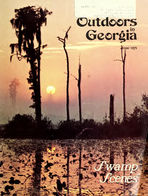
FRONT & BACK COVER: The ethereal beauty of a dawning in the Okefenokee Swamp was captured by Wendell Metzen.
MAGAZINE STAFF
Phone 656-3530
David Cranshaw
Publisher
Bill Morehead
Editor
Liz Carmichael Jones . . . Art Director
T. Craig Martin (on leave). . . . Editor
Aaron Pass
Wildlife Editor
Joe Cullens
Staff Writer
Dick Davis
Staff Writer
Priscilla C. Powell .
Rebecca N. Marshall . . . Staff Writer
Jose Vinas
Artist
Bob Busby
Photo Editor
Edward Brock . . . Staff Photographer
Cathy Cardarelli . . Staff Photographer
Jim Couch
Staff Photogapher
Circulation Manager
Outdoors in Georgia is the official monthly magazine of the Georgia Department of Natural Resources, published at the Department's offices, Room 713, 270 Washington Street, Atlanta,
Georgia 30334. No advertising accepted. Subscriptions are $3 for one year or $6 for three years. Printed by Williams Printing Company, Atlanta, Georgia. Notification of address change must include label from a recent magazine, new address and ZIP code, with 60 days notice. No subscription requests will be accepted without ZIP code. Articles and photographs may be reprinted when proper credit given. Contributions are welcome, but the editors assume no responsibility or liability for loss or damage of articles, photographs, or
illustrations. Second-class postage paid at Atlanta, Georgia. 35,000 copies printed at an approximate cost of $14,500. The Department of Natural Resources is an Equal Opportunity
employer, and employs without regard to race, creed, color, sex, age, or national origin.
Nature Demands
In our society, natural resource laws and regulations are products of hard-fought considerations. The good natural resource laws are those which do not seek to repeal nature's laws. Getting such laws requires a deep understanding of both nature and the nature of politics.
It is good to report to our readers that in a General Assembly session mainly dedicated to other issues (the economy, tax relief, etc.), six-
teen important pieces of natural resource legislation were passed (see story on page 20).
Nature sent some not-so-gentle reminders of itself during the 1975 session. The recent floods in Atlanta and Albany, and the ravaging tornadoes of Fort Valley and Atlanta, provide vigor-
ous proof that nature operates independently of people.
We are all learning fast that we plan our lives
with and for nature. There is really no other way. The Department of Natural Resources is a creation of state government's understanding of
those facts, and exists as a tribute to nature and its demands.
The visible wreckage wrought by floods and
tornadoes is but one aspect of nature's demands. Other forces, less visible but no less important,
operate throughout our state and demand our
attention.
Georgia, this year and in the past, has passed some very good natural resource legislation.
More will have to come, and it will. The most
-- important point is the fact that in econom-- ically lean years and rich the Governor and
the General Assembly are sticking by their commitments to nature. In this, Georgia is very
fortunate.
tfLy'7$*$y
Jut?e 1975
Bait Rigging
by T. Craig Martin and Larry Smith
Photography by Jim Couch
Offshore fishing is beginning to pick up now, opening the season that will last into August and September. Now's the time for saltwater anglers to organize their gear, ready their boats, and
review their technique. To help with that process, we offer this introductory/refresher course
in rigging trolling baits.
Many anglers avoid trolling altogether be-
cause they feel rigging the bait is too compli-
cated, and many novices may cruise around all day wondering why nothing has hit that spinning
hunk of meat strung out behind the boat. But
the basic techniques for attaching lures or bait-
fish to hook and line are relatively simple. With
a little practice, any angler can create lures to attract mackerel, dolphin, barracuda, amber-
jack, or sailfish.
-- Readying the artificials most common on
our coast are feather jigs, metal spoons, and
-- A plugs like the Cisco Kid is quite easy. wire
leader about 7 feet long is attached to the lure and the other end is connected to the line with an Albright knot ( a good book on knots is Kreh and Sosin's Practical Fishing Knots, published
by Crown) or swivel. Since learning the haywire and barrel twists may take some time, feathers and spoons should be rigged in advance; thus no fishing time will be lost while you practice.
Outdoors irj Georgia
The haywire and barrel twist: the tag end and standing portion of the wire are twisted around each other at least 3 V2 times; the wrap will be weak if only the tag end is bent around the standing portion.
After gutting the mullet, remove the backbone and drill a hole through the head.
The same twists create the loop at the line end
of your leader.
The leader itself should be a solid, coffee-
color wire of #7, 8 or 9 strength (between 75-
and 95-pound test ) . Although for most fish you
won't need the full 7-foot length, a good king
mackerel or sailfish might cut your line with
tail or bill if the leader is too short. The leader
is no place to economize in offshore tackle.
The hooks for both natural baits and feather
jigs should be high quality stainless or tinned
steel, usually in 6/0, 7/0 or 8/0. In a two-hook
rig, the rear hook will have a ring eye, the for-
ward hook a needle eye which can be slipped
through the ring. In most cases, a 2X long
shank hook will help put the barbs a little fur-
ther back, often to your advantage when mack-
erel are striking short.
Working with natural bait is not quite so
simple. The lure must be rigged so that it will
swim or skip from wave to wave naturally,
creating an irresistible temptation for hungry
predators. If it spins or swims unnaturally, no
fish is going to take it.
Please turn page
Jupc 1975
After slipping the needle eye hook through the ring eye, slip the second hook through the slit in the belly and out just before the tail.
1 Then slip the forward hook up through the slit and into the mouth.
2 Put the leader wire into the hole in the mullet's head, thread it through the hook's eye and bring it out through the lower jaw.
3 Slip on an egg sinker (any size from V2-ounce up to 1 'A -ounce), and finish the rig with haywire and barrel twists.
4 The finished mullet, and a complete rig without the mullet to show how it looks.
5 There's no need to debone the ballyhoo, but its backbone should be thoroughly broken.
It, too, is gutted before rigging.
6 After the hook is thoroughly secured, the tag end of the leader is cut off, leaving about one inch remaining.
Outdoors ii? Georgia
--
.--
^^^U "'W
l^^^_
^^^^
[tj- ,.
^^^^^&^t9^^^\
^^'
The hook is inserted through the gills and brought out in the belly slit. The eye of the hook then is pushed up into the back of the mouth and the remaining portion of the tag end shoved out through
the top of the bait's head.
8 A rubber band or short piece of copper wire is wrapped tightly around the mouth and beak and the exposed leader wire, both to keep the mouth shut
and secure the hook.
The most commonly seen natural baits here are mullet and ballyhoo ( a member of the half-
beak family). Occasionally, flying fish are used. Although ballyhoo sometimes are considered a little more classy, Georgians probably will do as
well with the common mullet, perhaps because its shape so much resembles that of a flying fish (which is common here during the warmer
months). Both ballyhoo and mullet can be bought, and mullet can be caught with cast nets.
A 6- to 8-inch mullet is fine for most of our
common offshore species, although those seek-
ing marlin or tuna will want something larger. Contrary to popular belief, this 6" or 8" bait will attract sailfish more readily than bigger baits. Ballyhoo should be in the 7" to 10" range.
Both mullet and ballyhoo can be skipped
-- usually on the third or fourth crest back from
the boat, further if outriggers are used and
A the mullet can be used as a swimming bait.
single-hcok rig probably is best for skipped
baits, a double-hook for swimming baits. The following pictures and captions illustrate
basic rigs using jig, mullet, and ballyhoo. It
would be wise to practice rigging at home before
heading out for serious fishing: the middle of a feeding school of nice kings is no place to learn
# bait rigging.
9 Finally, the beak is broken off.
1 With a selection of bails like this, the offshore troller should be able to tempt a wide variety
of exciting gamefish.
Jui?e 1975
Flies, Ticks
and Redbugs
by Gib Johnston, Jr.
Flies, including mosquitoes, gnats,
and midges have been intimate com-
panions of man since time began. They have annoyed him, tortured
him with bites, infested his flesh and
the flesh of his animals, transmitted diseases to him, and destroyed his
crops. Yes, flies have done all this, and their persistent attacks combined with the long-lasting misery caused by two more pests, the ticks
and chiggers, ruin as many vacations
as thunderstorms, hurricanes, or non-cooperative fish.
The May issue of Outdoors in
Georgia looked at mosquitoes and what could be done about them. This issue takes a closer look at flies, ticks, and redbugs.
Flies, like mosquitoes, are classed as aquatic insects because part of their life cycle is spent in moist areas. Often this "aquatic" environ-
ment includes skin, open wounds, rotting hay, and spoiled food. Flies pass through egg, larva, pupa, and adult stages in a few days, and generally can infest humans in all stages
of this life cycle.
Biting flies qualify among the flies most annoying to humans. The term
"biting" is questionable, since they
Biting Midge Outdoors ip Georgia
Horse Fly
tear a hole in flesh and lap up the
blood, but who cares? The results
are the same.
Flies that concern many Geor-
gians are the big horseflies and smaller deer flies. All swimmers and fishermen are painfully aware of the vicious bite of these pests. They seem to enjoy operating in full sunlight and depend on movement of their prey for location. Deer flies are very strong fliers and can out-
distance the swiftest horses. (Two
hundred seventy-three species of this fly inhabit North America.)
Midges, or "no-see-ums", are
very tiny flies. They are so small
that the victim has difficulty deter-
mining just what is biting. These delicate flies, also known as punkies, have other names that decency prevents mentioning here. Midges are most active towards "first dark" and appear in large swarms that seem to be dancing in the air. The sound of their wings is a hissing hum, like a distant rain shower. Their bites cause a burning itch.
Sandflies hatch from rotting grass, sewage, and rotting garbage, giving the area a fuzzy appearance. Although they are weak fliers, they
feed on the blood of many animals.
Their attack is quiet, vicious, and
painful.
Black flies are small, shortbodied, short-legged flies found in
Sand Fly
Eye Gnat
away from our eyes. Gnats don't
bite, but eternal persistence classes
them with the worst of pests.
Two other "bugs" that cause con-
cern among outdoor Georgians are
not really bugs; they are not flies or even insects. These are ticks and chiggers (or redbugs in south Geor-
gia). They are arachnids, as are spiders. Insects have six legs and three well-defined body parts; arachnids have eight legs and head and thorax "fused" into one part.
Of these, chiggers are without doubt the most troublesome, probably due to sheer numbers. They abound from mid-June till Novem-
<sJLJj
Deer Flv Jupc 1975
wooded areas near streams. These persistent biters are known as "buffalo gnats" and are serious pests to man and livestock. They will attack by night as well as day, and often
the pain of the bite does not appear
until later.
There are other biting flies, such
as the stable fly who seems to land
teeth first. But for pure annoyance, the eye gnat of south Georgia is sec-
ond to none. Those of us who have
lived "below the gnat line" take gnats more or less in stride and have learned to unconsciously hold our mouth just right and blow them
Redbug
Lone Star Tick
her but may be on the coast and in
deep south Georgia year round. Chiggers are the larval stage of mites that, as adults, feed on the eggs of insects.
Their life starts as eggs in the
ground. The eggs hatch into 6legged larvae (the adults have 8 legs)
that climb onto grass blades, bushes, and small trees where they wait for almost any kind of animal to brush
against their perch. They grab hold, make their way to bare flesh, and attach for 1-7 days feeding on tissue fluids, not blood. The results are well known.
Man is not the only animal plagued by chiggers; snakes, mam-
mals, birds, and turtles all suffer with us.
Ticks feed on blood in the "seed"
(or larval) stage as well as the adult.
Unlike chiggers, that feed by a specialized organ that is part chigger
and part host, ticks use their own mouth parts and dig in with such vigor that the entire head is buried in the skin. They do this so neatly that a day or two may pass before
there is any pain or discomfort. The most serious problem with
ticks comes from an encounter with a "tick bush", on which many newly hatched larval ticks wait for any
passing host: hundreds may be able to attach. They must be removed im-
mediately, because the poisonous effect of their saliva can cause fever
and a day or two in bed. The attack of most flies, ticks, and
chiggers can be repelled by proper protective clothing, but some flies and chiggers are smaller than the weave of cloth. So this leaves only chemical repellents.
Off and Cutters ward off the greatest variety of pests. Generally, Off works well against mosquitoes, chiggers. and most other insects. Cutters is best against ticks, sandflies, and deer flies.
Both of these products have as the
main ingredient N,N Diethylmeta-
tolumide, or "deet". Deet, like most repellents, is a chemical that "smells bad enough" to the insects to prevent them from landing on the treated areas. Cutters has other re-
pellent ingredients, plus homo men-
thyl salicylate, a sun screen. As some chemicals repel, others
attract. Avoid shaving lotions and perfumes, as they seem to smell as good to flies as they do to people.
Despite all preventive efforts, peo-
ple do get bitten. The remedies described in the mosquito article work
well for the itch of fly bites, but
ticks and chiggers present different problems because the beast is attached to the skin.
For large ticks that really have dug in, first try to pull, not twist, them off with steady pressure. If that fails, try some oily nail polish remover on a piece of cotton. Hold
the cotton on the tick for a minute or so, then pull again, or rub in a circular motion. The tick should come off, head and all. If the head remains attached, sterilize the point of a needle and dig it out; this will help prevent infection. As for the lighted cigarette method to make ticks release their hold, forget it! The
tick can stand the heat much longer
than you can. For redbugs, hot water and strong
soap will reduce the infestation; a gcod rubdown with pine oil disinfectant, followed in about 10 minutes by a good shower, will remove most of them. This procedure is good for seed tick infestation also.
Methods for slowing the itch of chigger bites are the same as for
mosquitoes. Or. dot each red spot
with a paste made of meat tenderizer. The enzymes in the meat tenderizer actually digest the body of
the chigger and the area of your skin and release the chigger saliva from
that area.
Remember, however, that the effectiveness of repellent depends partly on your personal body chemistry, and no repellent is 100 percent effective, so experiment. Find the one that's best for you and worst for the pests. Proper use of repellents, plus
a generous application of the age old "swat and dammit" technique should protect you from flies, ticks,
# or redbugs.
Outdoors ip Georgia
Parks
Summertime 75
by Lonice Barrett
Photography by OIG Staff
4
mm. #*
Jupe 1975
Do you enjoy camping under a
canopy of breeze-blown leaves or is
your preference for a comfortable
j
'' cottage? Do you enjoy water sports
, ^ like swimming and water skiing, or is it more your style to cast a rubber
'Vt\ worm into a likely-looking spot in
some remote corner of a quiet lake?
Perhaps you prefer wildlife pho-
tography, or a walk along a trail.
Maybe you simply want to enjoy a
picnic lunch and stretch out for
a snoozeli i
Please turrtpage^
t
>
You can enjoy all of this and
more in Georgia state parks and historic sites this summer.
Visitors can expect a variety of recreational facilities and programs designed for hours of fun and relaxation for just an afternoon, or up to two weeks. Various historic sites with their exhibits and displays offer an opportunity to re-live a little of
the past.
The following list provides a thumbnail sketch of facilities and programs to be offered this summer. Rental Cottages and Mobile Homes
There are over 215 rental cottages and 26 mobile homes that rent for $10 to $22 a night, depending on the number of people. The cottages have modern kitchens, and all utensils, linens, and towels are provided. The visitor needs only to bring food. Requests for information or reservations should be made through the park office at individual parks. Camping
There are more than 3,074 campsites in the parks. They have water, electricity, and nearby flush toilets, and rent for $3.00 per night. Reservations are not accepted. Most parks
have dump stations for recreational
vehicles. Historic Sites
The Historic Sites Section operates 23 sites which include historically significant homes, buildings, forts, and inns plus pre-historic Indian mounds. Exhibits and displays
are designed to interpret the "story"
of the site. No admission is charged. Group Camps
Twelve group camps are operated to serve youth or church groups who want to spend a fun-filled week at camp. These facilities are increasingly in demand, and information should be requested through the
individual park office.
Swimming There are 13 swimming pools and
19 beaches on lakes within the Georgia parks system. Qualified lifeguards are on duty at all facilities to ensure visitor safety. Golf
Three regulation golf courses are located at Hard Labor Creek State Park near Rutledge, Victoria Bryant
Manx state parks have comfortable cabins like this one.
-- Cabins are set near to most park activities, and are
completely furnished even to a real log-burning fireplace.
Left. Tenting is the ultimate in
camping, and Georgia's state parks
are designed for the tenting family.
Below. Swimming lakes abound in
-- state parks, and are the delight of
summertime visitor especially
the smaller youngsters.
10
Outdoors it? Georgia
Right. Parks and
historic sites interpretive naturalists
have developed a series
of lecture tours concerning both the
natural and cultural histories of parks
localities.
Above. History and historical
site interpretation is receiving
increasing attention from the summertime visitor. Georgia's unique setting in Revolutionary and post-Revolutionary days is a popular theme.
Right. Every visitor to a state park or historic site wants to
enjoy himself. Proper management determines that such individual enjoyment should not
diminish that prospect for others. In this picture, the park
site has been managed so natural enjoyment can be
recycled.
\) \
iI
1/
l
Hu3
? WBk* mm t^^pST'* jf .a
3
ty^^T^^^
-- ^2r- *L~*- '^si 1~ >.
y^w/z\e&t&&gL&ir'm%/*^&*TV*\y<**w*iM.
%43t
*Pi!
State Park near Royston, and Little Ocmulgee State Park near McRae. Greens fee for eighteen holes is $3.00, and electric or pull-type 'carts are available for rent. There are miniature golf courses in 22 parks throughout the state. Fishing
The Parks Division works closely
with the Game and Fish Division to
manage its lakes and streams to provide good fishing for park visitors. Eleven state parks leased from the U.S. Corps of Engineers are located on large reservoirs.
Stables
There are stables at Hard Labor Creek State Park, Franklin D. Roosevelt State Park, and Georgia Veterans State Park, where owners may board their horses for a nominal fee. Horses are not provided.
Picnicking There are over 70 developed
picnic areas within the parks. No
charge is made for picnic tables, although a limited number of reserved
shelters can be rented for reunions or other group activities.
Trails Several of the parks, notably
Stephen C. Foster, Providence Canyon, Cloudland Canyon, Keg Creek, Mistletoe, and Reed Bingham have recently undergone extensive trail improvement work. Organized Programs
Naturalist Programs: This summer 12 parks will employ full-time seasonal naturalists to plan and organize group events designed to tell the "nature story" surrounding the park. These will include talks, hikes, movies, demonstrations, and a number of "special event weekends" at
selected parks. History Interpretation: Full-time
interpreters will be working at three
historic sites: Etowah Mounds. New
Echota, and Fort Jackson Maritime Museum.
Recreation: Recreation leaders will be working at Vogel State Park near Blairsville and John Tanner State Park near Carrollton to plan
and implement summer recreation
programs including sports, games, and contests.
Please turn page
Jupe 1975
11
Activities Chart
A. H. Stephens
V
V Amicalola Falls ZXp^ - 2-^S<,
Bainbridge
Black Rock Mountain
V
Blackburn
V
Bobby Brown
V
Chattahoochee River
Chattooga Lakes
Chehaw
V
Cloudland Canyon
V
Crooked River
V
Elijah Clark
V
Fairchild
Fort Mountain
V
Fort Yargo
V
Franklin D. Roosevelt (^g
General Coffee
V
George T. Bagby
George W. Carver
Georgia Veterans Memorial
\/
Gordonia Alatamaha
V
Hamburg
V
Hard Labor Creek 3^& -VS72-V
Hart
V
High Falls
V
Indian Springs
V
John Tanner
V
Keg Creek
V
Kolomoki Mounds
V
Lake Chatuge
Laura S. Walker
V
Little Ocmulgee
V
Magnolia Springs
V
Mistletoe
v/
Moccasin Creek
V
Panola Mountain
Providence Canyon
Red Top Mountain
V
Reed Bingham
V
Reynoldsville
Richmond Hill
V
Seminole
V
Skidaway Island
V
Stephen C. Foster
V
Tugaloo
V
Victoria Bryant
V
Vogel
V
Watson Mill Bridge
V
Whitewater Creek
V
= 2* two group camps at park
12
-
**
VVV
V
V
V
V
V
VV
VV
V
V
V
V
V
VVV
VVV
V
VVV
VV V
V V V 2*
V
V
VV
V VV
VV
V
V
V V V V 2*
VVV
VV
VVVV
V VV V
VV
VV V
V
VVV
\/ V V V V
V VV V
VVV
V
V
V
VVV
VV
V
V
VVV
VV
V
V
VVV
VV
VVV
V
V
> 1
:>%
r **
VV
V
V
VVV
V
V
VVVV
V
VV
V
V
V
V
V
VV
V
V
V
V
VV
V
V
V
VV
V
V
VVV
V V VV V
VV
V
V
V
V
V
V
V
VV
V
V
V
VV
VVV
V
VV
V
V
VV
VV
V
VV
V
V
VV
VV
V
V
VVV
V
V
V
V
VV
VV
VV
V
VVV
V
V
V
V
VV
VV
VV
V
VV
VV
V
V
V
V
V
V
VV
V
V
V V VV V
VVV V V
VV
V
V
V
V
V
Outdoors ip Georgia
Drama: For the third summer, the Touring Drama will present plays in the parks. This group of DeKalb
College students will present GOLD! and The Vigil. GOLD! tells the story
of the north Georgia gold rush days at Auraria, while The Vigil is a story of Elijah Clark and Nancy Hart, two
Revolutionary War figures. The
drama presentations are free to the public and are presented in the
evenings.
Special Weekends: "Special Week-
ends" are planned at various parks during the summer, and include archaeology-anthropology weekend at Etowah Mounds, geology week-
Left. Canoeing and other forms of
state parks. Fishing may be the
main reason for bringing or renting a boat, but sometimes a quiet glide down a blackwater flow will replenish the hunger of a soul.
Below. Proper planning will assure the visitor a chance to dufj a couple of greens. Georgia has 3 golf courses at State parks. Summertime '75 is sure to be an exciting time for the millions of visitors!
end at Cloudland Canyon, and birding weekend, bluegrass music weekend, and living off the land weekend
at other parks.
Youth Conservation Corps: The Division will operate four Youth Conservation Corps camps at Panola Mountain State Park near Stockbridge; Chattahoochee River State Park in Atlanta; Red Top Mountain State Park near Cartersville; and Sweetwater Creek State Park near Douglasville. The high school students working in these camps will
build nature trails, boardwalks, wildlife food plots, and other conservation-related projects. This program is jointly sponsored by the Department of Natural Resources and the U.S. Forest Service.
Camping Program for the Handicapped: Over 500 mentally and physically handicapped children will attend a nine-week summer camp program beginning this July. The Parks and Historic Sites Division and the Georgia Association of Retarded
Citizens will join forces to operate
the camps at Will-A-Way Park for the Handicapped near Winder; Franklin D. Roosevelt State Park near Pine Mountain; Magnolia Springs State Park near Millen; and Laura S. Walker State Park near Waycross. Parents of retarded children interested in this program
should contact local training centers for registration information.
State parks will be open to the public this summer from 7 a.m. to 10 p.m. daily.
The summer season schedule begins June 1 and runs through Labor Day. Naturalist programs, swimming
pools and beaches, miniature golf, and related concessions will be open Tuesday through Sunday. (They will
be open on Monday holidays and
closed on Tuesday.) Historic sites are open 9 a.m.
to 5 p.m. Tuesday through Saturday, and 2 p.m. to 5:30 p.m. on Sunday. Sites are closed on all Mondays ex-
cept legal holidays.
A state park is located within one
hour's driving time of every Geor-
gian. Why not plan to visit one of
Georgia's 51 state parks or 19 his-
# toric sites this summer?
Jupc 1975
13
CS.S. Chattahoochee
It takes a lot of scrounging through volumes
of Civil War history to find anything about the
Confederate Navy. But the Confederacy did
-- have a Navy and it encompassed far more
than the Merrimac and its legendary battle with
the Monitor.
The Confederate Naval Museum at Colum-
bus, one of Georgia's Historic Sites, is a monument to this important branch of the South's military machine. Here visitors learn about the
Confederate
Naval Mueeum
by Dick Davis
Photography by Ed Brock
South's naval warfare and almost relive Confederate gunboat operations.
Appropriately situated near the Chattahoo-
chee River, site of much of the history it brings to life, the Museum features salvaged portions
'i-
1
r*
.MM
1 **.,..
r
'&%&;&.
m
k?
"*93
m
of two Confederate gunboats, the CSS Jackson (locally known as the "Muscogee") and the CSS Chattahoochee. The hulls of the two ships
are exhibited in a covered open air arena, where
visitors can view them from many vantage
points: from under the keel line, from the sides and from above, or from raised permanent
-- platforms that provide a topside view. The organization of the Confederate Navy
--its make-up and mission, its glories and demise are portrayed inside. Replicas of the Muscogee, the Chattahoochee, and the Monitor and Merrimac are displayed, along with the rudder of the Chattahoochee and other artifacts from
the gunboats. Special attention is given to a
photo display on the salvage operations which raised the boats from the Chattahoochee River
bottom.
The ironclad Muscogee was built to challenge the Federal blockaders of the Eastern Gulf and
to defend the Chattahoochee and Appalachicola Rivers. The vessel, constructed at the Confed-
erate Navy Yard and powered by engines and boilers built by the Columbus Iron Works, was
launched in the Chattahoochee River in December 1864, though her armor plate and guns were not installed until 1865.
The ship, called the Jackson in honor of Mississippi's capitol, was a twin-screw vessel about 200 feet long with a 56-foot beam. She carried six guns, four 7-inch and two 6.4-inch. Her draft was only six feet.
The Muscogee was set on fire by Federal cavalry raiders attacking Columbus in early 1865. Once in flames, she was cut loose from her moorings and burned to the waterline before sinking about 25 miles below Columbus.
In 1962, the ship was raised from the river bottom in two sections, the end of a struggle
stretching over nearly three years.
The Chattahoochee was built at Saffold, a small river community in Early County, and in 1862 was armed with four broadside and two pivot guns. She was between 130 and 150 feet long with a beam of approximately 30 feet, was three-masted, sail-rigged, and steam driven by
a single propeller.
Above. Twin screws of C.S.S.
Muscogee still
attached to the hull. This gunboat,
fitted in 1865 and sunk the same year, was raised from the
Chattahoochee River 13 years
ago.
Right. Capable of both offensive and defensive deploy-
ment, field pieces such as the one
shown here served mainly to defend
strategic river
towns during the
War Between the
States.
She first sank in 1863: in an accident on the Chattahoochee River her boiler exploded as she collided with obstructions. The ship quickly was raised and put back into service. She finally was sunk by the Confederates to prevent her capture by Federal forces after Lee's surrender
at Appomattox. The recovered portion of the Chattahoochee
was brought up in 1964. The Confederate Naval Museum, operated
by the Department of Natural Resources, is open Tuesday through Saturday from 9:00 a.m.
to 5:00 p.m., and on Sundays from 2:00 p.m. to 5:30 p.m. It is closed on Mondays, and on
Thanksgiving Day and Christmas Day. #
Jupc 1975
15
&ln these savage, liquid plains
.
v^/nly known to wand ring swains. where the mossy nv let strays, QJar from human haunts and ways;
CAll on feature you depend
Und life s poor season peaceful spend.
[Robert 'Jjurns, ij8j
Outdoors ip Georgia
)
wamp
O'
ojcenes
fPnolograpny oy wendell lllelzen
Juije 1975
Outdoors U) Georgia
... emerald grows oerlook thy shadowy aisles.
SX/here verdant twilight lands sweet daij repose.
oJnomas (Hoi fey L^nivers, i83j,
'
Jupe 197
20
Outdoors ii) Georgia
Environmental
Laws of 1975
by Bill Tinkler
Watercolors by Lanny Webb
The recession and its impact on the state
budget were the major themes of Georgia's 1 975
General Assembly. Media coverage of the ses-
sion understandably highlighted tax relief, the
equal rights amendment, and public kinder-
gartens.
For this reason, the very significant advance-
ments made in natural resources legislation did not gain deserved publicity. The 1975 session
could, in fact, be called a "conservation session". Sixteen important bills were passed. Here is a
-- summary of these bills: House Bill 148 Heritage Trust
This Act
establishes the Heritage Trust Commission as a
citizens' advisory body to the Board of Natural
Resources. In doing so, the Act requires the Board to continue its program of acquiring
property which represents the state's cultural
and natural history. It also sets forth a dedica-
tion procedure for land given to the state
through the Heritage Trust Program.
House Bill 149 Oil, Gas, and Mineral Drilling
--This Act authorizes the Board of Natural Re-
sources to adopt rules and regulations dealing
with the drilling and production of oil, gas, and
certain other minerals. One major aspect is de-
signed to assure the continued quality of Geor-
gia's groundwater supply.
--House Bill 174 Erosion and Sedimentation This authorizes cities and counties to adopt
erosion control ordinances to prevent river and
stream pollution by sedimentation. Only major
land-disturbing activities are required to have
permits under these ordinances. Among the ex-
Jupe 1975
emptions are forestry, farming and other agri-
cultural practices, as well as minor land devel-
opment. If after two years a city or county has
failed to adopt ordinances which meet minimum requirements set forth in this Act, DNR's En-
vironmental Protection Division, along with the
State Soil and Water Conservation Committee,
will hold hearings and adopt regulations. EPD
will act as the permitting authority for a
local jurisdiction until adequate ordinances are
adopted. According to Commissioner Tanner,
the Erosion and Sedimentation Act will go far
in correcting the state's most severe water pol-
lution problems.
-- House Bill 260 Disability Payments Under
the provisions of this Act, Conservation Rangers
of the Department of Natural Resources will be
eligible for disability payments if injured in the
line of duty.
--House Bill 579 Sapelo Island Transportation This authorizes the Department to provide
water transportation for state employees and
other persons to and from "certain coastal
islands owned by the State". The Act, which now applies only to Sapelo Island, puts the De-
partment on firm legal ground in continuing
its daily shuttle.
--House Bill 721 Air Quality Act Amendments In February 1 974 a decision handed down by
the Fifth Circuit Court of Appeals held that
Georgia's Air Quality Act did not comply with
Federal standards for two reasons: (1) Georgia's law did not allow public inspection of re-
ports of stationary source emissions, and (2)
it did not state that, in attaining air quality
standards, economic considerations will be
subordinate to considerations of public health.
H.B. 721 added language to the Air Quality Act
which satisfies Federal requirements on these
-- two points. House Bill 872 Animal Importation
This
Act repeals an old law concerning importation
of wild animals, which was administratively un-
workable, and replaces it with a corrected ver-
sion. H.B. 872 allows the Department to regu-
late the importation of animals which would
pose the possibility of harmful competition to
wildlife, the introduction of disease harmful to
wildlife, law enforcement problems, or danger
to other natural resources.
Please turn page
21
-- House Bill 937 Disposal of Contraband
This Act allows the Commissioner of the De-
partment of Natural Resources to order the
immediate sale of wildlife seized in violation of
a Game and Fish law, if the wildlife would be
difficult to store for the required 30-day period.
(H.B. 937 requires that the proceeds from the
sale of the wildlife be held in escrow for 30
days.) This law will, for example, solve the
problem the Department now faces when a
shrimp boat with 2,000 pounds of live shrimp
-- is confiscated for illegal shrimping. House Bill 939 Inspection of Licenses
Until this Act was passed, a person technically
could refuse to show his hunting or fishing
license to a Conservation Ranger. H.B. 939
simply corrects this flaw in the existing statute.
It is now a misdemeanor to refuse to show a
-- license upon request. House Bill 605 Trash Act Amendments
This Act. which applies only to Fulton, DeKalb,
Clayton, and Cobb Counties, exempts recycling
DNR programs approved by
from the provision
which requires them to be approved by county
commissions if they involve transporting trash
-- across county lines. Senate Bill 311 Striker's License
Under
the provisions of this Act, people assisting the
captain of a shrimp boat (strikers) will not be
required to have individual commercial fishing
licenses. This new law not only will save the De-
partment the administrative costs of supplying
large numbers of commercial licenses at small
cost to the licensee, but it will also eliminate the
shrimp boat captain's difficult task of finding
-- licensed workers for his boat. Senate Bill 342 Boat Bond Amendments
Under the commercial boat bond law passed in
the 1974 session, all shrimpers were required to
post a surety bond in the name of the state.
S.B. 342 expands the bonding options available
to shrimpers by allowing the following alterna-
tives: ( 1 ) the shrimper may post a $5,000 cash bond, or (2) a Georgia shrimper who owns his boat outright may sign an affidavit granting the
Department a first lien on the vessel.
--Senate Bill 323 Commercial Bait Shrimping This Act requires shrimp bait salesmen to
carry a bond similar to that now carried by
shrimp bait fishermen. It also restricts the hours
for individual and commercial fishermen during
22
shrimp season (May 1-Aug. 31). This bill was
needed to eliminate the law enforcement prob-
lems which existed under the old law.
:|:
:|:
*
*
*
*
In addition to these bills, several resolutions
were adopted by the House and the Senate which conveyed state-owned land to various local governments. H.R. 306-1138 conveyed 1 1 acres of state-owned surplus property on the Chattahoochee River in metropolitan Atlanta to Fulton County. The land will be used for local recreational purposes. The General Assembly also conveyed two state parks to local governments. Chehaw State Park was transferred to Dougherty County and Lincoln State Park was transferred to Jenkins County. Each
park will now be operated by the local gov-
ernments. #
Outdoors ip Georgia
Outdoor Photography
(Second in a Series)
by T. Craig Martin
and Jim Couch
OIG Staff Photography
Before 1 5 rolls of film have clicked
through that new camera, the aspiring photographer has begun to save
or lobby or otherwise prepare for the purchase of one or more alterna-
tive lenses. By day he pores over the
catalogs and price lists; by night he dreams of the exquisite pictures
he'll get with the new equipment.
Occasionally he even pauses to ana-
lyze the kinds of pictures he'd like to take and the conditions in which he'd be able to take them; less often the sinister "need versus desire"
dilemma rears up to confront him,
but it quickly retreats before a barrage of clearly reasoned arguments
in support of . . . desire. Oh, the heart of it is camouflaged quite artfully; but in the beginning almost all camera buffs buy what they want rather than what they need.
TELEPHOTO LENSES
And what almost all of them ini-
A tially want is a telephoto lens. lens
with a focal length of more than
200mm is, with very few exceptions,
a terrible choice for new photogra-
phers using the 35mm format.
These lenses often are bulky, and usually are very slow (/4.5, /5.6 and up). They always require precise focusing. While they do enlarge the image on the negative or transparency, they also enlarge all the little tremors that go unnoticed in less demanding lenses. This tendency, combined with their bulk, means that long lenses must be mounted on a tripod and, if possible, used only with fast shutter speeds.
The working distance offered by a 135mm lens is useful in dealing with
feisty critters like this bobcat.
But these lenses are slow, so the fast shutter speed means they must be opened to their widest, which, in turn, means that the depth of field (distance between the nearest and farthest objects in sharp focus) is narrowed considerably. This narrow
depth of field makes it much harder
to get an acceptable photograph. All these problems, multiplied by the novice's extraordinary distaste for
tripods, lead to many sad results.
Telephoto lenses have a place in the beginning photographer's armo-
ry. Lenses in the 85mm, 105mm, and 135mm range are the most
versatile: they offer distortion-free
portraiture, slightly more working distance from the subject, and/or a larger image on the film. Lenses in
the 180mm and 200mm range are
the upper limit for hand-held work, and most photographers should not try to hand-hold exposures of longer than 1 /250th of a second with them.
The photographer can vary his image size with almost any lens by moving closer to or farther from his subject. The long focus lens pro-
jects a smaller portion of the subject onto the film, providing a larger
image. A photographer can get a
similar effect with his normal lens by moving closer to the subject.
Longer lenses are good for portraiture because they allow the photographer to fill his frame while remaining a comfortable distance from his subject. This allows him to get more natural pictures than he might if he had to crowd in.
Long lenses also help to avoid unpleasant distortion. Normal and
wide angle lenses are less suitable for pictures of people because they tend to emphasize objects near the
lens. As the portrait which accom-
panies this article illustrates, the ef-
fect seldom is pleasing. By moving
farther away, the photographer re-
Jurje 1975
23
--
A long lens is useful to isolate
elements of a scene.
Below.
Working some distance from the
subject enabled the photographer to capture this dynamic candid.
He used a 200mm lens.
Far Below.
The wide angle (28mm) lens caught
all the important elements of this scene and kept them all in acceptable focus.
duces this distortion while the long lens lets him keep the same image
size.
Although focus is very critical in long lens work, this problem can work to the photographer's advantage. The narrow depth of field allows him to isolate and emphasize elements in the picture by keeping important areas in sharp focus while letting the rest remain fuzzy.
(Note, however, that a given fstop provides the same depth of field whether it is set on a wide angle, normal, or telephoto lens: if the image from a wide angle lens set at /8 were blown up to the same size as the image from a telephoto lens set at /8, the depth of field would be the same. The camera position
-- therefore image size leads to the
apparent difference.)
The main reason for using a telephoto lens is to get a bigger image on the film, when it is impossible or undesirable to move physically
closer.
Here in Georgia where most of our wildlife is not dangerous to man, stick with medium telephoto
lenses.
The outdoorsman turned pho-
tographer is apt to find that it is infinitely harder to get a decent photograph of a duck or deer or
turkey than to kill one. Any of these
that can be spotted in dim early
morning or late evening light can be killed easily at a range of 50
yards or more. Few really good
photos of such wildlife can be taken
from much more than 50 feet, and
in most cases 20 to 30 feet is the maximum.
Not only must the photographer
-- get close he must do it in full day-
light. Good color pictures require a lot of light, certainly more than the human eye needs to spot some wary animal. Even with a tripod, the photographer can't shoot much slower
than a 60th of a second for fear that
the animal will move. And for best
results, he should shoot at 125th or
250th of a second. To do that he
needs a lot of light.
WIDE ANGLE LENSES
While the main reason for long
focus lenses is a bigger image, the
main purpose of a wide angle lens is to get more of the subject onto film. The telephoto provides a larger image without moving the camera forward; the wide angle a smaller image without moving it back.
If, for example, a telephoto lens fills the frame with a duck's body, a wide angle lens in the same camera position might include portions of
his pond, other members of the flock, and the red early morning sky.
The wide angle is a good choice for a photographer recording fishing action while he's in the same boat as
24
Outdoors ip Georgia
the angler, or for a hunter working in a duck blind. It also is good for
many landscape pictures.
This lens emphasizes foreground
-- objects a tiny fish held near the
lens looks huge compared to the
angler standing behind it. This per-
spective works well in landscape
photography, for the viewer's eye
can be drawn to foreground sub-
jects while still able to see the overall
context: a boat drawn up on a
beach, for example, or a lovely old
stump in the foreground of a forest.
Wide angle lenses also give the
impression of tremendous depth of
field, so both near and far objects
can be in focus. This depth of field
helps the photographer place his
main object or activity in its proper
context.
Beginning photographers often
buy wide angle lenses that aren't
"wide" enough to be of much use. Dealers most often recommend a
35mm lens; unfortunately, a 35mm
really doesn't provide the expanded
perspective that makes a wide angle
35mm lens useful. In fact, a
lens
probably would make a reasonable
"normal" lens for most photogra-
phers.
The 35mm provides slightly wider coverage than the 50mm "normal",
and so is better for group pictures,
many scenics, and other common
outdoor pictures. But it cannot be
used for portraiture for the reasons
noted above.
The most versatile wide angle lens probably is the 28mm. It offers suf-
ficiently altered perspective without
introducing the noticeable distor-
tions inherent in 20mm or 24mm lenses. Any lens shorter than 24mm
probably should be considered a
special purpose lens and avoided by
novices.
No lens or combination of lenses,
however, is going to protect a photographer from himself. The camera
and lens will do no more than the
photographer asks of them, and they
won't even do that unless he under-
stands their limitations.
The beginning photographer
should be wary of taking refuge in
his lack of equipment. He may be
slightly limited by his gear, but his
Right. Ideal use of both the wide angle and telephoto lenses. Here the subject is seen in context and (Above) the photographer isolates his dramatic face.
Lower right. This is why wide angle
lenses should not be used for portraiture. These unpleasant effects
came from a 28mm lens.
photographs should be competent
within those limitations. He also can learn a lot as he tries to devise means
of overcoming hindrances set up by his equipment. As he takes more and more pictures, he will begin to find an actual need for more versatile lenses; but he should resist buying them as long as possible.
If he can, he should borrow or rent various lenses to see which best suit his needs. There are "long lens people" and there are "wide angle people": one group prefers the larger image and more removed working distance; the other group likes a wider perspective and closer work. The newcomer would do well to learn about himself before he rushes headlong into either group.
In our next article we'll examine the fascinating world of close up. or
# "macro" photography.
Jupc 1975
25
BROUGHT TO VOU UVE!
by Joe ( ullens
Photography by Bob Busby
Live bait! Is that the key when the fish just don't seem to bite? It just may be the saving factor in an
otherwise fruitless day. Artificial lures have their place
and many times will fill your stringer
or live well to the brim, but no serious fisherman should ignore the possibilities of live bait. After all, what is an artificial lure supposed to do . . . mimic real life, right? What's wrong with giving the real thing a try once in a while?
Live bait fishing is considerably different from fishing with artificial
lures. You don't have to mechanically impart movement to the lure;
the natural wiggle of the bait does
the work for you. And there is no
need to worry about retrieving too
fast.
The scent of live bait works for
you, too. Sure, there are artificial scents on the market, but none seems
to draw fish quite like the real thing. The "feel" of the strike is much
enhanced when the only motion of the bait is its natural movement. This can be very important when
you are after smaller panfish, whose nibbles often can barely be felt. These fish just don't make savage strikes like the larger bass and trout.
The carnivores of the underwater world naturally look for anything unusual: lures are designed to mimic the action of sick or wounded bait, or some oddly shaped individual that has had the bad luck of falling
into the water or being separated from a group.
In recent years the live bait fisher-
man has become an antique, a relic, especially in bass fishing circles. The
growth of scientific angling has dwarfed the old-line tactic, relegating its use to oldsters and the very young.
That's okay, though; a lot of folks
go home laughing up their sleeves at
"those long-nosed snobs in their fancy boats with the empty stringers and a piano case full of plastic
perties".
Live bait certainly is not the ultimate answer (there isn't one). It simply is a forgotten tool in a world
of mechanical marvels. Why not
pack some up and take it along on
that next trip? Live bait attracts fish. It's just that
simple. When fish are feeding, you
can bet your boots that they'll hit a
nice fat worm or minnow. And here
is where you enter a world of your
own as a live bait fisherman
Live Baits 1) Georgia fishermen have quite a few favored live baits, and the spring lizard probably is one of the best.
The lizard is extremely effective in both northern and southern lakes and ponds. Spring lizards generally are fished in a slow trolling style, allowing the bait to sink to the bottom and move as it would in nature.
The lizard is hooked through the lips, or up through the lower jaw and out one eye. This method ap-
parently allows the fish to take the whole bait into its mouth, never
realizing the presence of the hook
until it is too late.
But caution! The strikes you'll get when fishing spring lizards are savage, and the fish will run a good dis-
tance before stopping. Don't try to
26
Outdoors it? Georgia
Zi
This small red wiggler has been threaded onto the hook in much the same manner as a plastic worm. Notice that the ends are left free to wiggle and tantalize the fish. Like the minnow, this small bait should be fitted with one or more split shots.
set the hook too quickly. When the
fish takes the bait, give him all the
line he wants. When he stops, give
him a few seconds to maul the bait in his mouth and swallow it, then set that hook and haul him in. ?) Another very popular live bait, especially among bass fishermen, is
the minnow. A word to the wise:
check the regulations on the body of water you're fishing. Some lakes and streams prohibit the use of minnows, since the wrong type can cre-
ate nightmarish population problems.
These small baitfish range in size from the tiniest of shinners to the chunky creek chubs four and five inches long. Don't let size fool you
though, for a hungry bass will make
almost as quick a meal of a small minnow as the larger ones, though
there may be some truth in the
adage that claims "the bigger the minnow, the bigger the bass".
There are a number of ways to fish minnows. They can be hooked through the lips or eyes and trolled
along the edses of structure; or thev
can be attached to a small float or bobber and dangled a few inches away from underwater growth. Minnows also can be hooked just in front of the dorsal fin and allowed to swim freely.
The experienced crappie fisherman will tell you that minnows are
the preferred bait. Crappie just
can't seem to resist a tasty minnow
dangled in front of them, and it isn't
at all uncommon to find fishermen
rilling their boat from a single spot when these panfish are feeding in
a frenzy.
3) Though really out of the realm
of "live" bait, the pork rind should not be overlooked. These thin brinecured strips of pork flesh have a
movement all their own, and in the winter months when the fish are sluggish and hard to tempt, pork
rinds can be used, in combination with other lures or simply by themselves, for outstanding results, particularly on bass.
Pork rinds come in all shapes and sizes, from the frog and lizard to the simple oval shape. With the ad-
vent of scientific fishing, colors have
come into play as well. You can find
pork rinds varying from natural
buff white to the deep purples, blues,
and blacks of the plastic worm. 4) Live worms can be hooked in al-
most any fashion, so long as you
allow freedom for movement. The
small tender night crawlers and red
wigglers often are hooked several
times through the body, leaving the
tail and head sections free to wiggle.
This is an especially good practice
with the smaller panfish, since they
seem to have developed an uncanny
ability for slurping worms off hooks
like strands of spaghetti.
Larger earthworms have tough
skin and can be hooked in bunched
fashion like smaller worms, or
hooked through the body and out
the head like a plastic worm. The latter method allows the worm to move about as it would naturally,
but you have to be careful in setting
the hook. If you set too quickly,
you're liable to get slapped in the
face with your own bait, since the
fish is naturally going to taste the
bait a bit first.
5) Speaking of taste, an especially lush tidbit for "of bucketmouth" is
the cricket. There are two varieties,
the black and brown. They are
readily available through commer-
cial outlets, or you can grow your
own.
Fine wire hooks are best for
crickets, since it is easy to kill them
unless you're careful. The small
hooks also allow you to catch a few
bream if the bass aren't biting. On
the cricket's back you'll notice a circular "collar". Thread your hook
carefully under here and you'll have
one of the liveliest baits around. The Technique
Live bait fishing techniques differ
as much as fishermen, but there are
a few basics that generally produce
results.
Please turn page
Jur>e 1975
27
Using a small hook is necessary with crickets. Take
-- care to inset the hook under the "cockle" on the cricket's
hack. This bait is easily killed so change it often.
A nice fat grub like this one can be found almost
anywhere. Turn over a few rocks or sift through a few manure piles and you can find plenty of these.
Live bait is plentiful, so keep your hook fresh. Don't "let it lay" for too long in one place. Experiment a lit-
tle. Bump and bob the bait around
those likely nooks and crannies. Gentle movement adds action to an already tempting morsel.
Light and medium spinning tackle has proven itself a champion in the "go get 'urn" category. The same
holds true for its use with live bait.
The light monofilament lines allow the fish to strike and run with no suspicious "heavy" feel. Spinning tackle can be successfully used in
standing as well as running water. In swift-running water, baits like
hellgramites, soldier fly larvae,
crickets, mealworms, or small crayfish can be allowed to float gently downstream, much as they would naturally. It doesn't take much coaxing to get a hungry, frightened, or simply curious fish to take a good stab at a tempting meal floating right
past his front door.
The whole idea behind the use of live bait is, of course, to come close
to the natural action of the fish's
favorite food. But there comes a
time occasionally when you can't
avoid the use of sinkers and bobbers
or corks. Use the smallest split shot
you can find to get the job done. The
same holds for the bobber. The more resistance that the fish feels when
he takes the bait, the less likely he is
to swallow it, and the fewer fish
you will have on the stringer at the
end of the day.
A #6 hook larger than a
just isn't
going to do the job in freshwater.
First, it is going to tear up your
bait; second, a big hook is going to
look like a big hook; third, it's hard
to set without tearing loose (especial-
ly on tender-mouthed fish like the
crappie). The smaller panfish just
won't take a big hook, so the best
advice is to stick to the smaller
hooks.
Live bait is inexpensive, easy to
find, easy to use, and best of all . . .
it gets results! The next time you've
tried everything in the box and just
aren't doing well, slip into the bank,
get out of the boat, and scrounge
A yourself a few wriggling goodies.
change of luck never hurt any-
# body.
Find a quiet pool in a nearby stream
and use your minnow net to round up a few crayfish. Crawdads make tempting tidbits for bream as well
as bass. Using a small hook, thread it around and through the crayfish's underside in a looping manner. Crawdads swim backwards so be careful not to hinder the flexing motion.
28
Outdoors it? Georgia
)
i
Outdoorsman's
Quiz
by Lr. V. J. Garrison
Boating Safety
A (Editor's Note:
vessel means
every description of watercraft, other
than a seaplane, used or capable of
being used as a means of transpor-
tation on the water.
1. Mooring to buoys or other navigational aids is prohibited. True
or false? 2. P.F.D.s (personal flotation de-
vices) must be readily accessible whenever a vessel is in use. True
or false?
3. Non - motorized sailboats less
than 12 feet must be registered. True or false? 4. Registration numbers must be displayed on the forward half of a vessel, in block numbers at least 3 inches high. True or false? 5. Boating accidents resulting in only property damage need not be reported. True or false? 6. Type "1" P.F.D.s (seat cush-
ions) are legal for vessels less
than 16 feet long. True or false?
7. Riding the bow of a boat not
having a rail or retaining device is illegal. True or false? 8. Vessels 16 feet and over in length must be equipped with
wearable PFDs in addition to one throwable-type PFD. True
or false? 9. Vessels 26 feet and over in
length must be equipped with sounding devices (horns, bells,
whistles) and fire extinguishers.
True or false?
Vessels less than 16 feet are not
required to display a light during
night operations. True or false?
Vessels at anchor, except those
anchored or moored at marinas,
docks or other common anchor-
age, must display a 32 point
(360) white light during hours
of darkness. True or false?
Vessels less than 26 feet in
length must be equipped with
fire extinguishers if the construc-
tion of such vessels will permit
the entrapment of flammable
gases or vapors. True or false?
13 Bass boats are prohibited from
having elevated seats higher than
30 inches above the gunnel. True
or false?
14. A permit from the Department
of Natural Resources is required
to hold marine events (i.e., boat
and raft races, skiing exhibitions,
etc.). True or false?
A 15
vessel certificate of registra-
tion is a pocketsize plastic card and must be carried on board
whenever the boat is in use. True
or false?
Answers
an j j -g\
onjj -p\
-- SUOIPIJJS3J ou asjrjj^i
3UJJ-CI
-- siqSii 3ABq jsniu sjeoq jjb
onjj [i
3S[ej 'oi
anal "6
anjj -g
anjj
poAOiddu pJcnQ
jseoj ojr: Aaip popiAOjd 'onjj 9 pojjodaj aq jsniu ajoui
jo 001$
SUIAIOAUI
jo aSeiunp Xjjadoad
SJUappOB j|B
3SJEJ '
onjj -p
3S[FJJ
anji "i 3RI) ' I
Jupe 1975
29
.
Letters to tl?e Editor
To The Editor:
May I say thanks jor a job well
done. I sure enjoy your work and the
photographs. Keep up the good
work. Thanks again.
Sani C. Humphries, Georgia
Editor Replies: It's always amaz-
ing that certain people (like Mr.
Humphries) will take the time to
write us compliments. Gripes are
natural, plaudits are unusual. Thanks
We for your letter.
will try a little
harder because of it!
To The Editor:
You have made an excellent
magazine of Outdoors in Georgia.
/ enjoy every issue.
-- It would he helpful to me -- probably to all other readers
and
to
have the photographs identified in
such articles as New Echota (O.I.G.,
March 1975).
The photography was excellent.
Thanks jor the grand job that you
and your staff are doing.
R. M. McFarland, Jr., Georgia
Editor Replies: Your letter has
been heavily discussed by the edi-
torial staff at O.LG. Our policy on
photographs is, photographic explanations should be used wherever
necessary, but not where we feel the photo is self-explanatory and/or where the artistic merit of the photo would be harmed. We'll try to elimi-
nate confusing situations.
Thank you for your comments on our magazine and its photography.
We are quite proud of the compe-
tence of our photographers.
(O.I.G. would like to know other
reader opinions on the question of photo-explanations )
To The Editor:
I'm writing in regard to your arti-
cle, "What Danger Lurks" (O.I.G.,
Feb. 1975), especially about pokeweed.
As a young boy, raised in a coal town along the Ohio River, I've probably eaten a good many gallons
of pokeberries. We ate the young
shoots cooked as greens and also sliced, rolled in egg and jlour and
fried. Fried pokestalks taste like
fried green tomatoes. We also made
very good jelly from the berries. I lived in Georgia from Nov. '66
to Nov. '69, and upon eating my
first Georgia pokeberries I was told they were poison, which was a big
shock to me because in West Virginia, poke is a way of life.
This could be an example of dif-
ferent beliefs oj different parts of the United States.
Larry R. Hill West Columbia, West Virginia
Editor Replies: When I first
showed your letter to Gib Johnston, the author of the article in question, his reaction was, "Mr. Hill doesn't know it, but he died 20 years ago."
Seriously, author Johnston says, "Mr. Hill has survived what such authorities as the U.S. Army, U.S. Department of Agriculture, and the Georgia, Florida, South Carolina
and North Carolina Health and Agriculture Departments are certain should have brought his untimely demise."
Pokeweed is eaten as "greens"
here in Georgia, but only after very careful preparations to remove the
poisonous alkaloids. You seem
aware that the poisonous properties of plants vary in strength from geo-
graphic area to area. Maybe you lived in a good area or maybe you're
just plain lucky!
We still contend pokeweed be-
longs on our poisonous plant list. (Editor's Note: "Poke" is a way
of life in Georgia, too. One of O.I.G.'s new staffers, Lynda Staf-
ford, contributes the following Georgia recipe for preparing poke salad,
better known in Georgia as "poke
sallit"):
Collect the tender portions oj
poke, and wash in cool water. Cut the stalk small enough to fit in a pan, cover it with clear water and boil 'til tender. Pour off the water and rinse thoroughly in clear water. Then cook the poke as you would any garden greens.
Since pokeweed is a hallmark of southern tradition, maybe other
readers could help us out with different recipes involving poke (especially pokeberries ). Send your letters to:
Outdoors in Georgia
Room 713
Trinity-Washington Bldg. 270 Washington St., S.W.
Atlanta, Georgia 30334
30
Outdoors it? Georgia
Profi le:
J. Wimbric
Milker
Board Member
Department
of Natural Resources
by Bill Morebead
The first Board Member of the Department
of Natural Resources appointed by Governor Busbee is J. Wimbric Walker. Mr. Walker, a
native of McRae in Telfair County, brings to
the Board a successful business background in
A manufacturing. graduate of the University of
Georgia in political science, Mr. Walker served
in World War II in the Pacific Theatre (earning
both the Bronze Star and Purple Heart). J. Wimbric Walker is married to the former
Hilda White of Telfair County and has three children Ronnie, Jennifer and Craig. According to Mr. Walker, he is, "greatly concerned about
the prospect of human population increases in
Georgia and their effect on wildlife." An avid
outdoorsman, Mr. Walker says, "I don't hunt much anymore but I spend a lot of time in the
-- field taking pictures of wildlife especially tur-
keys. I have a deep identity with people who fish
and hunt, and with their problems. We have got
to get the message across that, as long as man controls the habitat of game and fish, he must
also control wildlife populations. Hunting is a traditional and honorable part of such control."
Mr. Walker is a member of the Methodist Church in McRae. His appointment to the Board
of Natural Resources is for the 8th Congressional District and runs from February 1975 to January 1982.
Jupc 1975
31
BooH
Reviews
THE COMPLETE BOOK OF PRACTICAL CAMPING
By John Jobson, Winchester Press, 274 pp., $10 (hardbound).
This is, indeed, a pretty "com-
-- plete" book on camping if that
term does not include backpacking.
The novice backpacker will find much of interest here, but for infor-
mation geared to his specific needs, he still must turn to Colin Fletcher's The Complete Walker.
For those contemplating almost any other form of camping, though, this is the place to start. Jobson, for more than 20 years camping editor
& of Field Stream, writes with skill
and authority on where, when, and,
most important, how to get into the
outdoors. His is truly "practical" advice: his
experience gives him the confidence
to ignore the elaborate csoterica favored by less authoritative writers.
And he writes for family campers,
not iron - stomached, thick - headed
spartans. He explains how to enjoy
the outdoors in comfort; not the sloppy "carry -the -suburbs -to- the woods" comfort, perhaps; but certainly the comfort that allows a camper the stamina and concentration to appreciate his adventure.
This book deals mainly with the
problems faced by those who ven-
ture out on wheels: in cars, trucks, trailers, mobile homes, etc. But it also contains a chapter on pack trips, trips on horseback that the author rightly calls "the nonpareil of North American camping".
Jobson's style is straightforward and interesting. He's often quite fun-
ny, but his humor always illustrates some point he's trying to make.
Although $10 may seem like a lot
for a book, this one certainly seems
worth it. The tips Jobson passes on
-- learned over his many years of -- camping are almost certain to save
more than that for any serious
camper.
TCM
THE PRIVATE LIVES OF ORCHIDS
by Hilda Simon, J. B. Lippincott Company, 160 pages, $15.00 (hardbound).
This is not the complete book on orchids, nor was it meant to be. It
-- is, rather, a fundamental introduc-
tion to this versatile usually beau-
-- tiful plant, which sinks its roots
in every part of the world except polar and desert regions.
I never knew anything about or-
chids. I could tell they were attractive, of course, and that they inflated the cost of corsages I bought from time to time, hut that was about it. I was completely unaware, and in fact, unconcerned, about the highly developed sophis-
tication of the orchids.
There are orchids, for example, which grow in treetops 100 feet above ground so they can receive
sunlight, and others which grow
-- completely flowers, stems, roots -- and all underground so they will
receive none. Some orchids yield
flowers as large as ten inches in di-
ameter, others offer blooms no larger than the head of a pin. Some
orchids smell like apricots, others like putrid flesh. These characteris-
tics have purposes, some obvious, some unbelievably subtle.
Simon also considers the future of orchids. She claims that sophisticated schemes for fertilization have
imperiled the future of certain orchids. For those orchids which have
for centuries depended on a single
species of insect for pollination, the destruction of the insect's habitat ul-
timately will mean the extinction of
the plant.
The author rightly concludes that
caution, common sense, and con-
sideration for all ecological factors
is required, lest we lose this beauti-
ful life form.
An added attraction in this book
is the marvelous artwork done by the author. These are lovely illus-
DC trations, beautifully reproduced.
32
Outdoors ip Georgia
Corpipg Next Moijtl)...
A Special Canoe Trail. Over 200 years ago,
canoeing the streams of Georgia was a necessity. Today it is a special pleasure, and Kerry Dawson writes about the adventure of canoeing the Altamaha River. Cathy Cardarelli's photo-
graphs of pristine scenes along the river are magnificent.
Traveler's Rest. Imagine yourself a traveler in
the early 1800's, bumping along in a hot,
crowded stagecoach. You finally stop, in time
for breakfast at Traveler's Rest, near Toccoa. What's for breakfast? "I got an excellent breakfast of coffee, ham, chicken, good bread and
butter, honey and plenty of good new milk for
a quarter", says an 1837 traveler. Story by Rebecca N. Marshall.
Outdoor Photography. Ever try to shoot closeups with your camera? Craig Martin and Jim Couch continue with their series on outdoor photography. (August. 1975)
-- Forgotten Fish Forgotten Fishing. In the
streams of the piedmont and northern Georgia, a finny fighter lies waiting for the angler. Micropterits coosae, the Redeye Bass, is a stream dweller and a dandy of a game fish. Story by
Bill Morehead and photography by Bob Busby.
-- Northwest Georgia The Landstyles, Lifestyles
A and the People. pictorial essay on the moun-
tains, valleys, rivers and how they have affected (and been affected by) the people who live
there.
Bill Morehead, Editor
Our magazine wants to serve all Georgians. Why not subscribe today? If you are a
-- subscriber send us the name of a person you'd like to see get our magazine. We'll send
a courtesy copy of Outdoors in Georgia along with a note saying that you took the time to be thoughtful. That's a lot of mileage for a post card!
*^*S3a&XeWS1X3S3S3SXXSXXX*^^
Outdoors
ii> Georgia
6/75
Send check or money order to: Outdoors in Georgia Magazine 270 Washington St., S.W. Atlanta, Ga. 30334
please allow 60 days for change of address or renewal
RENEWAL
Paste your last magazine address label into space indicated and mail with payment.
CHANGE OF ADDRESS
Paste recent magazine label into space indicated, show change on form and mail.
NEW SUBSCRIPTION
Fill out form at right and mail with payment.
Attach recent magazine address label here for renewal, change of address, or inquiry.
Name